
Sign up to save your podcasts
Or

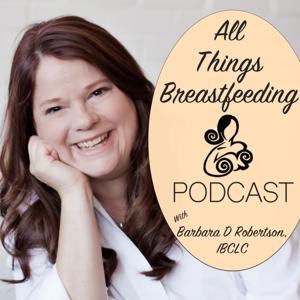


Barbara first meet Kay Hoover at her favorite conference, Lactation Consultants in Private Practice about 18 years ago. Kay and her dear friend Chris Mulford, created the conference to help private practice folks improve their skills. Kay has been in the field for years, in many different roles, working in private practice, at the hospital, and in public health.
From the introduction to The Breastfeeding Atlas, 7th Ediction, Kay…”retired from her hospital job as a lactation consultant at the end of 2019. During the pandemic she provided many on-line presentations to maintain her career-long commitment to educating the next generation of lactation consultants. Kay became an International Board Certified Lactation Consultant in 1985 and was recognized as a Fellow of the International Lactation Consultant Association in 2008.
During her career she served as a lactation consultant for four different hospitals. Kay was also employed as a lactation consultant by the Pennsylvania Department of Health for the Breastfeeding Awareness and Support Program, the Philadelphia Department of Public Health in the Division of Maternal, Child and Family Health, and the Center of Childhood Obesity Research at the Pennsylvania State University. In addition, she maintained a private practice for over 20 years. Kay has an international reputation as a lecturer, author, and clinical photographer.
Since 1971 she has been a La Leche League Leader and a member of the Pennsylvania Breastfeeding Coalition since its inception in 1992. She served for six years on the Board of Directors of the International Board of Lactation Consultant Examiners. Kay and Charlie, her husband of 55 years, raised their sons, Douglas, Steven, and David, in the Philadelphia area and are the grandparents of Daniel, Eric, and Robert.”
Articles Kay referred to:
Vazirinejad R, Darakhshan S, Esmaeili A, et al. The effect of maternal breast variations on neonatal weight gain in the first seven days of life. International Breastfeeding Journal Nov 2009 https://internationalbreastfeedingjournal.biomedcentral.com/articles/10.1186/1746-4358-4-13
Claesson IM, Larsson L, Steen L, et al. “You just need to leave the room when you breastfeed” Breastfeeding experiences among obese women in Sweden – A qualitative study. BMC Pregnancy Childbirth 18(1):39, 2018 https://bmcpregnancychildbirth.biomedcentral.com/articles/10.1186/s12884-017-1656-2
The post All Things Breastfeeding Episode 97: Interview with Kay Hoover appeared first on The Breastfeeding Center of Ann Arbor.
Wanting to get to know some of her favorite mentors who are the leaders in the field of lactation, Barbara Robertson is creating a series of podcasts to share with all of you! The first is with Dr. Anne Eglash. Barbara did an interview with Dr. English in 2015 about pain that is published here. Since that time Barbara became an advid fan of IABLE, the Institute for the Advancement of Breastfeeding & Lactation Education that Anne is a huge part of. This organization has a great find lactation support including breastfeeding medicine doctors. It also has one of my favorite brain teasers, Clinical Questions.
In this podcast, Barbara and Anne talk about how Anne became interested and involved in the field of lactation, tracing her roots back to medical school.
Anne Eglash MD, IBCLC, FABM, is a clinical professor with the University of Wisconsin School of Medicine and Public Health, in the Department of Family and Community Medicine. In addition to practicing family medicine, she has been a board certified lactation consultant since 1994. Dr. Eglash is a cofounder of the Academy of Breastfeeding Medicine, the Medical Director and cofounder of the Mothers’ Milk Bank of the Western Great Lakes, and the Medical Director of the University of Wisconsin Lactation Services. She has published many peer- reviewed articles on breastfeeding medicine, and has special research interests in chronic breast pain, human milk storage, nipple shield use, and outpatient breastfeeding education for health professionals. She sits on the editorial board for Breastfeeding Medicine Journal. She co-hosts and produces a free breastfeeding medicine podcast series, co-sponsored by The Academy of Breastfeeding Medicine, called The Breastfeeding Medicine Podcast, available on i-tunes. Dr. Eglash is founder and president of The Milk Mob, a nonprofit organization dedicated to the creation of breastfeeding-friendly medical systems and communities.
The post All Things Breastfeeding Episode 96: Interview with Dr. Anne Eglash appeared first on The Breastfeeding Center of Ann Arbor.
What’s the deal with lipase?
There was a recent paper published called Food-Derived Compounds Extend the Shelf Life of Human Milk.
Nancy and Barbara found this very interesting and discuss the merits of the findings from this paper, what we actually know about lipase and human milk, and what should we be doing about lipase, if anything. They had many questions about this paper including the fact it was not peer reviewed, not published in a journal, they didn’t actually measure the lipase levels of individuals, and address the question of fresh expressed milk sometimes smelling “lipasey”.
Let’s start with what is lipase? We know it is an enzyme that helps break down food. Not everyone agrees about what is true concerning lipase and human milk. Dr. Katrina Mitchell says, “There is no scientific evidence to support the concept of high lipase breastmilk from the freezer. Milk may smell bad after thawing, but it is from general breakdown of fatty acids rather than an abnormally high content of lipase. Because the breast is an endocrine organ and sweat gland, breastmilk may smell in the same way our armpits or groins smell. Humans are smelly animals :). In addition, babies may dislike bottle milk because they prefer feeding at mom’s breasts, with her warmth and smell. The Academy of Breastfeeding Medicine Human Milk Storage Protocol reviews the fact there is no evidence to support the concept of “high lipase” and IABLE has an excellent podcast on this topic as well.”
So, do we even have a problem? It does seem like some parent’s milk becomes “smelly” after it has been expressed and some babies don’t seem to want to drink it. So what is going on? The fact is we are still not sure.
From the new article. “We developed a first-of-its-kind high-throughput screening platform to identify food-derived compounds and combinations of compounds that, when added to human breastmilk, preserve fat content, retain antioxidant capacity, and reduce production of rancid-associated free fatty acids during extended freezer storage. These formulations represent leads for the development of safe and affordable frozen breastmilk shelf-life extenders for easy at-home use to increase the longevity of stored breastmilk.”
But do we need this? Nancy and Barbara worry that people will use this compound in their milk preemptively, even when they very well might not have a “lipase” issue. Are we “solving” a problem that doesn’t need to be solved? In other words, exploiting worried families?
The author does note this:
The authors disclose affiliation with and equity in PumpKin Baby Inc., a Princeton University spinout and for-profit public benefit corporation formed over the course of this work. PumpKin Baby Inc. is working to develop and commercialize the technology presented in this report, as the organization's stated purpose is to provide access to scientific research and products that aim to improve access to breastmilk, breastfeeding, and maternal and infant health. Several patents related to the technology described in this manuscript are pending and assigned to Princeton University.”
Clearly, he wants to make money off of this, well meaning or not.
If you come across colleagues or parents wondering about this, let them know the jury is still out. At this time we cannot say that this is a good solution to the problem.
My expressed breastmilk doesn’t smell fresh. What can I do?
https://llli.org/breastfeeding-info/smell-human-milk/
The post All Things Breastfeeding Episode 95: Lipase appeared first on The Breastfeeding Center of Ann Arbor.
How to become an IBCLC….
In this podcast Nancy and Barbara answer some of the most common questions people ask about how to become an IBCLC.
Below is a description of the process. You can also join us for our monthly “How to become an IBCLC” Zoom meeting on Monday, August 25 at 7 PM ET. Email [email protected] to join!
How to become an IBCLC
The IBLCE Board of Directors has specified 14 subjects in which all candidates for the IBCLC certification exam must complete courses of study.
At least one course in eight (8) higher education subjects is required. Higher education is defined as education acquired after completion of compulsory education. It is typically provided at academies, universities, colleges, vocational schools, institutes of technology, trade schools and career colleges that award academic degrees or professional credentials.
Important note: Human Biology can fulfill Biology, Human Anatomy, and Human Physiology!!!
Courses in the additional 6 topics are most typically available as non-credit, continuing education courses of varying length. IBLCE does not specify a certain number of instructional hours for these topics; therefore, courses of varying amounts of instructional time are acceptable.
When applying for the IBLCE exam, individuals educated in the following health professions will be asked to identify their profession and submit a copy of their license, registration, diploma or transcript. Here is a list from the site. https://ibclc-commission.org/ibclc-information/recognised-health-professions-list/
Individuals who are not educated in one of the above health professions will need to provide transcripts and certificates of completion for the General Education courses. For more information about the General Education requirements, please consult https://ibclc-commission.org/step-1-prepare-for-ibclc-certification/health-sciences-education-2/
The 3 exam eligibility pathways are open to individuals from a variety of backgrounds. Each person must decide which pathway will work best for them. For more info, go here: https://ibclc-commission.org/step-1-prepare-for-ibclc-certification/lactation-specific-clinical-experience/
Pathway 1 involves using appropriately supervised clinical experience obtained through paid employment or volunteer service as a health professional or mother support counselor. The kind of supervision that is considered appropriate depends upon the candidate’s professional background and scope of practice.
Under Pathway 2 and Pathway 3, the candidate completes clinical practice in lactation care under the direct supervision of experienced IBCLCs. Individuals with no paid or volunteer experience in providing care to breastfeeding families or those who desire a more structured way of learning lactation care clinical skills may choose to follow one of these pathways.
Pathway 1
Many candidates use clinical practice they have obtained through paid employment or volunteer service to qualify for the IBCLC certification exam. If you fall into one of the following categories, Pathway 1 is a reasonable choice to make.
Pathway 1 candidates must complete the following minimum requirements.
The General Education requirements must be completed prior to applying for the IBCLC certification exam. You must evaluate the higher education that you have already completed and determine whether or not additional coursework is needed.
Education in human lactation and breastfeeding is available through various education providers. The required minimum of 90 hours in lactation education must be completed within the 5 years immediately prior to applying for the IBCLC certification examination.
Pathway 1 candidates must complete at least 1000 hours of clinical practice experience in lactation care that were accrued in the 5 years immediately prior to applying for the IBCLC certification exam.
Individuals from two types of backgrounds are eligible under Pathway 1.
Health Professionals: Nurses, midwives, physicians and dieticians working in maternal-child care are the health professionals who most often seek IBCLC certification through Pathway 1.
Mother Support Counselors: Accredited mother-to-mother breastfeeding support counselors and breastfeeding peer counselors are among the mother support counselors who may use their experience to qualify through Pathway 1.
Pathway 2
Within the 5 years immediately prior to applying for the IBCLC certification examination, individuals seeking qualification through Pathway 2 must graduate from an academic program in human lactation and breastfeeding that meets all of the following requirements established by IBLCE.
Currently, there are 4 academic programs worldwide that meet the above requirements. Each academic program has unique admission and graduation requirements; no two programs are exactly alike. You may contact the academic institutions for more information about their requirements. This list is provided for the convenience of visitors to the IBLCE website. IBLCE does not recommend or endorse these academic programs.
Pathway 3
Individuals seeking qualification through Pathway 3 must have an approved Pathway 3 Plan on file with IBLCE. This mentorship plan must be developed according to the specifications found in https://ibclc-commission.org/ibclc-information/pathway-3-plan-guide/ and must be approved by IBLCE prior to beginning the mentorship.
The following table describes the minimum requirements for a Pathway 3 mentorship.
Pathway 3 was designed for individuals who have little or no opportunity to obtain clinical experience in lactation care through their paid or volunteer employment and/or those who do not have access to an academic program in human lactation and breastfeeding. The first step toward qualification for the IBCLC certification examination through Pathway 3 is to develop and submit a mentorship plan to IBLCE. Details about Pathway 3 Plan development can be found in https://ibclc-commission.org/ibclc-information/pathway-3-plan-guide/
The General Education requirements must be completed prior to applying for the IBCLC certification exam. Pathway 3 candidates must evaluate the higher education that they have already completed and determine whether or not additional coursework is need.
Education in human lactation and breastfeeding is available through a number of education providers. The required minimum of 90 hours in lactation education must be completed within the 5 years immediately prior to applying for the IBCLC certification examination.
Pathway 3 requires a minimum of 500 hours of clinical experience in lactation care that were directly supervised by experienced IBCLCs and accrued within the 5 years immediately prior to applying for the IBCLC certification examination.
If you are considering Pathway 3, you must locate and contract with one or more IBCLCs who have recertified at least once. These IBCLCs will serve as your mentors and will provide the direct supervision of your clinical practice in lactation care.
All candidates for the IBCLC certification examination must complete at least 95 hours of education in human lactation and breastfeeding. The required lactation education must be completed within the 5 years immediately prior to applying for the IBCLC certification examination.
Lactation education may be completed in a variety of ways, including in-person presentations, online education, distance learning and independent study modules.
Our sister site, LactaLearning, offers this educational opportunity!
4. Sign a pledge that you will adhere to the professional code of conduct
5. Passing a professionally developed certification examination
You must have your application and materials submitted to IBLCE by these dates. These dates change and the earlier you apply for the exam, the cheaper it is. The exam roughly costs $660.00 as of 2024 depending on how early you turn in your materials.
The skills in the https://ibclc-commission.org/2018/12/17/revisions-to-ibclc-scope-of-practice-and-clinical-competencies/sections are discussed and are representative of the ways in which IBCLCs apply this knowledge to clinical situations.
IBLCE Detailed Content Outline
All exam questions have both Discipline and Chronological parameters. This Detailed Content Outline gives you exactly the breadth of information you need to know for the exam.
The post All Things Breastfeeding Episode 94: How to Become an IBCLC – Common Questions appeared first on The Breastfeeding Center of Ann Arbor.
The All Things Breastfeeding Podcast is a program for both lactation professionals and new and experienced parents. Barbara D. Robertson, MA, IBCLC, owner of LactaLearning and The Breastfeeding Center of Ann Arbor and Jessica Beemsterboer, MEd, IBCLC, who works with Barbara, host the show. Barbara and Jessica share their thoughts and information on All Things Breastfeeding.
The All Things Breastfeeding Podcast is a program for both lactation professionals and new and experienced parents. Barbara D. Robertson, MA, IBCLC, owner of LactaLearning and The Breastfeeding Center of Ann Arbor and Jessica Beemsterboer, MEd, IBCLC, who works with Barbara, host the show. Barbara and Jessica share their thoughts and information on All Things Breastfeeding.
The All Things Breastfeeding Podcast is a program for both lactation professionals and new and experienced parents. Barbara D. Robertson, MA, IBCLC, owner of LactaLearning and The Breastfeeding Center of Ann Arbor and Jessica Beemsterboer, MEd, IBCLC, who works with Barbara, host the show. Barbara and Jessica share their thoughts and information on All Things Breastfeeding.
The All Things Breastfeeding Podcast is a program for both lactation professionals and new and experienced parents. Barbara D. Robertson, MA, IBCLC, owner of LactaLearning and The Breastfeeding Center of Ann Arbor and Jessica Beemsterboer, MEd, IBCLC, who works with Barbara, host the show. Barbara and Jessica share their thoughts and information on All Things Breastfeeding.
The All Things Breastfeeding Podcast is a program for both lactation professionals and new and experienced parents. Barbara D. Robertson, MA, IBCLC, owner of LactaLearning and The Breastfeeding Center of Ann Arbor and Jessica Beemsterboer, MEd, IBCLC, who works with Barbara, host the show. Barbara and Jessica share their thoughts and information on All Things Breastfeeding.
The All Things Breastfeeding Podcast is a program for both lactation professionals and new and experienced parents. Barbara D. Robertson, MA, IBCLC, owner of LactaLearning and The Breastfeeding Center of Ann Arbor and Jessica Beemsterboer, MEd, IBCLC, who works with Barbara, host the show. Barbara and Jessica share their thoughts and information on All Things Breastfeeding.
From the publisher's feed

108 Listeners
139 Listeners

16,622 Listeners
776 Listeners

8,527 Listeners
369,618 Listeners
1,034 Listeners
129 Listeners
727 Listeners

474 Listeners
9 Listeners
4,492 Listeners

19,254 Listeners
210 Listeners

15 Listeners