
Sign up to save your podcasts
Or



Based on Podcast App listening data
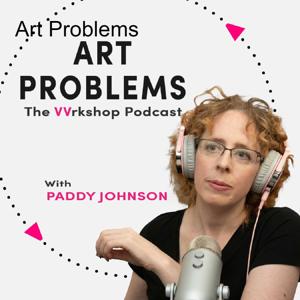
Have you ever felt overwhelmed by the sheer volume of information out there to help artists? In this episode of Art Problems Netvvrk member Maggie Hinders shares how the Netvvrk Navigator assessment transformed her artistic experience of this reality from "I can't do this" to "I can do this."
Maggie talks about moving from using Netvvrk primarily for community connection to finally tackling the curriculum with clarity. We discuss how the assessment organizes information into a clear path forward, why understanding what different career levels actually look like matters, and how developing an artistic narrative helps you communicate about abstract work.
If you've ever felt like your brain works like a web and you need help pulling out that first thread, this conversation is for you.
80% of artists struggle with the same problem: getting seen by curators, gallerists, and collectors. And solving this problem is like slaying a multiheaded Hydra—the tasks are endless.
We're kicking off 2026 with artist William Powhida, whose 2017 work After the Contemporary predicted the future of art with unsettling accuracy. From the NEA closure to resource wars to Miami flooding, his satirical timeline keeps proving prescient. We discuss what he got right, what he missed (AI, influencers), and his predictions for 2026—including the rise of the "haute garde," the gambling-ification of culture, and why flexible pricing models might finally give artists more agency.
Relevant links:
In this episode, Paddy talks with art market analyst Tim Schneider about the New Visions Report 2025, a survey of over 1,000 visual artists about their working conditions.
Artist and accountant Hannah Cole talks about her new book "Taxes for Humans"—your not-boring guide to taxation for self-employed artists. We discuss why tax education is deliberately kept from us, how to fix a messy tax situation without shame, and Hannah's secret agenda to turn artists into activists.
This week I'm extending a conversation I started in my revived Hyperallergic column: do you need a proper studio space to get studio visits? The answer is no—if you handle it properly.
But the real question isn't about your space. It's how to network effectively so visits actually happen. I break down the exact timing strategy for outreach, why most networking fails in the follow-through, and how to structure emails that make it easy for people to say yes.
The biggest reason artist emails don't get responses isn't disinterest—it's that the email didn't make it easy to respond. I cover four principles that change that and walk through a real scenario showing how to think strategically about follow-up.
Want the exact framework? Join me for my free webinar Monday, November 24th at 7 PM EST.
RELEVANT LINKS:
Hyperallergic: Do I Need a Studio?
Free Webinar Sign Up: How to Get Studio Visits Without Reading Minds
This week on the Art Problems podcast interview series "Inside Netvvrk", I'm wrapping up the series with Chris Moss, a painter and the artist advisor who leads all of Netvvrk's studio critiques.
Chris has been with Netvvrk for years. He shares what it's like to go from being completely stuck to organizing a neighborhood studio crawl that brought hundreds of people through his door. We talk about why COVID isolation finally pushed him to find a solution, how he went from zero shows to curating exhibitions with himself in them, and why self-worth is one of the biggest intangible benefits of investing in your career.
Chris also gets into why regular critique with other artists matters more than almost anything else for making better work.
If you've been feeling stuck or isolated in your practice, Chris's focus on community and taking action—even when it feels uncomfortable—might be exactly what you need to hear.
This week on the Art Problems podcast interview series "Inside Netvvrk", I'm talking with Brent Showalter, a multidisciplinary artist whose brilliantly colored paintings and photographs transform layered compositions of color and shape into vibrating surfaces.
Brent runs multiple businesses and brings that same strategic mindset to his art practice. In doing so, he's able to devote more time to his art. We talk about how his accountability group helped him finally organize his entire archive, and what it takes to feel confident when opportunity knocks—whether that's the director of the Guggenheim walking into your studio or an Instagram comment from a curator.
Brent also shares how that casual comment turned into a curated opportunity in 24 hours—because he had everything ready to go.
If you've been wondering whether Netvvrk is worth the investment, this conversation will help. It shows what happens when you stop reinventing the wheel and start using the tools that already work.
This week on the Art Problems podcast interview series “Inside Netvvrk”, I'm talking with Ann Marie Auricchio, an abstract painter who creates work at the intersection of psychological and physical experiences.
Ann Marie shares what it's like to restart your art career after 25 years in another profession. She talks about why having all your materials ready isn't enough if you don't know how to use them, and how a shoulder injury became the perfect time to invest in herself.
We get into how she went from feeling stuck and isolated in New Orleans to landing her first museum solo show and working with multiple galleries. She also explains how writing exhibition proposals with other Netvvrk members led to actual acceptances—and taught her when to turn down opportunities that don't financially make sense.
We also talk about researching institutions by looking at other artists' CVs and why community matters even when people can be annoying.
If you're restarting your career or feeling isolated in your practice, this conversation will help. It shows what's possible when you get your assets in order and find your people.
This week I'm launching 'Inside Netvvrk,' a new interview series with Netvvrk members. First up is Laurie Frick, a data artist and one of Netvvrk's founding members.
In this conversation, we talked about what it's really like to invest in your career when you're already mid-career. Laurie doesn't sugarcoat it: Netvvrk isn't cheap, and you need to treat your career like it's worth investing in. But she also shares what changed when she made that commitment—going from feeling stuck in public art commissions to now having four galleries and selling all the work she makes.
We talk about the small group of artists who transformed each other's fellowship applications into something extraordinary, what it takes to actually be vulnerable with other artists, and why a community on Zoom can be just as real as painters meeting in a bar.
If you've ever wondered whether coaching or community membership is worth the investment—especially if you're already established—this conversation shows what happens when you stop going it alone.
From the publisher's feed
The Netvvrk podcast for ambitious artists who want more shows, bigger grants, and better residencies.
Ranked by our users in the last 21 days

37,986 Listeners

6,763 Listeners
520 Listeners
879 Listeners

10,134 Listeners

1,493 Listeners

203 Listeners
444 Listeners

495 Listeners
535 Listeners
307 Listeners

366 Listeners

3,592 Listeners

145 Listeners

1,663 Listeners