
Sign up to save your podcasts
Or

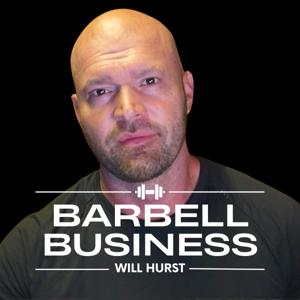


This week, we took a trip to fabulous Las Vegas to meet up with old-school Barbell Business podcast host and two-time world-record-setting powerlifter AJ Roberts (Instagram: @ajroberts). He's one of the few people in the industry with a very solid perspective on both business and training, and he's one of our favorite speakers of all times.
AJ breaks down what he considers to be the three pillars of running a successful gym: sales, marketing, and experience. If you're like most box owners we know, crafting a great client experience comes naturally to you, but sales and marketing might feel like something gross that happens on the used-car lot. In this episode, AJ offers insight that helps gym owners better understand what we already know: At the end of the day, we're selling people happiness.
Tune in for an authentic, non-skeezy outlook that gets the best results not just for your clients, but for your business. No matter where your gym is on its path to awesomeness, this episode will help you solidify your thinking about what you want your gym to be.
For info on books and additional resources mentioned in the show, go to http://www.barbellbusiness.com/172-aj-roberts/.
We haven't been able to independently verify it, but we think MMA trainer and entrepreneur Mike Dolce, of Dolce Fitness and The Dolce Diet, might be the hero of an old-school novel. Hear us out. After his father suffered a massive stroke, Dolce got a job as a New Jersey dock worker at the age of eight. Eight years old. Scraping barnacles off of fishing boats for $2 a day, like a… well, like a character right out of a legend. Being a forward-looking youngster, Dolce knew that $2 in his pocket wasn't just that: If he kept it up, in 100 days he'd have $200. And if he found other work, he would have even more money. Growing up in straight-up poverty, Dolce didn't feel entitled to anything except the right to work.
As a savvy eight-year-old, Dolce knew he had to work around the child labor laws in New Jersey. He stacked a paper route on top of his dock work and got a job with a printing shop at the age of 10. At this point, he had officially outpaced America's classic self-made man, Benjamin Franklin, whose lazy bones didn't start working at a printing shop until he was 12. (Benjamin Franklin obviously didn't have Mike Dolce's drive for excellence.) Franklin turned his print shop gig into his own newspaper operation, but Dolce had the good sense to go down to the 7-11 and buy muscle magazines with his hard-earned cash –– because that was an investment in the kind of future he wanted to have.
Dolce opened up the first iteration of his current fitness enterprise when he was only 17, without going into any debt. Now the founder and owner of Dolce Fitness and Dolce Diet, as well as being the owner of a real estate company and the founder of a non-profit dedicated to eradicating childhood obesity and eating disorders, Dolce joins us on this week's episode to talk about good old-fashioned bootstrappin'.
Listen in as Mike Dolce gives us the real talk he's become known for: no sugar-coating, no B.S., straight-up advice on how to rise up from the ashes like a [expletive] phoenix to make Benjamin Franklin jealous of your determination.
You may have heard the expression, "C students make the best teachers." They remember the struggle of not getting it. They tend to give students the kind of support they wish they'd had themselves when they were struggling to learn algebra (or English, or chemistry, or whatever). The same can be said of functional fitness coaches. While natural-born athletes can certainly make great coaches too, the self-described "fat kids" have a natural empathy for their prospects that helps close the sale and keep clients coming back. And as perverse as it sounds, we've observed that true empathy is often the key to getting dollar bills to rain down from the ceiling.
This week we went up to L.A. to meet with Fit Body Boot Camp's Josh Carter, a fat kid turned swole, and one of the best in the business when it comes to marketing. From copywriting to group-closing, Josh takes us through the process that contributes to the astounding success of Fit Body Boot Camp. And it takes more than just remembering the feeling of wanting to get fit yourself.
"Here's the first thing I would recommend people do, is know your audience," says Josh. "That would mean poll your audience. Other than knowing them, ask them, 'What do you want? What are your goals?'... And get them to tell you, and then use their words. When you use their words, you can better speak to them."
Listen in to hear about what a comprehensive marketing plan looks like for a gym, and get some good advice on how to close those sales. (ABC: A - Always. B - Be. C - Collecting email addresses. Always be collecting email addresses.) The good news for the many of us who don't love the "sales" part of our job: Closing prospects at a gym should be mutually beneficial every time––otherwise we're just crooks. We should believe in our product to the extent that if a potential client walks, we legit feel bad for them. As Josh explains, "When we're selling, we're literally selling health and happiness." Take this knowledge to heart, and then get them to sign on the line that is dotted.
Enjoy,
Mike
We have a super-exciting guest this week. A big "get," if you will. We've been wanting to feature him on the podcast for years, because we're his biggest fans. That's right, kids! This week we got to talk to Markus Gerszi, of Barbell Business fame! [Thunderous applause; confetti falls from the ceiling.]
Joking aside, it was very cool to be in Markus's old box in Orange County, CA, this week. Markus is a smart dude, which is why we keep him around. We've been wanting to get his best practices for accountability on the record, so that's what this episode is all about. [Thunderous applause; even more confetti falls from the ceiling.]
In this business, we tend to be very client-focused. We want the best for our clients, or we'd be doing something else for a living. We have a natural impulse to hold them accountable, with everything from documenting their workouts to journaling their meals to setting long-term goals (and occasionally standing in for their therapists). Join us as we talk about some common-sense, often-overlooked methods for reliable client accountability.
And while we're on the subject of accountability, let's talk about you. It's almost second-nature to keep our clients accountable. But who or what do you have in place to keep yourself consistently in-check? This includes your personal fitness goals as well as the daily operations of your business. Long-term goals, too. If you're like most gym owners, your answer to this question is, "Mumble mumble clients busy mumble." And unfortunately, "Mumble mumble clients busy mumble" isn't a sustainable strategy. As Doug points out, "Holding yourself accountable is a totally different ballgame." Most of us know we should do it, but don't have a great idea about how.
In this episode, we talk to Markus about the best strategies to hold your clients accountable, your team accountable, and yourself accountable. Listen in to learn commonsense strategies that you can implement right away for a stronger business.
Who do you learn from when you're already at the top of your field? How do you get the motivation to grow when you're already, frankly, pretty awesome? Maybe there are worse problems to have… Okay, there are definitely worse problems to have. But as entrepreneurs, this is the challenge that we all hope to face at some point. This week we travelled to Chino Hills, California to interview someone who knows a ton about the top tier of personal development: Bedros Keuilian, CEO and founder of the Fit Body Boot Camp empire.
Bedros has one of the fastest-growing franchises on the planet, so when he thinks about improving his business and himself, he describes his current state as being like 211º degree water –– he just needs one more degree to make a monumental impact. While there's a lot you can do at 211º, at 212º you have steam. It's the difference between cooking an egg and powering a locomotive.
As tempting as it might be to stand on top of that mountain and pat yourself on the back, there's so much to be gained from continuing to improve yourself, even when you're at the top of your field. He maintains the same mindset he had as the fat, broke foreigner he describes from his youth, even though he's now an ultra-fit kajillionaire. Self-development is the highest priority not just for himself, but for his employees (who he describes as working at a "self-development company that happens to be in the fitness industry.") But where do the Bedros Keuilians of the world plug in? Just as his clients plug in to him for advice and growth, he needs to learn and recharge somewhere.
Listen this week to learn where to find your built-in mentors, why you want to be a fighter jet, and why Bedros would rather get attacked by a shark right now than go write the next chapter in his book. (And why he's gonna go write the next chapter in his book right now anyway.)
Enjoy the show,
Mike
What would it take to get Casey Jenks functional fitness sainthood status? Is that a thing? If we just put his face on a medal and wear it around our gym, will that do the trick?
Casey's the creator of Fitbot, the software that keeps our personal training programs from being our personal nightmares.
One thing we've found as gym owners is that people very rarely stumble upon a great opportunity without first encountering a world of pain. For Casey (and for us before he came along with Fitbot,) the pain was in the logistics of maintaining individualized fitness plans for personal training clients. To manage all the aspects of a program with remote, in-person, and hybrid clients, the whole digital circus would have to come to town: email, Excel, Google Docs, Evernote, Vimeo, copying, pasting, smartphones, desktops. When Casey would ask other coaches how they were keeping track of fitness plans, the same gigantic list of tools would come up. Luckily for all of us in fitness entrepreneurship, Casey already happened to be a software developer.
"I got sick of it, and decided to fix it. And I've believed that I could do a better job than what was being done. And I believe that what coaches and trainers do is a super-important part of society, and the tools they had at the time were just complete shit. And I believe that they deserve better."
But let's back up to why efficient individualized fitness plans are even necessary: A lot of coaches start with group fitness, and this is where they feel most comfortable. So this is sometimes where they want to stay. But personal training is what your gym needs in order to extend the lifecycle of your members. We see a ton of burnout after two years, but with a robust personal training program, you not only extend the interest and commitment of your clients, but you create a useful career path for your coaches.
Join us as we talk to Casey about how well-managed personal training programs increase income, improve employee and client retention, and get the best athletic results.
Because gym owners almost always love coaching, it's easy to fall into the trap of wanting to do all the hands-on stuff yourself. You love your work, so why would you want to let anyone else take over?
This week, we talk to Alwyn Cosgrove of Results Fitness to find the compelling answer to that question. We were thrilled to have the chance to sit down with Alwyn, because he was one of the first people to really convince us of the merits of systemizing our own business.
Alwyn helped us explore some of the reasons we choose not to delegate our work or simplify it with systems. A lot of times we think of handing over a task as a form of 'giving up.' Alwyn's response is that "It's not about idleness. It's not about stepping out to be lazy. It's about what if you had to? Could you?"
When Alwyn was diagnosed with stage-four cancer, he very quickly figured out how to get all the systems in place that were necessary for his gym to operate optimally in his absence.
"I had to move in at UCLA to have a stem cell transplant, right? We had insurance because of the gym, but your bills at home… You still have to pay your rent or your mortgage. You still have to pay your car payment. You still have to pay for everything, right? How do you create a business that runs without you? That's what you should be doing in the first place."
Alwyn's gym underwent a thorough systemization under circumstances that were far from ideal. But it worked. In fact, he jokes that he must have been the jam in the system, because business boomed while he was gone.
As a result of the groundwork he laid years ago, Alwyn is now able to focus on refining his systems and getting incredible results. Some of his members, for example, have been with his gym for 17 straight years, with the average membership running in the seven-to-ten-year range. Ideally, the only reason someone would chose not to renew their membership is that they've moved out of the area entirely. Otherwise, he wants to be the last gym his members will ever join.
It's a tale as old as time: A Major League Baseball right-fielder starts selling deer-antler supplements to teammates during pitching changes. Word spreads until members of rival teams are making transactions on base, until finally, one day, he's inadvertently made the career switch from pro-ball player to nutrition entrepreneur. Sound familiar?
Okay. So maybe former Oakland A's outfielder Danny Putnam's specific story isn't one we've heard before, but you've seen those basic elements over and over: A hobby or a side-gig ends up taking off, and before you know it, you're in business. As the Founder and Managing Director of Lurong Living, Danny's business literally started on the field during ballgames. It wasn't anything he'd expected. The way he's sustained the growth of his business is by putting the right systems in place at the right time.
In this episode, we talk to Danny about how to know when to build a tool versus when to hire a person, the difficulty of putting up boundaries on your time when things start taking off, and how to create buy-in with your employees. We also use juggling as a metaphor a lot. It works. (Anyone who's ever dropped the ball can back us up on this.)
As entrepreneurs, we often don't want to develop systems or automation, out of the fear that it will make our business impersonal. We talk about the ways that systems can actually make us more creative. When we can find a better way to take care of tasks that are outside of our wheelhouse, it frees up our time and our brain to work on the bigger picture of our mission.
Whether you're growing your business or you just want to hear more about the world of deer-antler side-hustles, we hope you enjoy the show!
As a Marine Corps lieutenant, and usually as the only woman in the room, Taylor Drescher anticipated the challenges she might face as a leader. In her case, she was able to identify that her strength as a leader was literally her physical strength -- so she played it as much as she could.
"I'd carry more weight on purpose, just to, not to prove a point, but because I could and I loved it. I lived for that, you know? So, why not? Then, the guys would be complaining or falling down, I'd be like, 'Do you want me to carry your pack for you?'"
By the time Taylor decided to become a Marine, she was already deep into the functional fitness lifestyle and competing as an athlete. When she had to go on a five-mile, weighted endurance run through the mud for basic training, her reaction was, "I can't believe I'm getting paid to do this."
This attitude has helped her have an awesome career not just as a Marine, but now as a life coach.
And it isn't all about leaning on your strengths: Effective leadership requires an honest assessment of weaknesses and a plan to overcome them. In Taylor's case, she was not good at taking standardized tests. That's where she would ask for help studying. She knew that, just as her team would look to her for guidance in her strongest areas, she needed to be okay with sometimes saying "I don't know this," and seeking out help from someone who does.
She now applies these principles of playing up strengths and identifying weaknesses with her clients who look to become more effective leaders themselves, in a variety of fields.
Just because you've eaten in a restaurant doesn't mean you know how to run a restaurant. Most people will agree with that in general, but it's harder to see the truth when looking at your own business. The same goes for working out or coaching in a gym versus running a gym.
This week, Garry Lineham talks to us about why it might be more important to grow in your business experience than in your technical knowledge when running your own gym (or any business for that matter.) The core reason is corporate intelligence: the attribute that you exercise and expand by working on a business as an entrepreneur rather than just working in the business as an employee.
Currently, Garry runs Human Garage, a health and wellness company in Venice, California that specializes in the connection between the body and the mind. On Barbell Business, Garry tells us how he applies his corporate intelligence daily to the tasks of leading and growing his team there and scaling his operation.
Garry explains a lot by breaking down what is and is not a real business.
For him, your skill starts off as a trade. Then you create a hobby out of it, even if you're actually operating a gym, for example. A real business is when you can duplicate it, and that requires a certain amount of corporate intelligence in the owner.
When it comes to starting and continuing a gym, Garry believes that corporate intelligence is the key to making the right call: "Just because something is a good idea doesn't mean it makes a good business."
But even if you're running a business that should work, your corporate intelligence will determine if you're the right man for the job: "Just because it's a good business and a good idea doesn't mean I'm gonna be good at it."
For those who are already successful at their business but are eager to learn more, Garry also has some wisdom to share.
So if you've been wondering why all these hours spent in your gym haven't elevated you to a higher level of business success, or you already have corporate intelligence but want to gain more, check out this week's episode of Barbell Business.
From the publisher's feed

227,492 Listeners
39,048 Listeners

3,898 Listeners
4,370 Listeners

32,765 Listeners

4,982 Listeners
12,104 Listeners
1,934 Listeners
13,957 Listeners
2,294 Listeners
1,553 Listeners
528 Listeners

540 Listeners
46,076 Listeners
3,140 Listeners