
Sign up to save your podcasts
Or



Based on Podcast App listening data
Big brands are turning away from Facebook over its so-called toxic content - so how will the social network cope? That’s the big question we’ll be asking on Business Weekly. We’ll also be investigating the changing face of make-up as Kim Kardashian West sells a stake in her cosmetics business to the beauty giant Coty. We’ll hear why traditional make-up brands are struggling to keep up with companies born in the age of social media and influencers. Our correspondent in France heads to the sparkling shores of Brittany to see whether businesses there are ready for summer tourists - and we have an interview with the film director, Gurinder Chadha. Presented by Lucy Burton.
Coronavirus has brought one of the most prolific film industries to a virtual standstill. Nollywood, Nigeria’s film industry, is the third largest in the world after Hollywood and India’s Bollywood. Chijioke Uwaegbute from the entertainment desk at Price Waterhouse Coopers Nigeria explains the financial impact of the virus on Nollywood. Moses Babatope, co-founder of Filmhouse, the biggest cinema chain in West Africa, says that with all his cinemas closed, he’s having to pay furlough money out of his own pocket. Plus actress and screenwriter Alexendra Amon tells us that she has had projects cancelled. And we’ll also hear from Obi Emelonye on using smartphones to overcome restriction during the pandemic.
(Image: Nollywood films at a market in Lagos. Picture credit: CRISTINA ALDEHUELA/AFP via Getty Images)
Coronavirus cases have been rising in two dozen states over the last 14 days. Of these, Texas, Florida, Arizona and California have emerged as the country's latest virus epicentres. And yet governors in many of these states are resisting efforts to close down economic and social activity, or a “second lockdown".
Republican strategist Chris Ingram in Tampa, Florida, explains to Business Daily's Ed Butler the thinking behind allowing most Americans, apart from the most vulnerable, to get back to normal life. But some Floridians are not waiting for directions from the government. Ed Boas, owner of Lanes clothing store, describes the precautions he’s taking on his own initiative.
Meanwhile Dr Cheryl Holder, at the Herbert Wertheim College of Medicine at Florida International University, says that while the state is better-equipped to deal with a second wave, she’s concerned many young people think themselves invulnerable. And Wendell Potter, former health insurance broker turned whistle-blower, explains how the US healthcare system is leaving tens of millions of people untreated, potentially worsening the public health crisis.
(Picture: A pamphlet on how to stay safe from COVID-19 being distributed in Miami, Florida; Credit: Chandan Khanna/AFP via Getty Images)
Will the Stop Hate for Profit campaign change the social network's handling of "toxic" content? Big names like Ford, Starbucks and Unilever are pulling ads from Facebook starting this month.
Ed Butler speaks to some of the companies involved: Damien Huang, president of outdoor clothing company Eddie Bauer, Mary Ellen Muckerman from tech firm Mozilla, and Ryan Gellert from Patagonia.
As the campaign appears to gather momentum, how much will it hurt Facebook's business? Jordan Bucknell, founder and CEO of Upbeat Agency, a facebook and Instagram advertising agency, describes the draw of the platform for many small businesses. And Steven Levy, author of the book Facebook: The Inside Story, explains why the real pressure for change could come from Facebook's own workforce.
Producer: Edwin Lane
(Photo: Stop Hate for Profit campaign displayed on a smartphone, Credit: EPA)
The 2020s will be transformational for humanity, according to the tech prophet founders of RethinkX,
Tony Seba and James Arbib talk to Justin Rowlatt about their prediction that a confluence of new technologies - in energy, transportation, and food and materials production - could wipe out poverty and solve climate change in the next 10-15 years, and usher in a new "Age of Freedom" for our species.
But while it sounds utopian, they also warn in their new book Rethinking Humanity that it could pose huge civilizational challenges for a planet that still clings to outdated concepts such as democracy, capitalism and the nation state.
Producer: Laurence Knight
(Picture: Global communications Planet Earth graphic; Credit: metmorworks/Getty Images)
Mohamed Mansour is a household name in Egypt. The billionaire head of the multinational conglomerate Mansour Group has been involved in business and politics in Egypt and abroad for decades, as the BBC’s Mohamed El Aassar explains. Mansour himself sat down to speak with Manuela Saragosa about globalisation, the long-term impact of coronavirus and donating to the UK conservative party.
(Picture: Mohamed Mansour. Picture credit: Mansour Group.)
On Business Weekly we’ll be asking why the boss is often the least skilled person in the room? Are incompetent people put into middle management to get them out of the way - or are they just more confident than their more proficient peers? We’ll also be looking at the future of meat and asking whether china will turns its back on pork and embrace plant-based alternatives. And we’ll hear from the pilots who have swapped aviation for empathy.
Presented by Lucy Burton, produced by Benjie Guy .
With current World Trade Organization Director-General Roberto Azevêdo due to leave his post later in the year, the race is on for a new DG. Abdel Hamid Mamdouh, a former diplomat and candidate for the top job, tells Manuela Saragosa how he imagines the WTO of the future, while the BBC’s Andrew Walker explains how US opposition under President Trump to a global multilateral trading system is putting the organisation’s future in doubt.
(Picture: A shipping freighter with cargo containers. Picture credit: Getty Images)
Why is it that the boss never seems to know what they’re doing? The famous “Dilbert principle” asserts that companies promote incompetent employees into middle management to get them out of the way. But Professor David Dunning, co-creator of the competing “Dunning–Kruger effect”, says there’s more to it than that, specifically that the more incompetent a person is, the more confident they can be. Meanwhile, Kelly Shue, Professor of Finance at Yale, says an even simpler idea, the “Peter Principle” helps to explain why people get promoted beyond their level of competence. And entrepreneur Heather McGregor explains why the incompetence of a former boss led her to buy her own company
One of the long-run impacts of the coronavirus pandemic is dramatically worsened unemployment around the world, with millions of people suddenly unable to support themselves and their families. Aside from the obvious financial implications, Dr Stephen Blumenthal, a clinical psychologist in the UK tells Ed Butler about the tremendous impact this could have on mental health and human life. Meanwhile, some economists are discussing whether societies could, or indeed should, make sure everyone who wants a job can have one. Economist Pavlina Tcherneva lays out “The Case for a Job Guarantee.”
(Picture credit: An unemployment line in Chile. Picture credit: Getty Images.)
From the publisher's feed
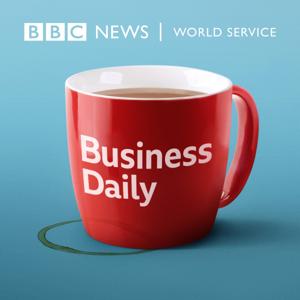
The daily drama of money and work from the BBC.
Ranked by our users in the last 21 days

7,618 Listeners

4,112 Listeners

1,050 Listeners
285 Listeners
426 Listeners

5,485 Listeners

1,795 Listeners

2,112 Listeners
360 Listeners

427 Listeners

51 Listeners
220 Listeners

240 Listeners

350 Listeners

233 Listeners
646 Listeners
227 Listeners

320 Listeners

3,219 Listeners

73 Listeners

741 Listeners

526 Listeners
628 Listeners

383 Listeners
37 Listeners

242 Listeners

59 Listeners
139 Listeners

74 Listeners

71 Listeners