
Sign up to save your podcasts
Or

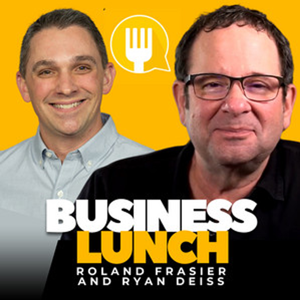


Over the next few podcast episodes, we’ll walk through the 7 Levels of Scale—everything you need to know to grow and scale your business. Today is about MONEY—doubling your take-home pay.
Co-hosts Roland Frasier and Ryan Deiss have developed a powerful and proven framework for scaling your business. It’s been a long labor of love. They had all the pieces, but they needed to tie it together in a simplified way that was transferable and repeatable. And they made it happen.
Here are the 7 Levels of Scale:
They covered Levels 1 and 2 in Part 1 and Level 3 in part 2. Today is all about Level 4. Listen in for some actionable strategies to double your take-home pay (AFTER you’ve hit levels 1-3).
Scared Money Doesn’t Scale
People hear “double your take-home pay” and think, “If I do that, I’ll go broke and not have enough money to grow. Shouldn’t I be putting that money back into my company?”
Ryan says there are two things at play here. One is nerd finance stuff (which Roland loves and Ryan is learning to like). There’s a big mindset shift that needs to happen for many people at this point. It’s time for you to be feeling more abundant, feeling some of the gains of owning a business. Ryan’s first mentor back in the day once told him, “You’re doing well, but you’re not taking enough money. You need to pay yourself well, because scared money doesn’t scale.”
This step is so important. Roland and Ryan want you to have a plan to personally bring twice as much money home. If you haven’t brought home anything up to this point, you need to do more than twice, more than enough to pay for your basic expenses.
“But I could lose everything,” you think. “I need to make another sale or I could go out of business.” That fear is really good in the early days. The intensity of the lion chasing you is great for launching a business, but not great for scaling a business. That fear will hold you back, keep you stuck in short-term thinking. You need to make more money so you can start thinking longer-term.
One of the obstacles you face in business is feeling guilty taking money out of the company. You do have a tight situation when you’re boot-strapping, so you’ve got to think about your people you need to take care of, and the growth you need to get, and the resources, media, inventory, people you need. You’re spinning plates, and the plate that gets ignored is you. You actually deserve this. You need to take care of yourself. If you don’t build in some profitability for yourself, any ding in the company could end it.
Don’t Over-Parent Your Company; Let It Soar
Your company won’t scale if you don’t let it grow up. You’ve got to let it go out on its own and live and survive and perform at a level it needs to perform at for you. At level 3, we separated the founder/entrepreneur from being the brain of the business. We upgraded from you being the operating system to having an actual operating system. You’re no longer the brain; now you have to stop being the beating heart of the...
Acquiring and selling businesses is one way to live a rich and happy life, but how do you convince someone to sell you their company?
In today’s episode, Roland Frasier walks us through some important questions to ask when buying a business. This is Part 2 in a series (be sure to check out Part 1!) where he’ll be sharing some of his extensive knowledge and acquisition experience as well as tactical strategies you can go out and implement right away. Acquiring businesses is Roland’s specialty. He’s actually written an entire book on it.
Listen in as he talks about the two questions he asks the target company’s owner as he’s starting the conversion about acquiring the company.
Question #1 to Ask the Owner
Roland says a lot of people create more friction than is necessary at the beginning. They jump in and say, “Hey, do you want to sell your company?” When you’re ready to talk to the owner of the company you want to acquire, hopefully you’ve determined your acquisition criteria and the profitability level you want. But “Hey, do you want to sell your company?” is a walls-up question.
If you’re going in cold, you might get this common angry response: “Who told you our company was for sale?”
The question Roland likes to ask instead is more investment-related. “Hey, I’m an investor. I’m looking for a company in [specific area] that sells [specific industry] and makes [x level of sales]. Would you be interested in having a conversation about the possibility of investment or working together?”
Coming in as an investor is very non-threatening, because almost all businesses need investors and capital. You want to be coming from a place of authenticity, so get clear on what an investment means to you. An investment doesn’t have to mean you have a pool of cash available. You can have other resources and assets to bring to the table.
If they say yes, another mistake people make is asking for a financial statement or tax returns. Don’t ask for that upfront. You don’t want them talking to their accountant or attorney and getting their walls up again, before you even know if you want to buy the company.
Instead, just say, “That’s fantastic. I have a few questions to see if we’d work well together. I’d love to know some basic numbers. Could we meet now, or do you need a few days to gather that information?”
Question #2 to Ask the Owner
This brings us to the next question: “Can you tell me the story of the company?” This one helps build rapport. You’ll get the long-form narrative response about the history of the company and how it has evolved. Take notes here, because they’re giving you priceless information. And it’s so much less threatening to them.
While they’re telling you this history, find places you can build rapport with them because you have commonalities of experience. Find common touchpoints that will build trust. Bring them up when they’re done talking.
Then say: “That’s great. So interesting. I love learning more about the company. I’d also love to know more about you and your entrepreneurial journey.” People love to talk about themselves. Find more commonalities. Ask more questions. Build more trust. And you’ll be well on your way to acquiring this company.
Stay tuned for Part 3!
OUR PARTNERS:
Over the next few podcast episodes, we’ll walk through the 7 Levels of Scale—everything you need to know to grow and scale your business.
Everyone always asks Roland Frasier and Ryan Deiss “Where do I start?” when it comes to scaling their business. Their new framework they call The 7 Levels of Scale answers that question.
In the previous episode, they covered Levels 1 and 2. In today’s episode, they unpack Level 3, but here are all seven:
If you haven’t listened to Part 1, go do that now. This framework doesn’t work out of order. Sequence matters in a big way. Then listen in for everything you need to know about Level #3: Build an upgraded scalable operating system.
Two Big Errors Entrepreneurs Make
The first error entrepreneurs make is setting up an operating system without going through the first two levels. You don’t need an operating system if nothing is happening in your business.
The second error they make is just go go going without putting an operating system in place. If you build your growth flywheel, then fail to build and implement an operating system, you’ll grow your business into non-existence. It will implode from system overload. You can’t serve the people coming in, because it’s all happening too fast, and you don’t have a system in place to handle it. This will wreck you, wreck your family, and wreck your business.
This happened to Ryan. He almost lost his marriage over it. To build something that’s actually working—but have it almost destroy you—is one of the worst things that can happen.
What Is an Operating System Exactly?
No one can actually agree on a definition, but Google says this: “An operating system is a set of algorithms and a common language that enables different components to communicate with one another in the support of the desired outputs of a machine.” It’s like a computer where the mouse, the CPU, the printer, and everything else has to communicate with each other in order for it to work.
What do we mean by a set of algorithms? Standard operating procedures. What is a common language? Communications and meeting rhythms. What are desired outputs? Your goals and objectives.That forms the foundational framework of what it means to have an operating system.
The business owner generally knows what the desired outputs are, but they haven’t really been fully flushed out. You need goals and objectives and a way to communicate them throughout the company. You need standard operating procedures (SOPs) where one person knows how to do something, and documents it so others can learn and repeat it.
Roland and Ryan built a tool for their company internally and now it’s available to people in their
Scalable OS Accelerator.
Document Your Set of Algorithms
Visualize how your company creates value. What is your growth engine? Once you’ve acquired a customer, how do you serve them? That’s the fulfillment engine. In the entire process, you might have half a dozen value engines. There might be 3-4 stages that are really important. These are the ones that
Acquiring and selling businesses is one way to live a rich and happy life, but how do you know which companies to buy?
In today’s episode, Roland Frasier walks us through some important things to know when buying a business. This is part one in a series where he’ll be sharing some of his extensive knowledge and acquisition experience.
Listen in as he talks about the first two questions you need to answer before you buy.
How Am I Going to Define My Acquisition Criteria?
That’s question #1. If you don’t know what kind of business you want to buy, it’s easy to get overwhelmed. You’re like a kid in a candy store. You’ll save yourself a lot of headaches by establishing criteria first. Roland uses a matrix for this. It can be as simple as a whiteboard or a piece of paper with four quadrants:
Quadrant #1: Make a list of things you actually like to do. Being an entrepreneur is hard. It’s more motivating to go forward and deal with problems if you’re actually passionate about it. Take an inventory of your interests.
Quadrant #2: What do you have experience in? Brainstorm all your prior experience and things you’ve actually done in the past. Write down all of it, even if it doesn’t seem relevant. You might see connections later.
Quadrant #3: What do you have knowledge, training, skills in? This is similar to #2, but this time you’re writing down specific skills you have.
Quadrant #4: What are your connections? What networking resources do you have access to? What things are you a member of? What business contacts do you have? List all of them; don’t leave anyone out.
These four things will help you determine what kind of business you want to buy. You’re looking for common threads among things you’re passionate about, have experience in, are skilled at, and have connections for. What kind of business makes the most sense when taking all four of those things into consideration?
How Do I Select a Target Type?
This is the second big question to ask yourself. How do I select a target type of business? The type of company you’re looking to acquire can fall into several categories:
Roland recommends focusing on that last category, unless you have specific skills in turnaround. Not everyone is cut out to acquire failing businesses and turn them around. It’s hard. There are plenty of profitable companies to acquire. In the break even/profitable category, if he doesn’t see things that could make it profitable in 30 days, he’ll pass.
How do you decide how profitable a company needs to be before you acquire it? Roland doesn’t care about sales. He cares about profits. There are two types of profit. The first is SDE (seller discretionary earnings). That’s how profitable an owner-operated company is. Then there’s EBITDA (earnings before interest, taxes, depreciation, and amortization) for a company that’s professionally-managed.
You might want a company with an SDE or EBITDA of a certain amount. What do you want that amount to be? First, ask: how much do I want to pay myself for doing this deal on a monthly business? Let’s say $10k/month. That’s his new target type—a company that’s profitable and making at least...
Kendra Scott started her iconic brand with $500, a spare bedroom, and a newborn—and now her company is valued at over a billion dollars.
The 1st Annual Scalable Impact LIVE took place in Austin, TX in early November of this year, and Kendra Scott was one of the big-name guests. She sat down with Roland Frasier to talk about how she started her business, how it became so wildly successful, and why she’s so passionate about giving back.
Listen in for some inspiration and brilliance from this woman on fire.
How It All Started
Kendra’s first son was born on 11/11/01, just two months after 9/11. She vividly remembers what it felt like to be given this tiny human being in such an uncertain time. No one knew what the world was going to be like going forward, but there was an incredible opportunity for hope and connection.
Kendra knew she wanted to be the best mom she could be, but she’d also loved fashion and design since she was a little girl. “If I could do what I loved,” she says, “that would be the greatest thing in the world.” Her first business failed, then her stepfather died, leaving her with this thought: “We have one life, and it is short and it is fast. While we’re here, we need to use the gifts we’ve been given to do good.”
She started her business very quietly, because she didn’t want people to see her fail. She was terrified that people would laugh at her.
How She Worked Through That Fear
Fear is real, Kendra says, and it is okay to be scared. “I wake up every morning, leading a business that is bigger than it was the day before. I’m walking in uncharted territory every time I get out of bed.”
It helps knowing she doesn’t have to do it alone. She’s not afraid to ask for help. Mentors are huge for her. And she has built “the most awesome team ever.” She has 3000 employees, and 96% of them are women. The brand is the DNA of all the people who work with her at her company. It’s her name, but they’re truly a team. She was alone in it for a long time. Now, when she has a problem, everyone puts their heads together and rolls up their sleeves, excited to help solve the problem.
Choosing entrepreneurship means not choosing the easy route. It is so fun when it’s fun and so scary when it’s scary. Entrepreneurship is peaks and valleys, just like life. When you’re in the valleys, you think this is it. I’m going to lose my business. When you start realizing you can get out of the valley, and you have a team doing it with you, it’s so cool. You overcame something together, and your bond is so amazing.
The Kendra Scott company is on a mission to do good. Their core values are family, fashion, and philanthropy, and their customers share those values. They’re caring, optimistic, and fun, and have a heart that beats for their community. “You can put your team and your community first and still have a fiscally successful company,” Kendra says. “And now I’m teaching others how to do it.”
What 2020 Was Like For Her Business
In a retail business where you have 120 brick and mortar stores, “a pandemic isn’t great,” Kendra says. She remembers all the news channels with their doomsday pronouncements of “brick and mortars have seen their last day.” She didn’t sleep for a couple days in March 2020. She and her team went back to the white board and started completely over. They changed everything overnight.
The only thing that didn’t change was their core values. How do we stay true to our core values? was the only question that mattered. They did all their Kendra Gives Back events virtually. They created new connections with their customers—sending them letters, calling people and checking on them, making masks, delivering things to people’s homes....
What is often called “the five evolutions of a business” can also be thought of as “the five exits every entrepreneur makes in a business” over the course of their entrepreneurial journey.
Today’s episode is another snackable one with Roland Frasier. It’s short and sweet, something you can listen to while you’re running a quick errand or getting something done around the house. This one is all about the five exits you make on your journey from solopreneur to selling your business.
Exit #1: From Solopreneur to Manager
When you first start a business, you’re wearing all the hats, doing all the services. You’re the CEO, CMO, janitor, sales team, and everything in between. Your first exit is from doing to delegating. Instead of you doing the basic thing the business does (offering a service or actual product creation), you hire someone (or several someones) to do it for you. When you hire your first person, you start this first exit.
Exit #2: From Manager to CEO
The next level of exit is going from manager to leader or CEO. We’re not talking about a CEO who does everything—that’s a solopreneur, not a true CEO. A true CEO is someone who has people reporting to them and getting their marching orders. The CEO is truly leading the company and figuring out how to implement the Board of Directors’ vision for the company. When you stop managing and delegating, and you’re responsible for bigger things and being an actual leader and communicating/channeling the directors’ vision, that’s the second exit.
Exit #3: From CEO to Board of Directors
The third exit is when you go from being the CEO to being on the Board of Directors. At that point, you’re really responsible for the strategic direction and vision of the company, how it’s doing in the world as a corporate citizen. You’re communicating with the CEO and saying, “This is our vision, and it’s your responsibility to communicate this to the company and get them to execute it.” You’re not the leader. You’ve stepped off the organizational chart of the company, but you’re still very involved in it. You may have sold a majority part of the company at this point.
Exit #4: From Board of Directors to Investor
Your fourth exit is when you go from the Board of Directors to investor. At this point, you might sell more of your company. You might decide you don’t want to be burdened with, or responsible for, creating the vision of the company any more. You’re interested in what the company is doing, and you’re a shareholder/owner, and you have the ability to impact who is on the Board of Directors, but you’ve moved back several levels to being a simple investor. Your main concern is: how will this asset perform for us in terms of income generation?
Exit #5: Exiting Ownership
The fifth exit is exiting ownership. You don’t want to be an investor anymore. You’ve gotten enough return on your investment, and you’re going to retire from the entire relationship you have with the company. Now you’re a free agent with your capital, moving on to whatever else you’re ready to do.
It’s good to know about the different exits, the different levels of evolution. It’s good to know your options. Maybe you’re tired or burnt out or have other ideas to explore, and it’s time to start making those exits one at a time. Maybe the responsibilities are more than you want to shoulder as CEO, and you can move to the Board and still have impact, but less responsibility. You don’t lose the ability to impact the company until you go through all the exits. Seeing the big picture helps you figure out what fits best with your life and other business opportunities.
RESOURCES:
Football great Emmitt Smith knew two things from a very early age—that he would play football and that he would need a plan for life after the game.
The world-famous NFL Hall of Fame running back and serial entrepreneur was a guest speaker at this year’s first annual Scalable Impact Live. Emmitt sat down for an intimate chat with Roland Frasier to talk about his entrepreneurial journey and everything he’s done since retiring from football. The man has been busy, to say the least.
Listen in as he shares some secrets to his success and what drives him as an entrepreneur and a human being.
The Entrepreneurial Spirit Was With Him As a Kid
Emmitt became an entrepreneur at a young age without even realizing what he was doing, whether it was taking a lawnmower around the neighborhood cutting grass or working for a TV network in high school or detailing cars in college. “I did whatever I needed to do to subsidize,” he says, “to get the money I needed for clothes or gas.”
He remembers one incident in particular when he was at his Pop Warner football coach’s 3600-square foot house. It was his first time ever at a white person’s house, his first time seeing a home office. He saw papers laying on a slanted board, and his coach started explaining what he did for a living. He started teaching him how to read blueprints and floor plans.
“He said football wouldn’t last forever, and I’d need a plan after it was over,” Emmitt says. “I was 11 years old.”
He put that advice in the back of his head, because football and getting to college were at the forefront. He started getting college letters early on. He got so many he was sick and tired of looking at them. “Boxes and boxes and boxes of letters. It was ridiculous.” When his friend told him he could get a scholarship, and his parents wouldn’t have to pay for college, football became his first business.
The Business of Football
Things have changed very recently in the world of college sports. Athletes are finally getting the opportunity to pocket some of the money that once went entirely to their schools. Emmitt remembers in 1987 getting a Pell Grant for $7000 and he only saw $700 of it. They also told him he couldn’t work and be on scholarship at the same time. He’d look up in the stands and see all these people in #22 jerseys and think, “Where’s my cut? They’re making millions of dollars off of me.”
He remembers being in class trying to figure out what he wanted to do. He was reading textbooks but not getting anything from them that would help in the real world. When he left school to become a professional athlete, the world opened up to him.
He started asking Cowboys owner Jerry Jones questions. He said, “I know how much you’re paying me. How much are you making?” He told Jerry he wanted to sit down in his office and listen to him negotiate contracts. Jerry said sure. “He knew I was on a mission physically in the world of sports, but he could tell I was thinking much broader. It helped me out learning his tactics when I was negotiating my contract.”
It wasn’t long before marketing and endorsements entered the picture. Michael Jordan paved the way for all athletes to understand what endorsements could be like and how to package yourself. Then he met guys like Roger Staubach, a childhood hero of his, and started to understand what he was doing beyond the game.
Entrepreneurship After Football
By the time Emmitt hung up his jersey for the final time, he already knew what he wanted to do. Roger had asked him to come talk to him when he retired. Emmitt wanted to get into the real estate business as a developer. He wanted to build big things, like retail shopping centers. Roger asked him if he’d ever thought about the broker side of the...
When it comes to building your board, what are the most important things you need to know?
Today’s shorter, snackable episode was taken from a session Roland Frasier did at this year’s Scalable Impact LIVE. It was very helpful for the sold-out crowd, so we’re passing it along to you.
Listen in for some expert tips on structuring your board and advisors.
Your Business Needs a Board-Friendly Structure
The two boards that will be important to you are:
They’re two very different things. A board of directors has power; a board of advisors does not.
There are also a few different types of entities you might choose for your business:
And there are at least 8 different objectives to consider:
Where Do You Want to Hold Value?
What is the value of cash? We don’t typically leave it all in one place in a company. We put the value of a profit center in one entity and we’ll put tangible assets in another company. You can also put intangible assets in another company. And intellectual property in a separate company. And create license relationships back to the original company.
How this all shapes up is the goose and egg structure. We like to be able to exit part or whole of the company. If you structure it properly, you can keep the momentum and still sell the thing that makes the money. Roland recommends that you don’t own your business individually. He doesn’t own anything in his name. He has no net worth per se, but he has plenty of money. He recommends having a holding company that owns all your assets. It gives you so many planning options.
Then you have your primary operating entity. Roland and his partners have a separate company that they put all their shared resources in—their media properties, finance team, sales team. They put all of their employees in one company. Then, if you sell one of your companies, you don’t lose your team. Or you can sell a company without losing your intellectual property. There’s nothing shady about this. It’s all in the documents.
The next thing you want to think about: what if I want to have a new product line and want to separate the liability for that from my existing company? You can do this. It’s a good idea. You can have a separate company. Or you can transfer some of the risk to investors without giving them any more ownership. Give them more equity in the new unproven company, not in the holding company or the operating company.
Roland has found that this structure works really well. How does it relate to boards of directors and boards of advisors? You have your holding company. This will typically have a board of directors. They have power. They can vote you out of your...
As an entrepreneur, if you want something, and you can map out the journey, there’s no reason why you can’t make it happen.
On today’s episode, host Roland Frasier sits down with Karl Alomar, Managing Partner at M13. Karl has achieved massive success as an entrepreneur, and his journey is inspiring. He’s a strong believer in the mantra nothing ventured, nothing gained. “The stuff outside the box is what creates great businesses,” he says. “I admire the founders who have the guts to go out and make the world different.”
He says there’s a difference between ideas that sound crazy (and really are) and ideas that sound crazy, but when you think about them logically, there’s a journey to get you there.
Karl’s Diverse Entrepreneurial Experience
Karl’s entrepreneurial journey began in the late 90’s when he started a video networking company. He exited in 2000 when they were on the downswing of value. His background was actually in engineering, but that degree wasn’t helping him much in the business world, so he decided to go to business school and get an MBA.
He says he would do it all over again. The first 3-6 months of the MBA program is basics, and things started making sense to him that he’d previously faked his way through. He could hardly read a financial statement properly with his first business. He says he built that business with “guts and glory” and really didn’t understand much of what was going on. By the time he finished his business degree, he got really good at fundamentals.
He started a company called China Export Finance. His first engineering job involved doing projects in Asia, China in particular. And he grew up in Europe, so he was used to different cultures. “Different markets are very different,” he says. “You have to understand the customers.”
He partnered with a friend in London who really understood the sourcing problem and illustrated it for him. Once they had the framework, he flew to Shanghai and sourced a handful of local talent. He wanted to create an entity that felt really open. He found a great Chinese business partner who helped him set up the Shanghai office and create a localized feel so the customers were comfortable.
After China Export, he made a few small investments, then accepted the COO position at Digital Ocean in 2013. They had just launched a few months earlier. When he came in, they were at $50k/month. When he left, they were doing $250M a year.
How He Orchestrated that Significant Growth
Karl says there are two parts of growth: things that drive it and things that allow you to manage it and keep up with it. Essentially: growing and scaling. He says that failure is usually more of a lack of ability to manage it. It’s a scale challenge, not a growth challenge.
Right out of the gate, Digital Ocean built a machine that was organically building on it. They had a simple model, clean offering, relationship with community, and great content. It was an incredible recipe for creating an engine that would build on itself. The formula was built to create a perpetual engine that would grow. One of the key learnings he says he’d pass on is that it’s never too early to figure out how you’re going to grow your organization.
“Think about what you want to get done, and think about mapping out the journey of how you get there,” he says. “Is it a logical journey? It may not make sense by the standards and expectations of the current market, but how is the market changing? What are the key components and how do they connect, and is each one realistic? If you can figure those out, there’s no reason you can’t go out there and make it happen.”
Karl says there are two positions you need as you grow. When you grow so much that you can’t touch everyone, you...
There are three ways to buy a businessâa normal acquisition, a no-money-down acquisition, and a no-money-out-of-pocket acquisition.Â
Â
Of those three kinds of deals, Roland Frasier has a favorite. Roland has bought and sold a lot of businesses over the course of his career, so he knows what heâs talking about. In this bite-sized snackable episode, he shares which acquisition deal is his favorite and whyâand how you can make it happen for yourself.Â
Â
3 Types of Deals and the Distinctions Between Them
Â
A lot of people ask Roland what the ROI is on no-money-down deals, but first you need to make a distinction between the three main types of deals.Â
Â
Â
With a traditional acquisition deal, you need a lender, whether thatâs a bank or a fund or an individual or an SPAC (special purpose acquisition company) or whatever. Typically, theyâll provide 70%-90% of the funding. Thatâs going to be debt. These creditors will loan you this money, then expect you to come up with the difference, the down payment. They typically donât want that to be borrowed. It has to be your money so you have skin in the game.
Â
Letâs say youâre going to acquire a $5M company. You get a loan for $4.5M and put $500k of your own money down. You do some cool things with it, grow it, and sell it for $10M. Thatâs a 100% return on your investment, but itâs a 2000% return on your $500k down payment.
Â
Thatâs when we start thinking of more creatively financed deals, where weâre not coming out of pocket at all. That means our ROI is really going to be infinite, because we have zero investment.
Â
The first kind of deal where youâll get infinite return is no money down. These are rare as you get into larger deals. There is literally no money going into the sellerâs pocket at closing. Youâve got to find a seller thatâs totally cool with 100% financing. These deals are very common in small companies, but less common as you get above $1M. Youâre probably buying a company from a motivated seller thatâs not that great.
Â
The quality of deals, size of deals, and number of available deals with a âno money downâ deal is pretty low.
Â
The âNo Money Out Of Pocketâ Deal
Â
In between the âno money downâ deal and the traditional deal is a deal Roland likes to do, and thatâs called âno money out of pocket.â No money out of pocket is significantly different because the sellers often receive a whole lot of cash at closing. The only difference is that itâs not coming out of your pocket. And you donât have to tap your personal credit or assets.
Â
Roland and his team have come up with 219 different ways you can finance your company without getting a commercial loan, and adding to that list all the time. They teach this in an 8-week course, and even then they donât scratch the surface. What it boils down to is that youâre using the assets that exist in the company and some other creative financing techniques to provide the seller with whatever down payment they want at closing.Â
Â
You can do hybrid deals where you use some of these strategies and some commercial loans, but itâs really fun to play the game of âhow can I do this without any commercial lending?â One thing you can do from the standpoint of credit is use an SPV (special purpose vehicle), a company thatâs set up for a special purpose of acquiring the business.Â
Â
Those are the three types of deals youâre looking at doing. When we think of ROI, weâve had to come out of pocket zero dollars, weâve gotten the seller money at closing, so it increases how many deals are
From the publisher's feed

3,899 Listeners
16,852 Listeners
209 Listeners
2,202 Listeners
577 Listeners

4,458 Listeners
920 Listeners
733 Listeners

2,648 Listeners
210 Listeners

358 Listeners
958 Listeners

451 Listeners

931 Listeners

282 Listeners