
Sign up to save your podcasts
Or

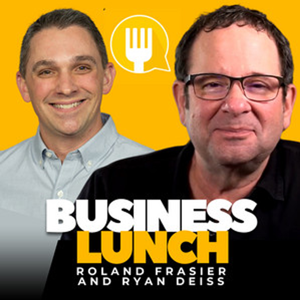


Ryan Deiss was recently featured on the Perpetual Traffic Podcast to talk about the future of marketing and conversion.
Marketing, at the end of the day, is the crafting and amplification of a message—and the crafting piece is more important today than it’s ever been.
We’ve been receiving so much positive feedback about adding Ryan as a co-host on Business Lunch. We recently featured Ryan on another one of our podcasts, Perpetual Traffic, about the future of marketing and some cool things happening at Scalable. (One of those cool things is Scalable Impact LIVE. Get your ticket HERE.) It’s a great episode to listen to as a leader and entrepreneur—and to have your marketing team listen to as well.
No one knows marketing like Ryan Deiss. Listen in as he chats with Perpetual Traffic hosts, Ralph Burns and Kasim Aslam, about what we can expect in the world of marketing in the weeks and months to come.
How Digital Marketing Has Changed in the Past Two Decades
Ryan has been in the digital marketing game since he was 19, and he’s almost 41. If you do the math, he’s been at it longer than he hasn’t. And he’s seen a lot of changes. When he first started, obviously there was no Google or Facebook or YouTube or TikTok. Over the first decade of his career, he watched it move toward marketers’ ability to target. There was this push when it was all about “right person, right time” (and the right message wasn’t as important).
In the past few years, we’ve seen a shift away from that. Things got harder, more expensive. It’s been fun with Facebook ads from 2007 to 2017. There was a new social channel coming out every other month. You could get in early, build your following. We watched influencers become celebrities.
But paid ads have straight up doubled in the past year. The average marketer has to spend more, and it’s only going to get harder. We peaked, we crested, and now we’re seeing a shift back toward digital marketer looking like mass media marketing. Our ability to get our message in front of the right person at the right time is slowly getting taken away from us—through competition, algorithmic shift, and being priced out.
With all this mass media, the message matters more now. It’s the message that reigns. There’s always going to be an edge if you’re really a student of this stuff. It’s really important as marketers that we own our message and become good copywriters again. Bad copy used to work if your timing was perfect. The message could be “want this thing?” People would be like, “I do!” And it was as easy as that.
Now? The sky isn’t falling exactly, but you have to realize that the 2015 playbook isn’t going to work in 2022. You have to build your own community, your own media brand. You need an email list, a podcast, a community of people invested in you and what you do.
The Best Message Wins
Roy Williams, one of Ryan’s mentors, is the author of The Wizard of Ads trilogy, which “everybody should read,” Ryan says. One of the fundamental themes is that the best message wins. Roy knows this because he’s done primarily mass media marketing, and there’s only so much targeting you can do through radio/TV. Roy always says, “The most valuable target is the untargeted target that you target through messaging.”
Why is this true? Because, the more targeting you bring into play, the higher the cost. The holy grail of marketing and advertising is the ability to craft a message, yell it out to the masses, and have people who didn’t even know they were in the market have their ears perk up. That is the greatest skill that has ever existed and will always work in marketing.
Ryan says there’s going to be an absolute...
In an interview with Roland Frasier, Marcus Lemonis, host of the hit TV show, The Profit, breaks down what really matters most in business.
Marcus was scheduled to speak at T&C 2020, but the event never happened. Roland and Marcus still had a chance to sit down and chat though, and this podcast episode revisits that brilliant interview.
And exciting news! Marcus will be speaking at Scalable Impact Live in Austin, TX on November 2-3, along with NFL Hall of Fame running back Emmitt Smith and Kendra Scott, who has had a billion dollar exit in her fashion brand.
Marcus is known for looking at the 3 Ps—people, product, and process—when he’s evaluating a business to invest in. When asked to break that down, he said it’s important to first establish the fact that this framework works for everyone. It’s an easy way for him to communicate with people on TV about how to think of their business differently. The application is universal.
Product, Process, People
These are the three things that matter in a business, but you have to rank them in terms of priority, Marcus says.
Product is the easiest one to think about. A relevant product or service is something everyone can understand. It’s got to be real time, digestible. It has to be able to change when the environment changes, and it’s got to be driven by the market, not your emotion.
Process is all about how you develop the idea, how you properly document it, build the case study around it, test it, roll it out to people, and continue to improve on it. Where a lot of companies die is that they don’t evolve, and you have to. Your process has to evolve and take into account new technology, trend changes, etc.
People are the most important. It’s easy to say you care about people, but Marcus has started to rev this up a little more recently. Start with yourself. You can’t respect other people if you don’t respect yourself.
2020 has been a crazy year. It has wreaked havoc and played tricks on people’s minds. We’ve lost a lot and need to take stock in who we are as individuals, family members, community people, and leaders. Then apply that to people who work with you, not for you. We get frustrated with people, and we change our tone. We have this mindset of you work for me, instead of you work with me. We can be collaborative and thoughtful and still be good leaders.
“I can go into any business and help them to think differently about themselves and other people,” Marcus says. “If you’re not capable of thinking differently, you shouldn’t be a leader.”
What Is So Attractive About Turn-Arounds?
The Profit is all about turning around businesses that are having challenges. What makes someone want to tackle something so difficult? Marcus says he’s always just been more at home with looking at things that are broken (processes, products) and really understanding it. “I’m more comfortable with things that are fractured,” he says, “because I like to be the guy with the glue who puts things back together.”
How does he decide when to help people and when to cut his losses? He says a lot of people think he’s crazy. “Why do you waste your time with knuckleheads?” people ask him. And he does it because of what other people learn while they watch him do it. He invests time in people to prove something to himself, to help others, and he knows it also resonates with the people watching. He wants to raise people’s self-awareness about their behavior.
How does he deal with people attacking him while he tries to help them? Well, that part isn’t much fun. When the cameras leave, those relationships don’t always work out. If they’re delusional about themselves, they usually don’t change. Don’t rely on the other person to dictate your behavior, he says. You...
A good leader communicates directly and truthfully without sugarcoating.
In today’s episode, co-hosts Roland Frasier and Ryan Deiss recount a recent leadership meeting of their central holding company, Scalable Equity. According to Ryan, the meeting was going “fine” until Roland “started yelling at this one guy out of nowhere.” Roland’s rendition of what happened is nothing like Ryan’s.
These differing perspectives caused Roland and Ryan to reevaluate things and ask some important questions like: How do you yell at people when they’re screwing up? How do you talk to people at an executive leadership level vs. your subordinates? Do we need to worry about people’s feelings? What’s the best way to deliver uncomfortable truths?
Listen in as they tackle a hard topic head-on.
Two Sides to the Same Story
Ryan gives his version of the leadership meeting first. Things were going fine. They were talking over their priorities. Then Roland started yelling about how they had goals that didn’t get met, projects that didn’t get finished on time. He was frustrated and let his feelings be known. Ryan said they were all frustrated, but he was still surprised that Roland came in with “guns blazing.”
Roland says Ryan’s characterization isn't accurate. He felt like the meeting was all BS. Everyone was being inauthentic and pretending to be this perfect image. He was surprised that people were faking fine.
From Roland’s point of view, it started with looking at one particular company’s financials. They received PPP money, and have a line of credit. The company had missed its goals by a fair amount, and the current month was tracking even worse. They’d made a lot of changes, but they were using PPP money that was supposed to be sacrosanct.
Roland says there had been rumors of people complaining about variable comp, and they needed to understand they were underperforming. A company called DigitalMarketer shouldn’t have a struggling marketing department. He loves them all, but they need to fix this, and the leadership team is responsible.
He says he wasn’t picking on one guy. He was talking to everyone. (He called this person after the meeting to clear things up.)
Sugarcoating vs. Being Real
Roland and Ryan discuss the whole “praise in public, reprimand in private” concept. They agree that yes, you need to be careful not to damage someone reputationally by coming down on them hard in front of others. But, in a leadership meeting, you need to be able to talk directly. It’s tempting to sugarcoat, but the longer you go without saying what you need to say, the harder it gets.
If you’re going to talk to a person about their performance (or lack of), that should be done in private. But when you’re talking about the company and saying, “Here’s where we’re falling down and here’s where we stand as a consequence of that, and that can’t continue and we all need to pull together and figure out how we’re going to help correct that,” you’ve got to be able to have that conversation with your leadership team. They don’t need to be beat up on or singled out, but they need to hear the truth and where the collective leadership is failing.
Roland said he didn’t make an emotional outburst; he delivered the facts intentionally in the way he thought would convey the biggest impact. He thought about the words he was using and chose to say “marketing” instead of a person’s name.
Ryan said he wished he would have known ahead of time that Roland was going to bring it up, so he could have been prepared. But he realizes that a leadership meeting is literally for discussing problems. If they’re not going to meet for real talk, then why are they even meeting?
He says a leadership team can’t be effective unless they can piss each other off and still move on from that. If you’re hyper-obsessed with not hurting people’s feelings, how will you ever get
Get the behind-the-scenes inside scoop on what went right (and wrong) at T&C 2021.
In today’s episode, co-hosts Roland Frasier and Ryan Deiss pull back the curtain and take a very honest look at what it’s like to pull together a huge conference not only during a pandemic, but when your celebrity guest pulls out at the last minute.
Before they share those details—and what you can learn from them—don’t miss the opportunity to be part of what’s coming up next. You’re invited to Scalable Impact Live on November 2-3, 2021. It’s an event like no other. Roland, Ryan, and Richard will be up close and personal, workshop style, teaching cool stuff, helping you network with amazing people, and getting actual work done. Register here TODAY.
Now listen in as the hosts describe a very intense three days at T&C.
A Last-Minute Scramble for a Celebrity Guest
Traffic & Conversion Summit celebrated its 10th anniversary in 2019. Then it got canceled in 2020 because of Covid. Roland and Ryan and their team had high hopes for T&C 2021, with fingers crossed that Covid would be a thing of the past. Their goal was 10k in attendance, a new T&C record.
Then, the week they announced the event—and celebrity guests Snoop Dogg and Martha Stewart—the Delta variant was all over the news. Their timing could not have been worse.
Then, on the first day of the event, Roland got a call that Snoop was sick and couldn’t make it. How were they going to deliver a great experience to their guests without him? They had to decide on the spot whether they’d cancel him altogether or keep him for next year. They decided to keep him. And had a day and half to find a comparable replacement.
Meanwhile, Ryan was having recurring nightmares and waking up in cold sweats about walking out to do the keynote at a sold-out event with no one in the audience. On the actual day, backstage, waiting to walk out, he had a near panic attack and texted Roland. (His keynote fortunately went great.)
Roland Gets the Job Done
Ryan is very impressed by Roland’s seeming unflappability in times of great stress. When Snoop Dogg canceled, Roland called in every favor he possibly could and came up with a list of 22 possible replacements. They narrowed it down to Gwyneth Paltrow and Magic Johnson and decided on Magic. Roland wrote the contract on his laptop on the way to the conference center.
That night he slept from 1am to 3am, because he had to cram on Magic interviews and his book, so he could craft a list of questions they’d be asking him (per his PR team’s requirements).
Ryan says Roland is suck it up, buttercup, and never looking for pity. He just gets the job done. When crap goes sideways, it’s a reason to sleep less, but not to give up. You make the thing every bit of what you promised it would be to the people who have invested their time and money to come.
Roland shouts out Martha Stewart for being a suck-it-up person as well. She had just gotten out of the hospital from surgery on her broken ankle. Her doctor told her not to move, but she wasn’t going to back out of the job she signed up for. She had someone helping her walk, but she showed up, and she delivered in a big way.
When Bad Things Happen, Freak Out for a Minute, Then Deliver
Not everyone can be as calm as Roland Frasier, but a good leader needs to stay calm enough to lead the team and make things right for the customers. Ryan noticed that some people on the team were able to do this and pursue solutions. Others seemed drawn to the...
Starting a new project is easy; finishing what you start is crucial.
If you want your business to grow and scale, you can’t just do one thing. But you also can’t just have a bunch of great ideas, start a bunch of projects, and never finish them. 80% done is zero.
In today’s episode of Business Lunch, co-hosts Roland Frasier and Ryan Deiss take an honest look at some of the struggles they’ve had lately in their multiple businesses. They talk through some challenges at DigitalMarketer in particular. Things haven’t been getting completed at the speed, frequency, and level of excellence they want them to.
The good news? They’ve had some hard discussions with their leadership team, and they’ve finally solved this challenge. But it has involved relearning lessons they’d already learned from past mistakes. If this happens to you too, you’re not alone.
One Team Takes One Thing at a Time from Beginning to End
It’s a classic mistake—trying to do too much with just one person or one team, stretching people too thin. This temptation is always present, but it never works out.
Roland and Ryan’s longtime friend, Carl White, talks about half-built bridges. Instead of building a whole bridge, you keep starting bridges. You put in tons of labor, and it’s worth nothing, because nothing is finished. It’s not that, if you get it to 80%, you’ll get 80% of the results. Nope. You’ll get zero results.
They’re not saying your business can’t do more than one thing at once. In fact, you have to, if you want to grow and scale. The iPhone doesn’t go away while Apple is developing the iWatch. But you have to acknowledge that one team can only take one thing from beginning to end at a time. When you have a team working hard on something, you can’t ask, “Hey, can you do this thing too?” Whatever gains you get on the new thing, you’re going to lose on the first thing.
What Roland and Ryan did to solve this was very simple. Each team stopped doing everything but this one thing. They tackled until it was done and it was great. Every piece of it. Then they moved on to the next thing.
So how do they solve for the long term? How do you start something new and keep the other things running?
Don’t Ask a 0 to 1 Person to Do a 1 to 10 Job
You have to know the difference between a “0 to 1” person and a “1 to 10” person. These are two totally different personality types. A 0 to 1 person takes a project from start to finish, but then they’re done, and a 1 to 10 person takes it from there. They run it, manage it, optimize it. And the 0 to 1 person starts something new.
One mistake they’ve made in the past: asking a 0 to 1 person to do 1 to 10 job in their spare time. A second mistake: giving the 0 to 1 person a team and hoping they can do both the launching of new projects and the maintenance of old projects. You wind up building a team of people who aren’t as talented as the 0 to 1 person. And, even more importantly, you’re asking a 0 to 1 person to be a manager. That’s not in their wheelhouse. They want to get things done quickly and correctly, not take the time to teach other people how to do it.
The bottom line: if you want to do multiple things at the same time, you need multiple 0 to 1 people.
What This Looks Like in Real Life
At DigitalMarketer, one of their portfolio companies, they’ve had marketing and products centralized for the longest time at the holding company level. Now that they’ve hired a general manager, they can begin to build a marketing team made up of “1 to 10” people.
They’ve also identified this at
What if you could sell less but make a bigger profit?
Sound too good to be true? Russ Ruffino, creator and founder of Clients on Demand, helps experts, coaches, consultants, and thought leaders do this very thing. In this episode of Business Lunch, Russ sits down with host Roland Frasier to talk about how he went from selling products that cost less than $10 to selling programs that cost $10,000 or more.
Russ started out in online marketing in 2011. After some affiliate marketing success, he realized the real money was in creating his own stuff. He bought everything he could afford on his bartender salary and started selling products at a really low price. It didn’t take long before he decided to flip the model on its head. Instead of selling thousands of copies of something that cost $7, why not sell a handful of something that costs $7k?
The Model Is Simple
Russ tried a massive experiment. He designed a funnel, found some committed folks to enroll in his program, and they got results. His income went from $20k/month to $200k/month as soon as he got it cranking. They scaled and scaled, and now they’re doing around $1.7 million/month.
He says his model is simple and elegant. It’s what’s left when you toss out everything extreme or unnecessary.
They run ads on YouTube and Facebook and drive traffic into a 40-minute webinar. On the webinar, they invite people to book a call. On the call, they book them straight into their high-ticket program. And that’s the same model they teach to their clients. Their program is 8 weeks long. On the back of that, they have a 1-year mastermind ($24k). Then they have a higher-level mastermind for $85k/year for people who want to go to multiple 7, 8 figures.
The vast majority of their clients are in the health space, relationship space, nutrition space, real estate space, NOT the business building space. They don’t want to create their own competitors.
Their ideal customer is anyone who can solve a major life or business challenge. They have to have something to teach people and an outcome they can help people achieve. One of their clients is a handstand coach. He teaches how to do a press up to a handstand, which is the holy grail of yoga/fitness people. Russ was skeptical at first, but it’s wildly popular and way more than just a handstand. There are a cascade of benefits—no back or shoulder pain for the rest of your life, literally being an inch taller—that make it well worth the high ticket.
What About Downselling and Outsourcing?
A lot of people believe you have to warm people up by starting with a low-ticket item, then move toward a high-ticket program. What are Russ’s thoughts on the value ladder concept? His method works without a warm-up. He’s filtering out people who aren’t willing to invest and commit, and getting right to the people who are.
He might be leaving money on the table by not having a downsell, but he doesn’t know what he’d even sell. He could do an information-only program without the support, but that defeats the whole purpose. It’s like giving a stick of dynamite to a kid.
About 95% of their enrollments come on the first call. They have 30-35 people a day reaching out to his company, and he has 5 people on the phones full-time. They watch the webinar, then book their appointment right after.
He says he hasn’t had much success with outsourcing sales. It’s difficult to find someone completely aligned with their values. They only make an offer to 80% of the people they talk to. They firmly believe...
There’s a lot of buzz right now about a surprising new privacy announcement from Apple and a “new” thing called the creator economy.
Of course you can count on co-hosts Roland Frasier and Ryan Deiss to have some thoughts about it all. Summer is over, and Roland and Ryan are looking forward to getting back into the normal groove of business, which they both love. Traffic & Conversion Summit is just around the corner. These are exciting times. And, hey, if you’re enjoying the podcast, take a minute to review it.
Today’s episode is a virtual smorgasbord of great topics, and they start off by discussing a recent article titled “The Year that Everyone Became a Creator.” The article essentially states that we have this creator economy right now and, as a result of that, anyone and everyone can be a creator, someone who is able to scale without permission.
There’s Nothing New Under the Sun
Ryan says this development—individuals thinking more like businesses—is a good thing. In the past, an individual putting themselves out there was a fairly limited business model. They’ve shown they can monetize their own stuff, but then go beyond that and leverage investments in other businesses.
His only problem is with the terminology. This idea of a creator economy, or even creators in general, is just a rebranding of the word “entrepreneur.” It’s not new. Sure, there are more opportunities right now, so we have more winners. But businesses have been doing this forever.
Like Roland says, it’s a reskinned version of an age-old thing. Ryan’s marketer side thinks it’s brilliant to rename a category, but the teacher in him warns us not to lose the opportunity of learning from all the models we have in the past.
Roland agrees. He’s a fan of reading the classics in business and finance and marketing. Like that Shakespearean assertion that there are only 7 plots in the world, all of this has been seen before. Don’t go out and read all the new books on becoming a creator. It’s called business.
What Goes Into Being a Business?
So, to break this down, what does every business need to do? Three basic things:
A lot of creators/influencers right now (on TikTok, etc.) are entertainers. There are no more gatekeepers. You don’t have to get on the radio or TV. You still need to have something you’re selling—a product or a service. Entertainment is a service. You still need distribution and monetization. And there are a lot of opportunities to cross-monetize your celebrity. A lot of people are now able to get into micro-funds, to micro-invest.
Roland and Ryan are developing a fund that will help small businesses. They’ll put their own money into it and raise money as well. It’s an example of creators investing in other creators and keeping small alive.
There’s a great opportunity to create your own network, like they’re doing with their podcast. It’s just eliminated the giant infrastructure with investment. Democratization is an overused word, but it’s appropriate. Don’t limit your monetization. Do all the things you’re doing but also make semi-passive investments in other companies. Diversify how you make money.
Is Our Privacy in Jeopardy?
The host switch gears for a bit to talk about something pretty important: your privacy. Apple announced recently that, in hopes of stopping child trafficking and abuse,
Build your business smart, and you can make a lot of money when you sell it.
In today’s episode of Business Lunch, host Roland Frasier sits down with John Warrillow, founder of ValueBuilder, author of three great books, and all-around good guy, to talk about building and selling businesses.
Each of his books is geared toward a different phase of your business. Built to Sell is for anyone feeling trapped in their business and shows you how to create a business that can thrive without you. The Automated Customer is for anyone looking for a recurring revenue stream. And The Art of Selling Your Business is for anyone on the last chapter of their entrepreneurial journey.
He also has an exclusive offer for Business Lunch listeners who want to apply the lessons from his latest book to their own businesses.
Listen in as Roland and John dig deep into how to build and sell your business well.
Building a Company You’ll Eventually Sell
John has a radio show called Built to Sell where he interviews a different entrepreneur each week about their exit strategy. He says there are a few dozen people out there playing at a higher level, out-maneuvering and outthinking the other side. They were the inspiration behind his most recent book. What tactics can we learn from these people? What mistakes can they help us avoid?
The biggest issue entrepreneurs face when they go to sell their business is: what do you want for it? John says if you put a super-high number out there, you’ll lose people before you even start the process. On the other hand, if your number is too low, you’re cheating yourself. There’s virtually no good answer to this question, but this is a decent one: “Hey, I’m a reasonable person. I’m happy to review any offer you think is reasonable.”
He tells them that he’s willing to look at an IOI (indication of interest) if they want to put that together. An IOI is not the same as an LOI (letter of intent). An LOI gives a specific price and includes a no-shop clause where you agree not to market your business to anyone else. That’s a dangerous document to sign. You’ve lost leverage. You want a process to try to get multiple bids from multiple people at a time.
The Importance of Building Your Own Media
A lot of Business Lunch listeners own ecommerce companies, and right now FBA (Fulfillment By Amazon) roll-ups are all the rage. They’ve raised over $1 billion in funds and hold workshops on how to get the most for your business. They create a deal flow mechanism—How to Sell Your Amazon Business—then go in and buy at low multiples. They’re like the fox in the henhouse. How would John advise someone who gets an offer from one of these groups to proceed?
He asks the question: who owns the customer? If Amazon is seen as the ultimate owner of the customer, and you’re a fulfillment house with a 3rd party product you sourced, you don’t have a direct relationship with the customer. This puts you in a weak negotiating position.
If you own the brand, the customer list, and you
You need a process for distinguishing a good idea from a great idea.
It’s fairly easy to tell the difference between good ideas and bad ones, but what about good ideas and great ones? As many people have said in a lot of different ways, sometimes the enemy of a great idea is a good idea. (For great ideas delivered to your inbox weekly, sign up for the Scalable Memo.)
Good ideas are a dime a dozen, and if you say yes to all of them, you’ll never have the capacity to try out some really great ideas. At a recent strategic planning meeting, Roland and Ryan sat down with their team to look at where they’re at as a company and where they’re headed. They felt frustrated that growth hasn’t been what they’d hoped of late.
They concluded that they’d been investing too much time and money into good ideas, instead of great ones. It was time to let some of those good ideas go. But how do you know when and how to do that?
Tweaking the ICE Model and Clearly Stating the Hypothesis
The ICE Scoring Model is helpful when deciding whether an idea is good or great. You rank your project on a scale of 1-10 in each of three categories: Impact, Confidence, Ease. Then you multiply the numbers to get the ICE score.
To make sure an idea is great, and not just good, Roland and Ryan have decided to go for a high score in all three categories, not just one or two. If something will have a high impact and is easy, but you don’t have confidence in it, it’s not going to be great.
They also decided to get very clear on their hypothesis from the beginning and put it in writing. A simple paragraph is fine. “We believe that, if we do the following, it will achieve this particular result. And we’ll know when x happens.”
Don’t just say, “We think that, if we do this, we’ll get more leads.” That’s not specific enough, and there’s no time frame. You need to know when to kill if something doesn’t work as quickly as you wanted. You need a system for identifying whether or not an idea lives up to expectations in a stated time frame.
Just because you have the capacity doesn’t mean you have to take on a project. If it’s not a great idea yet, let it bake.
Getting Your Employees to Think Like Owners
The theory is that the more we can help employees to think like entrepreneurs, to have an owner’s mindset, the more aligned we all are toward achieving our goals as owners. But how do you do that? How do you instill an entrepreneurial mindset in the people who work for you?
Ryan thinks most people are at one end of the spectrum or the other. They’re either a serial entrepreneur who’s always starting something new or someone who just wants a job where they clock in and out and do what they’re told. He doesn’t see many people in the middle.
One way to motivate employees to act like owners is to offer variable compensation (incentive on top of a base salary used to motivate and retain employees). But Ryan hasn’t seen that work. He thinks you either have that mindset or you don’t, and their company isn’t going to pay a salary at market rate and put variable comp on top of that. For owners, if there’s no money, there’s no paycheck. If lots of great ideas bring in lots of money, they get more. You can’t have your cake and eat it too.
When you’re interviewing, you look for people who take ownership of things. Ask them questions and see if they get responsibility and already take ownership of their lives. People with owner mindsets are going to make decisions for the good of the company, not just themselves.
Micro-Ownership as a Prerequisite to the Owner Track
There are two tracks: the employee track and the owner track. Instead of...
Learn the importance of systems when it comes to inside sales.
Before Neal Tricarico joined Scalable as Director of Sales, inside sales was one of the biggest missing pieces in the business. Scalable was born from a digital marketing company, and they didn’t have anybody on the phones. They were literally missing out on half the sales they could have made.
They snagged Neal from the Tony Robbins organization, and he brought his vast experience, impressive credentials, and his great personality with him. He has developed several systems that have proven wildly successful with sales teams, and he amped up Scalable’s inside sales in no time.
In today’s episode, he sits down with host Roland Frasier to share some valuable information with listeners, including exclusive access to his brilliant Sales Strengths Identifier (SSI). Whether you’re hoping to improve your inside sales—or get it started in your business—Neal has just what you need.
An In-House Sales Team vs. an Outsourced Solution
What are the pros and cons of hiring your own sales team vs an outside sales team? Basically, the biggest advantage to an outside team is a lower investment risk. And an internal team is more aligned with the culture and values of your company, which is a huge advantage.
Neal says that hiring your own team means your sales reps “have an opportunity to eat their own dog food.” They can experience what they’re selling. An outside sales team, on the other hand, has a potential disconnect from the products they’re offering. There’s no buy-in. They’re just doing their job.
What’s the First Step to Bringing Sales In House?
That first hire is most important. Scalable brought in Neal, and he brought in his own successful system. Then he recruited and hired sales reps who understand and work in that system.
If you’re just starting out, you’re looking for a player-coach, someone to roll up their sleeves, be sales rep #1 so they understand what’s actually happening on the front lines. They can build out the framework of success. Then you can scale and hire more reps.
Great. So, how do you find that person?
Neal believes there’s a confluence of science and skills. There are specific capabilities required. You can assess someone to see if they have those skills with The Sales Strengths Identifier, which Neal invented. It’s both data-driven and experiential, and you can match it with your interview process.
So, what are those strengths/skills?
Strength #1: Mindset
Mindset is the critical foundational step in this process. You need someone who has the ability to shift their focus from their own needs/wants to the client’s. Mindset-wise, you’ll never feel bad or smarmy when doing sales, because you know the value of what you’re offering exceeds the price. You’ll feel good about it the whole way through.
Strength #2: Rapport
You want someone who has the capability of establishing rapport with clients—and quickly. You have to earn your customer’s trust and respect as soon as possible. First impressions are huge.
You establish this rapport by focusing first on the client. Seek to understand before being understood. No old school small talk; that’s a turnoff. Instead, ask an open-ended question: What led us to this call today?
Strength #3: Diagnose Needs
A doctor who prescribes without diagnosis is guilty of malpractice. It’s the same with sales. When we pitch or present our solution before we’ve actually diagnosed the client’s needs, we’re guilty of malpractice. Your moral obligation is to conduct a gap analysis that helps the prospect...
From the publisher's feed

3,899 Listeners
16,852 Listeners
209 Listeners
2,202 Listeners
577 Listeners

4,458 Listeners
920 Listeners
733 Listeners

2,648 Listeners
210 Listeners
358 Listeners

958 Listeners
451 Listeners

931 Listeners

282 Listeners