
Sign up to save your podcasts
Or

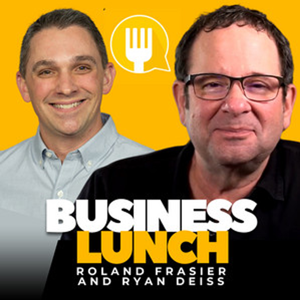


In This Episode of Business Lunch: Ryan and Roland discuss the best indicator of a business’s overall health. Although having different ideas, the common thread is observing trend-based results rather than dated numbers. They also talk about the importance of deeply understanding the growth capacity of a business before acquiring it and achieving the balance of having free distributable cash and future investment in R&D.
Chapters:
00:00 The Importance of Profitability Over Growth
03:09 Defining Business Health Metrics
06:00 Exploring Key Metrics: NPS and Revenue per Employee
08:51 The Case for Distributable Cash
12:10 Understanding Cash Flow and Business Health
14:48 The Shift Towards Profitability
17:55 Final Thoughts on Business Metrics
Connect with me on social:
Resources:
• 7 Steps to Scalable workbook
• Get my book, Zero Down, FREE
Mentioned in this episode:
Build Your CEO Dashboard
Get one report every week of the key metrics you need to know with the CEO Dashboard!
CEO Dashboard
In This Episode of Business Lunch: Roland Frasier breaks down simple, practical ways to grow by buying the right businesses.
He explains the difference between horizontal integration (buying competitors to grow fast) and vertical integration (buying suppliers, distributors, affiliates, or outsourced partners to capture more profit). He also talks about using acquisitions to add recurring revenue and smooth out seasonal cash flow, plus how buying intellectual property can spark innovation and create a competitive edge.
The core message: identify where money is leaking in your supply chain or distribution, find who owns it, and consider acquiring them.
Chapters:
00:00 Introduction
00:23 Vertical Integration Overview
00:47 Horizontal vs. Vertical Integration
01:31 Acquiring Suppliers and Manufacturers
04:30 Supply Chain Diversification
05:27 Acquiring Distributors and Retailers
06:44 Distribution for Digital Products
08:18 Recurring Revenue Strategy
09:27 Finding Recurring Revenue Opportunities
12:03 Intellectual Property Acquisitions
13:24 Benefits of IP Acquisition
14:01 Finding Intellectual Property
15:32 Conclusion
15:34 Outro
Connect with me on social:
Resources:
• 7 Steps to Scalable workbook
• Get my book, Zero Down, FREE
In This Episode of Business Lunch: Roland Frasier and Richard Lindner discuss Amazon's recent strategic shift in the grocery sector, focusing on the closure of Amazon Fresh and Go stores while expanding Whole Foods. They explore the implications of this move, emphasizing the importance of market expansion and capital allocation. The discussion delves into how businesses can identify customer needs for expansion, the critical decision of whether to build or buy new capabilities, and the operational strategies necessary for successful growth. They also highlight the significance of understanding internal capacity when pursuing new opportunities.
Chapters:
00:00 Amazon's Grocery Strategy Shift
03:03 Understanding Market Expansion and Capital Allocation
05:58 Identifying Customer Needs for Business Expansion
08:46 The Build vs. Buy Dilemma
12:10 Operationalizing Expansion Strategies
15:03 Evaluating Internal Capacity for Growth
Connect with me on social:
Resources:
• 7 Steps to Scalable workbook
• Get my book, Zero Down, FREE
Mentioned in this episode:
Build Your CEO Dashboard
Get one report every week of the key metrics you need to know with the CEO Dashboard!
CEO Dashboard
In This Episode of Business Lunch: Roland Frasier and Ryan Deiss discuss the evolving landscape of business in the age of AI, emphasizing the shift from task-oriented work to purpose driven services. They explore the implications of AI on job markets, the importance of customer experience, and strategies for business owners to adapt and thrive. The conversation highlights the need for businesses to focus on delivering value beyond mere tasks, ensuring they remain competitive in a rapidly changing environment.
Chapters:
00:00 Introduction to the Death of the Task Economy
01:51 The Shift from Task to Purpose
06:09 Understanding Jevons Paradox in AI
12:42 Qualitative vs Quantitative Work
20:47 Valuation and Purpose in Business
25:10 Transforming Services with Purpose
32:27 Customer Experience and the Future of Services
Connect with me on social:
Resources:
• 7 Steps to Scalable workbook
• Get my book, Zero Down, FREE
Mentioned in this episode:
Build Your CEO Dashboard
Get one report every week of the key metrics you need to know with the CEO Dashboard!
CEO Dashboard
In This Episode of Business Lunch: Ryan Deiss and Roland Frasier discuss the importance of reflecting on failures to extract valuable lessons for future growth. They emphasize the significance of distributions as a sign of a healthy business, the necessity of focusing on one task at a time, and the long-term value of content marketing. Additionally, they explore the mindset shift from viewing excuses as valid reasons to recognizing them as barriers to success.
Chapters:
00:00 Reflecting on Failure and Growth
03:10 The Importance of Distributions in Business
06:06 Prioritizing Tasks and Focus
08:50 The Value of Compounding Content
11:56 Excuses vs. Reasons: A Mindset Shift
Connect with me on social:
Resources:
• 7 Steps to Scalable workbook
• Get my book, Zero Down, FREE
Mentioned in this episode:
Build Your CEO Dashboard
Get one report every week of the key metrics you need to know with the CEO Dashboard!
CEO Dashboard
In This Episode of Business Lunch: Ryan Deiss and Roland Frasier explore the evolving landscape of personal branding and entrepreneurship, focusing on the concept of the 'Individual Empire.' They discuss the shift from being a creator to building a sustainable business, the challenges of content creation, and the importance of team building. The conversation highlights the need for systems and processes to scale effectively and the potential for individual empires to be acquirable in the future. Ultimately, they emphasize that building a business around a personal brand requires careful architecture and planning to ensure longevity and success.
Chapters:
00:00 Introduction to the Individual Empire Concept
02:32 Defining Personal Brands vs. Individual Empires
07:35 The Transition from Media to Brand Ownership
12:39 Bottlenecks in Content Creation and Audience Growth
18:46 Building a Team for Sustainable Growth
22:41 The Role of Trust in Consumer Relationships
24:26 Valuation of Individual Empires vs. Brands
29:59 Best and Worst Case Scenarios for Creators
36:08 Final Thoughts on Building Sustainable Businesses
Connect with me on social:
Resources:
• 7 Steps to Scalable workbook
• Get my book, Zero Down, FREE
Mentioned in this episode:
Build Your CEO Dashboard
Get one report every week of the key metrics you need to know with the CEO Dashboard!
CEO Dashboard
In This Episode of Business Lunch: Roland Frasier and Richard Lindner reflect on the challenges and triumphs of 2025, discussing the importance of making tough decisions, the role of AI in business strategy, and the lessons learned for the upcoming year. They emphasize the need for operational excellence, strategic thinking, and the importance of aligning business practices with customer needs.
Chapters:
00:00 New Beginnings: Reflections on 2025
02:58 Navigating Challenges: The Path to Q4 Success
05:54 AI in Business: Strategic Partnerships and Innovations
08:53 Building AI Agents: Transforming Business Operations
12:02 Lessons Learned: Adjustments and Realignments for 2026
14:52 Looking Ahead: Optimism and Opportunities for the New Year
Connect with me on social:
Resources:
• 7 Steps to Scalable workbook
• Get my book, Zero Down, FREE
Mentioned in this episode:
Build Your CEO Dashboard
Get one report every week of the key metrics you need to know with the CEO Dashboard!
CEO Dashboard
In This Episode of Business Lunch, Roland Frasier and Ryan Deiss reflect on the challenges and lessons learned from 2025, emphasizing the disappearance of confidence in business, the importance of profit over margin, and the transformative role of AI. They discuss the need for simplified processes, the significance of content as an asset, and the importance of building systems for predictability as they look ahead to 2026.
Chapters
00:00 Year in Review: Reflecting on 2025
02:58 The Disappearance of Confidence
05:53 Economic Indicators and Market Behavior
08:56 The Shift from Trust to Proof
12:03 Profitability Over Margin Percentage
14:53 AI as a Team Member: A Paradigm Shift
18:07 Transformative AI Applications in Business
23:52 Leveraging AI Protocols for Efficiency
30:10 Implementing Systems for Business Success
35:03 From Momentum to Inevitability
38:44 Rethinking Business Events and Resources
42:21 Simplifying Processes for Better Performance
Connect with me on social:
Resources:
• 7 Steps to Scalable workbook
• Get my book, Zero Down, FREE
Mentioned in this episode:
Build Your CEO Dashboard
Get one report every week of the key metrics you need to know with the CEO Dashboard!
CEO Dashboard
In This Episode of Business Lunch, Roland and Sarah dig into why most business failures aren't actually motivation problems—they're friction problems. They explore how accidental complexity in your systems quietly kills performance, why transparency in pricing beats "customized solutions," and how mapping out every step of a process reveals the hidden friction that's sabotaging adoption.
Sarah pushes back on whether removing friction just accommodates laziness, leading to a nuanced discussion about intentional versus accidental friction. They cover real examples from CRM adoption to project management tools to sales processes, and debate when systems should adapt to people versus when people should adapt to systems.
The core insight: if your strategy requires people to "try harder," your system is poorly designed. Includes practical advice on friction audits and why starting small beats trying to redesign everything at once.
Connect with me on social:
Resources:
• 7 Steps to Scalable workbook
• Get my book, Zero Down, FREE
In This Episode of Business Lunch, we unpack why the real power in AI isn’t the model itself—but the protocols wrapped around it. Even advanced AI systems still get things wrong 15–20% of the time, which makes unchecked automation a serious business risk. The winners aren’t chasing smarter models; they’re building structured decision systems that catch errors, manage leverage, and define when humans step in.
We explore how companies use tools like RAG and multi-layer “triple-check” frameworks to dramatically reduce AI error rates, why stabilizing decision-making must come before accelerating it, and how operating leverage—done right—can either amplify profits or protect downside. The big takeaway: well-designed AI protocols are becoming a new form of intellectual property, increasing predictability, transferability, and valuation by creating true founder-independent businesses.
In short, the future advantage isn’t faster AI—it’s better thinking systems.
Connect with me on social:
Resources:
• 7 Steps to Scalable workbook
• Get my book, Zero Down, FREE
From the publisher's feed

3,898 Listeners
16,852 Listeners
209 Listeners

2,208 Listeners
578 Listeners

4,458 Listeners

921 Listeners
733 Listeners

2,647 Listeners
210 Listeners
358 Listeners

956 Listeners

452 Listeners
931 Listeners

280 Listeners