
Sign up to save your podcasts
Or

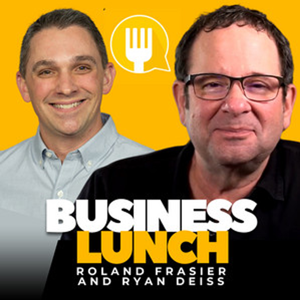


Roland Frasier and Ryan Deiss crack open the 2025 Forbes 400 and spot a seismic shift: 71% are now self-made, the cutoff is a record $3.8B, and the newest entrants aren’t entertainers or app celebrities—they’re infrastructure builders (data labeling, energy export, freight platforms, drive-thru formats). The guys lay out a practical framework—B.O.T. (Bottlenecks, Order Flow, Tools)—to find, buy, and scale the “unsexy” choke points where outsized wealth is created. Expect candid takes on ethics and regulation, tax advantages vs. complexity, and why tech alone isn’t a moat in the AI era.
Key Takeaways
Quiet wealth > spotlight wealth: New billionaires control choke points (permits, labeled data, logistics, power access) instead of chasing virality.
Tech isn’t the moat—distribution is: If you’re just a feature, the platform will build you tomorrow. Own users, data, or order flow.
B.O.T. framework:
Ethics & risk: Bottlenecks ≠ monopolies; add real value or get routed around. Order-flow plays invite regulatory heat—design accordingly.
Luck favors the paranoid: Nvidia’s rise = timing + category choice. Choose your competitor carefully; it defines your playing field.
Episode Highlights
00:00 – Cold open: dentists, numb faces, and a record-breaking Forbes 400.
03:10 – The stat no one’s talking about: 71% self-made, $6.6T total wealth, $3.8B cutoff.
08:20 – Why opportunity has more leverage than ever (AI + democratized tools), but tech alone won’t save you.
12:45 – B is for Bottlenecks: picks & shovels thinking; mini-moats in permits, medical transcripts, underground tank installers for data centers.
22:10 – Ethics check: bottlenecks vs. monopolies; how to add value without getting regulated to death.
27:05 – O is for Order Flow: Robinhood’s play, freight/dirt broker roll-ups, AI pricing/matching, monetizing spread & float.
36:40 – The toll-booth trap: if you don’t add value, the sides will route around you.
41:30 – T is for Tools: why toolmakers outlive trends; bundling niche AI devtools; the Nvidia, Intel, AMD cautionary tales.
53:10 – Choosing competitors = choosing categories; luck + timing still matter.
57:45 – Operator wrap: how to map your business to B.O.T. this quarter.
Memorable Quotes
“If all you are is a feature, you don’t have a business—you have a countdown clock.”
“Quiet wealth lives in the choke points everyone else ignores.”
“Bottlenecks aren’t monopolies—create value or the market will route around you.”
“Tech isn’t a moat. Users, data, and distribution are.”
Mentioned in This Episode
Forbes 400 (2025): $6.6T total; $3.8B entry; 71% self-made
Categories: Data labeling (Surge AI), LNG export (Venture Global), fintech (Robinhood), scaled drive-thru formats (Dutch Bros)
Playbooks: Broker roll-ups, AI matching/pricing, DevOps tool bundling, “picks & shovels” strategy
Cautionary tales: Regulation on order flow; platform envelopment risk; innovators’ dilemma (Intel vs. Nvidia/AMD)
🎧 Listen If You’re
A founder/operator hunting durable moats in an AI-copycat world.
An acquirer rolling up fragmented niches (brokers, trades, permits, data).
A strategic thinker shifting from product obsession to distribution & control points.
Connect
Hosts: Roland Frasier & Ryan Deiss
Podcast: Business Lunch with Roland Frasier
More: businesslunchpodcast.com
In this week’s episode of Business Lunch, Roland Frasier and Ryan Deiss continue breaking down the “Bottlenecks” framework—the 11 proven playbooks that billionaires use to grow, protect, and multiply wealth.
From AI-driven acquisitions to tax-optimized exits, this conversation dives into the strategies that separate ordinary entrepreneurs from long-term empire builders. You’ll hear how the world’s wealthiest think about capital allocation, scaling “boring” businesses, and structuring companies for massive, tax-efficient exits.
Whether you’re scaling your first venture or managing a growing portfolio, this episode is a tactical deep dive into how to think—and act—like a billionaire.
Key Takeaways
• Tech Is Not a Moat: With AI making innovation easy to copy, your real advantage is distribution and users.
• The QSBS Advantage: How the Qualified Small Business Stock exemption can eliminate up to $10M (or more) in capital gains per shareholder.
• DAFs & Charitable Strategy: Donor Advised Funds can combine tax savings with long-term impact—if structured correctly.
• Boring Businesses, Billionaire Results: Logistics, energy, and real estate can quietly create generational wealth when value is added and scaled.
• Capital Cycling: Why the world’s best investors (like Blackstone and Berkshire) act like banks—recycling capital and compounding returns.
Episode Highlights
[00:02:00] – Why tech is easy to copy—and why users, not code, create real enterprise value.
[00:10:00] – The billionaire tax play: how QSBS and DAFs legally minimize or eliminate capital gains.
[00:18:00] – When to start thinking about tax strategy (hint: usually not before $10M net worth).
[00:25:00] – Logistics, land, and “boring” businesses that create quiet fortunes.
[00:33:00] – The ESG arbitrage: adding sustainability to raise valuations.
[00:40:00] – Network effects and marketplace rollups: creating compounding flywheels.
[00:55:00] – The rise of “edge retail”: micro-brands, coffee chains, and inversion models that scale fast.
[01:05:00] – Capital cycling and other people’s money (OPM): how billionaires play the funding game.
Memorable Quotes
“If all you are is a feature that someone else could build, you don’t have a business—you have a countdown clock.”
“Boring businesses aren’t boring when they compound quietly into billions.”
“It’s not what you make—it’s what you keep.”
“Billionaires don’t think like operators; they think like capital allocators.”
Mentioned in This Episode
Listen If You’re
Connect
In this episode of Business Lunch, Roland Frasier and Ryan Deiss explain how the classic four-stage buying journey has collapsed into one moment—and why trust is the lid that keeps prospects “popping” in your pot. They unpack three forms of trust—Identity, Competence, and Proximity—with sharp wins and public flops (Nike, Sephora, Peloton, DSW, Starbucks, Apple, United). You’ll get simple creative frameworks to turn short-form content into instant, in-channel conversions and a 14-day sprint to prove it on a small budget.
HighlightsThree Trust Types (MAP mnemonic):
Competence wins & misses: Nike’s “Why do it?” repositioning; Sephora tutorials lifting AOV; Peloton’s 2019 holiday ad backlash.
Proximity plays: DSW AR try-ons; Starbucks barista TikToks; Apple retail specialists; cautionary tale—United Airlines viral incidents.
Localization tactics: regional currency/sites, geo-specific visuals (city skylines), and micro-influencers by market.
KPI effects: higher AOV/retention/loyalty from competence; higher LTV from proximity; employee posts driving outsized reach.
Timestamps🎧 Whether you’re in B2B services or retail, this playbook turns everyday posts into high-trust, one-step conversions—without celebrity budgets.
CONNECT
• Ask Roland a question HERE.
RESOURCES:
• 7 Steps to Scalable workbook
• Get my book, Zero Down, FREE
To learn more about Roland Frasier 👉 https://msha.ke/rolandfrasier/
Connect with me on social:
🎵 TikTok: https://www.tiktok.com/@rolandfrasier
📸 Instagram: https://www.instagram.com/rolandfrasier/
📱 Facebook: https://www.facebook.com/RolandFrasierPage/
💼 LinkedIn: https://www.linkedin.com/in/rolandfrasier/
Subscribe to Roland Frasier 👉 https://www.youtube.com/channel/UCkHnnFgdaTCg8KBd7W_LGSw?sub_confirmation=1
Mentioned in this episode:
Join Roland & Ryan at Get Scalable Live
If you’re a founder, CEO, or operator running a 7- or 8-figure business, Get Scalable Live was built for you.
This is not your typical business event. It’s 3 days of hands-on strategy, real-world frameworks, and next-level networking with the smartest operators in the game.
🗓 November 18–20, 2025
📍 San Diego, CA
🎉 Hosted by Ryan Deiss, Roland Frasier, and Richard Lindner
🎧 As a Business Lunch listener, you get 25% off your ticket.
Use code LUNCH at checkout.
Get Scalable Live
In this episode of the Business Lunch podcast, Host Roland Frasier and guest Richard Lindner break down the subscription trap and why recurring revenue isn’t always the ultimate solution it’s made out to be.
From the outside, subscription models look like a dream: predictable cash flow, higher valuations, and a business that doesn’t start at zero each month. But as Roland and Richard reveal, the reality can be far more complicated.
They dive into real stories from their portfolio companies, showing how recurring revenue can backfire through hidden churn, customer support debt, and endless innovation demands. You’ll hear how even big players like Netflix constantly battle to keep customers engaged, and why smaller businesses often underestimate the true cost of service.
This episode is a must-listen if you’re considering shifting to a subscription model—or if you’ve already launched one and want to make sure it’s sustainable.
HIGHLIGHTS
“Recurring revenue is great… until you’re losing more members each month than you know how to gain.”
“There’s voluntary churn, where people cancel. But the killer is involuntary churn—declined payments, expired cards—that can quietly eat your business alive.”
“If you’re creating content subscriptions, pair them with community. Access is the real value that keeps people sticking around.”
“Don’t fall in love with the model. Define your business by who you serve, not just how you charge.”
Mentioned in this Episode
The difference between breakage vs. consumption models (think Netflix vs. gym memberships)
Why AI in customer support is changing the economics of subscription businesses
How to tell if your business should pursue a bolt-on subscription or avoid it altogether
🎧 Whether you’re launching your first subscription offer or scaling an existing one, this episode will help you see beyond the hype and make smarter decisions for long-term growth.
Timestamps:
00:00 – Intro & The Subscription Trap
02:10 – Should Every Business Go Subscription?
04:58 – Understanding Churn & Retention
07:52 – The Innovation Challenge
10:23 – Cost of Service & Support Debt
13:35 – Smarter Models: Community + Content
19:31 – Key Questions Before You Launch
CONNECT
• Ask Roland a question HERE.
RESOURCES:
• 7 Steps to Scalable workbook
• Get my book, Zero Down, FREE
To learn more about Roland Frasier 👉 https://msha.ke/rolandfrasier/
Connect with me on social:
🎵 TikTok: https://www.tiktok.com/@rolandfrasier
📸 Instagram: https://www.instagram.com/rolandfrasier/
📱 Facebook: https://www.facebook.com/RolandFrasierPage/
💼 LinkedIn: https://www.linkedin.com/in/rolandfrasier/
Subscribe to Roland Frasier 👉 https://www.youtube.com/channel/UCkHnnFgdaTCg8KBd7W_LGSw?sub_confirmation=1
Mentioned in this episode:
Join Roland & Ryan at Get Scalable Live
If you’re a founder, CEO, or operator running a 7- or 8-figure business, Get Scalable Live was built for you.
This is not your typical business event. It’s 3 days of hands-on strategy, real-world frameworks, and next-level networking with the smartest operators in the game.
Event Link: https://business-lunch.captivate.fm/gsl
🗓 November 18–20, 2025
📍 San Diego, CA
🎉 Hosted by Ryan Deiss, Roland Frasier, and Richard Lindner
🎧 As a Business Lunch listener, you get 25% off your ticket.
Use code LUNCH at checkout.
Get Scalable Live
Roland Frasier and Ryan Deiss break down the “loyalty illusion”—why points and perks often backfire, how spreadsheet thinking killed customer love, and a practical framework to audit or rebuild a program that actually increases retention, spend, and referrals.
What you’ll learnCONNECT
• Ask Roland a question HERE.
RESOURCES:
• 7 Steps to Scalable workbook
• Get my book, Zero Down, FREE
To learn more about Roland Frasier 👉 https://msha.ke/rolandfrasier/
Connect with me on social:
🎵 TikTok: https://www.tiktok.com/@rolandfrasier
📸 Instagram: https://www.instagram.com/rolandfrasier/
📱 Facebook: https://www.facebook.com/RolandFrasierPage/
💼 LinkedIn: https://www.linkedin.com/in/rolandfrasier/
Subscribe to Roland Frasier 👉 https://www.youtube.com/channel/UCkHnnFgdaTCg8KBd7W_LGSw?sub_confirmation=1
In this episode of the Business Lunch podcast, host Roland Frasier sits down with Lucy Guo, a remarkable entrepreneur who made her mark in a short amount of time. Lucy takes us through her inspiring journey, starting from her early days as a kindergartener selling Pokemon cards and colored pencils to her groundbreaking roles as an intern at Facebook and the first female designer at Snap.
Lucy's shares how she leveraged platforms like PayPal and eBay to turn her skills into financial opportunities. Lucy and Roland delve into the topic of coding and its importance in today's landscape.
While Lucy acknowledges the rise of no-code tools, she emphasizes the value of understanding coding fundamentals, particularly when it comes to managing engineering teams and making informed decisions about app development.
This podcast episode offers a captivating glimpse into Lucy Guo's entrepreneurial journey, filled with valuable insights and lessons for aspiring entrepreneurs.
HIGHLIGHTS
"I was always an entrepreneur growing up... I was selling Pokemon cards and colored pencils for money."
"Knowing how to code is important... the best sites today and the best apps today, you still need a team of engineers."
“If you are just a business person and you are hiring a team of engineers, you're gonna get ripped off."
Join us as we delve into the dynamic world of executive leadership and pivotal moments of transition in this engaging episode of the Business Lunch podcast. Hosts Roland Frasier and Ryan Diess kick off with a lively banter, setting the stage for a deep dive into the complexities of being a CEO.
The episode features a detailed discussion on the stepping down of Bumble's CEO, exploring the nuanced reasons behind such significant career decisions.Throughout the conversation, Ryan and Roland offer insights into the multifaceted nature of executive roles, particularly focusing on the differences and responsibilities of CEOs and COOs.
They bring their own experiences into the discussion, providing listeners with real-world examples and practical advice.This episode is a treasure trove for anyone interested in the intricacies of business leadership, whether you're an aspiring entrepreneur, a seasoned executive, or simply curious about the dynamics of high-level management.
It's an insightful journey into what it means to lead, adapt, and grow in today's fast-paced business environment.Highlights:"I think that the most important thing is to be able to have a conversation with somebody and to be able to disagree with them and still respect them."“I want to know all the people I'm working with by name and you know, see how they're doing and know about their families and do barbecue.”“No one can run your business like you do.
Highlights:
"I think that the most important thing is to be able to have a conversation with somebody and to be able to disagree with them and still respect them."
“I want to know all the people I'm working with by name and you know, see how they're doing and know about their families..."
“No one can run your business like you do.”
Timestamps:
(0:00:00) - Considering Leadership Transitions
(0:14:17) - Consider Hiring CEO or COO
(0:23:07) - CEO vs COO and Hiring Specialists
(0:33:02) - Acquiring Successful Businesses Is More Effective
CONNECT
• Ask Roland a question HERE.
RESOURCES:
• 7 Steps to Scalable workbook
• Get my book, Zero Down, FREE
To learn more about Roland Frasier 👉 https://msha.ke/rolandfrasier/
Connect with me on social:
🎵 TikTok: https://www.tiktok.com/@rolandfrasier
📸 Instagram: https://www.instagram.com/rolandfrasier/
📱 Facebook: https://www.facebook.com/RolandFrasierPage/
💼 LinkedIn: https://www.linkedin.com/in/rolandfrasier/
Subscribe to Roland Frasier 👉 https://www.youtube.com/channel/UCkHnnFgdaTCg8KBd7W_LGSw?sub_confirmation=1
Welcome to a new episode of Business Lunch! Today, hosts Roland Frasier and Richard Lindner dive deep into a practical framework for optimizing business expenses—perfect for founders, business owners, and financial leaders. Whether you’re facing a cash flow crunch or simply want to boost your bottom line, this episode is packed with actionable strategies to help you identify, analyze, and cut unnecessary costs while maintaining business momentum.
Highlights:
"Every extra million dollars helps, every extra $100,000 a month helps."
"Profit dies by a thousand cuts, especially with forgotten subscriptions."
"Don’t wait for things to get bad to make things better."
"If you’re operating on a 25% profit margin, cutting $100,000 is like adding $400,000 in sales."
Timestamps:
00:00 – The Payment Terms Dilemma: Cash Flow vs. Sales Velocity
01:32 – Why Every Business Needs a Bottom Line Review
03:10 – Testing 12-Month Payment Terms: Results & Risks
06:24 – The Impact of GAAP Accounting on Revenue Recognition
08:40 – The STOP Framework: Where to Start Cutting
13:24 – Evaluating Team ROI: Scorecards & Underperformance
15:39 – Tools & Tech: The Hidden Cost of Subscriptions
18:59 – Operations & Overhead: Renegotiating Leases and Utilities
26:46 – The SAVE Process: Scan, Analyze, Verify, Execute
34:56 – Why Quarterly Expense Reviews Matter
CONNECT
• Ask Roland a question HERE.
RESOURCES:
• 7 Steps to Scalable workbook
• Get my book, Zero Down, FREE
To learn more about Roland Frasier 👉 https://msha.ke/rolandfrasier/
Connect with me on social:
🎵 TikTok:
/ rolandfrasier
📸 Instagram:
/ rolandfrasier
📱 Facebook:
/ rolandfrasierpage
💼 LinkedIn:
/ rolandfrasier
Subscribe to Roland Frasier 👉
/ @rolandfrasierepic
Welcome to a new episode of Business Lunch! In this episode, Roland Frasier and Richard Lindner take a look at the current trend of running businesses with ultra-lean teams, the role of AI in operational efficiency, and the real impact these choices have on business value and potential for acquisition. Whether you’re a founder, operator, or executive looking to optimize your team, scale profitably, or prepare your business for sale, this episode is packed with insights on balancing technology, human capital, and long-term growth.
Highlights:
"It’s a badge of honor to operate with as few people as possible."
"If you’re a lifestyle business, build a lifestyle business. If you’re building to sell, you’re selling the ability to execute."
"Trying to be lean in customer support is usually to give poor customer support."
"Small businesses that are overly lean are just not going to be as marketable as companies that have redundancies."
Timestamps:
00:00 – Introduction
01:05 – The Lean Team Trend: Entrepreneurs and the new badge of honor
02:44 – Three Business Models: Lifestyle, lean tech, and scalable teams
05:49 – Technology as Amplifier: Roles for tech and humans
08:13 – The Customer Support Cautionary Tale: $40M savings gone wrong
12:16 – Human Touch in Customer Service: Why empathy matters
15:45 – Transferable Value: The importance of cross-training and redundancy
19:28 – Critical Roles for Lean, Profitable Companies: Finance, marketing, sales, and tech
24:26 – Departmental Tech Specialists: Bridging humans and AI
30:16 – Digital Marketer’s AI Solutions: How to get started and who it’s for
CONNECT
• Ask Roland a question HERE.
RESOURCES:
• 7 Steps to Scalable workbook
• Get my book, Zero Down, FREE
To learn more about Roland Frasier 👉 https://msha.ke/rolandfrasier/
Connect with me on social:
🎵 TikTok:
/ rolandfrasier
📸 Instagram:
/ rolandfrasier
📱 Facebook:
/ rolandfrasierpage
💼 LinkedIn:
/ rolandfrasier
Subscribe to Roland Frasier 👉
/ @rolandfrasierepic
Welcome to a new episode of Business Lunch! In this episode, Roland Frasier and Ryan Deiss dive into the emerging trend of rolling up traditional businesses and supercharging them with AI. They discuss the opportunities and pitfalls of this strategy, offer advice for old-school business owners, aspiring platform companies, and investors, and share real-world examples of value creation through AI integration. This episode is perfect for entrepreneurs, business owners considering acquisitions, and anyone curious about the intersection of AI and business growth.
Highlights:
"Roll ups fail at the integration level, and the integration is really what systems do we have to do that?"
"If you don't invest in up-leveling and AI-fying your business now, you'll be acquired on the cheap."
"The basic building blocks of why you would do a roll up, applied with AI and tech, make perfect sense to me."
"If you're planning on just shutting it down or letting it die a slow and profitable death, then cool. But if it's longer than that, you either have to get on the bus or face being put out of business."
Timestamps:
00:00 Introduction
04:15 AI and Roll-Ups: Success and Failure
07:16 Advice for Old-School Businesses
10:30 Investor Strategy and Execution
16:05 Management and Systems for Roll-Ups
17:56 Investor Strategy: Mergers and Acquisitions
20:52 Value Addition through AI
CONNECT
• Ask Roland a question HERE.
RESOURCES:
• 7 Steps to Scalable workbook
• Get my book, Zero Down, FREE
To learn more about Roland Frasier 👉 https://msha.ke/rolandfrasier/
Connect with me on social:
🎵 TikTok:
/ rolandfrasier
📸 Instagram:
/ rolandfrasier
📱 Facebook:
/ rolandfrasierpage
💼 LinkedIn:
/ rolandfrasier
Subscribe to Roland Frasier 👉
/ @rolandfrasierepic
From the publisher's feed

3,898 Listeners
16,852 Listeners
209 Listeners
2,208 Listeners
578 Listeners
4,458 Listeners
921 Listeners
733 Listeners

2,647 Listeners
210 Listeners
358 Listeners
956 Listeners
452 Listeners
931 Listeners

280 Listeners