
Sign up to save your podcasts
Or

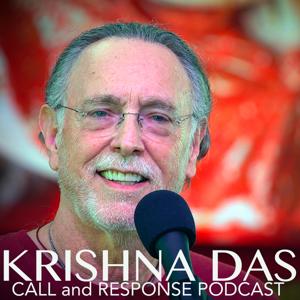

Call and Response Podcast with Krishna Das Ep 81 | Not Getting What you Want
“If you don’t allow yourself to feel that terrible disappointment and the pain of not getting what you want, you’re never going to move through it to get what you really want. You know, we can’t pretend that we don’t hurt. All of us hurt, that’s the deal. And we have to allow that to be in our lives. It’s a big part of being human, to allow that all the different kinds of suffering and pain, to allow ourselves to feel that. It makes us human and it bonds us with every other being on the planet, because we all suffer.” – Krishna Das
Q: Yes.
KD: Yes. Sir.
Q: Every morning I met, in the place that I go, I have five cats, seven peacocks, several dogs, several other animals, and they all have expectation that they’ll be fed. I try to temper my expectation. What do you say to that? Should I? Or should I expect what they always expect? Not necessarily to be fed kibble or whatever they get, meow mix, whatever, but should I always expect that things that I want to have or think about or whatever, is not expecting something a way to expect it?
KD: You mean, can you fool yourself? No.
Q: Yeah. In some ways…
KD: We can’t. We can’t really fool ourselves. Sometimes you just have to live with the fact that a particular thing you want, you won’t get. You know? Like, I wanted to be 6’8” 240 lbs power forward on a basketball team. But I was 6’1” 185, and that guy used to beat the shit out of me. So, I’m never going to be 6 ‘8” 240, no matter what I do. I had to live with that. And, in fact, you know, in my life, I really wanted to play basketball and I went to, I had a basketball scholarship to Brandeis and before my senior year, I ripped up my leg, ligaments in my right leg, and I didn’t get into shape in time and they took the scholarship back. I was destroyed. That was the only thing I wanted. I mean, I was playing music. I loved doing all that, but I was a basketball maniac and I was destroyed by that. My whole life changed that day that I ripped up my ankle, my leg. It was amazing And it was very painful. So, my friend and I were going to build a Harley. Back in the old days in the comic books, there was a little ad, you know, “Build a Harley Motorcycle.” So, we were going to get this kit for like $10, build a motorcycle and drive out to the West Coast and be lumberjacks. And the basketball coach for Stony Brook called me. It was his first year. His name was Herb Brown, Larry Brown’s brother. He called me, he said, “Hi, Jeff, whatchya doing?” I said, “Well, I’m going to go be a lumberjack.” He said, “Oh, don’t you want to play ball?” Yeah. So, I went to Stony Brook, which was great, because it turned out to be the drug and music capital of the East Coast. I played more games on LSD than any other drug. It was unbelievable. The coach used to have me come sit next to him in the front of the bus and he’d put his arm around me and he’d say, “It’ll be ok, it’ll be ok.” And I’d be, “Ok, ok.” It was amazing. So, you know, you have to live with it, you know. But if you don’t allow yourself to feel that terrible disappointment and the pain of not getting what you want, you’re never going to move through it to get what you really want. You know, we can’t pretend that we don’t hurt. All of us hurt, that’s the deal. You know. And we have to allow that to be in our lives. It’s a big part of being human is to allow that all the different kinds of suffering and pain, to allow ourselves to feel that. It makes us human and it bonds us with every other being on the planet, because we all suffer. And so, it makes you more human, you know? And then you look at other people and you see what they feel, and you can feel that. You can relate. And you know what a person’s going through and that makes you compassionate, without even pretending to be compassionate. You just automatically understand what that person in the street is feeling. And you see somebody yelling at somebody else with terrible anger and you know what that feels like, not only to the person they’re angry at, but what it feels like to be owned by that fierce passionate anger in your own heart that’s burning you alive. That’s just a part of being human.
KD: Hello.
Q: Hi. I wanted to ask you a question, since you lived in India. What is the difference between kirtans and bhajans?
KD: Well, you know, bhajans is usually a story, a song about a story, like something happened in the Ramayana or Krishna’s play, just like gospel songs, but kirtan is the repetition of the Name, only. I mean, more or less. You know, it’s India so anything is good. No problem. But, technically, one thing is one thing and another thing is another thing, you know? But yeah. So.
KD: HI.
Q: Hello. My name is Maura.
KD: Oh, really.
Q: How are you? I saw you the other night.
KD: I know, I’ve got you down.
Q: We were talking. We’ve been talking. I just was, you said the other night when you played with David, you know, you’re just two old Jewish guys playing in a band and I was curious how you feel or felt or where does your Judaism come into play for you.
KD: I’m about as Jewish as the pope.
Q: Ok. So, there is none.
KD: I also, I usually joke, I say, “I’m Jewish on my parents’ side.” I mean, culturally, I’m Jewish. I grew up in that culture to some degree, but you know, I mean, nobody in my family believed in God, believed that there really is something to find in the world other than fighting over the pope’s nose. Anybody know what the pope’s nose is? It’s the part of the chicken that goes over the fence last. That’s what they… at the table they would fight over that. You know, it was…
Q: You’ve sat with rabbis, I’m sure.
KD: You know, my grandparents were so good to me on both sides. Without them, I would be dead, you know. And I realized later that every other weekend, when I was sent to my grandparents’ house, that’s when my parents went to therapy. You know? So, I got all that wonderful love and caring and affection from my grandparents. Not that my parents weren’t loving, but my grandparents really… so culturally, there was, but you know, the other thing, they never talked about the holocaust. I never heard about it. And all of those people I grew up with, they had relatives there they never mentioned. So, it was interesting. But yeah, you know, and then, of course, my bar mitzvah. I was bar mitzvah’d, you know? So, we had the celebration at this place called the Club Jericho on Jericho Turnpike in Long Island. Really fancy. And by the end of the day, I had like $1,000 in checks in my pocket, people, all my relatives, gave me. My father comes up to me and says, “Give me the checks.” What? “Give me the checks. I have to pay for this.” That’s when Judaism went out the fucking window. Not one minute after that did I ever think I would want anything to do with this ever again. I was thinking of all the porn I could buy. I was 13 and I’d just became a man, so, what else do you do? No, you know, but, later on I came to appreciate it a lot more. I read a bunch of books about the Baal Shem Tov. The Baal Shem Tov was, I believe, was 16th century. He was an incredible saint. And you know what it means, Baal Shem Tov? It means, “The Master of the Good Name.” Hello? The Name. I don’t know, maybe he sang Sri Ram Jai Ram when nobody was looking. The Name, the Name. So, he was incredible. So, I had come to appreciate a lot of that mystical, but you know, I’m a one trick pony. I woke up in India. I always… this is what I do. This is what I am. You know? I can’t do anything else except some things.
Q: Hi. Can you hear me.
KD: Yeah.
Q: Ok. Thank you. I, maybe this is a little bit of a, you know, a for me question, but hopefully other people will appreciate it, too.
KD: Don’t have hope.
Q: I just want to acknowledge that we’re here in this space, like you had mentioned earlier, we’re here at Dharma’s place and I’ve seen you here before over the years, and I’m wondering maybe, if you could speak a little about your relationship with our teacher and if you want to share a story. Because I don’t really know much about it.
KD: Dharma and I have spent very little time together physically, really. We love each other very much but we don’t, it’s never been, we’ve never had a lot of time to spend together. He would invite me to come sing to the teacher trainees at the old place and I would love to do that. It’s just kind of, we kind of know each other and love each other but we just haven’t spent a lot of physical time together. And of course, all the yogic teachers that I know, the older generation, they all used to come to Dharma for teaching. They all learn so much from him. He’s not just a yoga teacher. He’s a yogi. There’s a difference. And he’s a wonderful being. Yeah. Good. Good Being. It’s really not easy to be that. You have to really be that to be that.
Ok. More?
Or we can sing a little bit.
Ok, yeah good. No, no. This is important. I don’t care if you don’t like it. It’s important to me. I go all around the world and I do this people all around the world and I want to tell you, they ask, it’s the same thing every time. Everybody wants the same thing. Everybody has the same issues, the same problems, a slightly different way of… the only place, two places… once, the first time I did a workshop in Zurich, they sat there like this for three hours. When the gong rang at three hours, they rushed me, and they all had questions. I said, “What’s been? For three hours, what have you been doing?” The other time was in Norway, ok. So, everybody, we had great singing, everybody was talking, there was one guy sitting like where you’re sitting, like this, the whole time. He didn’t move for three hours. And I thought, this guy’s a serial killer. What am I going to do with this guy? I’ve got to get out of here the minute I stop singing. So, I tried to get out, but everybody rushed the stage and they were waiting in line to talk to me and I saw he was like, in the line, so I was like smiling, “Hi, thank you, thank you so much.” And then the next one and all of a sudden, he’s there and he goes, “This was great!” All the sweat that I sweated for the first three hours was ridiculous. The guy, he was scary looking. This is why, we live in our own worlds, we’re projecting all the time on everybody else, you know. I don’t know who any of you are. A couple of you I might have some ideas. But basically, when I see you, you know, you’re playing your part in my dream, so I’m really playing your part in my world. Isn’t that incredible. So, when we talk like this we kind of bring the inside out and everybody can share so much of the same stuff. We’re all in the same place. We all want the same thing and we have all the same issues. So, I think this is great. And you came, so screw it, you’re dead. Where was it? Over there, yeah hi.
Q: Hi, I have a practical question.
KD: You’re asking me practical something?
Q: I probably should just email somebody, but it was exciting to ask you directly, and then I have a spiritual question if I get two for one.
KD: I’ll see if I can tell the difference.
Q: I sing with a few people in Knoxville, Tennessee. And it’s mostly bhajans for Ammachi, the Hugging Saint.
KD: Sure.
Q: And some Sai Baba bhajans, but I’ve been doing some Krishna Das in the mix and I always feel really guilty because I always think “Oh, you know, should I be paying somebody some royalties, like, if we perform?”
KD: 50 cents a mantra.
Q: Does it matter if it’s donation? Does it matter if there’s a fee?
KD: Nah. Come on. It’s all free. You just, when you buy a cd, you know, then I can pay my rent, other than that there’s nothing you have to do. Yeah, no problem.
Q: Thank you.
KD: They don’t punish you for singing my stuff in there?
Q: Everybody told me not to worry about it, but I’ve got a guilty conscience.
KD: I used to sing a lot for Ammachi here in New York when she came but I came once and there was a battle going on for stage time. There were like, a lot of people wanted to sing, and they were like, fighting with each other. I just took my harmonium and went home. I was just like, fine let them have it. What do I care? It’s crazy. The kirtan wallah wars I call them. One in World War Two, Kirtan Wallah War Two. Ok, go ahead. Now, your spiritual question. This is going to be great.
Q: It’s probably pretty standard. You tell a great story about willpower and when you learned about the need and purpose of it and I get that, and then there’s also an element of like, about surrender and I feel like I get that, as well, and what I have trouble with is when to do which and the balance between the two.
KD: Well, it’s not quite like that, at least as far as I can see. Surrender, real surrender means dropping the separate self, the sense of a separate self, the sense, the belief that you’re you and not that you’re, that you’re actually who you think you are. So, that surrender, being able to drop that and being able to merge into the oneness, and without willpower, there’s not the slightest possibility in hell that will happen. You just don’t drop it. You have to transmute it. You have to let it go. You have to give it away. You have to move it over. You have to look to see through it. You have to analyze it. You have to understand it. You have to see your motivations. You have to be good to people. You have to care about yourself and others. It’s really, it’s the whole path. Surrender is the goal. It doesn’t mean giving up your will to somebody else. It means dropping your separate self and merging with the whole universe. Dropping it, just letting it go. You think you can do that without willpower? No possibility. But we don’t even use our will well. You know? She’s referring to a story I told. What happened to me once, I was in the jungle with this very very old yogi. He was 163 years old. This was back in the 80s. He’s still alive, I hear. I haven’t seen Him for many years. So, we were sitting together, and he looked at me and he goes, and he said, “You have to develop,” he said in Hindi, “Iccha-shakti”. Iccha is desire, shakti is power. Icchashakti is willpower or the power to get what you want. And my thought was, “What do I need that for?” And then he went like, “oh,” and then he did something. He could read your thoughts. It was ridiculous, so then he did something inside of me. He showed me, inside of me, what he saw, and I went, “Oh.” I didn’t see that. And I saw myself. I was doing nothing. Nothing. I was floating. I wasn’t doing anything to help myself be happy, even. I was just, I wasn’t doing anything. It was a really dark time in my life. It was in the 80s. And I saw that I had chains around my own ankles and I wouldn’t let myself go after the things I wanted in life for so many stupid reasons, you know? Oh, I might not get it. What’ll they think. All that stuff. It was amazing what he showed me. And from that moment was life changing in many ways, and it kind of led, it was one step on the, on the path of getting, becoming, starting to sing with people. It was one move in the right direction. Our wills are really compromised by all the conflicting emotions that we have and all the conflicting desires and all the stories we tell ourselves about ourselves that we don’t like. So, we don’t, even when we use our will, our strength to go after something, the motivation for going after that particular thing is very confused. Very confused and it really doesn’t ever give us what we want, what we really want. And then, I saw, wherever that was, over there somewhere, I saw that there wasn’t worldly life and spiritual life. There was just me and my life and I was crippling myself in my daily life, my so-called worldly life. The life of my desires. How was I going to do something in the so-called spiritual realm? With no will, how am I going to calm my mind? It was the same will. There’s not two of me. There’s one of me. And if I wasn’t doing it over here, it wasn’t going to work over there, so it was very interesting. I had to start paying attention to myself in a different way. And you know, I think one has to find out that what one wants isn’t really what one wants, to some degree. You know, you have to live. You have to go for it. Even if it winds up that you just bash your head against the wall again at 100 miles an hour, because there’s no other way to learn. There’s no other way to find out that what you want, other than getting what you thought you want and finding out it wasn’t enough, or that it doesn’t last, or it’s not really what you want. It’s experiential. You can’t do it in your head. Maharajji sent me, after two and a half years, He looked at me one day, out of the blue as far as I was concerned and said, “Ok, go back to New York. You have attachment there.” What? What are you talking about? Forever I was going to live in India, you know? I had no plan to go back in my head, and now all of a sudden, I’m going back. He said, “You have attachment there.” I didn’t know what He was talking about. Hello. How are you, Mr. Attachment? Everything that happened to me, from that moment to this moment, is what He was talking about. I could not work through my stuff in India, in the way I was living in India at that time. And also, He was getting ready to leave as well. So that would have been very difficult to be there. So, He was telling me, I had to come back to America and deal with my stuff. It’s the only way to become free is to deal with it. There’s no fast track around it. It just doesn’t work that way. We misinterpret a lot of those things that we, oh, hello,
Where were we?
Willpower.
Yeah, yeah, so you know, He sent me back. I would have, first of all, I was so sick. I had every disease you could get. I had it. Hepatitis. All kinds of parasites. Every kind. I wouldn’t have lasted long in India and, but there was no possibility of me working through my stuff in India. It just wasn’t going to happen. So, He sent me back. And I guess I’m ok with it. Eventually, I’ll probably get with the program. I don’t know. You know, He knew what was best for me and He knows what’s best for me and I try to listen to my own heart because that’s how He speaks to me. He didn’t tell me to go back to America and sing with people. He never told me to do that. I had to recognize that this was what I needed to do for me. And this is what’s happened, you know? I didn’t plan this. It just happened. So, it must be ok. But willpower is a very interesting thing. One can use it for so many different reasons, but if it’s the ability to keep yourself moving in the direction you want to move, ultimately.
The post Call and Response Podcast Ep. 81 | Not Getting What you Want appeared first on Krishna Das.
 View all episodes
 By Kirtan Wallah Foundation

4.9
105105 ratings
Call and Response Podcast with Krishna Das Ep 81 | Not Getting What you Want
“If you don’t allow yourself to feel that terrible disappointment and the pain of not getting what you want, you’re never going to move through it to get what you really want. You know, we can’t pretend that we don’t hurt. All of us hurt, that’s the deal. And we have to allow that to be in our lives. It’s a big part of being human, to allow that all the different kinds of suffering and pain, to allow ourselves to feel that. It makes us human and it bonds us with every other being on the planet, because we all suffer.” – Krishna Das
Q: Yes.
KD: Yes. Sir.
Q: Every morning I met, in the place that I go, I have five cats, seven peacocks, several dogs, several other animals, and they all have expectation that they’ll be fed. I try to temper my expectation. What do you say to that? Should I? Or should I expect what they always expect? Not necessarily to be fed kibble or whatever they get, meow mix, whatever, but should I always expect that things that I want to have or think about or whatever, is not expecting something a way to expect it?
KD: You mean, can you fool yourself? No.
Q: Yeah. In some ways…
KD: We can’t. We can’t really fool ourselves. Sometimes you just have to live with the fact that a particular thing you want, you won’t get. You know? Like, I wanted to be 6’8” 240 lbs power forward on a basketball team. But I was 6’1” 185, and that guy used to beat the shit out of me. So, I’m never going to be 6 ‘8” 240, no matter what I do. I had to live with that. And, in fact, you know, in my life, I really wanted to play basketball and I went to, I had a basketball scholarship to Brandeis and before my senior year, I ripped up my leg, ligaments in my right leg, and I didn’t get into shape in time and they took the scholarship back. I was destroyed. That was the only thing I wanted. I mean, I was playing music. I loved doing all that, but I was a basketball maniac and I was destroyed by that. My whole life changed that day that I ripped up my ankle, my leg. It was amazing And it was very painful. So, my friend and I were going to build a Harley. Back in the old days in the comic books, there was a little ad, you know, “Build a Harley Motorcycle.” So, we were going to get this kit for like $10, build a motorcycle and drive out to the West Coast and be lumberjacks. And the basketball coach for Stony Brook called me. It was his first year. His name was Herb Brown, Larry Brown’s brother. He called me, he said, “Hi, Jeff, whatchya doing?” I said, “Well, I’m going to go be a lumberjack.” He said, “Oh, don’t you want to play ball?” Yeah. So, I went to Stony Brook, which was great, because it turned out to be the drug and music capital of the East Coast. I played more games on LSD than any other drug. It was unbelievable. The coach used to have me come sit next to him in the front of the bus and he’d put his arm around me and he’d say, “It’ll be ok, it’ll be ok.” And I’d be, “Ok, ok.” It was amazing. So, you know, you have to live with it, you know. But if you don’t allow yourself to feel that terrible disappointment and the pain of not getting what you want, you’re never going to move through it to get what you really want. You know, we can’t pretend that we don’t hurt. All of us hurt, that’s the deal. You know. And we have to allow that to be in our lives. It’s a big part of being human is to allow that all the different kinds of suffering and pain, to allow ourselves to feel that. It makes us human and it bonds us with every other being on the planet, because we all suffer. And so, it makes you more human, you know? And then you look at other people and you see what they feel, and you can feel that. You can relate. And you know what a person’s going through and that makes you compassionate, without even pretending to be compassionate. You just automatically understand what that person in the street is feeling. And you see somebody yelling at somebody else with terrible anger and you know what that feels like, not only to the person they’re angry at, but what it feels like to be owned by that fierce passionate anger in your own heart that’s burning you alive. That’s just a part of being human.
KD: Hello.
Q: Hi. I wanted to ask you a question, since you lived in India. What is the difference between kirtans and bhajans?
KD: Well, you know, bhajans is usually a story, a song about a story, like something happened in the Ramayana or Krishna’s play, just like gospel songs, but kirtan is the repetition of the Name, only. I mean, more or less. You know, it’s India so anything is good. No problem. But, technically, one thing is one thing and another thing is another thing, you know? But yeah. So.
KD: HI.
Q: Hello. My name is Maura.
KD: Oh, really.
Q: How are you? I saw you the other night.
KD: I know, I’ve got you down.
Q: We were talking. We’ve been talking. I just was, you said the other night when you played with David, you know, you’re just two old Jewish guys playing in a band and I was curious how you feel or felt or where does your Judaism come into play for you.
KD: I’m about as Jewish as the pope.
Q: Ok. So, there is none.
KD: I also, I usually joke, I say, “I’m Jewish on my parents’ side.” I mean, culturally, I’m Jewish. I grew up in that culture to some degree, but you know, I mean, nobody in my family believed in God, believed that there really is something to find in the world other than fighting over the pope’s nose. Anybody know what the pope’s nose is? It’s the part of the chicken that goes over the fence last. That’s what they… at the table they would fight over that. You know, it was…
Q: You’ve sat with rabbis, I’m sure.
KD: You know, my grandparents were so good to me on both sides. Without them, I would be dead, you know. And I realized later that every other weekend, when I was sent to my grandparents’ house, that’s when my parents went to therapy. You know? So, I got all that wonderful love and caring and affection from my grandparents. Not that my parents weren’t loving, but my grandparents really… so culturally, there was, but you know, the other thing, they never talked about the holocaust. I never heard about it. And all of those people I grew up with, they had relatives there they never mentioned. So, it was interesting. But yeah, you know, and then, of course, my bar mitzvah. I was bar mitzvah’d, you know? So, we had the celebration at this place called the Club Jericho on Jericho Turnpike in Long Island. Really fancy. And by the end of the day, I had like $1,000 in checks in my pocket, people, all my relatives, gave me. My father comes up to me and says, “Give me the checks.” What? “Give me the checks. I have to pay for this.” That’s when Judaism went out the fucking window. Not one minute after that did I ever think I would want anything to do with this ever again. I was thinking of all the porn I could buy. I was 13 and I’d just became a man, so, what else do you do? No, you know, but, later on I came to appreciate it a lot more. I read a bunch of books about the Baal Shem Tov. The Baal Shem Tov was, I believe, was 16th century. He was an incredible saint. And you know what it means, Baal Shem Tov? It means, “The Master of the Good Name.” Hello? The Name. I don’t know, maybe he sang Sri Ram Jai Ram when nobody was looking. The Name, the Name. So, he was incredible. So, I had come to appreciate a lot of that mystical, but you know, I’m a one trick pony. I woke up in India. I always… this is what I do. This is what I am. You know? I can’t do anything else except some things.
Q: Hi. Can you hear me.
KD: Yeah.
Q: Ok. Thank you. I, maybe this is a little bit of a, you know, a for me question, but hopefully other people will appreciate it, too.
KD: Don’t have hope.
Q: I just want to acknowledge that we’re here in this space, like you had mentioned earlier, we’re here at Dharma’s place and I’ve seen you here before over the years, and I’m wondering maybe, if you could speak a little about your relationship with our teacher and if you want to share a story. Because I don’t really know much about it.
KD: Dharma and I have spent very little time together physically, really. We love each other very much but we don’t, it’s never been, we’ve never had a lot of time to spend together. He would invite me to come sing to the teacher trainees at the old place and I would love to do that. It’s just kind of, we kind of know each other and love each other but we just haven’t spent a lot of physical time together. And of course, all the yogic teachers that I know, the older generation, they all used to come to Dharma for teaching. They all learn so much from him. He’s not just a yoga teacher. He’s a yogi. There’s a difference. And he’s a wonderful being. Yeah. Good. Good Being. It’s really not easy to be that. You have to really be that to be that.
Ok. More?
Or we can sing a little bit.
Ok, yeah good. No, no. This is important. I don’t care if you don’t like it. It’s important to me. I go all around the world and I do this people all around the world and I want to tell you, they ask, it’s the same thing every time. Everybody wants the same thing. Everybody has the same issues, the same problems, a slightly different way of… the only place, two places… once, the first time I did a workshop in Zurich, they sat there like this for three hours. When the gong rang at three hours, they rushed me, and they all had questions. I said, “What’s been? For three hours, what have you been doing?” The other time was in Norway, ok. So, everybody, we had great singing, everybody was talking, there was one guy sitting like where you’re sitting, like this, the whole time. He didn’t move for three hours. And I thought, this guy’s a serial killer. What am I going to do with this guy? I’ve got to get out of here the minute I stop singing. So, I tried to get out, but everybody rushed the stage and they were waiting in line to talk to me and I saw he was like, in the line, so I was like smiling, “Hi, thank you, thank you so much.” And then the next one and all of a sudden, he’s there and he goes, “This was great!” All the sweat that I sweated for the first three hours was ridiculous. The guy, he was scary looking. This is why, we live in our own worlds, we’re projecting all the time on everybody else, you know. I don’t know who any of you are. A couple of you I might have some ideas. But basically, when I see you, you know, you’re playing your part in my dream, so I’m really playing your part in my world. Isn’t that incredible. So, when we talk like this we kind of bring the inside out and everybody can share so much of the same stuff. We’re all in the same place. We all want the same thing and we have all the same issues. So, I think this is great. And you came, so screw it, you’re dead. Where was it? Over there, yeah hi.
Q: Hi, I have a practical question.
KD: You’re asking me practical something?
Q: I probably should just email somebody, but it was exciting to ask you directly, and then I have a spiritual question if I get two for one.
KD: I’ll see if I can tell the difference.
Q: I sing with a few people in Knoxville, Tennessee. And it’s mostly bhajans for Ammachi, the Hugging Saint.
KD: Sure.
Q: And some Sai Baba bhajans, but I’ve been doing some Krishna Das in the mix and I always feel really guilty because I always think “Oh, you know, should I be paying somebody some royalties, like, if we perform?”
KD: 50 cents a mantra.
Q: Does it matter if it’s donation? Does it matter if there’s a fee?
KD: Nah. Come on. It’s all free. You just, when you buy a cd, you know, then I can pay my rent, other than that there’s nothing you have to do. Yeah, no problem.
Q: Thank you.
KD: They don’t punish you for singing my stuff in there?
Q: Everybody told me not to worry about it, but I’ve got a guilty conscience.
KD: I used to sing a lot for Ammachi here in New York when she came but I came once and there was a battle going on for stage time. There were like, a lot of people wanted to sing, and they were like, fighting with each other. I just took my harmonium and went home. I was just like, fine let them have it. What do I care? It’s crazy. The kirtan wallah wars I call them. One in World War Two, Kirtan Wallah War Two. Ok, go ahead. Now, your spiritual question. This is going to be great.
Q: It’s probably pretty standard. You tell a great story about willpower and when you learned about the need and purpose of it and I get that, and then there’s also an element of like, about surrender and I feel like I get that, as well, and what I have trouble with is when to do which and the balance between the two.
KD: Well, it’s not quite like that, at least as far as I can see. Surrender, real surrender means dropping the separate self, the sense of a separate self, the sense, the belief that you’re you and not that you’re, that you’re actually who you think you are. So, that surrender, being able to drop that and being able to merge into the oneness, and without willpower, there’s not the slightest possibility in hell that will happen. You just don’t drop it. You have to transmute it. You have to let it go. You have to give it away. You have to move it over. You have to look to see through it. You have to analyze it. You have to understand it. You have to see your motivations. You have to be good to people. You have to care about yourself and others. It’s really, it’s the whole path. Surrender is the goal. It doesn’t mean giving up your will to somebody else. It means dropping your separate self and merging with the whole universe. Dropping it, just letting it go. You think you can do that without willpower? No possibility. But we don’t even use our will well. You know? She’s referring to a story I told. What happened to me once, I was in the jungle with this very very old yogi. He was 163 years old. This was back in the 80s. He’s still alive, I hear. I haven’t seen Him for many years. So, we were sitting together, and he looked at me and he goes, and he said, “You have to develop,” he said in Hindi, “Iccha-shakti”. Iccha is desire, shakti is power. Icchashakti is willpower or the power to get what you want. And my thought was, “What do I need that for?” And then he went like, “oh,” and then he did something. He could read your thoughts. It was ridiculous, so then he did something inside of me. He showed me, inside of me, what he saw, and I went, “Oh.” I didn’t see that. And I saw myself. I was doing nothing. Nothing. I was floating. I wasn’t doing anything to help myself be happy, even. I was just, I wasn’t doing anything. It was a really dark time in my life. It was in the 80s. And I saw that I had chains around my own ankles and I wouldn’t let myself go after the things I wanted in life for so many stupid reasons, you know? Oh, I might not get it. What’ll they think. All that stuff. It was amazing what he showed me. And from that moment was life changing in many ways, and it kind of led, it was one step on the, on the path of getting, becoming, starting to sing with people. It was one move in the right direction. Our wills are really compromised by all the conflicting emotions that we have and all the conflicting desires and all the stories we tell ourselves about ourselves that we don’t like. So, we don’t, even when we use our will, our strength to go after something, the motivation for going after that particular thing is very confused. Very confused and it really doesn’t ever give us what we want, what we really want. And then, I saw, wherever that was, over there somewhere, I saw that there wasn’t worldly life and spiritual life. There was just me and my life and I was crippling myself in my daily life, my so-called worldly life. The life of my desires. How was I going to do something in the so-called spiritual realm? With no will, how am I going to calm my mind? It was the same will. There’s not two of me. There’s one of me. And if I wasn’t doing it over here, it wasn’t going to work over there, so it was very interesting. I had to start paying attention to myself in a different way. And you know, I think one has to find out that what one wants isn’t really what one wants, to some degree. You know, you have to live. You have to go for it. Even if it winds up that you just bash your head against the wall again at 100 miles an hour, because there’s no other way to learn. There’s no other way to find out that what you want, other than getting what you thought you want and finding out it wasn’t enough, or that it doesn’t last, or it’s not really what you want. It’s experiential. You can’t do it in your head. Maharajji sent me, after two and a half years, He looked at me one day, out of the blue as far as I was concerned and said, “Ok, go back to New York. You have attachment there.” What? What are you talking about? Forever I was going to live in India, you know? I had no plan to go back in my head, and now all of a sudden, I’m going back. He said, “You have attachment there.” I didn’t know what He was talking about. Hello. How are you, Mr. Attachment? Everything that happened to me, from that moment to this moment, is what He was talking about. I could not work through my stuff in India, in the way I was living in India at that time. And also, He was getting ready to leave as well. So that would have been very difficult to be there. So, He was telling me, I had to come back to America and deal with my stuff. It’s the only way to become free is to deal with it. There’s no fast track around it. It just doesn’t work that way. We misinterpret a lot of those things that we, oh, hello,
Where were we?
Willpower.
Yeah, yeah, so you know, He sent me back. I would have, first of all, I was so sick. I had every disease you could get. I had it. Hepatitis. All kinds of parasites. Every kind. I wouldn’t have lasted long in India and, but there was no possibility of me working through my stuff in India. It just wasn’t going to happen. So, He sent me back. And I guess I’m ok with it. Eventually, I’ll probably get with the program. I don’t know. You know, He knew what was best for me and He knows what’s best for me and I try to listen to my own heart because that’s how He speaks to me. He didn’t tell me to go back to America and sing with people. He never told me to do that. I had to recognize that this was what I needed to do for me. And this is what’s happened, you know? I didn’t plan this. It just happened. So, it must be ok. But willpower is a very interesting thing. One can use it for so many different reasons, but if it’s the ability to keep yourself moving in the direction you want to move, ultimately.
The post Call and Response Podcast Ep. 81 | Not Getting What you Want appeared first on Krishna Das.

10,557 Listeners

373 Listeners
11,924 Listeners
2,635 Listeners
1,489 Listeners

638 Listeners

702 Listeners

266 Listeners

953 Listeners

12,783 Listeners
2,538 Listeners
3,724 Listeners

1,446 Listeners
1,368 Listeners

628 Listeners