
Sign up to save your podcasts
Or

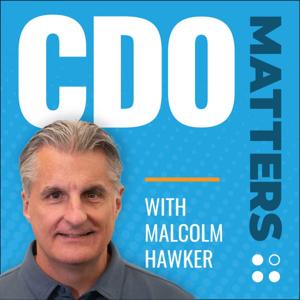


Do you have what it takes to be a Chief Data Officer (CDO) in today’s business landscape?
On the latest episode of the CDO Matters Podcast, Profisee Head of Data Strategy and former Gartner Analyst Malcolm interviews Justin Magruder, the CDO of SAIC Corporation. The conversation begins with a focus on his role as CDO as well as some of the major changes Justin has implemented within his organization to help SAIC become more data-driven.
This includes creating a data office center of excellence (COE) outside the IT organization that embraces a producer/consumer operating model — where it’s the job of the data office to provide data products that meet the needs of its consumers.
The data products — and core capabilities — are managed by a team of product managers within SAIC’s data office. Data serves as a primary focus where economies that efficiently share data are a top priority.
The discussion then pivots into Justin’s journey to becoming the CDO of one of the biggest technology services companies in the world. According to Justin, “For those who want to become a CDO, who aren’t already in technology, there is hope.”
In fact, Justin did not come from a background in technology, but rather as a Catering Service Manager at a large hotel in New York. Through a long series of choices always leading him back to data, Justin outlines a career focused on enabling companies to become more data-.
Data and analytics leaders who want to become a CDO — especially those without technology backgrounds — should be inspired by listening to this episode as Justin shares some of his keys to success. Justin stresses the importance of “communicating and collaborating” to anyone looking to transition into a CDO role.
Key Moments[1:25] The Role of the CDO in Modern Organizations
[5:37] Developing a Data Strategy
[9:42] Data Commonalities Across Industries
[12:03] Finding Purpose in Your Data
[14:46] Evangelizing as a CDO
[18:58] Treating Data Management as Product Management
[22:00] The Significance of Data Sharing
[25:02] Starting a CDO Career
[30:38] Important Characteristics of a Modern CDO
[35:20] The Importance of Communication for CDOs
Key TakeawaysSAIC’s Approach to Managing Data (4:15)
“We help businesspeople get the data they need to do their job — it’s as simple as that. What makes us successful at SAIC is that we’ve been able to govern the intake of data requirements from across the business using very common ‘voice of business’ type approaches, very agile methodologies.” — Justin Magruder
Implementing a Successful Data Strategy (13:11)
“What [a data catalog] is really about, we have learned, is automation — and how we build a framework where we can have this integrated environment and we can really find out the authoritative source for any given data point at any point in time…so it’s really been rewarding to see how the introduction of data strategy to a technology firm is beginning to have a positive impact on how we do business with our customers and the value we provide to them.” — Justin Magruder
The Importance of Data Sharing (24:30)
“We realized we can really supercharge some of the work we are doing for our customers if we can do this kind of integration and sharing of information. It turns out we don’t need three copies of the same thing. If we can learn how to share one, it would save us all time and money.” — Justin Magruder
Becoming a CDO (25:50)
“For those people who aren’t already in technology, there is hope [for becoming a CDO]. I started my career after college with a big Fortune 500 company in a management training program, the company was Marriott. I went through Marriott’s management training program and became a Catering Service Manager. How did I get here?...I wound up in New York City for a big hotel...and I began to question how we put together profit/loss statements for my department. I worked with the hotel’s Food and Beverage Director to look at the way we were calculating gross margin and things like that...he said I should go to business school and go into banking. I came out of business school and fell into a technical role.” — Justin Magruder
About Justin MagruderJustin is the CDO of SAIC Corporation, a $7.4B Fortune 500 technology integrator at the forefront of enabling the digital transformation of some of the largest government entities in the U.S. He is a pioneer and a thought leader in the field of data governance, master and reference data and data operations, with more than 25 years supporting data operations, leaders and decision-makers to improve business performance through better data management.
EPISODE LINKS & RESOURCES:Follow Justin Magruder on LinkedIn
Visit SAIC’s website
Our understanding of data and its role within a business isn’t the same as it was 20 years ago. As data leaders embark on a modern data strategy, it is important continually adapt to change while operating with agility.
Malcolm interviews Samir Sharma, the CEO and Founder of datazuum, a data strategy and analytics consulting firm. Samir and Malcolm discuss many of the more significant challenges facing Chief Data Officers (CDOs) as they pursue their strategic priorities, with Samir providing a trove of useful and highly pragmatic guidance for any CDO looking to meet both short-term and longer-term goals.
Early in the discussion, they dive into the unhealthy fascination data leaders have on implementing technology without first understanding the business problems it will solve. Malcolm and Samir also share CDOs need to clearly understand their organizations’ existing operating model and their level of data and analytics maturity, as both are critical in defining a data strategy roadmap.
Samir shares his framework for working with CDOs whose stated strategic goals require greater maturity but are often starting at ground zero — which involves taking an agile and pragmatic approach to testing the organization’s ability to provide short-term business benefits around certain data use cases within specific engagement models.
The conversation then shifts to the importance of the culture of an organization and how that impacts the ability of a CDO to deliver a data strategy. However, unlike more conventional approaches to delivering a data strategy that puts culture change as a dependency for CDO success, Samir makes a compelling argument to work best within the existing culture and find ways to deliver value and speak in a common language without requiring drastic cultural shifts. He outlines how developing a common language and a clear understanding of expected outcomes is key for allowing CDOs to work within the cultural constraints of a given business.
Data literacy programs come under the crosshairs of both Samir and Malcolm, where it’s posited that data literacy programs may often be a symptom of larger organizational dysfunctions. Rather than seeing data literacy as the solution, Samir makes a case for a broader focus on having CDOs and their teams more focused on developing knowledge of business processes and where those processes are architected — all with a deep understanding of the importance of data from the ground-up.
CDOs focused on defining or executing their data strategies will find this episode of CDO Matters particularly useful, especially those frustrated with the speed or effectiveness of their efforts. This episode makes a compelling case for a more agile, iterative and pragmatic approach to a data strategy that removes major dependencies — such as culture change or a focus on literacy — to one focused on adapting to any existing culture and operating model.
Key Moments[2:06] Top Takeaways from Big Data London Conference & Exhibition
[7:28] Focusing on Business Outcomes and Building Data Technologies
[11:35] Creating a Data Strategy
[14:32] Data Ownership and Domain Retention
[19:10] Business Maturity and Understanding Data Products
[21:10] Assessing Your Data Strategy
[28:44] Remaining Pragmatic and Operating with Agility
[31:31] Maintaining a Business Culture and Preserving Data Values
[36:11] Knowing Your Business Process
[38:06] Deconstructing Data Literacy
[41:10] Breaking Down Your Business Data Model
[42:52] Making Changes to Drive Value
Key TakeawaysBuilding Data Technologies (10:07)
“I think when I look at it, technology is easier than having to put together the notion of scratching your heads and wondering what you are going to do…I think this is just another iteration of the whole marketing movement for tooling…we had all of the various different terms that we were attempting to implement…all of those areas that which we’re trying to improve how we work, but why have we got all this stuff? Because the systems can’t integrate…we need to start with a data-focused view.” — Samir Sharma
Is Data Ownership Relevant? (14:31)
“I think it’s okay to talk about ownership from the perspective of an individual application. But when you start talking about domains that are used everywhere, it’s a horrible label…To me, the notion of ownership…not all data is created equally. I think the notion of ownership is misguided.” — Malcolm Hawker
Launching Your Data Strategy (21:48)
“There’s got to be a certain amount of standardization…a certain amount of proof of value that you can start to show stakeholders who are going to invest in this thing long-term. I think that’s one thing that many people forget. Before you go out and start thinking about centralization versus decentralization or a factory model or whatever you might want to have, you got to think about use cases…we want to prove value and we want to show how we can do it and want to show that early benefit to stakeholders.” — Samir Sharma
Promoting an Adaptable Data Culture (35:06)
“My view around culture is that there is one. We don’t need to disrupt it. What we need to do is get better at engaging with each other. We need to set a foundation of ways of working that will use business language and be able to talk to somebody about the outcomes that they are looking for.” — Samir Sharma
About Samir SharmaSamir is the CEO and Founder of datazuum, a data strategy, and analytics consulting firm. Advising businesses on how to prioritize data activities, identifying growth possibilities and using data to boost revenue and profit. His clients span the UK, Europe and North America while ranging from medium-sized firms to major multi-national corporations.
Prior to datazuum, Samir worked at Computer Sciences Corporation, Accenture, Christie’s and Vertex Business Services where he led the development of their data and analytics business. He writes on all things related to data strategy, roadmap development and how to execute the data strategy where he shares his experiences and lessons learned.
Samir is a frequent keynote speaker and hosts the Data Strategy Show podcast, which was named one of the Top 10 Podcasts of 2022, as well as leading Ask Me Anything events with top data executives.
EPISODE LINKS & RESOURCES:Follow Samir on LinkedIn
Listen to the Data Strategy Show podcast
Visit datazuum’s website
The world changed in March 2020. Public events and social gatherings took a backseat. As we recover from the pandemic over two years later, are we ready to attend large in-person conferences?
In this special 10th episode of CDO Matters, Malcolm becomes his own guest and takes a look into the future of in-person conferences through the lens of his experiences at four industry events this summer including an in-depth review of a celebrated annual conference, Microsoft Ignite.
Malcolm details the pros and cons of the conference. The highly anticipated event hosted 3,500 in-person attendees in Seattle, but over 200,000 online attendees around the globe. Most notably, the in-person attendees – many of whom came from overseas – paid thousands of dollars to attend while online attendees received free admission. Malcolm discusses the differences between the two experiences such as peer networking, vendor interactions, and expert advice. Was the in-person experience worth it?
He also discusses the incredible diversity of conference content – ranging from the desktop to the cloud and everything in between – being an additional challenge for CDOs seeking in-person networking and peer interactions. Unexpectedly, any data-related content that was available focused on data infrastructure, but not on people or processes supporting data management. The irony of a conference with little CDO-centric content or networking opportunities, but with a primary theme/track of “becoming data-driven” is highlighted in this episode. Here, Malcolm is forced to question the future of these events and whether in-person conferences remain relevant in 2022.
Despite a suboptimal experience in Seattle, Malcolm shares his firm belief that in-person conferences are still alive, and that creating a highly effective ‘hybrid’ event, based on experiences at other conferences he attended this summer – most notably the CDOIQ conference – is doable. There is a pent-up demand for conferences coming out of COVID-related lockdowns driving attendance, but more importantly at the right conference, there are still significant benefits CDOs can gain from in-person exchanges of insights and experiences that online events cannot provide.
Key Moments[2:07] The Role of the CDO and Why We Started the Podcast
[6:07] Audience Attendance
[8:52] Networking Challenges
[10:17] Presentation Style and Sensory Output
[12:37] Are In-Person Conferences Dead?
[14:02] The Future of Hybrid Events
[16:07] On-Site vs. Online Event Experience
[18:22] Discussions and Interaction
[20:07] Presentation Hubs and Breakout Sessions
[25:07] Conference Layout
[28:22] The Good and the Bad (What Worked and What Didn’t)
[34:27] Closing Statements
Key TakeawaysWhy the Podcast Started (1:33)
“We started this podcast because…what I saw in the market were really things that just weren’t working for CDOs…a lot of the same messages that we had been hearing for years. What I see less of is moving the needle: results. We know that CDO tenures are very short. Anywhere from two to two and a half years…when I look to the community of people, like myself, that are providing insights, providing best practices, providing the tips and tricks on how to be a better CDO, I saw very little derivation…yet businesses changed.” — Malcolm Hawker
Are In-Person Conferences Dead? (13:07)
“Are on-site, in-person events dead? Most certainly not. I went to four this year. I went to Ignite, the DGIQ conference in San Diego, the CDOIQ conference in Boston and I went to the Gartner Data and Analytics conference in September in Orlando and they were all full…there’s most certainly a demand for on-site events. Now whether this is a post-COVID phenomenon? I really don’t think so.” — Malcolm Hawker
In-Person vs. Online (16:07)
“Some people do actually enjoy interacting with vendors and being able to talk to others about their solutions. But if you don’t get the networking, if you don’t get to interact with vendors, if you don’t get the peer, one-to-one opportunities, then why would you attend in person? It would be really tough to justify spending thousands of dollars if you can do the exact same thing online”. — Malcolm Hawker
EPISODE LINKS & RESOURCES:Follow Malcolm on LinkedIn
Visit the Microsoft Ignite website
The data space isn’t what it was 20 years ago. As enterprises change the way they conduct business, we should also change our traditional approaches to data governance.
In his latest discussion, Profisee Head of Data Strategy Malcolm Hawker talks with Moxy Analytics CEO Laura Madsen to dive deeply into the topic of data governance and discuss Laura’s love/hate relationship with a field that can often defies logic in today’s modern data estates. Laura challenges many of the more traditional approaches to governance that are clearly not working for many companies — most of which have not changed fundamentally in decades. Laura makes a compelling case to “blow it all up” and start completely from scratch with approaches to data governance that are more scalable and adaptable to modern business needs.
Throughout the discussion, Laura takes aim at other data management gold standards, including what she sees as the absurdity of aspiring to a single definition for anything today. Laura advances the idea that data quality is not absolute and that striving for data quality standards that aren’t defined or measured is a fool’s errand. The discussion of data quality not existing without data governance — and vice versa — is an insightful exploration into the critical need to measure and define data quality metrics and standards. Laura highlights the paradox that having one without the other makes it impossible to know if you succeed at either quality or governance.
Laura highlights other data-related technologies as critical components to enable scale while also acknowledging they cannot “magically solve all of our problems.” The discussion concludes with a focus on the radical democratization of data, a concept that Laura believes is critical to breaking through old, unproductive patterns of data management. In this transition toward data democratization, Chief Data Officers (CDOs) will know they are on the right path when an environment exists for users to question the data, where those questions form the foundation for ongoing data improvements.
This episode of CDO Matters should appeal to any CDO who feels their data governance program is ill-suited to support their ever-evolving business needs. It should inspire CDOs to revisit their assumptions about data governance — and potentially motivate many to consider some radical changes to governance “business as usual.” Forget what you think you know about single sources of truth, data quality metrics or top-down approaches to governance — Laura Madsen challenges all of these concepts (and more) in this provocative episode of CDO Matters.
Key Moments3:18 The Current State of Data Governance
5:23 “I Hate Data Governance”
7:16 Data Governance is Broken
8:45 Illogical Approaches to Data Governance
10:13 Data Stewardship for A Different Era
11:38 Do We Need Centralized “Command & Control”
14:28 Don’t Rely on a Single Definition of Your Data
17:59 Data Quality is Not Absolute
20:23 It’s Difficult to Prove Governance is Working without Data Quality and a Metric
22:33 Leveraging Data Governance Technologies
25:50 The Radical Democratization of Data
28:11 Data Governance Starts with People
29:38 Data Governance is Change Management
30:28 The Gender Gap in Technology
Key TakeawaysThe Way We Think about Data Governance Doesn’t Make Sense (4:40)
“When I see something that is wrong or lacking logic — and I do think that a lot of the ways we think about data governance now lack logic in a modern data environment — I just tend to want to blow those things up. There’s a fair part of me that still struggles with data governance as a result…we’re still doing a lot of the [traditional approaches].” — Laura Madsen
Illogical Approaches to Data Governance (7:54)
“I never intended to write a book about data governance. That was never on my radar at all…I was building a modern data platform and I didn’t really care about the landscape. Fast forward, I leave that job…the thing that kept coming back to me was that data governance was the Achilles heel of most programs and our ability to deliver results.” — Laura Madsen
Data Governance for a Different Era (10:23)
“In a space where in the late 90s, most of our data warehouses were maybe a handful of tables…nothing in terms of the construct of data governance changed from the late ‘90s to when I Googled that definition in 2019. Two decades…why are we still doing the same things with data governance in the data space?” — Laura Madsen
The Importance of Context in Data Governance (15:40)
“In what reality do we want everyone to be operating on one definition of something?...I want you to look critically at what you are executing and what is not working…Let [data leaders] have different definitions…When it matters is when you want to have a better sense of management around [definitions].” — Laura Madsen
Focus More on Process, People and Culture than Technology (22:53)
“We [initially] had no tools in this space at all…Data catalogs are changing the game. They help you focus on usage to define your use case…more eyeballs on the data means better data…tools can help us with that, but they cannot solve all of our problems. These are all problems that can be solved with some thinking about process and people and the culture of an organization and way less focus on the technology.” — Laura Madsen
Closing the Gender Gap in Technology (32:53)
“If we’re not willing to face these things and have discussions about them, then we are never going to improve them…We have made improvements and I sometimes think we need to acknowledge at least that…but, we still have a long way to go…it’s intentionality. It’s making yourself uncomfortable, realizing you have some culpability there, and moving forward.” — Laura Madsen
About Laura MadsenLaura Madsen is the CEO of Moxy Analytics and the author of three books on the topics of BI/Analytics, Data Strategy and Data Governance. With over 20 years in the field, she is a leader in the data and analytics industry and has supported the definition and implementation of data strategies and analytics/governance programs at multiple organizations across the country. She's a selfless champion for diversity, inclusion and gender equity matters through organizations like Sistech. Laura is also a Halestorm fan, myth-buster, BS caller and has perfected the art of cynicism.
EPISODE LINKS & RESOURCES:• Follow Laura Madsen on LinkedIn
• Purchase Laura’s book, Disrupting Data Governance: A Call to Action
• Learn more about Sistech, the Sisterhood of Technology Professionals
• Visit Moxy Analytics’ website
When it comes to leading a successful business, it is crucial to remain data-driven. But being overly technical in your approach can often take away from the social needs of your enterprise.
Malcolm and Dr. Juan Sequeda focus primarily on four key topics: data as a product, the data mesh phenomenon, why data leaders are incorrectly focused on technology and how taking a more ‘social’ approach — as advocated by the data mesh — will deliver superior results.
Dr. Sequeda breaks down data-related technologies into three core principles that he argues have changed little over the last several decades. CDOs with more of a business or non-technical background will appreciate how Dr. Sequeda is able to distill the complexities of the modern data estate into a simplified model — and warns how various data management vendors continue to complicate by focusing too much on software tools and features.
While exploring ways for data leaders to extricate themselves from technology-first approaches, the two explore the growing trend towards data as a product and how CDOs can benefit from it. Dr. Sequeda shares his ‘ABC’ framework for approaching data as a product that CDOs from all backgrounds can quickly use within their data organizations.
Dr. Sequeda both challenges and acknowledges the benefits of data centralization during a discussion focused on how master data management (MDM) is still needed by all organizations despite the decentralized approach advocated by the data mesh. Ultimately, it should be no surprise that a noted scholar on knowledge graphs believes that context and semantics should drive more modern approaches to governance and MDM — where the context or use case of data ultimately determines what rules/policies should be defined rather than the data itself.
This episode of CDO Matters will help less technical CDOs understand the underlying data semantics and why the data mesh — most especially the ‘data as a product’ phenomenon — is worthy of consideration. Prioritizing efforts to integrate product management disciplines in data management — at both centralized and decentralized levels — will ultimately help data leaders to drive superior results by being more driven socially.
Key MomentsBridging Technology and Business for CDOs [5:05 — 6:03]
“I would say you need to have people on your team who can be those bridges…who will be able to fill that gap [between technology and business]. As a leader, you want to understand the overview of things, but you also want to feel empowered by having the best people around you.” — Dr. Juan Sequeda
Is Data Mesh a Software Category? [7:16 — 8:14]
“Data mesh is a social-technical paradigm shift, it is not something you buy… if somebody is selling you a data mesh, please run far away as fast as you can from that vendor because they are selling you B.S.” — Dr. Juan Sequeda
The 3 Principles of the Data Stack [15:06— 16:49]
“We talk about the modern data stack…look at the principles…here is this box and it has inputs and outputs. It is the three main boxes. One is the box that moves data. Data comes in, data comes out. Then you have another box where data comes in, questions come in and answers come out. That is your storage and compute…then you have another box where different questions come out. That is your analytics.” — Dr. Juan Sequeda
The Problem with Being Overly Tech-Focused [17:05 — 17:42]
“The issue here is that we have been defining success from a technical perspective, which is ‘my data is now in one place,’ but that was not the goal…define success from the social perspective about the needs of the business.” — Dr. Juan Sequeda
About Dr. Juan SequedaDr. Juan Sequeda is the Principal Scientist at Data.World and the co-host of the Catalogs & Cocktails podcast. Juan holds a Ph.D. in Computer Science from the University of Texas at Austin and is a noted scholar and researcher in the fields of semantic technologies, including knowledge graphs. He is a frequent public speaker at data and analytics conferences across the globe and is passionate about helping data leaders implement more modern and innovative approaches to both data strategy and data management.
EPISODE LINKS & RESOURCES:Successful companies don’t just withstand disruption, they find ways to innovate throughout technological change.
In this episode of CDO Matters, Malcolm interviews Dr. Cheryl Flink, an author and noted researcher in the field of human-centered design and social psychology.
Dr. Flink shares insights from her upcoming book, “Doing Well and Doing Good — Human Center Digital Transformation Leadership,” set to release in March 2023. She makes the case that digital transformation represents a fundamentally different way of operating, one that represents an optimal intersection of business, social and employee success.
She proposes that a successful digital transformation is one that prepares organizations to withstand — and even prosper from — the constant disruption of technology, where the delivery of human value is as important to financial value.
In addition to making a strong case for a human-centered focus within digital transformations, Dr. Flink also shares some of the keys to digital transformation success — most notably the need for a strong mandate from senior leadership — something many companies still struggle with. Having broad awareness and consensus around the ‘why’ of a digital transformation is the foundational level of a ‘scaffold’ approach to a framework for digital transformation that Malcolm discusses with Dr. Flink — outlined in more detail in her book.
Dr. Flink also makes the case for creating the corporate culture needed to allow for employees to feel safe to highlight imbalances between any of the various tensions that naturally exist within organizations — for example — between speed/agility and governance. The more balanced these forces are — and the more employee or stakeholder needs play an equal role to financial needs — the more human centered the approach will be. This is exactly what Dr. Flink sees as the optimal approach for long-term social and business success.
This episode of CDO Matters is perfect for those CDOs who have been tasked to execute a digital transformation strategy and who are looking for alternatives to more traditional program management approaches to these large-scale business initiatives. This episode explores how using more human-centered design approaches could optimize not only shareholder value, but also employee and social value. Dr. Flink makes a compelling case that ‘doing good and doing well’ is not only preferred, but increasingly required during a time of constant disruption and social scrutiny of business practices.
Key MomentsThe Significance of Human -Centered Leadership [5:40 — 6:50]
“Are we really thinking about how we create human value? Not just financial value...I think that in this human centered leadership world, it is about the ability to think through that calculus...We think about that human value as including two major components: one is the value we are creating for individuals and the corporations we work with and the other is for society at large.” — Dr. Cheryl Flink
Digital Transformation Defined [14:45 — 15:35]
“The ongoing process of strategic renewal that uses advances in digital technologies to build capabilities that refresh or replace an organization's business model, collaborative approach or culture. In other words, you are preparing the organization for the constant disruption of technology.” — Dr. Cheryl Flink
Transitioning to a Human Centered Data Organization [21:25 — 22:04]
“You cannot move forward with digital transformation unless there is a transformational mandate. Why are we doing this? If that ‘why’ is not clear…the organization is going to flounder. They have to know why in order to create directional alignment and commitment. Alignment is we know how we are going to get there and commitment is we are all going to band together to make this happen.” — Dr. Cheryl Flink
The Tension Between Business Innovation and Governance [26:00 — 27:25]
“When you think about these teams that are innovating, they are rewarded for taking risks...fast release of products. The seamless integration team is rewarded for protecting data...for making sure that what is produced integrates into the current platforms. I have to innovate and I have to have business continuity. So, one of the things that a leader, to create human value, has to do is really create psychological safety...and balance that tension. ” — Dr. Cheryl Flink
About Dr. Cheryl FlinkDr. Cheryl Flink is the former Global Vice President for the Center for Creative Leadership. She helped organizations around the globe find new market opportunities, improve revenue and cost drivers and create exceptional customer experiences by linking data, technology and analytics to strategy, product development and business execution. Dr. Flink is currently applying her lengthy career in data, leadership, and research to the area of human centered business transformation.
EPISODE LINKS & RESOURCES:It is one thing to adopt a data function for your organization, but it is another to build an entire culture around it! Data governance is an efficient way to standardize your critical data, but what if it enabled you to further grow your business?
In this episode of CDO Matters, Malcolm interviews John Moran, the Director of Enterprise Data Governance with Thermo Fisher Scientific — a $40BB publicly traded manufacturing and services company providing innovative products and solutions to research scientists around the globe. In his role, John is responsible for establishing and maintaining enterprise-wide data policies, standards and processes across domains, supporting customers and products in some of the most complex and regulated industries on the globe.
Throughout their conversation, Malcolm digs into how John’s team has helped create a culture of data governance at Thermo Fisher, turning a potential obstacle into a value-add for their business. Through the efforts of the data governance team, Thermo Fisher has developed a culture of data governance as a business enabler and not just a regulatory requirement. Even with a complex and fragmented environment of over 100 ERPs and other core business systems, John’s team delivers data governance value through a focus on three key pillars:
In other words, Thermo Fisher takes a “data as a product” approach to data governance to differentiate themselves from the competing product management companies. This is most certainly a valuable lesson for CDOs who are considering more product-centric approaches to managing their data — regardless of if they plan on monetizing data or not.
Another key takeaway for CDOs is the benefits Thermo Fisher has realized through effective prioritization of data governance efforts — which are a function of better listening, a deep understanding of how data drives business value and a focus on process analysis. In our near 30-minute conversation, John never uses the word “domain” to describe how they prioritize their understanding of business value — a key lesson for any CDO wanting to more closely align with their business instead of their data.
Key Moments[3:41] Keys to Data Governance Success
[5:40] Highlighting Customer Needs with Product Management
[10:00] Data Governance Prioritization
[12:18] Unlocking the Value of Data
[13:52] Taking a Business-centric Approach to Data Governance
[15:16] The Relation Between ERP Consolidation and Governance
[18:05] The Role of Thermo Fisher’s Data Governance Team
[19:10] Turning Back the Clock: Data Governance Takeaways
[21:10] Creating a Compelling Governance Message to Drive Value
[22:05] Business Literacy and Understanding Potential Value
[22:59] Shifts in Leadership
Key TakeawaysData Governance Obstacles [4:09 — 5:31]
“What I would say in terms of driving success...is that data governance can mean many things to folks. Sometimes they don’t conjure up the best images of things. You sort of have to get past that barrier...try to figure out where they are and meet them where they’re at. Get past the terminology and try to develop some common understanding of what data they are working with and what their challenges are.” — John Moran
Assembling a Strong Governance Team [13:52 — 14:44]
“What I really wanted were people who were ready, willing and able to learn… who have demonstrated the ability to grasp complex topics… because with data, especially product data, we are collecting and managing hundreds of data attributes and there is logic all over the place… People who were the most successful really understood the supply chain and what happened downstream and were able to explain that to other people…. We encourage our team to understand all of the downstream impacts [of data].” — John Moran
Benefitting from Governed Data [17:07 — 20:18]
“With so much data, if you treat everything with equal importance, you sort of lose your way...[You need to consider] what are the decisions we plan on making with governed data that we can't make today...and then connecting that and quantifying that…Then you are not talking about data governance for data governance’s sake, you are talking about enabling whatever that financial benefit is.” — John Moran
Communicating with Executive Leadership [21:25 — 22:04]
“[Process analysts] need to be able to speak the language that our executives speak: making money, saving money, reducing risk. If you can't connect [data efforts] to one of those three things, it's going to be hard to change behaviors.” — John Moran
About John MoranJohn Moran is the Director of Enterprise Data Governance for Thermo Fisher Scientific. He previously worked with Intuit before transitioning to his current position of 16 years. John is Six Sigma Black Belt certified in techniques and tools for process improvement.
EPISODE LINKS & RESOURCES:Your critical enterprise data should serve as a foundation for your business providing significant business value. So why not leverage this data for EVERYTHING it is worth?
In this episode of CDO Matters, Malcolm sits down with West Monroe’s Data & Analytics Strategy Innovation Fellow, former Gartner analyst and best-selling author Doug Laney to discuss the business value that can come from data. Doug’s book, Infonomics: How to Monetize, Manage, and Measure Information for Competitive Advantage, was selected by CIO Magazine as the “Must-Read Book of the Year,” a “Top 5 Books for Business Leaders and Tech Innovators,” and by the Wall Street Journal as one of its “5 Summer Reads for CIOs.” His latest book, Data Juice: 101 Real-World Stories of How Organizations Are Squeezing Value From Available Data Assets has received accolades from business, data, analytics and IT executives and practitioners around the world.
During their discussion, they touch on key data value topics including how to measure data as an asset within your organization, the overall state of data management, evaluating data context and reporting on the actual value that critical data brings. They go on to talk about alternative forms of data value (e.g., tokenized data, cryptocurrencies) and how the principles of his latest book apply to real-world business use cases.
The conversation closes with the two weighing in on what they believe the future will be like for enterprise data strategies before concluding on the importance of sharing data governance within your business.
**Stick around to the end of the podcast as Doug makes you a valuable offer you don’t want to miss**
Key Moments[4:53] The Importance of Info-nomics
[9:00] Measuring Data as an Asset
[12:23] The State of Data Management
[15:03] Evaluating Data Context
[19:33] Reporting on the Value of Data
[23:53] Alternative Data Values – Tokenizing Data & Crypto
[25:43] Applying ‘Data Juice’ to Real-World Use Cases
[31:03] The Future of Enterprise Data Strategy
[35:23] Sharing Data Governance
Key TakeawaysThe 3 Ms of Info-nomics: Measure, Manage and Monetize [6:51 – 8:55]
“With [CDOs], the role is still kind of being defined…it’s really about how to manage and leverage data as an actual asset. That’s really what’s at the core of what [CDOs] need to be doing to drive and prove value from data.” – Doug Laney
How to Measure the Monetary Impact of Your Data [8:57 – 9:55]
“The state of data management...I would give it about a five or maybe a solid six [out of 10] ...Getting back to the notion of measuring, what I would hear all the time from all the CDOs and CIOs…is that the impacts here from a data perspective are indirect.” – Malcolm Hawker
Improving the Data Process for Better Performance [10:24 – 11:20]
“We developed an entire metrics framework…that can be used to empirically track how improvements in various quality metrics and data governance indicators drive improvements in business process performance leading to revenue improvements, profit improvements, market share, risk reduction, etc.” – Doug Laney
Why Value Your Data? [17:06 – 19:10]
“Depending on why you want to value the data, whether you are trying to get investments or whether you are trying to justify the benefits of an analytic use case …there are a variety of reasons that you would want to value your data...the standards methods of evaluating any asset are the cost approach, the market approach and the income approach.” – Doug Laney
Reporting on Data Value [20:00 – 22:07]
“If data was a balance sheet asset, I think it would help some organizations and hurt others...there are certain things that you want to keep proprietary and out of the prying eyes of investors and competitors...If you could report on the value of your data, it might augment the evaluation of your company…Data is not a balance sheet asset according to accounting standards.” – Doug Laney
About Doug LaneyDoug Laney is a best-selling author and recognized authority on data and analytics strategy. He advises senior IT, business and data leaders on data monetization and valuation, data management and governance, external data strategies, analytics best practices and establishing data and analytics organizations.
EPISODE LINKS & RESOURCES:Follow Doug on LinkedIn
Doug’s Published Works:
When it comes to becoming an expert in the data space, it is important to discuss hot data topics with your peers and network with other professionals. For that reason, it is crucial for CDOs to strongly consider attending events like these!
In this episode of CDO Matters, Malcolm interviews Sanjeev Mohan. Sanjeev is a fellow former Gartner data and analytics analyst and is the founder of SanjMo, a professional services organization focused on helping organizations discover opportunities for market advancement and company growth through outsider insights into their data analytics, internal processes, customer feedback and competitors.
This episode of CDO Matters was recorded live at the 2022 CDO IQ Conference on the campus of MIT in Cambridge, Massachusetts. Malcolm and Sanjeev discuss their key takeaways and learnings from the sixteenth iteration of this annual conference focused exclusively on the needs of CDOs from across the globe.
This podcast helps CDOs better understand the benefits of attending this conference in the future, what sets this conference apart from others and what some of the top trends are within the data and analytics space discussed at the conference. CDOs will also appreciate some unique insights on the evolution of the CDO role, as reflected through the conversations with the many CDOs attending this unique conference. For CDOs looking to attend more industry events and seeking to build their professional networks, CDOs will better understand if the CDO IQ conference is the right fit for their business needs.
Key MomentsThe Expanding Role of the CDO (2:54–4:02)
“CDOs are getting much more tightly integrated with businesses...it is all about monetizing, democratizing and getting value out of your data.” - Sanjeev Mohan
How Product Management is Becoming Integrated with Data Management (4:42–5:29)
“On a high level, I think it is a really good trend. This trend towards product management in the data management space.” - Malcolm Hawker
The Value of the Entire Data Lifecycle (6:06-6:49)
“Data as a product has become so important...we think of its entire lifecycle.” - Sanjeev Mohan
The Unique Opportunity of the CDO IQ Conference (7:52-8:51)
“To me, [networking] is the highlight of this conference...these are the senior-level decision-makers with decades of experience....and just learning from them.” – Sanjeev Mohan
The Importance of Data Storytelling (17:46-18:44)
“It’s easy for technology people like us to say that we aren’t salespeople...but at the heart, it is being able to tell the data story.” – Malcolm Hawker
About Sanjeev MohanSanjeev is a former Gartner data and analytics analyst and the co-host of the It Depends podcast. He is also the principal and founder of SanjiMo, a professional services firm helping companies become more data-driven. As former Gartner analysts, Sanjeev and Malcolm spent time working together in the data space.
Episode Links and Resources:The first step to overcoming an obstacle or barrier is admitting the problem and building a base from which to grow. For women in data and technology, it is understanding the potential for change in which the gender gap continues to close.
In this episode of CDO Matters, Malcolm interviews the President and COO of BlueConic, Cory Munchbach. Cory is a fellow recovering analyst and runs one of the top Customer Data Platform, or CDP, solutions available in the market today. In her role, Cory is at the forefront of some of the biggest customer experience and digital transformation initiatives of many of the best-known brands on the planet.
During their discussion, the two focus on the role of women in technology and how we can improve on the many gender imbalances that continue to persist both in their companies, and society at large.
They also discuss the role of CDPs in the digital transformation landscape, and how those solutions differ from other customer-data management solutions – such as MDM or analytics platforms. If you are one of the 25% of CDOs tasked with executing your organization’s digital transformation initiative, this episode of CDO Matters will help bring you to a higher-level understanding of how CDPs ‘fit’ into a broader MarTech and IT technology stack, and the value they bring to the organization.
The conversation closes with a dialog around the possibility of a coming recession, and what CDOs and other senior leaders can do to best prepare for some form of economic slowdown. Cory shares her experience in working with major consumer-facing brands over the last recession, and how many ‘doubled down’ digital transformation investments as a means to improve customer relationships and drive competitive advantage.
Key MomentsThe Coexistence of CDPs and MDM (9:15-9:37)
“I would have conversations…with IT leaders...about this false perception that it was either CDP or MDM. My answer always was both.” - Malcolm Hawker
The Underrepresentation of Women in Technology (12:06-14:04)
“...this is much less of a tech problem and more of a social problem...we’ve always had an underrepresentation of women in technology, so there haven’t been enough people to go to battle for the kind of things that will make more women come.” - Cory Munchbach
Pay Transparency in the Workplace (15:38-17:08)
“If you have a certain role...then everyone in that role should be within that pay band...over time, your value for the organization grows and we don’t make a lot of adjustments for that internal expertise...” - Cory Munchbach
Responding to Economic Uncertainty (23:19-25:24)
“I am a big believer that you should plan for the worst and hope for the best...this should be transformational because it changes how you work...the thing that you need to have is the relationship with your customer.” - Cory Munchbach
About Cory MunchbachCory is the current President and COO of BlueConic. She previously worked as an analyst for Forrester supporting marketing technology and the former author of the Forrester ‘Wave.’ While being an early-stage startup investor and advisor, Cory also serves as a member of Chief – a private network designed for the most powerful women in executive leadership.
EPISODE LINKS & RESOURCES:From the publisher's feed

542 Listeners
476 Listeners

1,089 Listeners
582 Listeners
149 Listeners
112 Listeners
304 Listeners
145 Listeners
265 Listeners
9,071 Listeners
959 Listeners

10,190 Listeners
77 Listeners
2,017 Listeners

455 Listeners