
Sign up to save your podcasts
Or

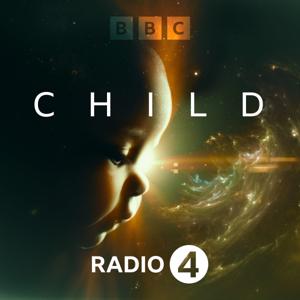


India explores the complicated world of nutrition with the help of Dr Emma Derbyshire. How much of the advice out there is crucial, and how much is just another stress on a new parent? And could the food we eat during pregnancy impact the future tastes of an unborn baby? Nadja Reissland shares her research.
Food is one thing, but what are we not exploring when it comes to our influence over an unborn baby? Child psychotherapist Graham Music and Consultant Obstetrician and Gynaecologist Christine Ekechi share some other significant factors that can impact a foetus.
Presented by India Rakusen.
A Listen production for BBC Radio 4 and BBC Sounds
Talking about pregnancy loss, miscarriage and unexpected news in pregnancy is difficult, not just for those going through it but for the whole society. But why?
India speaks to Clea Harmer, the CEO of the baby loss Charity Sands about the idea of what is and isn’t a person and how the law, science and our own feelings are at odds with each other on this topic.
We also unpick foetal testing and screening in pregnancy. What syndromes are tested for, and why? And what does this say about our approach to disability and the idea of risk? Dr Garath Thomas is a reader in social sciences at Cardiff University and has researched Down's Syndrome Screening and Reproductive Politics.
For details of organisations which offer support with child bereavement and pregnancy related issues, go online to bbc.co.uk/actionline.
Presented by India Rakusen.
A Listen production for BBC Radio 4 and BBC Sounds
What does it mean to suddenly take on this role, this mantle of ‘mother’. It’s a powerful world and it’s meaning has changed through time.
We speak to writer and science journalist Lucy Jones about the mind blowing experience of becoming one. Writer and historian Elinor Cleghorn about some of the most influential images of motherhood, and how they have shaped the role of women today, as well as artists Conway and Young about their search for alternative depictions of motherhood.
Presented by India Rakusen.
A Listen production for BBC Radio 4 and BBC Sounds
Ultrasound scans are an amazing window into a previously utterly mysterious world. Having one can bring a whirlwind of emotions, but they also provide a lot of important information for midwives, doctors and parents.
After going for her own 12 week scan, India speaks to Asma Khalil, Professor of Obstetrics and Maternal Foetal Medicine and Vice President at The Royal College of Obstetricians and Gynaecologists, as well as historian and medical writer Randi Hutter Epstein, about the role ultrasounds play in care.
But is there a side to them we are perhaps not exploring? Research midwife Dr Nancy Stone shares her findings on how multiple scans can impact the connection between a mother and the foetus.
Presented by India Rakusen.
A Listen production for BBC Radio 4 and BBC Sounds
Pregnancy tests are so easy to take at home, but that wasn’t always the case.
In this episode, India examines the moment of finding out you’re pregnant and what to do with that knowledge. Should we tell, or wait 12 weeks? And why wait 12 weeks when the first trimester can be so hard?
We meet our first pregnancy hormone HCG, and hear from Hetal Bopodra who experienced extreme sickness during three pregnancies. India also speaks to Joeli Brearley from Pregnant Then Screwed about the “motherhood penalty” and the sometimes thorny issue of telling work you’re pregnant.
Presented by India Rakusen.
A Listen production for BBC Radio 4 and BBC Sounds
All around the world, the placenta is revered in rituals - but in many places it’s mainly seen as medical waste. What is this incredible organ, who does it belong to and how does it feed, grow and protect a baby?
India Rakusen speaks to placenta expert Margherita Turco, before diving into the world of what the foetus is really protected from. When you become pregnant there’s a long list of things you apparently should and shouldn’t consume, but how much information are we given and what’s being left out? Philosopher Quill Kukla explains.
Presented by India Rakusen.
A Listen production for BBC Radio 4 and BBC Sounds
After that very first moment, when sperm meets egg - the life of a human begins to unfold. But how does that one cell begin to divide and differentiate into the billions of complex parts of a human being. How much do those very first cells know?
India Rakusen heads to a lab in Cambridge to look at a human embryo and speaks to leading cell biologist Magdelana Zernika-Goetz.
And a baby isn’t a baby without the people and the world around it. We speak to Child psychologist Graham Music and historian Elinor Cleghorn about how intertwined we are with our world, and the instant effects on the mother.
Presented by India Rakusen.
A Listen production for BBC Radio 4 and BBC Sounds
In this new look at the beginnings of life we tell the story of a child from fertilisation to first birthday through the lens of society, history, and science.
From the publisher's feed
Child returns for the next chapter of the story of all of us. Delve deep into the mind of a toddler and explore how our emotions and our selves are built through life experience.
381 Listeners

2,100 Listeners

2,033 Listeners

266 Listeners

1,163 Listeners
1,185 Listeners
127 Listeners

243 Listeners

58 Listeners
18 Listeners
57 Listeners

815 Listeners

323 Listeners

30 Listeners
102 Listeners