
Sign up to save your podcasts
Or

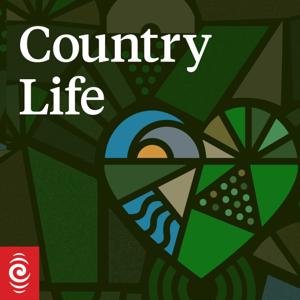


Country Life goes on the trail of the elusive whio at Blue Duck Station while learning about the efforts to conserve the history and preserve biodiversity.
On the back of New Zealand's $10 note, a native bird gracefully floats on the water.
This is the blue duck, a creature at the centre of Dan Steele's world, both figuratively and literally.
Listen to find out whether Country Life managed to find a Blue Duck
Blue Duck Station, situated where the Whanganui and Retaruke rivers converge in the North Island, is not just a working sheep and beef farm; it's a testament to Dan's dedication to preserving history, conserving wildlife, and creating a sustainable future.
It's a bustling enterprise with 6000 sheep, 700 cattle, and a small deer farm. Yet, beyond the daily operations, Dan's true passion lies in the conservation efforts that define the station's identity.
"I think when you're dealing with critical things like water quality and biodiversity, businesses have to take a lot of this on themselves," Dan, owner of the station, explains.
"Farmers own most of New Zealand, so farmers looking after New Zealand is a huge opportunity and is, in fact, very necessary."
The core of Dan's conservation philosophy revolves around the blue duck itself.
"The thought with the blue duck is if you look after the blue duck, you look after everything," he says.
"You look after water quality and trapping predators; you're looking after everything. If you look after them, you look after everything above as well."
To witness this commitment firsthand, Dan takes Country Life to a newly constructed wetland where Dan's conservation story unfolds.
The air is filled with the sounds of native birds, a testament to the success of the station's efforts in creating a sanctuary for wildlife.
"I love the diversity of the world. Anything that takes away the diversity of the world has to be questioned," Dan reflects.
"So the conservation journey for me is pretty natural. I'm just learning all about these things."
The history of Blue Duck Station dates back to post-World War I when the land was so formidable that many farmers abandoned their efforts.
Dan, however, saw an opportunity to meld tourism with the working farm to breathe new life into the challenging terrain. Activities such as horse trekking, bush safaris, fine dining, and jet boating have transformed the once-remote land into a thriving destination.
"It was too remote for a lot of people; the land was just too tough to break in and run anything profitably," Dan recounts…
Go to this episode on rnz.co.nz for more details
The soggy ground has put East Coast arable farmers behind schedule. Only about half this season's maize crop has been planted. Also, the Big Feed Rural Telethon has raised more than 639-thousand mince and milk meals for food banks round the country.
A round-up of the week's agricultural news with RNZ rural news reporter Sally Murphy.
The soggy ground has put East Coast arable farmers behind schedule. Only about half this season's maize crop has been planted. Also, the Big Feed Rural Telethon has raised more than 639-thousand mince and milk meals for food banks round the country.
Go to this episode on rnz.co.nz for more details
Country Life meets former dairy farmer Lance Gillespie, who's launching a kiwi style chicken trailer. Pasture-raised egg production fits with his interest in regenerative farming practices and, alongside the trailer business, he runs workshops to help other farmers improve their soil heath.
https://players.brightcove.net/6093072280001/default_default/index.html?videoId=6343043316112
Chicken caravans are good for the hens and good for the soil, says Lance Gillespie, a regenerative farming advocate.
Gillespie spent 20 years as a dairy farmer, milking 380 dairy cows at Āpiti in Manawatū, dabbling with the trailers on the side.
He's now on a much smaller block of land on the outskirts of Palmerston North importing, assembling and selling chicken caravans full-time after seeing the benefits the roaming chooks can have on farm.
Meet Lance Gillespie, chook trailer builder and regen ag advocate
"The first year I could definitely see where the chicken trailer was parked ... there'd be a nice green patch about three weeks later," he told Country Life.
The units, housing from 20 to 1500 birds, are solar-powered shelters, with sides that lift up. Their nesting boxes allow eggs to roll away onto a conveyor belt and lighting is managed to suit the chickens' laying pattern.
The chooks scratch around in the pasture for bugs, dispersing the dung of other livestock.
At the same time, they were fertilising the paddocks with their own poop and adding to farm production.
Gillespie said he had an uptick in inquiries after new restrictions on caged hens came in at the end of 2022.
Many people were wanting to get into the egg business perhaps as a joint venture with a land owner, offering consumers pasture-raised eggs.
"People are wanting to see and know where their food's grown these days."
Inspired by the Lunatic Farmer, Gillespie coaches others how to incorporate the caravans onto farms, orchards and lifestyle blocks.
He was now designing and building a version of the caravan better suited to New Zealand's windy conditions.
Gillespie also organises the Manawatū Regenerative Agriculture Group which hosts workshops and discussions for farmers interested in sustainable farming practices.
Taking care of the land had always been a focus for him but the need to take care of his mental health since leaving dairying has been a revelation.
Moving off the farm and not finding another suitable property for drystock farming was a struggle, he said.
"It's certainly been a mental challenge for me over the years to work out who I am now and what I have become."…
Go to this episode on rnz.co.nz for more details
Cam Booker is hoping a good crowd will turn up on Christmas eve to dig their own spuds and pick peas at his market garden in Sefton.
Cam Booker is hoping a good crowd will turn up on Christmas eve to dig their own spuds and pick peas at his market garden in Sefton.
Rain or shine, Cam and his wife Melissa have held the festive harvesting day for ten years at their North Canterbury property.
"For a lot of families now it's their tradition to come out here and pick peas and dig for Christmas potatoes," Cam said.
In the ground this year were the Massey and later maturing Greenfeast dwarf peas.
However, getting the yield plump and tender is being hampered by some hit and miss weather, he said.
"We do need some more heat to bring the Greenfeast on, as it's the main variety for the pick your own day."
Spud-wise, Cam normally grows Jersey Bennes for the Christmas market, but due to a shortage of Jersey Benne potato seed he's gone for the red-skinned Desiree and the Anuschka variety, that was bred in Germany.
"The relatively new Anuschka is an early season, yellow fleshed potato which is very good for boiling and roasting," he said.
The Booker's also grow strawberries, asparagus, sweetcorn, broccoli, cabbages, tomatoes, chillies and capsicums. Most of the produce is sold at local Farmers Markets and at the farm gate through an honesty box system.
Click here for details about the Christmas eve dig and pick your own day at the Grown Market Garden.
Go to this episode on rnz.co.nz for more details
When Geoff Crawford started trapping for pests on his farms, he was catching 70 possums a week. Now he's lucky if he gets seven...and the community have jumped on board too.
When Geoff Crawford started trapping for pests on his farm, he was catching 70 possums a week.
Now he's lucky if he gets seven.
While Geoff says he only started trapping 18 months ago, the self-proclaimed "townie's" journey into farming started a bit longer ago, at the ripe age of 17.
"I grew up in quite a poor area where we had four siblings. We were in a rural town and looked out over the farmland and I thought, well, 'that's what I want to be'," reminisces Geoff.
Listen to Geoff Crawford's journey to farm ownership, on Country Life.
Out of school, Geoff started work on a dairy farm, before he got an opportunity to take over a contracting business spraying weeds.
As a result, that catapulted Geoff to be able to move into farm ownership at the age of 20.
And he has never looked back. Now Geoff owns seven properties.
Over 30 years he's built a farming business of three dairy farms totalling 505 effective hectares and 1400 cows plus two beef-rearing and finishing farms integrated with the dairying.
As he stands on a high point of the farm, just outside Whangārei, he can reflect on the transformation that has taken place over 30 years since he first purchased it.
"The farm was rundown to start with. That helped with the decision-making, but we were very poor.
"A lot of the original fencing was secondhand materials."
The commitment to the environment is evident in the farm's rejuvenation. New pastures, fencing, native planting, drainage systems, and even a wedding venue now grace the landscape.
The farm's transformation is not just about aesthetics - it's a testament to Geoff's philosophy of leaving the land better than he found it.
As Geoff checks the pest traps with Country Life, he drives around acres of mature bush hugging multiple waterways that snake through the farm.
"We never had a plan on measurement," he says.
"We just fenced it for what we thought was right for the paddocks. It's really come up nice."
However, Geoff's commitment to the environment extends beyond the boundaries of his farm.
A staunch advocate for conservation, he initiated the Pest-free Parakiore Program, bringing together 30 to 40 neighbours to trap possums and mustelids, paving the way for the reintroduction of kiwi.
"We've only started trapping probably 18 months now. So we're starting to see the rewards," Geoff shares, highlighting the success of the community-driven initiative…
Go to this episode on rnz.co.nz for more details
This week on Country Life; A dairy programme in Sri Lanka is lifting rural communities out of poverty. Selina Prem Kumar and charity Tearfund set the programme up in 2009 and with help from Kiwi farmers, it's grown from helping eight farmers to five-thousand. Selina's been travelling around Aotearoa thanking the farmers for thier support.
"I was given a cow and taught how to make a shed", Pest control creates balance for Northland farmer, Yarn on the Farm and the Rural News Wrap.
Go to this episode on rnz.co.nz for more details
A dairy programme in Sri Lanka is lifting rural communities out of poverty. Selina Prem Kumar and charity Tearfund set the programme up in 2009 and with support from Kiwi farmers, it's grown from helping eight farmers to five-thousand.
"It's so cold here," says Selina Prem Kumar with a chuckle.
"In Sri Lanka the minimum temperature is like 24 or 23 degrees."
Selina is standing in a paddock near Ashburton. It's windy and showery.
She's wrapped up in a woolen shawl. A sensible replacement for her usual sari.
A small herd of Limousin cattle owned by Fred and Sandy Hoekstra graze around her.
Country Life is there to find out about a dairy farming programme Selina's set up in northern Sri Lanka with help from charity Tearfund.
Her goal is to lift rural people out of poverty after a 26-year civil war left thousands widowed, homeless and without livelihoods.
The programme gives people a chance to diversify their income away from rice farming, by creating small dairy herds.
"Most of the families couldn't go back to rice farming due to landmines, but dairying had always been the secondary income, so we thought, at that point in 2011, dairy can bring in quick money for them to start their lives again."
The programme is called Yugashakthi, which means guarantee and has grown from helping eight farmers to five-thousand.
The Hoekstra's are supporting the programme via Tearfund who assist the Yugashakthi programme financially through Kiwi donations.
Selina is meeting up with other donor farmers around the country too.
"I'm focusing on sharing the success story with all our supporters and the dairy farmers here, and I'm also learning by visiting farms," she says.
Every dollar people donate has been doubled by the Ministry of Foreign Affairs and Trade.
Selina says the help from New Zealand farmers is invaluable and not just financially.
"We have one New Zealand dairy farmer who videoed their day to day life and we use it widely in the training sessions, so everyone who has cows will see."
One of the first things needed to make the programme work was to recover cows that had disappeared into forests in the war zone, Selina says.
"As people ran for their lives, cows also ran for their lives.
"So we had to round up the cattle and bring them back and then we divided them up according to the tags they kept.
"But through this programme we've also given them cow loans and we have given cows to farmer groups and female farmers."…
Go to this episode on rnz.co.nz for more details
A round-up of the week's agricultural news with RNZ rural news reporter Sally Murphy.
A round up of the week's rural news with RNZ rural news reporter Sally Murphy
Go to this episode on rnz.co.nz for more details
A visit to the dairy shed to find out about AI and how to keep cows cool during El Nino.
Last week we explored the quiet wetland corner of Kaiwaiwai Dairies with one of its owners Aidan Bichan.
This week we're popping back in just for a moment to check out the business end of things with Bichan and farm manager Jon Cranshaw at the farm, situated in the lee of the Remutaka range in Wairarapa.
On a typical morning in the final days of a particularly unsettled spring, there were paddocks to be fertilised and cows in for mating, to ensure the milk keeps flowing all year round.
Go to this episode on rnz.co.nz for more details
Frank Erceg was victim of New Zealand's first helicopter hunting accident, but now his story, and that of the deer culling industry has come to life through his niece, Louise Maich.
Louise Maich has been on a decades-long journey to uncover the story of her uncle Frank as one of New Zealand's most prominent deer hunters of his era.
In 1965, at the age of 30 Frank Erceg had established a reputation as a prominent marksman and mountaineer.
Country Life caught up with Louise to hear about Frank and consequently, the history of the deer culling industry in New Zealand which features in her book, Finding Frank.
Listen to Lousie Maich on Country Life
"Frank was my uncle, he died when I was a pre-schooler, and my one lasting memory is scant and hazy.
"I grew up knowing very little about his life, he always appeared as a handsome adventurous uncle who died tragically, and of course someone I wished I had known," Louise says.
"He was a part of my family history, someone that I was driven to uncover and write about."
Frank and his fellow hunters had only the most basic equipment, she says.
"They had to know how to get through those mountain passes and get out of difficult situations.
"And they really did learn on their feet, they might have a rudimentary place to sleep, they may have made a little lean-to tent, they may have found what's called a dry rock and slept under that.
"They may have crossed a very trickling stream in the morning to go out for a day's hunt. And then the rain would come down, especially on the West Coast, and so that small stream that they crossed over in the morning ankle deep, was a torrent that they'd had to wade to get back over.
"So, they had nothing, they were on their own."
Frank and his friend Johnny Cumming were killed in New Zealand's first helicopter hunting accident, sending shockwaves through the tight-knit hunting community, Louise says.
"While dragging deer carcases to the craft, they came into contact with the rotary blades and both died instantly."
To listen to the RNZ podcast Deer Wars click here.
Go to this episode on rnz.co.nz for more details
From the publisher's feed

383 Listeners

4,819 Listeners

93 Listeners

283 Listeners

266 Listeners

109 Listeners

1 Listeners

1 Listeners

32 Listeners
1 Listeners

1 Listeners
42 Listeners

102 Listeners

1 Listeners

8 Listeners

7 Listeners

54 Listeners
4 Listeners
3 Listeners

0 Listeners

18 Listeners

31 Listeners
0 Listeners
4 Listeners

3,050 Listeners

836 Listeners

390 Listeners

175 Listeners
4 Listeners

2 Listeners
0 Listeners
3 Listeners
712 Listeners
2 Listeners

2 Listeners