
Sign up to save your podcasts
Or

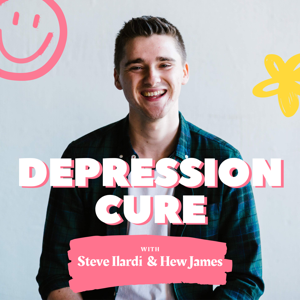


Anxiety is the most common mental health disorder in the world, (having recently overtaken depression in the last few years).
Yet, despite how widespread it is, there’s still a lot of misunderstanding about what anxiety actually is, what causes it and even what it feels like to experience it.
So, today we’re doing the podcast deep as part of our 101 Series to explore and validate why you — or someone you love — feels anxious, AND more importantly what you can do about it.
Along the way Steve and Hew answer questions like:
- Why do we humans get anxious?
- Is it ever helpful?
- How do we diagnose anxiety?
- What actually causes anxiety in the first place?
- And how do causes change the way we go about treating it?
Thanks so much for being here and we really hope you enjoy.
//
For show notes, supplement list and links to everything we talk about today please visit: https://mentalhealth.fm/episodes/anxiety-101-part-one
Support the show on Patreon at: https://www.patreon.com/mentalhealthpodcast
As we wrap up our Addiction 101 deep dive, we thought it would be a good time to share this extremely rare and insightful interview with a 70-year old member of AA who goes by the name of “Alan.”
“Alan,” is an alcoholic who turned to Alcoholics Anonymous for help over 40-years ago and has been sober ever since
In this episode, we ask about everything you’ve always wanted to know about AA including:
- Is it really like how the movies/TV shows depict?
- What actually happens at meetings?
- What is a sponsor and why is it an essential part of the program?
- Why is it anonymous?
- Can people be allergic to alcohol?
- And why AA has worked for so many people around the world.
//
For show notes, supplement list and links to everything we talk about today please visit: https://mentalhealth.fm/episodes/alcoholics-anonymous-podcast-interview
Support the show on Patreon at: https://www.patreon.com/mentalhealthpodcast
Welcome back to our 101 deep dive on addiction where we’re discussing the causes, cures and potential superpowers of this incredibly common mental disorder.
In part one we talked about the neuroscience behind why drugs and behaviours can hijack our brains in the first place and in this episode, we cover:
- How you can actually fight some drug addictions with other drugs
- Why 12-Step programs like AA are so powerful
- How willpower doesn’t work (and what we should do instead of white-knuckling)
- Healthy habits that help with addiction
- Sitting with our pain rather than trying to escape from it (Acceptance & Commitment Therapy)
- And the superpower addicts possess.
Thanks so much for being here and we really hope you enjoy.
//
For show notes, supplement list and links to everything we talk about today please visit: https://mentalhealth.fm/episodes/addiction-101-willpower-drugs-twelve-steps
Support the show on Patreon at: https://www.patreon.com/mentalhealthpodcast
Addiction is something that affects us all — whether it’s a close friend, family member or the person looking back at us in the mirror.
Plus with substance abuse at an all-time post-pandemic (not to mention the sharp rise of digital addictions like gambling, pornography and video games), addiction is no longer something that happens to “those people over there,” but rather a “normal” part of our modern culture.
But what actually is addiction? Why can our brains get addicted to stuff in the first place? And how can we find our way out of the vortex that steals so many hours, weeks and years of life in mild cases, and actual life in the extreme?
These are some of the questions myself and Steve wrestle with in today’s conversation alongside:
- Why did humans evolve to have addiction-prone brains?
- How does addiction hijack our neurochemistry?
- Why do drug addictions get more attention than some of the behavioural addictions stampeding through our culture?
- What role does dopamine and D2 receptors play in this process?
- And whether or not genetics can tell us the full story.
Thanks so much for being here and we really hope you enjoy.
//
For show notes, supplement list and links to everything we talk about today please visit: https://mentalhealth.fm/episodes/addiction-101-how-drugs-behaviours-hijack-our-brain
Support the show on Patreon at: https://www.patreon.com/mentalhealthpodcast
Welcome back to our deep dive on the causes, treatments and potential superpowers of Attention Deficit Disorder, more commonly known as ADHD.
In part two, we talk about:
Practices that lead to deep work and extreme focus
Thanks so much for being here and we really hope you enjoy.
//
For show notes, supplement list and links to everything we talk about today please visit: https://mentalhealth.fm/episodes/adhd-101-how-to-focus-part-two
Support the show on Patreon at: https://www.patreon.com/mentalhealthpodcast
Today we’re launching our brand new ‘101 Series’ where each episode we’ll be taking a deep dive into causes, treatments and potential superpowers for some of the most common mental disorders on the planet.
To start off, Steve and I explore the world of ADHD (Attention Deficit Disorder), including:
Some of the most famous/successful people throughout history with ADHD
The difference between inattention and hyperactivity
Social and relational drawbacks of the disorder beyond the classroom/workplace
What’s going on in the brain of somebody who has ADHD
And why people with ADHD have the ability to hyperfocus (including how you can tap into that!)
Really hope you enjoy and be sure to subscribe on your favourite podcast platform to be notified when we drop part two next week.
//
For show notes, supplement list and links to everything we talk about today please visit: https://mentalhealth.fm/episodes/adhd-101-how-to-focus-part-one
Support the show on Patreon at: https://www.patreon.com/mentalhealthpodcast
Today we're sharing a very special interview Hew managed to land featuring one of the world's leading experts on dopamine and addiction — Dr Anna Lembke!
Over the last few years, Anna has appeared in Netflix documentaries like The Social Dilemma and podcasts like The Rich Roll Podcast, The Huberman Lab and The Joe Rogan Experience.
Her new book, Dopamine Nation: Finding Balance in the Age of Indulgence was an instant New York Times bestseller and explores how to moderate compulsive overconsumption in a dopamine-overloaded world.
In this conversation we cover:
- What dopamine actually is
- How it governs our lives
- Why the pursuit of pleasure is actually the pursuit of pain
- How a dopamine fast can help reset our brains
- And practical tools for overcoming addiction
Check it out.
https://mentalhealth.fm/episodes/anna-lembke-dopamine
https://www.patreon.com/mentalhealthpodcast
Over the last two years, there have been extreme measures put in place to try and get us through the pandemic — some that have worked, and others that haven’t.
We believe it’s been the same for our mental health: with many of us adopting a wide range of habits, rituals and behaviours to get us through these challenging times — some healthy, others not so much.
But now we're closer to the end of the pandemic, we thought it would be a good idea to take some time to reflect on the tools we want to carry forward from this experience, and which one’s we’d like to leave behind.
So, in this final episode of our pandemic mini-series, join us for a run-down of ten essential practices and habits we think you should consider adding to your Mental Health toolkit to help you thrive during the pandemic (and beyond!)
Thanks so much for all your feedback so far. We’re so excited for what’s next!
— Steve & Hew
https://mentalhealth.fm/episodes/thriving-in-the-pandemic
https://www.patreon.com/mentalhealthpodcast
PART TWO: Be sure to check out the previous episode for the full context of what we talk about today.
Some of the things covered in this conversation are:
Tools for meeting new people and connecting with your neighbours
Check it out!
//
For show notes, supplement list and links to everything we talk about today please visit: https://mentalhealth.fm/episodes/social-connection-pandemic-part-two
Human beings are the most social animals on the planet — and we don’t need to tell you how devastating it can be when our sense of social connection and belonging are taken away from us (say in the instance of a 2-year+ global pandemic!)
As we all attempt to put the pieces of our relational lives back together (or maybe even some of us for the first time), Steve and I believe that the pandemic has uncovered some essential insights into what it means to be human, and most importantly, how we can develop robust relationships that can survive whatever life throws our way.
In today’s episode, we caught up to chat about:
Why the human brain NEEDS connection
The impact COVID has had on our sense of community
Deep vs Wide relationships
And the difference between connection and belonging
This is a two-part special we’re super excited to share with you and really hope that it empowers you to take some positive action in your own life.
Check it out!
//
For show notes, supplement list and links to everything we talk about today please visit: https://mentalhealth.fm/episodes/social-connection-pandemic-part-one
From the publisher's feed

1,907 Listeners
924 Listeners

8,001 Listeners
1,797 Listeners

911 Listeners
202 Listeners

11 Listeners
8 Listeners