
Sign up to save your podcasts
Or

By BBC Radio 4
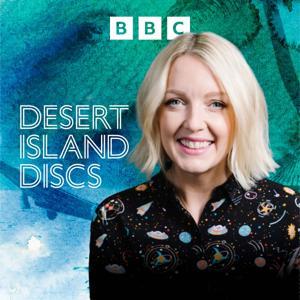
Guests are invited to choose the eight records they would take to a desert island.
... more

4.6
6262 ratings


The podcast currently has 209 episodes available.
The most played episodes among Podcast App listeners.
Sue Lawley's castaway this week is the mountaineer Joe Simpson. He was born in Kuala Lumpur in 1960 where his father was stationed with the British Army. Over the next few years the family lived in Gibraltar, Ireland and Germany, although Joe returned to England for schooling at Ampleforth and showed an early adventurous spirit and love of sport. But it was only after reading the classic account of attempted ascents on the Eiger - 'The White Spider' - by Heinrich Harrer that he developed an interest in his future passion. After a brief spell working at a saw mill and then at a quarry he studied English Literature at Edinburgh University. There he began climbing in earnest often attempting dangerous routes beyond his experience before tackling a previously unconquered route up Siula Grande - a peak in the Peruvian Andes. This climb was to make his name. He and his partner Simon Yates made the first successful ascent of the mountain's west face only to run into difficulties after Joe shattered his leg on their descent. After running out of resources and with no prospect of rescue Simon painstakingly lowered Joe towards shelter before being forced to cut the rope on his friend. Joe had inadvertently slid over an overhanging rock and was slowly pulling the two off the mountain. He landed in a crevasse and after being left for dead amazingly managed to crawl miles back to safety. Simon Yates was widely attacked for his actions in the climbing community leading Joe to write a defence of the rescue with his book 'Touching the Void', which has also been made into an award-winning film. Told he'd never climb again following the accident, Joe went on to climb many more mountains over the last two decades. He's worked as a mountaineering guide all over the world and written five more books. [Taken from the original programme material for this archive edition of Desert Island Discs] Favourite track: I'm Not A Man You Meet Everyday by Cait O'Riordon and the Pogues Book: Blank book and pen Alternative to Bible: The Sutras - the teachings of Gautama Buddha Luxury: A drink-making machine

Sue Lawley's castaway this week is John Fortune. John Fortune is one of Britain's most respected and enduring satirists. For the past 12 years he has been half of the award-winning double act, The Long Johns, with John Bird, that have brought a sharper political edge to Bremner, Bird and Fortune. As a result of the act, they have been named the Best Opposition by The Oldie Magazine and are Bafta award winners. It is a return to the forefront of political satire for John Fortune - he had joined Peter Cook in setting up The Establishment Club in the 1960s and had taken the review to America to widespread acclaim and returned to Britain to write for, among others, BBC Three and Not So Much a Programme, More a Way of Life. [Taken from the original programme material for this archive edition of Desert Island Discs] Favourite track: Piano Sonata No 30 in E Major by Ludwig van Beethoven Book: The Leopard (In Italian & English) by Giuseppe di Lampedusa Luxury: A rug made by the Baluch people from Afghanistan
Sue's Lawley's castaway this week is the zoologist turned author and broadcaster Desmond Morris. He made his name with The Naked Ape first published in 1967 in which he persuasively argued the case for viewing man as a 'risen ape' rather than a 'fallen angel'. To him, humans should be observed like any other beast in the animal kingdom. The book has sold more than 12 million copies and has been translated into 23 languages. Dozens more books have followed including The Human Zoo, which compared the social problems of humans living in cities to the behaviour of stressed animals in a zoo. He's also a successful artist - once holding the directorship of the Institute of Contemporary Arts - and he's exhibited his work at galleries around the world. [Taken from the original programme material for this archive edition of Desert Island Discs] Favourite track: Imagine by Alex Parks Book: Tales from Arabia: One Thousand and One Nights by Richard Burton Luxury: Snorkel
Sue Lawley's castaway this week is the actress and wildlife campaigner Virginia McKenna. She was born in London and, after spending five years of her childhood in South Africa to escape the Blitz, she returned to England. She enrolled at the Central School of Drama but left after two years when offered six months in Repertory at Dundee. Classics such as the Cruel Sea, Carve Her Name with Pride and A Town Like Alice, for which she won a British Academy Award for Best Actress, have been highlights in a long and successful career. However her most remembered and best loved roles have been in Born Free and Ring of Bright Water, starring opposite her actor husband the late Bill Travers. For Born Free, she won the Variety Club Best Actress Award . Making Born Free in 1964, which told the true story of George and Joy Adamson as they returned Elsa the lioness to the wild, profoundly affected Bill and Virginia and it was a key influence in their lives. They realised that wild animals belong in the wild and should be protected there, not imprisoned in captivity. But the premature death in London Zoo of Pole Pole, a young elephant, who had featured in their film, An Elephant Called Slowly, led to the founding of Zoo Check in 1984. The Trust was dedicated to preventing the abuse of captive wild animals and strove to protect and conserve them in the wild. Zoo Check grew to become a major force in the animal welfare movement and was renamed The Born Free Foundation in 1991. She was awarded the OBE in the New Year's Honours List in 2004 for services to wildlife and the arts. [Taken from the original programme material for this archive edition of Desert Island Discs] Favourite track: We Are The Music Makers by Edward Elgar Book: Animal - the Definitive Visual Guide to the World's Wildlife by David Burnie Luxury: Language tapes to learn Italian and Swahali
Sue Lawley's castaway this week is the world famous musician Hugh Masekela. As a boy growing up in the impoverished townships of South Africa, he was inspired to learn the trumpet after seeing Kirk Douglas play Bix Beiderbecke in Young Man With A Horn. He begged one of his teachers - the anti-apartheid crusader Father Trevor Huddleston - to buy him a horn and in return he promised to stay out of trouble. Hugh soon made a name for himself in South Africa but as the racial tensions intensified during the 50s he decided he had to leave his homeland to get a better music education in America. There he quickly made a name for himself with his fusion of African jazz music and became a 'flower child' playing with some of the great bands of the decade: Bob Marley, Jimi Hendrix and the Byrds. He's still probably best known for his number-one track, Grazing in the Grass, which sold four million copies worldwide in 1968. He returned to Africa in 1973, spending the next 17 years working on a range of musical collaborations in Botswana, Liberia, Nigeria, Congo and Guinea. Then, after thirty years in self-imposed exile, he returned to his homeland in 1990. [Taken from the original programme material for this archive edition of Desert Island Discs] Favourite track: Lilizela Mlilezeli by Mahlathini & the Mahotella Queens Book: Nicholas Nickleby by Charles Dickens Luxury: A keyboard
The podcast currently has 209 episodes available.

7,615 Listeners

1,062 Listeners
376 Listeners

5,525 Listeners
1,809 Listeners

1,796 Listeners
1,043 Listeners

1,902 Listeners
2,053 Listeners

492 Listeners
151 Listeners
77 Listeners
48 Listeners
52 Listeners

751 Listeners

45 Listeners
62 Listeners

3,228 Listeners
65 Listeners

1,602 Listeners
120 Listeners

50 Listeners

73 Listeners
713 Listeners
25 Listeners