
Sign up to save your podcasts
Or

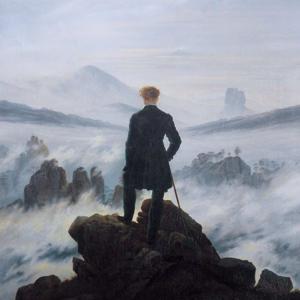


Have you been doing your practices? If so, you should REALLY love today's episodes. We decided to release these two episodes back to back because the overall experience is quite unique! In these episodes, Dr. Vervaeke was joined by Christopher Mastropietro, Guy Sengstock, and Taylor Barratt in discussion, practice, and friendship.
Welcome back to After Socrates! Episode 11 releases next FRIDAY, February 24th, 2023. Please join our Patreon to support our work! https://www.patreon.com/johnvervaeke
--
You are invited to join John, Guy, and Christopher live, online, at the next Circling & Dialogos Workshop where we discuss & practice the tools involved in both Philosophical Fellowship & Dialectic into Dialogos.
You can find more information, and register, here:
https://circlinginstitute.com/circlin...
---
After Socrates is a series about how to create the theory, the practice, and the ecology of practices such that we can live and grow and develop through a Socratic way of life. The core argument is; the combination of the theoretical framework and the pedagogical program of practices can properly conduct us into the Socratic way of life. We believe that the Socratic way of life is what is most needed today because it is the one that can most help us cultivate wisdom in a way that is simultaneously respectful to spiritual tradition and to current scientific work.
In this episode, John explores the concept of metanoia, a transformative change of heart, through the lens of Antisthenes and the Cynic tradition. He begins by discussing the processes of differentiation and integration, referencing J.A. Scot Kelso's work on understanding dynamic coordination in the brain. The conversation then turns to Antisthenes' teachings and his emphasis on conversation as a means to redirect and reorient attention.
John delves into the Cynic philosophy, which seeks to challenge conventions and societal norms, and he explains the distinction between purity codes and moral codes. He then discusses the importance of practical wisdom (phronesis) as opposed to theoretical wisdom (sophia), highlighting the role of improvisation in honing this practical wisdom. As the conversation comes to a close, John introduces the idea of metanoia and its relevance to communication, pointing to the works of George J. Thompson, Luke A. Archer, and Marshall Rosenberg as resources for further exploration.
Throughout the episode, John also references the work of several other thinkers, including Plato, Aristotle, Plotinus, Heraclitus, Cratylus, and Ludwig Wittgenstein, shedding light on the historical context and development of the ideas discussed.
Please consider joining our Patreon to support our work - www.patreon.com/johnvervaeke
--
You are invited to join me live, online, at the next Circling & Dialogos Workshop where we discuss & practice the tools involved in both Philosophical Fellowship & Dialectic into Dialogos.
You can find more information, and register, here:
https://circlinginstitute.com/circlin...
---
After Socrates is a series about how to create the theory, the practice, and the ecology of practices such that we can live and grow and develop through a Socratic way of life. The core argument is; the combination of the theoretical framework and the pedagogical program of practices can properly conduct us into the Socratic way of life. We believe that the Socratic way of life is what is most needed today because it is the one that can most help us cultivate wisdom in a way that is simultaneously respectful to spiritual tradition and to current scientific work.
In Episode 8 of John Vervaeke's Awakening from the Meaning Crisis series, he continues his exploration of the dialogical self and the various theories and practices surrounding it. He dives into the works of philosophers and psychologists, such as Norbert Wiley, George Herbert Mead, Charles Sanders Peirce, Agnes Callard, Hubert Hermans, and many others, who have made significant contributions to understanding the "I" positions and the dialogical self.
This episode also covers the concept of "Parts Work" in relation to the self, as well as the integration of intuition and rationality, and the importance of non-propositional knowing. Vervaeke touches on various theories and practices, such as internal family systems therapy, focusing, and ally work, which are aimed at healing and integrating the different aspects of the self.
Throughout the episode, Vervaeke emphasizes the value of understanding the self and its various facets to lead a more meaningful life. He shares insights and practices to help individuals navigate their inner experiences and cultivate a richer understanding of themselves.
Please join our patreon to support our work! https://www.patreon.com/johnvervaeke
--
You are invited to join me live, online, at the next Circling & Dialogos Workshop where we discuss & practice the tools involved in both Philosophical Fellowship & Dialectic into Dialogos.
You can find more information, and register, here:
https://circlinginstitute.com/circlin...
---
After Socrates is a series about how to create the theory, the practice, and the ecology of practices such that we can live and grow and develop through a Socratic way of life. The core argument is; the combination of the theoretical framework and the pedagogical program of practices can properly conduct us into the Socratic way of life. We believe that the Socratic way of life is what is most needed today because it is the one that can most help us cultivate wisdom in a way that is simultaneously respectful to spiritual tradition and to current scientific work.
Welcome back to episode 7 of After Socrates! Episode 8 releases next FRIDAY, February 3rd, 2023. Please join our patreon to support our work! https://www.patreon.com/johnvervaeke
--
You are invited to join me live, online, at the next Circling & Dialogos Workshop where we discuss & practice the tools involved in both Philosophical Fellowship & Dialectic into Dialogos.
You can find more information, and register, here:
https://circlinginstitute.com/circlin...
--
Thinkers Referenced:
Plato
John Bussanich
Michael McGhee
Gregory Vlastos
James Blachowicz
Norbert Wiley
Read Montague
Michael Anderson
Dan Sperber
Deirdre Wilson
Susan Goldin-Meadow
Iain McGilchrist
Damian G. Kelty-Stephen
James Dixon
Per Bak
Robert Breedlove
St. Paul
Augustine of Hippo
Anderson Todd
Emmanuel Levinas
M. Basil Pennington
Michael Casey
Guigo II the Carthusian
Mary Keator
Nicholas of Cusa
---
After Socrates is a series about how to create the theory, the practice, and the ecology of practices such that we can live and grow and develop through a Socratic way of life. The core argument is; the combination of the theoretical framework and the pedagogical program of practices can properly conduct us into the Socratic way of life. We believe that the Socratic way of life is what is most needed today because it is the one that can most help us cultivate wisdom in a way that is simultaneously respectful to spiritual tradition and to current scientific work.
Welcome back to episode 6 of After Socrates! Episode 7 releases next Monday, January 30th, 2023. Please join our patreon to support our work! https://www.patreon.com/johnvervaeke
--
You are invited to join me live, online, at the next Circling & Dialogos Workshop where we discuss & practice the tools involved in both Philosophical Fellowship & Dialectic into Dialogos.
You can find more information, and register, here:
https://circlinginstitute.com/circlin...
--
Thinkers Referenced:
Christopher Mastropietro
Guy Sengstock
Dan Chiappe
Johannes Niederhauser
Daniel Zaruba
Aristotle
Ludwig Wittgenstein
John Russon
Sean D. Kirkland
Edmund Husserl
Don Ihde
Maurice Merleau-Ponty
Evan Thompson
Shaun Gallagher
D.C. Schindler
Robert Breedlove
St. Paul
Augustine of Hippo
Anderson Todd
Emmanuel Levinas
M. Basil Pennington
Michael Casey
Guigo II the Carthusian
Mary Keator
Nicholas of Cusa
---
After Socrates is a series about how to create the theory, the practice, and the ecology of practices such that we can live and grow and develop through a Socratic way of life. The core argument is; the combination of the theoretical framework and the pedagogical program of practices can properly conduct us into the Socratic way of life. We believe that the Socratic way of life is what is most needed today because it is the one that can most help us cultivate wisdom in a way that is simultaneously respectful to spiritual tradition and to current scientific work.
Welcome back to episode 5 of After Socrates! Please join our patreon to support our work! https://www.patreon.com/johnvervaeke
--
You are invited to join me live, online, at the next Circling & Dialogos Workshop where we discuss & practice the tools involved in both Philosophical Fellowship & Dialectic into Dialogos.
You can find more information, and register, here:
https://circlinginstitute.com/circling-dialogos/
--
Thinkers Referenced:
Christopher Cherniak
Jerry Fodor
John Searle
Ludwig Wittgenstein
Aristotle
Werner Stegmaier
Kevin Corrigan
David Yaden
Ezequiel Di Paolo
Christopher Honey
Garri Hovhannisyan
Edwin Hutchins
Brett Andersen
Jordan B. Peterson
Gregg Henriques
--
Time Codes:
[0:00] Welcome back to After Socrates
[3:24] Awakening from the Meaning Crisis episodes for review: 27 - 33
[3:30] John's article in The Journal Phenomenology and the Cognitive Sciences -https://link.springer.com/article/10....
[12:50] Adaptive
[18:30] The Phenomena of Insight
[26:00] Emerging Framework
[34:30] Salience Landscaping
[44:22] Second Meta
[50:00] Flow State
[58:30] Logos
[1:03:00] The Self
[1:11:00] Consciousness
[1:25:30] Logos of Being
[1:30:00] Opposite Lived Strategies
[1:34:00] Beginning of practice: Walking Theosis
---
After Socrates is a series about how to create the theory, the practice, and the ecology of practices such that we can live and grow and develop through a Socratic way of life. The core argument is; the combination of the theoretical framework and the pedagogical program of practices can properly conduct us into the Socratic way of life. We believe that the Socratic way of life is what is most needed today because it is the one that can most help us cultivate wisdom in a way that is simultaneously respectful to spiritual tradition and to current scientific work.
Welcome back to episode 4 of After Socrates! Please join our patreon to support our work! https://www.patreon.com/johnvervaeke
--
You are invited to join me live, online, at the next Circling & Dialogos Workshop where we discuss & practice the tools involved in both Philosophical Fellowship & Dialectic into Dialogos.
You can find more information, and register, here:
https://circlinginstitute.com/circling-dialogos/
--
Thinkers Referenced:
Phillip S. Cary
Taylor Barratt
Peter Limberg
Guy Sengstock
Pierre Hadot
L. A. Paul
Agnes Callard
Christopher Moore
Lev Vygotsky
Michael Polanyi
Maurice Merleau-Ponty
Sara Ahbel-Rappe
William James
--
Time Codes:
9:54 The Horizontal Dimension of Dialectic
10:46 The Vertical Dimension of Dialectic
13:08 Philia
15:14 Sophia
21:20 Aspiration
22:20 Relational Self
24:39 Internalization and Indweilling
29:21 Self as aspirational
33:45 Socratic ignorance, Platonic knowledge
38:59 Back to Aporia - Self Knowing
44:01 No-thingness
48:04 Socrates and Suhrawardi
49:00 Illumination
52:59 Indwell to internalize, internalize to indwell
55:34 Anagogic Loop
57:24 God, Logos, light
58:26 Three books that are networked together
1:00:55 Kirkland, Alethea, Socratic Questioning
1:16:26 Practices
---
After Socrates is a series about how to create the theory, the practice, and the ecology of practices such that we can live and grow and develop through a Socratic way of life. The core argument is; the combination of the theoretical framework and the pedagogical program of practices can properly conduct us into the Socratic way of life. We believe that the Socratic way of life is what is most needed today because it is the one that can most help us cultivate wisdom in a way that is simultaneously respectful to spiritual tradition and to current scientific work.
Welcome back to episode 3 of After Socrates! Please join our patreon to support our work! https://www.patreon.com/johnvervaeke
--
You are invited to join me live, online, at the next Circling & Dialogos Workshop where we discuss & practice the tools involved in both Philosophical Fellowship & Dialectic into Dialogos.
You can find more information, and register, here:
https://circlinginstitute.com/circling-dialogos/
--
Books Referenced:
Dialectic and Dialogue: Plato's Practice of Philosophical Inquiry - https://amzn.to/3QzeW7i
New Perspectives on Platonic Dialectic A Philosophy of Inquiry - https://amzn.to/3ird3wJ
Thinkers Referenced:
Pierre Hadot
Plotinus
Francisco J. Gonzalez
Aristotle
Ludwig Wittgenstein
Gilbert Ryle
James J. Gibson
Stanley Rosen
Wallace Matson
Vasilis Politis
Augustine of Hippo
Graham Priest
Werner Stegmaier
Eric Sanday
James H. Austin
Show Notes:
[0:00] Intro
[9:24] Pierre Hadot was a French philosopher and historian of philosophy specializing in ancient philosophy, particularly Neoplatonism.
[14:56] Plotinus c. 204/5 – 270 CE. A philosopher of the Hellenistic tradition, born and raised in Roman Egypt. Plotinus is regarded by modern scholarship as the founder of Neoplatonism.
[16:25] "In the end, I'm not concerned ultimately about historical accuracy. I'm concerned about affording people the ability to practice a way of life."
[23:25] Semantic Memory - General knowledge about the world: e.g., facts, ideas, and other concept-based knowledge unrelated to specific experiences.
[24:41] Procedural memory - a type of implicit memory involved in the performance of different actions and skills: the memory of how to do certain things.
[26:07] Perspectival Knowing - Refers to knowing via embodied perception. It consists of seeing and experiencing the world from within a certain state or place of consciousness.
[28:29] Episodic memory - The memory of everyday events that can be explicitly stated. It is the collection of past personal experiences that occurred at particular times and places.
[30:28] ver·i·si·mil·i·tude - the appearance or semblance of truth; genuineness; authenticity.
[31:02] Propositional knowing has to do with our reasoning capacity (language and inference). Procedural knowing relates to our basic skills and cognition (sensory-motor interaction). Perspectival knowing is about embodied consciousness (salience landscaping).
[32:45] The Fourth Kind of Knowing: Participatory Knowing. Finding agency within an agent-arena relationship; by being fitted to the arena, the agent is able to determine the consequences of behavior and alter that behavior to bring about the desired consequences.
[38:39] James Jerome Gibson (1904 – 1979). An American psychologist considered to be one of the most important contributors to the field of visual perception.
[45:04] Stanley Rosen (1929-2014). One of the central themes of his work is the claim that the extraordinary discourses of philosophy have no other basis than the intelligent understanding of the features of ordinary life or human existence.
[49.37] Wallace Matson (1921-2012). An American professor of philosophy at the University of California, Berkeley. He is known for his works on the existence of God.
[52:17] Ep. 17 - Awakening from the Meaning Crisis - Gnosis and Existential Inertia:
[1:06:46] Vasilis Politis (1963-) is a Greek philosopher and Associate Professor of Philosophy at Trinity College Dublin. He is known for his expertise on Plato and Aristotle. (Dialectic and the Ability to Orientate Ourselves)
[1:12:55] Graham Priest (born 1948) Distinguished Professor of Philosophy at the CUNY Graduate Center. He is known for his defense of dialetheism, his in-depth analyses of the logical paradoxes and his many writings related to paraconsistent and other non-classical logics.
[1:27:13] The Forms: The forms are something like fundamental principles of intelligibility and of being. The forms are the principles by which things "Are" and by which they are known or knowable by us.
[1:32:33] Beginning of the practice.
---
After Socrates is a series about how to create the theory, the practice, and the ecology of practices such that we can live and grow and develop through a Socratic way of life. The core argument is; the combination of the theoretical framework and the pedagogical program of practices can properly conduct us into the Socratic way of life. We believe that the Socratic way of life is what is most needed today because it is the one that can most help us cultivate wisdom in a way that is simultaneously respectful to spiritual tradition and to current scientific work.
Welcome back to episode 2 of After Socrates. In this installment, Dr. Vervaeke continues to add insight into the Socratic Way as we go deep into dialogue and the practices of "Finding Your Root" and "The Humble Wonder Practice." Please consider joining my patreon to support our work: https://www.patreon.com/johnvervaeke
--
You are invited to join me live, online, at the next Circling & Dialogos Workshop where we discuss & practice the tools involved in both Philosophical Fellowship & Dialectic into Dialogos.
You can find more information, and register, here:
https://circlinginstitute.com/circling-dialogos/
--
Thinkers Referenced:
Drew Hyland
Erich Fromm
Robert C. Fuller
Harold North Fowler
Christopher Mastropietro
Aristophanes
Iris Murdoch
John R. Wright
Francisco J. Gonzalez
Sara Ahbel-Rappe
Sean D. Kirkland
Show Notes:
[0:00] Introduction to episode
[0:23] "Socrates the Monstrous"
[1:06] Socrates described himself as atopos, which means "strange" or "out of place," not belonging to any known category. It resembles the modern word "atypical" but is deeper and more powerful.
[1:48] Metaxy: as fundamentally in between the human and the divine
[2:17] Finitude and Transcendence
[2:35] Eros
[3:26] The monster distorts the normal categories in a way that is startling, challenging and disruptive.
[4:57] Questioning
[7:12] By practicing this kind of dialogue, Socrates has come to know that he does not know.
[7:48] "One has been pretending - deeply, unconsciously, automatically, reactively - to know."
[8:25] Learned Ignorance
[12:03] Horizon of Wonder
[12:17] The psychoanalyst and social psychologist Erich Fromm successfully combined psychological and sociological thinking in a social psychological theory and method. World-wide known are his books Escape from Freedom, The Art of Loving and To Have Or to Be? and his humanistic concept of man.
[12:25] Professor Fuller's research concerns the relationship between psychology and religion as well as the study of contemporary religion in the United States
[13:00] Wisdom begins in Wonder
[13:30] Educe: to bring out, or draw forth. Closely related to the word "education."
[13:59] To be on the Horizon of Wonder is to be in a place in which you are calling yourself and your world into question. So a new self in a new world can deeply be born.
[18:48] The process of dialogos is not something we do. It is something we participate in, the way we participate in love and friendship. It is between us, and between us and the world.
[19:13] Harold North Fowler was the original translator of a number of Plato's works for the Loeb Classical Library collection.
[21:07] we seek to bind ourselves to things
[21:30] We seem by nature to be looking for things other than ourselves, to complete us. Self-transcendence; I'm looking for something that's other than me to become me so that I am more than me, but completed as me.
[30:15] The unexamined life is not worth living.
[34:49] 1) The best life is the life of virtue.
[35:33] 2) Virtue depends on knowledge.
[35:44] 3) He does not have the knowledge needed for virtue.
[36:06] Aristophanes was a famous comic playwright of ancient Athens. His play The Clouds gives a critical portrayal of Socrates as a man of nonsense and deception. Socrates addresses the slander in Plato's Apology.
[41:50] Iris Murdoch was a prominent British philosopher of the second half of the 20th century, best known for her moral philosophy. She combined her grounding in Wittgensteinian and linguistic/analytic philosophy with a strong influence of 19th and 20th century Continental philosophy, Christian religion and thought, and Hindu and Buddhist philosophy.
[45:47] Is Socrates just Plato's mouthpiece?
[59:11] Practice Intro.
[59:44] Finding Your Root.
[1:11:16] The humble wonder practice
[1:12:08] There is so much I do not know about myself because of all of the facts.
[1:12:49] There is so much I shall never know about myself because of all of the fate.
[1:13:45] There is so much I refuse to see about myself because of all of my foolishness.
[1:16:32] There is so much I am unable to see about myself because of all of my faults.
---
After Socrates is a series about how to create the theory, the practice, and the ecology of practices such that we can live and grow and develop through a Socratic way of life. The core argument is; the combination of the theoretical framework and the pedagogical program of practices can properly conduct us into the Socratic way of life. We believe that the Socratic way of life is what is most needed today because it is the one that can most help us cultivate wisdom in a way that is simultaneously respectful to spiritual tradition and to current scientific work.
From the publisher's feed

15,237 Listeners
2,023 Listeners

26,240 Listeners
1,607 Listeners
315 Listeners
33,428 Listeners
1,028 Listeners

2,155 Listeners
868 Listeners

4,171 Listeners

354 Listeners
1,632 Listeners

20 Listeners

436 Listeners
282 Listeners