
Sign up to save your podcasts
Or

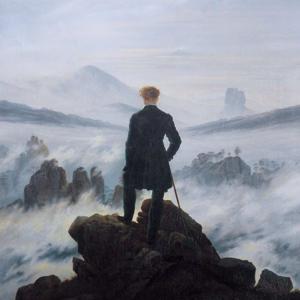


In episode 20 of After Socrates, join Dr. John Vervaeke and his eloquent interlocutor, Christopher Mastropietro, as they delve into an intriguing exploration of love, beauty, faith, and the mysteries of existence. From the interplay of virtues to the hermeneutics of beauty, the dialectic of part and whole, and the unveiling of the concealed 'sculpture' within us, this episode is sure to incite curiosity, inspire insights, and deepen your understanding of life's profound questions. I recently had a discussion with DC Schindler and Ken Lowry that further explores this topic, if you would like to view that conversation, please do so here: Discovering the Four Leaps: Reason, Love, Faith, and Body | DC Schindler and Ken Lowry - https://youtu.be/V8UFpsVOl7A
Time-Codes:
00:00 - John Vervaeke introduces the Vervaeke Foundation Patreon - www.patreon.com/johnvervaeke
01:00 - John and Christopher delve into the intriguing relationship between love, beauty, and the leap into the unknown.
03:00 - The concept of the three leaps: faith, reason, and love, is introduced and explored.
06:00 - John poses the question of how to articulate the intricate relationship between the three leaps.
08:10 - A deep discussion on the interdependence of virtues in the dialectic takes place.
09:49 - John distinguishes between the hermeneutics of suspicion and the hermeneutics of beauty.
12:08 - Christopher enlightens us with the Kierkegaardian idea of being a part in order to participate in the whole.
21:20 - Dr. Vervaeke explains the relationship between the absolute and the relative.
22:13 - The concept of Ratio is introduced as a means of moving towards the absolute.
24:00 - The interpenetration of insight and inference in philosophy is discussed.
27:24 - John illuminates the lack of distinction between inferences and insights.
28:00 - The Platonian metaphor of uncovering the sculpture within the stone is explored.
29:50 - John explains how two perspectives can induce an aporia in inferential reasoning.
32:21 - The role of a beautiful tree in orienting us towards reality is discussed.
35:07 - A deep dive into how beauty, love, and faith are interrelated occurs.
36:50 - Christopher proposes a terminological change in Kierkegaard's concept of faith.
39:00 - John elucidates how the fullness of being orients us towards a fuller life.
41:10 - The connection between goodness and faith is brought to light.
43:35 - An enlightening discussion on forgiveness, guilt, and sin takes place.
01:03:40 - John concludes the discussion by emphasizing the importance of transcendence.
In this episode of After Socrates, Dr. John Vervaeke and guest Christopher Mastropietro explore the overlap and interweaving of the works of Socrates and Kierkegaard, and their relation to the revolutionary characteristics of Jesus. There is a certain reverence that we hold naturally for counter-culture figures, even though we often don't celebrate them until long after their expiration. The speakers also discuss the challenge of grasping Kierkegaard's thoughts due to his pseudonymous writings and poetic style, which often leaves the reader lost and searching for meaning, the significance of intersubjectivity in philosophical conversations and the influence of Hegel on Kierkegaard's thinking. The discussion highlights the importance of going beyond objective philosophical reflections and the role of philosophical fellowship in encouraging self-reflection and personal growth and the tension of discussing private matters in a public setting and how it relates to the ethical dimensions of both Socrates and Kierkegaard's teachings.
In this episode of After Socrates, Dr. John Vervaeke and guest Christopher Mastropietro explore the importance of humor in the context of philosophy and spirituality. They examine how humor can be used to approach the absurdity of life, reveal performative contradictions, and challenge societal norms. The conversation also touches on the interconnection between humor and tragedy, the role of good humorists in society, and the loss of the religious category of thought in modern times. The episode ultimately emphasizes the importance of cultivating a balanced perspective and recognizing the limitations of our ethical frameworks in the pursuit of greater understanding.
Time-codes:
00:00: Discussion on the importance of humor in the context of philosophy, specifically when looking at Socrates and Kierkegaard.
02:53: Introduction of "The Humor of Kierkegaard" book, an anthology that highlights Kierkegaard's humorous side.
07:36 - Discussion of the importance of incorporating humor into the Logos as a spiritual orientation, as it enables human transcendence with respect to the absurd.
09:23 - The humorous phone call example used to illustrate perspectival clash, highlighting the relationship between humor and absurdity.
13:25 - Christopher Mastropietro and Dr. John Vervaeke discuss the relationship between irony and humor, and how humor can help us approach the absurdity of life.
17:58 - Discussing humor in the context of the story of the geese, highlighting how the humor is in the absurdity and juxtaposition of perspectives.
22:13 - Christopher Mastropietro discusses the story of David and Bathsheba, showing how humor and tragedy can make people see the consequences of their actions.
27:26 - Christopher Mastropietro discusses the concept of being at variance with oneself and how humor can expose the performative contradiction in a situation.
32:48 - Dr. John Vervaeke and Christopher Mastropietro discuss how looking at one's ethical frame unironically can result in absurdity and expose the contradictions within it.
38:21 - Discussion on how humor can act as a birth canal towards the serious and religious.
43:34 - John Vervaeke discusses laughter and comedy as a reminder not to get entrapped in an idolatry of the literal and how the comic can be part of the numinous.
48:22 - Discussion on the transmutation from the lowly and sexual to the anagogic in Socratic Eros.
53:25 - The discussion delves into the primary orientation and the meta-optimal grip needed for practicing dialectic in the Dialogos.
57:06 - John and Christopher discuss the loss of the religious category of thought, resulting in the idolatry of the ethical and the dangerous consequences of this situation.
In this thought-provoking episode of After Socrates, host John Vervaeke is joined by scholar Christopher Mastropietro to explore the connections between Socrates and Kierkegaard, as well as the relationship between reason, faith, existentialism, and spirituality. Through a deep dive into irony, self-transcendence, and relevance realization, Vervaeke and Mastropietro reveal the shared project between these two influential thinkers, while discussing the role of humor and absurdity in understanding the human condition. Christopher Mastropietro is a scholar and author who has collaborated extensively with John Vervaeke on various projects.
Time-Codes:
00:00 - Kierkegaard's humorous example of a busy man dying
01:07 - Introduction to After Socrates, Episode 17
03:24 - Faith, logos, and character cultivation
05:50 - Kierkegaard's paradoxical argument on autonomy
06:47 - The paradox of self-transcendence
09:53 - Irony in developing a relationship with truth
10:35 - Differentiating irony from cynicism and sarcasm
14:08 - Irony as participatory and perspectival truth
16:24 - Kierkegaard's example illustrating ironic tension
20:04 - Irony's grounding and autonomy
22:13 - Irony, epistemic humility, and aporia
24:00 - An ironist's passionate participation in paradox
25:58 - Clarifying irony, cynicism, sarcasm, and intellectual laziness
30:26 - Relevance realization and irony
32:28 - Communicating ultimate truth indirectly
33:02 - Relevance realization and ultimate concern
34:00 - Ultimate concern vs. regular concern
34:51 - Socrates and Kierkegaard's shared project
36:19 - Kierkegaard's use of the eye of Socrates
37:16 - Agency and freedom in philosophy
In this episode, John and Christopher explore the philosophical connections between Socrates and Kierkegaard, discussing the role of paradox, irony, and the self. They delve into Kierkegaard's stages of life - aesthetic, ethical, and religious - and his critiques of Christendom and societal expectations. The conversation also covers Kierkegaard's complex relationships with love and society, his I-Thou relationship with God, and the resolution of paradox in human existence. Throughout the discussion, Chris and John emphasize the profound nature of dialogos, the ontological claim about Christ as the Logos, and the challenges of discussing sin and its associations.
00:00 - Introduction
00:58 - Section 1: Socratic Paradox and Kierkegaard's Stages of Life
10:12 - Section 2: Kierkegaard's Critique of Christendom
20:03 - Section 3: Kierkegaard's Suffering
30:00 - Section 4: Kierkegaard's Struggle with Society and Love
40:15 - Section 5: Lingering Connection and the Teleological Suspension of the Ethical
50:00 - Section 6: Kierkegaard's I-Thou Relationship with God and the Resolution of Paradox
01:00:08 - Section 7: Dialogos, Shifting Modes of Identification, and the Concept of Sin
In episode 15 of After Socrates, Dr. John Vervaeke and Christopher Mastropietro engage in a thought-provoking discussion on the relationship between Socrates and Søren Kierkegaard, exploring their philosophical approaches and examining the complexities of Kierkegaard's works. Dr. Vervaeke is a cognitive scientist and philosopher at the University of Toronto, well-known for his expertise in the cognitive science of wisdom and mindfulness practices. Christopher Mastropietro is a scholar, author, and editor specializing in philosophy, religion, and culture.
The conversation covers Kierkegaard's literary and philosophical context, his use of pseudonyms, and the connections to Socrates in his methods. The hosts delve into Kierkegaard's concepts of the dialogical and aspirational self, highlighting the paradox of being and not yet being oneself. They also discuss "life views," the importance of understanding subjective states from within, and the concept of pathologos, or "sick belief."
The complexity of Kierkegaard's works is examined, focusing on layers of meaning created by dialogues between characters, as well as his portrayal of a world filled with unnecessary desires and unsatisfying pursuits. The hosts also discuss the dilemma of marriage in Kierkegaard's life and works and his willingness to expose himself in writing while maintaining anonymity through pseudonyms.
They also explore the ironic nature of self-pursuit in Kierkegaard's works and delve into his views on self, responsibility, and the role of Socrates in disillusioning individuals from modes of self-relations that are less than ultimate.
Books Referenced:
Kierkegaard and Socrates: A Study in Philosophy and Faith | Jacob Howland
Kierkegaard and Spirituality | C. Stephen Evans
Kierkegaard: A Collection of Critical Essays | Josiah Thompson
The Humour of Kierkegaard: An Anthology | Thomas C. Oden
Discover the profound wisdom of the Neo-Platonic Christian Tradition in this episode of After Socrates. Dive into the works of thinkers like St. Bonaventure, John Scotus Eriugena, and Nicholas of Cusa, and explore the concepts of dialectical contemplation, solipsistic skepticism, and ontological depth perception.
Guests featured: St. Augustine, Pseudo-Dionysius the Areopagite, Hans Urs von Balthasar, Jonathan Pageau, and more.
📚 Books & Works Discussed:
The Journey of the Mind to God by St. Bonaventure
Nicholas of Cusa on Learned Ignorance: A Translation and an Appraisal of De Docta Ignorantia by Nicholas of Cusa
Periphyseon on the Division of Nature by John the Scot
Explorations in Metaphysics: Being-God-Person by W. Norris Clarke S.J.
The Unknown God: Negative Theology in the Platonic Tradition: Plato to Eriugena by Deirdre Carabine
John Scottus Eriugena by Deirdre Carabine
Being and Creation in the Theology of John Scottus Eriugena: An Approach to a New Way of Thinking by Sergei N. Sushkov
Nicholas of Cusa by H. Lawrence Bond
The Vision of God by Nicholas of Cusa
The Voyage of Unknowing: Nicholas of Cusa On Learned Ignorance by David Christopher Lane & Andrea Diem-Lane
The Analogical Turn: Rethinking Modernity with Nicholas of Cusa by Johannes Hoff
Masters of Learned Ignorance: Eriugena, Eckhart, Cusanus (Variorum Collected Studies) by Donald F. Duclow
Beyond Formal Operations: Late Adolescent and Adult Cognitive Development by Cheryl Armon, Michael L. Commons, & Francis Richards
[0:00] Introduction
[1:40] Neo-Platonic Christian Tradition
[12:45] Distorted Thoughts
[15:22] Logic Broadly Construed
[20:43] Solipsistic Skepticism
[23:37] As Real As Myself
[27:02] Dialectical Contemplation
[33:51] Tagging, Tracking, Tracing
[37:40] Conceptual Understanding
[42:15] Demonstrative Reference
[47:10] The Cardinal Contradiction
[51:25] The Omnivoyant Image
[54:43] Being in Question
[58:30] End of Episode
Welcome back to After Socrates! Episode 14 releases next Friday, March 24th, 2023. Please join our Patreon to support our work! https://www.patreon.com/johnvervaeke
Uncover the profound insights of ritual as a form of metaphysical inquiry. Dr. Vervaeke discusses the role of rituals in our lives, how they help us access deeper levels of self-consciousness, and their unique ability to reveal hidden aspects of reality. Our good friend @JonathanPageau is also discussed in this episode, please visit his channel if you have not yet done so!
In this episode, you'll discover:
*The powerful concept of "facing reality" and how it impacts our understanding of the world
*The works of influential philosophers and theologians like Proclus, Iamblichus, John Scotus Eriugena, Nicholas of Cusa, and Ambrose of Milan, as well as insights from Jonathan Pageau, a French Canadian icon carver and public speaker
*The role of synthemata in theurgy and how it can lead to higher levels of self-consciousness and reality disclosure
*The unique way of knowing in rituals that cannot be accessed through other means
*Join Dr. John Vervaeke as he explores the non-reductive noetic function of ritual and its importance in understanding ourselves and the world. If you feel like your life is empty of ritual, this episode might change the way you see things and help you reconnect with this essential aspect of human experience.
--
You are invited to join John, Guy, and Christopher live, online, at the next Circling & Dialogos Workshop where we discuss & practice the tools involved in both Philosophical Fellowship & Dialectic into Dialogos.
You can find more information, and register, here:
https://circlinginstitute.com/circlin...
---
After Socrates is a series about how to create the theory, the practice, and the ecology of practices such that we can live and grow and develop through a Socratic way of life. The core argument is; the combination of the theoretical framework and the pedagogical program of practices can properly conduct us into the Socratic way of life. We believe that the Socratic way of life is what is most needed today because it is the one that can most help us cultivate wisdom in a way that is simultaneously respectful to spiritual tradition and to current scientific work.
In Episode 12 of Dr. John Vervaeke's "After Socrates," titled "The Way of the Logos," we delve deep into the world of Plotinus and his concept of dialectic, exploring how the intelligible world can be understood through a study of the nature and interconnection of real being. This episode examines the evolution of cognition and its relation to the grammar of reality, providing insights into Aristotle's conformity theory, transcendental argument, and solipsism.
We also discuss the notion of epiphenomenalism, where we learn that some things can be real without being actual or causally interactive. This episode further explores the concept of Dia-Logos, which focuses on improving the generative grammar of cognition to better track the through line generated by the grammar of being.
Throughout the episode, various philosophers and their works are referenced, including Proclus, Pseudo-Dionysius the Areopagite, and St. Augustine of Hippo. The episode concludes by touching upon the topic of Theurgia, setting the stage for a more in-depth exploration in future episodes.
Join Dr. Vervaeke in this fascinating exploration of the intellectual journey we must pursue to understand the intelligible world and its relation to our cognitive evolution.
Please join our Patreon to support our work! https://www.patreon.com/johnvervaeke
--
You are invited to join John, Guy, and Christopher live, online, at the next Circling & Dialogos Workshop where we discuss & practice the tools involved in both Philosophical Fellowship & Dialectic into Dialogos.
You can find more information, and register, here:
https://circlinginstitute.com/circlin...
---
After Socrates is a series about how to create the theory, the practice, and the ecology of practices such that we can live and grow and develop through a Socratic way of life. The core argument is; the combination of the theoretical framework and the pedagogical program of practices can properly conduct us into the Socratic way of life. We believe that the Socratic way of life is what is most needed today because it is the one that can most help us cultivate wisdom in a way that is simultaneously respectful to spiritual tradition and to current scientific work.
Proper Proportions & The Right Mode. In this episode, John Vervaeke delves into the philosophical underpinnings of Stoicism and its connections with both ancient and modern practices, while also emphasizing the importance of serious play and aspiration in rationality. Vervaeke begins by discussing the Stoic philosophy, which was founded by Zeno of Citium and focuses on achieving goodness and peace of mind through living a virtuous life in accordance with nature.
The episode then addresses the modern disjunction between value and fact, leading to the misunderstanding of the roles of meaning and event in our lives. The concept of cognitive behavioral therapy is introduced, highlighting the influential ideas of Epictetus, a Greek Stoic philosopher who believed in the importance of rigorous self-discipline.
A significant portion of the episode is dedicated to the topic of modal confusion, which occurs when individuals use the wrong mode for their needs. This can result in problems such as spiritual bypassing, where individuals avoid addressing their issues by seeking a false sense of enlightenment.
Vervaeke introduces Michael J. Apter's reversal theory, which explores the difference between the telic mode (goal-oriented) and the paratelic mode (activity-oriented) in human behavior. The concept of serious play is then discussed, emphasizing its importance in engaging with perspectival and participatory knowing without committing fully to an activity or experience.
The episode also covers aspirational practices, as discussed by Agnes Callard, which are central to rationality and enable transformative experiences in our lives. These practices involve a combination of proleptic rationality and the imaginal, allowing individuals to envision and strive for their goals.
Please join our Patreon to support our work! https://www.patreon.com/johnvervaeke
--
You are invited to join John, Guy, and Christopher live, online, at the next Circling & Dialogos Workshop where we discuss & practice the tools involved in both Philosophical Fellowship & Dialectic into Dialogos.
You can find more information, and register, here:
https://circlinginstitute.com/circlin...
---
After Socrates is a series about how to create the theory, the practice, and the ecology of practices such that we can live and grow and develop through a Socratic way of life. The core argument is; the combination of the theoretical framework and the pedagogical program of practices can properly conduct us into the Socratic way of life. We believe that the Socratic way of life is what is most needed today because it is the one that can most help us cultivate wisdom in a way that is simultaneously respectful to spiritual tradition and to current scientific work.
From the publisher's feed

15,237 Listeners
2,023 Listeners

26,240 Listeners
1,607 Listeners
315 Listeners
33,428 Listeners
1,028 Listeners

2,155 Listeners
868 Listeners

4,171 Listeners
354 Listeners
1,632 Listeners

20 Listeners

436 Listeners
282 Listeners