
Sign up to save your podcasts
Or

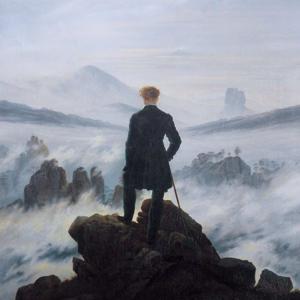


Dr. John Vervaeke and Bishop Maximus (Marretta) embark on a profound journey to challenge conventional notions of mind and consciousness. They critique representational theory, advocating for a conformist perspective. Dr. Vervaeke introduces integrating independent processes to determine relevance and illustrates how we can be aware through objects. The transformative power of attention is revealed, urging listeners to unlock hidden potential. Mesmerizing discussions connect martial arts, tai chi, and music, showcasing the art of "serious play." Wisdom from the inverted triangle in martial arts emphasizes self-improvement and strategic advantage. Bishop Maximus highlights the importance of accessible language bridging cognitive science with religious backgrounds.
Timecodes:
[00:00:00] Bishop Maximus introduces the problem with representational theory of mind and the need for a conformist view. [00:01:07] Bishop Maximus proposes an alternative orthodox conception of an iconographical, symbolic understanding of the mind. [00:03:48] Exploration of the concept of attention and the limitations of representational theories [00:05:00] Discussion of symbols in the Orthodox Church as means of representation with broader patterns and emphasis that Orthodox understanding of symbols complements the conformity theory of knowledge. [00:08:00] Dr. John Vervaeke delves into attention, debunking the spotlight analogy, explaining cognitive unison, and discusses integrating independent processes to determine relevance in situations. He presents an experiment showcasing awareness through tactile perception. [00:11:52] Explanation of the concept of looking through something, expanding our understanding of attention. [00:18:29] Dr. Vervaeke explains the concept of the inverted triangle in martial arts and its strategic advantages, and draws parallels between tai chi and music, exploring the idea of 'serious play.' [00:20:20] Dr. Vervaeke delves into the language of mastery and self-improvement. [00:27:33] Bishop Maximus discusses using accessible language to explain cognitive science to those from a religious background highlighting the value of conversations across beliefs and practices. He discusses the relevance of the discussion beyond religious backgrounds.
Dr. John Vervaeke and Gregg Henriques unpack the intricate relationship between ritual, rationality, and transcendent experiences. Vervaeke elucidates theoretical concepts surrounding the significance of sacredness in real-world encounters, particularly in rituals and spiritual engagements. The conversation further traverses the landscape of non-propositional knowing, where Vervaeke introduces groundbreaking ideas like "serious play," a space for transformative exploration. Drawing from personal anecdotes, Vervaeke delves deep into the healing potential of rituals and their integral role in shaping our worldview. Henriques punctuates these discussions by emphasizing the urgency of addressing the current global meaning crisis. Together, they present the idea of transcendent naturalism as a way forward, highlighting its potential in reconciling diverse perspectives.
Resources:
This Little Corner's Major Impact on the Future | Dr. John Vervaeke and Paul VanderKlay
Quotes:
"We have to understand that there is an aspirational dimension to rationality... Whenever I go through a transformative experience, a genuine transformative experience, until I undergo the transformation, I don't have the perspectival and the participatory knowing; I only get it once I go through it." - Dr. John Vervaeke
"Let's think of ourselves as a stacked phylogenetic, ontogenetic organism, animal, mammal, primate, person. We build a niche, create ecological feedback loops, and co-opt space-time structures. We seek a spiritual home and aspire within it. Transcendent naturalism is a viable option in this chirotic moment, calling for a meaningful, spiritual orientation." - Gregg Henriques
Timecodes:
[00:00:00] Dr. John Vervaeke introduces the fourth episode of the Cognitive Science Show of Transcendent Naturalism. Together with Gregg Henriques, they set the stage by discussing previous episodes and exploring the role of ritual in transcendent experiences.
[00:01:26] The conversation pivots toward how abstract concepts of sacredness and transcendence become tangible in real life. They delve into the intricacies of ritual, worldview attunement, and spirituality.
[00:03:25] Gregg Henriques accentuates the need to bridge scientific understanding with time-honored wisdom traditions and collective practices. This alignment, he suggests, can pave the way for more holistic knowledge.
[00:04:00] Dr. Vervaeke navigates the historical reluctance towards rituals, attributing its origins to pivotal events like the Protestant Reformation and the Enlightenment's secularization project. This exploration offers a backdrop for understanding modern perspectives on rituals.
[00:06:44] Dr. Vervaeke and Gregg Henriques underscore the ubiquitous presence of rituals in daily life, emphasizing that many of our routines, though not explicitly religious, have ritualistic elements.
[00:07:36] Dr. Vervaeke introduces a foundational concept: different types of knowing with varied normative standards. He emphasizes the paramount role non-propositional knowing plays in cognitive agencies.
[00:09:40] The idea of "serious play," an exploratory state allowing individuals to experience the shifts related to transformative moments without fully immersing themselves.
[00:12:00] Touching upon the aspirational aspect of rationality, Dr. Vervaeke elucidates that the journey to becoming more rational isn't just about inference but encompasses non-inferential, transformative experiences.
[00:15:19] Dr. Vervaeke delves into the cognitive anthropology of rituals, underscoring how language can position one within a context, thereby reinforcing the ritual's significance. The discussion evolves to introduce the concept of "transfer," which links personal insights to a broader system of problems, paving the way for self-transcendence.
[00:19:31] Dr. Vervaeke clarifies that rituals aren't inherently superstitious or neurotic. Instead, they serve a logical and adaptive purpose in human cognition and society.
[00:23:03] Reflection on the therapeutic impact of immersing in a tradition abundant with ritual and symbolism, and firsthand account of the power of rituals.
[00:26:12] Dr. Vervaeke provides a summary of intelligence, rationality, and wisdom, explaining how these concepts relate to each other and their roles in problem-solving, self-deception, and self-transcendence.
[00:30:36] Gregg Henriques steers the discussion toward the importance of rituals in connecting rationality with wisdom. Dr. Vervaeke then elaborates on the continuum of intelligence, rationality, and wisdom.
[00:37:25] Dr. Vervaeke elucidates the concept of relevance realization machinery and its potential to lead individuals toward the ultimate reality or ground of being, emphasizing the profound state of letting go.
[00:45:14] Dr. Vervaeke sheds light on the innate human desire to progress and find belonging in their existential surroundings, reinforcing that this isn't in conflict with the principles of transcendent naturalism.
[00:48:41] Henriques highlights the need for a spiritual orientation in the face of the current global situation and the meaning crisis.
Dr. John Vervaeke and Bishop Maximus (Marretta) explore a vast terrain of topics, from the rapid advancements in AI and their implications on privacy to the inherent biases ingrained in human cognition. Dr. Vervaeke shares intriguing insights on the potential threats and advantages of AI, particularly deepfake technology while highlighting the interrelation between human and machine. The discourse dives deep into cognitive biases and the practical techniques to overcome them, such as active open-mindedness. Moreover, the integration of stoic practices in Orthodox monastic traditions offers an intriguing perspective on the balance between modernity and spirituality. As AI continues to raise questions about consciousness, theology emerges as a key tool to provide answers, fostering a stronger sense of spirituality. The episode concludes with Dr. Vervaeke's profound understanding of memory, emphasizing its reconstructive nature, and offering actionable strategies for memory improvement.
Time Codes: 00:00:00 - Dr. Vervaeke compares studying strategies to taking a canoe to Europe. 00:01:40 - Debate on governments' potential to read minds with the advent of AGI. 00:03:00 - The imminent threat posed by deepfake technology is discussed. 00:07:00 - Dr. Vervaeke's revelation that humans are essentially cyborgs in today's age. 00:13:20 - Introduction of the nine-dot problem, representing the complexities of human cognition. 00:15:20 - Experiment on increasing solution rates using transcranial direct current stimulation. 00:24:20 - Using automobiles as an example of biases affecting our decision-making. 00:27:40 - Delving into stoic practices for combating biases. 00:33:20 - Exploring the transformative power of rituals in problem-solving. 00:35:00 - Introduction of the meta-crisis comprising ecological, energy, and political issues. 00:38:00 - Discussing the relationship between wealth, well-being, and life's meaning. 00:45:00 - Emphasizing the sacrifices made by those in monastic life for greater meaning. 00:49:20 - The potential return of theology due to the rise of AI. 00:53:20 - Tackling profound questions about consciousness posed by AI. 01:04:00 - Introducing the "chunking" concept for effective memory.
Dr. John Vervaeke and Gregg Henriques continue their thought-provoking exploration of Transcendent Naturalism by examining extended naturalism, neoplatonism, and the dimensions of sacredness. They challenge conventional notions of sacredness by examining its connection with strong transcendence and discussing Spinoza's insights into nature, God's ultimate reality, and the universe's deterministic nature, aligning with the Neoplatonic framework. They discuss religious perspectives, comparing classical and common theism and their evolution, while addressing the interplay between energy, consciousness, and reality, highlighting the philosophical underpinnings of theism. They also intriguingly differentiate spirituality from religion, both rooted in the concept of the sacred, and discuss symbolic ideals, spiritual richness, consequential history, and the profound significance of consequential decisions in our lives.
Resources:
The Case for God - Karen Armstrong
Religion and Nothingness - Keiji Nishitani
Thinking Being: Introduction to Metaphysics in the Classical Tradition - Eric Pearl
Consilience: The Unity of Knowledge - Edward Osborne Wilson
Time-codes:
[00:00:00] Dr. John Vervaeke outlines the episode's structure: extended naturalism, the meaning of sacredness within extended naturalism, the concept of strong transcendence, and three phenomena where people traditionally express a sense of transcendence: rituals, altered states of consciousness, and belonging to a worldview.
[00:04:53] Dr. Vervaeke dives into the first topic, extended naturalism. He discusses the consilience between structural and content arguments in the context of neoplatonism.
[00:07:36] Discussion of Spinoza's distinction between nature nurturing and nature being nurtured, a concept that explores the relationship between top-down and bottom-up processes in nature, bringing forward the idea of God not as a physical entity but as the source of all existence and understanding. [00:15:14] Dr. John Vervaeke discusses the features of common theism and its basis in classical theology, shares his perspective on the debates between theists and atheists, and the conception of God as a supreme being
[00:18:00] The concept of God as the ground that supports continual self-transcendence, and a contemplative discussion on theism's classical and common forms, pushing the boundaries of philosophical exploration.
[00:25:19] A deep dive into how truth can exist outside our understanding, challenging conventional beliefs.
[00:30:20] Dr. Vervaeke delves into the concept of sacredness, describing it as an inexhaustible and paradoxical fountain of intelligibility. He also highlights the limitations of traditional propositional knowing in fully comprehending this concept.
[00:37:23] The concepts of soul and spirit as ineffable aspects of human experience, with the soul, referring to the groundedness of our experiences and spirit pointing to our capacity for self-transcendence, and discussion on the connection between the symbolic ideal and the transcendent,
[00:38:09] Symbolic Ideals & Transcendence: Gregg Henriques links symbolic ideals to deeper philosophical perspectives, enriching discourse.
[00:41:20] Dr. John Vervaeke explains the concept of sacredness as a transjective experience, providing a new perspective on the understanding of sacredness.
[00:44:53] Gregg Henriques introduces a proposes a new concept of inconsequential versus consequential history; viewing historical events based on their long-term impact.
[00:55:00] Dr. John Vervaeke outlines his plan to explore the deep interconnections between an extended notion of rationality and ritual and their power, including an explanation of how and why we experience strong transcendence within ritual experiences, within the framework of extended naturalism.
Qoutes:
"Strong transcendence has epistemological and ontological import. The idea is that there are truths about reality that are disclosed only when one goes through a transcendence, which also gives you access to different levels of knowing." - Dr. John Vervaeke
"Generalizability in and of itself it's not really intelligibility. It's generalizability in relationship to the capacity for differentiation held in appropriate dialectic. There's a generalizable differentiation polarity where the poles between the two is going to afford intelligibility, and it's the right relationship of that t that is fundamentally key." - Gregg Henriques
Dr. John Vervaeke and Gregg Henriques delve into the fascinating concept of Transcendent Naturalism and its implications for navigating the meaning crisis. They explore the connections laid out in the worldview of Transcendent Naturalism, highlighting the Enlightenment gap and the urgent need for a new worldview. Henriques critiques the current state of education, knowledge systems, and the negative impact of capitalism and consumerism on our society. The discussion also delves into the epidemic of loneliness, disconnection from nature, and the importance of transforming knowledge into wisdom systems. They propose coherent integrated pluralism as a plausible solution, emphasizing the significance of a comprehensive theory encompassing matter and physicists' understanding. Additionally, the conversation shifts to exploring emergence, the digital network's role in the current world, and the potential for a complex adaptive plane. This thought-provoking episode invites listeners to delve into topics like ontology, intelligence, and the importance of collective action in shaping a sustainable metaculture.
Time-Codes: [00:00:00] - Dr. John Vervaeke introduces the topic of Transcendent Naturalism and sets the stage for the discussion about the concept of transcending the physical and material world through natural phenomena. [00:01:48] - Gregg Henriques discusses the Enlightenment gap and the need for a new worldview. He emphasizes that the Enlightenment's traditional approach to understanding the world is no longer sufficient for today's complex realities. [00:03:35] - Discussion on the negative impact of capitalism and consumerism on our society calling into question the values and priorities of modern society. [00:07:05] - Emphasis on the importance of a comprehensive theory of both matter and physicists' understanding of matter, reflecting on the essential connection between scientific understanding and the physical world. [00:09:22] - The conversation shifts to how our technologies are now engaging us in a complex adaptive dynamic interface; how digital technologies are shaping our world and the way we interact with it. [00:13:30] - Henriques introduces the idea of a new digital space as a bridge between energy, matter, life, and mind, shedding light on the potential of digital technologies to forge new connections and understandings between different aspects of our world. [00:15:18] - Henriques explains his agnostic position, rejecting fundamentalism and acknowledging the concept of God as having real-world consequences. [00:22:33] Gregg shares a visual of the first meta-argument and levels of emergence and emanation. He discusses the concept of combogenesis, a process identified by Tyler Volk as a specific kind of leveling process that results in part-whole relations, illuminating the process by which simple elements combine to form complex wholes. [00:30:05] - Dr. John Vervaeke discusses the concept of irreducible complexity and interdependence in life. He emphasizes that the parts of a living thing cannot exist independently from the whole. He appreciates the Aristotelian systematicity of the classification, which aligns with the topics and fields in science. [00:35:16] - Henriques introduces the second meta-argument and the concept of axiological commitments. He discusses how our epistemology and ontology can be connected, highlighting the deep links between our values and our understanding of the world. [00:42:33] - Presentation of the third meta-argument and description of the transjective as an iterative process between agent and arena, a dynamic and changing process. This presents a dynamic view of human interaction with the world. [00:54:59] - Dr. Vervaeke and Gregg Henriques discuss the importance of the idea of strong transcendence within naturalism for the reconciliation of science and spirituality, marking an important contribution to the ongoing debate about the relationship between science and spirituality. [01:03:40] - The conversation about 'strong transcendence' continues; they argue that movement between ontological levels discloses truths that are only accessible after significant transformation. This presents a new way of understanding the process of gaining knowledge and insight. [01:07:20] - Dr. John Vervaeke introduces the concept of the transformation of what we most identify with, encouraging listeners to consider their own identities and connections.
Dr. John Vervaeke introduces his colleagues from the Vervaeke Foundation and dives deep into the concept of "Awaken to Meaning," an online platform for wisdom cultivation and self-improvement. Guests Ryan Barton, Christopher Mastropietro, and Taylor Barrett share their personal journeys toward wisdom and their roles in the foundation. The team delves into the purpose and offerings of their online dojo, detailing its role as a hub for bridging theory and practice. They discuss the importance of wisdom cultivation, practical application of teachings in daily life, the transformative impact of various practices, and the nuances of maintaining accessibility and financial sustainability. Throughout the conversation, they invite listeners to explore their practices and contribute to the ongoing journey of self-improvement. Finally, the team acknowledges the contributions of their patrons and encourages listeners to trust in their efforts to enrich lives.
Resources:
Time-Coded Moments:
Quotes:
"Each person will have a different point of entry, and those points won't be the same. You don't have to take everything on at once. It's not possible or desirable because if you overwhelm yourself quickly, it's a good way to discourage yourself from doing anything." - Christopher Mastropietro
"I had no idea what was possible in relationship until I started doing the practice of authentic relating and circling, and now it's so much richer." - Taylor Barrett
"Behind all the hermeneutics of suspicion, there is a hermeneutics of beauty. There are people out there still pursuing and practicing the good. I strongly believe that I've found good people doing good work and creating a great place. I just wanted to address that concern you might have and ask you to rationally hope that there's an alternative to all of that bullshit and that's on offer here." - Dr. John Vervaeke
"When you're signing up to participate, you're contributing to the creation and the unfolding of this project. This flows in both directions, you're not taking something away, but you're actually giving into it. This is a participatory and co-creative process, and it has to be that in order for it to fulfill and be true to its own intentions." - Christopher Mastropietro
"For those of you who identify and are happy to identify with spiritual but not religious, this is a place to bring disciplined learning to that proposal." - Dr. John Vervaeke
Dr. John Vervaeke and Gregg Henriques challenge prevailing notions about science, spirituality, and their intricate relationship in this first episode of the new series entitled: Transcendent Naturalism. They embark on a journey through modern worldviews, diving into concepts such as reductionism, the Cartesian divide, and the tension between objective and subjective understanding. This dialogue brings out the complexity of reconciling quantum mechanics and relativity, the prevalent models that rob human beings of meaning and wisdom, and the importance of transcendence. Furthermore, the discourse touches on extended naturalism, the critique of reductionism, and the groundbreaking concept of energy information singularity. Dr. Vervaeke and Henriques shed light on meta-arguments, the relevance of convergence in argumentation, the depth of transjectivity, and the vast expanse of collective intelligence. They also explore the concepts of abstraction, self-organization, and the interplay of causality and constraints.
Top 15 Moments:
Resources Mentioned:
Books
Videos
People
Miscellaneous
From the publisher's feed

15,237 Listeners

2,023 Listeners

26,240 Listeners

1,607 Listeners

315 Listeners
33,428 Listeners

1,028 Listeners

2,155 Listeners
868 Listeners

4,171 Listeners

354 Listeners

1,632 Listeners

20 Listeners

436 Listeners
282 Listeners