
Sign up to save your podcasts
Or

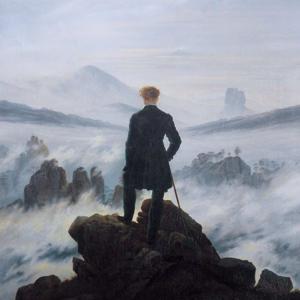


Dr. John Vervaeke and Sevilla King delve into intricate topics that cut across philosophy, psychology, and science. The conversation commences with an in-depth exploration of the "meaning crisis" and secular humanism. Sevilla King tackles the limitations of subject-object metaphysics, while Dr. Vervaeke expounds upon nominalism and its implications for understanding the world's patterns. They discuss Neoplatonism as a potential grounding philosophy for a "religion that's not a religion," and contrast it with the complexities of modern thought. As the conversation evolves, they engage in vibrant debates about embodiment, rationality, the potential and pitfalls of scientific inquiry, and the nature of love and truth. Dr. Vervaeke uses illustrative analogies, and Sevilla King emphasizes the role of mindset and the cultural implications of scientific paradigms. Each moment in the discussion serves as an intellectual milestone, pointing toward new conceptual territories and the endless horizon of human understanding.
Resources:
Sevilla King : Website | Substack | Blog | X
John Vervaeke: Website | Patreon | Facebook | X | YouTube
The Vervaeke Foundation
Books
Ennead, I: Porphyry on the Life of Plotinus. Ennead I
The Unknown God: Negative Theology in the Platonic Tradition: Plato to Eriugena - Deirdre Carabine
John Scottus Eriugena - Deirdre Carabine
The Catholicity of Reason - D.C. Schindler
The View From Nowhere - Thomas Nagel
Spinoza's Religion: A New Reading of the Ethics - Clare Carlisle
The Eternal Law: Ancient Greek Philosophy, Modern Physics, and Ultimate Reality - John H Spencer
Time Codes
00:00:00 — John Vervaeke expresses his excitement for an intellectual exchange with Sevilla King.
00:01:00 — Sevilla King delves into the "meaning crisis" and secular humanism's shortcomings.
00:03:40 — King probes into Neoplatonism as a potential grounding philosophy.
00:07:00 — Challenges to Platonism through nominalism are explained by Vervaeke.
00:09:03 — The reliance of science on real patterns is counterpointed.
00:15:17 — Sevilla King explores social patterns and their properties.
00:18:12 — The interconnectedness of different states of consciousness is emphasized by Vervaeke.
00:24:13 — King defends Persig's view of reason.
00:30:24 — Pursuing a lesser good versus a greater good is discussed.
00:33:27 — Vervaeke counters the idea of relativism.
00:38:00 — Sevilla King discusses the politicization of science.
00:42:00 — King quotes Plotinus on going beyond knowing.
00:46:49 — The expression of love as a total involvement of one's being is talked about by Vervaeke.
00:55:15 — The quantum argument of smaller particles is questioned.
00:58:40 — Advocacy for a transformation of consciousness in sciences is made by Sevilla King.
01:02:20 — The disruption of the one for manifestation is discussed.
01:06:20 — Vervaeke uses a personal analogy to explain the knowable and unknowable.
01:08:40 — Perspectives of scientists opposing religion are debated.
01:09:20 — The talk shifts to reconciling quantum physics with relativity.
01:10:19 — King and Vervaeke see opportunity in science's current instability.
01:18:20 — The host discusses Neoplatonism enhancing Christianity.
01:23:47 — King introduces Eriugena's God concept, resonating with Vervaeke.
01:30:21 — Vervaeke assures ongoing involvement in his online community.
Dr. John Vervaeke, Christopher Mastropietro, and Guy Sengstock unpack the rich layers of spiritual practice, existential philosophy, and human connection. The discussion moves fluidly from personal journeys to the theoretical frameworks that guide their collaborative work. The trio delves into the role of workshops and their impact on both individual and collective transformation. As the conversation unfolds, they touch upon the art of living well, the importance of relational dialogues, and the power of having a guiding 'North Star.' With a unique blend of academic rigor and experiential insights, this episode serves as an inspiring touchstone for anyone interested in deepening their understanding of life's complexities.
Resources:
Dr. John Vervaeke: Website | YouTube | Patreon | X | Facebook
The Vervaeke Foundation
Circling & Dialogos - Workshop October 21-22, 2023
Timecodes:
00:00:00 — Dr. John Vervaeke introduces his guests, Christopher Matropietro and Guy Sengstock. He sets the stage for a discussion on the fellowship of spiritual practice.
00:03:32 — Mastropietro reflects on the spontaneous moments of dialogos he and Vervaeke had during their writing collaborations.
00:04:29 — The joy of the journey to discovery, as opposed to just the discovery itself, is examined.
00:07:46 — The structure of influential workshops is explored, specifically how they act as the core of other practices.
00:11:43 — John Vervaeke explores the dual dimensions of the workshop experience: connection with others and spirituality.
00:19:43 — Vervaeke unveils plans for an advanced course that foregrounds existential questions.
00:24:40 — Christopher Mastropietro explores Socratic ignorance and its philosophical relevance.
00:28:35 — Guy shares a personal story, showing how the practice has made each moment an opportunity for sacredness.
00:30:23 — John closes the episode, inviting listeners to join in their living, creative endeavor.
In this third encounter between Dr. John Vervaeke and Matt Segall on Voices with Vervaeke, the conversation challenges conventional philosophical paradigms as it navigates complex terrain, from Kantian thresholds to Whitehead's modern implications. Vervaeke and Segall share a dynamic interplay, illuminating obscure ideas and rendering them pertinent to today's world. By examining the labyrinth of causality, freedom, and feeling, they invite the audience to reconsider what it means to understand ourselves and the universe we inhabit. Philosophical jargon is expertly unpacked, all the while maintaining a palpable sense of urgency as they dissect philosophical texts' relevance to everyday life. With multiple nods to their previous conversations, they lay the groundwork for a future rendezvous, promising more exploration into the evolving landscape of contemporary thought.
Matthew David Segall, Ph.D., is a multifaceted thinker straddling the realms of philosophy, science, and consciousness studies. He serves as an Associate Professor in the Philosophy, Cosmology, and Consciousness Program at the California Institute of Integral Studies in San Francisco. Not just confined to academia, Segall also chairs the Science Advisory Committee for the Cobb Institute. His work pioneers process-relational thought across various disciplines, from the natural and social sciences to the exploration of consciousness. A transdisciplinary researcher, writer, teacher, and philosopher, Segall synthesizes complex ideas into accessible insights that invite deeper inquiry.
Resources:
Matt Segall: Website | Patreon | Facebook | X | YouTube
John Vervaeke: Website | Patreon | Facebook | X | YouTube
The Vervaeke Foundation
John Vervaeke — YouTube:
Whitehead and religion in the making w/ Matt Segall
Emergence-emanation, Whitehead, Kastrup: a dialectic ontology w/ Matt Segall
Books
Crossing the Threshold: Etheric Imagination in the Post-Kantian Process Philosophy of Schelling and Whitehead - Matthew David Segall
Critique of Pure Reason - Immanuel Kant
Critique of Practical Reason - Immanuel Kant
The Critique of Judgement - Immanuel Kant
The Concept of Nature - Alfred North Whitehead
Opus Postumum - Immanuel Kant, Eckart Förster (Editor)
Miscellaneous
Mundus Imaginalis or the Imaginary and the Imaginal - Henry Corbin
People
Alicia Juarrero
Alfred North Whitehead
Martin Heidegger
Ludwig Wittgenstein
Immanuel Kant
Friedrich Wilhelm Joseph Schelling
Johann Gottlieb Fichte
Georg Wilhelm Friedrich Hegel
Eckart Förster
David Hume
Maurice Merleau-Ponty
Evan Thompson
Francisco Varela
Michael Marder
Sabine Hossenfelder
Rudolf Steiner
Robert B. Brandom
Timecodes
00:00:00 — The episode kicks off with Dr. John Vervaeke giving an introduction and presenting his guest, Matt Segall, an expert in Whitehead's theories on existential issues.
00:01:37 — Discussions around Immanuel Kant and the nature of reality come into focus as Matt Segall elaborates on his book, a revised and expanded version of his dissertation.
00:05:15 — Segall introduces the compelling concept of "etheric imagination" and its multifaceted connotations.
00:09:26 — Accessibility of philosophical texts to the general public is emphasized by Matt Segall.
00:13:30 — Agreement on Kant's idea of freedom comes from Segall, who underscores the importance of agency over mere consumer choice.
00:16:40 — Matt Segall discusses the intricacies of providential world order and imminent purpose in organisms.
00:20:00 — Segall speaks about Kant's controversial usage of categories of understanding beyond their intended realm.
00:30:20 — The enigmatic root of imagination as a vital human experience is further explored by Segall.
00:33:40 — Clarifying Matt Segall's point, Dr. Vervaeke argues that imagination should have a deeper role in cognition, not a diminished one.
00:37:00 — Polarity over strict opposites is the topic of discussion between Vervaeke and Segall.
00:38:33 — Cultural tensions between Romanticism and Enlightenment are dissected.
00:43:31 — Segall introduces Whitehead's view of space-time as an inherited pattern.
00:47:46 — Vervaeke and Segall challenge the traditional philosophical view that feelings are private.
00:54:08 — Dr. Vervaeke discusses the complexities of string theory and the importance of a follow-up discussion.
Dr. John Vervaeke engages in a multi-faceted conversation with Carla Groom, who is ingeniously incorporating cognitive science into her work. Vervaeke provides a scholarly background on mental models, drawing from philosophy and cognitive science to elucidate how humans make sense of their world. Groom shares her front-line experiences, revealing how these theories translate into actionable insights in government. The discussion evolves into a kaleidoscope of ideas, from the dynamics of mental models in decision-making to the nuanced philosophy of 'we agency' and collective intelligence. The conversation not only dissects the complexities of problem-solving in the public sector but also expands to the cosmos as they explore how NASA scientists navigate rovers on Mars. Focusing on the intricate balance between human cognition and the demands of large organizational structures, this episode is an intellectual treasure trove for anyone fascinated by the crossroads of cognitive science, governance, and human behavior.
Carla Groom is a pioneering force in the realm of behavioral science, currently steering the field of Human-Centred Design Science at the UK's Department of Work and Pensions. With a doctorate in social psychology from Northwestern University, she identified fundamental flaws in traditional empirical research methods, leading her to become a luminary in policy and organizational decision-making. Carla's unique practice focuses on debunking false assumptions in policy design by digging deep into contextual human behavior. Not only is she a sought-after conference speaker and academic peer reviewer, but she also thrives on educating others in her transformative methods. Her multidisciplinary team of experts continually enriches her own understanding, making her a perpetual student in a field in which she has substantially evolved.
Resources:
Carla Groom: LinkedIn | X
John Vervaeke: Website | Patreon | Facebook | X | YouTube
The Vervaeke Foundation
Circling & Dialogos - workshop
John Vervaeke — YouTube:
Bridging Behavioral Science & Government Policies for a Meaningful Work Experience
AI: The Coming Thresholds and The Path We Must Take | Internationally Acclaimed Cognitive Scientist
The Future of Governance:
The Future of Governance Part 1 | Jordan Hall and John Vervaeke
The Future of Governance Part 2 | Jordan Hall and John Vervaeke
The Future of Governance Part 3 | Jordan Hall and John Vervaeke
Climbing Mt. Sophia
Compassion: A Dialectic into Dialogos with John Vervaeke, Christopher Mastropietro and Ryan Barton
Books
Mental Models - Philip Johnson-Laird
Dynamics in Action: Intentional Behavior as a Complex System - Alicia Juarrero
Context Changes Everything: How Constraints Create Coherence - Alicia Juarrero
The Blunders of Our Governments - Anthony King, Ivor Crewe
Mentoring the Machines: Orientation - Part One: Surviving the Deep Impact of the Artificially Intelligent Tomorrow - John Vervaeke, Shawn Coyne
Mentoring the Machines: Origins - Part 2: Surviving the Deep Impact of the Artificially Intelligent Tomorrow - John Vervaeke, Shawn Coyne
Publications
Predictive processing and relevance realization: exploring convergent solutions to the frame problem - Brett P. Andersen, Mark Miller & John Vervaeke
Distributed Cognition and the Experience of Presence in the Mars Exploration Rover Mission - Dan Chiappe, John Vervaeke
The Enactment of Shared Agency in Teams Exploring Mars Through Rovers - Dan Chiappe, John Vervaeke
The Experience of Presence in the Mars Exploration Rover Mission - Dan Chiappe, John Vervaeke
Cognition in the Wild - Edwin Hutchins
Miscellaneous
UTOK Conference 2023 | Full Video Library
Mundus Imaginalis or the Imaginary and the Imaginal - Henry Corbin
Wolfgang Smith & John Vervaeke at The Meaning Code
People
Brett Andersen
Mark Miller
Geoffrey Hinton
Cory Lewis
Timecodes:
00:00:00 — Dr. John Vervaeke introduces Carla Groom, a UK government employee who is working on integrating cognitive science into her work. She acts as a liaison between various UK civil service departments.
00:01:20 — They discuss the challenges of understanding the underlying assumptions and mental models that people bring to problem-solving and communication.
00:07:33 — Dr. John Vervaeke discusses the concept of mental models as proposed by Philip Johnson-Laird, which he describes as a mixture of a picture and propositional labels used to model a situation.
00:15:00 — Carla Groom talks about simulating changes and responses in the UK government's hierarchical system.
00:19:20 — Dr. Vervaeke elaborates on how models act as emissaries for a worldview.
00:24:31 — The discussion centers on causality in understanding and solving issues.
00:30:09 — Groom raises questions about the hidden factors that influence our paths to success.
00:33:20 — Dr. Vervaeke shares an anecdote about NASA scientists forming connections with rovers.
00:39:07 – Vervaeke emphasizes the importance of understanding a minister's worldview.
00:44:30 — Carla emphasizes the need for new mental models in systemic thinking.
00:47:28 — Carla Groom agrees with Vervaeke on the necessity for evolving worldviews.
00:50:38 — The challenge of translating specialist language is discussed.
00:55:40 — The tension between domain specificity and professional specialization is examined.
00:58:20 — John Vervaeke explains the practice of oscillating between specialized processing and collective reasoning.
01:03:40 — Carla urges appreciation for the complexity in government problems.
Dr. John Vervaeke hosts Canadian psychiatrist Peter Czaplinski for a fascinating discussion that stretches the boundaries of conventional psychotherapy. Czaplinski, who specializes in private practice and leans heavily on existentialist perspectives, brings professional insight and personal reflections into the dialogue. The episode delves into the ethics of psychiatric care, especially in challenging patient situations, and grapples with the role of spirituality, prayer, and ritual in mental health treatment. Czaplinski's patient stories serve as potent illustrations, making the episode a rollercoaster ride through the highs and lows of psychiatric practice. The unique episode challenges healthcare professionals and patients to reevaluate their understanding of the therapeutic relationship, personal development, and ethical considerations in mental health care.
Peter Czaplinski is a psychiatrist based in Canada, renowned for his work in private practice and his existentialist approach to psychotherapy. His patient-centric philosophy blends compassion with intellectual rigor, offering a fresh perspective on the realm of mental health.
Resources:
Peter Czaplinski: Website | LinkedIn
John Vervaeke: Website | Patreon | Facebook | X | YouTube
The Vervaeke Foundation
Circling & Dialogos - workshop
Voice with Vervaeke - YouTube:
Dialogos as Healer with Peter Czaplinski
After Socrates - YouTube:
After Socrates: Episode 10a - Ecology of Practices
After Socrates: Episode 10b - Ecology of Practices
After Socrates: Episode 15 - Socrates Meets Kierkegaard: Philosophy's Greatest Dialogues
Awakening from the Meaning Crisis
People:
Gregg Henriques
Ivan Illich
In this episode of Voices with Vervaeke, Dr. John Vervaeke and guest Alexander Beiner, a leading voice in the world of psychedelics, discuss psychedelics' role in contemporary society. They tackle complex topics like the dangers and potentials of mixing politics with psychedelics, the mechanics of mystical experiences, and the modern meaning crisis. The duo also delves into the risks and rewards of commodifying psychedelic experiences. They explore the latest scientific studies, personal accounts, and anecdotal evidence, weaving them into an intricate narrative that invites listeners to consider psychedelics beyond recreational use. From trials at Imperial College London to DMT injections and the exploration of meta-cognitive skills, this episode serves as a comprehensive guide for anyone interested in the intricacies of the human mind, altered states, and the possibility of a collective conscious awakening.
Alexander Beiner (@AlexanderBeiner) is an author, journalist, and facilitator who is dedicated to bringing countercultural perspectives into mainstream conversation. With an approach that blends writing and experiential transformation, he's committed to helping us navigate the complex era we find ourselves. Alexander is the author of 'The Bigger Picture: How Psychedelics Can Help Us Make Sense of the World'' and also pens a popular Substack with the same name. He serves as an executive director for Breaking Convention, Europe's seminal conference on psychedelic medicine and culture. Additionally, he co-created and co-facilitates Regenerative Stewardship, a legal psilocybin retreat. A pioneer in alternative media, he was one of the founders of Rebel Wisdom, a platform that delved into the realms of systems change and cultural sensemaking.
Resources:
Alexander Beiner: Website | Substack | X
John Vervaeke: Website | Facebook | X
The Vervaeke Foundation
Rebel Wisdom — YouTube:
Psychedelic Capitalism and The Sacred
John Vervaeke — YouTube:
John Vervaeke: Artificial Intelligence, The Meaning Crisis, & The Future of Humanity
Conversation with John Vervaeke - AI edition - Jordan Hall
Regenerative Stewardship
Breaking Convention
Challenging Psychedelic Experiences Project
'I took part in a radical psychedelic clinical trial and it changed my life forever'
'Why Socrates was a Monster' with John Vervaeke
We Will Call It Pala
Books:
The Bigger Picture: How Psychedelics Can Help Us Make Sense of the World - Alexander Beiner
How to Change Your Mind: What the New Science of Psychedelics Teaches Us About Consciousness, Dying, Addiction, Depression, and Transcendence - Michael Pollan
Cosmic Serpent: DNA and the Origins of Knowledge - Jeremy Narby
The Razor's Edge - W. Somerset Maugham
Zen and the Art of Motorcycle Maintenance: An Inquiry into Values - Robert M Pirsig
Heidegger, Neoplatonism, and the History of Being: Relation as Ontological Ground - James Filler
Mentoring the Machines: Orientation - Part One: Surviving the Deep Impact of the Artificially Intelligent Tomorrow - John Vervaeke, Shawn Coyne
Publications:
Dose-Response Study of N,N-Dimethyltryptamine in Humans: II. Subjective Effects and Preliminary Results of a New Rating Scale - Rick J. Strassman MD; Clifford R. Qualls PhD; Eberhard H. Uhlenhuth MD; Robert Kellner MD, PhD
A Model for the Application of Target-Controlled Intravenous Infusion for a Prolonged Immersive DMT Psychedelic Experience - Andrew R. Gallimor, Rick J. Strassman
On Revelations and Revolutions: Drinking Ayahuasca Among Palestinians Under Israeli Occupation - Leor Roseman, Nadeem Karkabi
The Self-Organization of Insight: Entropy and Power Laws in Problem Solving - Damian G. Stephen, James A. Dixon
People:
Ram Dass
Timothy Leary
Terence McKenna
Marc Lewis
Ashleigh Murphy-Beiner
Robin Carhart-Harris
Juensung Kim
Michel Ferrari
Daniel Schmachtenberger
Iain McGilchrist
Émile Durkheim
Bernardo Kastrup
Nicholas of Cusa
Ben Sessa
Peter Gasser
Friederike Meckel
Aldous Huxley
Timecodes:
00:00:00 - Dr. John Vervaeke introduces his guest, Alexander Beiner, a founding figure of Rebel Wisdom.
00:03:22 - Beiner shares how the psychedelic counterculture influenced him and his exploration of the potential role of psychedelics in societal change.
00:06:50 - The conversation turns to the transformative possibilities offered by psychedelic experiences, highlighting both their enlightening and limiting aspects.
00:11:38 - Dr. Vervaeke probes the relationship between the duration of a DMT trip and its perceived intensity while contrasting mystical and visionary experiences.
00:18:00 - Delving into the sensory richness of psychedelic trips, Alexander expounds on the accompanying emotions like relevance, mystery, and familiarity.
00:23:00 - Skepticism and belief intersect as both speakers explore the advantages of an agnostic viewpoint when interpreting profound experiences.
00:26:40 - Dr. Vervaeke advocates for mindfulness as preparatory groundwork, cautioning against blindly conferring authority to psychedelic apparitions.
00:29:19 - Alexander talks about the research done by his wife, Ashleigh Murphy-Beiner, in the psychedelic world. He emphasizes the significance of leaning into what's coming up but also acknowledges the need to zoom out and take a step back.
00:34:00 - Vervaeke introduces the concept of overfitting and underfitting in machine learning, drawing parallels to our mental processes and how psychedelics can introduce noise to prevent overfitting.
00:40:43 - Reverence as a virtue is discussed, accompanied by reflections on the cultivation of epistemic virtue.
00:47:20 - Alexander suggests that even partial acceptance of panpsychism or idealism can enrich our perspectives in a meaningful way.
00:54:39 - John and Alexander discuss the dark side of AI and the manipulative potential of making things salient and opening people up to misinformation.
01:01:18 - Dr. John Vervaeke talks about the importance of the dialogical character of experiences and how they differ from traditional enlightenment experiences
01:09:51 - John describes the stages of Dialogos, including interpersonal intimacy, intimacy with the logos, and intimacy with the ground of being itself.
01:10:49 - John praises Alexander's book and his efforts to address the meaning crisis and explore the psychedelic renaissance.
Dr. John Vervaeke engages with Rafe Kelley, a visionary movement coach, in a nuanced discussion that meanders from the philosophy of human movement to the meaning of life. Kelley imparts his unique approach to personal growth, advocating for a harmonious blend of physicality and philosophical depth. He delves into the significance of sensory-motor learning, ethical action, and the role of movement in understanding both self and world. The pair traverse an array of complex topics such as the connection between cognition and emotion, the profound philosophy behind parkour, and even venture into existential crises among athletes. Kelley compellingly argues that modern humans have lost touch with their natural environment, a point underscored by Vervaeke's reflections on serious play and rituals. Drawing on literature from Maps of Meaning to predictive processing, the dialogue is layered with insights into the integration of body and mind.
Rafe Kelley (@RafeKelley) is a pioneering movement coach and founder of Evolve Move Play, an organization devoted to helping individuals reconnect with the natural world and their own innate capacity for movement. With a background spanning disciplines from parkour and martial arts to gymnastics, Kelley advocates for a holistic approach to physical training that emphasizes the mind-body connection, ethical development, and personal growth. Through workshops, podcasts, and seminars, Rafe Kelley is redefining the landscape of what it means to move, think, and live harmoniously.
Resources:
Rafe Kelley: Website | YouTube | X
Dr. John Vervaeke: Website | YouTube | Patreon | X
The Vervaeke Foundation
Workshops | Evolve Move Play
Volunteer Park Trust
Wilderness Awareness School
Voices with Vervaeke - YouTube:
The deep return to nature in order to cultivate wisdom and meaning w/ Kyle Koch
Rafe Kelley - YouTube
John Vervaeke & Lex Friedman on Return to the Source
Nest Robbers: Return to the Source 2021
The Dr. Jordan B. Peterson Podcast - YouTube:
Parkour and Rough Play: Combatting Infantilization | Rafe Kelley | EP 343
Andrew Huberman - YouTube:
Ido Portal: The Science & Practice of Movement | Huberman Lab Podcast #77
Maps of Meaning: The Architecture of Belief - Jordan Peterson
The Ego and the Dynamic Ground: A Transpersonal Theory of Human Development - Michael Washburn
Four Quartets: A Poem "Little Gidding" - T. S. Eliot
Laches, or Courage by Plato - The Internet Classics Archive
The View from Above: A Transformation of Perspectival and Participatory Knowing by John Vervaeke - Modern Stoicism
James-Lange theory - Oxford Reference
Parkour | Description, History, & Facts - Britannica
Eightfold Path | Summary & Eight Elements of the Path - Britannica
Moving like a kid again : an analysis of Parkour as free-form adult play - Margaret E. Kelley
People:
Aaron Cantor
Kyle Koch
Ben Medder
Paul Bloom
Todd Hargrove
Jonathan Pageau
Stuart Brown
Timecodes:
[00:00:00] Dr. John Vervaeke introduces Rafe Kelley, a movement coach who has been making powerful opportunities available for people.
[00:08:20] Kelley explains the connection between emotions and action potentials and provides a unique perspective on how emotions are tied to our actions and motivations.
[00:15:30] Dr. John Vervaeke discusses the relationship between physiological awareness and emotions, suggesting that even when people are immobilized, they can still experience emotions.
[00:19:40] Highlighting the complexity of the relationship between sensory motor capacity and cognitive ability, Vervaeke suggestis a top-down approach might also be at play.
[00:23:16] Rafe Kelley discusses the importance of our relationship with 'being' and how it drives meaning in life.
[00:32:53] Dr. John Vervaeke and Rafe Kelley delve into the transformative effect of parkour on the perception and understanding of the environment, enriching and expanding the geometries of thought and physical relationships.
[00:38:23] Painting a somber picture, Rafe Kelley states that modern Westerners have disconnected from nature, which strips the environment of its innate meaning.
[00:43:44] Discussing how collective intelligence can arise from group physical activities, Kelley talks about widening the scope of what we consider 'intelligent behavior'.
[00:46:14] Dr. Vervaeke shifts the conversation to cognitive and sensory motor movements, emphasizing their complex and exaptive relationship.
[00:50:14] Cognitive dimensions get a new perspective as Dr. Vervaeke talks about the role of beauty in cultivating wisdom.
[00:57:26] Questioning our notion of cognition, Vervaeke explores the possibility of sensory motor aspects extending to all cognition.
[01:00:20] Rafe Kelley highlights humans' unique ability to throw objects with precise aim, challenging the notion of human physical inferiority.
[01:02:40] Dr. Vervaeke reflects on how martial arts tap into an intuitive understanding of philosophy, giving a nod to embodied cognition.
[01:12:00] Both Kelley and Vervaeke weigh in on the meaning crisis, and how their perspectives on movement and cognition offer a pathway out.
[01:18:20] Kelley mentions Jordan Peterson's model of the archetypal hero and suggests that the physical interaction with the environment is undervalued.
[01:19:20] The conversation concludes with a proposition for a future discussion on the role of embodiment in response to AI.
Dr. John Vervaeke, Gregg Henriques, and Jordan Hall delve into the complexities of human language, spirituality, and the future of artificial intelligence. Vervaeke introduces the show by touching upon predictive processing and relevance realization theory, setting the stage for Henriques to discuss transcendent naturalism and its capacity to bridge the gap between science and spirituality. Jordan Hall introduces several groundbreaking concepts, including the transformation of language and the essence of digital media. This conversation covers the meta-crisis and even the theological underpinnings of future technology. From understanding different modes of language to the implications of large language models, this episode offers insights that will leave you questioning the very fabric of reality.
Jordan Hall (@jgreenhall) is a visionary entrepreneur and technologist whose work has left an indelible impact on various industries. With academic roots at Texas A&M and Harvard University, Jordan was among the first employees at MP3.com, revolutionizing the music industry by democratizing access to popular music. Jordan has continued to drive innovation and social change, and his multifaceted career illustrates a relentless commitment to leveraging technology for societal betterment.
Resources:
Jordan Hall: Medium | YouTube | X
Gregg Henriques: Website | Facebook | X
John Vervaeke: Website | Facebook | X
Books:
Maps of Meaning: The Architecture of Belief - Dr. Jordan Peterson
A New Synthesis for Solving the Problem of Psychology: Addressing the Enlightenment Gap - Gregg Henriques
Publications:
Predictive processing and relevance realization: exploring convergent solutions to the frame problem - Brett P. Andersen, Mark Miller & John Vervaeke
The Fifth Joint Point - Gregg Henriques
John Vervaeke YouTube:
The Future of Governance Part 1 | Jordan Hall and John Vervaeke
The Civium and the religion that is not a religion w/ Jordan Hall
Towards a Metapsychology that is true to Transformation w/ Gregg Henriques and Zachary Stein
John Vervaeke: Artificial Intelligence, The Meaning Crisis, & The Future of Humanity
Brett Andersen:
Intimations of a New Worldview - YouTube
Consciousness Emerges at the Border Between Order and Chaos
Intimations of a New Worldview
Movies
Oppenheimer (2023) - IMDb
People:
Brendan Graham Dempsey
Read Montague, Ph.D.
Paul Tillich
Nicholas of Cusa
Timecodes:
[00:00:00] Dr. Vervaeke opens the episode by introducing the guest, Jordan Hall, and co-host Gregg Henriques.
[00:03:00] Gregg Henriques expounds on transcendent naturalism, offering a conceptual bridge between scientific rationality and spiritual wisdom.
[00:07:35] Jordan Hall lays out his take on transcendent naturalism and situates it within the 'arc of big history.'
[00:11:45] Hall presents two key technological concepts that are at our societal threshold.
[00:15:13] The discussion moves into differentiating between trade and sacred languages, with an emphasis on the importance of communicative attunement.
[00:18:20] Jordan Hall posits the role of large language models as game-changers in transcending the limitations of trade language.
[00:24:11] Dr. Vervaeke discusses the concept of mutual modeling and introduces the complex sensitivity of family language, adding layers to the existing discussion.
[00:30:40] Jordan Hall outlines the real-world challenges of exponential growth, from resource management to societal structure.
[00:32:00] Hall brings up the concept of strong transhumanism, igniting conversations around human evolution and technological integration.
[00:36:45] The dialogue expands to digital media's unique potential for facilitating diverse mental models.
[00:44:30] Gregg Henriques discusses the possibilities and inherent risks of reaching the fifth joint point.
[00:48:00] Henriques shifts the focus inward, reminding us of the human need to be recognized and valued in authentic relationships.
[00:51:38] Jordan Hall frames the internet as the ultimate culmination of media, setting the stage for a new understanding of our interconnected world.
[00:54:00] Dr. Vervaeke challenges traditional distinctions between medium and intelligence, implying a more integrated future landscape.
[00:58:20] Jordan Hall reconnects the conversation to transcendent naturalism, offering a comprehensive framework that ties together the episode's numerous threads.
[01:05:00] Dr. Vervaeke introduces the intriguing idea of a chirotic decision point, adding moral and spiritual dimensions to our technological considerations.
[01:09:45] Dr. Vervaeke brings historical philosophy into play, citing Neoplatonism's relevance to the conversation.
[01:13:06] - Jordan Hall clarifies his position, stating that he does not claim to be rigorous or original, but rather aims to provoke thought and discussion.
[01:16:32] Jordan Hall discusses a metaphor of waves and cliffs, suggesting we must find and ride the waves moving in the right direction, which took 2000 years to work out the implications.
[01:18:00] Vervaeke talks about the potential for Zen and Neoplatonism to harmoniously coexist with modern scientific understanding.
[01:19:00] Gregg Henriques discusses the digital identity problem and the need for rotation on our identities to generate a digital identity solution.
[01:21:00] Jordan Hall leaves the audience with a powerful call to action, emphasizing the importance of digesting the complex conversation to fuel future dialogue.
Dr. John Vervaeke and Joe Alto explore the intersections of philosophy, psychology, virtue, and spirituality. Dr. Vervaeke, a cognitive psychologist, and Joe Alto, a campus minister, and aspiring clinical mental health counselor, dissect the modern meaning crisis and offer refreshing perspectives on living a virtuous life. This discussion is a nourishing blend of philosophical insights and therapeutic practices, creating a unique roadmap for anyone grappling with questions of meaning, goodness, and beauty. The episode brings forth debates on the diminishing efficacy of Cognitive Behavioral Therapy and underscores the essentialness of integrating philosophical ideas back into modern psychology. Joe Alto also shares compelling thoughts on his role as a spiritual guide in today's complex world, especially for those navigating existential challenges. This episode is a must-listen for anyone seeking to cultivate virtues, tackle a meaning crisis, or simply broaden their understanding of spirituality and mental health.
Joe Alto is a burgeoning intellectual force in the realms of psychology, philosophy, and theology. Currently a Clinical Mental Health Counseling student and the Campus Minister at Woodstock University in Cleveland, Ohio, Joe effortlessly melds academia with spirituality as a devoted Catholic. He's the charismatic host of "The Gist with Joe," a YouTube channel where he engages in enlightening conversations with great minds to distill the essence—the "gist"—of their intellectual and spiritual quests. His explorations focus on unearthing the good, the true, and the beautiful, making each dialogue not just a discussion, but a journey towards deeper understanding.
Resources:
Joe Alto: YouTube | Podcast
Dr. John Vervaeke: Website | YouTube | Patreon | X | Facebook
The Vervaeke Foundation
Voices with Vervaeke - YouTube:
Discovering the Four Leaps: Reason, Love, Faith, and Body | DC Schindler and Ken Lowry
The Quest for a Spiritual Home: Conference Warmup | John Vervaeke, Jonathan Pageau & Paul VanderKlay
AI: The Coming Thresholds and The Path We Must Take | Internationally Acclaimed Cognitive Scientist
More Christ - YouTube:
Paul Vander Klay, Spencer Klavan, and Michael Martin: Presence and Community in the Internet Age
Rafe Kelley - YouTube
John Vervaeke & Lex Friedman on Return to the Source
Alone with Others: An Existential Approach to Buddhism - Stephen Batchelor
How to Save the West: Ancient Wisdom for 5 Modern Crises - Spencer Klavan
The Primacy of Beauty, the Centrality of Goodness, and the Ultimacy of Truth - D.C. Schindler
Cognitive Behavioral Therapy (CBT)
Emotion-Focused Therapy (EFT)
People:
Rick Repetti
Henri de Lubac
Clay Rutledge
Nancy Snow
Ryan Barton
Eric Foster (Upfire Digital)
Timecodes:
[00:00:00] Dr. John Vervaeke introduces the episode and sets the stage for a dual interview with Joe Alto, who runs a YouTube channel called The Gist with Joe.
00:02:07 — Dr. John Vervaeke casts light on the fascinating intersection of his work with Joe's Catholic beliefs. The discussion pivots around truth, goodness, and beauty as unifying themes.
00:04:01 — The hosts discuss the intertwining of spirituality and counseling. Joe Alto reveals how various religious beliefs manifest in the world of mental health care.
00:07:57 — Dr. Vervaeke introduces philosophical counseling. He frames it as a solution to existential confusion rather than treating pathology, lending a fresh perspective to the mental health discourse.
00:11:00 — Joe Alto maps out his plans for catering to high-insight individuals.
00:15:00 — Joe Alto dives deep into the relationship between virtue and beauty, painting a vivid tapestry that includes insights from a college-read book, "Alone With Others" by Steven Batchelor.
00:17:00 — Dr. Vervaeke poses an intriguing question: How do beauty and virtue play out in psychotherapeutic practice? Especially pertinent for those grappling with existential confusion or a crisis of meaning.
00:19:20 — With a personal touch, Joe Alto discusses the complex interplay of guilt in the lives of highly insightful individuals. It's a delicate dance between self-awareness and the burden of consciousness.
00:23:20 — John Vervaeke unveils the universal triad of truth, good, and beauty. These "transcendentals," as he calls them, open up avenues for a deeper understanding across domains.
00:27:40 — Dr. Vervaeke advises on the intricate balance between truth, goodness, and beauty. Each, he suggests, has its unique form of "ultimacy."
00:38:33 — Cognitive Behavioral Therapy (CBT) comes under scrutiny. Dr. Vervaeke critiques its current use, specifically, its detachment from the original Stoic context.
00:41:20 — An amalgamation of cognitive and existentialist techniques in therapy is put on the table. Vervaeke brings in Stoicism and Buddhism, proposing a rich blend of therapeutic methods.
00:46:20 — Academic rigor meets practice as Joe Alto discusses Nancy Snow's empirical work on virtue cultivation. The focus sharpens on the value of scientific backing in psychological research.
00:51:28 — The theme of authentic living emerges. Dr. Vervaeke elucidates his aspiration to be truly Socratic, refusing to compromise this ethos for fame or influence.
00:54:02 — Mindfulness and dialogical practices are spotlighted as pivotal elements in Dr. Vervaeke's work. An "ecology" to nurture these practices is passionately advocated for.
01:00:25 — Fatherhood becomes a poignant lens through which Joe Alto examines reality. Personal life and intellectual pursuits collide, resulting in an enriched understanding of existence.
01:03:31 — Dr. Vervaeke delicately balances aspiration and humility, sharing his hope to influence a sizable audience without crossing into the realm of idolization.
01:07:58 — The digital and the physical intersect as virtue, virtuosity, and the virtual world are dissected. Dr. Vervaeke emphasizes the urgency of translating online actions into real-world impact.
01:10:20 — Beauty gets another layer of complexity as Joe poses a philosophical question about physical attractiveness. Is beauty in the eye of the beholder, or is it an intrinsic quality?
01:13:05 — The episode culminates in a profound note on the essence of inner beauty. Both speakers agree that true beauty is far more than skin deep, anchoring the conversation in an emotional and spiritual richness.
In episode 10 of the Transcendent Naturalism series, Dr. John Vervaeke, Gregg Henriques, and guest Brett Andersen delve into the intricate relationship between science, spirituality, and modern mythology. The episode is a tour de force of intellectual exploration, covering topics from self-organizing criticality to the philosophy of order and chaos. Andersen offers a compelling presentation on the role of modern myths like the Matrix trilogy in understanding our complex world. Dr. Vervaeke and Henriques provide counterpoints and extensions to Andersen's arguments, enriching the discussion with their own expertise in philosophy and psychology. The episode also explores the role of consciousness in collective intelligence and the tension between individual experience and societal norms.
Brett Andersen, a Ph.D. student in Evolutionary Psychology at the University of New Mexico, is a compelling voice at the intersection of cognitive science, complexity science, and the philosophical underpinnings of morality and religion. With a penchant for delving into controversial topics, Brett crafts thought-provoking essays on Substack and produces insightful YouTube videos. He's also in the process of writing a book, slated for a free PDF release, that encapsulates seven years of rigorous research across scientific and philosophical literature.
Resources:
Brett Andersen: Substack | YouTube | X
Gregg Henriques: Website | Facebook | X
Books:
Maps of Meaning: The Architecture of Belief - Dr. Jordan Peterson
Is There Anything Good About Men?: How Cultures Flourish by Exploiting Men - Roy Baumeister
Warriors and Worriers: The Survival of the Sexes - Joyce Benenson
Dynamics in Action: Intentional Behavior as a Complex System - Alicia Juarrero
Finitude and Transcendence in the Platonic Dialogues - Drew A. Hyland
The Self-Overcoming of Nihilism - Keiji Nishitani
History of Religious Ideas (3 book series) - Mircea Eliade
Publications:
Predictive processing and relevance realization: exploring convergent solutions to the frame problem - Brett P. Andersen, Mark Miller & John Vervaeke
Nihilism: a philosophical essay - Stanley Rosen
Voices with Vervaeke:
Relevance realization, personality, attachment and therapy w/ Garri Hovhannisyan
UTOK | Unified Theory of Knowledge:
Untangling the World Knot of Consciousness Series
Brett Andersen:
Intimations of a New Worldview, 5.3: The God of the Left Hemisphere
Intimations of a New Worldview, 5.4: The God of the Left Hemisphere
Movies:
The Matrix (1999) - IMDb
The Lion King (1994) - IMDb
Pinocchio (1940) - IMDb
Moneyball (2011) - IMDb
People:
Carl Jung
Joseph Campbell
Nietzsche
Hilary Putnam
Catherine Pickstock
Paul Tillich
Keith E. Stanovich
Michael Tomasello
Joseph Henrich
Timothy Morton
Paul Gilbert
Timecodes:
00:00:20 — Dr. John Vervaeke introduces his ongoing partner Gregg Henriques and guest Brett Anderson. He praises Brett's work, which incorporates some of his own, and the work of Jordan Peterson and others.
00:01:17 — Gregg Henriques provides an overview of the episode's topic. He introduces the concept of a worldview that bridges science and spirituality, setting the stage for the deep dive that follows.
00:02:37 — Brett Andersen begins his presentation on self-organizing criticality. He connects it to ontology, phenomenology, epistemology, and cosmology, offering a comprehensive framework for understanding the world.
00:07:00 — The distinction between modern and postmodern academic philosophy.
00:12:41 — Discussion of the Matrix trilogy as a modern mythology.
00:16:35 — Reasons why order is represented as masculine. Andersen cites the work of evolutionary psychologists, bringing a scientific perspective to the philosophical discussion.
00:22:00 — The dual nature of entropy and the importance of having the right relationship with chaos or novelty.
00:34:10 — Brett Andersen explores the hero myth.
00:44:20 — Gregg Henriques brings up trait theory, and how it relates to the discussion of fascism and decadence. He discusses the dimensions of extroversion, openness, conscientiousness, and neuroticism.
00:47:00 — Dr. John Vervaeke talks about the universal processes of relevance realization and predictive processing.
00:55:54 — The story of Osiris and Seth is discussed.
01:03:00 — Andersen discusses the denial of the contradictory experience. He delves deeper into the psychological aspects of dealing with anomalies.
01:15:35 — Dr. John Vervaeke discusses the function of consciousness in dealing with problems. He talks about the limitations of individual consciousness.
01:23:00 — Gregg Henriques asks Brett about the transformational processes that consciousness needs to undergo to awaken collective intelligence.
01:26:00 — The conversation wraps up with the trio expressing their belief in the importance of their corner of the internet.
From the publisher's feed

15,237 Listeners

2,023 Listeners

26,240 Listeners
1,607 Listeners
315 Listeners
33,428 Listeners

1,028 Listeners

2,155 Listeners
868 Listeners

4,171 Listeners
354 Listeners
1,632 Listeners

20 Listeners

436 Listeners
282 Listeners