
Sign up to save your podcasts
Or

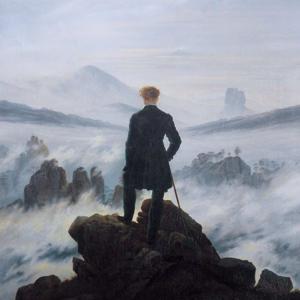


Dr. John Vervaeke and Brendan Graham Dempsey explore the intricacies of meaning, spirituality, and the human experience. The episode commences with a succinct recap of their previous discussion, touching on Neoplatonism and Zen, before diving into Brendan's recent work on the concept of meaning. The conversation spans a wide array of topics, from the epistemic aspects of meaning to the philosophical underpinnings of mindfulness and meditation. The duo also delves into the influence of historical figures like Plotinus, Dante, and Proclus, examining how their ideas can be integrated into a modern understanding of spirituality. With a focus on the potential for a synthesis between cutting-edge science and ancient wisdom, this episode offers a fresh perspective on some of the most pressing questions of our time.
Brendan Graham Dempsey is a respected voice in the realm of metamodern spirituality. With a BA from the University of Vermont and a master's degree in religion from Yale, he brings a strong academic background to his work. Authoring the influential 7-volume "Metamodern Spirituality Series" and host of its companion podcast, Dempsey is a thought leader who navigates the intricate corridors of post-postmodern culture.
Resources:
Brendan Graham Dempsey: Website | YouTube | Facebook
Books:
Aspects of Truth: A New Religious Metaphysics - Catherine Pickstock
Bonaventure: The Soul's Journey into God, The Tree of Life, The Life of St. Francis
Routledge Handbook on the Philosophy of Meditation - Rick Repetti (Editor)
God Without Being - Jean-Luc Marion
Plato's Critique of Impure Reason: On Goodness and Truth in the Republic - D.C. Schindler
Publications:
The phenomenological given and the hermeneutic exchange: which holds priority? - Catherine Pickstock
Videos:
Metamodern Spirituality | Updating Neoplatonic Spirituality (w/ John Vervaeke) Part 1
Neoplatonism and the Path of Transformation | Dr. John Vervaeke
The Cognitive Science Show | Transcendent Naturalism Series
Misc:
PLOTINUS, Ennead, Volume IV
Auguries of Innocence by William Blake | Poetry Foundation
People:
Gregg Henriques
Martin Heidegger
John Hick
Benedict De Spinoza
Immanuel Kant
Dante Alighieri
Alicia Juarrero
Emmanuel Levinas
Martin Buber
Ludwig Wittgenstein
Timecodes:
00:00:20 — Dr. John Vervaeke introduces Brendan Graham Dempsey and revisits the topics of Neoplatonism and Zen from the previous conversation, which can be found on Dempsey's YouTube channel.
00:02:30 — Dempsey outlines his work in metamodern spirituality and post-postmodernism.
00:06:35 — Dr. Vervaeke discusses the model of meaning, focusing on its epistemic aspects.
00:08:20 — Adding a layer of depth to the conversation, especially regarding a cosmological view, Brendan shares his fascination with historical figures like Plotinus, Pseudo-Dionysius, and Dante.
00:10:00 — A constructivist Piagetian developmental framework is introduced by Dempsey, shifting the conversation towards understanding the developmental aspects of meaning.
00:14:00 — The topic shifts to conformity as Vervaeke discusses its role in drawing something out of the subject. He also calls for more discourse around the Neoplatonic framework.
00:15:20 — Brendan expresses excitement about the potential of Neoplatonism in contemporary times.
00:21:00 — A mystical experience from the Ennead, IV by Plotinus, is brought up, opening the door to a discussion on the nature of mystical experiences. Dr. Vervaeke responds with an analogy about complexification, adding scientific rigor to the spiritual discussion.
00:28:11 — Dempsey introduces the concept of a principle of differentiation, suggesting that experiencing this principle could lead to a mystical experience.
00:30:44 — Referencing his work on mindfulness and the philosophy of meditation, Vervaeke introduces the idea of two movements in mindfulness practice.
00:37:36 — Dr. Vervaeke expands on Brendan's point about the contextual relationship of an individual's experience, discussing the idea of complexification.
00:44:10 — Dante's work is discussed and the concept of agape, a form of love that alters the direction of relevance realization.
00:51:28 — Brendan Graham Dempsey discusses the face as a representation of meaning, suggesting that it acts as a portal to increasing meaning.
00:58:30 — Dr. Vervaeke discusses the limitations of science when it comes to probing into its own presuppositions, introducing the concept of truths that are only disclosed through significant transformation.
01:01:03 — Brendan introduces the topic of the narrative that science provides about the origins of the universe, including the Big Bang, adding a cosmological layer to the discussion.
01:09:25 — The conversation shifts to exclusivity claims and how they can mislead us into believing something is more than just indispensable, but rather metaphysically necessary.
In Episode 9 of the Transcendent Naturalism series, Dr. John Vervaeke, Gregg Henriques, and guest Brett Andersen delve into the intricate relationship between complexity, criticality, and consciousness. The episode explores the concept of self-organized criticality and its role as a linchpin in understanding a variety of scientific topics. Andersen introduces his work on the diametric model of autism and psychosis, and the trio discusses the growing consensus around criticality as a framework for understanding brain function. The episode also touches on the psychology of meaning, the nature of sacredness, and the transformative power of psychedelics. This intellectual journey culminates in a discussion about the role of individual and collective consciousness in shaping society. Whether you're interested in the cutting-edge theories of cognitive science or the philosophical implications of modern neuroscience, this episode offers a comprehensive look at how these ideas are shaping our understanding of the world.
Brett Andersen, a Ph.D. student in Evolutionary Psychology at the University of New Mexico, is a compelling voice at the intersection of cognitive science, complexity science, and the philosophical underpinnings of morality and religion. With a penchant for delving into controversial topics, Brett crafts thought-provoking essays on Substack and produces insightful YouTube videos. He's also in the process of writing a book, slated for a free PDF release, that encapsulates seven years of rigorous research across scientific and philosophical literature.
Resources:
Brett Andersen: Substack | YouTube | X
Gregg Henriques: Website | Facebook | X
Books:
Maps of Meaning: The Architecture of Belief - Dr. Jordan Peterson
How Nature Works: the science of self-organized criticality - Per Bak
The Life of the Cosmos - Lee Smolin
The Cortex and the Critical Point: Understanding the Power of Emergence - John M. Beggs
The Structure of Scientific Revolutions - Thomas S. Kuhn
The Romance of Reality: How the Universe Organizes Itself to Create Life, Consciousness, and Cosmic Complexity - Bobby Azarian
The Voyage of the Beagle - Charles Darwin
Publications:
Predictive processing and relevance realization: exploring convergent solutions to the frame problem - Brett P. Andersen, Mark Miller & John Vervaeke
Relevance, Meaning and the Cognitive Science of Wisdom - John Vervaeke and Leonardo Ferraro
Flow as spontaneous thought: Insight and implicit learning - John Vervaeke, Leonardo Ferraro, and Arianne Herrera-Bennett
The self-organization of cognitive structure. - Stephen and Dixon
The entropic brain: a theory of conscious states informed by neuroimaging research with psychedelic drugs - Robin L. Carhart-Harris et al.
Gaining Insight Into the ''Aha'' Experience - Sascha Topolinski and Rolf Reber
The Experience of Presence in the Mars Exploration Rover Mission - Dan Chiappe, John Vervaeke
Distributed Cognition and the Experience of Presence in the Mars Exploration Rover Mission - Dan Chiappe, John Vervaeke
The Enactment of Shared Agency in Teams Exploring Mars Through Rovers - Dan Chiappe, John Vervaeke
Perception and self-organized instability - Karl J Friston, Michael Breakspear, and Gustavo Deco
Psychological Entropy: A Framework for Understanding Uncertainty-Related Anxiety - Jacob B Hirsh, Raymond A Mar, and Jordan B Peterson
Video:
Intimations of a New Worldview, Part 7.1: The Evolutionary Psychology of Meaning - Brett Andersen
MIsc.
The REBUS Model
People:
Per Bak
Brendan Graham Dempsey
Bobby Azarian
Jean Piaget
Ann Taves
Elkhonon Goldberg
Terence McKenna
Jonathan Pageau
Émile Durkheim
Ludwig Wittgenstein
J. A. Scott Kelso
David Wolpert and William Macready ("no free lunch" theorem)
Samantha Heintzelman
Time Codes:
00:00:20 — Dr. John Vervaeke opens the discussion, welcoming co-host Gregg Henriques and guest Brett Andersen.
00:00:48 — Gregg Henriques provides a recap of previous episodes. He highlights Brendan Graham Dempsey's vision on the emergence and meaning of meaning.
00:02:09 — Brett Andersen introduces himself and his work. He discusses his YouTube series 'Intimations of a New Worldview' and the diametric model of autism and psychosis.
00:03:46 — Andersen introduces the concept of self-organized criticality. He explains its significance in understanding scientific topics and their relationship to transcendent naturalism.
00:05:40 — Per Bak's work is discussed. Andersen elaborates on the phenomena of complexity in nature and the concept of self-organized criticality.
00:07:40 — The conversation turns to how complexity emerges at the border between order and chaos. Andersen explains why this concept is pivotal in various scientific disciplines.
00:09:20 — Dr. Vervaeke introduces the concept of relevance realization and maps it onto self-organizing criticality.
00:13:00 — The growing consensus around criticality as a framework for understanding brain function is discussed. Dr. Vervaeke highlights its increasing acceptance in neuroscience.
00:16:20 — Gregg Henriques introduces the concept of behavioral investment theory and aligns it with the criticality framework.
00:18:20 — Brett Andersen discusses the epistemological implications of criticality. He relates it to the functioning of the brain's two hemispheres.
00:21:41 — Henriques introduces the concept of the microscopic and macroscopic fractal of criticality. He suggests it can be observed in everyday situations.
00:25:50 — Andersen gives insights into the complexity of human existence and its sense of sacredness. He argues that humans not only manifest this complexity but also participate in it.
00:27:40 — Dr. Vervaeke argues about our ontological significance. He suggests that in terms of the universe's capacity to produce properties, we are apex and ontologically privileged.
00:32:23 — The concept of nested language is introduced. Andersen and Vervaeke discuss its implications for understanding hierarchies and change.
00:41:00 — Andersen explores the clash that occurs when an anomaly disrupts a tradition. He discusses the tension between adherents of the tradition and those who perceive the anomaly.
00:50:36 — Dr. Vervaeke talks about the ability of collective intelligence to detect hyperobjects. He suggests that these are too complex for any individual to understand.
01:00:29 — Dr. Vervaeke introduces the concept that intelligibility is almost like a living entity. He links this to the inexhaustible nature of the complexifying world.
01:02:55 — The conversation turns to the concept of affordance coupling. Dr. Vervaeke argues that internal peace is not just about the inner state but also about being in contact with reality.
01:08:36 — Dr. Vervaeke elaborates on how psychedelics can induce transformative processes. He suggests that experiences like flow states are insights into having an optimal grip on the world.
01:09:20 — Dr. Vervaeke expresses his interest in discussing the Trinitarian model in their next discussion. Gregg Henriques appreciates the concept of criticality and its implications on our ontology and cognitive grip. He expresses his interest in discussing the worldview implications.
Dr. John Vervaeke reunites with guest Damien Walter in an engaging second episode to unpack the fascinating theory of Star Trek as a potent contemporary mythos. They dissect storytelling as a "psycho-technology" that mirrors human cognition and immerses us in collective human experiences. The episode focuses on how Star Trek bridges the gap between traditional, modern, and postmodern narratives, with discussions on metamodernism and its relevance in narrative reconstruction. Vervaeke and Walter delve into Plato's influence on narrative crafting, modern myth-making, and the cultivation of new ways to access the sacred. Walter elucidates the unique structure of Star Trek, explaining its appeal to society's conservative aspects and its subversion of the military-industrial complex. Vervaeke aligns Star Trek's philosophy with the Enlightenment's mythos, further establishing its significance in our modern narrative.
Timecodes:
[00:00:00] Dr. John Vervaeke introduces Damien Walter, setting the stage for an exploration of Star Trek as a contemporary mythos.
[00:01:03] Damien Walter shares his video essay, inspiring the conversation around the postmodern deconstruction of Star Trek.
[00:03:16] Walter discusses how storytelling enables persona creation, marking a critical moment in understanding narrative impact.
[00:07:00] Vervaeke probes the authority of metanarratives, challenging postmodernism's stance, and introduces metamodernism, hinting at a new stage of societal narratives.
[00:11:07] Walter addresses our need to integrate different stages of civilization and personas into our narratives.
[00:13:06] Emphasis on the need to appreciate past narratives while fostering narrative evolution.
[00:18:15] Highlighting societal desire for dismissed narratives, using "Top Gun Maverick" and "Lord of the Rings" as examples.
[00:20:35] Vervaeke discusses liminal spaces, focusing on the reinvention of narratives.
[00:25:24] Walter delves into Plato's influence on myth-making and his innovative approach to philosophy through dialogues.
[00:30:38] Vervaeke explores the philosophical ideas of Heraclitus and Parmenides and their interplay in Plato's thinking, then the conversation shifts towards the cultivation of myths, discussing the organic growth of narratives.
[00:35:44] Walter presents Gene Roddenberry as a modern myth-maker, transitioning to Star Trek's narrative analysis.
[00:39:05] Comparing the idealized order in Star Trek's Enterprise to Plato's Republic.
[00:43:01] Vervaeke commends Damien Walter's thesis, aligning Star Trek's philosophy with the Enlightenment's mythos, dissecting Star Trek's ability to cater to conservative aspects of society while still providing a platform for progress.
[00:47:14] Walter discusses Star Trek's critique and subversion of the military-industrial complex, demonstrating its dual appeal.
[00:50:15] Vervaeke builds upon Walter's point, illuminating the series' progressive elements rooted in the Enlightenment's mythos.
[00:52:47] Walter and Vervaeke delve into the idea of Star Trek's Federation as a utopian vision, a 'sacred' space for exploring societal issues.
[00:57:00] The episode concludes with reflections on how Star Trek, as a modern mythos, offers a new perspective for understanding our society and its future.
Resources:
Voices with Vervaeke: Part 1: Science Fiction & Philosophy: Star Trek's Deep Commentary with Damien Walter | The Transformational Impact of Story Telling with Shawn Coyne
Why Do Movies Feel So Different Now?
Culture Series by Iain M. Banks
Dr. John Vervaeke and Gregg Henriques once again welcome Brendan Graham Dempsey to engage in profound explorations of transcendent naturalism, wisdom traditions, and the crucial significance of adaptive insight within our current existential landscape. Through discussions on religious reconstruction, animism, hyper-agents, and the role of wisdom in technology, the episode explores the connections between the sacred and the modern world. Dr. Vervaeke emphasizes collective intelligence and agency, while Brendan Graham Dempsey passionately speaks on the unfolding process of the sacred. Gregg Henriques proposes concepts like "wise NAGI" and reflects on collective awakening. Together, they inspire listeners to rethink the integration of religion, science, and reality, emphasizing the need for understanding and harmony.
Resources:
Brendan Graham Dempsey
Unified Theory of Knowledge
Publications:
Relevance, Meaning and the Cognitive Science of Wisdom - John Vervaeke and Leonardo Ferraro
Approaching awe, a moral, spiritual, and aesthetic emotion. - Dacher Keltner, Jonathan Haidt
Videos:
Ep 67 | UTOKing with Howard Bloom | The Blooming Universe
Neuroenlightenment: John Vervaeke at TEDxUofT
John Vervaeke: Artificial Intelligence, The Meaning Crisis, & The Future of Humanity.
John Vervaeke and Paul Vanderklay Dialogue about the Quest for a Spiritual Home
Books:
Mentoring the Machines: Orientation - Part One: Surviving the Deep Impact of the Artificially Intelligent Tomorrow - John Vervaeke, Shawn Coyne
The Romance of Reality: How the Universe Organizes Itself to Create Life, Consciousness, and Cosmic Complexity - Bobby Azarian
Quotes:
"I think the key here is to appreciate the roles that individuals can play when culture has reached its limits, and that is something that we have to take up the task of individually, of saying, alright, how do I explore this domain of the sacred, what are my intuitions, what are my sensitivities to the transcendent, and begin to give voice to those, to write them down, to externalize them, to objectify them, to put them back into culture so that we can collectively bring these new symbolizations together, ideally in a new networked way that allows for new collective representations of the sacred of the God concept of the divine." - Brendan Graham Dempsey
"There's a reconceptualization of the sacred, not as the perfect or complete, but as an inexhaustible fount of intelligibility that simultaneously always shines in and always withdraws from our grasp because relevance realization is incompletable and the world contains radical uncertainty, not just unfound or uncalculated risk." - Dr. John Vervaeke
Timecodes:
[00:00:20] Dr. John Vervaeke introduces Brendan Graham Dempsey's work on merging Vervaeke and Gregg Henriques's work related to transcendent naturalism.
[00:06:38] Dempsey discusses the Religious Reconstruction Project and the learning process, confronting the limits of world models.
[00:11:40] Gregg Henriques reflects on the idea of finding meaning at the edge of what we know.
[00:13:55] Dr. Vervaeke introduces the concept of the sacred as an always-beyond intelligibility, challenging traditional views.
[00:21:03] Delving into schemas, animism, and the risk of misunderstanding reality.
[00:28:03] Brendan Graham Dempsey introduces the concept of a new God, an iconic representation of the infinitely receding and illuminating element of reality, suggesting this could help us better understand our world.
[00:32:00] Gregg Henriques introduces the concept of the "fifth joint point" and the need for collective awakening and understanding of the underlying structure.
[00:35:00] Vervaeke mentions his upcoming book, suggesting that the proposals that prepare us for the future should have authority, and mentions the internet as a potential common ground for dealing with the advent of AGI.
[00:38:37] Speaking on the transformative power of encountering the "really real" and how it's woven into everything else suggests that this profound understanding of reality has a sense of authority.
[00:45:20] Dr. Vervaeke and Dempsey discuss logos and multi-layered symbolic articulation underscoring the importance of language in expressing this multi-layered form.
[00:49:18] Emphasizing intermediary models in learning complex concepts.
[00:52:19] Brendan Graham Dempsey discusses the idea of humans as a way for the cosmos to know itself, and how this perspective gives meaning to his life. He emphasizes the need for these truths to work at an embodied, lived reality.
[00:59:15] Stressing the need for alignment between religious conceptions and reality.
[01:02:02] Gregg Henriques shares his perspective on the enlightenment gap and the inadequacy of science in grounding our fundamental relevance realization across all modes of being.
[01:04:22] Proposing a trans-subjective epistemology, recognizing interplay over time.
[01:05:44] Discussing naturalism's role in framing the context for science.
In this third episode of a riveting series, Dr. John Vervaeke and Greg Thomas dive into the intersection of music, culture, democracy, and race. Through the philosophical lens of blues, jazz, and cultural intelligence, they explore the profound implications and existential impulses within our society. The discussion shifts to the complexities of race, stereotypes, and the pitfalls of categorization, showcasing nuanced perspectives on racialization. Thomas's insights into leadership and improvisation, balanced with Vervaeke's academic insights, bring a multi-dimensional exploration of identity, culture, and human nature. Finally, both experts call for a mindful approach, emphasizing listening, understanding, and moving away from harmful ideologies. This episode transcends political boundaries and offers fresh perspectives on complex issues.
Resources:
Jazz Leadership Project
Jazz Leadership Project Blog
Culture vs Race: American Identity Hangs in the Balance | Political Extremists vs. The Middle Path: Why I Remain a Radical Moderate | Deracialization Now - Part One | Deracialization Now - Part Two | From Race to Culture to Cosmos - Greg Thomas
Talking to Strangers: Anxieties of Citizenship since Brown v. Board of Education - Danielle Allen
Reconstructing Individualism: A Pragmatic Tradition from Emerson to Ellison - James M. Albrecht
Zombies in Western Culture: A Twenty-First Century Crisis - John Vervaeke, Christopher Mastropietro, and Filip Miscevic
The Interpretation of Cultures - Clifford Geertz
The Quest for a Spiritual Home: Conference Warmup | John Vervaeke, Jonathan Pageau & Paul VanderKlay
The Collected Essays of Ralph Ellison - Ralph Ellison
Theory of Racelessness: A Case for Antirace(ism) - Sheena Michele Mason
The Arc of a Bad Idea: Understanding and Transcending Race - Carlos Hoyt
Cultural Intelligence: Transcending Race, Embracing Cosmos course
How Culture Works - Paul Bohannan
Virtue of doubt | William Cunningham | TEDxUTSC
Bright Future Network
Race in North America: Origin and Evolution of a Worldview - Audrey Smedley
JRS EP143 John Vervaeke Part 1: Awakening from the Meaning Crisis
JRS EP 161 Greg Thomas on Untangling the Gordian Knot of Race
Time Codes:
[00:00:00] Dr. John Vervaeke introduces the episode and the guest, Greg Thomas. They discuss the intersection of music, culture, democracy, and race.
[00:02:40] Greg Thomas discusses the emphasis of session one on music, specifically blues and jazz, and their profound philosophical implications.
[00:05:00] Discussion of the existentialist impulse of the blues, influenced by famous thinkers, bridging music with philosophy.
[00:09:14] Greg Thomas introduces the Jazz Leadership Project's four principles: individual excellence, antagonistic cooperation, shared leadership, and ensemble mindset. This brings practical application into the conversation and demonstrates the fusion of art and leadership.
[00:13:15] The importance of pragmatist pluralism in the American tradition and its relevance to democracy.
[00:17:25] Vervaeke describes what he means by the "agent arena relationship" and connects it to his use of the term "cultural intelligence".
[00:20:00] Dr. John Vervaeke introduces the concept of niche construction, relating both biological and cultural evolution.
[00:26:47] Greg Thomas introduces the topic of culture and race. He shares Ralph Ellison's perspective on culture as a different cultural complex, not a deprivation.
[00:30:55] Dr. Vervaeke shares a story from a documentary, highlighting the impact of historical events on present generations and their collective memory.
[00:38:46] The concept of colorblindness and its implications in societal interactions.
[00:41:40] Thomas references anthropologist Paul Bohannon's work on culture and nature, outlining a concept of recontexting. This adds another layer of academic substance and further connects culture to innovation.
[00:47:40] Suggestion that music is a form of psychotechnology, creating a collective identity and interaction. This intriguing idea brings technology into the cultural discourse.
[00:53:00] Thomas elaborates on the five steps of racialization, providing specific examples for each step. He provides a clear framework for understanding complex social constructs.
[00:58:12] The conversation delves into the problematic nature of stereotypes and essentialization. This moment is pivotal in addressing common misconceptions in society about race.
[01:01:01] Greg Thomas discusses the necessity of slow thinking in understanding human nature. This encourages reflection and resonates with the need for deeper understanding in complex discussions.
[01:07:40] Vervaeke and Thomas discuss the importance of understanding identity in cultural terms, not racial terms. A strong statement on how both left and right perspectives on race can be problematic.
[01:09:57] Thomas emphasizes the need to move from understanding race to action. A call to action that pushes the conversation towards practical applications.
[01:13:20] The duo emphasizes the need for good faith and sophistication in understanding complex issues. This is a meta-commentary on the art of discourse itself, relevant beyond the topic at hand. They agree to a fourth episode to continue their exploration.
[01:19:00] Thomas points out that solutions will not come from political ideology but from participation, power, and wisdom.
[01:22:40] The importance of language in reinforcing racial identity and the need to separate oneself from this language.
In Episode 7 of TN, John and Gregg welcome Brendan Graham Dempsey. Brendan is a writer, theologian, and theorist whose work focuses on the meaning crisis and the nature of spirituality in metamodernity. He is also the host of the Metamodern Spirituality podcast, and he runs the Skymeadow Retreat, which has hosted several metamodern spirituality events. In this episode, Brendan shares about his recent work, which he wrote about in Emergentism, and from his in-progress work on the meaning of meaning. He shows how his work, UTOK, and Bobby Azarian's unified theory of reality can provide a framework to delineate the history and development of cultural meaning-making systems (i.e., large-scale systems of justification). This episode is full of powerful convergences between Brendan's vision and the worldview for bridging science and spirituality that is emerging in TN.
Resources:
Brendan Graham Dempsey
Oika
Claude E. Shannon: Founder of Information Theory - Graham P. Collins
The Levin Lab
UTOK
Publications:
A Spirit of Trust: A Reading of Hegel's Phenomenology - Robert B. Brandom
The information theory of individuality - David Krakauer
Semantic information, autonomous agency and non-equilibrium statistical physics - Artemy Kolchinsky and David H. Wolpert
Videos:
The Reality of Meaning: Knowledge, Value, and Complexity | Consilience Conference '23
Books:
The Romance of Reality: How the Universe Organizes Itself to Create Life, Consciousness, and Cosmic Complexity - Bobby Azarian
Context Changes Everything: How Constraints Create Coherence - Alicia Juarrero
Cosmic Evolution: The Rise of Complexity in Nature - Eric J. Chaisson
Quotes:
"Transcendent naturalism is trying to articulate a new worldview that holds science and spirituality, [and] orients us towards a frame of understanding for the 21st century that can enable a collective orientation toward wisdom." - Gregg Henriques
"Meaning equals information relevant to enhancing viability of an entity in context, and meaning is inherently transjective. It's not in the subject, it's not in the object, it's in the relationship between the two." - Brendan Graham Dempsey
"Earth burns like a quasar of complexification in the night sky. So if our measure is mass, then yes, but if our measure is complexification, especially an ontic epistemic conformity that affords awareness, experience, potentiality, growth, oriented towards a potential future, et cetera, that is an area in which we find ourselves quite uniquely situated in the universe in terms of the everyday knowledge that we have of things in the world. " - Gregg Henriques
Timecodes:
[00:00:00] Dr. John Vervaeke introduces the episode and the guests, Gregg Henriques and Brendan Graham Dempsey. The episode focuses on Transcendent Naturalism within the Cognitive Science Show.
[00:02:34] Gregg Henriques introduces transjective epistemology, detailing its relation to pragmatism.
[00:03:13] Collective awakening towards wisdom is discussed, focusing on its societal implications.
[00:07:55] Brendan Graham Dempsey explains the principle of a naturalistic universe and the energy-information relationship.
[00:10:40] Dempsey reveals the concept of figure-ground distinction in information theory.
[00:16:28] The discussion revolves around the learning process in cosmic evolution and complexification.
[00:20:10] The concept of symbolic learning and its relevance to the spiritual and sacred is discussed with emphasis on the need for a focus on this area in the conversation.
[00:27:52] Dr. Vervaeke explores the idea that humans are symbols, connecting to collective intelligence.
[00:30:14] Dempsey discusses the role of symbolic information in forming justification systems and the enculturation of individuals.
[00:35:00] The conversation shifts to penetrating the unknown and restructuring it for higher complexity.
[00:39:16] Henriques connects to justification systems theory, revealing the alignment with Habermas's structure.
[00:45:23] Dempsey delves into the progression from modernity to post-modernity and new integrations.
[00:53:41] Dr. Vervaeke criticizes postmodernism and its impact on the understanding of reason and wisdom.
[00:56:26] Dempsey responds to Dr. Vervaeke, discussing faith in the emergence of new understanding.
[01:00:39] Henriques shares his agnostic stance, addressing the expansion of knowledge within ambiguity.
[01:04:09] Discussion of trust and cosmic history in response to Dr. Vervaeke's post-Hegelian, Neoplatonic faith.
[01:07:12] The importance of pattern recognition in navigating a chaotic world.
[01:07:39] Henriques describes his role in carrying a "baton of energy information" within the greater story, and discusses the importance of being a good ancestor and considering the ripple effects of our actions across time, emphasizing the need for a better understanding of our human natures and our relationships.
Dr. John Vervaeke and guest Greg Thomas delve into the nuanced realm of 'Democracy as Antagonistic Cooperation' in the second installment of a captivating three-part series. Drawing parallels with jazz, Greg Thomas showcases how arts can lead to a deeper understanding and appreciation of democratic values. Dr. Vervaeke emphasizes the criticality of a shared cultural repertoire that trains cognition and shapes how democracy is internalized. They touch upon the often-overlooked interdependencies in politics, suggesting that opposing sides often complete each other, creating a holistic understanding. Greg Thomas brings forth the influence of Black Americans on democracy, given their unique sociocultural positioning. Topics span from the importance of humor in a democratic setup to the transformative virtues necessary for its functioning, marrying the worlds of art, music, and politics and offering a fresh perspective on the mechanics of democracy.
Resources:
Videos
John Vervaeke: Democracy and the Relevance Realization of Distributed Cognition
Books
Developmental Politics: How America Can Grow Into a Better Version of Itself - Steve McIntosh
Civic Jazz: American Music and Kenneth Burke on the Art of Getting Along - Gregory Clark
Zombies in Western Culture: A Twenty-First Century Crisis - John Vervaeke, Christopher Mastropietro, and Filip Miscevic
The Courage to Be - Paul Tillich
How Culture Works - Paul Bohannan
Justice by Means of Democracy | Talking to Strangers: Anxieties of Citizenship since Brown v. Board of Education - Danielle Allen
The Omni-Americans: Black Experience And American Culture | The Hero And the Blues - Albert Murray
Invisible Man | Shadow and Act | Going to the Territory - Ralph Ellison
Publications
Can Civic Jazz Resolve Our American Dilemma? | Democracy and a Post-Tragic Blues Sensibility | Charlie Parker's Higher Octave | Democracy 3.0: Chaos Before Order | Democracy 3.0: The Consilience Project | Democracy 3.0: The Wise Democracy Project - Greg Thomas
On Ritual Knowledge - Theodore W. Jennings
The Little Man at Chehaw Station - Ralph Ellison
Ensemble Interplay: Owning Change and Transformation - Jewel Kinch-Thomas
Music
Cherokee - 1942, Charlie Parker, Parker was 22 years old when this was recorded. Three years later he transformed jazz improvisation with his variation on "Cherokee" entitled "Koko."
Passion Dance - McCoy Tyner
Movies
Get Out (2017)
The Wicker Man (1973)
Misc
Danielle Allen, Harvard
Michael Winkelman
An Omni-American Future
The Wise Democracy Pattern Language
Timecodes:
[00:01:02] Greg Thomas introduces the theme "Democracy as Antagonistic Cooperation." Dr. Vervaeke explains opponent processing.
[00:08:10] Dr. John Vervaeke discusses the concept of polarity in politics, where each side demonizes the other, leading to a breakdown of collective intelligence and problem-solving capabilities. Greg Thomas points out the interdependent polarities in American politics, where the gaps and biases of one side are filled by the other.
[00:10:40] A significant question arises: How can we bridge political divides?
[00:16:52] Greg Thomas introduces the book, Civic Jazz, which integrates the work of Kenneth Burke, discusses the importance of rhetoric in art and communication, and explains how art, particularly jazz, can move people toward a realization of American civic and democratic ideals.
[00:26:05] Dr. John Vervaeke discusses the importance of cultural forms, such as music, in training cognition and proposes the transformation of dialectic into dialogos as a means to provide people with alternatives to the courtroom of debate, emphasizing the need for a broadly shared cultural repertoire that affords the cultural cognitive grammar of appropriating and appreciating democracy.
[00:30:00] Black Americans' unique democratic perspective is discussed, seen through the lens of Jazz. Dr. Vervaeke discusses the adjacent innovation thesis, highlighting peripheral perspectives.
[00:38:18] Greg Thomas showcases the educational prowess of his band, blending theory with musical practice, and describes a moment of antagonistic cooperation where the band was challenged to demonstrate their process of integrating new members and resolving conflicts.
[00:46:48] Discussion of the concept of scapegoats, particularly in a democratic society. Thomas emphasizes the importance of recognizing the sacrifices made by others for social cohesion and the significance of peaceful transitions of power.
[00:55:12] The visceral nature of fear and the feeling of impending doom are discussed, likening this feeling to the suspense and terror in a well-crafted horror movie. The movie "Get Out" is discussed as a reflection of identity manipulation.
[01:00:01] The symbolic "sunken place" is unpacked, discussing enslavement and manipulation in democratic societies. Greg Thomas discusses the importance of respecting and honoring those who sacrifice and lose in a democracy.
[01:07:00] The role of humor in preventing conflicts from turning hostile is highlighted.
[01:08:38] Dr. Vervaeke poses a thought-provoking question about the displaced scapegoat function in societies. They explore how certain forms of scapegoating, such as lynching, have been eradicated, but the underlying function may still persist in different manifestations, prompting reflection on how to address this function in a changing society.
[01:17:17] Dr. John Vervaeke discusses the concept of being a citizen of the cosmos, emphasizing the crucial transformation of character and the cultivation of virtue and wisdom that it demands. He highlights how cultivating these virtues is essential for the effective functioning of a democracy.
[01:18:45] Democracy 3.0 is introduced, hinting at an evolved democratic pattern language.
Dr. John Vervaeke and Gregg Henriques lead an insightful discussion with guests Dr. Rich Blundell and Rita Leduc, diving into the heart of creativity, art, and cognitive science. The conversation explores the profound concepts of cognitive approaches, creativity, the importance of intimacy in art, and the link between ecological health and economic wealth. As the guests share their unique perspectives on life, creativity, and science, they lay out a path for deeper understanding, and encourage exploration beyond the surface. The episode also features a thought-provoking discussion on niche construction, ecological intelligence, and the interconnectivity of nature and culture.
Resources:
Oika
Oika Spain - Fred Adam
Incomprehensible Certainty: Metaphysics and Hermeneutics of the Image - Thomas Pfau
Quotes:
"Extended naturalism is committed to all of that. There's a difference between knowledge and grasping the significance of the knowledge, especially the significance for personal transformation. When one grasps that significance so that one overcomes ways in which one is self-deceptive, disconnected from reality so that one understands reality in a way that transforms one. That's a good account of what wisdom is." - Dr. John Vervaeke
"I call it the process of acquaintance. I aspectualize my understanding of that place. I use so many different media and techniques—different muscle memories, different colors, sensory things, let as much in as possible, but also let myself in. This is, in fact, me trying to understand myself at a particular time and place." - Rite LeDuc
"The garden provides a place for the two cultures of the academy—science and humanity—to come together in a mutually inspiring dialectical dance." - Gregg Henriques
Timecodes:
[00:00:00] Dr. John Vervaeke introduces the episode and highlights the interconnectivity of the Cognitive Science series and guests. He presents the ongoing Oika framework discussion.
[00:02:24] Dr. Blundell starts his summary of the previous discussion by addressing the difference in approaches to using propositional knowledge and creating theoretical frameworks.
[00:09:52] Gregg Henriques emphasizes the need to clarify worldviews and values. He speaks about embodying and living these values in social practices.
[00:12:20] Rita Leduc talks about stepping out of comfort zones, embracing vulnerability, and building trust. She emphasizes the experiential mode for creatives.
[00:19:00] Rita explains her artistic process, describing it as a process of acquaintance where she attempts to understand a place, using different media and techniques to aspectualize her understanding.
[00:24:16] Dr. Vervaeke discusses the coherency of different aspects, likening them to melody notes rather than cacophony.
[00:28:14] The discussion turns towards the aspectualization of dialogically enhancing understanding of a place. Dr. Rich Blundell shares an anecdote about filming a documentary, highlighting the immersive and transformative nature of the creative process.
[00:32:52] Dr. Vervaeke explores mental framing, linking it to art creation. He draws parallels to the Eastern Orthodox tradition of icon carving.
[00:34:53] Rita Leduc explains the idea of niche construction in her practice, showcasing her unique artistic philosophy.
[00:41:30] Dr. Vervaeke seeks further explanation of niche construction in Rita's art. Dr. Rich Blundell explains how Rita's process of creating art involves letting the world shape her and creating an artifact that becomes part of the world.
[00:47:06] Dr. John Vervaeke draws a connection to wisdom and the process of internalizing the world and its spiritual intelligence. Leduc connects her feelings and experiences in the woods to a cosmic story. She describes how this connection affirms her creativity.
[00:49:23] Dr. Rich Blundell discusses the concept of Eidos and how it relates to the process of life emerging from non-life.
[00:51:55] Gregg Henriques talks about the reawakening of intimacy across various aspects of life. Dr. Vervaeke prompts Henriques to elaborate on the concept of intimacy, emphasizing its recovery in modern society.
[00:53:00] Henriques explores the idea of embodiment of intimacy across ontological continuity and how it has been lost in modern socialization.
[00:57:00] Dr. Rich Blundell introduces the idea of radical affection and falling back in love with life.
[01:00:36] Rita criticizes superficiality in work and encourages deep intimacy.
[01:06:02] Dr. Blundell shares various projects, including European collaborations and economic models. He discusses the importance of recoupling economic wealth and ecological health, highlighting how artists can contribute to this through their unique practices.
[01:10:44] Discussion about how art is now back in service of the sacred, overturning the modern and postmodern thrust in art, and how the art around the sacred predates agriculture and is probably the precursor to civilization, challenging certain reductionist accounts of human behavior.
[01:17:20] - Gregg Henriques underscores the significance of Oika and its connection to art. He reflects on his own journey and the importance of cognitive science and psychology in filling explanatory gaps, and he emphasizes the need to appreciate our natural intelligence as we transition into the artificial world.
Dr. John Vervaeke sits down with Greg Thomas, a renowned jazz musician, and musicologist, to delve into the first of a multi-part series. They embark on a journey, exploring the intersections of jazz, blues, leadership, and life. Greg integrates his deep understanding of music into a leadership program, shedding light on how jazz serves as a potent metaphor for leadership and team cohesion in contemporary workspaces. Beyond its rhythmic allure, jazz becomes a powerful tool for understanding democracy, cultural intelligence, and the intricacies of human interactions. They also touch upon the profound philosophical dimensions of blues and its reflection on life's challenges, struggles, and ultimate triumphs. The conversation gracefully traverses through personal anecdotes, profound quotes, and philosophical insights, positioning jazz not just as a musical genre but as a deep existential commentary on life and leadership.
Resources:
Jazz Leadership Project
Jazz Leadership Project Blog
A Brief Intro Into the Blues Idiom Wisdom Tradition
Primary Principles of Jazz
"Billy Boy" from Miles Davis' Milestones album (full version)
Esoteric Jazz: Pat Martino in Dialogue
John Vervaeke: Democracy and the Relevance Realization of Distributed Cognition
After Socrates: Episode 22 - Exploring The I-Thou
Wynton Marsalis
Albert Murray: Stomping the Blues | From the Briarpatch File: On Context, Procedure, and American Identity
The Consolation of Boethius as Poetic Liturgy - Stephen Blackwood
Finite and Infinite Games - James Carse
Trading Twelves: The Selected Letters of Ralph Ellison and Albert Murray
Group Genius: The Creative Power of Collaboration - Keith Sawyer
The Three Trumpeteers - Nicholas Payton
Take My Hand, Precious Lord - Thomas Dorsey
Timecodes:
00:00:00 Introduction - Dr. John Vervaeke introduces the episode and announces a collaboration with Greg Thomas, integrating music into a leadership program.
00:01:00 Jazz as Metaphor for Leadership - Greg Thomas speaks about his role at the Jazz Leadership Project and how he uses jazz as a metaphor for workplace leadership. He highlights musical principles guiding effective teamwork and leadership.
00:02:40 Three Key Discussion Topics - Greg outlines three key discussion topics, including jazz as an embodied art and democracy's relationship with E pluribus unum, emphasizing jazz's multi-faceted relevance.
00:06:13 Jazz and Tai Chi Chuan - Dr. Vervaeke shares his experiences with jazz and its parallels to Tai Chi Chuan, bridging Eastern practices and jazz, underscoring their shared themes of flow and embodiment.
00:10:00 Blues Music and Its Relation to Jazz - The topic of blues music and its relation to jazz is introduced. As jazz's precursor, the blues provides historical and emotional context to their conversation.
00:17:05 MLK's View of Jazz - Greg discusses Dr. Martin Luther King's view of jazz as a medium for meaning, love, happiness, and faith.
00:22:00 Role of Blues in Articulating Life Experiences - Dr. Vervaeke delves into the role of blues in articulating life experiences and nurturing wisdom.
00:23:51 Experiencing vs. Playing the Blues - The difference between experiencing the blues and playing them, with emphasis on musical expression as a coping mechanism, sheds light on how art allows individuals to confront life's challenges.
00:28:20 Mythic Foundation of Blues - References to Albert Murray's work and discussion on the mythic foundation of blues music. Tying the blues to myths underscores its timeless, universal appeal.
00:34:40 Philosophical Aspects of Blues - Philosophical aspects of blues music are discussed, comparing them to existentialism, unraveling the blues' ability to reflect on life's questions.
00:39:40 Universal Themes in Music - Dr. Vervaeke draws parallels between the Jewish exile and broader themes of exile, emphasizing the universality of themes within music and human history.
00:43:22 Jazz as Homegrown Wisdom Tradition - The discussion shifts to the four Ps (propositional, procedural, participatory, and perspectival) in the context of jazz. Dr. Vervaeke and Greg Thomas discuss jazz and blues as a homegrown wisdom tradition in the United States.
00:48:46 Global Influence of Black American Music - Greg Thomas highlights the global influence of black American music and his commitment to sharing its lineage with the world.
00:54:26 Jazz Apprenticeship Tradition - Greg Thomas explains the apprentice tradition in jazz and how it transitioned into an educational program.
00:57:15 Jazz's Adaptability - Greg touches on the adaptability of jazz, relating it to Aristotle's lasting wisdom.
01:00:00 Disposition Towards Elegance - Greg quotes from Murray's book, discussing the descendants of American slaves' disposition towards elegance, providing context for understanding the roots of jazz and blues.
01:03:20 Shared Leadership - Introduction of the concept of "Shared leadership," emphasizing mutual accountability and using jazz ensemble dynamics as a metaphor for collaborative teamwork.
Dr. John Vervaeke hosts an enlightening discussion with Gregg Henriques, Dr. Rich Blundell, and Rita Leduc. The conversation journeys through the realms of transcendent naturalism, embedded cognitive science, and the profound connection between individuals and the cosmos. Henriques dives deep into the concept of the Enlightenment Gap, offering fresh perspectives on how we relate to the world around us. Dr. Blundell's insights range from the interconnectedness of various scientific and philosophical theories to the transformative "earthling theory." Meanwhile, Rita Leduc shares her unique approach to understanding the world, promoting an open and curious view that leads to a journey through deep time. The discussion takes a critical turn as it addresses the challenges posed by social media algorithms on perception. Through a tapestry of profound insights and shared wisdom, this podcast episode bridges the gap between science and spirituality, urging listeners to seek joy, connectedness, and a more profound understanding of reality.
Resources:
Oika
Unified Theory Of Knowledge (UTOK)
Bearing Witness to Epiphany - John Russon
Timecodes:
[00:00:35] Gregg Henriques introduces transcendent naturalism, laying the foundation for the episode's central topic.
[00:07:08] Rita Leduc speaks on her enduring collaboration with Dr. Blundell, highlighting their synergistic relationship.
[00:14:40] Dr. Blundell addresses the necessity for revolutionary metaphors for reality.
[00:23:38] Dr. Vervaeke delves into the psyche-reality connection and revitalizing the sense of the sacred.
[00:30:23] Dr. Blundell introduces "brachiation" as a metaphorical tool for understanding nature.
[00:39:01] Dr. Blundell elucidates the profound cosmic connection akin to love and joy.
[00:47:35] Interconnectedness of varied scientific and philosophical theories is explored.
[00:55:51] Dr. Vervaeke addresses the influence of social media algorithms on worldview.
[01:00:24] Henriques presents the Enlightenment Gap, contrasting outside-in and inside-out perspectives.
[01:07:36] Leduc's take on Oika's philosophy, fostering an open worldview.
[01:15:01] Dr. Vervaeke champions a life enriched by joy over mere self-denial.
[01:22:53] Commitment to learning and open discussion is emphasized by Dr. Vervaeke.
[01:24:02] Henriques shares insights on nature's resonant frequency and our position within.
[01:25:08] Leduc weighs in on understanding and resonating with nature.
[01:16:00] The difference between pleasure and profound joy is explored.
From the publisher's feed

15,237 Listeners

2,023 Listeners

26,240 Listeners
1,607 Listeners
315 Listeners
33,428 Listeners

1,028 Listeners

2,155 Listeners
868 Listeners

4,171 Listeners

354 Listeners

1,632 Listeners

20 Listeners
436 Listeners
282 Listeners