
Sign up to save your podcasts
Or

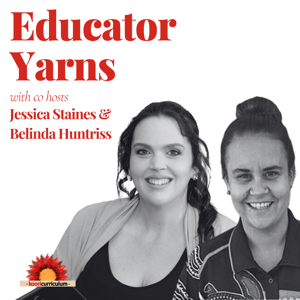


Connecting with community is the topic that fills the Koori Curriculum inbox more than any other, so in this episode Jess, Shan and Kelly sit down and give it a proper yarn. You've sent the email. You've waited a fortnight. Nobody has written back, and you're now hovering over the send button for a third try. Jess starts much earlier than that, with your why.
Wanting a mural on the side of your building leads you to a different person than wanting to learn local language, understand the local seasons, plant a bush tucker garden or find mentoring for an Aboriginal staff member. Elders, traditional owners and language custodians each hold different roles, and knowing the difference saves everyone a lot of awkwardness. From there, the team walk through Shan's community connections template, the art of "connecting with your feet" at NAIDOC Week and National Reconciliation Week events, and why black business rarely gets done over email.
Kelly, who answers hundreds of emails on Jess's behalf, talks about what happens when a polite no meets pushback after pushback. Then come the stories. A Townsville educator turned up with throat lozenges and chocolate when Jess flew in sick, and a university student asked how she could help rather than what she could take.
There's a bookshop ambush the morning after a Darwin conference, and a lovely woman in her seventies who arrived at Jess's front door holding Aboriginal wrapping paper. It's honest and generous, and in places it's very funny. Jess's dad and The Wiggles deserve a spin-off.
Key takeaways
Shan wraps the episode with the golden rule the whole team stands behind: "give, give, then take." Giving can be a cup of tea in an elders' tent, a shared post or an afternoon packing down marquees, and it builds the kind of trust that no email ever will.
Listen to the full episode for every story, including Jess's dad's chats with Stan Grant at Broadway Shopping Centre. Then join the Koori Curriculum Educator Community on Facebook, where the yarn continues, and you can tell us about the first community event you've put in your diary.
Resources discussed in this episode:
Connect with Jessica Staines:
Subscribe to Educator Yarns on your favourite podcast platform:
In this episode of Educator Yarns, Jess Staines, Director of Koori Curriculum, sits down with Shan and Kelly for an honest yarn about real partnership with Aboriginal families once you look past the flags and the bush tucker puzzles.
Shan shares a story from an early masterclass, recorded about three months into working at Koori Curriculum, that has shaped every conversation since. An Aboriginal mum explained that she can't send her daughter to care with an ordinary scraped knee without wondering whether she'll be collecting her child that afternoon or answering questions from officials.
Jess talks about the phone call she got after her son's four-year-old health check at preschool. A stranger read out a list of problems over the phone: a lisp, feet that turn inward, his weight, and back teeth that little hands physically can't reach yet. She describes how fast that deficit list made a confident Aboriginal mum feel like she was failing.
Kelly's son started childcare at 18 months and turns six in March. In all that time, his service has never updated her enrolment details, even after she moved from Service NSW into early childhood consultancy. And their invitation to join the RAP committee came with a strong whiff of "here, you do it".
Along the way you'll hear about birth certificates, baby sensory classes, a suspiciously handsome line-up of charity collectors at Brisbane Airport, and plenty of practical strategies you can take into your room on Monday morning.
Key Takeaways
The yarn covers a lot of ground, so here are the moments we reckon will change how you greet, enrol and walk alongside Aboriginal families at your service.
This episode is a gentle shake on the shoulder for every educator who has quietly wondered why an Aboriginal family keeps their distance. Trust gets built in the small moments: the morning greeting, the honest explanation on an enrolment form, the "no worries" when a family says not right now.
Jess, Shan and Kelly give you the stories and strategies to start building it today. Press play, have a giggle at the Brisbane Airport story, and then head to the Koori Curriculum website for our three new webinars on cultural safety for Aboriginal educators, families and communities.
Then share this episode with the colleague who still thinks a flag on the fence is enough.
Resources discussed in this episode:
Connect with Jessica Staines:
Subscribe to Educator Yarns on your favourite podcast platform:
Pull up a chair, because this one's a proper yarn about the Early Childhood Australia conference at the Melbourne Convention and Exhibition Centre, where roughly 2,800 educators took over the venue.
It was the first time Koori Curriculum ran a booth together. Kelly clocked somewhere between 13,000 and 14,000 steps on day one. Setting up the booth took about seven hours, and they packed it down in 20 minutes flat so they could get a front-row seat for Thomas Mayo's keynote. Shan came out of what he lovingly calls the "deep, dark curriculum dungeon" to meet the people he usually only sees as names on a screen.
Jess ran into a mum whose child she taught 18 years ago, which is the kind of thing that happens when you've been in this sector long enough to get a little bit famous and a little bit embarrassed about it. The booth was set up like a living room instead of a shop, full of programming examples, Shirley Pearl letters and well-loved scrapbooks from the travelling mascots.
The team also had a visit from Play School's Kiya and Gemima, and Shan still isn't over it. Underneath all the laughter is a serious conversation about embedding Aboriginal perspectives in a way that fits your community, your children and the moment you're in. Copying someone else's beautiful wall display won't get you there.
Here's a taste of what the episode covers:
Five years in the making. Jess talks about Intercultural Ways, the module Koori Curriculum created with Early Childhood Australia, starting around 2019. The team travelled to every state and territory to yarn with educators doing exemplary work. The self-paced course takes about 2.5 hours, but Jess's advice is to listen to the full-length yarns as well. That's where the gold is.
The principles and the process stay the same. The practice changes. An Aboriginal community-controlled service, a busy urban centre and a regional not-for-profit will all look different, and they should. Cookie-cutter approaches belong in the biscuit tin.
The stew and the saltshaker. A metaphor first shared at a Koori Curriculum retreat flips the usual thinking. In most mainstream services, the programme is the stew, and Aboriginal perspectives get sprinkled in like salt. In many Aboriginal community services, culture is the stew, and the EYLF, the NQS and the Code of Ethics are the seasoning.
Rubbish bins in Japan and caring for Country. Jess's partner Charlie taught Japanese in Japan for years. His stories about carrying your rubbish home and sorting it into seven categories turn into a lovely lesson in using the same intercultural process for every culture in your room.
The 8 Ways of Learning is a springboard. The custodians of the 8 Ways are happy for educators to use the framework, if you adapt it to the children, families and Country where you are. A lift-and-drop template won't do that.
Mogo Aboriginal Preschool and the presentation that vanished. Mogo had 15 minutes to share years of beautiful work, and then the conference tech lost their presentation on the day. They've since recorded it, and their 45-minute coaching camp webinar is a treat if you want the whole story.
Team meetings with a highlighter. Educators told the team they use the weekly Koori Curriculum newsletter articles as reflective readings. Staff highlight what speaks to them, then use those notes to shape their service's own vision and philosophy statement.
Tag the author, please. Aboriginal authors and illustrators pour their heart into their books and hear "my kids love this" far less often than you'd think. A quick message on social media can make someone's whole week, especially in a job that brings plenty of unkind feedback too.
Thomas Mayo, in person at last. Shan interviewed him about Dear Son and Finding the Heart of the Nation. Jess interviewed him alongside Bernard Namok Jnr about Our Flag, Our Story. There's also a family link through the waterfront, because both Jess's and Kelly's dads worked on boats. In his keynote, Thomas said that around 64% of voters aged 18 to 24 voted Yes in the 2023 referendum. Take that as a reply to recent claims, including Pauline Hanson's, that early childhood educators are "indoctrinating" children with Acknowledgements of Country. The work you do on the mat matters, and it's already showing results.
Floor books and slow pedagogy. Jess shares why Claire Warden's talking and thinking floor books fit so naturally with the 8 Ways and Intercultural Ways. You don't need to run two programmes side by side. Bring the two together, then refine as you go.
There's also a little confession from Jess, who insists she's shy (yes, really). She calls herself an extroverted introvert, and Shan and Kelly are the ones nudging her out of the booth to say hello.
Whether you were at the conference or following along from home, this episode will leave you feeling encouraged and ready to look at your own programme with fresh eyes. If you visited the booth, the team would love to hear what you took home with you and what you made of that very large Shirley Pearl display.
Have a look at the photos on the Koori Curriculum Facebook and Instagram pages, then head to The Koori Curriculum Educator Community to see how the team can support you and your early learning service. Hit play, grab a cuppa and yarn with us.
Resources discussed in this episode:
Connect with Jessica Staines:
Subscribe to Educator Yarns on your favourite podcast platform:
Jess, Shan and Kelly took to Brisbane for the TIPIAC x Riley Callie Resources National First Nations Education Conference, and this episode is their yarn about it. They went as a team, with Jess presenting and Shan hoping for a moment with Anita Heiss at her book signing. Kelly signed up as soon as Jess mentioned Briggs was playing Crowbar that night.
What followed was matching double denim, a two-storey country bar full of Dolly Parton and Alan Jackson, a "Boot Scootin' Boogie" line dance (the only one Jess & Kel know), and a Briggs gig that sent two country disco balls straight into a heavy metal mosh pit. Then comes the after-party story from the ECA conference. It involves a Magic Men show, a fainting episode, a bloke who looks like Channing Tatum, and footage that now lives on Instagram forever
Once everyone stops crying with laughter, the conversation turns serious. The team talks about what being "all in" really looks like, why a Reconciliation Action Plan is far more than a tick-and-flick exercise, and how a CSIRO workshop on traditional sifting and winnowing can change your sensory tubs.
They also discuss why Torres Strait Islander peoples deserve recognition, and how to bring conference learning back to your service before it fades. This is a proper behind-the-scenes episode. Expect to giggle and expect to come away with plenty to think about.
Here's a taste of what Jess, Shan and Kelly unpack in this episode, from the giggles to the big ideas:
Conferences are where the learning happens, and they're also where the relationships happen. The chats at your table during the breaks stay with you for months.
The team is already counting down to next year's First Nations Education Conference in Sydney, and Shan's advice is simple: if you're on the fence about a conference or retreat, go and do the thing. At worst, you learn something new and make a few friends.
Press play to hear the whole yarn, then head to the Koori Curriculum website to explore our Reconciliation Action Plan course and Acknowledgement of Country webinar. If you find a certain video on the Magic Men Instagram page, please don't tag Jess.
Resources discussed in this episode:
Connect with Jessica Staines:
Subscribe to Educator Yarns on your favourite podcast platform:
We're kicking off season six from the country's beating heart. Jessica Staines recorded this episode at Uluru with two Koori Curriculum team members, Shan Morrison and Kelly Quick, after a few days of on-the-ground research for next year's retreat on Anangu Country. That's the fourth retreat, and it'll bring 40 educators from all over Australia to the Red Centre.
Picture a 4:30 am wake-up, a pitch-black bus, and a huge shadow slowly rising from the flat landscape until Uluru is right there. Then the weather turned. Desert hail at a bus stop stunned even the locals. Camels, a spot of line dancing, and a blessed cancelled tour turned into an unplanned breakfast buffet.
The team also joined the roughly 1% of visitors who've seen waterfalls running down Uluru, the rock shining like someone had painted it silver. The bus ride back was very quiet. The team also gets honest about the hard stuff. Uluru had been greener than anyone could remember after nearly 400 millimetres of rain, yet barely a bird or kangaroo was to be seen, and that silence says a lot about colonisation on Country today.
Then Jess, Shan and Kelly talk about what happens behind the screen. A Koori Curriculum blog drew 567 comments in a single day, most of them racist, and Kelly opens up about her first real look at what Aboriginal businesses cop online. Jess shares a moment at Coles that her four-year-old daughter witnessed, and what the anti-bias approach looks like when it's your own kid asking why a stranger was angry at you.
Key Takeaways
This episode will follow you into your next staff meeting, and that's a good thing. Jess leaves you with questions to take back to your team:
Grab a cuppa for this one. It's warm and raw, there are some giggles, and it's exactly the yarn educators need right now.
Then join the Koori Curriculum Educator Community on Facebook, where Kelly will be posting prompts to keep the yarn going (Jess admits she wouldn't remember to do it herself).
Resources discussed in this episode:
Connect with Jessica Staines:
Subscribe to Educator Yarns on your favourite podcast platform:
In this episode of Educator Yarns, we sit down with Sue Currell, an early childhood teacher from rural Cobden, Victoria, who has spent over 25 years transforming how Aboriginal perspectives are embedded in early learning settings.
As a proud Gunditjmara woman who discovered her Aboriginal heritage later in life, Sue brings a unique perspective to reconciliation and cultural education. Working with a vibrant group of 16 children in the Narang room (meaning 'sun' in local Dhauwurd Wurrung language), Sue demonstrates how authentic Aboriginal education goes far beyond tokenistic activities.
From her early days attending workshops with Aunty Fay Muir to becoming a driving force for cultural change across her organisation, Sue's journey exemplifies how one educator's commitment can ripple throughout an entire community.
Her nomination as Educator of the Year beautifully captures her impact: "When you walk through Sue's classroom, Aboriginal culture is part of the day-to-day programme… You can hear and see a balance of traditional, contemporary, urban, regional and local perspectives through her holistic approach to teaching."
Key Takeaways:
Start small and authentic - Focus on one aspect that resonates with you, whether it's learning about local seasons or animal names, rather than trying to implement everything at once
The Eight Ways of Learning framework - Use this pedagogical tool to ensure all children can access learning outcomes equally, regardless of their preferred learning style
Create resource repositories - Sue developed a digital 'wall' where all educators can access Aboriginal stories, songs, and resources shared by Koorie Preschool Field Officers
Six seasons curriculum - Learn how incorporating Indigenous seasonal calendars creates meaningful connections between children, Country, and community throughout the year
Building genuine partnerships - Success comes from actively seeking connections with local Elders, attending cultural events, and most importantly, listening to Aboriginal voices
Document and share knowledge - Prevent valuable learning moments from being lost by systematically collecting and sharing resources with your teaching team
Embed culture in daily rhythms - From morning acknowledgements to using Dhauwurd Wurrung language for local animals, make Aboriginal perspectives part of everyday practice
Tell truth-telling stories gently - Use resources like Adam Goodes' 'Birrarung's Country' to introduce concepts of colonisation in age-appropriate ways
Connect with families meaningfully - Share your Aboriginal education journey with families weekly and invite them to contribute their own cultural knowledge
Recognise it's an ongoing journey - As Sue quotes from Banjo Clarke's wisdom: "It's not like a jigsaw that at some point one day the jigsaw is complete"
Sue's story reminds us that embedding Aboriginal perspectives authentically requires patience, humility, and genuine commitment to learning. Her transformation from having minimal resources 20 years ago to creating a classroom where Aboriginal culture breathes through every experience shows what's possible when educators take an active rather than passive approach.
Whether you're just beginning your journey or looking to deepen your practice, Sue's practical wisdom and heartfelt dedication offer a roadmap for creating truly inclusive early learning environments where all children can see themselves reflected and valued.
Access the episode resources here.
Have a question for Educator Yarns? Call 02 5300 0306 and leave a voicemail with your early childhood query about embedding Aboriginal perspectives, and you might hear your question answered in a future episode.
In this episode of Educator Yarns, we meet Andrea de Silva, a finalist for Ally of the Year at the Koorie Curriculum Educator Awards.
Originally from India, Andrea shares her remarkable journey of cultural discovery and connection as she learned to authentically embed Aboriginal perspectives into her early childhood education practice. From initial uncertainty about protocols to becoming a confident advocate for Gana culture and language, Andrea's story demonstrates how educators from diverse backgrounds can meaningfully engage with Aboriginal cultures.
Through her experiences with Uncle Tamaru's Gana language course, building relationships with Aboriginal families, and navigating cultural protocols with respect and humility, Andrea offers practical wisdom for educators beginning their own reconciliation journey.
Her approach—rooted in genuine curiosity, cultural humility, and a commitment to getting it right—provides a roadmap for non-Indigenous educators seeking to create inclusive learning environments that honour Aboriginal voices and perspectives.
Key Takeaways:
Andrea's journey reminds us that becoming an ally isn't about perfection—it's about showing up with respect, humility, and a genuine desire to learn.
Her story proves that educators from any cultural background can become powerful advocates for Aboriginal perspectives when they approach the work with an open heart and commitment to getting it right. As Andrea says, "Support the Aboriginal culture and connect with the generations… don't be fearful."
Access the episode resources here.
Have a question for Educator Yarns? Call 02 5300 0306 and leave a voicemail with your early childhood query about embedding Aboriginal perspectives, and you might hear your question answered in a future episode.
In this episode of Educator Yarns, we sit down with Hayley Callaghan, a dedicated cultural officer and early childhood educator at Learning Pathways in Toowoomba.
Hayley, a proud Kamilaroi woman from Goondiwindi Country, shares her profound journey of cultural rediscovery and how she's transformed her personal exploration into meaningful educational practices.
From raising over $500 through a Where It Yellow fundraiser to implementing the Aboriginal Eight Ways of Learning pedagogy, Hayley demonstrates how one educator's passion can create ripple effects throughout an entire learning community.
As a mother of five who grew up disconnected from her cultural roots, Hayley's story resonates deeply as she discusses the challenges and triumphs of fostering cultural understanding in mainstream early childhood settings.
Her candid insights about building relationships with families, supporting fellow educators, and creating culturally safe environments offer practical wisdom for anyone seeking to authentically embed Aboriginal perspectives in their practice.
Key Takeaways:
Personal cultural journey matters - Hayley's experience of rediscovering her own Kamilaroi heritage whilst teaching demonstrates that educators are learners too, and authenticity comes from acknowledging we're all on a continuous learning journey
Start with connection, not perfection - Building genuine relationships with Indigenous families begins with simple invitations and regular communication, even if uptake is initially low
The Eight Ways of Learning pedagogy - Hayley is actively working to unpack and implement this Aboriginal pedagogical framework throughout her centre, showing how Indigenous ways of knowing can enhance all children's learning
Visible cultural presence creates belonging - Strategic use of hallway displays, provocations with natural materials, and welcoming signage helps families know they belong from the moment they enter
Challenge requires courage - Overcoming the perception that focusing on Aboriginal culture excludes others required direct conversations with staff about ensuring all cultures are valued and represented
Time constraints are real but manageable - As a working educator with limited cultural officer hours, Hayley emphasises the importance of planning and preparation to maximise cultural learning opportunities
Community connections amplify impact - Attending cultural events and building relationships with local Indigenous community members like Tiffany provides invaluable support and authentic learning experiences
Children as cultural leaders - Hayley's seven-year-old son's enthusiasm for cultural dancing and her older son applying to be his school's cultural leader shows how educator passion transfers to the next generation
Nature as teacher - Getting outside and connecting with Country provides inspiration and authentic contexts for cultural learning that can't be replicated indoors
Include Aboriginal perspectives regardless of enrolment - Teaching on Aboriginal land means embedding Indigenous perspectives is essential whether you have Aboriginal children in your service
Hayley's journey reminds us that creating culturally rich early learning environments doesn't require perfection—it requires heart, humility, and a willingness to learn alongside the children and families we serve.
Access the episode resources here.
Have a question for Educator Yarns? Call 02 5300 0306 and leave a voicemail with your early childhood query about embedding Aboriginal perspectives, and you might hear your question answered in a future episode.
In this episode of Educator Yarns, hosts Jessica Staines from Koori Curriculum and Bec Buch from Bush Kindy Australia dive deep into practical examples of environmental advocacy that early childhood educators can implement with young children.
From the fascinating world of flying foxes in Tamworth to innovative community partnerships, Jeff and Beck share real-world stories that demonstrate how children as young as three can become active environmental stewards in their communities.
The conversation explores the critical importance of coexisting harmoniously with native wildlife, challenging common misconceptions about 'pest' animals, and revealing how simple actions like proper wildlife feeding can make significant impacts.
Through engaging anecdotes about children writing to MPs, creating handmade signs to protect koalas, and participating in regeneration programmes, this episode showcases how environmental education goes beyond mere observation to foster genuine reciprocity with Country.
Key Takeaways:
This episode brilliantly demonstrates that environmental advocacy isn't just about teaching children to care for nature - it's about empowering them to take meaningful action that creates real change in their communities.
By embedding these practices into daily routines and viewing every interaction with the environment through the lens of reciprocity and respect, educators can nurture a generation of environmental custodians who understand their role in caring for Country.
Whether you're just beginning your journey with bush kindy programmes or looking to deepen your existing practice, the practical strategies and inspiring stories shared by Jeff and Beck will transform how you approach environmental education in your setting.
Have a question for Educator Yarns? Call 02 5300 0306 and leave a voicemail with your early childhood query about embedding Aboriginal perspectives, and you might hear your question answered in a future episode.
Join us for an inspiring conversation with Lisa Mavin, the nominated supervisor of Tilly's Play Development Centre in Rutherford, who shares her remarkable 18-year journey in early childhood education and her transformative approach to embedding Aboriginal perspectives in mainstream services.
As a non-Aboriginal educator married into an Aboriginal family, Lisa offers a unique perspective on creating culturally safe environments and building genuine relationships with First Nations communities.
In this episode, Lisa reveals how she completely restructured her centre's approach to Aboriginal perspectives by starting with foundational education about history and intergenerational trauma, shares the powerful story of how her husband's willingness to share his experiences catalysed change throughout their 50-educator team, and discusses innovative initiatives like their Cultural Squad programme.
From transforming a mainstream service into one that's recognised and celebrated within the local Aboriginal community to practical strategies for overcoming common challenges, this conversation is packed with actionable insights for educators at any stage of their reconciliation journey.
Key Takeaways:
Lisa's journey demonstrates that creating a culturally responsive early childhood service isn't about perfect knowledge or having all the answers—it's about commitment, humility, and the willingness to challenge existing practices.
Access the episode resources here.
Have a question for Educator Yarns? Call 02 5300 0306 and leave a voicemail with your early childhood query about embedding Aboriginal perspectives, and you might hear your question answered in a future episode.
From the publisher's feed
155 Listeners
576 Listeners

791 Listeners
565 Listeners

219 Listeners

46 Listeners

154 Listeners

86 Listeners
17 Listeners
88 Listeners
379 Listeners

94 Listeners
58 Listeners

22 Listeners

11 Listeners