
Sign up to save your podcasts
Or

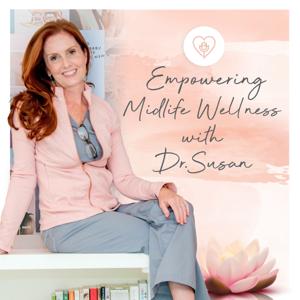


Based on Podcast App listening data
Can GLP-1 medications cause vision loss? And if you’re taking semaglutide or another GLP-1 agonist, is NAION something you should actually be worried about?In this video, I take a closer look at the emerging research around GLP-1 agonists and NAION (non-arteritic anterior ischemic optic neuropathy), a rare but serious condition that can cause sudden vision loss.We’ll put the headlines into perspective by looking at relative risk versus absolute risk, how rare NAION actually is, and what the current evidence does—and does not—tell us about a possible connection with GLP-1 medications.And that context matters. GLP-1 medications have demonstrated important benefits that extend well beyond weight loss, including cardiovascular and metabolic benefits, with growing evidence across kidney disease, fatty liver disease/MASH, peripheral artery disease, and other areas of health.So should concerns about NAION change the way we think about these medications? As always, it comes down to understanding the actual risk, considering the potential benefits, and making an individualized decision with your healthcare provider.I’ll also discuss the latest expert guidance and why getting regular eye exams and paying attention to changes in your vision should be part of the conversation.Studies and resources discussed in this video are linked below:Glucagon-Like Peptide-1 Receptor Agonists and the Risk of Non-Arteritic Anterior Ischemic Optic Neuropathy: A Consensus Statement by the North American Neuro-Ophthalmology Society and the American Academy of Ophthalmologyhttps://www.aao.org/education/clinical-statement/glucagon-like-peptide-1-receptor-agonists-risk-of-GLP-1 Receptor Agonists: Cardioprotection Beyond Weight Loss and Longevity in Mice:https://drive.google.com/file/d/1lpo9-h8Ta52nVXHuvcWpz9ZMcKXrLeZ-/view?usp=sharingComplete Midlife Wellness CenterLearn More About Holistic Medical Optimization Program https://completemidlifewellnesscenter.com/holistic-medical-weight-optimization-program/info/Interested in booking an appointment?Click here: https://completemidlifewellnesscenter.com In-person care in Houston and Cypress Virtual medical care across Texas, California, Colorado and New Mexico
A lab result can fall within the “normal” range and still not answer the most important clinical question: Is this number optimal for your health—not only today, but for the years ahead?In this video, I take you inside a patient’s Quest Diagnostics lab report and compare the standard reference ranges with the optimal ranges we use at Complete Midlife Wellness Center—a clinical protocol I developed to help us look beyond what is merely common and identify what may better support long-term health and longevity.Quest is a fantastic laboratory, but it is important to understand what a laboratory reference range actually means. For many tests, that range reflects where the vast majority of the laboratory’s reference population falls. It does not necessarily tell us what is optimal for a specific woman, nor does it account for her symptoms, medical history, age, or future health goals.In other words, being inside the reference range does not always mean there is nothing more to discuss.I walk through the key laboratory categories every woman should understand:• Lipids and cardiovascular risk, including ApoB and Lp(a)• Inflammation markers, including hs-CRP and homocysteine• Metabolic health, including glucose and insulin• Thyroid function• Iron, vitamins, and micronutrients• Estradiol, progesterone, FSH, testosterone, and cortisol• Liver and kidney functionI also explain when hormone testing should be performed if you are still having periods—and why timing can significantly affect how your results are interpreted.Download both documents below, take them to your healthcare provider, and use them to begin a more informed conversation about your health:HRT Labs: https://drive.google.com/file/d/15CGqzO6s-yE3Tf_ehCNgo4aUwasJ3rcu/view?usp=sharingOptimal Ranges: https://drive.google.com/file/d/1hRj9LAjPVkO8pvt2GgLI53ATmzFVHnFz/view?usp=sharingThese documents are educational tools and should always be reviewed with a qualified healthcare provider who understands your complete clinical picture.Interested in booking an appointment?Click here: https://completemidlifewellnesscenter.com In-person care in Houston and Cypress Virtual medical care across Texas, California, and New MexicoDr. Susan Hardwick-Smith is a nationally recognized, board-certified OB/GYN, Certified Menopause Practitioner, author, physician executive, and authority on menopause, hormone therapy, sexual wellness, and women’s healthspan. She founded Complete Midlife Wellness Center, serving women in Houston and through virtual care. Previously, she built Complete Women’s Care Center into the nation’s largest all-female OB/GYN group. Named a Texas Super Doctor 20 times, she is a member of the Texas Super Doctors Hall of Fame and a former national Physician Executive of the Year. Dr. Susan is the best-selling author of Sexually Woke, host of the Empowering Midlife Wellness podcast, and author of the forthcoming Create Her. She makes complex medical science practical, helping women live healthier, stronger lives in midlife and beyond. She has also completed nine full Ironman triathlons and more than a dozen marathons and supports women’s health initiatives in Sierra Leone and Malawi. Follow Dr. Susan on social media:Instagram: www.instagram.com/drsusanofficialFacebook: www.facebook.com/drsusanofficialPodcast: https://apple.co/3ePe5NJTikTok: www.tiktok.com/@drsusanofficial Bring Dr. Susan’s Voice to Your Stage Speaking & Media Inquiries: https://drsusan.com/speaking-media/ Get Sexually Woke: Awaken the Secrets to Your Best Sex Life in Midlife & Beyond: https://amzn.to/3rm47IU Pre-order Create Her: Aging Into the Healthiest Version of Yourself:https://drsusan.com/create-her-book/ Join the Well Past Midlife Masterclass:www.wellpastmidlife.com Join The Gathering Waiting List:https://drsusan.com/the-gathering-a-houston-womens-circle/
I believe we need to keep doing hard things as we age.
Not because life isn’t already hard enough. It is. And as we get older, some of the hard things coming our way won’t be things we get to choose.
But there is something powerful about repeatedly choosing to do difficult things. Every time we do, we create another piece of evidence for ourselves: I can do hard things. Do it often enough, and that evidence becomes self-trust.
I recently completed my 36th half IRONMAN. Swimming in cold water is particularly challenging for me because I have Raynaud’s syndrome, so you could reasonably ask: Why on earth would you keep doing this?
Because it’s incredibly rewarding to know that I can.
And here’s the interesting part: the more we do hard things, the easier doing hard things becomes. Not necessarily because the thing itself has changed, but because we have.
This connects to something I’ve been thinking and writing about for years: the difference between willpower and willingness.
Willpower is pushing yourself into another must-do habit. It requires effort and an ongoing internal fight. Willingness comes from somewhere different. You know why something matters to you. You consciously choose it. And with repetition, that choice can become increasingly easeful.
The hard thing may still be hard. But doing it no longer has to feel like a fight.
In this episode, I talk about why deliberately doing difficult things is part of how I think about living well—and how moving from wanting to willing can change our relationship with challenge, health, and ultimately ourselves.
This idea—learning to move from willpower to willingness, and creating a healthier future from a place of intention rather than obligation—is also at the heart of my upcoming book, Create Her, coming in February 2027. It’s not a book about how to be healthy. It’s about understanding why—and how taking care of ourselves can begin to feel less like something we have to force and more like something we genuinely choose.
Learn more about Create Her and pre-order the book:https://drsusan.com/create-her-book/https://www.amazon.com/exec/obidos/ASIN/1637636644?tag=simonsayscom
Dr. Susan Hardwick-Smith is a nationally recognized, board-certified OB/GYN, Certified Menopause Practitioner, author, physician executive, and authority on menopause, hormone therapy, sexual wellness, and women’s healthspan.
She founded Complete Midlife Wellness Center, serving women in Houston and through virtual care. Previously, she built Complete Women’s Care Center into the nation’s largest all-female OB/GYN group. Named a Texas Super Doctor 20 times, she is a member of the Texas Super Doctors Hall of Fame and a former national Physician Executive of the Year.
Dr. Susan is the best-selling author of Sexually Woke, host of the Empowering Midlife Wellness podcast, and author of the forthcoming Create Her.
She makes complex medical science practical, helping women live healthier, stronger lives in midlife and beyond.
She has also completed nine full Ironman triathlons and more than a dozen marathons and supports women’s health initiatives in Sierra Leone and Malawi.
Follow Dr. Susan on social media:
Instagram: www.instagram.com/drsusanofficial
Facebook: www.facebook.com/drsusanofficial
Podcast: https://apple.co/3ePe5NJ
TikTok: www.tiktok.com/@drsusanofficial
Bring Dr. Susan’s Voice to Your Stage
Interested in booking Dr. Susan for a keynote, panel discussion, podcast interview, media appearance, or special event?
Speaking & Media Inquiries: https://drsusan.com/speaking-media/ Get Sexually Woke: Awaken the Secrets to Your Best Sex Life in Midlife & Beyond: https://amzn.to/3rm47IU Pre-order Create Her: Aging Into the Healthiest Version of Yourself:https://drsusan.com/create-her-book/ Join the Well Past Midlife
Masterclass:www.wellpastmidlife.com Join The Gathering Waiting List:https://drsusan.com/the-gathering-a-houston-womens-circle/
So many women quietly live with discomfort or self-consciousness about their most intimate anatomy, believing they shouldn’t talk about it—or that wanting to change something makes them vain. It doesn’t.I made this video because women deserve honest information about their bodies without embarrassment or judgment. I explain what labiaplasty is, why women consider it, and how changes in the labia can affect comfort, clothing, exercise, intimacy, and confidence.I understand personally how something that appears “cosmetic” can shape everyday life. After having my twins, I lived for years with excess abdominal skin that changed how I dressed, travelled, and felt during intimacy. Choosing to have it removed gave me back a sense of ease in my body.Having performed more than 600 labiaplasty procedures, I see this work as both surgery and artistry. Every woman’s anatomy is different, and every procedure requires careful attention to proportion, symmetry, function, sensation, and a natural result.You are already beautiful. You also have every right to make thoughtful decisions about your own body and what helps you feel most at home in it.Watch the video—and if it speaks to something you’ve been quietly wondering about, let’s talk. You can book a private consultation with me or share this with a woman who deserves to know she has choices, too.Interested in booking an appointment?Click here: https://completemidlifewellnesscenter.com In-person care in Houston and Cypress Virtual medical care across Texas, California, and New MexicoDr. Susan Hardwick-Smith is a nationally recognized, board-certified OB/GYN, Certified Menopause Practitioner, author, physician executive, and authority on menopause, hormone therapy, sexual wellness, and women’s healthspan. She founded Complete Midlife Wellness Center, serving women in Houston and through virtual care. Previously, she built Complete Women’s Care Center into the nation’s largest all-female OB/GYN group. Named a Texas Super Doctor 20 times, she is a member of the Texas Super Doctors Hall of Fame and a former national Physician Executive of the Year. Dr. Susan is the best-selling author of Sexually Woke, host of the Empowering Midlife Wellness podcast, and author of the forthcoming Create Her. She makes complex medical science practical, helping women live healthier, stronger lives in midlife and beyond. Follow Dr. Susan on social media:Instagram: www.instagram.com/drsusanofficialFacebook: www.facebook.com/drsusanofficialPodcast: https://apple.co/3ePe5NJTikTok: www.tiktok.com/@drsusanofficial Bring Dr. Susan’s Voice to Your StageInterested in booking Dr. Susan for a keynote, panel discussion, podcast interview, media appearance, or special event?Speaking & Media Inquiries: https://drsusan.com/speaking-media/ Get Sexually Woke: Awaken the Secrets to Your Best Sex Life in Midlife & Beyond: https://amzn.to/3rm47IU Pre-order Create Her: Aging Into the Healthiest Version of Yourself:https://drsusan.com/create-her-book/ Join the Well Past Midlife Masterclass:www.wellpastmidlife.com
Join The Gathering Waiting List:https://drsusan.com/the-gathering-a-houston-womens-circle/
Muscle is increasingly recognized as central to healthy aging and longevity. Yet severe loss of muscle mass and strength remains a significant challenge for some women after menopause—and our therapeutic options are limited.So I want to ask a question that may feel uncomfortable: Is there a place for anabolic-androgenic steroids (AAS) in carefully selected postmenopausal women?The evidence is limited, but it is not nonexistent. Small studies in older and postmenopausal women have shown promising signals around muscle protein synthesis, lean body mass, and bone density with anabolic therapies. Other research has explored whether adding testosterone to estrogen may provide additional benefits for bone and body composition.These studies are small, and they certainly don’t give us definitive answers. But I believe they give us enough to stay curious and keep asking questions.None of this means anabolic steroids should become routine treatment for postmenopausal women. This is not a recommendation. It is an exploration of the science we have, the science we are still missing, and whether anabolic therapies could someday have a carefully defined role for women experiencing severe muscle loss after menopause.Sometimes keeping an open mind is where better research—and better options for women—begin.Interested in booking an appointment?Click here: https://completemidlifewellnesscenter.com In-person care in Houston and Cypress Virtual medical care across Texas, California, and New MexicoDr. Susan Hardwick-Smith is a nationally recognized, board-certified OB/GYN, Certified Menopause Practitioner, author, physician executive, and authority on menopause, hormone therapy, sexual wellness, and women’s healthspan. She founded Complete Midlife Wellness Center, serving women in Houston and through virtual care. Previously, she built Complete Women’s Care Center into the nation’s largest all-female OB/GYN group. Named a Texas Super Doctor 20 times, she is a member of the Texas Super Doctors Hall of Fame and a former national Physician Executive of the Year. Dr. Susan is the best-selling author of Sexually Woke, host of the Empowering Midlife Wellness podcast, and author of the forthcoming Create Her. She makes complex medical science practical, helping women live healthier, stronger lives in midlife and beyond. She has also completed nine full Ironman triathlons and more than a dozen marathons and supports women’s health initiatives in Sierra Leone and Malawi.Follow Dr. Susan on social media:Instagram: www.instagram.com/drsusanofficialFacebook: www.facebook.com/drsusanofficialPodcast: https://apple.co/3ePe5NJTikTok: www.tiktok.com/@drsusanofficial Bring Dr. Susan’s Voice to Your StageInterested in booking Dr. Susan for a keynote, panel discussion, podcast interview, media appearance, or special event?Speaking & Media Inquiries: https://drsusan.com/speaking-media/ Get Sexually Woke: Awaken the Secrets to Your Best Sex Life in Midlife & Beyond: https://amzn.to/3rm47IU Pre-order Create Her: Aging Into the Healthiest Version of Yourself:https://drsusan.com/create-her-book/ Join the Well Past Midlife Masterclass:www.wellpastmidlife.com
Testosterone gel and testosterone cream may sound interchangeable—but does the formulation actually change how much testosterone gets into your bloodstream?
I recently came across research that made me take a much closer look at this question, and the difference surprised me.
In this video, I compare research looking at topical testosterone in postmenopausal women and explore why the same milligram dose does not necessarily produce the same blood testosterone level when delivered in different formulations.
We’ll talk about what the studies show about absorption and serum testosterone levels, why blood tests don’t always tell the whole story, and how factors including SHBG and protein binding, androgen receptor variation, and intracellular testosterone production can complicate the picture.
I also take a closer look at the Global Consensus recommendations for testosterone therapy in women—and an important limitation: much of the evidence behind current recommendations comes from studies using a low-dose testosterone patch that is not currently available.
I’m also currently participating in a large testosterone study in collaboration with Baylor College of Medicine. The study is still underway, so we don’t yet have final results, but we are already seeing preliminary data that adds another interesting piece to this conversation. I share some of those early numbers in the video and explain why they caught my attention.
The bigger point? Testosterone therapy in women is nuanced. Dose matters. Formulation matters. Blood levels matter. But so does the individual woman and how she responds.
This is something I just learned more about, and I couldn’t wait to share it with you.Studies discussed:
1. Fooladi E, et al.
Pharmacokinetics of a Transdermal Testosterone Cream in Healthy Postmenopausal Women
https://pubmed.ncbi.nlm.nih.gov/24845394/
2. Heald A, et al.
Testosterone Gel and Serum Levels in Postmenopausal Women with HSDD
Clinical Endocrinology. First published March 15, 2026.
https://onlinelibrary.wiley.com/doi/10.1111/cen.70119
3. Global Consensus Position Statement on the Use of Testosterone Therapy for Women
https://pubmed.ncbi.nlm.nih.gov/31474158/
Want to learn more about testosterone?Watch my must-see Testosterone for Women playlist, where I break down the science, myths, treatment options, emerging research, and the questions women should be asking about testosterone therapy.
Watch the Testosterone for Women playlist on YouTubehttps://www.youtube.com/playlist?list=PLXB0Z6uY3JgE
Interested in booking an appointment?
Click here: https://completemidlifewellnesscenter.com
In-person care in Houston and Cypress Virtual medical care across Texas, California, and New Mexico
When we talk about GLP-1 medications like semaglutide and tirzepatide, the conversation usually centers around diabetes and weight loss.
But there may be a much bigger story unfolding.
Researchers are increasingly interested in the effects GLP-1 receptor agonists may have beyond the scale—including their relationship with systemic inflammation, cardiovascular health, metabolic function, and the brain.That raises an intriguing question: Could very low doses of GLP-1 medications eventually have a role in conditions where chronic inflammation is part of the problem?In this video, I explore why GLP-1 microdosing has caught my attention and the potential implications for conditions such as:
• Autoimmune disease• Chronic pain syndromes• PCOS• Mood and mental health conditions• Alzheimer's disease and cognitive decline• Cardiovascular disease
It's important to be very clear: GLP-1 microdosing for these conditions is not established medical therapy. We don't yet have large-scale clinical trials showing that microdosing treats or prevents these diseases.
What we do have is an expanding body of research into the broader biological effects of GLP-1 receptor agonists—and some fascinating questions worth following.
In this conversation, I'll explain what we're learning, what remains unknown, and why careful medical supervision is essential when considering any off-label approach.
At Complete Midlife Wellness Center, we believe good medicine requires both evidence and curiosity: following the science we have today while paying close attention to where it may take us tomorrow.
Interested in learning more about our approach to GLP-1 microdosing? Visit CompleteMidlifeWellnessCenter.com to learn more or schedule a consultation.
Click here: https://completemidlifewellnesscenter.com In-person care in Houston and Cypress
Virtual medical care across Texas, California, and New Mexico
Bleeding after menopause can be frightening—but not all bleeding means the same thing, especially if you're taking menopausal hormone therapy (MHT).
In this video, I explain the updated guidance from the American College of Obstetricians and Gynecologists (ACOG) on the evaluation of postmenopausal bleeding and what these recommendations mean for women both on and off menopausal hormone therapy.
This distinction is incredibly important. Women using a combination of estradiol and progesterone often require a different clinical approach than women who are not taking hormones. In many cases, bleeding while on MHT does not mean you should panic or stop your hormones. It may simply indicate that your hormone regimen needs to be adjusted.
I'll walk you through:
The latest ACOG recommendations When a transvaginal ultrasound and an endometrial biopsy are recommended How evaluation differs for women taking MHT versus those who are not Why individualized care is essential When bleeding is expected, when it should be evaluated, and what I recommend based on current evidence
Understanding these differences can help you make informed decisions and avoid unnecessary fear while ensuring that any concerning symptoms are appropriately evaluated.
Reference:Updated Guidance Regarding the Role of Transvaginal Ultrasonography and Endometrial Sampling in the Initial Evaluation of Postmenopausal Bleeding (ACOG, 2026)https://journals.lww.com/greenjournal/fulltext/10.1097/aog.0000000000006275
Interested in booking an appointment? Click here: https://completemidlifewellnesscenter.com
We offer virtual medical care in Texas, California, and New Mexico
Can a shingles vaccine do more than prevent shingles?
Emerging research suggests it might.
A recent study published in Alzheimer's & Dementia found that older adults who received the two-dose recombinant shingles vaccine (Shingrix®) had a significantly lower risk of developing dementia, including Alzheimer's disease and vascular dementia, compared with those who were not vaccinated. While this research does not prove that the vaccine prevents dementia, it adds to a growing body of evidence suggesting a potential protective effect on brain health.
In this video, I explain:
What shingles is and why it occurs
Who should receive the Shingrix® vaccine The latest research on shingles vaccination and dementia risk What these findings mean—and what they don't
As always, medical decisions should be individualized. Talk with your healthcare provider about whether the shingles vaccine is right for you.
Subscribe for evidence-based conversations about menopause, healthy aging, and women's health.
Read the research:Susan dos Reis, et al. Reduced Risk of Dementia with Recombinant Zoster Vaccine in US Adults Age 65 or Older.
Alzheimer's & Dementia. March 2026.
https://doi.org/10.1002/alz.71407
Interested in booking an appointment with me? Click here: https://completemidlifewellnesscenter.com
Creatine has been part of the conversation in sports nutrition for decades, but it may be even more important for women in midlife.
As estrogen declines, maintaining muscle becomes more difficult, bone loss accelerates, and many women notice changes in energy, strength, and even cognitive function. Creatine is one of the most extensively researched supplements available and has been shown to support muscle strength, healthy aging, bone health, and brain function.
In this video, I explain:
Why creatine matters for women in midlife The science behind its benefits Common myths and safety concerns Who should consider taking it—and how to use it
If you're looking for one evidence-based supplement that can make a meaningful difference as you age, creatine deserves your attention.
Interested in the creatine I personally recommend?
Thorne Creatine: https://bit.ly/4dfg6Po
From the publisher's feed
Ranked by our users in the last 21 days
7,215 Listeners
1,067 Listeners

4,860 Listeners
3,418 Listeners
9,155 Listeners

7,976 Listeners

334 Listeners
136 Listeners
1,142 Listeners
1,677 Listeners
356 Listeners

19,163 Listeners
1,200 Listeners
447 Listeners
173 Listeners