
Sign up to save your podcasts
Or

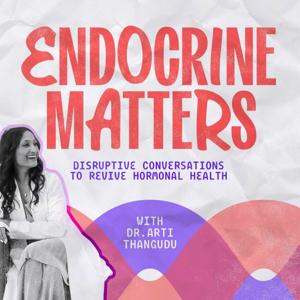


Starting a GLP-1: What to Actually Expect (A Practical First-8-Weeks Guide) | Endocrine Matters Ep. 2.47
It is 11pm and you are reading GLP-1 horror stories from a stranger on the internet. Close the tab.
Your doctor just prescribed a GLP-1 receptor agonist, and the comment sections are not your roadmap. Dr. Arti Thangudu, triple board-certified endocrinologist and founder of Complete Medicine, walks through what actually happens in your first few weeks on a GLP-1: what is normal, what is not, and how to get through the rough patch without quitting in week two. The headline up front: most people tolerate these medications well when they are started low and titrated up correctly. Everything else is a footnote, and this episode is the footnotes.
🔍 This episode explores:
• 🧩 The headline: most people tolerate GLP-1s well when started low and titrated correctly, and why the horror stories are the exception, not the pattern
• 🧩 Why GI side effects (nausea, diarrhea, constipation, occasional vomiting) concentrate in the first 8 weeks, especially right after a dose increase, and why slowed gastric emptying is the medicine working, not failing
• 🧩 The timeline: individual nausea episodes typically resolve in about a week, vomiting and diarrhea in a couple of days, weeks 3 to 4 is when most people feel things settle, and constipation is the one that overstays its welcome
• 🧩 The practical toolkit: smaller lower-fat meals, stopping at full, steady sips of water, anti-nausea prescriptions when it is intolerable, and the constipation game plan (hydration, fiber, movement, a gentle laxative if needed)
• 🧩 The titration truth: holding your current dose longer is a legitimate strategy, not a failure to keep up
• 🧩 The one true red flag (severe abdominal pain that is not ordinary nausea = same-day call), and the oral GLP-1 options that now exist if injections are not for you
👩 This episode is for you if:
● You just got a GLP-1 prescription and the internet has you terrified
● You are in week two and eyeing your injection with suspicion at 2am
● Nausea or constipation has you wondering if this medication is "wrong for you"
● Your dose just went up and your stomach objected
● You want the version of this conversation your 7-minute visit never has time for
⚖️ The bottom line
The first month on a GLP-1 is almost always the roughest part of the whole timeline, and then it quiets down. If you are in the rough part right now, that does not mean it is not working. It usually means it is working exactly as expected. Started low, titrated patiently, with the toolkit in hand, most people do well. Save this episode and come back to it in week two. You've got this.
🎙 About the Host
Dr. Arti Thangudu is a triple board-certified physician in Internal Medicine, Endocrinology, and Obesity Medicine, and the founder of Complete Medicine, a direct-care practice built around time, transparency, and evidence. She has walked hundreds of patients through week two.
📚 Resources Mentioned
● The nausea toolkit and constipation game plan (discussed in episode)
● Oral GLP-1 options for patients who cannot tolerate injectables
● Complete Medicine: https://www.sacomplete.com
● This episode is sponsored by Complete Medicine and Hey Healthy
🔗 Learn More / Connect
🩺 Complete Medicine → https://www.sacomplete.com | Direct care with a doctor who actually has time for you
📩 Newsletter + Blog → https://www.sacomplete.com/complete-medicine-blog | Weekly, plain-language hormone breakdowns
🎙 Podcast → Endocrine Matters, new episodes on all major platforms
📲 Instagram → https://www.instagram.com/drartithangudu | Daily myth-busting and real talk
▶️ YouTube → https://www.youtube.com/@drartithangudu | Full episodes and shorts
Subscribe, leave a review, and send this episode to the friend refreshing GLP-1 forums at 11pm.
🎙 About Endocrine Matters
Endocrine Matters is a weekly podcast where endocrinologist Dr. Arti Thangudu breaks down hormones, metabolism, and the healthcare system in plain language. No hype. No misinformation. No "heal your hormones naturally" shortcuts.
Everything You've Been Told About Diet and Diabetes Is Wrong (The South Asian Edition) | Endocrine Matters Ep. 2.46
Try telling a South Asian family to cut back on rice. Go on, we'll wait.
That conversation fails for a reason, and it is not stubbornness: the standard advice, eat less and move more, was never built with South Asian bodies in mind, and the data backs that up. Dr. Arti Thangudu, triple board-certified endocrinologist and founder of Complete Medicine, treats South Asian women for type 2 diabetes, prediabetes, PMOS, and weight every week. In this episode she walks through what the research actually says our bodies need, including an 18,000-person study out of India, the whole wheat roti surprise, and why the answer to yogurt is more dahi, not less. Nobody's rice is the enemy, and nobody is taking your ghee.
🔍 This episode explores:
• 🧩 Why South Asians develop type 2 diabetes at lower body weights, and how insulin resistance builds while the scale says you're fine
• 🧩 The carb load nobody talks about: traditional diets running over 60% refined carbohydrates in some studies, from white rice to the sugar in the chai
• 🧩 The 18,000-person study out of India that tested exactly which ratio of carbs, protein, and fat South Asian bodies do best on: roughly 40 to 50% carbs, 20% protein, the rest healthy fat
• 🧩 The whole wheat roti catch: finely milled atta spikes blood sugar almost as much as refined white flour, and what actually helps (millets, barley, coarser grains, pairing carbs with protein and fiber)
• 🧩 More dahi, not less: plain yogurt, dal, eggs, and fish all tracked with LOWER diabetes risk across South Asia
• 🧩 The three-step plate plan, why brown rice over white is a small swap with a real effect, and how cultural fasting traditions already overlap with time-restricted eating
👩 This episode is for you if:
⚖️ The bottom line
Diabetes is one of the most preventable and most treatable conditions out there, and lifestyle factors account for the vast majority of risk in South Asian populations. You do not have to abandon your culture to protect your health. You have to know which specific shifts move the needle for a body like yours, not a body built for a Western research study that historically didn't include people who look like us. If this changed how you look at your plate, send it to the relative who still thinks diet means suffering.
🎙 About the Host
Dr. Arti Thangudu is a triple board-certified physician in Internal Medicine, Endocrinology, and Obesity Medicine, and the founder of Complete Medicine, a direct-care practice built around time, transparency, and evidence. Her plate keeps the dal and the ghee.
📚 Resources Mentioned
🔗 Learn More / Connect
🩺 Complete Medicine → https://www.sacomplete.com | Direct care with a doctor who actually has time for you
📩 Newsletter + Blog → https://www.sacomplete.com/complete-medicine-blog | Weekly, plain-language hormone breakdowns
🎙 Podcast → Endocrine Matters, new episodes every Wednesday on all major platforms
📲 Instagram → https://www.instagram.com/drartithangudu | Daily myth-busting and real talk
▶️ YouTube → https://www.youtube.com/@drartithangudu | Full episodes and shorts
Subscribe, leave a review, and share this episode with the relative who still thinks diet means suffering.
🎙 About Endocrine Matters
Endocrine Matters is a weekly podcast where endocrinologist Dr. Arti Thangudu breaks down hormones, metabolism, and the healthcare system in plain language. No hype. No misinformation. No "heal your hormones naturally" shortcuts.
⏱ Chapters
00:00. Welcome: why "cut back on rice" always fails
00:50. Diabetes at lower body weights: the South Asian pattern
01:45. The refined carb load, from white rice to the chai
02:25. The 18,000-person study and the ratio that worked
03:20. The whole wheat roti catch (and what actually helps)
04:00. More dahi, not less: the foods linked to lower risk
04:40. The three-step plate plan
05:20. The bottom line: culture stays, specifics change
The One Thing Midlife Women Aren't Doing Enough Of (It Involves Picking Up Something Heavy) | Endocrine Matters Ep. 2.45
If you can hold a full conversation through 20 reps, the weight is too light.
You're eating clean, getting your steps in, doing the same cardio that worked in your 20s, and your body is doing whatever it wants anyway. This episode is not "eat less, move more." Dr. Arti Thangudu, triple board-certified endocrinologist and founder of Complete Medicine, names the specific piece missing for most women over 40 (it was never willpower), explains why pink dumbbells are cardio with better branding, and hands you the exact two-session, 15-minute starter plan she gives her own patients. No gym membership required, and one assignment: pick up something heavier than you think you can this week.
🔍 This episode explores:
• 🧩 Why your body stopped responding to the routine that worked in your 20s: estrogen decline reshapes how your body partitions food, stores fat, and holds onto muscle
• 🧩 The default loss nobody mentions: after 30, everyone loses muscle mass every year unless they actively work against it, and with it goes resting metabolic rate and blood sugar control
• 🧩 What real strength training actually means: weights heavy enough that the last few reps are genuinely hard, and why "mildly inconvenienced" muscles are the entire mechanism of change
• 🧩 The pink dumbbell correction: if you can chat through 20 reps without your voice changing, that is cardio with better branding
• 🧩 The no-gym toolkit: bodyweight squats, counter push-ups, resistance bands, and a pair of medium dumbbells at home
• 🧩 The starter plan: week one, two sessions of 15 minutes; week two, add load; judge results at 6 to 8 weeks, and never by the scale alone
👩 This episode is for you if:
⚖️ The bottom line
The missing piece for most midlife women is not more cardio and not more restriction. It is muscle: the tissue protecting your bones, your metabolic rate, and your insulin sensitivity while your hormones change. Real strength training, two to three genuinely challenging sessions a week, is the fix, and 15 minutes counts. Pick up something heavier than you think you can this week. Your bones and your metabolism will register the difference before you do.
🎙 About the Host
Dr. Arti Thangudu is a triple board-certified physician in Internal Medicine, Endocrinology, and Obesity Medicine, and the founder of Complete Medicine, a direct-care practice built around time, transparency, and evidence. She practices what she prescribes: the last few reps are genuinely hard.
📚 Resources Mentioned
Your metabolism did not break. Your muscle left.
If you are doing everything you did in your thirties, same diet, same workouts, and getting a different body back, this episode explains why, without a single word about eating less or doing more cardio. Dr. Arti Thangudu, triple board-certified endocrinologist and founder of Complete Medicine, breaks down what menopause changes at the cellular level, why strength training is medicine for your muscle, metabolism, and bones, and a realistic weekly plan that does not require hours in a gym. This is a topic she is genuinely passionate about, and it shows.
🔍 This episode explores:
• 🧩 Why estrogen decline changes your body at the cellular level: estrogen receptors live in your muscle cells, and when estrogen drops, muscle repair slows and loss accelerates
• 🧩 Muscle as your metabolic engine: why "same diet, same exercise, still gaining" is body composition, not willpower, and why the weight goes to visceral fat around the middle
• 🧩 Strength training, full stop: how lifting signals your body to keep muscle, improves insulin sensitivity, supports growth hormone and testosterone, and may reduce inflammation
• 🧩 Bones respond to mechanical load: why cardio alone will not protect your skeleton, and how resistance training can maintain and in some cases even increase bone density after menopause
• 🧩 Joint pain and fatigue: why gentle, consistent movement helps more than rest, and why ten minutes counts
• 🧩 The realistic weekly framework: 2 to 3 strength sessions, 2 to 3 weight-bearing cardio days, one flexibility/balance day, real rest, and 20 to 30 grams of protein per meal
👩 This episode is for you if:
⚖️ The bottom line
Menopause changes your body composition at a hormonal level: less muscle, more visceral fat, faster bone loss. These are not inevitable consequences you have to accept. They are biological processes you can directly influence, and strength training is the most powerful tool you have. It is not optional. It is medicine. You are not too old, it is not too late, and your body is still listening.
🎙 About the Host
Dr. Arti Thangudu is a triple board-certified physician in Internal Medicine, Endocrinology, and Obesity Medicine, and the founder of Complete Medicine, a direct-care practice built around time, transparency, and evidence. She lifts, and she wants you to as well.
📚 Resources Mentioned
🔗 Learn More / Connect
🩺 Complete Medicine → https://www.sacomplete.com | Direct care with a doctor who actually has time for you
📩 Newsletter + Blog → https://www.sacomplete.com/complete-medicine-blog | Weekly, plain-language hormone breakdowns
🎙 Podcast → Endocrine Matters, new episodes every Wednesday on all major platforms
📲 Instagram → https://www.instagram.com/drartithangudu | Daily myth-busting and real talk
▶️ YouTube → https://www.youtube.com/@drartithangudu | Full episodes and shorts
Subscribe, leave a review, and share this episode with a woman who still thinks lifting will make her bulky.
🎙 About Endocrine Matters
Endocrine Matters is a weekly podcast where endocrinologist Dr. Arti Thangudu breaks down hormones, metabolism, and the healthcare system in plain language. No hype. No misinformation. No "heal your hormones naturally" shortcuts.
⏱ Chapters
00:00. Welcome: exercise in menopause (not a cardio lecture)
01:00. What menopause changes at the cellular level
03:00. Strength training, full stop
05:00. Your bones respond to load
07:30. Joint pain, fatigue, and starting small
09:00. A realistic weekly framework
10:30. Protein, the other half of the equation
11:45. The bottom line
Once those pellets are in your body, they are in your body.
If you are in any perimenopause or menopause group online, you have seen the testosterone pellet debate: half the comments say "pellets changed my life, " the other half say "I had a nightmare and could not do anything about it.
" Dr. Arti Thangudu, triple board-certified endocrinologist and founder of Complete Medicine, walks through this honestly: why testosterone genuinely matters for women, exactly how pellets work, the risks nobody explains before the procedure, and the safer, adjustable option she uses with her own patients.
🔍 This episode explores:
• 🧩 Why testosterone is not just a male hormone: energy, motivation, muscle, mood, libido, bone density, and what low testosterone feels like in perimenopause and menopause
• 🧩 What pellets actually are, how the implant procedure works, and why the convenience is so appealing
• 🧩 The core problem: no reversing, no adjusting, no lowering the dose, for three to six months
• 🧩 Why women's testosterone dosing is tricky, how levels can come back far higher than intended (one woman's came back five times what they should have been), and the real harms of high testosterone: cystic acne, hirsutism, and hair loss that may not fully reverse
• 🧩 Compounded quality control, unpredictable absorption, the weak evidence base, and the fact that no FDA-approved testosterone product exists specifically for women in the US
• 🧩 What Dr. Arti uses instead: topical testosterone, dosed low, monitored closely, and adjustable at any time
👩 This episode is for you if:
-Someone has offered you testosterone pellets, or you are considering asking about them
-You feel flat, low energy, low libido, and wonder if testosterone is part of your picture
-You are on pellets and something does not feel right
-You have seen the "I feel 30 again" comments and want the full picture before deciding
-You want to know what informed consent on this treatment actually sounds like
⚖ The bottom line
Testosterone matters for women and your symptoms deserve to be taken seriously. But pellets are a delivery method, not a magic formula, and they carry risks other options do not: you cannot adjust the dose, you cannot remove them, quality is inconsistent, and levels frequently run higher than intended. Safer, adjustable, monitored options exist. You deserve the full picture before anything goes under your skin.
🎙 About the Host
Dr. Arti Thangudu is a triple board-certified physician in Internal Medicine, Endocrinology, and Obesity Medicine, and the founder of Complete Medicine, a direct-care practice built around time, transparency, and evidence. Informed consent is not a buzzword to her; it is the whole job.
📚 Resources Mentioned
-FDA-approved topical testosterone options and monitoring approach (discussed in episode)
-Complete Medicine: https://www.sacomplete.com
-This episode is sponsored by Complete Medicine and Hey Healthy
🔗 Learn More / Connect
🩺 Complete Medicine → https://www.sacomplete.com | Direct care with a doctor who actually has time for you
📩 Newsletter + Blog → https://www.sacomplete.com/complete-medicine-blog | Weekly, plain-language hormone breakdowns
🎙 Podcast → Endocrine Matters, new episodes every Wednesday on all major platforms
📲 Instagram → https://www.instagram.com/drartithangudu | Daily myth-busting and real talk
▶ YouTube → https://www.youtube.com/@drartithangudu | Full episodes and shorts
Subscribe, leave a review, and share this episode with someone who is navigating this exact decision.
🎙 About Endocrine Matters
Endocrine Matters is a weekly podcast where endocrinologist Dr. Arti Thangudu breaks down hormones, metabolism, and the healthcare system in plain language. No hype. No misinformation. No "heal your hormones naturally" shortcuts.
⏱ Chapters
00:00. Welcome: the pellet debate
01:00. Why testosterone matters for women
02:15. What pellets actually are
03:30. The problem: you cannot take them out
05:30. Quality control, absorption, and the evidence gap
07:45. What I use instead
09:30. If you are on pellets and feeling great
10:20. The bottom line
"Everything looks normal" is not an answer. It is the beginning of a better question.
If you are exhausted, gaining weight with nothing changed, not sleeping, and watching your mood swing while your bloodwork keeps coming back "fine, " this episode is for you. Dr. Arti Thangudu, triple board-certified endocrinologist and founder of Complete Medicine, explains why "hormone imbalance" is not actually a diagnosis, what estrogen, progesterone, and testosterone are really doing, and the specific questions that get you real answers. She built her entire practice around the women who were told they were fine when they knew they were not.
🔍 This episode explores:
• 🧩 Why "hormone imbalance" is not in any textbook, and the three questions that matter instead: which hormone, why is it off, and when in your cycle
• 🧩 Estrogen, progesterone, and testosterone: what each one does, and why their relationship matters as much as their levels •
🧩 What people call "estrogen dominance, " and what is usually really happening (spoiler: low progesterone)
• 🧩 Perimenopause: why wildly swinging hormones can look completely "normal" on a random Tuesday lab draw
• 🧩 PMOS (polycystic metabolic ovary syndrome), the newer name for PCOS: the testosterone and insulin vicious cycle, why progesterone disappears, and why chasing estrogen treats the wrong thing
• 🧩 Why sleep, blood sugar, strength training, and stress management are biochemistry, not soft suggestions
👩 This episode is for you if:
-A doctor has told you "everything looks normal" while you felt anything but
-You have Googled "hormone imbalance" at 11pm
-Your anxiety, 3am wakeups, or mood changes feel like they came out of nowhere
-You have PCOS, or symptoms nobody has ever fully explained to you
-You want the exact questions to bring to your next appointment
⚖ The bottom line
Feeling terrible with normal labs is not the end of the conversation. It is the beginning of a better one. Normal ranges are built on population averages, and they do not capture your ratios, your fluctuations, or your cycle. The real question is never "am I imbalanced. " It is which hormone, why, and when.
🎙 About the Host
Dr. Arti Thangudu is a triple board-certified physician in Internal Medicine, Endocrinology, and Obesity Medicine, and the founder of Complete Medicine, a direct-care practice built around time, transparency, and evidence. She is also a South Asian woman and a mom who knows exactly how often women hear "you're fine" when they are not.
📚 Resources Mentioned
-Complete Medicine: https://www.sacomplete.com
-Previous episodes on lab reference ranges (Ep. 2.37) and beta cell burnout (Ep. 2.40) for the South Asian metabolic health series
-This episode is sponsored by Complete Medicine and Hey Healthy
🔗 Learn More / Connect
🩺 Complete Medicine → https://www.sacomplete.com | Direct care with a doctor who actually has time for you
📩 Newsletter + Blog → https://www.sacomplete.com/complete-medicine-blog | Weekly, plain-language hormone breakdowns
🎙 Podcast → Endocrine Matters, new episodes every Wednesday on all major platforms
📲 Instagram → https://www.instagram.com/drartithangudu | Daily myth-busting and real talk
▶ YouTube → https://www.youtube.com/@drartithangudu | Full episodes and shorts
Subscribe, leave a review, and share this episode with someone who has been told she was fine one too many times.
🎙 About Endocrine Matters
Endocrine Matters is a weekly podcast where endocrinologist Dr. Arti Thangudu breaks down hormones, metabolism, and the healthcare system in plain language. No hype. No misinformation. No "heal your hormones naturally" shortcuts.
You survived teenage acne. Then your 40s said, just kidding.
If you are suddenly breaking out on your chin and jaw in your late 30s, 40s, or 50s, while also fighting fine lines in the same mirror, this episode is for you. Dr. Arti Thangudu, triple board-certified endocrinologist and founder of Complete Medicine, breaks down the zits-and-wrinkles combo nobody put in the brochure. She hears about it constantly from her own patients, and she has watched too many women get handed another cleanser when what they needed was a hormone conversation.
🔍 This episode explores:
• 🧩 Why estrogen starts "ghosting you" in perimenopause, riding up and down like a roller coaster while androgens stick around, and why that ratio shift lands on your chin, jaw, and neck
• 🧩 The three patterns of adult acne in women (persistent, late-onset, postmenopausal), why persistent acne can travel with PCOS (or PMOS, the newer name Dr. Arti prefers), and which pattern deserves an androgen workup
• 🧩 Why treating hormonal acne with skincare alone is like mopping the floor while the faucet is still running
• 🧩 Spironolactone: how a decades-old blood pressure medication became a well-studied, dermatology-recommended tool for hormonal acne
• 🧩 The honest side effect conversation, including the potassium question, period changes, and why pregnancy is a hard no while taking it
• 🧩 Who is the best candidate for spiro, and when a dermatologist should be leading your acne care
👩 This episode is for you if:
-Your breakouts came back (or showed up for the first time) after 35
-The same pimple returns to the same spot on your chin every few weeks
-Your flares track with your cycle, or got worse as your cycle changed
-You have tried every topical and still feel like you are losing
-You want to walk into your next appointment knowing exactly what to ask
⚖ The bottom line
Perimenopause acne is real, incredibly common, and not your fault. It is not a face-washing problem. It is a hormone transition, and there are real tools that treat it at the root cause. You deserve to be taken seriously, and you deserve clear skin at every age.
🎙 About the Host
Dr. Arti Thangudu is a triple board-certified physician in Internal Medicine, Endocrinology, and Obesity Medicine, and the founder of Complete Medicine, a direct-care practice built around time, transparency, and evidence. She is also a mom who understands that midlife health does not happen in a vacuum.
📚 Resources Mentioned
-American Academy of Dermatology guidance on spironolactone for hormonal acne
(discussed in episode)
-Complete Medicine: https://www.sacomplete.com
-This episode is sponsored by Complete Medicine and Hey Healthy
🔗 Learn More / Connect
🩺 Complete Medicine → https://www.sacomplete.com | Direct care with a doctor who actually has time for you
📩 Newsletter + Blog → https://www.sacomplete.com/complete-medicine-blog | Weekly, plain-language hormone breakdowns
🎙 Podcast → Endocrine Matters, new episodes every Wednesday on all major platforms
📲 Instagram → https://www.instagram.com/drartithangudu | Daily myth-busting and real talk
▶ YouTube → https://www.youtube.com/@drartithangudu | Full episodes and shorts
Subscribe, leave a review, and share this episode with a friend who is also fighting the zits-and-wrinkles combo.
🎙 About Endocrine Matters
Endocrine Matters is a weekly podcast where endocrinologist Dr. Arti Thangudu breaks down hormones, metabolism, and the healthcare system in plain language. No hype. No misinformation. No "heal your hormones naturally" shortcuts.
⏱ Chapters
00:00. Welcome and the zits-and-wrinkles combo
01:00. What is actually going on with your hormones
05:00. Can't I just use skincare?
07:00. Enter spironolactone
11:00. Side effects and safety, honestly
14:00. Who spiro is for, and when to see a dermatologist
16:00. The bottom line
Her A1c was 5.8. Her doctor said borderline. Three years later she had diabetes, and nobody had explained why.
If you have been told to watch what you eat and come back in a year, or if you are doing everything right and watching your numbers climb anyway, this episode is for you.
Dr. Arti Thangudu, triple board-certified endocrinologist and founder of Complete Medicine and Hey Healthy, explains what is actually happening in your pancreas, why standard advice was built on biology that is not yours, and what to ask for instead. She is direct about her clinical opinion in this one, and about why the usual messaging causes so much unnecessary shame.
🔍 This episode explores:
• 🧩 The two mechanisms behind type 2 diabetes: insulin resistance and beta cell failure
• 🧩 Why South Asian women start with a lower capacity to produce compensatory insulin
• 🧩 What the MASALA study shows about insulin secretion and fat distribution
• 🧩 Why South Asian women face up to eight times the diabetes risk at the same weight
• 🧩 The thin-fat phenotype, and why BMI cannot see it
• 🧩 Why we are diagnosed five to ten years earlier, with a narrower prevention window
• 🧩 Why lifestyle intervention works through insulin sensitivity and liver fat, not weight loss
• 🧩 Screening at a BMI of 23, and the tools worth a real conversation
👩 This episode is for you if:
• You have been told you are borderline or prediabetic and sent home for a year
• You eat well, exercise, and your blood sugar keeps climbing anyway
• You are the lean one in your family and assume that means you are safe
• You had gestational diabetes and were never followed up properly
• You want the actual mechanism, not another instruction to lose weight
⚖ The bottom line
You are not doing this wrong. The advice you were given was incomplete, because the guidelines behind it came from populations whose diabetes biology differs from yours. Your pancreas has likely been compensating for years before anything looked abnormal. That is not a reason to panic. It is a reason to act earlier, more specifically, and with every tool available to you.
🎙 About the Host
Dr. Arti Thangudu is a triple board-certified endocrinologist specializing in diabetes, women's hormonal health, thyroid disease, metabolism, and menopause. She is the founder of Complete Medicine and Hey Healthy and the host of Endocrine Matters. She practices evidence-based, direct-care medicine and refuses to let patients carry blame that belongs to the guidelines.
📚 Resources Mentioned
• MASALA study (Mediators of Atherosclerosis in South Asians Living in America): insulin secretion, fat distribution, and risk at low BMI
• Hypothesis literature proposing beta cell dysfunction as a primary driver of type 2 diabetes in South Asians
• Research on beta cell function and progression after gestational diabetes in South Asian women
• Meta-analysis of six randomized controlled trials of lifestyle intervention in high-risk South Asians
• ADA guidance on diabetes screening at BMI 23 for Asian adults
🔗 Learn More / Connect
🩺 Complete Medicine. sacomplete.com Dr. Thangudu's clinical practice. Evidence-based endocrinology and women's hormonal health.
📩 Newsletter + Blog. subscribe at https://www.sacomplete.com/complete-medicine-blog Clinical context without the noise. Straight to your inbox.
🎙 Endocrine Matters Podcast. new episodes every Wednesday Subscribe wherever you listen so you never miss a release.
📲 Instagram. @drartithangudu Daily clinical perspective. Real answers. No wellness-influencer energy.
▶ YouTube. Arti Thangudu MD. https://www.youtube.com/@drartithangudu Deeper dives on diabetes, perimenopause, thyroid health, and metabolic medicine.
Subscribe, leave a review, and share this episode with the woman in your family who keeps being told she's borderline.
🎙 About Endocrine Matters
Endocrine Matters is a weekly podcast hosted by Dr. Arti Thangudu, board-certified endocrinologist. Each episode brings evidence-based medicine to the questions patients are actually asking. No hype. No misinformation. No "heal your hormones naturally" shortcuts. Just the clinical clarity you deserve. New episodes drop every Wednesday.
The Stress Tax: What Perfectionism Actually Does to Your Body | Endocrine Matters Ep. 2.39
Your brain cannot tell the difference between being chased by a predator and being terrified of disappointing your parents. If you are the one who always handles it, who got the grades and does not complain and has not slept properly in two years, this episode is for you. What you are carrying has a physiological cost, and it is measurable.
Dr. Arti Thangudu, board-certified endocrinologist and founder of Complete Medicine and Hey Healthy, explains why perfectionism in South Asian women is a rational survival strategy rather than a character flaw, what chronic stress does to the HPA axis, and how that shows up as
insulin resistance, visceral fat, broken sleep, and irregular cycles. She has spent a long time on both sides of this one.
🔍 This episode explores:
• 🧩 Why perfectionism made complete sense in the households many of us grew up in
• 🧩 What the HPA axis is, in plain language, and what cortisol is actually for
• 🧩 Why this is HPA axis dysregulation and emphatically not adrenal fatigue
• 🧩 What the research on perfectionism and cortisol reactivity actually found
• 🧩 How dysregulated cortisol drives insulin resistance and visceral fat
• 🧩 The bidirectional loop between chronic stress and broken sleep
• 🧩 Why irregular cycles and a rougher perimenopause can trace back to this
👩 This episode is for you if:
• You are the responsible one, and you have been since childhood
• You are exhausted in a way that sleep and caffeine no longer touch
• Your weight or your cycles changed and nobody could tell you why
• You were raised where struggling quietly was the expectation
• You want the actual physiology, not a supplement protocol
⚖ The bottom line
Perfectionism was a rational response to an environment where falling short carried real consequences. That does not make it free.
When the stress response never fully switches off, the cost shows up in your metabolism, your sleep, and your hormones. Naming that accurately is what makes it treatable.
🎙 About the Host
Dr. Arti Thangudu is a board-certified endocrinologist specializing in diabetes, women's hormonal health, thyroid disease, metabolism, and menopause. She is the founder of Complete Medicine and Hey Healthy and the host of Endocrine Matters. She practices evidence-based,
direct-care medicine and has strong feelings about what the wellness industry sells to exhausted women.
📚 Resources Mentioned
• Functional hypothalamic amenorrhea, as the athletic parallel to chronic psychosocial stress
• The Trier Social Stress Test literature on perfectionism as an independent predictor of cortisol reactivity
• Research on self-critical perfectionism combined with early life adversity and daily stress reactivity
• HPA axis dysregulation and its metabolic consequences: insulin resistance, visceral adiposity, sleep disruption
🔗 Learn More / Connect
🩺 Complete Medicine. sacomplete.com Dr. Thangudu's clinical practice. Evidence-based endocrinology and women's hormonal health.
📩 Newsletter + Blog. subscribe at https://www.sacomplete.com/complete-medicine-blog
Clinical context without the noise. Straight to your inbox.
🎙 Endocrine Matters Podcast. new episodes every Wednesday Subscribe wherever you listen so you never miss a release.
📲 Instagram. @drartithangudu Daily clinical perspective. Real answers. No wellness-influencer energy.
▶ YouTube. Arti Thangudu MD. https://www.youtube.com/@drartithangudu Deeper dives on diabetes, perimenopause, thyroid health, and metabolic medicine.
Subscribe, leave a review, and share this episode with the woman in your life who never asks for help.
🎙 About Endocrine Matters
Endocrine Matters is a weekly podcast hosted by Dr. Arti Thangudu, board-certified endocrinologist. Each episode brings evidence-based medicine to the questions patients are actually asking. No hype. No misinformation. No "heal your hormones naturally" shortcuts. Just
the clinical clarity you deserve. New episodes drop every Wednesday.
⏱ Chapters
00:00. The woman I want to describe to you
01:00. Why perfectionism was a survival strategy, not a flaw
03:00. Functional hypothalamic amenorrhea, and what it teaches us
04:30. Meet your HPA axis
06:00. Why this is not adrenal fatigue
06:30. What the research says about perfectionism and cortisol
08:00. Insulin resistance, visceral fat, sleep, and your cycle
Your mother's silence about her own body was never wisdom. It was a gap, and it has a cost. If you are a South Asian woman who arrived at your 40s with no language for what your body is doing, this episode is for you. The exhaustion, the 3am wake-ups, the anxiety you don't
recognize, none of it is in your head, and none of it is something you have to endure quietly.
Dr. Arti Thangudu, board-certified endocrinologist, Menopause Society Certified Practitioner, and founder of Complete Medicine and Hey Healthy, connects the cultural silence around women's bodies to its real clinical consequences: why we enter menopause earlier, why our
symptoms get missed, and what to actually do about it. This one is personal. She grew up inheriting that silence too.
🔍 This episode explores:
• 🧩 Why periods and women's health were treated as shameful, and the health cost of that silence
• 🧩 Why South Asian women reach menopause earlier (around 48 versus 51), with nearly 1 in 3 before 45
• 🧩 Why earlier menopause means earlier cardiovascular and metabolic risk
• 🧩 The symptoms that show up more for us: sleep disruption, joint pain, mood changes, urinary symptoms, often more than hot flashes
• 🧩 Why vitamin D deficiency (70 to 90 percent of South Asian women) matters even more now
• 🧩 Hormone therapy and the timing question
• 🧩 The five things to bring to your next appointment
👩 This episode is for you if:
• You are a South Asian woman in your 40s and confused about what your body is doing
• Your mother never explained menopause, and no one else did either
• You keep telling your doctor you're "fine" when you are exhausted and not sleeping
• You want to understand your cardiovascular and metabolic risk, not just your symptoms
• You want evidence-based clarity and permission to ask for help
⚖ The bottom line
The silence that surrounded our mothers' bodies was not wisdom. It was a gap, in research, in conversation, and in the basic permission for women to be seen as full human beings whose physical experience matters.
Your health is not a luxury, and feeling well is not something you earn by suffering enough first.
You are allowed to understand your body, ask for help, and feel better.
🎙 About the Host
Dr. Arti Thangudu is a board-certified endocrinologist and Menopause Society Certified Practitioner specializing in diabetes, women's hormonal health, thyroid disease, metabolism, and menopause. She is the founder of Complete Medicine and Hey Healthy and the host of
Endocrine Matters. She practices evidence-based, direct-care medicine and treats the women who were taught to carry it all quietly.
📚 Resources Mentioned
• MASALA study (Mediators of Atherosclerosis in South Asians Living in America): menopause timing and symptoms in South Asian women; Lyu X et al., Climacteric 2025• Menopause transition and cardiovascular risk; El Khoudary SR et al., AHA Scientific Statement, Circulation 2020
• Menopause management and the hormone therapy timing hypothesis; Hickey M et al., Lancet 2024; Crandall CJ et al., JAMA 2023
• Vitamin D and menopausal health; Anagnostis P et al., EMAS Position Statement, Maturitas 2023
• The Menopause Society (menopause.org): find a certified menopause practitioner
• Continuous vitamin D testing and supplementation, and a cooling-sleep setup for night-time symptoms (see the newsletter/blog for the specific links)
🔗 Learn More / Connect
🩺 Complete Medicine. sacomplete.com Dr. Thangudu's clinical practice. Evidence-based endocrinology and women's hormonal health.
📩 Newsletter + Blog. subscribe at https://www.sacomplete.com/complete-medicine-blog Clinical context without the noise. Straight to your inbox.
🎙 Endocrine Matters Podcast. new episodes every Wednesday Subscribe wherever you listen so you never miss a release.
📲 Instagram. @drartithangudu Daily clinical perspective. Real answers. No wellness-influencer energy.
▶ YouTube. Arti Thangudu MD. https://www.youtube.com/@drartithangudu Deeper dives on diabetes, perimenopause, thyroid health, and metabolic medicine.
Subscribe, leave a review, and share this episode with a woman in her 40s who is confused about what her body is doing.
🎙 About Endocrine Matters
Endocrine Matters is a weekly podcast hosted by Dr. Arti Thangudu, board-certified endocrinologist. Each episode brings evidence-based medicine to the questions patients areactually asking. No hype. No misinformation. No "heal your hormones naturally" shortcuts. Just the clinical clarity you deserve. New episodes drop every Wednesday.
⏱ Chapters
00:00. Did your mother ever talk to you about menopause?
01:30. The culture of silence, and what it taught us
05:30. What is actually happening in your body during perimenopause
07:00. Why South Asian women enter this transition earlier
09:30. Vitamin D, bones, and the part we skip
11:30. What to do, and the five things to ask your doctor
14:30. You are allowed to feel well
From the publisher's feed
Ranked by our users in the last 21 days
1,729 Listeners

111,799 Listeners
573 Listeners

8,001 Listeners
545 Listeners
562 Listeners
413 Listeners

2,031 Listeners

1,944 Listeners

86 Listeners