
Sign up to save your podcasts
Or

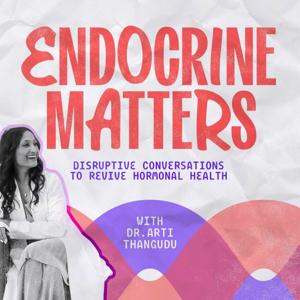


"Everything looks totally normal" should not leave you feeling worse.
If you are a South Asian woman who has walked out of an appointment relieved but still exhausted, foggy, and quietly certain something is off, this episode is for you. The gap you are sensing is real, and it is not in your head.
Dr. Arti Thangudu, triple board-certified endocrinologist and founder of Complete Medicine and Hey Healthy, breaks down the South Asian lab reference range problem: why "normal" ranges were built on bodies that look nothing like ours, why that gap quietly raises our risk, and exactly what to say at your next appointment. She has been sitting with this one for a long time, as a physician who grew up in this community and treats it every day.
🔍 This episode explores:
• 🧩 Why standard lab reference ranges were built on mostly white, Western populations
• 🧩 The MASALA study, and why South Asian women develop type 2 diabetes at up to four times the rate of white women at the same BMI
• 🧩 The Asian-specific BMI cutoffs (overweight 23, obesity 27.5) recommended by the WHO, ADA, and AHA
• 🧩 The South Asian waist threshold (about 80cm) versus the standard 88cm
• 🧩 Why "normal" LDL can still hide a more dangerous cholesterol pattern
• 🧩 The cultural roots of why so many of us were never set up to build muscle
• 🧩 The six questions to bring to your next appointment
👩 This episode is for you if:
• You are South Asian and keep being told your labs look "fine" while you feel anything but
• Your weight and numbers get called normal, but you sense the risk is being missed
• You want the specific cutoffs and questions that reflect your actual body
• You are a clinician who wants to read South Asian patients' labs more accurately
• You want evidence-based clarity, not vague wellness advice
⚖ The bottom line
The fact that your numbers fall in the "normal" range does not mean you are not at risk. It means the system has not caught up with the science.
Standard ranges were calibrated on bodies that are not yours, and for South Asian women that gap can quietly cost years of early intervention. You are not a data point built for someone else's body.
🎙 About the Host
Dr. Arti Thangudu is a triple board-certified endocrinologist specializing in diabetes, women's hormonal health, thyroid disease, metabolism, and menopause. She is the founder of Complete Medicine and Hey Healthy and the host of Endocrine Matters. She practices evidence-based,
direct-care medicine and treats the patients who have been told their numbers look fine while they knew something was wrong.
📚 Resources Mentioned
• MASALA study (Mediators of Atherosclerosis in South Asians Living in America), UCSF and Northwestern; Kanaya AM, Diabetes Care 2024
• ADA Standards of Care in Diabetes 2026 (Asian-specific screening cutoffs)• AHA Scientific Statement on South Asian cardiovascular risk; Volgman AS et al., Circulation 2018
• Pooled analysis of diabetes risk by BMI across racial groups; Nagai K et al., Diabetes Care 2025
• Waist circumference thresholds; Agarwala A et al., JACC Advances 2023
• Earlier diabetes onset in South Asians; Sattar N and Gill JM, Lancet Diabetes & Endocrinology 2015
• Cardiovascular risk-score limits and coronary artery calcium scoring; Al Rifai M et al., Atherosclerosis 2018; Haque W et al., Atherosclerosis 2021
🔗 Learn More / Connect
🩺 Complete Medicine. sacomplete.com Dr. Thangudu's clinical practice. Evidence-based endocrinology and women's hormonal health.
📩 Newsletter + Blog. subscribe at https://www.sacomplete.com/complete-medicine-blog Clinical context without the noise. Straight to your inbox.
🎙 Endocrine Matters Podcast. new episodes every Wednesday Subscribe wherever you listen so you never miss a release.
📲 Instagram. @drartithangudu Daily clinical perspective. Real answers. No wellness-influencer energy.
▶ YouTube. Arti Thangudu MD. https://www.youtube.com/@drartithangudu Deeper dives on diabetes, perimenopause, thyroid health, and metabolic medicine.
Subscribe, leave a review, and share this episode with the South Asian woman in your life who keeps being told she's fine.
🎙 About Endocrine Matters
Endocrine Matters is a weekly podcast hosted by Dr. Arti Thangudu, board-certified endocrinologist. Each episode brings evidence-based medicine to the questions patients areactually asking. No hype. No misinformation. No "heal your hormones naturally" shortcuts. Just the clinical clarity you deserve. New episodes drop every Wednesday.
⏱ Chapters
00:00. Why "normal" labs can still leave you feeling terrible
01:00. How reference ranges were built, and who they left out
04:30. The BMI problem, and why it is different for South Asian women
07:30. Five numbers to know and question
11:30. The appointment cheat sheet: exactly what to say
14:30. You are not a data point built for someone else's body
A rising A1C is not proof you stopped trying.
If you live with type 1 diabetes and have walked out of an appointment feeling like you failed, this episode is for you. The exhaustion you cannot quite explain has a name, and it is not weakness.
Dr. Arti Thangudu, board-certified endocrinologist and founder of Complete Medicine and Hey Healthy, breaks down diabetes distress: what it is, why it is not depression, why clinicians miss it, and why people living with type 1, and the people who love them, deserve to understand it.
She has been pulling on this thread since a fellowship project on CGM access and distress over a decade ago.
---
## 🔍 This episode explores:
• 🧩 What diabetes distress actually is, and how it differs from clinical depression
• 🧩 Why a rising A1C is often distress, not noncompliance
• 🧩 The minute-to-minute mental load type 1 demands, all day, every day
• 🧩 How CGM access can reduce the burden of constant guessing
• 🧩 The well-meaning comments that land like a punch, and what to say instead
• 🧩 Screening tools that take about five minutes, and why they should be routine
• 🧩 What to do if you love someone with type 1
---
## 👩 This episode is for you if:
• You live with type 1 diabetes and feel a bone-deep exhaustion that is hard to explain
• Your A1C went up and you were made to feel it was a measure of your effort
• You love someone with type 1 and want to support them better
• You are a clinician who wants to do more than a rushed visit allows
• You want evidence-based clarity, not platitudes---
## ⚖ The bottom line
Diabetes distress is real, documented, and common. It is not weakness or failure. It is the rational response to an irrational daily demand: the constant decisions, the vigilance, the disease that never takes a day off. The distress often comes first, and the A1C follows. People living with type 1 deserve care that sees the whole of them, not just their glucose curve.
---
## 🎙 About the Host
**Dr. Arti Thangudu** is a board-certified endocrinologist specializing in diabetes, women's hormonal health, thyroid disease, metabolism, and menopause. She is the founder of Complete Medicine and Hey Healthy and the host of *Endocrine Matters*. She practices evidence-based medicine and cares for the patients who have been told their numbers are a measure of their worth.
---
## 📚 Resources Mentioned
• PAID (Problem Areas in Diabetes) scale: a validated diabetes distress screening tool, about five minutes
• Diabetes Distress Scale (DDS): a validated screening tool for diabetes distress
• Continuous glucose monitoring (CGM): reduces the burden of guessing and can lower distress
• Diabetes care and education specialist (DCES): added support for self-management
• Direct care endocrinology: more time and access than a rushed system visit
• Therapist with chronic illness experience, ideally with type 1 familiarity
---
## 🔗 Learn More / Connect
🩺 **Complete Medicine**
. sacomplete.com
Dr. Thangudu's clinical practice. Evidence-based endocrinology and women's hormonal health.
📩 **Newsletter + Blog**
. subscribe at https://www.sacomplete.com/complete-medicine-blogClinical context without the noise. Straight to your inbox.
🎙 **Endocrine Matters Podcast**
. new episodes every Wednesday
Subscribe wherever you listen so you never miss a release.
📲 **Instagram**
. @drartithangudu
Daily clinical perspective. Real answers. No wellness-influencer energy.
▶ **YouTube**
. Arti Thangudu MD. https://www.youtube.com/@drartithangudu
Deeper dives on diabetes, perimenopause, thyroid health, and metabolic medicine.
**Subscribe, leave a review, and share this episode with someone who loves a person with type 1.
**
---
## 🎙 About Endocrine Matters
*Endocrine Matters* is a weekly podcast hosted by Dr. Arti Thangudu, board-certified endocrinologist. Each episode brings evidence-based medicine to the questions patients are actually asking. No hype. No misinformation. No "heal your hormones naturally" shortcuts. Just the clinical clarity you deserve. New episodes drop every Wednesday.
---
## ⏱ Chapters
00:00 What diabetes distress is, and why it matters
00:03 A personal start: the fellowship CGM project
02:00 Distress vs depression, why the distinction matters
03:30 The minute-to-minute mental load of type 1
05:30 What the data and patients say
06:30 The comments that land like a punch
08:00 Screening, A1C, and what clinicians should do
10:30 For the people who love someone with type 1
12:00 Closing: you deserve to be seen
You have been told the aches, the leaking, and the exhaustion are just part of getting older.
They are not, and most of it is treatable.
Dr. Arti Thangudu sits down with Dr. Alexis Shoope, board-certified orthopedic and pelvic floor physical therapist and founder of Pioneer Physical Therapy in Houston, on what standard care keeps missing in women's bodies, and what actually helps.
---
## 🔍 This episode explores:
• 🧩 What pelvic floor PT actually is, and the symptoms it treats that no one talks about (leaking, pain with sex, prolapse, constipation)
• 🧩 Why midlife joint pain is often hormonal, and how estrogen shifts show up in your tissues
• 🧩 Why "just do your kegels" is the wrong advice for many women
• 🧩 The two muscle groups that protect your pelvic floor most (glutes and adductors)
• 🧩 How insurance visit limits quietly shape the care you are offered, and what cash-pay really means
---
## 👩 This episode is for you if:
• You have been told your symptoms are normal aging
• You are navigating perimenopause and new aches or changes
• You leak when you run, sneeze, or lift
• You want a real clinical conversation, not wellness theater
---
## ⚖ The bottom line
Most of what women are told to live with is treatable.Strength is medicine, and the right specialist can change your life. Your symptoms are real. The explanation you were sold may not be.
---
## 🎙 About the Host
**Dr. Arti Thangudu** is a board-certified endocrinologist specializing in women's hormonal health, thyroid disease, metabolism, and menopause. She is the founder of Complete Medicine and Hey Healthy and the host of Endocrine Matters. She practices evidence-based medicine and sees the patients who have been told their labs are fine when they do not feel fine.
---
## 🎤 About the Guest
**Dr. Alexis Shoope** is a board-certified orthopedic and pelvic floor physical therapist and the founder of Pioneer Physical Therapy and Wellness in Houston. (pioneerpt.com)
---
## 📚 Resources Mentioned
• Pelvic floor physical therapy: for leaking, pain with sex, prolapse, and constipation
• Glutes and adductors: the muscle groups that support the pelvic floor
• Estrogen and joint pain: the perimenopause connection worth raising with your doctor
• Finding a pelvic floor PT who treats the whole system, not one symptom
---
## 🔗 Learn More / Connect
🩺 Complete Medicine
sacomplete.com
Dr. Thangudu's clinical practice. Evidence-based endocrinology and women's hormonal health.
📩 Newsletter + Blog
subscribe at https://www.sacomplete.com/complete-medicine-blog
Clinical context without the noise. Straight to your inbox.
🎙 Endocrine Matters Podcast
new episodes every Wednesday
Subscribe wherever you listen so you never miss a release.
@drartithanguduDaily clinical perspective. Real answers. No wellness-influencer energy.
▶ YouTube
Arti Thangudu MD. https://www.youtube.com/@drartithangudu
Deeper dives on perimenopause, thyroid health, metabolic medicine, and more.
🎤 Guest
. Dr. Alexis Shoope, Pioneer Physical Therapy. pioneerpt.com
Subscribe, leave a review, and share this episode with a woman who has been told it's just aging.
---
## 🎙 About Endocrine Matters
*Endocrine Matters* is a weekly podcast hosted by Dr. Arti Thangudu, board-certified
endocrinologist. Each episode brings evidence-based medicine to the questions patients are
actually asking. No hype. No misinformation. No "heal your hormones naturally" shortcuts. Just
the clinical clarity you deserve. New episodes drop every Wednesday.
---
## ⏱ Chapters
00:00 - Intro and meet DrAlexis Shoope
05:00 - The gaps in women's care she kept seeing
11:00 - What pelvic floor PT actually is
22:00 - The diagnoses she sees most
26:00 - Root causes: tightness, stress, and under-training
32:00 - Perimenopause, joint pain, and estrogen
36:00 - Her top three at-home priorities
40:00 - Where to find her
---
For years, the answer was no. GLP-1 receptor agonists were considered too risky for type 1 diabetes, and the caution traced back to trials that are now nearly a decade old. In 2026, the full picture finally arrived. In this solo episode, board-certified endocrinologist Dr. Arti Thangudu
walks through what the newest evidence actually shows, who stands to benefit, who should be cautious, and exactly how to bring this conversation to your own care team.
This episode explores
🧩 Why type 1 diabetes is not a childhood disease, and why the cardiovascular and kidney risks that drive mortality are largely preventable
🧩 Why the 2016 Adjunct trials raised real safety flags, and why those findings do not generalize to how we practice today
🧩 What the newer, better-designed research shows, including the Adjust-T1D trial and the latest real-world outcome data
🧩 The 2026 analyses linking GLP-1 use in type 1 to fewer cardiovascular events, less kidney disease, and lower hospitalization, without the feared spikes in DKA or low blood sugar
🧩 Who the right candidate is under the ADA 2026 Standards of Care, and who this is not appropriate for
🧩 Why this requires an endocrinologist, continuous glucose monitoring, and shared decision-making, never a five-minute prescription
This episode is for you if
You live with type 1 diabetes, love someone who does, or care for these patients, and you want a straight, evidence-based answer about GLP-1 medications instead of either blanket fear or wellness-influencer hype.
The bottom line
The evidence for GLP-1 receptor agonists in type 1 diabetes has crossed a meaningful threshold. These medications remain off-label in type 1 and require endocrinology expertise and close monitoring. But the blanket no is no longer supported by the data, and for the right person, the conversation is worth having now.
About the host
Dr. Arti Thangudu is a board-certified endocrinologist, founder of Complete Medicine and Hey Healthy, and host of Endocrine Matters. She focuses on women's metabolic health, type 1 diabetes in midlife, thyroid disease, and evidence-based, patient-first care, with a direct-care model built around the kind of time and attention specialist care actually requires.
Resources mentioned
Learn more and connect
About Endocrine Matters
Endocrine Matters is a podcast about the science that actually matters for people living with diabetes and hormonal conditions, and the clinicians caring for them. Hosted by Dr. Arti Thangudu, it challenges conventional norms, calls out misinformation, and centers evidence-based, patient-first care. New episodes every Wednesday.
Chapters
00:00 Why this conversation matters now
01:00 The questions patients and clinicians keep asking
02:00 Type 1 is not a childhood disease: the real risk picture
03:00 Off-label status and the data gap
04:00 What I see clinically when patients start a GLP-1
04:30 The evidence arc begins: the 2016 Adjunct trials
06:00 Why those early fears don't generalize to how we practice now
07:00 Adjust-T1D and the newer trials
08:00 A lack of evidence is not evidence of no benefit
09:00 The 2026 real-world data: cardiovascular and kidney outcomes
10:30 Who is the right candidate, and who is not
12:00 CGM, titration, and sick-day planning
13:00 The bottom line and how to bring it to your doctor
# You Can't Exercise Your Way Thin. | Endocrine Matters Ep.
2.33
---
You have been told to move more and eat less for as long as you can remember.
So you did. More cardio. Smaller portions. And somewhere in your 40s, your body stopped cooperating, and started hurting. That is not a willpower problem. It is an advice problem.
In this episode, board-certified endocrinologist Dr. Arti Thangudu sits down with Shannon Ritchey, a former physical therapist and the founder of the strength training app Evlo, to break down what actually changes a woman's body in midlife. Not vague wellness talk. A clear, evidence-based look at fat loss, muscle, and how to train smarter, with a practical framework you can use this week.
---
🔍 This episode explores:
👩 This episode is for you if:
⚖ The bottom line
You cannot exercise your way into a smaller body, and you were never supposed to.
Nutrition leads fat loss. Strength training builds the muscle that protects your metabolism, your bones, and how you feel for decades to come.
The goal was never to be smaller.
It is to be stronger. Your effort was never the problem. The plan you were handed simply was not built for your body.
---
🎙 About the Host
Dr. Arti Thangudu is a board-certified endocrinologist specializing in women's hormonal health, thyroid disease, metabolism, and menopause. She is the founder of Complete Medicine and the host of Endocrine Matters. She practices evidence-based medicine and sees the patients who have been told their labs are fine when they do not feel fine.
🏋 About the Guest
Shannon Ritchey is a former physical therapist and the founder of Evlo, a strength training app built to help women build muscle without unnecessary wear and tear on their bodies. Her work turns exercise science into simple, sustainable training. Find her at evlofitness.com and on Instagram @dr.shannon.dpt.
---
📚 Resources Mentioned
---
🔗 Learn More / Connect🩺 Complete Medicine. sacomplete.com. Dr. Thangudu's clinical practice. Evidence-based endocrinology and women's hormonal health.
📩 Newsletter + Blog. Subscribe at sacomplete.com/complete-medicine-blog. Clinical context without the noise, straight to your inbox.
🎙 Endocrine Matters Podcast. New episodes every Wednesday. Subscribe wherever you listen so you never miss a release.
📲 Instagram. @drartithangudu. Daily clinical perspective. Real answers. No wellness-influencer energy.
▶ YouTube. Arti Thangudu MD. Deeper dives on perimenopause, thyroid health, metabolic medicine, and more.
💪 Shannon Ritchey + Evlo. evlofitness.com and @dr.shannon.dpt. Strength training built for women, designed by a physical therapist.
Subscribe, leave a review, and share this episode with the woman in your life who has been working her hardest and getting nowhere.
---
🎙 About Endocrine Matters
Endocrine Matters is a weekly podcast hosted by Dr. Arti Thangudu, board-certified endocrinologist. Each episode brings evidence-based medicine to the questions patients are actually asking. No hype. No misinformation. No “heal your hormones naturally” shortcuts. Just the clinical clarity you deserve.
New episodes drop every Wednesday.
---
⏱ Chapters
00:01. Introduction: meet Shannon Ritchey and the story behind Evlo
02:00. Burned out and injured at 24: how overtraining backfired
04:30. Exercise as medicine: why type, dose, and frequency matter
05:30. The big unlock: exercise is a weak tool for fat loss
08:30. What actually drives fat loss, and the role of protein
12:00. Body composition over the scale
14:30. The “toned” myth and its 1980s marketing roots
19:00. The REPS framework for building muscle
23:00. What muscular failure really means, and the five second rest test
26:30. Where to start: choosing the right weight
29:00. Perimenopause and midlife: why recovery is the real shift
33:00. Pilates: what it does and does not do
39:30. Where to find Shannon and Evlo
---
You have been doing everything right for everyone except yourself.
You are not burned out because you are weak, ungrateful, or bad at managing stress. You are depleted because your body is carrying a physiological load that no one has actually looked at closely. There is a difference. This episode names it.
Dr. Arti Thangudu, board-certified endocrinologist and mother of two school-aged kids, breaks down what is actually happening inside the bodies of high-achieving women in their late 30s and 40s when the wheels start to feel like they are coming off. Not vague "stress talk." A specific, layered, biological explanation with a real clinical checklist at the end.
---
## 🔍 This episode explores:
• 🧩 Why "it's just stress" is incomplete, not wrong
• 🧩 The perimenopause layer: why it starts earlier than most women expect, and why the timing is brutal
• 🧩 What progesterone withdrawal actually does to your sleep (and why journaling won't fix it)
• 🧩 Chronic cortisol elevation: what it measurably does to your body when stress never fully resolves
• 🧩 The thyroid layer: why hypothyroidism and Hashimoto's get missed or under-treated for years in this group
• 🧩 The iron layer: why a normal CBC is not the same as a normal ferritin, and why this matters
• 🧩 Sleep as a clinical priority, not a lifestyle aspiration
• 🧩 Why the most competent women are often the last to seek care for themselves
• 🧩 A concrete clinical checklist: what Dr. Thangudu looks for when a patient like this walks into her office
---
## 👩 This episode is for you if:
• You are a woman in your late 30s or 40s and you cannot remember the last time you felt genuinely rested
• Your labs keep coming back "normal" but you do not feel normal
• You have been told it's stress, it's the season of life, come back if it gets worse
• Your sleep has changed, your mood has changed, your brain feels slower, and no one has used the word perimenopause with you yet
• You have been triaging your own health to next month for longer than you can account for
• You are the person everyone else brings their problems to, and you are quietly running on empty
• You want evidence-based answers, not wellness platitudes
---
## ⚖ The bottom line
What you are experiencing is not a failure of resilience or gratitude.
It is a physiological response to extraordinary demand occurring at a biologically vulnerable window.
Perimenopause, cortisol dysregulation, thyroid disease, iron deficiency, and chronic sleep deprivation do not announce themselves separately. They arrive together, in the same body, in the same decade of life. The sum looks like burnout. But it is not only that.
The question is not why you cannot handle this better.
The question is whether anyone has actually looked.
---
## 🎙 About the Host
**Dr. Arti Thangudu** is a board-certified endocrinologist specializing in women's hormonal health, thyroid disease, metabolism, and menopause. She is the founder of Complete Medicine and the host of Endocrine Matters
She practices evidence-based medicine and sees the patients who have been told their labs are fine when they do not feel fine.
---
## 📚 Resources Mentioned
• CBT-I (Cognitive Behavioral Therapy for Insomnia): first-line, evidence-based treatment for insomnia with no side effects
• Ferritin: the iron storage marker to ask for specifically, separate from a standard CBC• Thyroid workup: TSH, free T4, free T3, thyroid peroxidase antibodies (TPO), thyroglobulin antibodies
• Protein target: at least 0.7 grams per pound of body weight daily, more if strength training
• Resistance training: 2 to 3 times per week, progressive, does not require a gym or an hour
---
## 🔗 Learn More / Connect
🩺 **Complete Medicine**
completemedicine.com
Dr. Thangudu's clinical practice. Evidence-based endocrinology and women's hormonal health.
📩 **Newsletter + Blog**
subscribe at completemedicine.com
Clinical context without the noise. Straight to your inbox.
🎙 **Endocrine Matters Podcast**
New episodes every Wednesday
Subscribe wherever you listen so you never miss a release.
📲 **Instagram**
@drartithangudu
Daily clinical perspective. Real answers. No wellness-influencer energy.
▶ **YouTube**
Arti Thangudu MD
Deeper dives on perimenopause, thyroid health, metabolic medicine, and more.
Subscribe, leave a review, and share this episode with the woman in your life who is holding
the most and saying the least about how she feels.
---
## 🎙 About Endocrine Matters
*Endocrine Matters* is a weekly podcast hosted by Dr. Arti Thangudu, board-certified endocrinologist. Each episode brings evidence-based medicine to the questions patients are actually asking. No hype. No misinformation. No "heal your hormones naturally" shortcuts. Just the clinical clarity you deserve.
New episodes drop every Wednesday.
---
## ⏱ Chapters**00:01**
Introduction: This Isn't Burnout, It's Biology
**01:00**
The question nobody is asking: when did you last feel genuinely rested?
**01:17**
What burnout has been standing in for, and what it may actually be
**02:03**
The specific population: professional women in their late 30s and 40s at peak career and peak parenting
**03:11**
Why the most competent women are the least likely to seek care
**03:58**
The perimenopause layer: why timing is the problem
**05:21**
Progesterone, sleep architecture, and why 3 a.m. wakefulness may not be anxiety
**05:21**
The cortisol layer: chronic stress versus acute stress, and what it does to the body
**06:47**
The thyroid layer: why hypothyroid symptoms get attributed to stress and missed for years
**07:46**
The iron layer: ferritin versus hemoglobin, and why this single test matters
**09:12**
The sleep layer: why sleep runs through every other variable on this list
**09:54**
The paradox of high-achieving women and the triage trap
**10:56**
The identity piece: why admitting depletion feels threatening
**11:55**
Something personal from Dr. Thangudu: the knowing does not automatically protect you
**13:19**
The clinical checklist: thyroid workup, ferritin, perimenopause conversation, sleep, resistance training, protein
**17:13**
Closing: your symptoms are a signal. Signals are meant to be read.
The most dangerous thyroid advice online doesn't sound dangerous. It sounds confident, validating, and like someone finally gets it. That's exactly what makes it so easy to follow. But what sounds right and what keeps you safe are not always the same thing.
In this episode of Endocrine Matters, board-certified endocrinologist Dr. Arti Thangudu breaks down why the most dangerous thyroid misinformation isn't a lie. It's a partial truth, stretched out of context and applied to everyone.
She opens with a patient she calls Sarah, who was told her suppressed TSH was "just a lab value" and ended up having a stroke at 51. Because a suppressed TSH is not just a number, and knowing the difference can protect your heart, your bones, and your life.
🔍 This episode explores:
🧠 What the most dangerous health misinformation really is (a partial truth, not a lie)
💊 The real evidence on T3 and desiccated thyroid, and who they may and may not be right for
🧪 Why routine "full panels, " reverse T3, and the free T3 obsession often lead to overtreatment
⚠ What "thyroid support" supplements actually contain, and the accountability gap behind them
🫀 What happens when thyroid disease goes really wrong: myxedema coma, thyroid storm, atrial fibrillation, bone loss
🔎 A 5-question framework for vetting anyone giving you thyroid advice online
🩺 What a thorough, evidence-based thyroid workup should actually include
👩 This episode is for you if:
You've been told your TSH is "normal" but you still feel exhausted or foggy You've seen desiccated thyroid, T3 protocols, reverse T3, or "thyroid support" promoted online You have Hashimoto's or hypothyroidism and wonder if you're being treated right You've felt dismissed by
a doctor and aren't sure who to trust You want a straight, evidence-based answer from a board-certified endocrinologist
⚖ The bottom line
Being dismissed by one inadequate system does not make a charismatic alternative the right answer. You deserve care that is both compassionate and competent. Those are the same value, not opposing ones. A suppressed TSH is not a win, and "natural" does not mean safer.
About the Host
Dr. Arti Thangudu is a board-certified endocrinologist specializing in hormone health, metabolism, thyroid disease, and menopause care. She focuses on evidence-based medicine and helping women understand what's actually happening in their bodies.
📚 Resources Mentioned
Related Endocrine Matters episodes:
Compassionate Thyroid Care
Thyroid with Dr. Ruchi Gaba at Baylor College of Medicine
Iodine episode
American Thyroid Association (ATA) and American Association of Clinical Endocrinology (AACE) guidance on treating hypothyroidism
American Geriatrics Society guidance on desiccated thyroid in adults 65 and older
A simple way to vet a provider: board certification, completed residency and fellowship, financial conflicts, and evidence vs. anecdote
🔗 Learn More / Connect ✨
Clinic: Complete Medicine | https://www.sacomplete.com/ 💌 Newsletter: Blog |
https://www.sacomplete.com/complete-medicine-blog 📲 Instagram:
instagram.com/drartithangudu 👉 Subscribe for evidence-based conversations on women's health, hormones, and thyroid care.
🎙 About Endocrine Matters
Endocrine Matters is a podcast dedicated to women's hormone health, metabolism, thyroid disease, menopause, and evidence-based care. Each episode breaks down complex medical topics so you can make informed decisions about your health.
⏱ Chapters
0:00 Sarah's story: a suppressed TSH and a stroke at 51
2:02 Why this keeps happening: misinformation as a partial truth
3:27 T3 and desiccated thyroid: kernel of truth vs. overgeneralization
5:45 The free T3 and reverse T3 obsession
7:10 "Thyroid support" supplements and the accountability gap
8:00 What happens when thyroid disease goes really wrong
11:00 How to vet thyroid advice online: the 5 questions
14:50 Women have been dismissed, and both things can be true
16:00 What good thyroid care actually looks like
18:30 The takeaway and where to go next
#ThyroidHealth #WomensHealth #Hashimotos #HealthMisinformation #EndocrineMatters
We were told ambition looks like one thing: a ladder, climbed in one direction, without stopping. So what happens when you step off it?
For a lot of women — especially mothers — stepping back from a career feels like stepping down. The guilt is loud. The "are you giving up?" questions start fast. And "stay-at-home mom" still carries baggage it never earned.
In this episode of Endocrine Matters, Dr. Arti Thangudu sits down with Neha Ruch, founder of The Power Pause, to challenge all of it — and to share her own story of pausing a 35-patient-a-day practice when her newborn needed her. Because the decision to pause, pivot, or recalibrate isn't a failure. It's one of the most intentional things a woman can do.
🔍 This episode explores:
🧭 What ambition actually means — and why it was never just a ladder ⏸ Why a career pause is not a career ender
💬 How to answer "what do you do?" without shrinking
💰 The financial conversation every couple should have before a pause
😞 Why guilt is a signal to examine your values — not a verdict on them
👶 How the skills of motherhood translate directly into leadership
🤝 Why the "working mom vs. stay-at-home mom" divide hurts everyone
🩺 Arti's own story — leaving the hamster wheel when her newborn needed her
👩 This episode is for you if:
⚖ The bottom line
A career pause is not a career ender. Ambition was never one ladder pointed in one direction. It's the determination to do what you actually care about — and that can be recalibrated again and again across a lifetime of work and family.
If you've ever felt behind for choosing differently, you're not behind. You're choosing. And you're allowed to.
About the Host
Dr. Arti Thangudu is a board-certified endocrinologist specializing in hormone health, metabolism, and menopause care. She focuses on evidence-based medicine and helping women understand what's actually happening in their bodies.
🎤 About the Guest
Neha Ruch is the founder of The Power Pause, a platform reframing the narrative around career pauses and modern motherhood. She helps women approach stepping back from work as an intentional, empowered choice rather than a step down.
📚 Resources Mentioned If you're navigating a career pause or pivot, consider:
🔗 Learn More / Connect ✨ Clinic: Complete Medicine | Endocrinology Care and Education
💌 Newsletter: Blog | Complete Medicine 📲 Instagram: instagram.com/drartithangudu
🎙 About Endocrine Matters
Endocrine Matters is a podcast dedicated to women's hormone health, metabolism, thyroid
disease, menopause, and evidence-based care. Each episode breaks down complex medical
topics so you can make informed decisions about your health.
⏱ Chapters
0:00 Introducing Neha Ruch and The Power Pause
2:02 The career escalator — and missing the forest for the trees
3:08 "What do you do?" — why the question feels so loaded
6:04 Language that helps: "right now, I get to…"
7:30 Arti's story — leaving a 35-patient-a-day practice
9:05 Redefining ambition — it was never just a ladder
12:22 Setting yourself up: the financial conversation
18:00 Don't abandon professional goals during a pause
20:27 Financial dignity and having a voice in your marriage
24:53 Handling overwhelm and the myth of the "super mom"
30:13 Rethinking guilt and the gift of childcare
33:39 Your network doesn't dry up — it expands
34:38 Letting yourself be seen as "messy"
37:33 Running on empty — the hormonal shift in your 30s and 40s
44:13 Real self-care and making time that's actually on the calendar
46:05 Re-entry — confidence, resume gaps, and "serious self-study"54:50 The takeaway: working moms and stay-at-home moms aren't so different
57:10 Where to find Neha
#WomensHealth #CareerPause #WorkingMotherhood #Ambition #EndocrineMatters
You’re working out more.
Eating better.
Doing everything “right.”
And yet — the weight is going up, your sleep is off, your mood feels different, and no one has an explanation.
You’re told it’s stress. Aging. Life.
But for many women, this is actually perimenopause — and no one has connected the dots.
In this episode of Endocrine Matters, Dr. Arti Thangudu explains what perimenopause actually is, why it affects your metabolism, and why so many women are dismissed during this transition.
This episode explores:
This episode is for you if:
• You’re in your late 30s or 40s and feel “off”
• You’re gaining weight despite doing everything right
• Your sleep, mood, or cycles have changed
• You’ve been told your labs are “normal” but you don’t feel normal
• You want real answers — not vague reassurance
The bottom line
Perimenopause is not just a hormone story.
It’s a metabolic transition — one that affects how your body stores fat, uses insulin, and regulates energy.
And most women are never told what’s happening until they’re already in the middle of it.
This isn’t about willpower.
It’s physiology.
And when you understand it, you can actually do something about it.
About the Host
Dr. Arti Thangudu is a board-certified endocrinologist specializing in hormone health, metabolism, and menopause care. She focuses on evidence-based medicine and helping women understand what’s actually happening in their bodies.
Resources Mentioned
If you think you may be in perimenopause, consider discussing:
• Lipid panel (cholesterol testing)
• Blood sugar and insulin resistance
• Bone health and DEXA screening
• Thyroid function (especially if on medication)
• Menopausal hormone therapy (MHT)
Learn More / Connect
Clinic: SacompleteComplete Medicine | Endocrinology Care and Education
Newsletter: SacompleteBlog | Complete Medicine
Instagram: Instagraminstagram.com/drartithangudu
About Endocrine Matters
Endocrine Matters is a podcast dedicated to women’s hormone health, metabolism, thyroid disease, menopause, and evidence-based care.
Each episode breaks down complex medical topics so you can make informed decisions about your health.
Chapters
0:00 The patient story every woman relates to
2:00 What perimenopause actually is
4:00 Why hormones fluctuate (not just decline)
6:00 Weight gain and insulin resistance explained
9:00 Cholesterol and cardiovascular changes
11:00 Bone density and long-term risk
13:00 Thyroid changes during perimenopause
15:00 Why sleep disruption matters
17:00 What actually helps (lifestyle)
20:00 Hormone therapy explained
24:00 What to ask your doctor
If you’re taking Armour Thyroid, NP Thyroid, or any compounded thyroid medication — this episode is for you.
Because over the past year, something major has happened:
→ The FDA changed how these medications are regulated.
→ Insurance companies are changing what they cover.
→ And patients are being left confused, frustrated, and in some cases — forced to switch medications.
In this episode of Endocrine Matters, Dr. Arti Thangudu breaks down what’s actually happening, what it means for your care, and what your real options are if you’re still symptomatic on levothyroxine.
🔍 This episode explores:
⚖️ What the FDA actually did to desiccated thyroid medications
💊 Why NP Thyroid is being removed from some insurance formularies
📊 The difference between NDT (Armour/NP) and levothyroxine
🧠 Why some patients still feel unwell on standard thyroid treatment
🔬 The truth about T3 therapy and who it may help
⚠️ Risks of excess thyroid hormone (heart, bone, and metabolic health)
🚫 Misinformation around reverse T3, TSH, and “thyroid optimization”
💡 What a real, evidence-based approach to persistent symptoms looks like
👩 This episode is for you if:
• You take Armour Thyroid, NP Thyroid, or compounded thyroid meds
• Your medication coverage recently changed
• You still feel tired, foggy, or “off” despite normal labs
• You’ve been told “your labs are fine” but don’t feel fine
• You’re considering T3 therapy or online thyroid programs
⚖️ The bottom line
There is no one-size-fits-all thyroid treatment.
Levothyroxine works for many patients — but not all.
Desiccated thyroid isn’t inherently “better” — and comes with real limitations.
And high-dose T3 protocols being sold online are not the same as evidence-based care.
There is a middle ground.
One that’s personalized, monitored, and grounded in real physiology — not extremes.
You deserve that level of care.
👩⚕️ About the Host
Dr. Arti Thangudu is a board-certified endocrinologist specializing in thyroid disease, hormone health, and metabolic health. She focuses on evidence-based, patient-centered care and helping women navigate complex health decisions with clarity.
📚 Resources Mentioned
If you’re navigating thyroid treatment, consider discussing with your physician:
• Thyroid panel (TSH, Free T4, Free T3 when appropriate)
• Iron studies (ferritin)
• Vitamin D levels
• Insulin resistance and metabolic health
• Whether combination T4/T3 therapy is appropriate
🔗 Learn More / Connect
✨ Clinic: SacompleteComplete Medicine | Endocrinology Care and Education
💌 Newsletter: SacompleteBlog | Complete Medicine
📲 Instagram: Instagraminstagram.com/drartithangudu
🎙️ About Endocrine Matters
Endocrine Matters is a podcast focused on women’s hormone health, thyroid disease, metabolism, menopause, and evidence-based medicine.
Each episode breaks down complex topics so you can make informed decisions about your health — without misinformation.
⏱️ Chapters
0:00 Why this matters right now
1:30 FDA changes explained
4:00 What this means for your medication
6:00 Insurance and formulary changes
8:00 NDT vs levothyroxine
11:00 Why symptoms persist
14:00 T3 therapy explained
18:00 What wellness clinics get wrong
21:00 Risks of overtreatment
24:00 What you should actually do
#ThyroidHealth #WomensHealth #HormoneHealth #EndocrineMatters #Hypothyroidism
From the publisher's feed
Ranked by our users in the last 21 days
1,729 Listeners

111,799 Listeners
573 Listeners

8,001 Listeners
545 Listeners
562 Listeners
413 Listeners

2,031 Listeners

1,944 Listeners

86 Listeners