
Sign up to save your podcasts
Or


Are government programs and interventions superior to market corrections? According to Dr. Cliff Winston, the evidence to support such a claim doesn’t exist. Many economists obsess over market failures but seldom point the microscope in the direction of government, despite its many failures. And worse, the bureaucracy doesn't hold itself accountable.
This week, we examine some of the flaws of modern economic theories with Dr. Winston, a microeconomist and Senior Fellow at the Brookings Institution, with a B.A. and Ph.D. in economics from UC Berkeley, and Masters from the London School of Economics. He is the author of numerous books and papers, including, most recently, “Indispensable: Market corrections in a U.S. economy beset by government failures.”
From antitrust to welfare programs and tax incentives, most Americans assume government interventions are preferable to allowing the market to correct itself, but as Cliff explains, we don't have scholarly evidence to back that up. He explains why we need government retrospectives and more widespread experiments to test what does or doesn't work. When has government been effective? Ironically, Cliff says, when it gets out of the way: deregulation. We talk about the benefits of airline deregulation, for example, and Cliff makes the case for deregulating the legal profession and other areas that require occupational licensure. Finally, we discuss scenarios where government involvement could be beneficial, such as setting adoption standards for autonomous vehicles.
 View all episodes
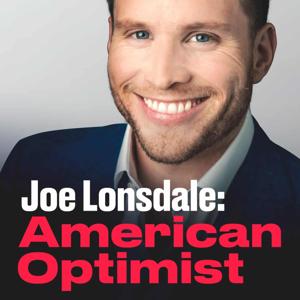
 By Joe Lonsdale

4.5
155155 ratings
Are government programs and interventions superior to market corrections? According to Dr. Cliff Winston, the evidence to support such a claim doesn’t exist. Many economists obsess over market failures but seldom point the microscope in the direction of government, despite its many failures. And worse, the bureaucracy doesn't hold itself accountable.
This week, we examine some of the flaws of modern economic theories with Dr. Winston, a microeconomist and Senior Fellow at the Brookings Institution, with a B.A. and Ph.D. in economics from UC Berkeley, and Masters from the London School of Economics. He is the author of numerous books and papers, including, most recently, “Indispensable: Market corrections in a U.S. economy beset by government failures.”
From antitrust to welfare programs and tax incentives, most Americans assume government interventions are preferable to allowing the market to correct itself, but as Cliff explains, we don't have scholarly evidence to back that up. He explains why we need government retrospectives and more widespread experiments to test what does or doesn't work. When has government been effective? Ironically, Cliff says, when it gets out of the way: deregulation. We talk about the benefits of airline deregulation, for example, and Cliff makes the case for deregulating the legal profession and other areas that require occupational licensure. Finally, we discuss scenarios where government involvement could be beneficial, such as setting adoption standards for autonomous vehicles.
1,284 Listeners

537 Listeners

2,450 Listeners
1,083 Listeners

2,158 Listeners

2,004 Listeners

9,909 Listeners
506 Listeners

136 Listeners
141 Listeners

474 Listeners

121 Listeners

44 Listeners

3 Listeners
49 Listeners