
Sign up to save your podcasts
Or

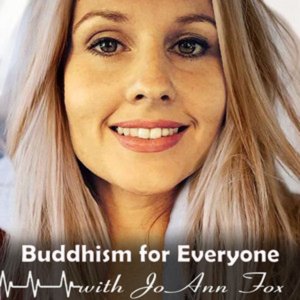

Like two wings of a bird, the Buddhist Spiritual path has two essential parts: wisdom and compassion. All the teachings of Buddhism help us to develop and refine these two qualities. Also, we can use wisdom or compassion to help us to work on our problems, like anger, anxiety or an attachment causing us great pain. In this episode, we look at wisdom and compassion and ask ourselves, Who am I? Who do I want to be?
Wisdom realizing emptiness is realization that leads to enlightenment. Buddha taught that the ultimate nature of all things is emptiness. Our reality is empty of something that we normally perceive, but what is it empty of? When we say our glass is empty and ask for more, the glass is empty of something. Is it empty of water or tea? This is the same with the emptiness of reality; it means our reality is empty of something. We ask then, "reality is empty of what?" Buddha taught that our reality is empty of inherent existence. Nothing exists inherently, independent of its name or without our minds perceiving it. A wine glass, for example, is not inherently a wine glass. Someone from a culture that has never seen a wine glass might see it as a vase flowers or a bowl for food. If no one ever gave it the name 'wine glass' it would not be a wine glass. The object is empty of existing inherently as a wine glass, but it does exist as a wine glass conventionally; it exists as mere name or imputation by conception. This also means the wine glass is full of possibilities for how it can exist.
This state of infinite possibility is true of our self also. If we even get a taste of our self being empty, it opens up infinite possibilities for our us. We can be anything. We can exist in any new, healthy way we can imagine. We can believe with certainty that we can become a Buddha and set out on the journey to become a bodhisattva. A bodhisattva is someone who has universal compassion and has determined to become a Buddha for the benefit of all living beings. Who are you? Who do you want to become?
Blind is this world;
Few see clearly here.
As birds who escape from nets are few,
Few go to heaven. (174)
Swans travel the path of the sun;
Those with psychic powers travel through space;
The wise travel forth from the world,
Having conquered Māra and his army.
--Buddha, The Dhammapada
Reference
Buddha.The Dhammapada. Translated by Gil Fronsdale. Shambala, Boston and London, 2011, pp. 40.
Yeshe, Thupten. Introduction to Tantra. (Audiobook). Wisdom Publications, Somerville, 2014.
 View all episodes
 By JoAnn Fox: Buddhist Teacher

4.9
189189 ratings
Like two wings of a bird, the Buddhist Spiritual path has two essential parts: wisdom and compassion. All the teachings of Buddhism help us to develop and refine these two qualities. Also, we can use wisdom or compassion to help us to work on our problems, like anger, anxiety or an attachment causing us great pain. In this episode, we look at wisdom and compassion and ask ourselves, Who am I? Who do I want to be?
Wisdom realizing emptiness is realization that leads to enlightenment. Buddha taught that the ultimate nature of all things is emptiness. Our reality is empty of something that we normally perceive, but what is it empty of? When we say our glass is empty and ask for more, the glass is empty of something. Is it empty of water or tea? This is the same with the emptiness of reality; it means our reality is empty of something. We ask then, "reality is empty of what?" Buddha taught that our reality is empty of inherent existence. Nothing exists inherently, independent of its name or without our minds perceiving it. A wine glass, for example, is not inherently a wine glass. Someone from a culture that has never seen a wine glass might see it as a vase flowers or a bowl for food. If no one ever gave it the name 'wine glass' it would not be a wine glass. The object is empty of existing inherently as a wine glass, but it does exist as a wine glass conventionally; it exists as mere name or imputation by conception. This also means the wine glass is full of possibilities for how it can exist.
This state of infinite possibility is true of our self also. If we even get a taste of our self being empty, it opens up infinite possibilities for our us. We can be anything. We can exist in any new, healthy way we can imagine. We can believe with certainty that we can become a Buddha and set out on the journey to become a bodhisattva. A bodhisattva is someone who has universal compassion and has determined to become a Buddha for the benefit of all living beings. Who are you? Who do you want to become?
Blind is this world;
Few see clearly here.
As birds who escape from nets are few,
Few go to heaven. (174)
Swans travel the path of the sun;
Those with psychic powers travel through space;
The wise travel forth from the world,
Having conquered Māra and his army.
--Buddha, The Dhammapada
Reference
Buddha.The Dhammapada. Translated by Gil Fronsdale. Shambala, Boston and London, 2011, pp. 40.
Yeshe, Thupten. Introduction to Tantra. (Audiobook). Wisdom Publications, Somerville, 2014.

2,554 Listeners
860 Listeners
10,533 Listeners
2,631 Listeners
385 Listeners
277 Listeners
824 Listeners
698 Listeners
12,710 Listeners
2,501 Listeners
873 Listeners
224 Listeners
1,350 Listeners

63 Listeners
97 Listeners