
Sign up to save your podcasts
Or

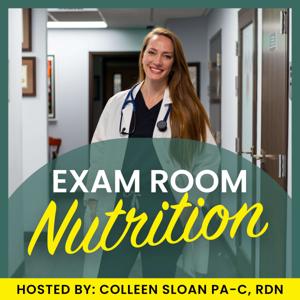


Nutrition, supplements, and what the evidence says
In this episode, I’m joined by Chelsey Hoffmann, PA-C, RDN, who specializes in pain medicine at Mayo Clinic, to break down where nutrition fits into chronic pain management and how to evaluate supplements without overpromising results.
We cover:
Resources mentioned:
Any Questions? Send Me a Message
Support the show
Connect with Colleen:
Instagram
LinkedIn
Sign up for my FREE Newsletter - Nutrition hot-topics delivered to your inbox each week.
Disclaimer: This podcast is a collection of ideas, strategies, and opinions of the author(s). Its goal is to provide useful information on each of the topics shared within. It is not intended to provide medical, health, or professional consultation or to diagnosis-specific weight or feeding challenges. The author(s) advises the reader to always consult with appropriate health, medical, and professional consultants for support for individual children and family situations. The author(s) do not take responsibility for the personal or other risks, loss, or liability incurred as a direct or indirect consequence of the application or use of information provided. All opinions stated in this podcast are my own and do not reflect the opinions of my employer.
Fertility Care for Both Partners
Infertility affects both partners, yet fertility evaluations and lifestyle advice often focus primarily on women. In this Summer School replay, Colleen talks with infertility PA Jessica Boone about taking a more complete, compassionate approach to fertility care.
They discuss why both partners should be evaluated, what may be missing from a standard infertility workup, and how nutrition, sleep, movement, hydration, and environmental exposures can support overall reproductive health. Jessica also shares practical questions clinicians can ask to better understand a couple’s history, family-building goals, and next steps.
Resources mentioned:
Episode 47: Nutrition and Infertility- Is Your Diagnosis Wrong?
Connect with Jessica
Any Questions? Send Me a Message
Support the show
Connect with Colleen:
Instagram
LinkedIn
Sign up for my FREE Newsletter - Nutrition hot-topics delivered to your inbox each week.
Disclaimer: This podcast is a collection of ideas, strategies, and opinions of the author(s). Its goal is to provide useful information on each of the topics shared within. It is not intended to provide medical, health, or professional consultation or to diagnosis-specific weight or feeding challenges. The author(s) advises the reader to always consult with appropriate health, medical, and professional consultants for support for individual children and family situations. The author(s) do not take responsibility for the personal or other risks, loss, or liability incurred as a direct or indirect consequence of the application or use of information provided. All opinions stated in this podcast are my own and do not reflect the opinions of my employer.
Foods to support focus, memory, and long-term brain health
In this Summer School replay, I talk with Dr. Jenna Stedman, a cognitive performance dietitian, about the connection between nutrition and cognitive health across the lifespan.
You’ll learn:
Resources Mentioned:
Episode 150: How to reduce dementia risk with daily habits
Dr. Stedman’s Brain Power Plate breakdown
Blog: 9 Questions to Ask About Cognitive Health
Any Questions? Send Me a Message
Support the show
Connect with Colleen:
Instagram
LinkedIn
Sign up for my FREE Newsletter - Nutrition hot-topics delivered to your inbox each week.
Disclaimer: This podcast is a collection of ideas, strategies, and opinions of the author(s). Its goal is to provide useful information on each of the topics shared within. It is not intended to provide medical, health, or professional consultation or to diagnosis-specific weight or feeding challenges. The author(s) advises the reader to always consult with appropriate health, medical, and professional consultants for support for individual children and family situations. The author(s) do not take responsibility for the personal or other risks, loss, or liability incurred as a direct or indirect consequence of the application or use of information provided. All opinions stated in this podcast are my own and do not reflect the opinions of my employer.
Nutrition To Support Post-Operative Healing
In this Summer School replay, Colleen talks with Erin Scherer, a surgical PA and registered dietitian, about the role nutrition plays in tissue repair, infection prevention, and recovery. They discuss which patients may need additional nutrition support, the key nutrients clinicians should prioritize, and simple opportunities to bring nutrition into the conversation.
Grab the FREE Post-Surgical Nutrition Guide Here
You’ll learn:
Resources Mentioned
Episode 75 | Are you patients taking too many supplements?
PA Foundation Handouts
https://youtu.be/mIsnrEh84LA - Nutrition to Improve Recovery after Surgery
https://youtu.be/lY53LwjS_X4 - Nutrition to support Wound Healing
Skip navigation
Create
Any Questions? Send Me a Message
Support the show
Connect with Colleen:
Instagram
LinkedIn
Sign up for my FREE Newsletter - Nutrition hot-topics delivered to your inbox each week.
Disclaimer: This podcast is a collection of ideas, strategies, and opinions of the author(s). Its goal is to provide useful information on each of the topics shared within. It is not intended to provide medical, health, or professional consultation or to diagnosis-specific weight or feeding challenges. The author(s) advises the reader to always consult with appropriate health, medical, and professional consultants for support for individual children and family situations. The author(s) do not take responsibility for the personal or other risks, loss, or liability incurred as a direct or indirect consequence of the application or use of information provided. All opinions stated in this podcast are my own and do not reflect the opinions of my employer.
Food Triggers, Hydration, and Supplements
Welcome to Summer School! In this Summer School replay, Colleen talks with Kelly, a registered dietitian specializing in migraine nutrition, about the complicated relationship between food and migraines. They discuss why there is no universal list of “migraine trigger foods,” how hydration and caffeine may influence symptoms, and why overly restrictive elimination diets can create more confusion than relief.
You’ll learn:
Connect with Kelli
Any Questions? Send Me a Message
Support the show
Connect with Colleen:
Instagram
LinkedIn
Sign up for my FREE Newsletter - Nutrition hot-topics delivered to your inbox each week.
Disclaimer: This podcast is a collection of ideas, strategies, and opinions of the author(s). Its goal is to provide useful information on each of the topics shared within. It is not intended to provide medical, health, or professional consultation or to diagnosis-specific weight or feeding challenges. The author(s) advises the reader to always consult with appropriate health, medical, and professional consultants for support for individual children and family situations. The author(s) do not take responsibility for the personal or other risks, loss, or liability incurred as a direct or indirect consequence of the application or use of information provided. All opinions stated in this podcast are my own and do not reflect the opinions of my employer.
You Are Not Your Struggle
So many women are trying to eat better, lose weight, meal plan, feed their families, manage busy schedules, and somehow not feel guilty about every food choice along the way. In this episode, I’m joined by Kelsey Wickenhauser, PA, homeschooling mom of four, Christian health coach, and founder of Kingdom Fit Moms, for a conversation about what it really looks like to pursue health in the middle of real life.
Key Takeaways:
Resources Mentioned:
Episode 157: I Hate Meal Plans
Connect with Kelsey
Any Questions? Send Me a Message
Support the show
Connect with Colleen:
Instagram
LinkedIn
Sign up for my FREE Newsletter - Nutrition hot-topics delivered to your inbox each week.
Disclaimer: This podcast is a collection of ideas, strategies, and opinions of the author(s). Its goal is to provide useful information on each of the topics shared within. It is not intended to provide medical, health, or professional consultation or to diagnosis-specific weight or feeding challenges. The author(s) advises the reader to always consult with appropriate health, medical, and professional consultants for support for individual children and family situations. The author(s) do not take responsibility for the personal or other risks, loss, or liability incurred as a direct or indirect consequence of the application or use of information provided. All opinions stated in this podcast are my own and do not reflect the opinions of my employer.
CKD Food Rules That Need an Update
Kidney nutrition has a reputation for being restrictive, confusing, and honestly… a little intimidating. But for many patients with chronic kidney disease, the biggest problem isn’t that they’re eating a banana or adding tomatoes to dinner. It’s that they’ve been handed outdated food rules that leave them scared to eat.
In this episode, I’m joined by renal dietitian Lauren Budd Levy, MS, RDN, CSR, to talk about what clinicians need to know about kidney nutrition, especially if you don’t work in nephrology.
We cover the CKD diet rules that need an update, including potassium restriction, phosphorus additives, protein needs, sodium, hydration, electrolyte powders, and how to help patients enjoy summer cookouts, travel, and real life without feeling like their kidney diagnosis means they have to avoid everything.
Key Takeaways:
If your patient with CKD has ever asked, “Can I eat tomatoes?” “Do I need to avoid phosphorus?” or “Are electrolyte drinks safe for me?” this episode will help you answer with more confidence, nuance, and compassion.
Resources Mentioned:
Episode 43 | Nutrition and Kidney Disease: What's a Renal Diet?
Episode 32 | How to Read a Nutrition Facts Label - with a Focus on Kidney Health
Connect with Lauren
Any Questions? Send Me a Message
Support the show
Connect with Colleen:
Instagram
LinkedIn
Sign up for my FREE Newsletter - Nutrition hot-topics delivered to your inbox each week.
Disclaimer: This podcast is a collection of ideas, strategies, and opinions of the author(s). Its goal is to provide useful information on each of the topics shared within. It is not intended to provide medical, health, or professional consultation or to diagnosis-specific weight or feeding challenges. The author(s) advises the reader to always consult with appropriate health, medical, and professional consultants for support for individual children and family situations. The author(s) do not take responsibility for the personal or other risks, loss, or liability incurred as a direct or indirect consequence of the application or use of information provided. All opinions stated in this podcast are my own and do not reflect the opinions of my employer.
Give Nutrition Advice Without Making Patients Feel Punished
Have you ever asked, “Do you have any other questions?” at the end of a visit and immediately regretted it?
Same.
Because of course they have more questions. Important questions. Questions that probably should have been asked 15 minutes ago, except now you’re already behind, the next patient is waiting, and you’re trying to be compassionate without completely derailing the visit.
In this episode, I’m talking with Maya Feller, MS, RD, CDN, registered dietitian, author of Eating From Our Roots, and founder of Maya Feller Nutrition, about the art of inviting patients into treatment instead of simply telling them what to do.
We talk about cultural humility, implicit bias, why foods like rice, tortillas, noodles, plantains, and traditional starches get unfairly blamed for chronic disease, and how clinicians can help patients improve blood sugar, blood pressure, and lipids without stripping away the foods that feel like home. Maya also shares a brilliant framework for setting the agenda with patients, asking permission, and keeping the visit patient-centered without losing control of the clock.
In this episode, you’ll learn:
Resources Mentioned:
Episode 146: When Culture is Erased from Guidelines
Connect with Maya
Any Questions? Send Me a Message
Support the show
Connect with Colleen:
Instagram
LinkedIn
Sign up for my FREE Newsletter - Nutrition hot-topics delivered to your inbox each week.
Disclaimer: This podcast is a collection of ideas, strategies, and opinions of the author(s). Its goal is to provide useful information on each of the topics shared within. It is not intended to provide medical, health, or professional consultation or to diagnosis-specific weight or feeding challenges. The author(s) advises the reader to always consult with appropriate health, medical, and professional consultants for support for individual children and family situations. The author(s) do not take responsibility for the personal or other risks, loss, or liability incurred as a direct or indirect consequence of the application or use of information provided. All opinions stated in this podcast are my own and do not reflect the opinions of my employer.
What Really Happens Inside an Obesity Clinic
GLP-1 medications are everywhere right now. Patients are asking about Ozempic, Wegovy, Zepbound, compounded medications, muscle loss, “Ozempic face,” insurance denials, and what happens when the weight loss slows down.
But what does obesity medicine actually look like inside the clinic? In this episode, I’m joined by Joseph Zucchi, PA-C, clinical supervisor and physician associate at Transition Medical Weight Loss in Salem, New Hampshire.
This is not your typical GLP-1 conversation. We’re going beyond protein goals, nausea tips, and constipation management to talk about what clinicians are really facing in practice: how to dose these medications, when to switch, and how to support patients when insurance coverage disappears.
In this episode, you’ll learn:
If you prescribe GLP-1 medications, counsel patients on weight management, or feel overwhelmed by the insurance and documentation side of obesity medicine, this episode will give you a practical, behind-the-scenes look at what comprehensive obesity care can look like.
Connect with Joe
Resources mentioned:
Obesity Medicine Nutrition Course (with a 2026 medication update) Use code POD15 for 15% off!
155 | Unstuck: Strategies for Sustainable Weight Loss
151 | Are GLP-1s Masking Undiagnosed Eating Disorders?
Obesity Medication Infographic
Any Questions? Send Me a Message
Support the show
Connect with Colleen:
Instagram
LinkedIn
Sign up for my FREE Newsletter - Nutrition hot-topics delivered to your inbox each week.
Disclaimer: This podcast is a collection of ideas, strategies, and opinions of the author(s). Its goal is to provide useful information on each of the topics shared within. It is not intended to provide medical, health, or professional consultation or to diagnosis-specific weight or feeding challenges. The author(s) advises the reader to always consult with appropriate health, medical, and professional consultants for support for individual children and family situations. The author(s) do not take responsibility for the personal or other risks, loss, or liability incurred as a direct or indirect consequence of the application or use of information provided. All opinions stated in this podcast are my own and do not reflect the opinions of my employer.
Nutrition Advice Needs More Nuance.
Your patients are hearing a lot online: fix your gut, avoid processed foods, buy organic, take a probiotic, and eat the “right” foods if you want to be healthy.
But nutrition is rarely that simple.
In this episode, I’m joined by Registered Dietitian Manju Karkare to talk about how clinicians can respond to common nutrition questions with more nuance, less fear, and advice that actually fits the patient’s life.
We cover gut health, probiotics, processed foods, organic produce, cultural food traditions, food access, and where integrative and functional nutrition can be helpful without overcomplicating care.
What You’ll Learn:
Connect with Manju on Instagram
Join the Obesity Medicine Course and get 16% off with code SWEET16 here
Any Questions? Send Me a Message
Support the show
Connect with Colleen:
Instagram
LinkedIn
Sign up for my FREE Newsletter - Nutrition hot-topics delivered to your inbox each week.
Disclaimer: This podcast is a collection of ideas, strategies, and opinions of the author(s). Its goal is to provide useful information on each of the topics shared within. It is not intended to provide medical, health, or professional consultation or to diagnosis-specific weight or feeding challenges. The author(s) advises the reader to always consult with appropriate health, medical, and professional consultants for support for individual children and family situations. The author(s) do not take responsibility for the personal or other risks, loss, or liability incurred as a direct or indirect consequence of the application or use of information provided. All opinions stated in this podcast are my own and do not reflect the opinions of my employer.
From the publisher's feed
Nutrition advice is everywhere. Your patients need help sorting through misinformation, and you need practical guidance for communicating nutrition clearly and compassionately. Exam Room Nutrition…
Whether you are a PA strengthening your nutrition knowledge or an RD sharpening your counseling skills, Exam Room Nutrition will help you bring practical, compassionate nutrition care into every patient conversation.
1,069 Listeners
3,344 Listeners

111,779 Listeners

56,445 Listeners
24,541 Listeners
3,399 Listeners
369,621 Listeners
9,135 Listeners
134 Listeners
1,137 Listeners
297 Listeners

29,197 Listeners
413 Listeners
2,029 Listeners
12,480 Listeners