
Sign up to save your podcasts
Or



Based on Podcast App listening data
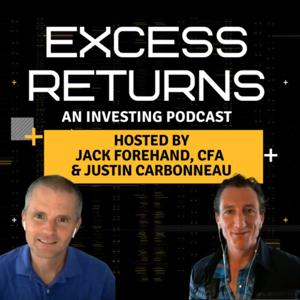
In this episode of Excess Returns, we sit down with Andrew Beer to break down managed futures, hedge fund replication, diversification, and what investors can realistically expect from these alternative strategies. Andrew explains why managed futures can act like a “cloudy crystal ball,” how trend strategies capture major macro shifts, why complexity isn’t always your friend, and how advisors can communicate these concepts to clients. We also explore fees, model portfolios, allocation decisions, global macro themes, and what smart-money positioning looks like heading into 2025.
Topics Covered
What managed futures actually are and how they work
How trend strategies capture big macro shifts
Why diversification is most valuable during market stress
Why investors struggle with complexity and line-item risk
The statistical case for adding managed futures to a 60/40 portfolio
Barriers to adoption and how advisors should explain the strategy
The role of model portfolios and why slow rebalancing can hurt in regime shifts
Why Andrew prefers simplicity over complexity in managed futures
Fee sensitivity, ETFs, and how this strategy goes mainstream
Indexing, replication, and building more efficient alternatives
Why manager selection is hard in this space
The “rush to complexity” and why it often hurts returns
How hedge fund replication works and what it captures
What smart money is positioned for today across equities, rates, currencies, and commodities
Macro themes: inflation, rate cycles, the dollar, yen, and global equity opportunities
Why international equities may finally be turning
How managed futures complement – not replace – stocks and bonds
What mainstream adoption might look like over the next decade
Timestamps
00:00 Intro and why managed futures matter
02:00 Explaining managed futures in simple terms
06:18 The four major asset classes trend funds trade
10:00 Why trends form and how information reveals itself in prices
11:55 Diversification and how managed futures improve portfolios
14:00 Why investors haven’t widely adopted the strategy
17:01 Communicating the “what,” not the “how,” with clients
18:55 How model portfolios behave in regime change
21:55 How managed futures can move faster than traditional allocations
24:00 Why a simple portfolio of major markets works
26:00 Making alternatives feel less risky
28:00 Performance dispersion across managed futures ETFs
30:00 Why complexity doesn’t equal value
35:20 Fees, ETFs, and what mainstream adoption requires
38:00 The real reason for the industry’s “rush to complexity”
40:35 Should managed futures exclude equities and bonds?
43:00 Why it’s so hard to handicap what will work in advance
46:00 The human side of alternatives and advisor communication
47:00 Hedge fund replication explained
50:00 How replication identifies major themes
52:00 Why replication works only in certain strategies
53:10 What smart money positioning looks like today
55:45 Inflation, rates, the dollar, and global opportunities
58:00 The path to managed futures becoming a standard allocation
59:22 Where to find Andrew Beer online
We are including this episode from our separate show Teach Me Like I'm Five in the Excess Returns feed. If you would like to continue receiving new episodes, subscribe using the links below.
In the episode, we sit down with Business Breakdowns host Matt Reustle to discuss how he breaks down businesses and the common characteristics that the best businesses he has looked at share.
Subscribe on Spotify
https://open.spotify.com/show/7zu6lFpPohoPKhcu0Er9kB
Subscribe on Apple Podcasts
https://podcasts.apple.com/hr/podcast/teach-me-like-im-five-investing-concepts-made-simple/id1815975642
In this episode of Excess Returns, Graeme Forster of Orbis joins us to discuss two major research papers: Six Courageous Questions for 2026 and Sunrise on Venus. We explore how long-running global trends may be reversing, what that means for U.S. dominance, the future of international and emerging markets, the risks and opportunities created by AI and massive CapEx spending, the dollar’s shifting role, and how investors should think about valuation, humility, and navigating a world where the economic “water” is changing. This conversation is packed with global macro insight, long-term investing lessons, and practical frameworks for building more resilient portfolios.
Topics Covered:
• Why long-term market “water” becomes invisible to investors
• Self-reinforcing global cycles and how China’s WTO entry reshaped the world
• Signs the 25-year U.S. outperformance cycle may be breaking
• How tariffs, political shifts, and corporate reforms change the global landscape
• Why international and emerging markets may now offer better expected returns
• Why U.S. large caps are not the entire story of American exceptionalism
• How to think about valuation, margins, and discounted cash flow models across markets
• The AI boom, bubbles, capital cycles, and asymmetric outcomes
• How AI CapEx constraints influence winners and losers
• The shifting role of the U.S. dollar and why market shocks may behave differently
• Maslow’s hierarchy, needs vs. wants, and the return of state-driven capital investment
• Deglobalization, reshoring, and the national-security lens for investing
• How to evaluate China and Taiwan inside emerging markets
• Why humility is an investor’s greatest edge
Timestamps:
00:00 Introduction
01:02 Why Orbis wrote Six Courageous Questions for 2026
03:44 The David Foster Wallace “water” analogy and investing
06:12 How a 25-year self-reinforcing cycle powered U.S. outperformance
10:12 Signs the cycle may be breaking
12:00 Corporate reform and opportunity in Asia
13:55 Why active share, benchmarking, and incentives distort investor behavior
17:31 Decomposing S&P 500 returns: margins, valuations, fundamentals
20:20 Expected returns inside and outside the U.S.
22:34 Why international stocks offer richer opportunity sets
24:25 Currency implications and weakening dollar dynamics
26:18 American exceptionalism beyond the top 10 mega caps
28:49 Where Orbis is finding value today
30:25 Biotech, healthcare, and post-COVID dislocation
31:05 How Orbis thinks about valuation in an intangible-heavy world
32:09 Is AI a bubble or the beginning of something bigger?
34:30 Game theory of AI CapEx and right-tail outcomes
36:00 CapEx cycles, history, and who benefits
38:00 Indirect AI beneficiaries and the SK Square example
40:35 Maslow’s hierarchy and the shift from wants to needs
42:32 Deglobalization, national security, and domestic reinvestment
44:00 Capital returning to home markets and strategic industries
46:00 Can anything reverse these structural trends?
48:00 Balancing bottom-up investing with macro awareness
49:45 The deeper risk in emerging markets: owning vs. avoiding
51:00 Valuation still matters for long-term returns
52:29 Corporate behavior, dividends, and re-rating cycles
53:52 How Orbis views China vs. bottom-up opportunity
55:34 Why great investors must be right 90–95% of the time in decision quality
58:00 One lesson Graeme would teach the average investor
James Grant, legendary founder of Grant’s Interest Rate Observer, joins us for a wide-ranging conversation on cycles, interest rates, inflation, credit, the Federal Reserve, private markets, gold, and the future of investing. Grant brings five decades of historical perspective to today’s market extremes, explaining why this era of ultra-low interest rates created distortions that will shape returns for years to come — and where patient investors may ultimately find opportunity.
Topics Covered
• The historical patterns that define major market cycles
• Why interest rate cycles unfold over generations
• What the 2021 bond market top tells us about the next decade
• How inflation behaves like an underground coal fire
• The shift from “capitalism without capital” to the “tangible twenties”
• Geopolitical tension, military spending, and inflation risk
• The Fed’s role in shaping today’s market distortions
• The long-term consequences of QE and financial repression
• Private credit, opaque marks, and the fragility beneath the surface
• Rising risks inside life insurance balance sheets
• Why credit cycles always go further than anyone expects
• The challenge of finding long opportunities in today’s market
• Why liquidity and patience may be the biggest opportunities
• Whether the classic 60/40 portfolio still works
• Gold as money and why confidence in paper currencies is eroding
• Jim Grant’s one lesson for the average investor
Timestamps
00:00 Cycle extremes and market absurdities
01:00 Interest rates over generations
07:00 Defining major tops and bottoms
12:30 Where we are in the current rate cycle
14:00 Inflation, armed conflict, and tangible investment
18:00 The “tangible twenties” and data center boom
19:00 Coal fire inflation analogy
20:00 Fed independence, politics, and monetary power
25:00 The long shadow of the 2008 crisis
30:00 QE, zero rates, and long-term consequences
33:00 Housing affordability and locked-in rates
34:00 Risks in private credit and opaque marks
36:00 How far the credit cycle has progressed
38:00 Japan, value investing, and long cycles
43:00 Where opportunities exist today
47:00 The future of the 60/40 portfolio
49:00 Structural risks from low-rate distortions
51:00 Freedom, politics, and economic consequences
56:00 Gold as money
58:00 What Jim Grant believes most investors disagree with
59:30 The one lesson Jim Grant would teach the average investor
In this episode, we’re joined again by Jim Paulsen to break down the key themes shaping markets and the economy heading into 2026. Jim explains why policymakers may be fighting the wrong battle, why real sustainable growth has quietly collapsed over the past 20 years, and how shifts in policy, demographics, productivity, inflation, and investor psychology all tie together. We also walk through Jim’s latest charts from Paulsen Perspectives and explore what they mean for stocks, sectors, interest rates, the dollar, and leadership in the year ahead.
Topics covered in this episode:
• The state of inflation and why CPI and PPI may be sending a very different message
• The 20-year collapse in real sustainable GDP growth
• Why job creation, labor force growth, and productivity have all structurally weakened
• The rise in unemployment duration and what it signals about lost “animal spirits”
• How demographics, immigration policy, and cultural shifts are shaping growth
• Productivity puzzles: innovation vs. distraction in a tech-driven economy
• Why the real economic risk may be deflation, not inflation
• How monetary policy, the yield curve, the dollar, and fiscal policy have remained contractionary
• Tariffs as a hidden tax and their real impact on inflation
• How an easing cycle could reshape market leadership in 2026
• Jim’s Total Policy Stimulus Index and what it reveals about small caps, cyclicals, value, and foreign stocks
• The difference between today’s tech cycle and the dot-com bubble
• What a broadening market might look like if policy finally turns supportive
• How international equities could respond to a weaker dollar
• Why tech may underperform without collapsing
• Jim’s expectations for S&P 500 returns in 2026 and the potential for a more balanced leadership environment
Timestamps:
00:00 Market setup and inflation overview
02:00 Reviewing recent corrections and sector broadening
04:00 Bond yields, easing expectations, and fear-based asset leadership
06:00 Tech’s relative performance beginning to fade
07:00 GDP growth collapse over two decades
09:00 Structural slowdown in job creation
10:30 Labor force growth and aging demographics
12:00 The doubling of unemployment duration
14:00 Population trends, immigration, and slowing productivity
17:00 The rise of de-risking and falling monetary velocity
19:00 Trade deficits, globalization, and policy contraction
22:00 Why inflation risk may be overstated
26:00 CPI/PPI data versus the inflation narrative
29:00 Money supply, real rates, and the longest yield curve inversion
31:00 The strong dollar as a contractionary force
34:00 International stock performance and currency impact
35:00 Tax burden relative to slower growth
37:00 Tariffs as taxes and their real economic effect
39:00 What would it take to restore growth and optimism?
42:00 The Total Policy Stimulus Index explained
47:00 Policy’s impact on equal-weight, small caps, cyclicals, and value
52:00 How foreign stocks respond to policy and the dollar
54:00 Tech valuations today vs. the dot-com era
55:00 Fed response differences between now and 2000
57:00 Why today’s tech cycle is structurally different
59:00 What 2026 might look like for the S&P 500
01:01:00 Why price targets are inherently unreliable
01:01:45 Closing thoughts and sign-off
In this special episode of Excess Returns, we share the most important investing lessons from more than 50 of our top guests. After asking more than 200 investors, strategists, academics, and market thinkers the same closing question about the one lesson they would teach the average investor, we compiled the most powerful, timeless, and repeatable insights into a single episode. This collection highlights common themes around patience, discipline, humility, diversification, risk management, and long-term thinking, while revealing how great investors navigate markets, behavior, and uncertainty.
Main topics covered:
Why investing is about preserving and growing wealth, not getting rich
Why neither get in nor get out is an investing strategy
The role of base rates in decision-making
The dangers of performance chasing
Why you should look at your portfolio less often
The importance of independent thinking and avoiding envy
Treating stocks as businesses, not trading sardines
Diversification across assets, strategies, and economic regimes
The behavioral traps that destroy wealth
Liquidity, supply and demand, and how markets really function
The value of patience, long-term thinking, and sticking to your plan
How to build a resilient portfolio that survives different market environments
Why simplicity often beats complexity
The role of humility, self-awareness, and keeping emotions out of investing
Timestamps:
00:00 Investing is about preserving and growing wealth
00:45 Why neither get in nor get out is a strategy
01:16 How we arrived at the one-lesson question
02:00 Finding a portfolio you can live with
03:00 Avoiding envy and chasing 10-baggers
04:00 Why watching markets too closely hurts results
05:00 The Matt Levine rule of unbelievable returns
06:00 The power of base rates
08:00 Look at your portfolio as little as possible
10:00 Treat your holdings like real businesses
12:00 Be invested early and think independently
14:00 Be kind to yourself and keep taking action
15:58 Do not chase performance
17:00 Treat every position like you put it on today
18:31 Your portfolio is secondary to your life
19:44 Buy when others are fearful
20:00 Be Rip Van Winkle, not Nostradamus
22:00 Navigate the noise and avoid the siren song
23:38 The value of simplicity and studying history
24:59 Patience and tuning out the noise
26:00 True diversification and preparing for unknown regimes
27:50 Stick to a strategy that fits your personality
29:00 Diversify and be humble about what you know
30:00 Most results come from the market, not manager skill
32:38 Keep investing simple
34:00 Focus on what is knowable
35:00 Believe in long-term economic and market resilience
37:00 Get out of your own way
38:22 Build a philosophy you can stick to
39:00 Misjudging probabilities and confidence
40:46 Book your gains and contain your losses
41:00 Diversification is protection against bad luck
42:00 Supply, demand, and liquidity always matter
45:00 Markets as a political utility
46:00 Find something real if you want true alpha
47:00 Write down your decisions
48:32 Why 100 percent indexing is unrealistic for most
50:00 Alpha through portfolio structure, not just stock picking
52:00 Dividends and long-run investing
53:56 Valuation, time horizons, and patience
55:00 Embracing uncertainty and avoiding pigeonholing
56:33 Rules-based processes
57:35 Buy good businesses, not just cheap ones
59:00 Think long term and save early
01:01:00 Focus on the basics first
01:02:00 Avoid catastrophic losses
01:03:22 Evidence-based investing and avoiding resulting
01:04:09 Know what you own and keep fees low
01:05:00 Simple strategies often work best
01:06:00 Compounding and emotional control
01:07:00 Treat savings as savings, not lottery tickets
01:07:50 Balance enjoying today with protecting tomorrow
01:08:00 Stay invested and think long term
01:08:41 Be humble, patient, and systematic
01:09:00 Do your own work and build conviction
In this episode of Excess Returns, Matt sits down with Ben Hunt to break down his new Epsilon Theory essay, World War AI. They explore how the US government, markets, and Big Tech are rapidly shifting the AI narrative from productivity and progress toward a national security arms race with massive implications for energy, capital, jobs, inflation, and the broader economy. Ben explains why AI buildout is consuming enormous resources, how this echoes World War II scale mobilization, why consumers are already feeling the strain, and what policies could still steer the country toward a healthier economic path.
Topics covered:
• Why the AI narrative flipped from optimism to national security
• How AI CapEx creates shortages of energy, capital, and investment elsewhere
• The parallels between AI buildout and World War II economic mobilization
• Why the promise of AI-driven productivity and leisure was never realistic
• The coming squeeze on consumers through higher prices and reduced availability
• Why energy bottlenecks and electricity scarcity may lead to rationing
• The risk of stagflation and a shrinking job base as AI replaces human labor
• The political paths this could take, from authoritarianism to backlash
• Ben’s three-policy plan: reshoring, energy expansion, and electricity caps
• How investors should think about the boom-bust risk of hyperscale growth
• Why awareness and public conversation are essential before the window closes
Timestamps:
00:00 AI narrative shift and the failure of the carrot
01:20 Measuring narratives through Perscient Pro
05:30 Why Ben wrote World War AI
07:30 The carrot vs. the stick in AI storytelling
11:00 Utility bills, consumer squeeze, and rising economic pressures
12:30 World War II-level spending and debt dynamics
15:30 Crowding out the consumer economy
17:00 Interest rates, borrowing, and capital shortages
20:00 Energy usage, electricity scarcity, and cost-push inflation
24:00 Rationing risk and historical parallels
26:00 Jobs, productivity, and AI’s impact on labor
31:00 The lack of new job creation in an AI-driven economy
33:00 Why new-tech job optimism does not apply here
38:00 Market skepticism and narrative extremes
41:00 Political risk, backlash, and potential future paths
42:20 The three policies: reshoring, energy buildout, electricity caps
49:30 Investment implications and the boom-bust cycle
55:00 How AI growth must be subordinated to broader economic goals
57:00 Why connecting consumer pain to AI buildout is essential
59:30 Early signs of state-level limits on data centers
01:02:00 Where to follow Ben Hunt and the continuing story
In this episode of Excess Returns, we sit down with Louis-Vincent Gave of Gavekal Research for one of the most wide-ranging and eye-opening conversations we have ever hosted. Louis breaks down how China transformed its economy over the last seven years, why Western observers consistently misunderstand the country’s growth model, and what this means for global markets, AI competition, supply chains, currencies, energy, demographics, and the next decade of investing. If you want a clearer picture of China, global macro dynamics, and the forces shaping markets today, this is essential viewing.
Topics covered in this episode:
• Why Western investors misread China’s economy
• China’s response to the US semiconductor embargo
• How China redirected all lending toward industry
• The scale and speed of China’s move up the value chain
• China’s EV dominance and the BYD vs. Tesla comparison
• The new global deflation and reflation forces
• Why China now looks like the US did in 2009
• Energy, labor, and industrial competitiveness
• China’s open-source AI approach vs. America’s closed systems
• “Hunger Games” capitalism and the impact on investors
• Where foreign investors consistently get China wrong
• The RMB as the most mispriced major asset
• How China’s demographics shape policy and markets
• Why fears of a Taiwan conflict are overblown
• How Louis is positioning for China’s next bull market
Timestamps:
00:00 China’s economic shock and the US semiconductor embargo
02:00 What the West gets wrong about China
04:00 Competition, local governments, and industrial incentives
06:10 China’s lending shift: real estate to industry
08:00 China’s rapid climb up the value chain
10:00 BYD vs Tesla and China’s engineering surge
12:30 The global deflationary shock and US–China tensions
15:00 From defense to offense: China’s policy pivot
17:00 China’s reflation and emerging market implications
18:20 Scarcity of energy, labor, and time
21:00 China’s cost advantages vs the US
24:00 Comparing AI strategies: open vs closed systems
28:00 “Hunger Games” capitalism in China
31:30 Investing challenges and opportunities in China
34:00 China’s new high-tech niche champions
37:00 Capital-light Chinese AI vs US capital intensity
40:30 Rethinking US-China blocs and global alliances
44:00 Why Europe will be torn apart by the next phase
45:30 Will China outperform the US over the next decade?
47:00 The massively undervalued RMB
49:00 China’s barbell investment setup
50:00 China’s demographic crisis and policy response
53:00 Taiwan risk: myth vs reality
58:00 How Louis could be wrong
01:00:40 Louis’s contrarian investing belief
01:02:00 Louis’s one lesson for investors
In this episode, we sit down with Sanctuary Wealth Chief Investment Strategist Mary Ann Bartels to break down her new 2026 outlook. We cover her long-term S&P 500 forecast, why she believes we are still early in a secular bull market, how technological innovation is fueling productivity and profitability, the risks she’s watching in 2026, and the case for international stocks, gold, and diversification. Mary Ann also explains why skepticism suggests we are not yet in a true bubble, how valuations fit into today’s market, and what investors should understand about cycles, inflation, and long-term compounding.
Topics Covered
• Secular bull markets and why the long-term trend still points higher
• Whether today’s market is following historic bubble patterns
• AI, technology cycles, and the connection between innovation, productivity, and profits
• Why skepticism means we are not yet near euphoria
• The 2026 “reset” and how the presidential cycle could affect markets
• Valuations, earnings trends, and interest-rate dynamics
• Market concentration, structural changes, and the role of mega-caps
• Growth vs value and why growth leadership may persist
• Why international markets may be entering their own secular bull market
• Inflation outlook, tariffs, and what the data now suggests
• Private credit concerns and overall financial-system stability
• Gold’s surge, future targets, and its role as portfolio diversification
• Portfolio construction, risk, and the importance of compounding for younger investors
Timestamps
00:00 Market patterns, bubbles, and early-cycle dynamics
01:00 Introduction
02:00 Long-term S&P 500 outlook
04:00 Historical bubble analogs and market psychology
06:00 Skepticism vs optimism
09:00 2026 reset and election-year dynamics
13:00 Valuations and PE expansion
17:00 Long-term valuation trends
17:40 Innovation cycles and economic growth
20:20 Productivity, AI CapEx, and profitability
21:00 Technology adoption across industries
22:20 Digitization and long-term tech layers
22:30 Market concentration and structural changes
25:00 Why corrections are more frequent
27:20 Growth vs value
31:00 International markets outlook
36:00 Correlations, deglobalization, and opportunity
38:40 Inflation short-term vs long-term
40:30 Private credit and financial stability
43:30 Gold outlook and targets
45:40 Diversifying concentrated portfolios
48:40 Crypto, private markets, and generational shifts
49:20 Key risks for 2026
51:40 What most investors get wrong
53:00 The one lesson for the average investor
54:40 Closing
In this episode of Excess Returns, we talk with Carl Kaufman, Co-President and Co-CIO of Osterweis Capital Management, about navigating today’s fixed income landscape. Carl breaks down the major segments of the bond market, explains how credit and interest rate cycles interact, discusses private credit risks, and shares how he builds durable, low-volatility bond portfolios. Drawing on more than two decades managing one of the top multi-sector income funds, Carl offers clear, practical insights for investors trying to understand yields, defaults, duration, and where returns are most attractive today.
Main topics covered:
• Overview of investment grade, high yield, leveraged loans, and private credit
• How today’s credit quality is shifting across the bond market
• Why the high yield market may be higher quality than most investors realize
• How levered loans and private credit have changed system dynamics
• How Carl uses the interest rate cycle and credit cycle to position the portfolio
• Why he avoids style boxes and instead buys bonds like a stock picker
• The flaws in fixed income indexing and why active management matters more in bonds
• How he evaluates companies, business models, leverage, and free cash flow
• Why distributors and equipment rental companies are strong long-term bond businesses
• The risks of the AI Capex boom and echoes of past bubbles
• Where defaults are rising and why private credit concerns may not be systemic
• Why his portfolio is short duration and how he uses cash as optionality
• How he protects against large drawdowns and manages risk across cycles
• His perspective on the Fed, inflation, employment data, and rate cuts
• Carl’s one investing belief most peers disagree with
• The one lesson he would teach every investor
Timestamps:
00:00 Intro and bond market quality shift
01:00 Carl’s background and fund philosophy
02:42 Defining investment grade, high yield, loans, and private credit
08:00 Why high yield quality has improved
10:07 The two-cycle approach: interest rates and credit
14:31 How today’s cycle differs
18:03 Why forecasting matters less than knowing where you are
18:52 Buying bonds like a stock picker
25:28 Index flaws in fixed income
26:56 Sectors Carl prefers
29:16 Thoughts on AI Capex, Nvidia, and financing trends
33:10 Sector concentration in bond portfolios
34:51 Position sizing and portfolio construction
35:43 Cracks in private credit and default data
39:45 Private credit for retail investors
40:34 Why Carl is short duration today
44:57 Using cash and liquidity as a strategic tool
45:44 Risk management and drawdowns
47:29 The Fed, inflation, employment, and policy uncertainty
53:53 Closing questions: belief peers disagree with
54:45 One lesson for the average investor
From the publisher's feed
Ranked by our users in the last 21 days
3,064 Listeners
588 Listeners

946 Listeners

201 Listeners

793 Listeners

356 Listeners

298 Listeners

2,140 Listeners
206 Listeners

90 Listeners

426 Listeners

108 Listeners
266 Listeners
413 Listeners

149 Listeners