
Sign up to save your podcasts
Or

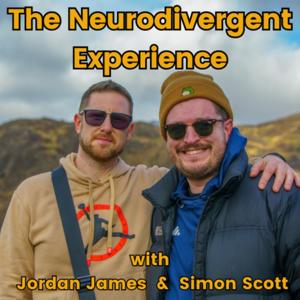

In this episode of The Neurodivergent Experience, Jordan James and Simon Scott explore the overlap — and important differences — between executive dysfunction and pathological demand avoidance (PDA), and why both can make everyday tasks feel overwhelming.
They unpack how executive dysfunction is linked to planning, organisation, and overload, while PDA is driven by anxiety, autonomy, and threat responses — and why, in real life, the two often collide. Through personal examples, they explore why getting started, following through, or responding to demands can feel impossible, even when you want to do the thing.
Jordan and Simon reflect on how fear of failure, shame, trauma, and being told to “just do it” can intensify paralysis rather than help. They also discuss how misunderstanding these patterns leads to judgment — at home, at work, and in childhood — instead of support.
Rather than offering quick fixes, the conversation focuses on reducing pressure, understanding what’s really happening in the nervous system, and finding supportive ways to move forward.
They discuss:
A validating conversation about why simple tasks can feel so hard — and how understanding, compassion, and the right support can make a real difference.
Our Sponsors:
🧠 RTN Diagnostics - Right to Choose – Autism & ADHD Assessments (UK)
🧘♀️ Ashley Bentley – Integrative Coaching, Breathwork & Hypnotherapy
🔗 Stay Connected
❤️ Support the Show
If this episode resonated with you:
✅ Follow or Subscribe to The Neurodivergent Experience
⭐ Leave a quick review on Apple Podcasts or Spotify
🔔 Turn on notifications for new weekly episodes
Hosted on Acast. See acast.com/privacy for more information.
 View all episodes
 By Jordan James and Simon Scott
5
2525 ratings
In this episode of The Neurodivergent Experience, Jordan James and Simon Scott explore the overlap — and important differences — between executive dysfunction and pathological demand avoidance (PDA), and why both can make everyday tasks feel overwhelming.
They unpack how executive dysfunction is linked to planning, organisation, and overload, while PDA is driven by anxiety, autonomy, and threat responses — and why, in real life, the two often collide. Through personal examples, they explore why getting started, following through, or responding to demands can feel impossible, even when you want to do the thing.
Jordan and Simon reflect on how fear of failure, shame, trauma, and being told to “just do it” can intensify paralysis rather than help. They also discuss how misunderstanding these patterns leads to judgment — at home, at work, and in childhood — instead of support.
Rather than offering quick fixes, the conversation focuses on reducing pressure, understanding what’s really happening in the nervous system, and finding supportive ways to move forward.
They discuss:
A validating conversation about why simple tasks can feel so hard — and how understanding, compassion, and the right support can make a real difference.
Our Sponsors:
🧠 RTN Diagnostics - Right to Choose – Autism & ADHD Assessments (UK)
🧘♀️ Ashley Bentley – Integrative Coaching, Breathwork & Hypnotherapy
🔗 Stay Connected
❤️ Support the Show
If this episode resonated with you:
✅ Follow or Subscribe to The Neurodivergent Experience
⭐ Leave a quick review on Apple Podcasts or Spotify
🔔 Turn on notifications for new weekly episodes
Hosted on Acast. See acast.com/privacy for more information.

3,767 Listeners

420 Listeners

942 Listeners

47 Listeners
715 Listeners

428 Listeners

309 Listeners

178 Listeners
290 Listeners
51 Listeners

596 Listeners
111 Listeners

26 Listeners

283 Listeners