
Sign up to save your podcasts
Or

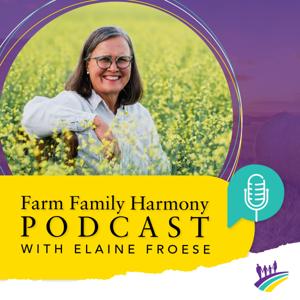


When you've spent your life building a farm, what happens when you have to walk away from it?
In this episode, I sit down with Warren Davies, The Unbreakable Farmer, to talk about the emotional side of farming and how deeply our sense of identity can be tied to the land.
Warren shares his experience navigating some of life's toughest challenges and what he's learned about the pressures farmers face. Together, we explore why it's not always easy to talk about what we're going through, especially when we're used to being the ones who keep everything moving.
We also touch on the importance of connection, the challenges of farm transition, and why having the right people around you matters.
If you're facing uncertainty on your farm or feeling the weight of expectations, this episode is a reminder that you don't have to figure everything out on your own.
"For farmers, we're taught to be resilient, and we're expected to be resilient. You know, you're meant to be able to bounce back and be tough and stoic." - Warren Davies
Resources Mentioned During This Episode
About Our Guest
Warren Davies, known as The Unbreakable Farmer, is one of Australia's leading rural mental health speakers and advocates.
Drawing on his experience in farming, mental health, and disaster recovery, Warren is passionate about raising awareness, encouraging meaningful conversations, and empowering people in rural, regional, and remote communities to seek support.
As a former farmer, business owner, husband, father of five, and everyday bloke, Warren brings an authentic and relatable perspective to his presentations and workshops. His work focuses on strengthening communication, building community connections, and helping people recognize when to ask for help.
Through his own experiences with mental health challenges, hitting rock bottom, and rebuilding his life, Warren shares powerful lessons about resilience, persistence, and determination. His story offers hope and practical encouragement to those navigating stress, uncertainty, and life's toughest challenges.
Elaine Froese Resources:
Farm Family Coach Social Media Links
Timestamps:
0:30 - Welcome and introduction of Warren Davies, "The Unbreakable Farmer" 1:45 - Warren's story: Melbourne, bullying, moving to the country, first farm at 22 4:09 - Losing the farm after a seven-year drought, and losing his identity with it 6:58 - The grade three "wheat seeds" story 9:54 - First tool: connection and communication 10:24 - "Find your five people" 10:53 - Building capacity instead of resilience ("cowboy up") 12:57 - One in five people will struggle with their mental health 13:57 - George's story: the conference thumbs-up/thumbs-down signal 14:44 - Speaking tools: curling your toes, and finding a few resonating faces 18:41 - George's reveal, and his talk with his two neighbours 21:37 - TING (whole-body listening): Talk, Inquire, Notice, Guide 25:34 - "They want to be seen and heard" 26:15 - Succession and family conversations with a reluctant older farmer 30:27 - "I love you, but I cannot read your mind" 31:37 - Disaster recovery and the bushfires 32:57 - "Comparison is a joy stealer" and "different is not wrong" 34:25 - "Talk It Out" conversation cards 35:16 - Blue Tree Project 37:33 - Cottage by the Sea 40:32 - Homework: who are your five people? 41:50 - How to reach Warren 42:06 - Warren's five capacity-reset questions 44:18 - Closing and Farm Family Coach call to action
In this episode, I sit down with Shawna Percy, suicide prevention specialist and founder of Ag Care Connect, to explore why small conversations can make such a big difference in farm families.
Drawing on 15 years of experience in mental health and suicide prevention, Shawna shares how meaningful connections often begin with simple, everyday conversations. On the farm, where family relationships, emotions, and expectations are closely intertwined, finding the right words isn't always easy.
Together, we explore how building the habit of talking and listening can create a stronger foundation for navigating difficult conversations, from family relationships to farm transition and mental well-being.
If you've been struggling to start an important conversation with someone in your farm family, this episode offers a valuable reminder that you don't have to tackle everything at once. Sometimes, the smallest conversations are where meaningful change begins.
"Sometimes in hindsight we see things looking back, but sometimes our loved ones and others can be really good at masking and hiding things from us." - Shawna Percy
Resources Mentioned During This Episode
About Our Guest
Shawna Percy is an Ontario farmer, suicide prevention and intervention specialist, author, TEDxUW speaker, and founder of Ag Care Connect, a national initiative supporting the mental wellbeing of Canadian farmers and agricultural communities.
Widowed by suicide, Shawna brings both professional expertise and deeply personal lived experience to conversations about grief, loss, mental health, and suicide prevention. With more than a decade of experience and over 100 suicide intervention workshops facilitated, she has trained nearly 2,000 people in suicide intervention.
Through Ag Care Connect, Shawna develops free, practical resources that help farmers and farm families navigate life's pressures, including difficult conversations about farm succession, changing family roles, grief, and legacy. Her work recognizes that succession planning is about far more than transferring land and assets. It's also about identity, relationships, belonging, and the emotional weight of letting go.
Shawna is passionate about helping farm families have the conversations that matter before a crisis forces them to.
Elaine Froese Resources:
Farm Family Coach Social Media Links
Timestamps:
00:30 - Why upstream, small conversations matter before big ones 03:38 - Learning to ask directly about suicide 04:35 - The Toronto moment that proved the power of one question 06:24 - What Ag Care Connect is building for farm families 06:50 - Suicide prevention as life promotion, not just crisis avoidance 09:42 - Why producers need producer-only conversations 11:02 - The Conversation and Legacy Guide as an entry point 11:30 - Starting with farm history, family story, and generational context 13:19 - Questions across generations and between siblings 14:46 - How the Protective Planning Tool works 15:58 - Anonymous, free, and built for use in the moment 17:49 - Why the worst time to plan for crisis is during a crisis 18:45 - Shauna's current work, recovery, and limits after the car accident 20:08 - Built by producers for producers, inside agriculture 20:38 - Why succession conversations are really identity conversations 21:36 - Getting more comfortable with feelings through practice 23:01 - Choosing better settings for hard conversations 23:54 - Curiosity and respect as the tone for farm family communication 24:49 - How to reach Ag Care Connect and follow what's happening 26:11 - Finding ag-informed therapists through the National Farmers Mental Health Alliance 27:34 - Favorite conversation starters for people who do not know each other well 28:59 - Why curiosity prevents harmful power dynamics 29:56 - Nonviolent Communication and asking for needs clearly 31:21 - Suicide, unmet needs, and why practical tools matter now 32:41 - Pressure, change, and why people must be gentle with themselves 33:55 - Resilience as a system issue, not just an individual trait 34:51 - Prayer, outlet, and hope during hard seasons 36:47 - Reaching out by phone, in person, and with intention instead of doomscrolling 37:45 - Community response after suicide and after the car accident 40:03 - Grace, Scripture, and the myth that suicide automatically means hell 41:23 - Family support, house support, and rehab after the accident 42:52 - Asking for help clearly instead of expecting people to guess 43:50 - Anonymous peer support through Do More Ag 44:47 - Why one question can plant a seed for change 46:36 - What listeners can control: response, choices, and reaching out for help
In this episode, I sit down with Julie Matthews, fraud investigator and former investigative journalist, for an important conversation about fraud and the impact it can have on farm and rural families.
Julie brings years of experience working with scam victims and seeing firsthand how the effects can reach far beyond the money lost. Together, we explore why farm families can be particularly vulnerable and how quickly trust can be taken advantage of.
We also talk about what can happen when fraud enters a family, why it can be so difficult to talk about, and what farm families need to be paying closer attention to.
If you want to better protect your farm and the people you care about, this episode is for you.
"The scammers will try to isolate that person further from any family or friends they do have. So for family and friends, watch for isolation... try to keep the lines of communication open." - Julie Matthews
Resources Mentioned During This Episode
About Our Guest
Julie Matthews has dedicated her career to stopping scam artists and protecting Canadians. She spent 19 years as an investigative TV reporter. Her passion for helping others led her to trade her microphone for a badge, becoming a peace officer and senior investigator with the Government of Alberta's Consumer Investigations Unit.
Recognizing the need for fraud prevention education, especially in rural areas, she turned her focus to empowering others. Julie now travels across Canada delivering engaging presentations to seniors, businesses, and community groups about the latest scams. She focuses in depth on fraud impacting rural and farming communities and families.
She is the national spokesperson for the Canadian Anti-Scam Coalition's Stand Against Scams campaign. She is a strong victim's advocate and volunteers her time speaking to victims and their families across North America about how to get through to loved ones trapped in one of these heartbreaking scams.
Elaine Froese Resources:
Farm Family Coach Social Media Links
Timestamps:
*]:pointer-events-auto R6Vx5W_threadScrollVars scroll-mb-[calc(var(--scroll-root-safe-area-inset-bottom,0px)+var(--thread-response-height))] scroll-mt-[calc(var(--header-height)+min(200px,max(70px,20svh)))]" dir="auto" data-turn-id= "request-WEB:20dce6e2-ee03-4773-ad86-dc604738cdf8-1" data-turn-id-container= "request-WEB:20dce6e2-ee03-4773-ad86-dc604738cdf8-1" data-testid= "conversation-turn-2" data-turn="assistant"> div:has([data-free-thinking-preview-answer=true])+:is(.text-message,.relative:has(>.text-message))]:-mt-2 grow"> div:has([data-free-thinking-preview-answer=true])+:is(.text-message,.relative:has(>.text-message))]:-mt-2" data-streaming-response-group="">00:30 - Episode intro and why fraud fractures farm families 03:51 - Julie speaks to seniors and the problem of scam shame 05:03 - Why scammers target farms and rural families 08:12 - One email click that led to thousands disappearing 10:05 - Cybersecurity basics for farms without IT departments 11:47 - Phone scams, CRA impersonation, and grandparent fraud 14:10 - Buy and sell scams involving tractors, livestock, and feed 17:01 - Romance scams, friendship scams, and emotional manipulation 18:59 - Warning signs: secrecy, isolation, and hidden relationships 22:05 - How social connection helps protect isolated adults 25:19 - Spotting fake emails, fake names, and fake websites 27:37 - Cloned Facebook pages and fake contests from real businesses 29:31 - Defining elder abuse and protecting farm families legally 32:22 - Estate scams, odd bills, and suspicious family behavior 35:43 - Organizing documents and using password managers safely 39:42 - Obituary scams and why family details should stay private 42:08 - How to contact Julie Matthews for speaking and support 43:05 - Final reminders on harvest stress, gut instinct, and getting help
In this episode, I sit down with Chad Reznicek, Behavioral Health State Specialist with the Colorado AgrAbility Project, to talk about something that affects all of us: the way we think about the challenges in front of us.
Chad spent 20 years as a licensed therapist before bringing his experience to agriculture and helping develop the Land Logic Model, a practical approach designed for farmers and ranchers.
Together, we explore what Chad calls "barbed wire thinking": thought patterns that can leave us feeling stuck, overwhelmed, or convinced things are worse than they really are. We talk about how assumptions, comparison, blame, and all-or-nothing thinking can show up on the farm, and why it's important to pay attention to the stories we're telling ourselves.
Chad also shares why asking for help matters, especially in a culture where working harder and pushing through can feel like the only option.
If you've ever caught yourself assuming the worst, carrying everything on your shoulders, or wondering how to look at a difficult situation differently, this episode is for you.
"If we don't like the current consequences we are dealing with in life, we may not be able to change the things that are happening to us, but we can change and question whether our belief is working in our favor." - Chad Reznicek, MA, LPC
Resources Mentioned During This Episode
COMET
90-minute training to help community members recognize and respond to signs of behavioral health distress
Colorado Agricultural Mental Health Program
Mental health voucher program for Colorado's agricultural community
About Our Guest
Chad Reznicek is the Behavioral Health State Specialist with Colorado State University Extension and Co-Director of the Colorado AgrAbility Project, committed to helping expand and improve behavioral health support and resources in rural communities.
Before joining the AgrAbility Team, Chad spent 20 years as a licensed therapist, providing behavioral health services in diverse settings with special focus areas in suicide prevention, trauma, mood disorders, and substance abuse. Both of Chad's parents were raised on farms, and he grew up in a small town in central Nebraska with a deep respect for agriculture as the heart of our rural communities.
Elaine Froese Resources:
Farm Family Coach Social Media Links
Timestamps:
0:30 — Welcome and episode introduction 2:17 — Chad's background: rural Nebraska, therapy work, and moving into agricultural mental health 5:18 — What the Land Logic model is and how it supports producers 8:01 — The "agrarian imperative": why land, purpose, and farming identity run so deep 10:53 — Using a farm map and a typical day to help producers feel understood 12:32 — Introducing "barbed wire thinking" and how thought patterns affect wellbeing 14:47 — Catastrophizing: expecting the worst-case outcome 17:37 — All-or-nothing thinking and making room for the gray area 19:49 — Mind reading: assuming you know what others are thinking 22:56 — Overgeneralizing from one setback 25:19 — Blaming, agency, and focusing on what you can influence 30:55 — Personalization: carrying too much responsibility alone 35:42 — Comparing yourself to neighbors and measuring self-worth through appearances 38:29 — The fairness trap: dwelling on what feels unfair 41:42 — "Heaven's reward": using work to avoid hard family conversations 45:13 — Toxic grit, asking for help, and challenging the "do it alone" mindset 48:34 — Land Logic training, resources, and how listeners can connect 50:40 — Closing invitation to the Farm Family Transition membership
In this episode, I'm talking about something many farm families wrestle with: how to have better conversations with your siblings about farm transition.
Farm siblings and non-farm siblings can look at the same farm and see things very differently. You may have different expectations, different concerns, and even different ideas about what the future should look like. So how do you talk about it without the conversation going sideways?
I share some practical talking tips and questions to help you come from a place of curiosity, get clearer about what matters to each person, and keep the conversation moving forward.
If conversations with your farm or non-farm siblings have been difficult, avoided, or long overdue, this episode is for you.
"Respect doesn't mean that everyone agrees, but it means that everybody gets to speak without being labeled entitled or greedy or ungrateful or impossible." - Elaine Froese
Elaine Froese (pronounced 'phrase'), CSP, is a certified professional speaker, certified coach, and author. She's a go-to expert for farm families who want better communication and conflict resolution to secure a successful farm transition.
As a farmer and mother to the successor of their farm, she understands the culture of agriculture intimately.
Her superpower is helping families find harmony through understanding.
Her expertise is to discuss what she calls the Undiscussabull™ – the bull in the middle of the farm family that no one wants to talk about.
She is an award-winning author who's written 5 books over the past 25 years.
Faith Today magazine has dubbed her "Canada's Farm Whisperer". She was awarded the Farm Management Canada Wilson Loree award for excellence in Farm Business Management, the 4-H Canada First Most Distinguished Alumna award from a pool of 350,000 alumni, as well as the Manitoba 150 Women Trailblazers award.
Elaine's passion is to share simple, practical and actionable tools with farm families so they can talk about tough issues and get traction in their farm transition. Her topics are a catalyst to courageous conversations and conflict resolution. Expect her to WOW your audience by bringing clarity with workable and practical tools.
She's on a mission to guide farm families, across North America, to get unstuck, communicate better, find harmony through understanding, and secure a profitable farm legacy. Elaine's goal is for everyone to be rich in relationships.
Elaine Froese Resources:
Farm Family Coach Social Media Links
Timestamps
00:30 - Why sibling conversations matter during farm transition 01:30 - Farm siblings vs. non-farm siblings 02:57 - Expectations, assumptions, and the roots of conflict 04:51 - Three questions to start the conversation 06:21 - Why parents' wills and intentions should not be kept secret 07:51 - Writing down commitments and next steps 08:48 - Speaking up before small irritations become big problems 09:46 - Using time tracking and data instead of emotion alone 11:23 - What non-farm heirs may still want from the farm 13:16 - Land as inheritance, equity, and long-term planning 15:10 - Warm-hand succession and transferring assets early 16:38 - What is underneath "I'm fine" 17:38 - Planning for vulnerable family members and caregiving 19:35 - When mediation or facilitation is needed 21:09 - Self-awareness and the conflict dynamic profile 24:17 - Personality differences and how they affect farm teamwork 25:28 - Why quick repair matters in sibling relationships 26:39 - Clarifying expectations, timelines, and roles 28:54 - Why Elaine does this work and the role of lived experience 29:54 - The power of thank-you notes and written conversations 34:16 - Celebrating the good together as a family 36:16 - Avoiding estrangement and choosing repair 37:56 - Why facilitators help families have safer, shorter, more productive conversations
In this episode, I sit down with Jaclyn Turpin, Registered Social Worker and founder of Rural Refresh, for a conversation about grief and loss on the farm, including the losses that don't always involve a death.
With over ten years of experience as a social worker and her own connection to agriculture as a farm spouse, Jaclyn understands how deeply change and loss can affect farm families. Together, we talk about experiences like selling livestock, transitioning out of farming, losing independence, and other changes that aren't always recognized as something we need to grieve.
Jaclyn shares why naming and talking about these experiences matters, along with practical ways to navigate loss, ask for help, and better support the people around us when they're going through a difficult time.
If you or someone you know is navigating grief, change, or loss on the farm, this episode is for you.
"We don't always recognize those non-death losses and transitions as a loss experience, and they really are. This is people's identity. This is people's life. It's their livelihood. It's so much a part of them." — Jaclyn Turpin, MSW, RSW, BA
Resources Mentioned During This Episode
About Our Guest
Jaclyn Turpin is a Registered Social Worker in private practice. With both her lived experience and education, she supports farmers and their families with transitions, loss, and change. Jaclyn has years of experience working with those who are experiencing grief from both death and non-death losses. She now farms with her husband and children in Oxford County, Ontario, and is committed to supporting those who identify as the farmer and those who keep the rest of the roles filled, both on and off the farm. Jaclyn is passionate about working with rural individuals and appreciates the uniqueness of rural mental health and grief on the farm.
Elaine Froese Resources:
Farm Family Coach Social Media Links
Timestamps
00:00 - Introducing grief and loss support for farm families 00:33 - Jaclyn's background growing up in Oxford County 01:19 - Why loss and grief work became personal 03:07 - Why non-death losses matter in agriculture 05:19 - Naming the actual loss in farm transitions 06:01 - Using a loss timeline to map layered grief 07:36 - Why "buck up" culture makes grief harder 08:10 - Phrases people say that are not helpful 09:30 - Replacing shallow comfort with real empathy 10:21 - Questions that open space for honest grief 11:54 - Presence matters more than perfect words 12:41 - Why "let me know if I can help" is too vague 13:04 - Practical support that actually helps farm families 14:03 - What makes agricultural grief unique 15:12 - Small losses children notice on the farm 16:50 - Slowing down after a major transition 18:50 - Understanding ambiguous loss and dementia 20:47 - How dementia affects independence and farm identity 21:45 - Caregiver grief and the challenge of supporting safely 23:18 - Practical adjustments for people in care homes 24:21 - How to contact Jaclyn and work with Rural Refresh 25:39 - Why some people resist getting help 27:12 - Why it is never too early to seek support 28:38 - Making stress conversations normal in farming 30:05 - Choosing not to bottle everything up 31:39 - Why busyness is not the antidote to grief 32:16 - Expanding what community support can look like 33:57 - Frozen meals, expectations, and practical care 35:35 - Why follow-up matters long after the funeral 36:39 - Helping children understand death and loss 37:10 - Jaclyn's virtual support group for spouses of farmers 38:47 - Building community across Ontario and beyond 39:36 - Final encouragement for farm families and listeners
In this episode, I sit down with Dr. Ken Keis, president of CRG Consulting Group, leadership expert, and longtime friend, for an honest conversation about helping farm parents find purpose beyond the farm and why understanding yourself is essential for a successful transition.
Drawing from decades of experience working with families, leaders, and organizations, Ken shares how personality, values, and purpose shape the way we communicate, make decisions, and navigate change. Together, we explore why so many farm transitions stall, the importance of having difficult conversations before a crisis, and how changing roles doesn't mean losing your identity.
We discuss discovering your purpose beyond the farm, understanding different personality styles and values, creating a healthier family culture, and why transition planning should happen while everyone is healthy and able to make decisions together.
If you or someone you know is struggling with letting go, finding purpose after farming, or navigating the next chapter of your family's journey, this episode is for you.
"The farm or your business is your identity. And I'm here to say that is not true. It is just an entity. The relationship and the people are the legacy." - Dr Ken Keis
Resources Mentioned During This Episode
About Our Guest
Ken Keis, Ph.D., is a globally recognized expert in personality, leadership, purpose, and wellness. With more than 37 years of experience, he has delivered over 3,000 presentations and 10,000 hours of coaching and consulting, helping individuals and organizations realize their full potential.
As President and CEO of Consulting Resource Group International (CRG), Ken has advanced professional and personal development through CRG's proprietary models, 10 online courses, and 14 assessments, including The Personal Style Indicator, consistently rated the #1 personality assessment by participants. He has also certified and licensed coaches, trainers, speakers, consultants, and HR professionals in more than 30 countries.
Ken is the bestselling author of Why Aren't You More Like Me?, Deliberate Leadership, and The Quest for Purpose. His work has been endorsed by respected leadership experts, including Ken Blanchard, Jim Kouzes, and Marshall Goldsmith.
Elaine Froese Resources:
Farm Family Coach Social Media Links
Timestamps:
00:00 - Introduction: Why farm family clarity and transition matter 00:30 - Dr. Ken Keis's background and farm experience 01:03 - The importance of measurement and clarity in life and farming 01:31 - The role of personal style indicators in understanding family dynamics 02:24 - Leadership development and realization of potential 03:00 - Procrastination's impact on agriculture and family decisions 04:21 - Personal family story: engagement, values, and clarity 05:44 - Family meeting: using personality tools for farm decision-making 06:28 - Navigating risks and uncertainties in farming 07:25 - Why family members are wired differently and personality differences 08:43 - Recognizing strengths and challenges of varied personal styles 09:50 - The importance of purpose and the risks of taking the farm for granted 10:14 - The legacy of the farm: family relationships vs. land 11:07 - Inherited roles and aligning talents with farm roles 11:36 - Moving on: the story of finding fulfillment outside traditional farm roles 12:14 - Clarity about the farm as an entity, not identity 12:52 - The significance of values in decision-making and alignment 13:48 - Challenges of growth and outgrowing capabilities 14:15 - Self-awareness and perception gaps 15:14 - The need for intentional planning and clarity 16:37 - The importance of environment and culture on motivation 17:22 - Transition stories: CEOs and medical professionals 18:03 - Planning ahead for farm succession and estate transfer 19:03 - The importance of legal and estate planning 20:22 - Managing aging farm owners and health considerations 21:24 - Tools available for assessing wellness, confidence, and values 22:26 - Family and business values alignment exercises 23:41 - The role of congruence and authentic values in happiness and engagement 26:45 - Practical steps for clarity, communication, and intentional transition 28:02 - The impact of wellness, mental health, and self-worth on decision-making 29:49 - Embracing personal choice and living authentically 31:01 - Creating flexible, enjoyable retirement and transition options 32:02 - The power of intentional planning over reacting to circumstances 33:19 - Closing thoughts: Your ability to choose your farm's future
In this episode, I sit down with Michael Baker, CPA, Certified Financial Planner, and co-author of Financial Blind Spots, for a conversation about building financial confidence and creating more options for your farm family.
Michael shares why so many farmers overlook important financial opportunities, the value of having the right advisory team, and how planning can help protect your family, your farm, and your future.
We discuss common financial blind spots, creating a long-term vision, protecting your greatest assets, and why asking better questions leads to better decisions.
If you're ready to take control of what you can and make proactive decisions for your family's future, this episode is for you.
"Control what you can control. The only way to create possibility is to move forward. Reach out and ask questions. Just ask, ask, and ask. Eventually, you'll know." - Michael Baker, CPA
Remember, successful financial planning is a journey — one step at a time. Share this episode with your farm family and community to build confidence and strengthen your financial future together.
Resources Mentioned During This Episode
About Our Guest
Michael Baker, CPA, CA, CFP, TEP, is the founder of Baker Wealth in Medicine Hat, Alberta. With over 30 years as a professional accountant, Mike has become a leader in transforming financial landscapes, and his goal is clear: to be a visionary in financial planning and tax strategy using life insurance. At the core of his work is a single value: helping others create a life they love.
He leads a balanced life and is located in Medicine Hat, AB. Mike has been happily married to Sabrina, the love of his life, for 23 years, and together they raise 16-year-old triplets — a son and two daughters.
An accomplished athlete, he played University football for the Golden Bears and has completed seven Ironman Triathlons, bringing that same discipline and devotion to everything he does.
Elaine Froese Resources:
Farm Family Coach Social Media Links
00:00 - Introduction to Mike Baker and the topic of financial freedom for farmers 02:37 - Mike's journey from CPA to financial advisor and the book Financial Blind Spots 04:56 - The gap in financial advisory engagement among farm families 07:09 - Building a North Star: setting long-term goals amidst life's uncertainties 10:25 - Key concepts of the "Financial Pyramid" model for farm planning 13:12 - The crucial role of protection and insurance in farm succession 15:22 - How land and asset valuation affect farm transition strategies 18:02 - The longevity risks faced by farm families and the 100-year legacy plan 23:31 - Values-based planning: aligning financial decisions with family priorities 27:41 - Practical advice for an older farm family just starting to plan 32:28 - The importance of health, prevention, and early diagnosis in farm safety 35:01 - Different types of insurance: term, participating whole life, critical illness, and disability 37:46 - The complexity of disability insurance and the importance of definitions 40:30 - The use of key person insurance in farm business continuity 44:23 - Innovative insurance strategies involving land and leverage 48:26 - How to choose and vet a trustworthy financial advisor 50:27 - Next steps for farm families seeking financial clarity and freedom 52:48 - Upcoming farm finance, legal resources, and networking opportunities 54:17 - Closing thoughts: taking one step at a time toward better financial health
In this episode, I sit down with Andrew DeRuyck, farmer, mediator, and farm management specialist, for a conversation about navigating divorce, conflict, and financial uncertainty in farm families.
Drawing on decades of experience in both mediation and farm business consulting, Andrew shares how communication breakdowns, financial complexity, and unmet expectations can put enormous strain on relationships.
Together, we explore the importance of finding common ground, improving financial literacy, and creating workable solutions that protect both people and the farm.
We also discuss why listening matters, how trust impacts decision-making, and the role mediation can play in helping families move forward with greater clarity and less conflict.
If you or someone you know is facing relationship challenges, separation, or difficult financial conversations on the farm, this episode is for you.
"When a marriage is struggling, the first place I go is common ground. Why did you get married in the first place, and how did you end up here?" - Andrew DeRuyck
Resources Mentioned During This Episode
About Our Guest
Andrew is a mediator, financial consultant, and farmer in southern Manitoba. He has worked for Farm Debt Mediation Service for over 20 years. Andrew and his wife Tanis began farming full-time in 2001 and were named Manitoba's outstanding young farmer of the year in 2011. He has a degree in Agriculture from the University of Manitoba and has worked for FCC, CIBC, and various chemical companies. Andrew now specializes in farm finances, divorces, and agricultural mediations.
Contact Andrew
Elaine Froese Resources:
Farm Family Coach Social Media Links
00:00 - Welcome and episode overview 01:30 - Andrew's farm journey and transition from cattle to grain farming 03:21 - Introduction to farm divorce and Andrew's role in facilitating the process 04:55 - The challenge of legal costs and the importance of preparation 06:11 - The pitfalls of confrontation and advantages of active listening in mediation 07:50 - Mediation versus legal battles in farm divorce cases 09:39 - The importance of understanding intent, action, and effect in conflict resolution 11:11 - How neutrality and the role of the mediator help couples feel heard 12:21 - Common reasons why couples rush into legal action 14:21 - Organizing complex farm financial data for better decision-making 15:36 - The impact of increased land values and debt on farm finances 16:55 - Financial literacy gaps in farming and building confidence through data 18:19 - Addressing shame and embarrassment over financial unawareness 21:14 - Handling disagreements about farm assets and ways to find common ground 23:30 - Strategies for couples wanting to keep the farm intact during separation 26:34 - Creating solutions and opportunities through positive conflict behaviors 27:23 - Managing timelines and persistence in the mediation process 28:52 - The importance of trust and honesty in resolving conflicts 33:20 - Redemptive separation as a tool for addressing behavioral and relationship issues 34:53 - Age range and complexity of divorces in the farming community 36:17 - The significance of trust accounts and emotional bank accounts in relationships 37:31 - The role of admitting wrongdoing to move towards resolution 38:40 - Changes in behavior and the importance of genuine effort in reconciliation 39:37 - Protecting farm assets and the culture of transparency in families 41:05 - Building confidence in financial understanding for farm families 43:07 - The value of seeking common ground and shared goals in relationships 45:53 - Resources for mental health and relationship support 47:11 - Contact details for Andrew and available services 48:23 - Final thoughts on farm and family harmony, emphasizing relationship wealth over material assets
In this episode, I sit down with Jeremy Allen, a funeral director and grief educator, for an honest conversation about grief, loss, and how we show up for one another.
Jeremy shares a grounded perspective on supporting people through difficult moments, especially in farming communities where emotions are often left unspoken.
Together, we explore the difference between being prepared and being ready, and why grief isn't always about death. We discuss what to say (and what not to say), and how simply being present can make a lasting impact.
If you've ever felt unsure how to support someone through loss — or how to face it yourself — this episode is for you.
"People don't need you to have the perfect words, they just need to know you're willing to stay." - Jeremy Allen
Resources Mentioned During This Episode
About Our Guest
Jeremy Allen is a licensed funeral director, embalmer, and manager of Gregory's Funeral Home in Provost, Alberta, but his work reaches far beyond the walls of a funeral home. Jeremy is a passionate advocate for transforming the way we understand death, grief, and the healing power of mourning.
Elaine Froese Resources:
Farm Family Coach Social Media Links
Timestamps
00:30 - Introduction to Jeremy Allen and the focus on grief in farming communities 02:37 - Jeremy's background in funeral service and grief education 03:39 - The difference between being involved in funerals and speaking about grief 08:30 - Personal story of grief and the importance of having documents in order 11:09 - Generational perceptions of emotion and the evolution toward emotional intelligence 16:30 - The significance of meaningful funeral rituals and community celebrations 20:37 - How relationships shape grief and legacy in farm families 23:33 - Celebrating the life of Dorothy and the power of storytelling in funerals 28:46 - Embracing vulnerability for deeper connections and trust 31:32 - How to normalize emotions and foster honest dialogue in families 37:22 - The significance of kindness and acknowledgment in funeral and grief contexts 41:59 - Contrasting emotions in grief and how they coexist simultaneously 49:07 - The importance of showing up and being present in loss 51:04 - Practical tools for initiating honest conversations and deepening relationships 52:43 - Jeremy's resources and how to connect online
From the publisher's feed

38,996 Listeners

4,781 Listeners

8,325 Listeners

7 Listeners
2,419 Listeners

65,322 Listeners

382 Listeners

46,039 Listeners

777 Listeners

4,530 Listeners

3,457 Listeners

337 Listeners

18,831 Listeners

173 Listeners

51 Listeners