
Sign up to save your podcasts
Or

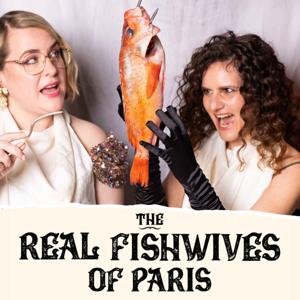


What actually is a bistro, and why does Paris seem to have a different word for every type of restaurant?
In this episode of Fishwives of Paris, Emily Monaco and Caroline Fazeli break down one of the most misunderstood concepts in French food culture. From cafés to brasseries to bouillons, the lines between these establishments used to be clear, but today, they are anything but. Along the way, they debunk the persistent myth that bistros were invented by Russian soldiers yelling “bystro,” and instead trace their real origins to waves of migration from the Auvergne into Paris.
The result is a story that has less to do with tablecloths and steak frites, and more to do with community, labor, and the evolution of French comfort food. Follow us on socials for more content on our top bistro picks in Paris.
While not definitive, classic signs include:
But remember: today, these are aesthetic signals, not guarantees
Watch full episodes in 4k on Youtube
Follow us on Instagram, TikTok, Facebook, and join our Facebook group.
In this episode of Fishwives of Paris, Emily and Caroline unpack the real story of Marie-Antoine Carême, the ambitious pastry chef who rose to cook for diplomats, emperors, and tsars, and helped shape modern French cuisine.
Beyond the dramatized version, Carême was a master of image and storytelling, even spreading myths about his own life. While he was not a spy, he was deeply connected to power, using food as a tool to impress and influence Europe’s elite.
We explore how Carême’s work helped define French cuisine as we know it today, from early sauce classification to his belief that pastry was a form of architecture. He played a role in shaping iconic desserts like the croquembouche, eclairs, and the modern Charlotte, and helped elevate pastry into an art form built on structure, precision, and spectacle.
The episode also looks at his more modern ideas, including seasonality, balance, and a shift away from heavy spices toward fresh herbs, as well as his role in defining the image of the professional chef, including the creation of the chef’s hat.
In this episode:
Codifying French cuisine
Elevating pastry
Iconic pastries
Chef identity and kitchens
Modern food philosophy
Luxury and ingredients
Dining and presentation
Watch full episodes in 4k on Youtube
Follow us on Instagram, TikTok, Facebook, and join our Facebook group.
Potatoes are one of the most iconic ingredients in French cuisine today. But for centuries, the French refused to eat them.
In this episode of Fishwives of Paris, Emily Monaco and Caroline Fazeli uncover the strange and fascinating story of how the humble potato went from feared outsider to beloved staple of French cooking. Once thought to cause leprosy and plague, potatoes were even banned in France for a period of time before a determined pharmacist named Antoine-Augustin Parmentier began campaigning to change public opinion.
Through a mix of clever marketing, royal influence, and a staged "potato heist" at Versailles, Parmentier helped transform how the French viewed this Peruvian import. Along the way, Emily and Caroline explore how potatoes traveled from South America to Europe, why the French were so suspicious of them, and how they eventually became the foundation of classic dishes like pommes puree, gratin dauphinois, and hachis Parmentier.
This episode reveals how culinary myths are created, how food traditions evolve, and how one clever campaign helped change the course of French cuisine.
Père Lachaise Cemetery (Paris)
This famous Paris cemetery is the final resting place of Antoine-Augustin Parmentier. Visitors sometimes leave potatoes on his grave as a playful tribute to the man who helped introduce them to French cuisine.
Versailles (Chateau de Versailles)
Parmentier famously planted potato fields near Versailles and staged a fake theft of the crop to spark curiosity and convince the public that potatoes were valuable.
Fishwives of Paris
Hosted by Caroline Fazeli and Emily Monaco
Instagram: @fishwivesofparis
Goguette affiliates: https://bit.ly/goguette_FWOP
Press & partnerships: [email protected]
Watch full episodes in 4k on Youtube
Follow us on Instagram, TikTok, Facebook, and join our Facebook group.
Mexican food in France is often treated as cheap street food, but chef Carla Kirsch is challenging that narrative. In this episode of Fishwives of Paris, we sit down with the Mexican-born, French-trained chef behind Alebrije in Lyon to talk about bringing Mexican cuisine into the French fine dining world.
We dig into why French diners expect Mexican food to be inexpensive, why spice still scares people in France, and how many core French ingredients originally came from Mexico and the Americas. Carla also shares what it takes to source Mexican ingredients in France, from dried chilies and tomatillos to masa made from French corn, and what it’s like to open a restaurant in France as a foreign woman.
Fishwives of Paris
Hosted by Caroline Fazeli and Emily Monaco
Instagram: @fishwivesofparis
Goguette affiliates: https://bit.ly/goguette_FWOP
Press & partnerships: [email protected]
Watch full episodes in 4k on Youtube
Follow us on Instagram, TikTok, Facebook, and join our Facebook group.
Is beef bourguignon really a rustic Burgundian peasant dish? Or is it one of France’s greatest culinary PR successes?
In this episode, Emily Monaco and Caroline Fazeli dig into the surprisingly modern (and non-Burgundian) origins of beef bourguignon, how it became a symbol of “traditional” French home cooking, and why the version most of us recognize today owes a lot to Parisian restaurants, Escoffier, and Julia Child.
They unpack how French beef has historically been used (working animals first, dinner later), why slow-cooked stews became central to French cuisine, and how the romantic idea of French “peasant food” often hides a much more complicated and urban reality. Along the way, they break down what actually matters when cooking this dish at home, and which rules are worth ignoring.
Wine to cook with (for the stew):
You do not need Burgundy wine. “Bourguignon” refers to a red-wine style of preparation, not the Burgundy region. Use an affordable, drinkable red wine. Do not waste expensive Burgundy on cooking.
Cut of beef to use:
Wine to drink with boeuf bourguignon:
Skip Burgundy here, too. The dish is rich and beefy, so it pairs better with a fuller-bodied red:
If you’ve ever been confused about whether you’re “doing it wrong” with beef bourguignon, this episode is your permission slip to relax, save your good wine for drinking, and stop taking French food myths so seriously.
Watch full episodes in 4k on Youtube
Follow us on Instagram, TikTok, Facebook, and join our Facebook group.
Crêpes may be one of France’s most iconic foods, but chances are you have been eating them wrong, or at least misunderstanding what they are. In this episode of Fishwives of Paris, Emily and Caroline break down the myths surrounding crêpes, explain why treating them as street food is mostly a tourist habit, and unpack the deep regional identity behind Brittany’s buckwheat galettes.
From linguistic nitpicking (crêpes vs galettes vs krampouezh) to the surprising agricultural history of buckwheat, this episode explores how geography, language, and industrialization shaped one of France’s most misunderstood dishes. In this episode:
We mention Breizh Café as our favorite spot in Paris and Lyon for traditional buckwheat galettes. You will also find many classic crêperies serving plated galettes around the Montparnasse area, historically where trains from Brittany arrived. One important note: traditional galette restaurants serve cider, not wine, in keeping with Breton custom.
Watch full episodes in 4k on Youtube
Follow us on Instagram, TikTok, Facebook, and join our Facebook group.
Tartiflette May Look Like an Old-School Dish, But It’s a Marketing Coup in Disguise
The French are masters of après-ski delicacies like cheesy raclette, fondue, and tartiflette – hearty dishes with loads of melty cheese to help you warm up after a day on the slopes. But while tartiflette may look like a time-tested creation with deep Savoyard roots, the reality is that this casserole of potatoes, bacon, onions, and melted Reblochon cheese is a baby by French food standards, invented in the ‘80s by a clever ski resort owner looking to make good on a dairy glut. But this is no simple case of terroir-washing, as Emily and Caroline are here to share.
Tune in to discover:
In this episode we mention Oma cheese from the Von Trapp family in Vermont.
Hosted by Lyon-based sommelier Caroline Fazeli & Paris-based food journalist Emily Monaco.
Follow us on Instagram: @fishwivesofparis
We are currently seeking partnerships. If that’s you, get in touch: [email protected]
Watch full episodes in 4k on Youtube
Follow us on Instagram, TikTok, Facebook, and join our Facebook group.
Mushrooms Are Fun Guys – As Long as They Don’t Kill Ya
If you see Paris mushrooms on a French menu, don't go assuming they've been grown in the French capital – these days, about 70% are actually grown in China. Their name is a reference, not to their provenance, but to their roots: Paris mushrooms first gained acclaim in the gardens of the palace of Versailles before their culture moved to the underground caverns of the Catacombs.
In this episode, you’ll learn:
Places, people & references mentioned:
Mushroom dishes & recipes discussed:
This episode is a journey through tunnels, traditions, and taboos — revealing how something as humble as a mushroom can tell the story of Paris, French food culture, and what it means to eat locally in a globalized world.
Hosted by Lyon-based sommelier Caroline Fazeli & Paris-based food journalist Emily Monaco.
Follow us on Instagram: @fishwivesofparis
We are currently seeking partnerships. If that’s you, get in touch: [email protected]
Watch full episodes in 4k on Youtube
Follow us on Instagram, TikTok, Facebook, and join our Facebook group.
The Bûche de Noël and French Christmas Episode
It’s no surprise, in structure-loving France, that the menu for Christmas dinner is pretty much set in stone – or should we say, petrified in wood? After a veritable eating frenzy of oysters, foie gras, roasted capon, and more truffle-studded cheese than any accountant (or cardiologist) would recommend, on December 24th, most French people feast on a cake shaped into a log, complete with meringue mushrooms and chocolate bark. And before you go trying to link the Yule log to a manger, know that the bûche de Noël has got nothing to do with the birth of Jesus.
Tune in to discover:
Check out our Instagram to see photos of Caroline's Caga Tio creation from the episode @fishwivesofparis
We collaborated with Lucy Vanel of PLUM Lyon for a gorgeous meringue mushroom recipe which you can find on our episode webpage: https://www.fishwivesofparis.com/episodes/s1/the-buche-de-noel-episode/
Hosted by Lyon-based sommelier Caroline Fazeli & Paris-based food journalist Emily Monaco.
Follow us on Instagram: @fishwivesofparis
We are currently seeking partnerships. If that’s you, get in touch: [email protected]
We are now proud partners of Goget
Watch full episodes in 4k on Youtube
Follow us on Instagram, TikTok, Facebook, and join our Facebook group.
The Episode Where we Party Poop on Champagne
Dom Pérignon’s French Wikipedia page claims he invented Champagne – but the truth is way cooler than that. The world’s best-known sparkling wine has roots in English cider-making and has a host of intrepid local widows to thank for its deliciousness, not to mention its renown.
Tune in to learn:
Hosted by Lyon-based sommelier Caroline Fazeli & Paris-based food journalist Emily Monaco.
Follow us on Instagram: @fishwivesofparis
We are currently seeking partnerships. If that’s you, get in touch: [email protected]
Watch full episodes in 4k on Youtube
Follow us on Instagram, TikTok, Facebook, and join our Facebook group.
From the publisher's feed

37,882 Listeners
2,532 Listeners

2,499 Listeners
1,111 Listeners

576 Listeners
348 Listeners

2,995 Listeners

1,532 Listeners
229 Listeners

739 Listeners

301 Listeners

280 Listeners

4,226 Listeners

70 Listeners

648 Listeners