
Sign up to save your podcasts
Or

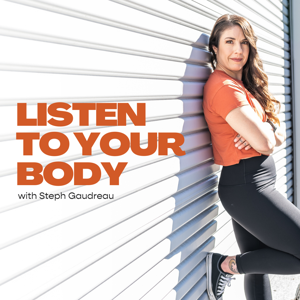


Based on Podcast App listening data
Have you been spending a few workouts a week lifting weights and trying to eat healthily but are still not seeing the results you are hoping for? There are three main common reasons that I hear over and over again in the community that is keeping you from seeing the results you want from your strength training efforts. The good news? They are easy to fix once you have empowered yourself with the knowledge and mindset shifts to do so!
Key Takeaways
If You Want To See The Results You Are Looking For From Strength Training You Should:
Eating Less and Moving More Is Not the Answer
A lot of us have a negative association with the word 'calories' because of diet culture. We have been told to put an emphasis on 'eating less and moving more', but that is not the magic cure. Your body needs fuel to move, and when you restrict that fuel, it can kill your energy and open you up to chronic energy.
All three of these topics, under-fueling, not managing your stress to recovery ratio, and not looking for ways to improve your movement patterns and tissue outside of the gym, have a huge impact on the results you see inside of the gym.
Results Need an Active Listener
Listening to your body is all about tuning into the signals that your body is sending you instead of ignoring them. If you are under a lot of stress, are not eating healthy foods or enough foods, or not prioritizing your sleep, it will all show up when you start to lift those weights.
While every exercise has its own risks, you can see the results you are looking for when it comes to strength training, but only if you are giving your body what it needs to succeed. Listening to your body, fueling it the right way, managing your stress to recovery ratio, and improving your movement patterns are the ways to help you achieve the results you are looking for in a healthy and safe way.
Which one of these common mistakes rang the most true for you? Share your thoughts with me in the comments on the episode page.
In This Episode
Quotes
"If you are making this mistake, nobody is here to blame you. This isn't something to feel bad about, this isn't something to feel shameful for, it's a piece of information to take and tuck into your back pocket and be more mindful and aware of what you are doing in your daily life." (4:38)
"There is oftentimes a lot of negative self-talk or feeling like you are broken, or wrong, or bad, for your body physiologically responding in the way that it does. And a lot of that can be staved off by eating enough food and eating more consistently and introducing what I would call more of a relative balance of macronutrients." (15:45)
"What is to be aware of is, if you are not getting the results from your strength training that you want, is to take a look at how much other, especially higher intensity movements or exercise, relative to all of the other stress that is going on in your life." (20:05)
"If you are dealing with injuries or you are dealing with the effects of 'life-ing' and moving through life with these movement patterns, it is really important that you become aware of that and you work on them, and you start to become more tuned in to the signals your body is sending you." (31:08)
"If you are a woman who wants to get stronger and is lifting weights, you want your energy to increase, and you want to see performance in the gym, I am going to be here to help you do that." (33:21)
Featured on the Show
Join the Tune-In Membership Here
Strength Workout Mini-Course
Work With Me
Join my Texting Squad at 619-313-5948
Steph Gaudreau Website
Check out the full show notes here! Follow Steph on Facebook | Twitter | Instagram | YouTube | Pinterest
I'd really love it if you would take 1 min and leave us a rating and review on iTunes!
Related Episodes
LTYB 331: Strength Training & Your Relationship with Exercise
When I look back at all of the work I have done over the years, it all comes back to the lightbulb moment where strength training helped me stop focusing on using exercise solely as a tool to make my body smaller. Strength training was the #1 thing that helped me make a shift in my life to having a better relationship with exercise, and in turn, my body and mind.
Key Takeaways
If You Want To Improve Your Relationship With Exercise Through Strength Training, You Should:
Finding the Freedom To Have Fun With Exercise
Having a free, fun, and filling relationship with movement can be a life-changing topic for some folks. I am feeling a sense in the community of people ready to get started or get started again on moving their body and improving their relationship with exercise.
While the way you relate to your body is a constantly evolving notion, strength training can help heal your dysfunctional relationship with exercise and give you the freedom to shift how you relate to exercise and your body. By giving yourself the space to enjoy exercise, you can stop being preoccupied with the notions diet culture has been feeding you and start breaking down the walls around you.
The Many Benefits of Strength Training
Lots of people view those who are interested in strength training or functional fitness as 'meatheads' or bodybuilders. This couldn't be further from the truth, as strength training has so many benefits, including improving your bone mineral density and blood glucose control, increasing your energy and metabolism, giving your more balance and stability, and enhancing your mood while decreasing your anxiety.
In addition to those fact-based benefits, strength training can help you stop viewing your worth as conditional and help you focus on what your body can do rather than how to make it smaller.
Are you ready to have a better relationship with exercise? Have you ever considered or experienced the many benefits of strength training? Share your experience with me in the comments on the episode page.
In This Episode
Quotes
"Functional movement is not just about competing at an elite level. If that's your jam, that's cool with me. If it's not your jam, you might think 'well functional movement, functional strength training, isn't for me'. And I am here to tell you that that could be further from the truth." (6:17)
"For me, exercise for so long was a way to shrink my body, control the size of my body, and try to become smaller. And that was the only thing that I really got out of exercise or the only reason I approached exercise." (11:35)
"For me, strength training, in general, was the thing, the stepping stone, that allowed me to get on a better path with how I related to exercise, and then by default, my body." (17:13)
"When I think back to all of the work I have done over the years, it always comes back to that. To that moment or that period of time where I learned to focus for once in my fucking life, on something else other than shrinking my body." (24:47)
"You don't have to be a bodybuilder, you don't need to be a competitive level lifter to get the benefits of this, and you don't have to squat 400 pounds." (29:47)
Featured on the Show
Food Freedom Mini-Course
Made Strong Program
The 5 Main Movement Patterns of Functional Movement Reel
Shit That People Say To Women About Strength Training Reel
Strength Workout Mini-Course
Steph Gaudreau Website
Check out the full show notes here! Follow Steph on Facebook | Twitter | Instagram | YouTube | Pinterest
I'd really love it if you would take 1 min and leave us a rating and review on iTunes!
Related Episodes
LTYB 323: Why I'm Not Paleo Anymore
Society has taught us that emotional eating is bad, and we should punish and restrict ourselves for it. The issue with emotional eating is when we use food as our only tool to cope or celebrate, but it can be part of a normal and healthy way to communicate with our bodies. The truth is, sometimes your body needs to eat emotionally, but it is up to you to distinguish when you are emotionally eating for good and when you are using it as a crutch. Tapping can help you lean into this intuitively so that you can shift your focus away from restriction and towards listening to what your body needs.
Key Takeaways
If You Want To Try Tapping To Resolve Your Emotional Eating You Should:
Emotional Eating Isn't Always Bad
Jason Winters is a Certified Holistic Health Coach, Intuitive Eating Coach, and Gold-Standard Emotional Freedom Techniques Coach. After overcoming his own battle with disordered eating, Jason pursued his passion to serve women and men still suffering from the emotional eating cycle. Now, Jason is on a mission to help empower and free you from the chains of emotional eating, diet culture, food obsession, and body hatred so that you can live your best life possible.
How To Get Clear on What You Really Want
The path of intuitive eating has changed many lives, including Jason's, but that doesn't mean it comes without its fair share of struggles. Society has forced us to lose our ability to trust ourselves and what the right path for us is, which is why it is so important to get clear on what you are doing, what is working for you, and what isn't.
The first step is identifying what you really want out of your life. By holding space for your goals and intentions and doing it on your own terms, you can address your unresolved issues, learn how to acknowledge the negativity you are feeling, and most importantly, let it go.
The Beautiful Marriage Between Tapping, Emotional Eating, and Intuitive Eating
EFT, or Emotional Freedom Technique, is a powerful stress-relieving technique that combines Chinese acupuncture with modern psychology to address the fear of rejecting diet culture and guide you towards a more intuitive relationship with food.
Emotional eating, intuitive eating, and tapping come together beautifully because they help you break down the fear, stress, and anxiety you may be feeling and clear out your emotions. Tapping can help you process your energy and help you feel lighter and more equipped to handle the anxiety and negativity plaguing you. By learning how to better understand your emotions, you can take back the control that diet culture has stripped you of and start listening to what your body needs.
Have you ever tried tapping? How has it helped you on your intuitive eating or emotional eating journey? Share which of Jason's nuggets of wisdom touched you the most with us in the comments on the episode page.
In This Episode
Quotes
"To shift that normal behavior around food, and to then demonize it and to shame people for engaging in it, it is a restriction of something that you want and that you need. And then it just turns emotional eating into a theme." (7:14)
"What do you really want? I think that's the biggest thing is identifying what you want, and getting quiet enough to hear the answer of what you really want. Because intuitive eating, and intuitive exercise, and having an intuitive lifestyle, it is really about you." (17:42)
"Tapping allows you to come out of control and more into choice. And the way that that happens is when you are tapping on these specific points, you are breaking down the fear." (25:18)
"It's not just what we put in our mouth, it is our belief system. We are in choice, our affirmations you chose. So if you use someone else's affirmation, make sure it rings true for you, make sure it is your choice." (31:40)
"When we are repeating or you are hearing these statements being made, this anxiety, this anxiety, this anxiety, you are addressing your specific anxiety, I am addressing mine, but we are all working together." (41:52)
Featured on the Show
Food Freedom Mini-Course
Strength Workout Mini-Course
Food Freedom Tapping Worksheet
Jason Winters Website
EFT: Tapping to End Chronic Emotional Eating Facebook Group
Follow Jason on Instagram | Facebook
Steph Gaudreau Website
Check out the full show notes here! Follow Steph on Facebook | Twitter | Instagram | YouTube | Pinterest
I'd really love it if you would take 1 min and leave us a rating and review on iTunes!
Related Episodes
LTYB 278: Energy Tips For Empaths & Highly Sensitive People
LTYB 284: How Neuroscience Can Help You Listen To Your Body with Alyssa Chang
LTYB 290: Start Living Your Life By Design with Rai Henry
Listening to your body doesn't happen through a magic pill or a one-size-fits-all answer. It is about leaning into your self-trust and learning to embrace what makes you uniquely you. But how do we actually do that in a practical, hands-on way? The concept of self-trust is an all-encompassing one that considers a lot of different parts about who you are as a person, which is why it is essential to have the proper framework when diving into these topics.
Key Takeaways
If You Are Looking To Build Self-Trust You Should:
Learn How To Build Self-Trust with Shohreh Davoodi
Shohreh Davoodi is a self-trust coach who created her Three Pillars of Self-Trust Framework to help women overcome fear and self-doubt and become brave by conjuring up the courage inside of them. Her framework combines the three main pillars of self-trust, consciousness practices, care practices, and courage practices so that you can figure out who you are and what you value.
The Three Pillars of Self-Trust
The first step of self-trust is consciousness. This means having the awareness of the things in your life that you want to change, what is working for you in your life and what isn't, and why. This usually deals with the systems in place in our society that are causing self-doubt, that really has nothing to do with you as an individual.
Next comes care practices. While we all know the importance of self-care, Shohreh takes it a step further and includes principles such as intuitive eating, intentional movement, sleep, and organization all as ways that you can care for yourself and let your body know that it can trust you to listen and take care of it.
The final piece of the puzzle is courage. Engaging with issues such as activism, setting boundaries, and having a more value-driven life are all ways that you can reconnect with your head, heart, and body, to do the things that make you feel good.
It Takes a Village That Stands Together To See Real Change
In order to engage more authentically with your own self-trust, you need to dive deep and look some scary stuff in the eye. We cannot self-trust our way into community liberation. It takes better community care and systemic changes so that everybody can have self-trust and a better relationship to food and their bodies.
There is no one right way to engage with these practices. By being more understanding and compassionate to the people around you, being in a community that lets you know that you are not alone, and dropping into your body in a time-sensitive way that feels good for you are the best ways to take steps to move closer to deeper self-trust.
What is one way that you are going to lean into your courage and let your body know that it can trust you? Share which of Shohreh's tips you're going to integrate into your routine with me in the comments on the episode page.
In This Episode
Quotes
"My niche is self-trust, but self-trust really encompasses so many different topics and ideas and ways of being in the world. So I can't just talk about self-trust, in talking about self-trust I have to talk about so many other things." (11:10)
"Each of these pillars are important and can stand on their own, but they are most powerful when they bridge together. And that is the foundation of self-trust for an individual." (15:01)
"Almost all of us have privileges in some places, even marginalized folks have privileges in some areas. So we can't look at the marginalization without also looking at the privilege and how we contribute, knowingly or unknowingly, to the advancement of these systems." (21:03)
"So often when someone is struggling to trust their own body, it is actually because they have gotten messages about bodies like theirs, and what a body like theirs should be or should look like or should feel like." (32:06)
"For everyone who is interested in building more self-trust, the key to doing that is that you have to get to know you and what you want and what you value." (35:08)
Featured on the Show
Food Freedom Mini-Course
Strength Workout Mini-Course
Follow Your Arrow Membership Program
Shohreh Davoodi Website
One-On-One Coaching with Shohreh
Conjuring Up Courage Podcast
Follow Shohreh on Instagram | Facebook | TikTok
Steph Gaudreau Website
Check out the full show notes here! Follow Steph on Facebook | Twitter | Instagram | YouTube | Pinterest
I'd really love it if you would take 1 min and leave us a rating and review on iTunes!
Related Episodes
LTYB 305: Using Body Language To Understand Yourself and Others Better with Tiff Lee
LTYB 262: How To See Value Outside Your Body & Overcome Self-Doubt with Summer Innanen
Recently I was asked about the place that alcohol has when connecting to your inner intuitive eater. Thinking about alcohol use in the context of connecting to your body and healing your relationship with food is intensely personal, which is why I want to share my perspective with you as someone who has been a non-drinker for 5 years and also as an intuitive eating and nutrition counselor.
If you are struggling with substance abuse or are concerned about your relationship with alcohol, please contact 1-800-662-HELP. This episode contains my personal thoughts about alcohol, but at the end of the day, you have the freedom and autonomy to do whatever feels right for you. If you are struggling with substance abuse, please know there is support out there for you, and change is possible.
Key Takeaways
If You Want To Explore Your Relationship With Alcohol and Intuitive Eating You Should:
The Difference Between Food and Alcohol
A common misconception is that food is addictive. In reality, the food 'addiction' you may be familiar with is a result of restriction and the binge eating that follows. Alcohol is different from food in this way. Reducing the amount you are drinking will not cause the majority of people to binge drink because alcohol is not required for survival like food is. Often people are reluctant to cut out alcohol because they are worried they will crave it all the time. Binge drinking and binge eating have different mechanisms and experiences, and it is crucial to understand how restriction with food differs from simply choosing not to engage with alcohol.
It's Your Personal Journey, No One Else's
A lot of people are concerned about doing intuitive eating 'right'. Intuitive eating is not a set of yes or no rules, it is a set of personal guidelines, and your relationship with alcohol is included in that. I want you to use intuitive eating principles to ask yourself the tough questions and help you gain clarity on your personal experience with alcohol. Do you have a diet mentality when you are drinking? Are you drinking mindfully? Is alcohol your primary coping strategy?
By noticing your relationship with alcohol and assessing it, you can understand your own unique relationship to alcohol and if it fits into your intuitive eating journey.
Which of the questions I posed to you today got you thinking? How does your relationship with alcohol fit into your version of intuitive eating? Share your thoughts with me in the comments on the episode page.
In This Episode
Quotes
"There are a lot of questions that come up for people with regard to understanding how restricting food works or bingeing on food works, and how restricting alcohol and binge drinking works, and the fact that those aren't necessarily the same thing." (8:01)
"A lot of people will notice that if they start to cut down on their drinking, or they stop drinking altogether, they often don't notice an increased desire or preoccupation with drinking." (13:11)
"You may decide that you are making peace with food over here, but when it comes to alcohol, if you realize that you are not enjoying it, that your relationship with it isn't super great, you would rather just take it out for a while, its okay to remove it from your environment!" (15:42)
"It's worth considering how these different principles of intuitive eating can apply to your relationship with alcohol and your drinking habits and know that the answers are going to be different for everybody." (24:03)
"I hope that this show has given you some questions to ask yourself. I can't promise that it is perfect, I can't promise that my thoughts here are going to be exactly applicable to you. But I think it is really important to go through the questions that I raised in this show and to think about things on a really personal level for yourself." (27:40)
Featured on the Show
Food Freedom Mini-Course
Overcome Emotional Eating Workshop
Steph Gaudreau Website
Check out the full show notes here! Follow Steph on Facebook | Twitter | Instagram | YouTube | Pinterest
I'd really love it if you would take 1 min and leave us a rating and review on iTunes!
Related Episodes
LTYB 114: Alcohol + Social Pressure
LTYB 205: The Great Big Sober Secret with Veronica Valli
LTYB 326: Your Body's Changed During the Pandemic… Now What? With Evelyn Tribole
Has it been a while since you've worked out, but you have a newly found motivation to get going? Are you diving into a fitness program only to be so sore afterward that it does not feel like it was worth it? Getting back into exercise after the crazy year we had is a great thing, but it needs to be approached in the right way to make sure it is sustainable for you.
Key Takeaways
If You Want To Get Back into Exercise Without Feeling Wrecked, You Should:
Ditch The 'All or Nothing' Mentality
When getting back into movement and working out, the first step is to get rid of the 'all or nothing' mindset that fitness culture has ingrained in us. Instead of going so hard once a week that you have to 'toilet trust fall' for the rest of the week, focusing on a daily movement practice is a much more sustainable and enjoyable way to ease yourself back into exercise.
Your body needs support when getting back into movement, which is why you need to integrate taking care of yourself into your daily routine. If you are ready to get reacquainted with a daily commitment to move your body, however, that looks and feels for you, a sustainable approach is the best way to honor your body's signals.
Start Where You Are Now
We are coming out of a whole year of the world being flipped upside down. The amount of stress you have been under, your daily routine, and your sleep can all affect how ready your body is to get active again. The high-intensity workouts that you may have done in the past might not suit your body's current needs.
It is essential that you modulate your intensity and volume of workouts and listen to the signals your body is sending you to properly heal your tissues and address the issues you are feeling. By listening to your body and taking the time to properly recover, you can get active again without wrecking yourself so that you can be more consistent, enjoy the benefits of your workout, and have fun while still challenging yourself.
Physical activity can be a fun, challenging, and positive experience if you approach it the right way. By shifting your mindset away from the 'all or nothing' mentality, modulating your intensity and volume, and focusing on your tissue recovery through nutrition and awareness, you can harness your good intentions and get active again.
Are you ready to take your motivation to get active again and implement it in a safe, healthy, and fun way? Share what your daily movement commitment is with me in the comments section on the episode page.
In This Episode
Quotes
"I want you to start thinking about movement being more of a daily commitment instead of a once-a-week smash fest which then you can't move for the next five days and your body is so painfully sore that every step you take feels super painful." (9:02)
"We have been taught by fitness culture in general that if it is not intensity level 10, that it was no good and we got no benefit from it. Which is absolutely not true." (12:10)
"You need to think about what is leading up to me getting more active again and are there things I should probably deal with with my body?" (21:08)
"What I am seeing a lot in the community is still an under-eating situation. It's like an under-eating, under-recovery situation, and that is not going to help with your recovery." (28:29)
"Recovery is a part of the process, and if you are coming out of a period of less activity, it might be something you need to think a little bit more about." (30:06)
Featured on the Show
Food Freedom Mini-Course
Join the CORE 4 Program Waitlist
Doc Jen Fit Website
The Ready State Website
Rom Wod Website
Steph Gaudreau Website
Check out the full show notes here! Follow Steph on Facebook | Twitter | Instagram | YouTube | Pinterest
I'd really love it if you would take 1 min and leave us a rating and review on iTunes!
Related Episodes
LTYB 319: Why Fitspo Needs To Die
LTYB 129: How Mobility Can Help You Unlock Your Inner Power with Jen Esquer
LTYB 055: How to Stand for Better Health Kelly & Juliet Starrett
We are now over one year into the global pandemic. While there is a sense of excitement and hope around seeing friends and loved ones who we have been absent from this past year, there is also a lot of anxiety around seeing people after your body has changed. Today the living legend Evelyn Tribole is here to share some of her best advice on these topics and help you navigate the world and your body in a post-pandemic situation.
Key Takeaways
If You Are Anxious About How Your Body Has Changed Throughout The Pandemic, You Should:
You Are More Than a Body
Nobody in the world has more experience in intuitive eating and the anti-diet space than Evelyn Tribole. Co-creator of the Intuitive Eating Framework, which was introduced into the world 25+ years ago, Evelyn is a wealth of wisdom when it comes to connecting and honoring our bodies.
Surviving Is Something To Be Proud Of
The first thing Evelyn wants you to remember is that regardless of your body changing over the last year, your body also survived a pandemic, which is an amazing accomplishment. As we start to navigate the new social norms, it is an opportunity for us to change the narrative and move past the body objectification that has been a toxic part of our culture.
You are so much more than a body. When it comes time to reconnect with those we have not seen in a while, it is essential to set boundaries within your bandwidth and focus on the connection we have been missing from others, not the judgment of other people's bodies. By being consistent and reinforcing your boundaries around conversation, you can normalize the accomplishment of simply surviving the global pandemic.
Being Kind To Your Body Going Forward
When was the last time you asked yourself if you have been kind to your body on a biological level? While it is instinctual to use food restriction as a means of control when so much of our world is out of our control, dishonoring your hunger through restriction disrupts your cells on a biological level and ruins their trust in you. Being consistently kind to your body in acts of predictable nourishment can help you cultivate trust between you and your cells.
Diet culture tells us that we need to outsource our nutrition decisions. Evelyn wants you to challenge yourself instead to tune in to how your body responds, which can be a beautiful adventure. You can stop the legacy of diet culture at your own kitchen table and take back some of the agency and hope we have been missing to bring your family and community into a healthier and more supportive post-pandemic world.
How do you feel about the potential to see people again and reestablish connections once it is safe to do so? Which of Evelyn's tips are you going to integrate to ease your anxiety and nourish your body with consistency? Share your thoughts on how your body has changed throughout the pandemic with me in the comments section of the episode page.
In This Episode
Quotes
"Looking at yourself and that there might need to be some grieving that needs to take place. For this relationship and how it used to be, grieving for the time spent in pursuit of things that are no longer serving you, that you have found actually hurt and harm you. There might be anger with that, there might be sadness with that. And it is giving yourself the space and time for that." (14:04)
"Our biology has a mind of its own, and it disrupts trust every time you mess with hunger." (20:05)
"They can say all these sweet words of compassion and self-love, but at the end of the day, if you are still cutting your calories, your cells at a biological level are going to have a reaction to that." (27:52)
"Intuitive eating is not pass or fail, it is a journey of learning and discovery." (38:15)
"You need to go through the wobble to discover the connection with your body. I can guide you to some practices to help you figure it out, but it is going to take you connecting and checking in." (45:16)
Featured on the Show
Enroll in the Free Food Freedom Mini-Course Here
Intuitive Eating for Every Day by Evelyn Tribole
Intuitive Eating 4th Edition by Evelyn Tribole and Elyse Resch
The Intuitive Eating Workbook by Evelyn Tribole, Elyse Resch, and Tracy Tylka
Join the Intuitive Eating Online Community Here
Follow Evelyn on Instagram
Fearing the Black Body: The Racial Origins of Fat Phobia by Sabrina Strings
Steph Gaudreau Website
Check out the full show notes here! Follow Steph on Facebook | Twitter | Instagram | YouTube | Pinterest
I'd really love it if you would take 1 min and leave us a rating and review on iTunes!
Related Episodes
LTYB 275: The Anti-Diet Approach To Eating with Evelyn Tribole
One of the most common questions I receive is how to actually put intuitive eating practice into your real life. We can often get hung up on the rules and restrictions of diet culture that we feel lost without them and unsure of how to move forward on our intuitive eating journey. Today I am here to give you practical advice for implementing intuitive eating into your everyday life.
Key Takeaways
If you are looking to include the practice of intuitive eating into your life you should:
You Were Born an Intuitive Eater
Intuitive eating may sound simple, but it's not easy. In short, intuitive eating is just eating! You were born an intuitive eater, sensing when you are hungry and what satisfaction feels like. However, the way you have been socialized has shaped how you interact with food, to the point where many of us don't know how to trust and listen to both our brains and our bodies.
Intuitive eating is about simplifying your eating habits and guidelines so that you can find the overlap between listening to your brain and your body to make intuitive eating decisions.
Practical Advice for Implementing Intuitive Eating in Your Life
Building healthy habits is the key to changing your internal landscape when it comes to food and learning to listen to your body's signals. You don't need to be mindful 100% of the time, but even a small amount of awareness can be powerful when embracing intuitive eating.
Starting from a place of mindfulness, taking it one principle at a time, and planning your meals in a way that fits in with your lifestyle are all great ways to start checking in with yourself and selecting your food choices based on a more internal approach.
Which of my tips have you tried? What have you noticed? Share your thoughts and experiences with me in the comments on the episode page.
In This Episode
Quotes
"We have become so accustomed to interacting with food in that way, that when we present intuitive eating as eating without all of the rules, and restrictions, and regulations, and calculations, and computations, and logging, and everything, it kind of breaks your brain a little bit." (6:08)
"Here is how I sum up intuitive eating. It is where you use both your brain and your body to decide what to eat." (10:29)
"In mindful eating, what we are really trying to do is to build awareness of what we are doing, because a lot of our eating is very automatic." (22:53)
"You are not a short-order cook… and you shouldn't have to be one in order to make intuitive eating work for you. Remember we are trying to simplify things." (30:47)
"It is okay to repeat meals, it is okay to use convenience items, it is okay to use dry goods from your pantry, it's okay to use frozen foods. We have to let go of some of the stigmas around that stuff." (35:41)
Featured on the Show
Join the Tune In Membership Here
Mindful Eating Tool
Join the Listen To Your Body Newsletter
Steph Gaudreau Website
Check out the full show notes here! Follow Steph on Facebook | Twitter | Instagram | YouTube | Pinterest
I'd really love it if you would take 1 min and leave us a rating and review on iTunes!
Related Episodes
LTYB 324: Is It Wrong To Want To Lose Weight?
We have been told for our whole lives that our weight equals health which equals our worth. Have you ever stopped to ponder how this diet culture mentality has been engrained into our relationship with our bodies and our health? Just because diet culture tells us that thinner equals healthier, it does not mean it is the truth.
Key Takeaways
If You Want To Start Asking Yourself The Important Questions, You Should:
Fuck the Scale
I used to let the number I saw on the scale completely dictate if I had a bad day or a good day. Like so many women out there, I had a toxic relationship with the scale, and I thought that if I could achieve my 'goal', I would be happy. This obsession extended into how I viewed other people, and I was buying into the story that intentional weight loss via restriction was the only path.
Weight loss can be a beneficial byproduct of improving your health, but it is not the only measure that matters. Gaining health is about feeling better in your body at whatever size, instead of the number on the scale.
How To Find Sustainable Health
When people prioritize their health, they often assume that it is the weight loss that makes them feel better. In reality, it is the habits, behaviors, and changes you are making in your life that make you feel better, and weight loss can sometimes be a byproduct of those healthy habits.
It is not inherently wrong to want to change your body; you have the autonomy to do what feels right for you. But to make health changes work for you, think about how you can stay focused, how you want to feel, your deeper why, and the habits you can commit to consistently. Instead of forcing yourself to stay motivated based on the number on your scale, focus on how you want to feel in your body, and you can gain truly sustainable health.
What did you think when you read the title of today's podcast? Share your gut reaction with me in the comments on the episode page.
In This Episode
Quotes
"When I criticize the diet industry and diet culture, I am not criticizing the individual dieter, the person who goes on the diet. Because they are simply trying to exist in a system that is constantly reinforcing that weight loss is 'the path'." (10:41)
"It's not even normal in our world to think about 'well, what else is there besides weight loss?' because that is the only thing that is ever presented to us from the diet industry." (15:22)
"There are often times lots of changes that people were making, but they go back to it being the weight loss that helped them feel better. When in fact, a lot of the time it was the behaviors and habits they had changed that were actually making them feel better and improving their quality of life." (23:01)
"We need to connect to how we want to feel because feelings drive actions." (25:26)
"We need to consider that when we gain health, weight loss is sometimes, but not always, an outcome. And losing weight doesn't always automatically confer better health." (35:57)
Featured on the Show
Join the Tune In Membership Here
1-1 Intuitive Eating Coaching
Join the Listen To Your Body Newsletter
Steph Gaudreau Website
Check out the full show notes here! Follow Steph on Facebook | Twitter | Instagram | YouTube | Pinterest
I'd really love it if you would take 1 min and leave us a rating and review on iTunes!
Related Episodes
LTYB 304: What is Gentle Nutrition? (Intuitive Eating Principle 10)
Do you remember when I used to be 'Stupid Easy Paleo'? A lot of you are curious as to why I am no longer paleo and the complete rebranding I did in 2018. So, I decided to share my real, truthful, nitty-gritty story with you all for this week's episode.
Key Takeaways
If You Are Starting To See The Cracks In Your Own Relationship With Food and Diets You Should:
How I Got Here
In 2018 I had a realization. I realized that I had been carrying my disordered eating and relationship with my body through the various stages of my life, masking it with different diets and exercise regimes.
When I first heard about paleo in 2010, my most significant thought was 'will this help me get smaller?'. While I did learn some good things from paleo, over time, the rules, restrictions, and arguments I had with people about whether or not something 'is' or 'isn't paleo was making me exhausted. That's when I realized something had to change.
Restriction Isn't Helping Anybody
The more I learned about the origins of diet culture and the harm that comes from approaching 'taking care of our health' in a way that is restrictive and an all-or-nothing mentality, I knew I had to burn what I thought I knew down to the ground.
When you are able to take the guilt and shame out of your relationship with food and stop thinking about food 24/7, you can come back to yourself. You are always and have always been worthy no matter your body size or appearance, and my mission is to help you get back to being the intuitive eater that you were born as.
Do you see yourself reflected in my story? How is your story different than mine? Share your thoughts with me in the comments on the episode page.
In This Episode
Quotes
"We always have a choice. We are faced with new information all day, every day, and we get to decide how and if we want to incorporate that information into our new viewpoint of the world and our perspective." (3:32)
"I feel like I wasn't living my life because I was so invested in dieting, and shrinking myself, and making myself smaller." (12:41)
"This is when I started to become aware of the fact that my thinking around food was occupying a lot of my time. Prior to that, it was just something that happened, I didn't have that outside looking in awareness of 'this is kind of fucked up'." (23:53)
"I started to learn about bigger issues, things like diet culture. And then it all started to make sense." (33:38)
"I think that is my biggest point to you today, is learning to find the wiggle room, removing the guilt and the shame, recognizing that some of these smaller dietary choices are not going to cause you some kind of crazy significant harm." (44:42)
Featured on the Show
Join the Tune In Membership Here
Instead of Weight Loss, Focus on This Blog Post
Mindful Eating Tool
Emotional Eating Workshop
1-1 Intuitive Eating Coaching
Jamie Scott P3 Athletica Website
Join the Listen To Your Body Newsletter
Steph Gaudreau Website
Check out the full show notes here! Follow Steph on Facebook | Twitter | Instagram | YouTube | Pinterest
I'd really love it if you would take 1 min and leave us a rating and review on iTunes!
Related Episodes
LTYB 321: Is Body Positivity for You?
From the publisher's feed

1,069 Listeners
464 Listeners

1,131 Listeners

132 Listeners

622 Listeners
1,133 Listeners

812 Listeners

738 Listeners

346 Listeners
414 Listeners

1,223 Listeners
605 Listeners
217 Listeners
178 Listeners
98 Listeners