
Sign up to save your podcasts
Or

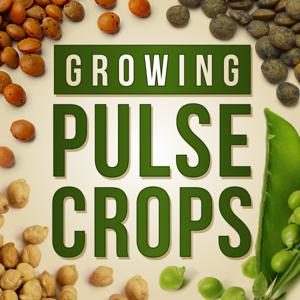


Shannah Peterson has been a part of the procurement team at Anchor Ingredients for the past six years. She also works with their sustainability and regenerative programs. On today’s episode, Peterson discusses the demand drivers for pulses for pet food markets, how trends like sustainability and regenerative farming practices impact pet food buying decisions, some important opportunities to be aware of for pulse producers, and what she’s watching from the pet food market in 2026. She shares great insight as someone who is a part of purchasing and sales decisions of pulses almost daily.
“ There's been this humanization of pet food where people really care the quality of pet food that their dogs and animals are consuming the same as humans. So one thing we've seen is as this trend in regenerative agriculture has hit the food space, it's also hit the pet food space. Where a lot of these brands are like we want to be able to source this product sustainably. We want to source it from regenerative farms. So we actually run a regenerative program where we offer regenerative farmers a premium for these pulses being grown regeneratively on their farm. And that's actually through our traceability platforms being carried all the way to our customers.” - Shannah Peterson
This Week on Growing Pulse Crops:
Growing Pulse Crops is produced by Dr. Audrey Kalil and hosted by Tim Hammerich of the Future of Agriculture Podcast.
Dr. Chelsea Didinger is the founder of the online platform "A Legume A Day.” Didinger uses her PhD in nutrition to share her passion for the benefits of beans and legumes. She highlights not just their health advantages but also their role in sustainable agriculture through her online platform and presence. In this episode today, she discusses the global trends in pulse consumption, the nutritional benefits that make them a perfect food, and practical ways to incorporate more pulses into everyday meals.
“ I want people to know that it doesn't have to be hard. Again, you could sometimes make those swaps, like have a pulse based pasta or sometimes add chickpea flour to your baking, or pick the dishes that you really like and just add pulses to that, or crisp up some chickpeas, crisp up some lentils, and just sprinkle those on. It doesn't have to be hard. There are canned products. You can cook from dry. Whatever fits into your schedule and works realistically, you don't want to set this goal that's unattainable. So I think that's a good place to start.” - Dr. Chelsea Didinger
This Week on Growing Pulse Crops:
Growing Pulse Crops is produced by Dr. Audrey Kalil and hosted by Tim Hammerich of the Future of Agriculture Podcast.
Dr. Charles Geddes is a research scientist with Agriculture and Agri-Food Canada based out of Lethbridge, Alberta. His research program focuses primarily on herbicide resistant weeds, where he looks at the discovery of new types of herbicide resistance, characterizing those types of resistance, and then monitoring where resistance is occurring across the Canadian prairies. In this episode, he shares about the growing incidences of resistance across the Canadian Prairie, the types of resistance, why resistance in weeds like kochia is spreading so fast, and what the research is telling us about trying to reverse this troubling pattern.
“About 70% of the fields that are annual crop production in the region have at least one type of herbicide resistance present. So group one and two resistance in wild oat, I mean both the in-crop options that we have in small grain cereals, for example. But in kochia, we have resistance, so widespread resistance to group two to the point it's not even worth testing for. Glyphosate resistance is in about 75% of the samples that we test. We then have resistance to auxin mimics, which would be group fours, primarily Fluroxypyr and Dicamba. And more recently we've identified group 14 resistance or PPO inhibitor resistance.” - Dr. Charles Geddes
This Week on Growing Pulse Crops:
Growing Pulse Crops is produced by Dr. Audrey Kalil and hosted by Tim Hammerich of the Future of Agriculture Podcast.
Marlene Boersch is the co-founder of Mercantile Consulting Venture based in Winnipeg, Canada. She founded the company about 22 years ago after spending over 20 years as a trader focused on Canadian pulse trading. Marlene and her team concentrate on providing market intelligence to farmers and grower associations for not only pulses, but also canola, wheat, oats and corn.
Boersch shares about the current supply and demand dynamics for peas, chickpeas and lentils around the world and reflects on what she’s watching in these markets in 2026. We discuss the evolution of these markets over the year, the current situation after the 2025 crop, new opportunities and challenges ahead for global demand, and what developing stories she’s keeping a close eye on because of their potential to move the markets.
“ I think that a huge milestone was entering the bulk markets. We are still talking agricultural markets, so price sensitivity is extremely important.” - Marlene Boersch
This Week on Growing Pulse Crops:
Growing Pulse Crops is produced by Dr. Audrey Kalil and hosted by Tim Hammerich of the Future of Agriculture Podcast.
Dr. Clifford Hall is a professor in the dairy and food science department at South Dakota State University. He also oversees research on pulse quality and utilization of pulses in food systems. Over the years, Dr. Hall has mentored several students completing research on peas, lentils, and chickpeas. These projects range from including pulses in extruded snacks to using aquafaba as an egg replacer to looking at the functional properties of pulse flours and other pulse fortified products. Dr. Hall has also overseen the annual U.S. Pulse Quality Survey since 2014. He shares how this information is used by the industry, what trends he is seeing in food applications for pulse crops, and where pulses fit into the nutrient density conversation.
“ If you are someone that looks at I want to sell the flour, I'm likely going to go to the functionality test, the water absorption index that tells you how much water the pulse can absorb. And that would be important if you want to make, say a gluten-free cookie or you want to put it in a wheat bread. So I think those are really kind of the ones that a lot of times the most interest is in the protein and then some of these functional properties.” - Dr Cliff Hall
This Week on Growing Pulse Crops:
Growing Pulse Crops is produced by Dr. Audrey Kalil and hosted by Tim Hammerich of the Future of Agriculture Podcast.
Greg Stamp is the seed sales manager at Stamp Seeds, which he runs with his two brothers, Matthew and Nathan. Stamp Seeds grows and processes retail pedigreed seed for about 60 different crops based out of Enchant, Alberta. Included in that long list of crops are some pulses like peas, chickpeas, lentils, and our subject for today’s episode, faba beans. Greg shares all things faba beans including markets, varieties, agronomic practices, pest and disease considerations, harvesting and more.
“ The market I think where there's some value is domestic. It's the people that are fractionating and it's the trend, you know, what's the next new hot protein? Past peas, it's faba beans… They're higher protein than peas and so that's why they want to use them. And then they have a different taste and flavor profile and fractionation. So that's why they're going that way. And so you're going to see more and more of them used in food products as time goes on.” - Greg Stamp
This Week on Growing Pulse Crops:
Growing Pulse Crops is produced by Dr. Audrey Kalil and hosted by Tim Hammerich of the Future of Agriculture Podcast.
Greg Bartley is the director of crop protection and crop quality at Pulse Canada. He’s an agronomist by training and a certified crop advisor who has been with Pulse Canada for over six years. Bartley discusses the Keep It Clean Program in Canada, the value and challenges associated with Maximum Residue Limits (MRLs), some helpful information about desiccants and how various perceptions about chemicals are impacting the global trade of pulses.
“ Things are changing. What's been happening within the past five years is not going to be what's happened in the next five years. So even though this is what you did on your farm two years ago. These MRL policies and just policies in general are ever evolving, you need to pay attention and recognize that sometimes things are changing. The level of testing that's going on within the industry is unreal. So if you were doing something two years ago chances are it may not be acceptable moving forward.” - Greg Bartley
This Week on Growing Pulse Crops:
Growing Pulse Crops is supported by the Northern Pulse Growers Association, produced by Dr. Audrey Kalil and hosted by Tim Hammerich of the Future of Agriculture Podcast.
Dr. Michael Wunsch is a Plant Pathologist at the Carrington Research Extension Center at North Dakota State University. He holds a Ph.D. from Cornell University in 2010, and has worked for NDSU ever since, focused on disease management problems on a wide breadth of crops grown in North Dakota.
This episode is a follow up to the last episode where Michael focused on understanding disease biology and diagnosis of Ascochyta Blight of chickpea. Today we’re going to go deeper into what it takes to control ascochyta, and specifically how to optimize fungicide applications.
When it comes to managing fungal diseases, fungicide resistance is a growing and very concerning issue. Just like you may have heard about herbicide resistance in weed management, we are seeing the same problems in fungal diseases: spraying the same group of chemistries that attack a site in a fungus eventually leads to individuals that mutate. That mutation in the fungus persists as those that are susceptible die off and that leaves room for the resistant strains to proliferate. This happens over time, but at first it can seem negligible, until the resistant strains take over and it appears to happen over night. So today, Michael is going to walk us through three critical areas of fungal disease management: product choice, timing and droplet size.
“ So essentially what you want to do is you want to spray your tank mix at early bloom before your first rain as you get into bloom. We're talking at that point, you're typically looking at absolute trace levels of disease. Your goal is to keep it from spreading because at that stage you can control it.” - Michael Wunsch, Ph.D.
This Week on Growing Pulse Crops:
Growing Pulse Crops is produced by Dr. Audrey Kalil and hosted by Tim Hammerich of the Future of Agriculture Podcast.
Dr. Michael Wunsch is a Plant Pathologist at the Carrington Research Extension Center at North Dakota State University. He holds a Ph.D. from Cornell University in 2010, and has worked for NDSU ever since, focused on disease management problems on a wide breadth of crops grown in North Dakota. In this episode, Wunsch provides us with a lot of helpful details about Ascochyta Blight of chickpea, including some of the historical impacts of the disease, how it spreads, the range of hosts, the process to diagnosing it, and how we distinguish it from another common pathogen called Botrytis. Stay tuned for part two of this conversation where we will discuss how to optimize fungicide applications for this disease.
“ You have some degree of Ascochyta in that field, whether it's catastrophic level or a trace level. Those chickpea residues, they're lying in that field, especially now that we're no-till and none of them are buried. They overwinter and that overwintering cycle induces the pathogen to form a different type of fruiting structure, which enables the pathogen to more quickly overcome management tools, whether that's host resistance or fungicides. And this produces spores that actually are emitted with some degree of force and they will get taken up by air currents and they can move hundreds of miles.” - Michael Wunsch, Ph.D.
This Week on Growing Pulse Crops:
Growing Pulse Crops is produced by Dr. Audrey Kalil and hosted by Tim Hammerich of the Future of Agriculture Podcast.
Dr. Sabine Banniza is a professor of pulse crop pathology and a member of the Crop Development Centre (CDC) at the University of Saskatchewan. Her research program is focused on pulse crop pathology with particular emphasis on problems in Saskatchewan. The overarching theme of Dr. Banniza’s research program is to study the biology of fungal and bacterial pathogens and their interaction with host plants.
In today’s episode, Dr. Banniza focuses on two important diseases in lentil: Anthracnose and Stemphylium blight. She is an expert on the pathogen biology and plant-pathogen interactions, and she gives us a lot of useful background on when they first started appearing in Canada, how problematic they are, and how to diagnose and manage each of these.
“ Using all of the molecular tools we have now, we’re trying to get that resistance from the wild relative into our cultivated species, and then breed race zero resistance as well. Because I think that will help a lot, and it’s really needed in particular now that we see these issues with fungicide insensitivity .” - Sabine Banniza, Ph.D.
This Week on Growing Pulse Crops:
Growing Pulse Crops is produced by Dr. Audrey Kalil and hosted by Tim Hammerich of the Future of Agriculture Podcast.
From the publisher's feed

227,520 Listeners

8,421 Listeners

223 Listeners
14 Listeners
16 Listeners

516 Listeners
128 Listeners

384 Listeners

50 Listeners

53 Listeners

353 Listeners

10 Listeners

3 Listeners