
Sign up to save your podcasts
Or

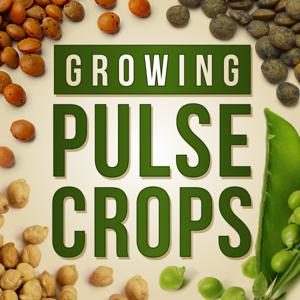


Farmer and Northern Pulse Growers Association president Sam Arnson and executive director Shannon Berndt join us to talk about their work at NPGA, the importance of bringing the industry together to fund research, marketing and education efforts, and how other pulse growers can get involved. They share what NPGA has accomplished and what the future holds for northern pulse growers in the region.
“This is an exciting time to be part of this industry because we are still a fairly small industry, but we're growing. We're seeing a lot of additional states coming on board with acreage and production that face some of the same challenges that North Dakota and Montana producers face. And so as a collective group of growers, I think it's important that y'all have a voice.” - Shannon Berndt
The Northern Pulse Growers Association is a nonprofit association representing dry pea, lentil, chickpea, lupin and fava bean growers from Montana and North Dakota. Shannon Berndt has been serving as the assocation's executive director since 2007. When not acting as president for NPGA Sam is found farming northwest of Williston, North Dakota.
“People are overall excited next year for pulses to be put into their rotation if their rotation allows it. And I mean by that is their crop rotation and or chemical herbicide usage if it's opened for pulses. I think a lot of acres are gonna go in next year.” - Sam Arnson
This Week on Growing Pulse Crops:
Growing Pulse Crops is produced by Dr. Audrey Kalil and hosted by Tim Hammerich of the Future of Agriculture Podcast.
In this episode we’re looking at a new pulse crop: sweet white lupins. Dr. Mike Ostlie is the director of the Carrington Research Extension Center at North Dakota State University. In the early 2000s a private company that was developing lupin varieties had gone out of business and the germplasm was given to NDSU to work on varieties. Now they’re close to releasing new varieties and Ostlie joins us to share why this is exciting for growers and for the pulse crops industry in general.
“It's actually really an exciting time to be in the lupin world right now because there's a lot of interest in it I think all around in people looking for some new food ingredients, for instance, on the buyer side. As well as some farmers that are interested in getting something a little bit different in their crop rotation.” - Dr. Mike Ostlie
While these varieties of sweet white lupins will be new to many US growers, there is also an initiative in Canada to develop and release blue lupins which have a lot of the same qualities. These qualities include being a strong nitrogen fixer, a phosphorous scavenger, and a high protein legume. Ostlie noted that there is some existing production of sweet lupin in Australia that mainly goes to the pet food and livestock feed industries there.
“The lupins have pretty wide adaptability in the northern plains in the fact that they produce reasonable yield under those very large drought conditions. When they're provided water, the yield potential is quite high….We've seen yields get up to 60 to 70 bushels an acre with lupins, which again, is very competitive with a lot of crops in the area.” - Dr. Mike Ostlie
This Week on Growing Pulse Crops:
Growing Pulse Crops is produced by Dr. Audrey Kalil and hosted by Tim Hammerich of the Future of Agriculture Podcast.
Take our audience survey and let us know your feedback about the Growing Pulse Crop Podcast!
Whether you’re from Nebraska or elsewhere, this is a great episode about what’s possible for the future of pulse crops. We talk about peas and chickpeas, but we also get into other niche opportunities like mung beans, cowpeas and more. You’ll get a sense of the emerging pulse industry in Nebraska, but also what it takes for the development of pulse crops everywhere. We discuss genetics, agronomy, disease management and marketing strategy. We start with Steve Tucker. Steve farms near Venango, Nebraska in the southwest part of the state. He has built his operation on the principle of diversity and grows up to 14 different crops.
“We can grow mung beans, I mean, there's different...aspects of these different things that we can do. What does the market need? And so I just had a conversation with a company that's looking for lupins. I don't know if you've ever heard of lupins before and so there are more various different kinds of pulse crops that who knows what else is out there and what people are looking for to utilize in food products.” - Steve Tucker
When plant pathologist Dr. Bob Harveson came to the University of Nebraska in 1999, chickpeas were really on the rise in the state. Sometime in the early 2000’s ascochyta really started to affect a lot of fields and there were no fungicides labeled for the disease for treatment. Since then he said fungicide options have improved over time as have genetics. Unfortunately, many of those same growers who experienced the devastating losses from ascochyta are very hesitant to plant chickpeas or even other pulse crops again. Despite these frustrations, Bob remains optimistic for the future of chickpeas and other pulses in the state.
“I have a strong diagnostic background. So whenever something like this pops up, I try to determine what the problem is, how well it's distributed, you know, those sorts of things. Before you can start developing control measures, you gotta know what you've got in order to really make the right choice for that.” - Dr. Bob Harveson
This Week on Growing Pulse Crops:
Growing Pulse Crops Podcast is hosted by Tim Hammerich of the Future of Agriculture Podcast.
Take our audience survey and let us know your feedback about the Growing Pulse Crop Podcast!
Terry Angvick farms in Sheridan County, Montana which is in the extreme Northeastern corner of the state. He was born, raised there and came back after earning a plant and soil science degree from Montana State University. In his first career, he spent 31 years as the Sheridan County Extension Agent, a position he retired from in 2010. Today he farms mostly durum and dry peas alongside his two older brothers and his son. Terry shares about the important role pulse crops play in rotations in his arid part of the country, some of his management practices that he’s adopted over the past 20 years of growing pulses, and some harvest and post-harvest considerations.
“I think the more residue out there, it prevents erosion, but it also creates a little microclimate, a little environment, for them to grow up into. I prefer a furrow drill…because I think it also allows that little microclimate when you grow up on the stubble. These varieties have tendrils that tie them together, and so that helps to hold them upright as well. In my mind, the more stubble the better.” - Terry Angvick
As an extension agent Terry found himself “searching for something that would justify the economics of farming.” This led him to encourage the planting of previously fallow fields and pursuing different types of crop rotations such as pulse crops.
“When you produce a durum crop following a pulse crop, you almost always have increased yield and quality as opposed to continuous wheat. For example, better protein, better color. Durum has HVAC, which is a hard vitreous amber color, which is a nice yellow color. It's almost always better. So from those standpoints, I guess the pulse crops have really fitted very well and the markets have followed it as well.” - Terry Angvick
This Week on Growing Pulse Crops:
Growing Pulse Crops Podcast is hosted by Tim Hammerich of the Future of Agriculture Podcast.
Take our audience survey and let us know your feedback about the Growing Pulse Crop Podcast!
Dr. Steve Van Vleet spent about 18 years as a regional extension specialist for Washington State University, and today is a research agronomist with The McGregor Company. For most of his career, pulses have been an important part of his work, and he joins us to talk about his excitement for the potential of winter peas. We’re not talking about Austrian Winter Peas, which are feed grade peas that are smaller in size and darker in color. We’re talking about food grade winter peas, which have been available for several years in certain growing areas. Steve says the differences are larger size of at least 17 grams, a clear seed coat, and a green or yellow cotyledon.
“Multiple years, my average yield of my winter peas was 6,000 pounds. That's between all the varieties. Spring pea will range from 2,500 pounds up to 4,500 pounds. But I can get 7,000 or 7,500 pounds off some of the different winter pea varieties. That's the part that makes me super excited..” - Dr. Steve Van Vleet
Steve talks about why he believes this crop is a great option for a lot more growers than are using them currently and some considerations for growing winter peas including seeding depths and timing and pest and disease management. The limiting factor he sees playing a big role in this variety’s success is the access producers have to markets.
“Not are you only helping the soil, helping another crop that you're producing, which makes it better, makes it healthier. But what are you doing when it comes to human health?... If we could market this and people would become educated and say, this is one of the most healthy crops that we can produce and improves human health, soil health, crop health, other crop health. Not just as a rotational crop, but this could be a major crop. That's where I see opportunity.” - Dr. Steve Van Vleet
This Week on Growing Pulse Crops:
Growing Pulse Crops Podcast is hosted by Tim Hammerich of the Future of Agriculture Podcast.
Eric Bartsch is the division head for global food ingredients at AGT Foods based in Bismarck, North Dakota. He’s been with the company for 16 years and through that time they have grown from just a couple factories to now over 45 facilities and $2B in sales. Processing peas, lentils, chickpeas, fava beans and dry edible beans has been their primary focus since they were founded in 2002. While they have ventured into some grain-based products since that time, they still remain focused and bullish on the future of pulse crops.
“There's a lot of things that we've had to establish. Protein checking in peas was non-existent 20 years ago. And now it's where we're checking protein on every load to be able to supply some of the high end markets that we are today. You know a lot of major investments in protein manufacturing plants, in processing, in food manufacturing plants that are incorporating pulses is really at an all time high and continues to grow.” - Eric Bartsch
Eric discusses how much has changed in pulses to make them more attractive to a wider variety of consumers who want tasty and nutritious foods. This has had big impacts on what buyers are looking for from these pulse crops in terms of flavor and functionality. He talks about how that information gets passed from the consumer to the producer and back, and the role AGT Foods plays in facilitating that connection. He also talks about some of the opportunities ahead for the industry, and why he is more optimistic than ever about the market potential for these crops.
“That's really one of the initiatives we took when we built our Minot plant, is how do we transform pulses into ingredients that can be incorporated into everyday food. So now you look at the market and there's all kinds of gluten-free pasta made from lentils, chickpeas, and peas. They’ve become mainstream where it's become a very large market…So there's many ways to where we've taken pulses, transformed them into an ingredient and incorporated them into everyday foods that consumers are familiar with” - Eric Bartsch
This Week on Growing Pulse Crops:
Growing Pulse Crops Podcast is hosted by Tim Hammerich of the Future of Agriculture Podcast.
At the time of this interview Dr. Abbey Wick was the associate professor and extension soil health specialist at North Dakota State University. She has since gone on to a new role after nearly 12 years at NDSU. She is now the Global Soil Health Education Program Lead at Syngenta. We talk about what is motivating more farmers to want to try new practices on their farms to improve their soil health, some of the barriers to adopting these practices, and the support and resources available for anyone looking to learn more. We also discuss a new approach that food companies are getting involved with to spread the word about soil health through certified crop advisors, which is called the Trusted Advisor Partnership.
“I do think that people need to be aware of how they're going to keep that residue on the surface and probably it's with the crops they are growing in between those pulse crops and rotation. They could build up some of the residue. But yeah, it's exciting. I think there's a ton of potential with pulse crops, and fortunately we can grow them here in the northern plains. So I think we're in a great position here to do some really cool things with soil health and pulse.” - Dr. Abbey Wick
Wick has seen both soil erosion and salinity issues be big motivators for producers to turn to new soil health practices. Using a perennial and keeping residue on the surface has become much more common place for producers in the North Dakota area to combat these issues. She goes on to share that a strong community of support and collaboration has developed around these soil health practices including the Trusted Advisor Partnership.
“There's a community around this that I think growers want to be part of. And to have that support not only from the university or from crop advisors who are interested in this or from conservation districts or NRCS groups. But they want to be part of that community because they want to be creative and they want to be thinking through the problems and solving problems on their farm and now they have people to do that with. And so I think that's been a huge motivator for soil health.” - Dr Abbey Wick
This Week on Growing Pulse Crops:
Growing Pulse Crops Podcast is hosted by Tim Hammerich of the Future of Agriculture Podcast.
Dr. Drew Lyon is a Professor and the Endowed Chair of Small Grains Extension and Research for Weed Science at Washington State University in Pullman. Prior to moving to Washington in 2012, he spent 22 years as a Dryland Cropping Systems Specialist at the University of Nebraska at the Panhandle Research and Extension Center in Scottsbluff. His endowment is from the WA Grain Commission, so he spends a lot of his time with wheat growers, but most of them also include pulses in their rotations. Our discussion mostly focuses on integrated weed management of chickpeas, from cultural practices to herbicides to biologicals.
“We do have some effective herbicides out there. In this part of the world nature doesn't always provide us with the moisture at the right time to get those products activated and going, that increases our need to use things other than herbicides for weed control. Because we've had 30 years of really effective herbicides that's the first place a lot of growers think. But I think we're gonna have to start thinking more about other approaches, things we used to do 40 and 50 years ago before herbicides were so effective.” - Dr. Drew Lyon
Lyon has seen herbicide tools come and go, both in their effectiveness and their availability. Because of this, he is a big advocate for an integrated weed management program, which he says all starts with trying to grow a competitive crop. He shares that there are also things that can be done to try to manage the overall seed bank of the weeds on fields. Cover crops, he says, can also be helpful with weed suppression if you have the moisture. When all is said and done, Lyon’s advice on weed management comes down to three basic principles: don’t get weeds started, do everything you can to grow a competitive crop, and always be changing things up.
“Prevent weed problems from starting. If you don't have certain weeds on your farm, make sure you don't get them… Do everything you can to grow a competitive crop…And then the other thing is to change things up. Anytime you do the same thing over and over again, you tend to select for those weeds that do well in that system…Human nature is that we like to stick with things until we break them, but that's the recipe for getting weed problems” - Dr Drew Lyon
This Week on Growing Pulse Crops:
Growing Pulse Crops is hosted by Tim Hammerich of the Future of Agriculture Podcast.
Jeannie Rude is an agronomist at PRO Co-op in Northeast Montana. She manages part of the co-op’s business to help growers make decisions, solve agronomic problems, and provide inputs. Overall, Rude works with 13 different crops on an annual basis. She is acutely aware of how much her job and the success of her cooperative hinges on the viability of the farmer customers that they serve.
“I love what I do because of the complexity. It definitely makes it more challenging. It makes it hard to bring new people into the business because they have to learn so much and it's not something that's in a textbook… I would not do this if it was routine and if it was something that was easy to copy.” - Jeannie Rude
In 2021 Rude discovered that there was limited research on grasshoppers due to the cyclical nature of their impact. She had to make some educated guesses for her clients in order to manage the grasshopper population explosion. Rude discusses grasshopper population thresholds, life cycles, management options and what environmental factors will affect their survival most.
“There's a hundred species of grasshoppers between you in South Idaho and me and Northeast Montana. There are five that are pests and two that are giving us trouble right now in this area, so there's 98 that don't matter. So there's a ton of grasshoppers in the environment that are harmless….There's a threshold for action and all of those other grasshoppers, they're not part of your action threshold you're looking for.” - Jeannie Rude
This Week on Growing Pulse Crops:
Growing Pulse Crops Podcast is hosted by Tim Hammerich of the Future of Agriculture Podcast.
Dr. Barney Geddes is an assistant professor at North Dakota State University in the Department of Microbiological Sciences. His work focuses on microbes with the goal of boosting crop yields for farmers. More specifically he studies rhizobia which form symbiotic relationships with legume crops like pulses. In this episode, Geddes explains how nodulation works and what that means for farm decisions like inoculants. He grew up on a farm in Manitoba, and after studying microbiology as an undergrad, he decided to apply this knowledge to his lifelong passion for sustainable agriculture. His perspective is deep into the science but also rooted in the reality of growing up on a commercial farm.
“Nodulation or the ultimate formation of a root nodule on the root of these pulses is really the result of quite an elegant communication and signal exchange between the plant and the microbe…It's really a communication between the two that ultimately leads the plant to understand it has the right microbe there to allow it to kind of gain entry and then it builds this house for it called the root nodule.” - Dr. Barney Geddes
According to Geddes, inoculation is “kind of a bet hedging process” in that producers are just making sure all the building blocks are made available for nodulation to occur. The plant will continue to send out signals to create nodules and will turn off those signals once they have met their needs. In this way, if there is excessive nitrogen in the soil, the plant will not be prompted to form the symbiotic relationship and nodulate. Plant stress and soil pH will also impact the symbiotic relationship and the success of nodulation.
“We're trying to build a translatable knowledge base that can lead to improvements in the industry. So that's been a big focus for us, is competition. These are living organisms that have to come into our environment and thrive there somehow…But thinking about that competition and, and what allows a microbe to thrive in a new environment is something we're starting to do a lot.” - Dr. Barney Geddes
This Week on Growing Pulse Crops:
Growing Pulse Crops Podcast is hosted by Tim Hammerich of the Future of Agriculture Podcast.
From the publisher's feed

227,520 Listeners

8,421 Listeners

223 Listeners
14 Listeners
16 Listeners

516 Listeners

128 Listeners

384 Listeners

50 Listeners

53 Listeners

353 Listeners
10 Listeners

3 Listeners