
Sign up to save your podcasts
Or

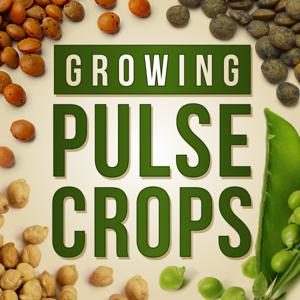


Greg Busch is a farmer in the far northwest corner of North Dakota. He farms with his wife Jessica and they’ve been growing pulses as part of their rotation for over thirty years. Greg joins us over the next two episodes to talk about what led him to diversify his rotation to include up to ten different crops. He tells us what he has learned through these experiences and where pulses specifically fit into the mix.
“When we first started farming and specifically when we first started no-till we were a monoculture and we saw a lot of problems with that, a lot of disease. It took a lot of extra fertilizer to keep growing crops like that.….We couldn't continue to do that. We were seeing depletion in our soil, erosion and land costs were getting higher.” - Greg Busch
A local extension agent introduced the Busch operation to field peas in an effort to more efficiently use his land. With that addition, they noticed not only could they grow the crop but they had reduced fertilizer inputs as early as the next year. Forgive the pun but with that the seed of crop diversity was planted. This crop diversity quickly enhanced their soil health by decreasing erosion and fertilizer needs confirmed with the Haney Soil Test.
“We do have a nice residual of nitrogen when we've done our soil tests. It comes back telling us that. We do the Haney Soil Test on most of our ground every year and they give you a soil health score based on a number of different things, carbon release is one of them. And those fields always seem to show higher and we’ve been very pleased.” - Greg Busch
Greg has noticed that there is much less tillage in his area in North Dakota. Less labor, less equipment costs, less passes in the fields and not to forget many soil health benefits have enticed many producers to pursue no-till practices. A major goal for Greg on his operation has been to increase the organic matter in his fields. His soil tests have proven that he has certainly accomplished that goal with a 3-4 times higher organic matter observed since adopting these rotations and practices.
“It just seems like the ground is a lot more forgiving. It seems to absorb heavy rainfall events better than fields with low organic matter. And it also seems to carry us through short droughts better than the ground with less organic matter. ” - Greg Busch
Join us in the next episode where Greg share’s specifically about his experiences with intercropping.
This Week on Growing Pulse Crops:
Growing Pulse Crops Podcast is hosted by Tim Hammerich of the Future of Agriculture Podcast.
Mark Jirik of the Northern Crops Institute joins the show to talk about their value-added product development and their role in education of a variety of crops. Northern Crops Institute is an international meeting and learning center that unites customers, commodity traders, technical experts, and professors for discussion and education. Since 1983, over 133 nations have sent participants to NCI who are government representatives, private industry agriculture workers, or from other commodity utilization industries.
“95% of our course participants had a better understanding of the US supply chain. 99% had a better understanding of quality and 51% increased their purchase of US commodities as a result of what they learned in our courses.” - Mark Jirik
To carry out their mission, NCI focuses on product development work and technical training and education. And like everyone else, they really had to adapt to the events of the past couple of years.
“The pandemic has really forced us to take a look at how we do things. So when we talk about education and technical education, historically, that has been in person training….We do some domestic facing courses as well. And obviously with a pandemic that couldn't happen. So we ended up moving a lot of that education online.” - Mark Jirik
Along with extensive education services, NCI services producers by identifying best product development processes. What they do is not really research, but everything related to the development of a process to get the final product consumer-ready.This unique vantage point has given Mark a special perspective on the global agricultural industry.
“Pulses are a very versatile crop. And when you start looking at the last 10, 15, 20 years, we've been in this protein pool market and pulses have been a very important component….whether you start talking Africa or other parts of Asia, there’s gonna be people that are hungry for protein and I think pulses fit a very nice niche for those people.” - Mark Jirik
To continue to meet the developmental needs of the global food industry, NCI is going to be moving into a brand new facility on the North Dakota State University campus. This new facility will help NCI’s work on behalf of farmers to best position themselves for the future ahead.
“(We are making) sure that people know who NCI is, but more importantly, when they think of quality pulses, they think of our region…it's about increasing the bottom line for growers.” - Mark Jirik
This Week on Growing Pulse Crops:
Growing Pulse Crops Podcast is hosted by Tim Hammerich of the Future of Agriculture Podcast.
Dr. Arti Singh joins us to talk about a lesser known pulse crop that is showing a lot of potential for increased commercial production in the U.S.. The mungbean, which has traditionally been grown for bean sprouts, is seeing increased demand due to its ideal properties for many plant-based proteins.
“The mungbean is a very versatile crop when it comes to uses and the quality of protein. The market is just amazing right now it's opening up in all different directions. I see there is a lot more benefit in growing this crop which is right now in a minor stage.” - Dr. Arti Singh
Dr. Singh is an Assistant Professor in the Department of Agronomy at Iowa State University with more than 15 years of plant breeding experience. After obtaining her PhD degree from G.B. Pant University in India, she worked as a Postdoctoral fellow at the University of Saskatchewan and then at Agriculture and Agri-Food Canada prior to joining Iowa State University. Her breeding program focused on developing new varieties for plant-based protein markets. Her research projects are geared towards harnessing genetic diversity for genetic gain, utilization of advanced data analytics particularly machine and deep learning for early disease and stress signatures, and genetic/genomic studies on abiotic and biotic stress resistance.
“I know farmers are very innovative and those growers who are looking for a new crop or they are looking to incorporate more diversity in their crop portfolio, please try mungbeans..This industry is going to grow…However, to reach there we’ll need a collective effort in industry, private and public, to bring this crop into the mainstream.” - Dr. Arti Singh
This Week on Growing Pulse Crops:
Growing Pulse Crops Podcast is hosted by Tim Hammerich of the Future of Agriculture Podcast.
Dr. Steve Shirtliffe joins us to talk about weed management in lentils. Steve is a professor in the department of plant sciences at the University of Saskatchewan. His research over the past couple of decades has focused on agronomy, with extensive work on weed management in pulses specifically. Steve and I talk about some of the challenges specific to lentils when it comes to weed management, and some of the latest research, innovation and best practices in this area. Steve and his colleagues and graduate students have had the chance to explore a lot of different possibilities for integrated weed management in pulses. One practice that has made a significant difference has been increasing seeding rates.
“We found that basically as soon as you started to increase your seeding rate, You got more crop biomass that meant there was less weed biomass that was there. So it was essentially just kind of almost a replacement thing that the more crop biomass you got there, you got that much less weed biomass.” - Dr. Steve Shirtliffe
But of course increasing the seeding rate isn’t the only answer for organic weed management. They’ve also looked at a variety of mechanical control methods, and tried to determine what would give producers the most optimal weed control. With resistance to group two herbicides, conventional farmers are benefitting from these practices as well. Although Steve admits that herbicides are still mostly preferred while available and still effective.
“If you can keep them weed-free from the five node stage to the ten node stage, if you can control weeds in that zone, you're home free, that's it. You don't have to worry about the weeds that start after that. And if you control them by the five node stage, they haven't done enough damage. So if you can keep them weed free in that period, you've done your job.” - Dr. Steve Shirtliffe
This Week on Growing Pulse Crops:
Growing Pulse Crops Podcast is hosted by Tim Hammerich of the Future of Agriculture Podcast.
Steve Zwinger joins the show to talk about variety development, intercropping, and organic pulse production. Steve is a research specialist in agronomy at NDSU Carrington Research Extension Center. One of his primary responsibilities is research into organic production, and pulse crops are an important part of these rotations. Steve has been involved in this type of research since the 1990s, and works with a number of crops, including small grains, pulses, and some work in ancient grains as well. You’re going to hear about what he’s discovering in his intercropping research, the benefits he sees in organic variety development for both organic and conventional growers, and the importance of seeding rates.
For those that might be new to intercropping, we’ve done some episodes on the topic in episode three of this season as well as last season episode six and an intercropping panel bonus episode. Steve says research has shown other benefits as well, such as disease suppression in a chickpea/flax intercrop. Disease resilience could be a reason to do further research into intercropping, but it also guides Steve’s work in breeding organic varieties in general.
“So basically intercropping is really looked at as a practice of growing two or more crops together in the field at the same time. And basically what we're doing is we're looking for combinations of plants that will compliment each other better than when they're planted alone. This can lead to increased yield and increased quality…. I thought it seemed to make sense from a number of standpoints, maybe it might have a fit in organic. And that's why I started looking at some of that.” - Steve Zwinger
He sees benefits of organic variety development not just for certified organic producers, but for conventional farmers as well. This concept of developing varieties in an organic system is an interesting one. As we think about trying to develop more resilient varieties that can prevail in less than ideal conditions, there’s a real argument to be made that more varieties should be developed this way. Overall one theme that definitely runs through a lot of Steve's work is this idea of building resilience, building it into varieties, but also just building it into agricultural systems.
“The variety choice is the easiest decision that can be made that's going to have the biggest impact for the farmer. So variety development is really important and I can't stress it enough. Where we really, really need to go for the future is developing varieties specifically for organic agriculture…Having those types of genetics is very important for all agriculture, of course, but particularly when your tools are limited by the amount of inputs that you can use.” - Steve Zwinger
This Week on Growing Pulse Crops:
Growing Pulse Crops Podcast is hosted by Tim Hammerich of the Future of Agriculture Podcast.
If you’ve ever thought that direct-to-consumer farm businesses are only for those located close to urban centers, this episode will challenge that thinking. Scobey, Montana is considered the second most middle-of-nowhere town in America. That’s where Terry grew up on the farm, and where he and Shauna have built their farm and business. Together they share about their journey on Farver Farms from farming to building their own farmer-direct brand of lentil snacks and mixes.
“Our kids were getting ready to graduate from high school and talking about wanting to come back to the farm. As anyone in agriculture knows, there's only so many acres and only so many cows you can put on those acres or so much crop…So then the question became, how do we bring these two kids back and support two more families? And we knew that part of that was going to have to be off farm income.” - Shauna Farver
The Farver’s have developed and sell Lentil Crunchers as well as lentil-based cooking and baking mixes. This is a great story of finding creative ways to add value to a pulse crop marketing plan. It’s no easy undertaking, but it can be done. At the onset, Terry and Shauna pursued lentils as a part of the rotation to help with weed management.
“They didn't really have a good chemical yet for getting wild oats, which is a grass out of wheat, which is a grass. And growing a legume which is a lentil, they had a chemical that was very inexpensive and worked really well. So you go in on your wheat ground that has bad wild oats, you grow legumes or lentils, and you spray this chemical and all your wild oats are gone. And it does a really nice job. It's a really good rotation.” - Terry Farver
Like any new venture, they had to start with what they had and sort of figure it out on the fly to get established. From the initial task of production, they have expanded into direct-to-consumer lentil products. Once they started gaining some early traction it was time to increase their capacity so they could meet the demand they were creating. They also increased the number of products they offered. The Farvers estimate that in a normal year, they're still selling less than 10% of their lentil production through this food business, but it's working and it's growing. Shawna said there still is one main challenge though, that she sees for other aspiring value added farmers out there.
“Infrastructure, I think is probably our biggest barrier. I know that there's a group working on some infrastructure particularly related to food production here in the Eastern side of the state. And I'm anxious to see what happens there. That might make things a little easier….it doesn't mean it can't be overcome. It just takes a little creativity sometimes.” - Shauna Farver
This Week on Growing Pulse Crops:
Growing Pulse Crops Podcast is hosted by Tim Hammerich of the Future of Agriculture Podcast.
Chris Wiegert joins the show to talk about his unique role in the pulse crops industry. As both the chief business development officer and chief sustainability officer of Healthy Food Ingredients, Chris has a great sense of various pulse markets and the ins and outs of maximizing value from these crops. Based in Watertown, South Dakota, Chris and his team at Healthy Food Ingredients contract organic, identity preserved and other specialty pulse, small grain, and oil seed crops.
“All of our facilities are food grade, so we're primarily in that food space, but we're in the middle. We're taking that product from the farmer, we're putting it into whatever form that end-user wants it in and then we're sending it to the end user to make the final food typically.” - Chris Wiegert
Chris discusses what customers are demanding when it comes to pulses including allergen free, identity preserved, and other specialty markets. We also talk about the importance of sustainability to consumers and food companies. This is an area of agriculture that is becoming more and more data-driven, and one that is important for everyone who works with pulse crops to understand.
It's really a specialty market because you're probably trying to hit a spec, whatever that is, or we're looking for zero toxins or zero heavy metals or something like that. It's a specialty market all the way through, even if you don't consider the crop a specialty crop.” - Chris Wiegert
A big part of that specialty market that has really emerged in recent years is allergen free products. When you’re talking about something as important and as specialized as allergen free, Chris says the entire process from farm to consumer needs to be aligned. Ensuring this type of allergen-free designation takes a lot of communication with growers. As does another type of speciality market: identity-preserved or IP. It seems incredibly tedious to know exactly where every shipment of pulses comes from. Chris says they’re not necessarily tracing it back for potential problems, but for potential opportunities. Having this information provides them with the opportunity to market the farming practices to the consumers.
“Our real niche is working with a customer based on what they feel is important and let's see if we can get all the way to the farm to help it.” - Chris Wiegert
This Week on Growing Pulse Crops:
Growing Pulse Crops Podcast is hosted by Tim Hammerich of the Future of Agriculture Podcast.
In this episode we have the opportunity to listen to an interview recorded for the War Against Weeds podcast. Co-hosts Dr. Sarah Lancaster and Dr. Joe Ikley are both weed scientists: Sarah at Kansas State University and Joe at North Dakota State. Together they help listeners understand what it takes for farmers to fight the war against weeds. Joining Sarah and Joe on today’s episode are Dr. Lucas Haag, the Northwest Area Agronomist for Kansas State University, and Jeanne Falk Jones, a trained weed scientist and multi-county agronomist for Kansas State University extension also based in Northwest Kansas.
In the interview, Sarah, Joe, Lucas, and Jeanne talk mostly about field peas and dry beans, including the growth of these crops in Kansas, and what’s working when it comes to weed management. Stay tuned to the end of the episode for a really interesting conversation on herbicide carryover.
“Dry beans are a really good alternative especially and primarily when we're looking at them on irrigated ground…And so they're a really good rotation crop, especially when we have a lot of irrigated corn. We have water needs at a little bit of a different time and they've seemed to be a little more economically viable for those versus just solely irrigated corn.” - Jeanne Falk Jones
She goes on to compare the use and benefits of dry beans rather than the more familiar soybeans. A strong thriving market, more Kansas soil tolerance and less susceptibility to fungus are some of the advantages dry beans have. Lucas adds that pulse crops have the added ability as cover crops to help solve one of the biggest obstacles for Kansas farmers, water efficiency.
“Everything in this part of the world is about how do we get the biggest economic return out of water? And it doesn't matter whether it's precipitation or coming on through a pivot…We're only about 20% efficient at storing that rainfall we get during a fallow period. So what if we can take that 80% that we would lose to evaporation anyways and turn that into something marketable like field peas.” -Dr. Lucas Haag
This Week on Growing Pulse Crops:
Growing Pulse Crops Podcast is hosted by Tim Hammerich of the Future of Agriculture Podcast.
Dr. Héctor Cárcamo is a senior research scientist at the Lethbridge Research and Development Center in Alberta which is part of Agriculture and Agri-Food Canada. Hector’s work focuses on developing integrated pest management strategies for insect pests in crops such as faba beans, field peas, canola, and some forage crops. He helps growers develop management strategies and looks for ways to reduce reliance on chemistry.
This episode focuses on two pulse crop pests in particular: lygus bugs and pea leaf weevils. We also talk more generally about biological control of insect pests including predators, parasites, and trap crops. Héctor shares that research suggests that some pests, if the populations are managed, can actually improve crop performance.
“If you have a few insect pests on the crop, you actually can stimulate the plant because we have seen a bit of a response where you have a few insects on the plant and you actually get more yield compared to a plant that has no insects at all.” - Dr. Héctor Cárcamo
An overpopulation of pests will of course affect yield but also and sometimes more importantly it will affect quality and flavor. Héctor suggests that pests are meant to be managed not eliminated. A part from the benefit of the plants being stimulated, some of these insects provide a link in the food chain for other species useful in providing biodiversity.
“My advice for growers in general is you have to be informed about the entomology, you know, the insects that are there and find out as much information as you can in terms of how you maximize the design of your farm.” -Dr. Héctor Cárcamo
This Week on Growing Pulse Crops:
Growing Pulse Crops Podcast is hosted by Tim Hammerich of the Future of Agriculture Podcast.
Dr. Clair Keene joins us to talk about both intercropping and incorporating pulses into an organic rotation. At the time of our interview, Clair was the extension specialist in cropping systems at the Williston Research Extension Center where she supported farmers directly as well as conducted research and extension outreach with county agents and other stakeholders. Since that time her title has changed to assistant professor and agronomist at North Dakota State University, but her research interests remain in crop rotation, weed management, cover crops, soil health, organic agriculture, and perennial forages.
We’re going to talk about the intercropping work Clair has participated in as well as some of her efforts to help farmers that want to transition to organic systems in the state. Clair does a great job of blending the agronomic and economic considerations in this episode.
“Farmers that have grown chickpea with flax, say that they don't see as much ascochyta in their fields. They don't need to spray as often. So they see it as a really important disease management tool. And so I wanted to do the small plot work. Let's see if we can ideally try to figure out why, why does it work?” - Dr. Clair Keene
Intercropping is the act of growing two different crops that are generally planted and harvested at the same time. We’ve discussed it on a few different episodes in the past, including episode 10 of season one with Lana Shaw, episode 6 of season two with Tony Wagner, and in a special intercropping bonus episode. Intercropping provides benefits such as disease suppression, dry down, and harvestability in some cases. As with everything, it’s going to be very dependent on your situation, but Clair does see potential with the chickpea/flax and the canola/pea intercrop combinations specifically.
“If we can reduce the need for fungicide use, reduce the number of fungicide applications, that's probably the fastest way to reduce chickpea cost of production or at least that I'm aware of.” - Dr. Clair Keene
This Week on Growing Pulse Crops:
Growing Pulse Crops Podcast is hosted by Tim Hammerich of the Future of Agriculture Podcast.
From the publisher's feed

227,520 Listeners

8,421 Listeners
223 Listeners
14 Listeners
16 Listeners
516 Listeners
128 Listeners

384 Listeners
50 Listeners

53 Listeners
353 Listeners
10 Listeners

3 Listeners