
Sign up to save your podcasts
Or



Dr. Miranda Meehan is the Livestock Environmental Stewardship Specialist with North Dakota State University Extension. Her work primarily deals with grazing management and the balance between our environment and our livestock.
In this episode we talk about making rotations of livestock and pulse crops work. Specifically, we’ll cover the role of pulses in full season cover crops, the considerations of incorporating cattle into crop rotations, and we’ll also get into some of the biggest questions about cattle and crops like compaction, stocking rates and forage quality.
“I think the most common thing we see people do in starting with cover crops is those winter cereals because that's an easy way to get into it and it doesn't interrupt our cropping system much.… That's a really good source for grazing, getting animals out for a little earlier grazing than we would if we had to wait for pastures to be ready.” - Dr. Miranda Meehan
Dr. Meehan suggests basing your cover crop selections on your overall goals for production. Different factors such as grazing, haying, and cost of seed can all affect that decision. In addition to watching costs and nutritional balance, timing is also very important. For example, in a frost situation legumes will lose their quality, but brassicas will be able to maintain. But, she says pulses, peas in particular, can be a great fit in full season cover crop mixes.
“In terms of our pulses, I think the best fit in a grazing situation is our field or forage peas. They are very affordable. They're under 50 cents a pound. And so, if we don't have something established, you don't feel bad about it. You're not out a lot and that lowers that risk.…..It's a cool season. It starts growth nice and early. We actually have seen regrowth on it when we graze it.” -Dr. Miranda Meehan
This Week on Growing Pulse Crops:
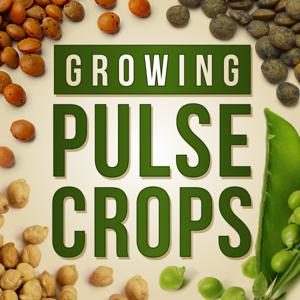
Growing Pulse Crops Podcast is hosted by Tim Hammerich of the Future of Agriculture Podcast.
First generation farmer Nate Powell-Palm shares his inspiring story of starting his farming career at the age of 12 and adding pulses to his grain and livestock rotation.
Nate is located near Bozeman Montana and currently farms organic pulse crops, oilseeds, cereals, and livestock. Beginning on his parent’s ten acres in 2004, Nate now farms around 1,000 acres spread across 12 different landlords. He also serves on the National Organic Standards Board and has been an organic inspector for about ten years where he has visited over 3,000 farms across 44 states.
In this episode, we talk about his story of getting started in farming, what his organic production system looks like, how his picture ended up on the box of Annie’s Mac N Cheese, and what he has learned from others on his farming journey.
“General Mills, owner of Annie's Mac N Cheese, developed a product saying we're going to make it with one-third yellow pea flour. And they said, Nate, you want to grow some yellow peas? And I'd never grown yellow peas, but I'm like, I'll try anything. And it just ended up being this super good fit for my region.” - Nate Powell-Palm
Nate has grown his operation and maintained it with an organic certification. He has found success in having a diverse production profile and that has included pulse crops. By incorporating pulses he has appreciated better soil health, improved soil fertility, better yields and an effective natural weed control.
“What I've learned through not only farming, but organic farming especially, is diversity pays. And so if you're going to be at all a producer you'll want to have more than just one stream of income.” -Nate Powell-Palm
This Week on Growing Pulse Crops:
Growing Pulse Crops Podcast is hosted by Tim Hammerich of the Future of Agriculture Podcast.
**Take our audience survey: https://bit.ly/GPCsurvey2021
In this episode, we’ll talk about some of the unique challenges pulse growers are facing this year with the hot and dry weather, how these conditions could impact yield and quality, what tools Canadian pulse growers are using for harvest aids, and information on some alternative harvest approaches like using swathing and stripper headers.
We’re joined by Dale Risula and John Ippolito, both with the Ministry of Agriculture in Saskatchewan, Canada. Dale Risula you may remember from episode nine of last season talking about Canadian pulses. He’s the provincial specialist for pulse crops and special crops, and has been with the ministry since 1982. John Ippolito is a crops extension specialist in west central Saskatchewan, which is a large pulse growing area including lentils, chickpeas, and field peas. John spends most of his time working directly with growers on management practices. Dale starts our conversation off with a very timely and relevant topic for a lot of pulse growers throughout North America: the dryness and heat of this season, and how that will impact yield and quality.
“I think first and foremost, the biggest impact that this is going to have is the effect on yield. Yield is likely to be down from the average for much of the province. We're not sure exactly where quality might end up just yet. Some of the grains themselves might be slightly lower than the average per bushel weight. They're also going to be subject to chipping in the dryer during harvest as they're handled with various equipment.” - Dale Risula
Beyond quality and yield deficits, Dale recommends extra attention be paid to dust control and fire hazards to create a safe working environment for producers. He also suggests extra precautions be taken post-harvest in regards to handling in order to prevent over drying and seed coat crackage. Elevated temperatures in the grains also may result in sweating that creates moisture pockets and leads to spoilage. Targeted cutting times, adjusting equipment and regulating the grain temperature are all measures that can be taken to mitigate these effects. John offers help to manage grain storage with proper handling, cooling and drying.
“Our recommendation to them would be to get it into a natural air bin. Col it down as quickly as possible to 15 degrees Celsius or probably about 60 degrees Fahrenheit because storage at those kinds of temperatures, even if they're dry is not going to go well.” - John Ippolito
Harvest aids and desiccants can and have been used to promote uniform dry down. There are area specific regulations for these products that all producers need to be aware of. To learn more about MRLs around the world, listen to episode 11 of this season with Todd Scholz. John added that although diquat is still the primary tool, there have in fact been a few new options for harvest aids that have also hit the market.
This Week on Growing Pulse Crops:
We want to hear from you! Take our audience survey!
Growing Pulse Crops Podcast is hosted by Tim Hammerich of the Future of Agriculture Podcast.
**Take our audience survey: https://bit.ly/GPCsurvey2021
Today’s episode focuses on where pulses fit into a cattle ration. Some growers may be considering haying peas, lentils or chickpeas as a supplement to their nutrition program due to the drought conditions. We also talk about how pulse crops work from a relative value standpoint.
We are joined by Dr. Zac Carlson, the North Dakota State University Extension Beef Cattle Specialist based in Fargo. He just recently started in that position in June after finishing a masters and Ph.D. at the University of Nebraska, Lincoln focused on ruminant nutrition.
“I think pulse crops have a very unique and distinct place when it comes to livestock feed. They certainly provide a high quality forage and a high protein grain that I think has a lot of value in the livestock industry.” - Zac Carlson, Ph.D.
This year’s severity of drought combined with low hay production has created a scarcity in forage for livestock. Some producers are decreasing their herd size to lighten the nutritional requirements for their operation but Dr. Carlson offers an additional option. Pulse crops can provide 20-25% crude protein as well as some additional energy as part of a livestock ration and so can be used as forage. Their unique abilities for nitrogen fixation do need to be taken into account before they are integrated into a ration.
“Nitrates are our concern when it comes to grazing pulse crops. So it's just something to be aware of. It's definitely manageable...Having a light stocking rate helps with that as well as not grazing when the forage is wet….and making sure your cattle aren't hungry when they go out to these fields. ” - Zac Carlson, Ph.D.
Dr. Carlson highlights that when pulse crops are stressed, for example in a drought or unexpected frost, nitrate levels may be increased. He encourages anyone interested in grazing pulse crops to contact their county extension and discuss sending a sample of the pulse crop off for nitrate analysis. Increased levels can be managed but knowing the level of concern is very helpful.
“Obviously there's a valuable product there. And I really think considering how some of these might fit into a livestock diet and work through that are something pulse crop producers should consider.” - Zac Carlson, Ph.D.
This Week on Growing Pulse Crops:
We want to hear from you! Take our audience survey!
Growing Pulse Crops Podcast is hosted by Tim Hammerich of the Future of Agriculture Podcast.
In today’s episode we talk about what’s being developed in terms of pulse varieties for pest and disease resistance, winter hardiness for fall-sown pulses, and what it takes to bring new varieties to the market. Rebecca McGee, Ph.D. joins us to discuss her work on developing varieties of spring-sown peas and lentils, autumn-sown peas, lentils and chickpeas. Dr. McGee is a research geneticist (aka plant breeder) with the USDA-ARS Grain Legume Genetics and Physiology Research Unit located at Washington State University in Pullman, WA. She has worked for the USDA-ARS since 2009, and before that time she spent 13 years with General Mills as a vegetable pea breeder.
Dr. McGee says one of the things she loves most about her job is developing varieties that are unique, nutritious for the consumer, and well-suited for the environment that the farmers will be growing them in. This last part includes developing resistance to pests and diseases.
“The mission of the ARS is to help America's farmers and the way I can do that is to develop varieties that they can reliably grow year in and year out, regardless of what disease and pest issues they face.” - Rebecca McGee, Ph.D.
She does want to be clear that developing the varieties is just one part of the complicated process of getting new varieties to farmers to grow. It’s of the utmost importance to have communication from everyone involved, especially when it comes to farmers offering feedback on the genetics they’re needing.
“The concept of it takes a village to raise a child, really applies to plant breeding too. It takes a village to create a new (plant) variety. As breeders, we know the genetics, but we rely on plant pathologists, on agronomists, on soil scientists, and a whole range of other scientists to help us in the development process.” - Rebecca McGee, Ph.D.
Producers play a role in her efforts by helping to identify what obstacles and yield limiting traits they are facing. “If it becomes apparent that the stakeholders need resistance to a new disease, it's relatively easy to go to the germplasm collection and search the collection for accessions that are resistant to the disease.” The process only begins with a need from the producer.
This Week on Growing Pulse Crops:
Growing Pulse Crops Podcast is hosted by Tim Hammerich of the Future of Agriculture Podcast.
On today’s episode we talk pulse crop quality standards and how residues and MRLs play a role in perceived quality from buyers and consumers around the world. Todd Scholz, vice president for research and member services at the USA Dry Pea and Lentil Council, joins us to discuss some of the nuances of MRLs (maximum residue limits) and what growers need to know to deal with the complex standards that exist in different global markets. He has been with the Lentil Council for over 20 years and provides great insight into navigating MRL’s and international trade.
“As countries are becoming more involved in international trade, they're establishing their own registration authorities and that's becoming a mosaic of different MRLs at different levels across the world which makes trade more complicated and makes our job as farmers more difficult.” - Todd Scholz
In order to ensure quality when it comes to residues, countries establish tolerances or maximum residue limits. This is becoming an increasingly important part of producing quality pulses for the global market because there are different approaches to determining these standards. The trend is for these requirements to become increasingly more strict. So how are growers supposed to adjust to these constraints? Todd recommends communicating with your processor, following the labels to the tee, and being keenly aware of the potential for drift.
"It is important to our production practices to be able to use chemical pesticides, but there is an increasing concern across the world for the use of those pesticides. And you can see it in the way the registering authorities are enforcing their MRL’s. They're reducing the MRL standards, eliminating them or establishing a level of detection so that even a drift accident can cause a shipment to be rejected. The cost to that is huge.” - Todd Scholz
Despite all of the complex dynamics at play here with quality and MRLs, the most important take home is to develop that good relationship with your buyer to make sure they know what they’re getting and you know how you can maximize your revenue from your crop and the way you produce it.
“We’re working really hard to try and harmonize MRL’s and make it as trade friendly as we can, but it's a complicated process and we need the help of our producers. ” - Todd Scholz
This Week on Growing Pulse Crops:
You can reach Todd and learn more about industry programs at the USA Dry Pea & Lentil Council website: www.USApulses.org
Growing Pulse Crops Podcast is hosted by Tim Hammerich of the Future of Agriculture Podcast.
Dr. Syama Chatterton is a research scientist with Agriculture and AgriFood Canada in Lethbridge, Alberta. For the past 10 years, Dr. Chatterton’s work has focused on soilborne diseases and root rot pathogens of pulses. Today’s episode focuses on the tools Dr. Chatterton and her colleagues are developing to more accurately and efficiently test for disease presence in soils for pathogens like aphanomyces and fusarium. The idea behind these tools they are developing is to lower the risk for farmers, make it easier to get information about this disease presence, and allow them to make more data-driven decisions about what to plant and when.
“If you grow a pea or lentil crop, and then you notice that you have a root rot issue in your field one year, our recommendation now is to stay out of that field for at least six to eight years….So that's why we're trying to develop some tools so that producers can test their soils, get an idea of what pathogens are in their soils, the quantity of pathogens in their soils, and then know whether its safe to plant peas or lentils again.” - Dr. Syama Chatterton
With a small sample, they are able to identify whether or not that targeted disease, such as the “root rot complex,” is present in a farmer’s soil. So essentially they are counting the detectable DNA to quantify the oospores of that pathogen in the soil. The hope is that this will lead to the ability to quantify the amount of disease presence in a soil in a timely manner, and start to establish thresholds to help a farmer determine when they should and should not plant. Ultimately, the hope is that farmers, when armed with the data from these tools, will be able to manage these diseases in a way that allows them to keep pulses in a regular rotation without proliferating the presence of these pathogens over time.
“If you're considering planting peas in that field and you want to know, am I going to be at a risk for root rot? Then you can go on and collect samples in the spring prior to planting.” - Dr. Syama Chatterton
With something like this that is able to use such a small soil sample, the sampling technique is extremely important to make sure the results are representative and actionable. At present, the protocol includes sampling at 10 sites and testing each of them separately to look for pathogens. Dr. Chatterton highlights that the results are only as valuable as the samples that have been collected. Low spots, water tracks or areas of decreased yield are the best places to focus your sampling. Identifying different species of pathogens and developing threshold values for producers to know how to use the results is an ongoing process.
This Week on Growing Pulse Crops:
Growing Pulse Crops Podcast is hosted by Tim Hammerich of the Future of Agriculture Podcast.
In this episode we meet Dr. Jenny Davidson, a pulse pathologist at South Australian Research Institute, or SARDI, in Adelaide, South Australia. Dr. Davidson works on diseases of lentils, chickpeas, field peas, and fava beans. She leads a team of a number of scientists and technicians working to keep pulse diseases under control in Australia. In 25 years of doing this work with pulse crops, she has seen diseases and genetic resistance to those diseases come and go. She shares about efforts to combat these pulse diseases, especially ascochyta, and the unified effort in Australia to find effective ways to manage them.
“We started out and still do really have a big focus on ascochyta because each of these crops have their own version of ascochyta blight. And in a rain fed growing system, this has a major impact on the crops.” - Dr. Jenny Davidson
Dr. Davidson shares that chickpeas became popular in Australia in the 1990’s. The varieties used were susceptible to ascochyta blight leading to the loss of whole crops. The industry only began to grow again once resistant varieties were used. Unfortunately, some of those varieties that had demonstrated resistance for 10 years began showing susceptibility. Producers are now having to use multiple fungicide spray applications and consider the additional costs in order to make up for this adaptation.
“What the Australian researchers have done in investigating the pathology of ascochyta rabiei in chickpeas is looking at the population variability of that pathogen, because obviously if you put out resistant types, you’re then putting a selection pressure on the pathogen to create types that can overcome that resistance. So we need to understand what the pathogen is doing.” - Dr. Jenny Davidson
Dr. Davidson’s research has identified that the ascochyta they are facing in chickpeas only reproduces in Australia asexually. Generally this leads to a reduction in the pathogens ability to adapt to resistant varieties but somehow the ascochyta has overcome this and made itself very difficult to manage for producers. The programs to investigate this are coordinated around Australia and the world to isolate the genetic sequences responsible for susceptibility and resistance.
“What we're hoping is that the resistance that we can get into adapted backgrounds then is handed over to the national breeding programs to get it into something that farmers will really want to grow. So it's a complete “beginning to end” program to try and cover off on the whole thing” - Dr. Jenny Davidson
This Week on Growing Pulse Crops:
Growing Pulse Crops Podcast is hosted by Tim Hammerich of the Future of Agriculture Podcast.
Dave Oien is the Founding Farmer and President of Timeless Seeds. In this episode he reflects on decades of organic pulse crop production, breeding, handling, and marketing. He helped to pioneer the US market for growing pulses as an organic cash crop, then began selling seed to other farmers, and ultimately has grown a business of selling lentils, chickpeas, and other crops to consumers around the world. Dave’s story was even captured in a book called “Lentil Underground”.
“These lentils are absolutely nutritious food, great for our livestock, good for our rotations, good for our farming practices, and as luck would have it, the organic industry was really kind of starting to get some legs. So the markets were expanding and we discovered that in fact, there was a need in the food market for certified organic lentils and peas.” - Dave Oien
Dave shares what it took to figure out how to grow some of these crops organically, how he has built and evolved his business over the years, and why he prefers the term resiliency over sustainability. Dave doesn’t recommend the cold-turkey approach to transitioning to organic that he took. He shares that it came with some lessons from the school of hard knocks. He quickly learned that in order to make an organic system work it was going to have to start with healthier soil and he would need to find sources of organic nitrogen.
“The more I read, the more I learned, the more I practiced, the more it seemed like, wow, we need to change the way we do things both to meet the growing market, but also just to pay greater attention to the health of the soil.” - Dave Oien
His organic lentils were discovered by “a relatively small chain store” at the time called Trader Joe’s. That connection at a trade show led to a long term relationship that expanded Dave’s market especially as Trader Joe’s also expanded their reach. Dave now also sells his products in other natural food stores, to the restaurant industry, to stores that cater to bulk orders and ships them internationally.
“The organic food market is a worldwide phenomenon with a worldwide demand. You gotta learn how to grow it, to meet the organic specifications and to be successful doing it, but the processing and marketing infrastructure is increasingly available.” - Dave Oien
This Week on Growing Pulse Crops:
Growing Pulse Crops Podcast is hosted by Tim Hammerich of the Future of Agriculture Podcast.
In this episode, Dr. Clare Coyne, curator of the USDA cool season food legume collection in Pullman, Washington gives us a really fascinating look into this extensive collection. You’ll hear how the collection is curated, preserved and utilized to continue to provide high quality seed to researchers, and ultimately to farmers. The seeds are stored under refrigeration and controlled humidity as part of a combined state and USDA effort. Under ideal conditions, they could store as long as 100 years.
Dr. Coyne has worked at the station for 25 years and has been in her current role since 1998. She's responsible for over 22,000 accessions of peas, lentils, chickpeas and fava beans. This collection serves as the genetic resources available to breeders and researchers to develop new varieties of pulse crops.
“Plant genetic resources are a guarantee that we can continue to improve the farmgate value of that harvested crop.” - Dr. Clare Coyne
The program for maintaining our crops' genetic resources is not new. The United States has been collecting seeds for crops of interest since the founding fathers. “We can look at the USDA system as the gold standard for plant genetic resources in the world.” There are other extensive collections in stations located in Mexico, Morocco and India to name a few. But these collections don’t just exist for academic or historical purposes. They serve a very important role in making sure that breeders have the genetic material they need to develop varieties that continue to meet the needs of growers.
“If we're presented with a new disease or a disease that in the past wasn't a problem and all of a sudden becomes a problem, then we need these breeding resources.” - Dr. Clare Coyne
Dr. Coyne offers root rot resistant genetics as a more recent need among producers. Cultivars for this ability were screened in the gene bank and are likely to make a difference for the growers. Fortunately, these collections continue to expand with a big focus being put on wild relative varieties of current crops. “We're realizing that the genetic reserve that's held in these crop wild relatives is very key to future progress made in our crops and not just on diseases, but also on yield components and nutritional components.” Once collected, Dr. Coyne and her colleagues grow these lines out in the field and collect data. That data is available online to researchers of all kinds wanting to utilize these genetics.
“Kind of a bottom line for growers is we can rely on a genetic answer so that when you plant that cultivar you already have a package where you're ahead of the game. If there is drought tolerance, if there is heat tolerance, if there is disease resistance in the genetics of that cultivar that you're planting, then that's an additional production cost that you don't have to bear.” Dr. Clare Coyne
Growing Pulse Crops Podcast is hosted by Tim Hammerich of the Future of Agriculture Podcast.
From the publisher's feed

227,520 Listeners

8,421 Listeners

223 Listeners
14 Listeners
16 Listeners

516 Listeners
128 Listeners

384 Listeners

50 Listeners

53 Listeners

353 Listeners
10 Listeners

3 Listeners