
Sign up to save your podcasts
Or

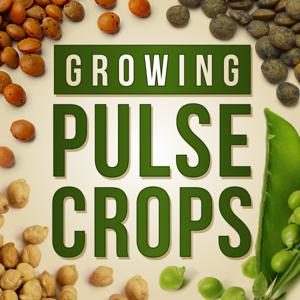


For the past 15 years, Tony Wagner has been on a journey to improve the soil health of his farmland, which runs the gamut from sandy to high clay. He’s located about 100 miles west of Fargo, so farther east than a lot of the North Dakota pulse growers, but he says they’ve worked well in his rotation. Tony shares how he got into pulses, why he’s stuck with them, how they fit into building soil health, and a really interesting project of planting peas with flax as a companion crop to try to keep them off the ground. Tony also talks about attempting two crops of peas in the same field. While the second crop succumbed to unexpected weather conditions, he was impressed with the benefit to the soil despite not having a harvestable second pea crop.
“The next year we put spring wheat on that ground and we pulled off on that type of soil, which is a very light soil, probably the best wheat that we've ever pulled off. And we did a soil test on it and the nitrogen was pretty high on that soil. So we decided to slowly start working into cover crops.” - Tony Wagner
Tony has continued to experiment with cover crops including with different varieties to see what provides the most benefit to his operation. Along with nitrogen benefits, he has observed much less wind and water erosion, improvement in areas of high salinity and better water infiltration. Tony admits that the benefits aren’t always easy to pencil and can take years to accumulate the advantages they offer. With decreased water requirements, decreased inputs and improved soil health, he is hooked and will continue his journey with cover crops and pulse crops.
“From where I started off at, I wish I would have taken a picture. It literally didn't feel like we were getting anywhere at all. That was the biggest eye-opener. And now, I've got that drive to just keep doing what we're doing because visually it's working.” - Tony Wagner
One of the more recent practices Tony has been using was incorporating flax as a companion crop in with his field peas. He chose flax since the pre-emergence chemicals used are the same as field peas and would allow him to not spray anything after emergence. Field peas were prioritized at seeding with depths and rates optimized for their production. The flax companion crop did work and helped the peas stand but unfortunately the flax grew too well and would not die at time of harvest while the peas did. Tony says he would like to attempt this trial again but will look at different varieties going forward to see if the maturity timing can be better coordinated.
This Week on Growing Pulse Crops:
Growing Pulse Crops Podcast is hosted by Tim Hammerich of the Future of Agriculture Podcast.
Dr. Alan McKay joins us all the way from Australia, to talk about some exciting work they are doing to measure various soil microbes including pathogens and beneficial rhizobia.
Dr McKay is the Leader of the Soil Biology and Molecular Diagnostics group at the South Australian Research and Development Institute (SARDI). He is committed to not only studying soil-borne diseases and other aspects of soil biology, but also developing tools for growers to manage this biology in their operations. He has played a major role in the development of the PREDICTA® B soil analysis technology, which is now recognised internationally for its capacity to accurately identify and measure soil pathogens, as well as the nutrition status of soils. We’re going to talk a lot more about this technology in today’s episode.
“The thing we’re doing now with the PREDICTA® B technology is starting to look at some of the beneficial organisms. So rhizobium for pulses...which is the rhizobia that modulate lentils, field pea and fava bean. Then using that we launched it as a provisional service just in South Australia and Victoria this year to identify paddocks where you don't need to inoculate the pulse crop. In Australia, the growers don't like applying their innoculates to the pulse crops. Most reliable methods have to be done just before seeding them and it's a task they prefer not to do. So we think this is going to work pretty well.” - Dr. Alan McKay
After sampling 850 paddocks they have identified 400 species to allow his group to map the growth of pathogens across the country. One unexpected discovery was that prior to this survey it was assumed there was one Phytophthora species with the potential for causing major harm to pulse crops. Now they have identified three separate species and can better isolate their locality and the tools to better identify them. At the moment, they are focusing on identifying more common pathogens going forward that, while not as catastrophic as Phtyophtora, can reduce yield by up to 20% and are therefore also significant.
“PREDICTA® B is a collection of what we call qPCR tests.” Dr McKay remarks that it is easy to quality control, scalable and offers great insight for growers and researchers alike. Currently the majority of their testing has focused on cereal crops but they are readily expanding into pulse crops.
“The potential now with pulses is that we could look at packaging tests for key pathogens and the rhizobium and identify whether a paddock is a good option for that crop and whether you need to inoculate.” - Dr. McKay
This Week on Growing Pulse Crops:
Growing Pulse Crops Podcast is hosted by Tim Hammerich of the Future of Agriculture Podcast.
We have a great discussion for you featuring Jeff Rumney, Vice President of Marketing at the USA Dry Pea and Lentil Council, Johanna Stobbs, who works to promote U.S. pulses in the European market, and Raul Caballero who represents U.S. pulses in Mexico and throughout Latin America. US Pulses are widely recognized and preferred in the global marketplace with lots of opportunity for growth going forward. In this episode we discuss what has driven demand for pulses traditionally in these areas, as well as the innovation that will help drive demand even further in the future.
“(Europe) is a demanding market and the trends are all towards pulse eating. The overwriting demand is for quality. And the great thing about US peas, lentils and chickpeas is that we deliver quality consistently year after year. And that's what makes the European market so dynamic for us.” - Johanna Stobbs
Johanna has seen an increase in pulse crop consumption due to the health benefits and more at home cooking with the global pandemic. Johanna also comments that there has been a lot of innovation in regards to using these products in different processed foods and the consumers are enjoying that as well. Raul goes on to explain the many benefits promoted in latin america where basic nutritional needs especially regarding protein can be cost prohibitive and represent a real concern for the general population.
“So nowadays you see all of these governments within the (latin american) region doing a lot of efforts to promote pulses. And also the population is looking at those new opportunities. And I think the most exciting part of it is that because of all this trend we're looking at new ways of preparing things.” -Raul Caballero
One of the pulse crops that has found more recent success in latin america are lentils. Varieties and quality from the US have become more popular and much more competitive globally. Johanna mentioned that Scandinavian countries, especially in regards to organically raised products, have seen an increase in pulse crop consumption.
“A lot of times (consumers) don't really understand or are worried about the underlying technology when they go to the market and buy products. They're first looking for taste, they're looking for convenience, and then they're looking for health. Will their family eat it? Is their family going to be healthy? Pulses and pulse ingredients really fit into that consumer mindset of what's going to make my family happy.” - Jeff Rumney
This Week on Growing Pulse Crops:
Growing Pulse Crops Podcast is hosted by Tim Hammerich of the Future of Agriculture Podcast.
Dr. Tim Seipel joins us to talk about integrated weed management. Tim is a Cropland Weed Extension Specialist at Montana State University. In this episode, he’ll talk about the threat of weed resistance, how to think about weed management strategies, and some of the tactics they are working on to combat some of the most threatening weeds to pulse crops.
“Integrated weed management is an approach to managing weeds where you combine multiple control tactics. Each one of those control tactics is not a silver bullet of success where all the weeds are gone, but when you end up putting together these tactics, you get better weed management outcomes..” - Tim Seipel, Ph.D.
Due to weed resistance there is rarely one method that will appropriately control weed growth. Mechanical, chemical and some biological management techniques are all different methods that when used in combination may be a more effective form of weed management that is far less likely to promote resistance. Dr. Seipel shares that the overall goal is to be “unpredictable” to the weed population to keep them from having a reliable weed management pressure that will result in selection of resistance.
“It worries me a little bit, that we put a lot of emphasis on these group 14 herbicides to really control that herbicide resistant glyphosate because further to our east and the midwest, they really do have resistance to group 14 herbicides…. Keep that in the back of your head and always think of different ways to control that marestail.” - Tim Seipel, Ph.D.
Dr. Seipel suggests an “on-farm experimentation process and figuring out what’s right for the producer and when you might have those time periods.” Focusing on diverse rotations, rotation goals for that specific operation and timing for most effective control will help producers understand where integrated weed management could provide the most benefit.
“Really what we should think about doing is pushing weed communities in directions where we want them to be so they have the minimum impact on our crops. So it's a strategy, tactic thing, more than a prescriptive plan that someone could give.” - Tim Seipel, Ph.D.
This Week on Growing Pulse Crops:
Growing Pulse Crops Podcast is hosted by Tim Hammerich of the Future of Agriculture Podcast.
March 15th is the last day to complete enrollment for 2021 agriculture risk coverage and price loss coverage programs. Considering that day is coming up in less than two weeks from when this episode publishes, we thought we’d bring you a little bit of timely information about crop insurance in pulses.
Steve Junghans is a risk management specialist at the USDA risk management agency regional office in Billings, MT. He is the lead person there for pulse crops, and is responsible for maintaining and improving the dry bean and dry pea crop insurance programs in MT, ND, SD, and WY. He works closely with the Northern Pulse Growers Association and Northharvest Bean Growers Association, and keeps them up to date on program changes. Steve took a few minutes to give us a behind-the-scenes look into the crop insurance programs for pulses, how payouts are determined, how they are handling things like intercropping, and some of the issues they sometimes see in the process.
“This management agency's role is to provide sound risk management tools for growers so they can have a stable income to produce crops in maintain an affordable and adequate food supply for our nation.” - Steve Junghans
Steve discusses three different plans available to producers and the types of pulse crops that apply for each. Plan One is the yield protection plan that protects against production loss only. Plan Two is the most popular and comprehensive option and provides protection against loss of revenue due to production loss, price decline or price increase or a combination of both. PlanThree is rarely selected and is the revenue protection plan with harvest price exclusion. It does not provide protection against price increase.
“It is very important that growers market at least some of their product and report prices, even in a down market so a harvest price can be established.” - Steve Junghans
Steve says by taking this measure the producer protects themselves by establishing a more accurate harvest price in order to get the most out of their policy. Steve also offers guidance for those participating in intercropping with pulse crops. If pursuing a fall planted pulse crop, it would need to be requested by the spring sales closing date of March 15th. The grower would need to get spring coverage and consent to an inspection to identify a proper stand to uphold the crop. Increased premiums may result if not handled properly.
Steve highlights that growers need to be aware of proper documentation in regards to written special agreements. The insurance sales agent is responsible for sending this in but producers should be aware and confirm that it happens in order to get the protection desired.
This Week on Growing Pulse Crops:
Growing Pulse Crops Podcast is hosted by Tim Hammerich of the Future of Agriculture Podcast.
Today we consider the economic opportunities of adding pulse crops into your operations. Dan Folske is an extension agent in Burke County, North Dakota, which is in the northwest part of the state. He’s been there in that position for over 30 years, and a big part of what he does is work with farmers to establish budgets and utilize tools for business decisions. Dan’s going to share what he’s seeing on the economics of planting pulses, and some tools he utilizes with the farmers he works with.
“(One farmer’s) durum production on those fields where he seeded into the pea stubble the following year was so much better that he thought he could probably raise peas and dump them over the edge of the coulee and be ahead. It was quite an eye opener in terms of what adjusting your crop rotations can do.” - Dan Folske
“Cash flow is always the big issue for anyone,” remarks Dan. NDSU extension publishes several tools to help producers evaluate different regional crop budgets which allow for planning with best estimates of expected expenses and price opportunities. Dan highlights that the better records each operation keeps, the more accurate their estimates will be when plugged into the provided spreadsheets. Dan directs any producers interested in using these tools to the following websites:
“One of the tough things about marketing is you really need to know what your costs are, what that market price is that you need to have a profit and profitability on your farm.” - Dan Folske
Weed control and herbicide resistance have been driving forces in integrating pulse crops. With the tools listed above, producers can estimate what financial benefits they may hope to gain with the addition of different crops in production. Unfortunately, pulse crops at the moment appear to be down in cost benefit but by utilizing these tools producers can best manage expectations and decide what works best for their individual needs and goals. These tools are routinely updated and will support producers in knowing when integration may be of best value for them.
This Week on Growing Pulse Crops:
Growing Pulse Crops Podcast is hosted by Tim Hammerich of the Future of Agriculture Podcast.
Don’t forget to register today for the Northern Pulse Growers Association Annual Convention happening January 19th - 21st. You can get all the information over at www.NorthernPulse.com.
In this panel we explore the advantages and challenges associated with the grading of pulse crops. While many producers grow frustrated by more criteria or hoops to jump through, our experts suggest that with careful management many times these can be used to the producers advantage by verifying the high standards US producers maintain.
Our panel is hosted by Todd Schulz, the USA Dry Pea and Lentil Council Vice President of Research and Member Services. Jillien Streit is a 5th generation farmer, owner of Sticks Ag and a part of the Montana Pulse Crop Committee. She actively participates in her processing plant in a food safety role and so provides us with a unique perspective from both sides of the crop. Jillien highlights the value the grading system adds to pulse crops throughout the supply chain. The president of Hinrichs Trading company, Phil Hinrichs, joins us to share his perspective from the processing side of the business. “Grading has definitely been a learning curve for the grower but obviously the process and the end user.” And lastly, Ryan Edinger joins us with AGT Foods. He has been with the company for 12 years and observed how the pulse industry has grown and evolved into new markets overtime.
The first obstacle a producer might encounter is definitively defining quality for not only your end consumer but any person in the supply chain in between. Ryan shares that individual consumers are looking for different qualities in the crop. The marketability is largely defined by the buyer and supported but not defined by any one grading system. In the chickpea market, Phil shares that his operation largely relies on the USDA grade which can be affected by color and moisture value. He highlights that with chickpeas a lot of the value is placed in the physical appearance of the crop since there is minimal processing prior to reaching the end consumer. Jillien shares her personal focus of quality is in food safety. She also suggests that third party grading supplies a “baseline and standard for all parties in the transaction to gauge the product” and that pulse growers need to be able to balance both factors to provide the best quality.
Phil strongly suggests allowing processors to do a final clean on the product. He doesn’t mind some residue being present when the crop is presented. The handling and evaluation of the crop is what they are experts at so he recommends allowing them to handle it to avoid any unnecessary trauma to the crop. Both Phil and Ryan recommend consistent monitoring and presenting a representative sample of each bin to the processor. In order to best market the crop, processors need to know the characteristics of the crop so getting a good representative sample whether good or bad will help them find the appropriate market for what the producer has.
Cracked seed coats plague pulse growers. Jillien suggests that “high supply markets can breed very picky buyers.” She finds that there isn’t a consistent judgement of cracked seed coats and that supply and demand factors affect the tolerance of the farmer. On the producer level, she suggests monitoring the method of harvest, reducing movement of the product especially if it is cold and paying close attention to moisture levels. Ryan adds that different varieties can have stronger seed coats so paying attention to that initial selection can be of benefit. Jillien adds that even with a high level of cracked seed coats there is a market for the crop so still send a representative sample to the processor and be patient.
MRL’s (Maximum Residue Limit) are a factor that requires constant adaptation, says Jillien. She says that her operation “sets policy but that policy is always adaptive.” The end user has a growing concern in chemical residues causing more strict requirements for the market. They are in parts per million and parts per billion and represent a “tolerance level” that the industry requires. Testing for residues is relatively easy, very inexpensive and incredibly specific so levels can be very significant to producers. Ryan suggests that even exposure to drift pesticides can affect tolerance and acceptance levels of products.
To achieve the optimum appearance of pulse crops, involves choosing the best variety and then the luck of the weather according to Ryan. Using certified seed can help create a more consistent product and avoid some anomalies. Phil adds that the initial variety and seed selection is very significant to processors and consumers so that initial investment is incredibly significant in the process of pulse growing.
For Phil, the takeaway from this conversation is that “management practice from the farm to the field is so important.” Grading standards and tolerance levels are constantly evolving and are also very significant in verifying a quality product. Jillien supports this by adding that the day to day operations and attention to details will contribute to the grading which then translates to the best market for the producer. Ryan reiterates that this is a “consumer driven market.” He recommends that producers continue to adapt to change as the market evolves and new avenues of use open up.
Paul Kanning led our panel on “Making Your Farm Equipment Work for you.” Paul is the MPCC Vice Chair as well as a producer from Flaxville, Montana. He was joined by Lowell Harris, a service manager at Torgerson’s LLC, Phil Moodie, a store manager for Front Line Ag, James Neumon, a service manager from Hoven Equipment Company and Mike Kjos, a store manager for C & B Operations. Needless to say, with a panel like this you are going to hear great insight into what the industry standard is for equipment use and management with pulse crops.
The first topic of discussion was air seeders and what steps need to be taken to prevent seed coat damage during the seeding process. There was general consensus that slowing down to 1- 1 1/2 per hour to give a pulse producer the best chances of success. James highlights the need for gentle handling and special considerations including a rubber pad to the top of the seed tower to create more cushion for the seeds. While the additional pad is not a factory option it has been gaining traction by word of mouth for better protection of the seed. Both Lowell and James recommend a well managed and controlled airspeed. Lowell also offered picking specific augers and meter rolls to compliment the other practices. Both Mike and Phil agreed that using the largest sized tooth sprocket in the meter housing as an additional course of action can add further protection. In addition, consistent ground speed and secondary towers can create a greater seeding consistency.
Paul moved on to roller techniques that producers can use to embed rocks. Ensuring good soil conditions such as with a little moisture will make the roller more effective. Also, using your roller as soon after drilling can give you the best results.
With the amount of investment and time spent on sprayers in pulse operations, maintenance is a very important part of a sprayers management. Mike discussed changing hub oil regularly and although its time consuming he recommends doing it yearly. James added rinsing off the sprayer after use to avoid rust and damage to the machine. Lowell agreed with the previous recommendations and added greasing the moving parts to keep them in the best working condition. Phil added monitoring the hydraulic lines and the drive line throughout the machine to avoid a fluid transfusion.
Some producers are still using swathers rather than applying a desiccant. Phil admits to not having many producers using this technique but suggests managing the flow pressure and the guard angle to make sure it is getting down as low as you can. James added adjusting the draper speed to make sure the crop lays easiest for pick up.
James recommends adjusting the flotation of the header to the optimal height being crucial during harvest. He also recommends paying attention to your guard angle and is very pleased with the technology involved in the flex drapers for pulse growers. Mike reiterated adjusting the flotation of the header to the optimal height. To keep with the theme throughout this panel, Mike highlighted the need for slow and steady progress in the field while operating a draper header. Lowell details different techniques to insure the flotation of the header is properly adjusted.
Phil explains different additions for air reel options on flex drapers. The Crary is his preference if you are working a large amount of acres with pulses. Mike agrees that an air reel will pay for itself in the long run for pulse growers especially with a lentil crop. Lowell suggests also exploring a Macdon reel and that producers he has worked with have at times preferred them. James admits he doesn’t have many if any customers using an air reel at this time. He did say many of his producers are finding success with the Macdon reel.
Lowell offers that “with any discussion about combine settings, everybody’s got a different opinion and most of them are right.” He does suggest that a lower rotor speed especially with pulse crops is a good option. James reiterates monitoring the rotor speed to run the combine as soft and gentle as possible. He does suggest swapping concaves out for pulse crops to be as gentle as possible. Again keeping with the theme of the panel, Phil highlights the need to move as slow as possible to have the best success and least damage to the crop. He does suggest an as open as possible rotor clearance and closing it as needed.
Mike has experience with stripper header specifically the Shelbourne brand. He does suggest pursuing it has quickly as possible if interested because they sell out quickly. He did say he isn’t aware of any producers using it for pulse crops but has seen it used on small grains. The biggest advice he gives producers when adjusting their equipment is to please only adjust one change at a time and monitor for any improvements or change. This keeps you from making multiple adjustments and not knowing which if any are successful.
Phil shares that manufacturers are pursuing pre-programmed settings for pulse crops in combines. At this time they are limited. He does suggest reaching out to manufacturers to push that process along. Lowell and James agreed that pulse crops are on the list for combine settings but have not completed them yet. James does suggest monitoring the progress of the combine to dial in the settings to your specific crop and fields when first using it. Once you have achieved the setting your want the machine will make small adjustments as needed from there.
A common concern for producers is a combine fire. Mike has observed that dragging a chain can help dissipate some of the static electricity. He also suggests using an air compressor to blow off the fine dust periodically. James adds that he has producers using a handheld laser temperature gun to check different bearings to see if anything stands out to find a bearing on its way out before it has the opportunity to start a fire. He also once again reiterates the need to go slow, monitor your machine and take your time to avoid any build up of excessive heat. Phil adds monitoring the exhaust as a common place for the fine dust from pulse crops to accumulate.
Dr. Mike Ostlie hosts a panel discussing the potential and process for intercropping with pulse crops. Dr. Ostlie is a research agronomist at NDSU Carrington REC. He leads us through a discussion with Justin Jacobs a Research Specialist at NDSU Williston REC,
Dr. Chengci Chen a Cropping Systems Agronomist and Superintendent of the Montana State University Eastern Ag Research Center and Karl Mavencamp a farmer from Malta, Montana.
The concept of having two crops growing in the same space requires a balance of inputs, resources and management to create a system that produces an overall increase in total yield per acre.
Let’s meet our panel! Justin Jacobs joins us to share his research at NDSU Williston. His recent focus has been on field peas and canola and developing the most advantageous management. He has also explored different protocols such as mixed row and alternate row planting. Dr. Chengci Chen has been working on pulse crops for over 18 years in Montana and has been most recently working on intercropping a chickpea crop with oil seed crops and forage type plants for better yield and disease suppression. Karl Mavencamp has been farming for almost 40 years. He started with conventional farming practices and now follows a no-till cover crop protocol with pulse crops in his rotation. He provides us an invaluable frontline, practical, farming perspective.
While pulse crops are not used on every rotation an even fewer number of producers are using them with an intercropping practice. Karl shares that he was introduced to intercropping with pulse crops when he wanted to add a different crop to his rotation with a similar harvest timing and decreased input potential. Justin adds that he thinks as an industry, farming needs to produce more crops while focusing on reducing inputs and still benefiting the soil to preserve farming in the future. This led him to exploring intercropping with different crops with different advantages including pulse crops.
Added benefits to incorporating pulse crops and intercropping practices include an improvement in grain protein quality, seed quality, total yield and added disease suppression according to Dr. Chen. Karl shares that anecdotally he had noticed a decrease in ascacida in his flax intercropping efforts. He shares that with his most recent harvest he got 80% chickpeas and 20% flax when they are intercropped. Karl highlights the harvestability, disease suppression and easability of storage as big advantages to the chickpea/flax intercropping.
The next question involved discussing the use of fertilizers when legumes are incorporated into an operation. Dr. Chen did not find any fertility inputs such as nitrogen were needed for the flax/chickpea combination because of the chickpea nitrogen fixation. Karl echoed this experience with his flax/chickpea intercropping. Justin has noticed a decrease in canola yield without any additional nitrogen added. He suggests looking specifically at which of the intercropping crops will create the most financial and management advantages for the producer and making sure that crop is most supported. Some plants will require more nitrogen and support than others and all of these factors must be taken into account.
Of course introducing two different crops together creates different challenges with weed management. Dr. Chen shares that different combinations can be more easily managed than others. Some will require specific inputs and some will naturally provide weed suppression with the competition of resources. Justin recommends a pre-emergent herbicide if intercropping with pulse crops. Research into each individual crop and the combination of the two is needed when planning out your operation.
Another challenge faced is post-harvest processing and storage management with two different crops being involved. Karl does not separate his chickpeas and flax after harvesting and stores them together as well. This has led to difficulties due to moisture levels. He suggests assessing their moisture content prior to harvesting to make sure the moisture level is managed prior to that to avoid needing additional drying practices. Karl will adjust his practice based on the water available. Some years he runs out of water and they desiccant without any additional inputs. The key he found to creating the best harvest timing possible has to do with making sure the seeding depths were individual to the crops needs allowing the timing to be best coordinated. This led to a discussion of seeding depths. Justin shares some different techniques and engineering to allow for row systems including employing an alternating row system. If you are pursuing a mixed row system he suggests splitting the difference between seeding depths to hopefully provide the most support to both crops possible. Karl shares different engineering techniques he has used in seeding to try to achieve different seeding depths. Both Karl and Justin suggest these efforts are a work in progress to avoid multiple passes in the field during seeding.
**Register for the Northern Pulse Growers Association Annual Convention happening virtually January 19-21: https://www.northernpulse.com/events/conventions/
Today's episode was recorded live at the NPGA Montana Pulse Day Virtual Event in November. USA Dry Pea and Lentil Council CEO Tim McGreevy gave a presentation on domestic and international pulse markets, then opened the floor for some Q&A moderated by NPGA President Chris Westergard.
Videos from Tim's presentation can be found on the USA Dry Pea and Lentil's Youtube channel: https://www.youtube.com/user/USADPLC
Thank you to the Northern Pulse Growers Association for sponsoring!
From the publisher's feed

227,491 Listeners

8,422 Listeners

223 Listeners
14 Listeners
16 Listeners

516 Listeners

128 Listeners

383 Listeners

50 Listeners

53 Listeners

353 Listeners
10 Listeners

3 Listeners