
Sign up to save your podcasts
Or

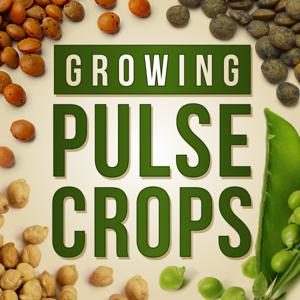


Please help provide feedback for the Growing Pulse Crops Podcast by completing our survey!
Click the link here! We look forward to hearing from you!
Dr. Joe Ikley is an Extension Weed Specialist at North Dakota State University and joins us to explain why fall weed control is crucial to best crop management. His extension responsibilities there include weed control on all row crops except for sugar beets and potatoes.
“We do just want to emphasize as many ways as we can that these weeds will be easier to control this fall than they will be in the spring…. Taking advantage of these weeds that are up now and killing them off before they go into winter is one of the best things we can do to prepare us for 2021.” - Dr. Joe Ikley
“Horseweed was one of the first weeds, the first weed in the US, to start taking advantage of overuse or over-reliance on glyphosate.” In crops like corn or soybeans we are able to apply a second herbicide in the spring if needed but with pulse crops that is not an option. This makes identifying and treating the weed when it germinates in the fall vital to maintaining weed control into the spring for pulse growers. Despite glyphosate resistance, Dr. Ikley still sees value in its use.
“Pulse crops have much longer rotation restrictions with the herbicides that we apply. But there’s still several that we can use in the fall that are pretty effective on the weeds that we’re dealing with. So for those grasses that we’re dealing with, its still going to be glyphosate.” - Dr. Joe Ikley
He goes on to suggest different additions, such as 2,4-D or Valor, that you can add to your fall spraying that will help to manage resistant weeds. Dr. Ikley has seen as much as 90% control of kochia in the spring by treatment with Valor in the fall. He does recommend careful reading of labels to make sure any additions or herbicides used comply with producers plans for any pulse crop planting.
This Week on Growing Pulse Crops:
Growing Pulse Crops Podcast is hosted by Tim Hammerich of the Future of Agriculture Podcast.
Can you tell the difference between a garbanzo bean and a chickpea? Neither can I. The bean is referred to as both so pick your favorite. Phil Hinrichs joins us from Hinrichs Trading Company to share his experiences with growing chickpeas and watching the industry grow. Initially chickpeas were mainly grown for export but in the last ten years have developed a domestic market that has really been taking off. With products like hummus and consumer desire for gluten free, chickpeas answer a lot of demands that consumers are looking for.
“We went in ….and introduced our product and showed that we had the ability to have a consistent product available to the market. And the domestic market started waking up.” - Phil Hinrichs
While the market appears endless with crackers, breads, and even milk and yogurt products up for grabs, there are challenges to growing the crop. Firstly, there is a short planting window. Chickpeas prefer slightly warmer growing temperatures. Chickpeas also take a while to germinate which can leave them vulnerable to pests and further temperature stressors. The bloom stage can last up to 45-50 days creating better yields as opposed to green peas that only bloom for 10-15 days. Of course that time of blooming is in July which can lead to heat stress or summer rains that can affect the end product.
“This crop does not like humidity. It's not for everybody….that’s what keeps it from expanding across the United States.” - Phil Hinrichs
Growers of specialty crops, like chickpeas, also have to be more flexible with getting paid for their product. Chickpeas move with the market which will likely require some storage and a bit of waiting to see what the need is. This does result in a premium price being paid but requires some forethought. While the market has been damaged by covid and trading tariffs, Phil is optimistic about the future of chickpeas for both growers and global markets.
“So the part that makes it interesting to our grower is number one, it's a rotational crop for his agronomy on his farm. So he’s going to build soil. He’s also gonna break disease cycles so that's his focus.” - Phil Hinrichs
This Week on Growing Pulse Crops:
Growing Pulse Crops Podcast is hosted by Tim Hammerich of the Future of Agriculture Podcast.
Not all crops are created equal. Sometimes, crops have the ability to contribute far more than their yield to an operation. Today we meet with Howard Nelson, a recently retired agronomist at Highline Grain Growers and Mark Sheffels a farmer who lives in Eastern Washington, the territory Howard once covered.
During his career, Howard focused his efforts on finding another crop to work into a wheat rotation to overwinter. He settled on fall sown peas for its nitrogen fixing ability and marketability as a crop. He then had to find a variety that would best thrive in the harsh winters of Eastern Washington. The Blaze pea variety he selected may look different than conventional peas but that doesn’t take away from the farmers ability to find a market as they are commonly used as an ingredient and the outside look is less significant. Apart from a new system of planting he also had to develop a new herbicide regimen.
“We have different issues because we’re looking at winter annual weeds versus spring germination weeds. So our major weeds are the mustard weeds….and then of course our grassy weeds….Pretty much we do all of our weed control, post emergent in the spring.” - Howard Nelson
The nitrogen fixed by the peas will help support the next crop introduced to that field. Farmers typically see fewer root diseases in wheat that follows peas. There is evidence of more micronutrients including phosphorus and sulfur in the soil following a pea harvest. All of this contributes to better yields in the wheat that follows the pea crop.
“The one year we had a 17 bushel increase in winter wheat, following peas versus wheat following wheat, which is almost a 30% increase with no additional costs. It didn’t cost this grower anything.” - Howard Nelson
Howard helped guide Mark Sheffels operation in adding fall sown peas. After “dabbling” in peas for many years, Mark added the peas into his rotation and has seen great advantages in his wheat production. He is impressed by the ability of peas to germinate when planted 5-6 inches deep in order to have access to moisture in the soil. He is also pleased to see the benefits the crop has had on his soil’s health without requiring additional inputs.
“With the peas and the change in rotation, it just opens up a lot of opportunities to run much cleaner rotations. And biologically…...we can do things to make our soils healthier, more productive and put them in a position to sequester more nitrogen out of the atmosphere for themselves. - Mark Sheffels
This Week on Growing Pulse Crops:
Growing Pulse Crops Podcast is hosted by Tim Hammerich of the Future of Agriculture Podcast.
Today in episode ten, we explore harvest aids with Dr. Drew Lyon from Washington State University. We also get an update on current pulse markets from Kevin Buxa of Halo Commodity Company based in Fargo, ND.
If you’re new to pulse crops, they include crops such as field peas, chickpeas and lentils. This show follows some pulse crop farmers through the growing season and dives into the research that’s helping them through some of the challenges they face. We’ll also talk to a number of other industry stakeholders along the way.
We begin today’s episode with an update on the fundamentals driving pulse markets. Kevin Buxa of Halo Commodity Company joins us. Based in Fargo, Kevin purchases commodities on-farm in North Dakota and Montana, and sells to various processors and handlers throughout the region. He also runs a stand-alone third party trucking company which enables him to expand his trading to a larger geography and more markets. For pulses, his primary focus is on peas and lentils.
Then we turn our attention now to our featured topic: harvest. Pulses are fairly indeterminate, which means they will continue to flower until they reach some sort of stress, such as lack of moisture, high temperatures, or nutrient deficiency. However, harvest timing is critical to optimize yield and quality, so growers often dessicate their crops in preparation of harvest.
Here to talk about this process and the types of available harvest aids is Dr. Drew Lyon. Drew is a Professor and the Endowed Chair of Small Grains Extension and Research for Weed Science at Washington State University in Pullman. Prior to moving to Washington in 2012, he spent 22 years as a Dryland Cropping Systems Specialist at the University of Nebraska at the Panhandle Research and Extension Center in Scottsbluff. His endowment is from the WA Grain Commission, so he spends a lot of his time with wheat growers, but most of them also include pulses in their rotations.
We have a lot more great information coming your way throughout the 2020 growing season. Please subscribe and tell a friend who is also interested in pulses. You can also find all of the episodes at www.GrowingPulseCrops.com.
This show is brought to you by the Pulse Crops Working Group with support from the North Central IPM Center. We’re releasing two of these every month throughout the growing season, so we look forward to bringing you your next episode very soon.
Pulses require unique rotations, harvesting and inputs. To continue with this theme, they also have unique pest challenges. Today we are joined by Lance Lindbloom the Lead Agronomist for 406 Agronomy and Dr. Sean Prager an Assistant Professor at the University of Saskatchewan College of Agriculture and Bioresources Plant Science Department.
“Our chickpeas are ones that are most bulletproof when it comes to insects.” - Lance Lindbloom
Lentils, on the other hand, seem to be most affected by pests specifically grasshoppers and aphids. The Pea Leaf Weevil can cause a lot of damage to pea crops and can be difficult to identify. The many life stages will drain the yield of the crop. While adults feed on the leaves, the larval stage hollows out the nodules below ground and are therefore more difficult to find..
“If you’re seeing the damage this year. You’re seeing them in the area. You really need to look at using the seed treat to kind of get control of them, at least to hold down that damage on those plants.” - Lance Lindbloom
Pea aphids are also extremely difficult to observe. Sweep netting is the practice used to capture and observe aphid populations. At that time you can also scout for aphid predators such as ladybugs to evaluate their population and ability to prey on aphids.
“In some ways it might be the biggest concern we have is actually increasingly now pea aphids. Because in bad years, even without any viruses, just on their own they’re really really problematic. - Dr. Sean Prager
Pea aphids are becoming more prominent of a concern because of their likelihood to transfer to and become problematic for other pulse crops. Again, they can be difficult to identify and evaluate for thresholds of aphid populations. Dr. Prager is currently trying to create a measurable threshold for producers that doesn’t involve counting individual aphids. Tracking wind trajectories can help producers predict when aphids might be spread or transferred between fields which would indicate increasing efforts to scout for evidence of infestation. While plants can tolerate a certain population of aphids they are very susceptible to the viruses they carry so the tolerance threshold decreases dramatically when that occurs.
“All bets are off if there actually is virus being transmitted by those aphids. Then the rules change.” - Dr. Sean Prager
This Week on Growing Pulse Crops:
Growing Pulse Crops Podcast is hosted by Tim Hammerich of the Future of Agriculture Podcast.
Can intercropping pulses with other crops help with problems like disease pressure? That's what we explore on this episode.
Farmer driven research at the Southeast Research Farm in Saskatchewan is a non-profit gift to farmers. Lana Shaw is the Research Manager there and has become the resident expert on intercropping specifically with flax and chickpeas.
“Adding a small amount of flax to chickpeas, we’ve found in small plot trials and farmer fields and in producer surveys, that it reduces the leaf disease, the ascochyta. ” - Lana Shaw
This would be an adjunctive measure to the routine rotations and seed treatments already employed by pulse farmers. An added benefit Lana has also found is that intercropping also increases the chickpea quality and helps to avoid loss of yield with necessary color sorting. Of course the battle with ascochyta is a perpetual fight for pulse crop growers and the potential for better control is very exciting.
“What the surveys have found was that the farmers were getting less disease with one application on intercrops than the farmers that were spraying twice on their monocrop.” - Lana Shaw
Lana finds that the “knowledge gap” for intercropping is a greater obstacle than any financial burden imposed by the flax. Using different seed at different rates and harvesting different crops at the same time present some challenges for equipment management. If intercropping is used there are modifications used during harvest to accommodate both crops. Lana refers you to farmers who have accomplished harvesting for the exact adjustments that need to be made.
Dr. Michelle Hubbard is a Pulse Pathologist at Agriculture and AgriFood Canada corroborates Lana’s findings. It’s possible the flax has been so successful in limiting ascochyta by limiting the moisture levels in the canopy making it more difficult for the fungi to grow as quickly. The other possibility is that the flax represents a physical barrier reducing the amount of spread between the chickpea plants. Another hypothesis is that more diversity alongside the chickpea plants results in activating a defense mechanism for the plants. Essentially, research is ongoing as to what is directly causing the benefit but it is widely accepted that it helps regardless of the mechanism of action.
This Week on Growing Pulse Crops:
Growing Pulse Crops Podcast is hosted by Tim Hammerich of the Future of Agriculture Podcast.
Canada has long been a leader in pulse crop production. A lot of what we know and use in the United States comes from their experiences and research. We are joined today by Dale Risula. Dale is the Provincial Specialist for pulse crops and other specialty crops with the Ministry of Agriculture based in Saskatchewan and he echoes the significance of crop rotation in pulses.
“If you grow any one particular crop too frequently, then the pathogens tend to build out and that’s when they become a problem. So having a good rotation in place and keeping to it is something that can help alleviate that problem.” - Dale Risula
He highlights build up of pathogens and rotating crops presents a “major problem” in Saskatchewan. Dale hopes that new adaptive breeding efforts will allow for other crops such as chickpeas to be introduced to new areas creating longer rotations and more options for producers. The pathogens of concern include ascochyta, anthracnose, and chocolate spot among others.
“Every crop has their own ascochyta pathogen. So it's not as if it's all one beast and there is quite a bit of difference in how they behave. So you have to be aware of that.” - Dr. Sabine Banniza
Dr. Sabine Banniza is a Professor of Plant Pathology in the University of Saskatchewan’s Crop Development Center. She shares that differentiating these pathogens especially ascochyta and anthracnose can be difficult. Fortunately for producers, some of the treatments are the same. Dr. Banniza recommends scouting fields early on to prevent a “major epidemic.” Fungicide application is best performed at the 8 to 9 node stage to allow for best penetration of the plant canopy. However, presence of a foliar disease does not automatically indicate a treatment is needed.
“One of the challenges of these diseases is that we simply can’t count and determine a threshold like we would maybe for an insect pest or a weed.” - Dr. Sabine Banniza
Because of this, recommendations can sound more “wishy washy” according to Dr. Banniza. The presence of disease is not enough indication for intervention. The Fungicide Decision Support Checklist can help producers determine the need for intervention with fungicides. By working through this list, factors such as crop history, weather forecast and canopy density can be evaluated and a risk assessment produced. Dr. Banniza also highlights that infected seed can inoculate fields with these pathogens creating a high pathogen burden from the onset of crop development. There are tolerable amounts of infection that will likely not affect the crop but each crop has different rates of tolerance. Dr. Banniza recommends evaluating risk factors to allow for more targeted fungicide use and hopefully reduce the fungicide resistance that appears to be developing.
This Week on Growing Pulse Crops:
Growing Pulse Crops Podcast is hosted by Tim Hammerich of the Future of Agriculture Podcast.
Farmer Lavern Johnson returns once again to share his insight with pulse crops. After 20 years of pulse crop farming, Lavern explained in episode 4 how root rot affected his ability to plant pulse crops for the next season.
“As far as the root rot, the only management practice that I think I have going forwards is lengthening out the rotation.” - Lavern Johnson
Research out of Canada suggests that it can take 8 years without a pulse crop host to successfully battle the aphanomyces. For Lavern, pulse crops had become (at times) one of his most profitable crops. This year he finds himself eliminating them from his rotation for an as yet undetermined amount of time.
“Seed treatments are critical for pulses. They’re a big juicy seed and fungi love that….We just kind of run out of management options later in the season because foliar fungicides don’t translocate down to the roots. They will not protect the root.” - Dr. Mary Burrows
Dr. Mary Burrows is an Extension Plant Pathologist with Montana State University. Dr. Burrows serves as the “direct link” with growers to share information and research in order to give them the greatest advantage on their farms. She joins us to share different seed treatments for control of Aphanomyces.
“Rotation, identifying the pathogen, using varieties, talking to your neighbors. Communication is really important for a lot of these diseases because once they build up in an area, it can be really difficult to manage.” - Dr. Mary Burrows
Dr. Burrows also recommends cleaning equipment between fields to avoid contamination. “There are a lot of factors at play in root rot and not all of them are under our control.” Weather patterns and moisture levels can have major influence on aphanomyces growth. Evidence of root rot is a honey brown color to the roots that can be easily stripped leaving a couple of real tough threads of vascular tissue. Another sign may be the leaves turning yellow from the ground up. This change is typically observed just prior to or around the first flower. To definitively identify aphanomyces she recommends sending in samples for analysis.
“Send us a sample. Send it early. And if it is not early, if it's late and you suspect it might’ve been a problem, we can actually test the soil…..Contact me directly and I’ll give you instructions.” - Dr. Mary Burrows
This Week on Growing Pulse Crops:
Growing Pulse Crops Podcast is hosted by Tim Hammerich of the Future of Agriculture Podcast.
Pulse crops offer some great benefits to the farmers that pursue them. Today we will talk about the market opportunities pulse crops offer especially during current uncertain times in regards to the Covid Pandemic. We also discuss the benefits offered by the nitrogen fixing bacteria to the soil associated with these crops.
Dr. Anton Bekkerman joins us from Montana State University to explain the effects of Covid on the pulse crop markets. With the possibility of shelter in place on the horizon, consumers bought a lot of storable goods including canned beans. He anticipates that the pandemic will likely increase the desire and need for these products and may result in long term consumer habits regarding pulse crop consumption.
“What makes peas, lentils, chickpeas, and other beans, particularly special is that they represent an alternative storable relatively cheap source of protein.” - Dr. Anton Bekkerman
From a global perspective, Dr. Bekkerman explains that any new trade deals have likely been put on hold. He expects the global pulse crop market is likely to be “in the status quo for the next year.” Pulse crops do not have a futures market so predicting prices can be difficult. Dr. Bekkerman recommends looking at the USDA Agricultural Marketing Service to see spot prices for pulse crops which although not guaranteed can indicate a potential value. He also highly recommends Canada Ag Statistics to get an idea of what markets are predicted to look like in Canada for pulse crops which often correlates with markets in the US.
“If I were to make a bet right now, I would say lentils are probably going to be the crop to market in September and October.” - Dr Anton Bekkerman
Beyond a niche market for consumers, pulse crops also greatly benefit the soil. Dr. Audrey Kalil,a plant pathologist at the North Dakota State University Williston Research Extension Center, joins us to explain how best to encourage the nitrogen fixing benefits the bacteria associated with pulse crops can offer. She recommends a granular inoculant that will best promote the rhizobia bacteria. Unfortunately this is also the most expensive form of inoculant. There are also peat and liquid applications available to improve the bacteria’s nitrogen fixing ability that are less expensive and can still improve the rhizobial activity. A big benefit she highlights of pulse crops is that they not only add “nitrogen to your system” but they are also building your soil. Unfortunately, this does not always translate directly into yield growth. The benefits may be “hidden.”
“I would be careful when folks say they’re not seeing the yield benefit to inoculation because that might not be the best way to understand whether you’re achieving what you want to achieve.” - Dr. Audrey Kalil
This Week on Growing Pulse Crops:
Growing Pulse Crops Podcast is hosted by Tim Hammerich of the Future of Agriculture Podcast.
“It is difficult to find a chemistry that is safe on the crop, controls multiple weeds, is fairly easy to make, (and is) relatively inexpensive to make.” - Dr. Brian Jenks
Creating, trialing and gaining an EPA approved label for herbicides with new mechanisms of action is an expensive, difficult process. It is unlikely we will see any new chemistries in the next year or two. Pulse growers are already limited on what is available so waiting for a new product will not help them in the near future. So how can pulse growers manage their weed populations without a new product? Farmer Ryan Ellis and North Dakota State University Weed Scientist Dr. Brian Jenks return in this episode to help explain what weed management practices can and need to be applied to pulse crops. The difficulty with limiting weeds in pulse crops are the extreme limitations of in-crop additives that can be used without damaging the crop. The weed that many pulse growers are most concerned about is the emerging issue of Palmer Amaranth. There are very few if any chemical options for managing its spread.
Crop diversity is one tactic to managing weed populations. Ryan shares that his pulse crop rotation is “always sort of changing.” On top of spreading pulse crops out by 3 to 4 years he also now rotates which pulse crops he produces on that rotation. There is also evidence of weed resistance to certain herbicides which further limits their use.
“Group one resistance is certainly going to be a problem. It is a problem, but it's going to continue to be a problem.” - Ryan Ellis
On top of having very limited post-emergence options, the crops themselves are very susceptible to the weeds. “Lentils and chickpeas aren’t that competitive” according to Dr. Brian Jenks. Killing a broadleaf weed in a broadleaf crop requires planning, timing and extreme care. Dr. Jenks highlights the significance of timing in applying post emergent sprays.
“In general we have to spray the weeds when they’re small in order to get decent control because if we wait until the weeds are four to six inches tall, we’re going to miss them.” - Dr. Brian Jenks
Another factor Dr. Jenks explains is the timing of spring rains. While the farmer cannot control the weather, the spring rains are required to “activate (the) soil applied herbicides.” To avoid dependence on this rainfall for activation of the herbicide, Dr. Jenks recommends focusing most weed management practices in the fall.
“If we can take out 70 to 90% of the weeds in the fall, then we’re not so dependent on the rain to help us start clean.” - Dr. Brian Jenks
This Week on Growing Pulse Crops:
Growing Pulse Crops Podcast is hosted by Tim Hammerich of the Future of Agriculture Podcast.
From the publisher's feed

227,491 Listeners

8,422 Listeners

223 Listeners
14 Listeners
16 Listeners
516 Listeners

128 Listeners

383 Listeners

50 Listeners

53 Listeners

353 Listeners

10 Listeners

3 Listeners