
Sign up to save your podcasts
Or

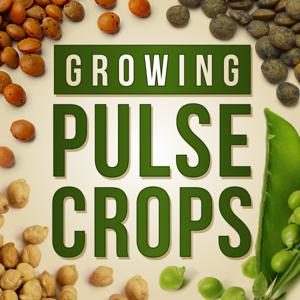


Mark Schmidt, a North Dakota Farmer, joins us to share the steps he is taking to improve the fertility of his pulse crops. Dr. Dave Franzen from the NDSU extension also chimes in to share what current research and recommendations are available for pulse growers.
Mark discusses his thought process in working through what crops to plant this season especially in the current global climate that is “just unlike any other year that I’ve farmed.” His persistent battle with root rot has led to planting more rotations as a form of mitigation. He now grows “two or three different crops in between (his) pulse crops.” Like many, Mark mentions that ongoing research and recommendations can at times seem like they contradict previous recommendations making it difficult to always know the best course of action. We visit with Dr. Dave Franzen to provide some direction with pulse crop fertility.
“Inoculation with proper inoculant is just really important….So that’s a big thing in the area where the pulse crops are grown.” - Dr. Dave Franzen
According to Dr. Franzen, Potassium, Phosphorus and Sulfur are not needed in large quantities in the North Dakota area. Monitoring the type of soil you have is much more beneficial than trying to assess these levels as you can predict what is needed. He typically suggests a small amount of Phosphorus and soluble Sulfur if the soil type suggests it. Potassium is rarely needed and Nitrogen only required depending on the crop. “In the absence of any diagnosis, putting a little bit on is probably not a bad plan,” says Dr. Dave Franzen. Micronutrients like “Zinc, Manganese, Iron, Molybdenum” are generally of little concern in his experience and not worth the added expense.
“We are having an emerging problem with acid pH in the west where most of these pulse crops are grown in long term, no till in particular.” - Dr Dave Franzen
Acidity is observed from the bacterial process when “ammonia goes to nitrate.” A lot of crops cannot be successful in an acidic environment and will require an additive to help neutralize the pH. The sugar beet industry and municipal drinking water facilities produce a byproduct that can serve to neutralize the pH but is difficult to transport and spread. With limited limestone sources, using these byproducts may become more significant and a higher priority if the pH continues to drop.
Dr. Franzen also helps us understand the calculation and use of Nitrogen credit. Pulse crops provide opportunity for nitrogen fixing bacteria to replenish nitrogen stores in the soil. The credit represents the “nitrogen that we know is going to be available probably in the first month or two after the next crop is planted.” Unfortunately this value is not represented in any soil tests so a calculation based on a store of data and the type of crop previously used is referenced. “Credit is something that you don’t see in the soil test but you know is going to happen.”
“The (Nitrogen credit) doesn’t come because it’s released in the nodules. It doesn’t come because it’s released in the residue. It comes because the residue is not tying up as much Nitrogen as what other choice crops might be.” - Dr. Dave Franzen
This Week on Growing Pulse Crops:
Growing Pulse Crops Podcast is hosted by Tim Hammerich of the Future of Agriculture Podcast.
Today we are joined by farmer Lavern Johnson and Dr Lyndon Porter, a pulse crop plant pathologist with the USDA Agricultural Research Service. After 20 years of experience as a pulse crop grower, Lavern Johnson brings real world issues to the forefront today by sharing why he is unable to plant pulse crops this year. Multiple organisms have accumulated in his fields over time leading to significant root rot and making his fields unable to support pulse crops for up to 8 years.
Rarely, does any grower have fusarium or pythium as solo pathogens causing damage. The root rot complex employs multiple organisms causing more than one infection to be present. Nematodes can also contribute by wounding the plants allowing fusarium better access.
“Fusarium might be the one that starts weakening the plant and it might be aphanomyces that finishes the life of the plant…..to my knowledge there’s no soil tests that they can use to determine the level of disease that’s out there.” - Lavern Johnson
Dr. Porter describes some of the options farmers have to avoid this situation. He suggests some standard cultural practices that can help. Soil compaction restricts the growth of the roots which can encourage fusarium growth. Maintaining a soil pH outside of the range most supportive of fusarium can also be helpful. Identifying best varieties, seed depth selection, soil fertility and managing wet fields also contribute to better control of the root rot complex of disease. Residual herbicide is another factor that can affect a plant’s susceptibility to root rot.
“I’ve seen a lot of herbicide damage that is causing poor plant vigor impacting yields and stressing plants out which causes greater root rot issues.” Dr. Lyndon Porter
Dr. Porter goes on to suggest evaluation of seed health to promote the healthiest plant. He feels a commonly overlooked factor is the health of the seed itself at planting to provide the best opportunity to maximize yield.
This Week on Growing Pulse Crops:
Growing Pulse Crops Podcast is hosted by Tim Hammerich of the Future of Agriculture Podcast.
Today we discuss soil-borne and seed-borne diseases in pulse crops. We are joined by Chris Westergard a farmer in Montana, who gives us insight into what his operation looks like and how he manages these risks to his pulse crops. Then Dr. Michael Wunsch, a Plant Pathologist at the NDSU Carrington Research Extension Center, shares some of the ongoing research and recommendations for combating these obstacles. Despite cold temperatures in Montana at the moment, Chris is turning his attention to his seed in preparation for planting. He evaluates his seed quality, germination and risk of Ascochyta.
“Ascochyta is by far the most prevalent and the most yield limiting in chickpeas. It can be in peas and lentils too….. But chickpeas seem to be way more susceptible to it.” - Chris Westergard
Chris highlights weed control, seed sources, soil temperatures and identifying the types of inoculant he needs to have ready as other preparation measures prior to planting. Dr. Wunsch echoes that advice citing research that confirms the effects of soil temperature and environmental conditions on pulse crop disease rates including Ascochyta, Pythium and Rhizoctonia. Unfortunately though Chris claims that “if everyone waited for optimal soil (temperatures) they’d never get anything done.” This leads to the use of seed treatments.
“Anytime you’re planting into cold soils, you definitely want to have a seed treatment. When you’re planting relatively late, say the third week of May, and the soils are warm…..and not too wet…..you can probably get away with not treating the chickpeas.” -Dr. Michael Wunsch
But just as with anything in farming, it's never simple. As Dr. Wunsch says “agronomic performance is a product of multiple factors.” His research has also explored the effects of early planting on root rot. He has found that “Early planting reduces the severity of your root rot and it reduces it by a lot.”
“So planting date is a really, really important tool for managing these (diseases).” -Dr. Michael Wunsch
This Week on Growing Pulse Crops:
Growing Pulse Crops Podcast is hosted by Tim Hammerich of the Future of Agriculture Podcast.
Meet Ryan Ellis, a farmer from North Dakota. Ryan shares how he is preparing for the upcoming season. Dr. Brian Jenks, a weed scientist from the North Dakota State University, also joins us to discuss pre-plant options to control weeds in pulse crops.
Ryan Ellis farms about 5,000 acres with his father. They currently grow peas, lentils, soybeans, flax and forages. Ryan shares that growing pulse crops requires a lot of forethought and planning. There are not many post-emergent herbicide options that can be used with in-crop applications. Any chemical residue from the year before will also affect the potential of the next year's crop if a residue persists.
“I generally plan out at least a rough idea of what I’m growing the following year based on what I spray the previous year.” - Ryan Ellis
Dr. Jenks shares that one great thing about pulse crop farmers in battling the weed populations is that they tend to have pretty diverse rotations. By varying planting dates, herbicide applications and harvest dates we avoid selecting for resistant varieties and traits of weeds. This system provides enough “diversity in the rotation and in the practices (which) helps to combat weeds.”
“The good thing about pulse growers is that most of them already have a good rotation or they’re working toward a good rotation...They typically have maybe even three or four or more crops in their rotation and that's a good thing.” - Dr. Brian Jenks
Both Ryan and Dr Jenks suggest a fall application of herbicide to better control the most common weed they face, Kochia. By applying in the fall and also the spring they are able to be more precise with their spraying and gain better control over time. Again, there are not many post-emergent herbicide options available for pulse crops, so being more aggressive earlier sets the farmer up for better success.
This Week on Growing Pulse Crops:
Growing Pulse Crops Podcast is hosted by Tim Hammerich of the Future of Agriculture Podcast.
Welcome to Growing Pulse Crops Podcast! In our first episode we speak with Tim McGreevy, CEO of the American Pulse Association. Tim explains how pulse crops became a priority in the farm bill and what federal funds has helped them to accomplish. The Pulse Crop initiative expanded research in nutrition data for these crops as well as the benefits to the cropping system.
Pulse crops play an integral role in “supporting sustainable agricultural systems around the world.” This has led to recognition and designation of 2016 being the international year of pulses by the United Nations. The US and Canada, top competitors in the industry, joined forces to take advantage of this opportunity and promote awareness for pulse crops. This effort has led to “exciting product innovation in plant based foods.”
“We (pulses) are in beverages, we’re in baked goods, we’re in pastas, we’re in deserts. We are in everything now and it’s growing.” - Tim McGreevy
Despite this recognition and promotion, the industry as a hole has faced more recent obstacles. Trade tariffs have resulted in some varieties, especially peas, lentils and chickpeas, to be priced below the cost of production. Another set back involved a recent announcement from the FDA suggesting a correlation between grain-free pet foods using pulse crops as substitutes for conventional grains and dilated cardiomyopathy in dogs. The research to verify the causation of diet induced dilated cardiomyopathy in dogs is ongoing but unfortunately consumer confusion has led to a fall in demand of these crops by pet food companies.
Despite these difficulties, McGreevy see’s a bright future ahead for the pulse crop industry. Recent annual research reviews highlight the techniques to “raise high quality disease free products” that put nitrogen back into the soil. They also suggest product innovation to fit these crops better into mainstream food supplies and will hopefully lead the way to an expansion of their available market.
This Week on Growing Pulse Crops:
Growing Pulse Crops Podcast is hosted by Tim Hammerich of the Future of Agriculture Podcast.
Today we introduce you to this brand new podcast focused on growing pulses like field peas, chickpeas and lentils.
The purpose of this show is to follow some pulse crop farmers through the growing season and to dive into the research that’s helping them through some of the challenges they face. We’ll also talk to a number of other industry stakeholders along the way.
Demand for these nutrient-dense, high-protein foods continues to grow. There is also interest from farmers to include more pulses into diverse rotations for benefits like nitrogen fixation and soil health.
But the industry continues to face challenges, and we are eager to address these head on. So if you’re a pulse grower or in any way interested in these important crops, hit subscribe and stay tuned for future episodes. We’ll be back with plenty of information about challenges pulse farmers are facing throughout the U.S. and what solutions are working.
This episode is just a teaser for what’s to come, but I have a bonus clip that I should I would share with you. Please make sure you are subscribed on your podcast player for many more great episodes to come!
From the publisher's feed

227,491 Listeners

8,422 Listeners

223 Listeners

14 Listeners
16 Listeners
516 Listeners

128 Listeners

383 Listeners

50 Listeners

53 Listeners

353 Listeners

10 Listeners

3 Listeners