
Sign up to save your podcasts
Or

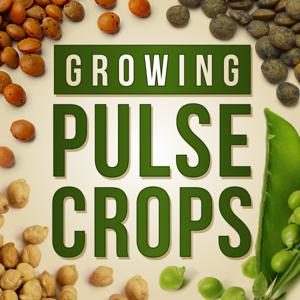


Dr. Perry Miller is a cropping systems scientist in the Land Resources and Environmental Sciences Dept at Montana State University. A large portion of the work Dr. Miller does includes working with pulse crops and how they can make other crops, namely wheat, grow better. Part one of this episode was published as episode two in this season and focused on crop diversification and fertility. In this episode, we focus on lentil agronomics. As more and more farmers started to grow lentils in their rotation instead of summer fallow, Perry says the early lessons about growing the crops included being mindful of herbicide carryover and applying an inoculant.
So you need to know what your soil residual herbicide history is because there are some persistent herbicides, and lentil tends to be a little bit the canary in the coal mine when it comes to herbicide residues. If you've got something in the soil, lentils will usually respond to it…The other easiest mistake to make is to not apply a rhizobial inoculant in a way that actually gets that bacteria in a living fashion onto the seed or into the soil in a way that can interact with lentils to help with fixed nitrogen.” - Dr. Perry Miller
Perry says that most producers are familiar enough with pulse crops to avoid those common pitfalls and that most are now focusing on optimizing their operation. One interesting area that he has been exploring is rolling timing and its impact on yield. Perry mentioned that even in their trials where there was flat ground and very little rocks, rolling still seemed to be beneficial to yield. Perry has also looked at five different seeding rates and found out the recommended seeding rate, in a lot of cases, was probably not enough.
“Long story short, 1.5 x seeding rate was the economic optimum by the time you considered additional seed cost and what the yield response was. So it suggests that we're probably leaving some yield potential on the table by going at our old, traditional recommended seeding rates.” - Dr. Perry Miller
This Week on Growing Pulse Crops:
Growing Pulse Crops Podcast is hosted by Tim Hammerich of the Future of Agriculture Podcast.
Dr. Michael Wunsch is a Plant Pathologist at the Carrington Research Extension Center at North Dakota State University. He holds a Ph.D. from Cornell University in 2010, and has worked for NDSU ever since and focused on disease management problems on a wide breadth of crops grown in North Dakota. Michael’s focus is on applied research that can directly address farmer needs. In this episode we focus specifically on root rots in peas and lentils and how the soil temperature can affect successful yields.
“Basically what happens is, is if your soil temperatures are below 50 degrees Fahrenheit in that seven day period after planting the root rot severity is way lower, way lower. You're cutting your fusarium and aphanomyces root rot in half at those early mid vegetative growth. So they can get a lot bigger before the root rot gets bad.” - Dr. Michael Wunsch
Michael emphasizes that there are no silver bullets with these root rots and that both warm and cool season root rots cause problems for producers and need to be accounted for. Seed treatments with proper efficacy for pythium and rhizoctonia will start crops off on the right foot. Fusarium and aphanomyces become a bigger issue in warmer saturated soils later in the summer. These two pathogens tend to impregnate fields one year and won’t cause a problem until the next year's plantings. Unfortunately seed treatments will no longer be present when temperatures warm up. Planting early in cooler soils will allow for the plants to be larger and more hardy prior to when their warm fungal adversaries will start causing a problem. The third management strategy that is an important piece for managing these root rots is crop rotation.
“It's just a no-brainer. You use a seed treatment with peas when you're planting in soils below 50 degrees Fahrenheit, and if you want to minimize your root rot, you need to plant in soils that are cool…The seed treatment basically gives you another four to five bushels. And so you're looking at a four to eight bushel gain by optimizing your planting day relative to soil temperature….Suddenly you're at eight to 13 bushels with those two tools.” - Dr. Michael Wunsch
This Week on Growing Pulse Crops:
Growing Pulse Crops Podcast is hosted by Tim Hammerich of the Future of Agriculture Podcast.
Aphids are known for the destruction they can cause due to feeding damage. But they can also be responsible for transmitting harmful viruses into the crops. In this episode we hear from Dr. Lyndon Porter is a plant pathologist at USDA-ARS based in Prosser, Washington, Dr. Sean Prager is an associate professor of entomology at the University of Saskatchewan and Dr. Sanford Eigenbrode is a professor of entomology at the University of Idaho. There is a tremendous amount of collective knowledge in this group covering aphid-related topics including the development of genetic tolerance to the insect and resistance to the viruses. We also discuss aphid sampling and hosts, chemical options for management and other integrated pest management strategies.
“We estimated a direct injury threshold, a level of aphid infestation that would justify a spray. And we had a second calculator that attempted to help growers who are concerned about the aphid as a vector of the virus, which is a different thing. In that case, we would say the nominal threshold is one aphid because it only takes an aphid that's prolific to feed for an hour and you have a sick plant.” - Dr. Sanford Eigenbrode
Lyndon says that giving growers real time data on aphid presence and aphid levels has been a critical step to helping with management of this pest and associated diseases. All three of our guests agree the long term goal is a combination of integrated pest management built upon a foundation of genetic tolerance to the pest and resistance to the diseases. This represents a really interesting area of research that combines entomology, pathology, plant breeding and several other areas of study.
“If we can just get the associations between genetic elements and resistance, we can skip knowing exactly what those genes are coding for as long as we can track them into the breeding lines.” - Dr. Sanford Eigenbrode
This Week on Growing Pulse Crops:
Growing Pulse Crops Podcast is hosted by Tim Hammerich of the Future of Agriculture Podcast.
Dr. Nonoy Bandillo is an assistant professor and pulse crops breeder who directs the pulse crops breeding program at North Dakota State University. He says their ultimate goal at the program is to develop and release varieties that maximize economic return to producers and to provide high quality crops to the pulse crops industry. In this episode we discuss key challenges in pulse crops that are being addressed through genetics, some of the varieties that his program has released in the past, and some exciting new lines that are in the pipeline.
“So the zero tannin lentil that we have in the pipeline, it doesn't have tannin or there's minimal tannin and it does not have any brownish color, which I would say, in my opinion, is not really a good characteristic of the seed of lentil.” - Dr. Nonoy Bandillo
Over the years of the NDSU breeding program, there have been several milestones, but perhaps most importantly, the release of four new cultivars. As these cultivars get released, it does take a while for them to be available commercially. ND Crown for example, was released in 2020, but there should finally be enough seed this year to be available for farmers.The program also has an additional eight lines in the pre-release phase of the pipeline. Disease resistance, yield, protein content and flavor remain high priorities for pulse crop breeding programs going forward. Nonoy and other plant breeders work extremely closely with plant pathologists to understand the mechanisms for disease resistance and to try to understand how to develop varieties accordingly.
“Our goal is to always collaborate with multiple breeders, not just within the US, but all around the world to get new sources of germ plasm or materials that we can use for the program… I feel like collaboration always starts with figuring out the important biological question that should be highly relevant to producers.” -Dr. Nonoy Bandillo
This Week on Growing Pulse Crops:
Growing Pulse Crops Podcast is hosted by Tim Hammerich of the Future of Agriculture Podcast.
Dr. Perry Miller is a cropping systems scientist in the Land Resources and Environmental Sciences Dept at Montana State University. He specializes in crop diversification strategies and says a big chunk of that work includes working with pulse crops and how they can make other crops, namely wheat, grow better. In this episode, Miller discusses some of these crop diversification strategies, the benefits to including pulse crop rotations, some of the work they're doing on crop fertility and how much nitrogen benefit he’s seeing from peas and lentils.
“So I can best speak from the Montana perspective, and I would say the evidence is very strong that our agriculture systems have become more diversified. Farmers have become more adventurous, more risk takers than they were in the past…So yeah, our systems have diversified pretty dramatically.” - Dr. Perry Miller
In Montana, Miller has seen sharp reductions in summer fallow in no small part because peas and lentils are a viable option. One of the benefits to diversifying a rotation by adding these crops is the potential nitrogen benefits. Miller emphasizes that the benefits are real, but they aren’t very predictable or as cut and dry as we might want them to be.
“So what is that nitrogen benefit behind pulse crops? It's not super easy to predict, but it's real, it's common and it happens often…If you grow it once, it's hit and miss whether you're gonna get a nitrogen response behind it. The second time, especially the third time, there's been a pulse crop on that field, it seems like it's much more reliable in terms of that nitrogen response.” -Dr. Perry Miller
This Week on Growing Pulse Crops:
Growing Pulse Crops Podcast is hosted by Tim Hammerich of the Future of Agriculture Podcast.
Over the past 15 years Paul Overby has converted his North Dakota farm to no-till, added zone management for nutrient management, diversified his rotations and added cover crops. He shares his journey toward building healthier soils, the importance of pulse crops in his rotation, and his recent experiences with growing pea/canola intercrop. Overby had already started growing peas before he decided to make the switch to no-till, but his interest in pulses grew as he started to understand the benefits they can have on not only economics but on his soil health program as well.
“We did bring the peas in as a way of labor management, planting and harvesting early. And there was a market. Dakota Dry Bean at the time did have a pea market, so that was relatively close by and easy to ship into…. And then as we got into the whole soil health side of things, then having peas in a rotation started switching for other reasons. Some of the value in having them in the rotation started showing up as we started learning about arbuscular mycorrhizal fungi.” -Paul Overby
Whether it’s as a primary crop, in an intercrop or as a cover crop, Overby sees pulses as an important part of his rotation and something to consider for anyone who wants to build healthier soils. Always on the hunt for new ideas to improve his farm, he observed what others were doing in intercropping. This led to a pea/canola intercrop experiment of his own last year.
“Canola and brassicas are not mycorrhizal associated plants, peas are. Is there a synergy there? Can you put peas under the soil and, and help out the canola that way? So this past year, we did a trial. We had two strips in a canola field where we had peas interceded with the canola.” - Paul Overby
This Week on Growing Pulse Crops:
Growing Pulse Crops Podcast is hosted by Tim Hammerich of the Future of Agriculture Podcast.
PLEASE COMPLETE THE LISTENER SURVEY: https://bit.ly/Pulses2022
The Land Institute’s Brandon Schlautman joins the show about the work he is doing to breed perennial pulses. Brandon is the lead scientist of the perennial legumes program at the Land Institute which is based in Salina, KS. The 40 year old non-profit ag research institute tries to find solutions that balance short term economic realities with long term conservation goals. They’re known for their work in kernza, and hope to make similar progress in pulses. In this episode we talk about why developing a perennial pulse crop is worthwhile, where they started down this road, how they settled on sainfoin for the perennial pulse development, and the road ahead towards commercialization.
“My program at The Land Institute focuses on perennial pulses and we're exploring various candidates and are starting to work towards something that can kind of mimic a pea or a chickpea or a lentil, but be something that has living roots in the ground year round, and gonna make it through our winters and recover and always be there. It's kind of a plant once and harvest many times type of deal.” -Brandon Schlautman
So when Brandon arrived at The Land Institute, one of his early challenges was to find the most promising perennial legumes to consider for commercial development. This open ended task was the first step to narrowing it down to a plant he could work with. He eventually settled on sainfoin. One big plus about sainfoin, is that it actually is already grown in some areas as a commercial crop. But settling on sainfoin is just one of the many challenges of bringing this new crop to production. The hope is this will find a premium market, reduce soil disturbance, and thrive on minimal inputs.
“There are a couple thousand acres of production in the western part of the US. And I really like that there's a sainfoin seed industry already. We've talked with multiple growers in Montana that they grow and clean seed and sell it to other producers mostly for forage production. So we have some of this knowledge about how sainfoin can be grown and how to do the seed production. The eating it is the next step and so we're excited.” - Brandon Schautman
This Week on Growing Pulse Crops:
Growing Pulse Crops Podcast is hosted by Tim Hammerich of the Future of Agriculture Podcast.
Dr. Cody Creech and Dr. Carrie Eberle join the show to talk about new frontiers for pulse crops in Nebraska and Wyoming. We’ll explore where and how these crops are fitting into rotations, the challenges of growing pulses in new areas, double cropping, and water use efficiency.
Cody is a dryland cropping systems specialist with the University of Nebraska Lincoln located at the panhandle center in Western Nebraska. He focuses on crops that can be grown without needing much water including soil water conservation, fertility, weed management and ways to improve overall use efficiency in Western Nebraska.
“This area of Nebraska and Wyoming has not been a target for breeding programs for these pulse crops. And so in the past 10 years, there's been a lot of improvement in these varieties, much better varieties that are much better adapted, but there's still a long ways to go in that realm. If we can keep working on that breeding side of things, I think we're gonna see continued success in pulse crops in both Nebraska and Wyoming.” - Cody Creech, Ph.D.
Carrie, at the time of this interview was a cropping systems agronomist with the University of Wyoming located studying alternative crops for the region and looking at sustainable farming practices. Since the time this interview took place back in January, she has since gone on to work for the USDA ARS as an agroecologist based in Morris, Minnesota.
“I think for the Wyoming system, our farmers are mostly looking to understand if the crop is going to work for them. So there's questions just about growing in the region and when they should plant, how they harvest, what their populations look like. There's a lot of questions around weed control in those crops. And then the other big challenge for our farmers is always access to markets.” - Carrie Eberle, Ph.D.
This week on Growing Pulse Crops:
Growing Pulse Crops Podcast is hosted by Tim Hammerich of the Future of Agriculture Podcast.
In this episode Dr. Tyler Wist discusses the impact caused by grasshoppers and aphids in pulse crops. Tyler is a field crop entomologist with Agriculture and Agrifood Canada based at the Saskatoon Research and Development Center. He does research on field crop insects to find ways to better protect crops, establish economic thresholds, and identify and understand plant-insect interactions. He starts the conversation with personal insights in grasshoppers.
“The real trouble is when grasshoppers get into a flowering crop. You can have a beautiful green lentil crop and they'll move in and they'll just clip the flower off….If it drops its flowers, you get no pods, then you get no yield. So the grasshoppers like to clip those flowers off, especially in lentils. So our threshold that we use up here in Canada is actually really low.” - Dr. Tyler Wist
With this potential for yield loss, it is important to understand exactly where that threshold should be. Another pest that causes substantial damage in pulse crops is the aphid. Tyler says they started using the cumulative aphid density to identify thresholds and found out that the economic threshold actually comes before the economic injury level. While counting aphids might sound tedious to some, rigorous scouting is of the utmost importance during the susceptible period.
“If you're not careful with aphids at the flowering stage of your fava bean plants, you could lose your whole crop.” - Dr. Tyler Wist
There are so many dynamics at play here including the biology of the insect, field conditions, overwintering, and timing. Tyler said all of this research he is involved in comes together to provide the most accurate economic thresholds possible. Along with continual monitoring, introducing beneficial insects can be an important part of an effective integrated pest management program. Tyler says Field Heroes have a great website with resources for learning more about beneficial insects.
“We're doing the science for you and those economic thresholds are there to help you save money, to know when you don't need to apply insecticides.” - Dr. Tyler Wist
This Week on Growing Pulse Crops:
Growing Pulse Crops Podcast is hosted by Tim Hammerich of the Future of Agriculture Podcast.
In this episode we continue our conversation with Greg Busch, a farmer in the far northwest corner of North Dakota. In case you missed Greg’s introduction, he farms with his wife Jessica and they’ve been growing pulses as part of their rotation for over thirty years. We talk about what led Greg to try intercropping, which combinations have worked for him, the benefits and challenges of this approach, and his advice for others who might want to experiment with intercropping.
“I was thinking I was going to still see the same root rot that we had seen five or 10 years before, but that didn't happen. It just seemed like the two grew together and they formed a really good synergy. In the areas that are a little more saline prone, where peas do very poorly, the canola was thicker. In the areas on hilltops, where the canola tends to run out of moisture, the peas did better. The combination far exceeded what we would've gotten with peas alone.” - Greg Busch
Greg continues to adjust his protocols as needed. One priority has been to even out the maturity of the crops to maximize their harvest. He mentions there is an added cost in cleaning and separating the crops he harvests but is hopeful he may someday find a market that will accept the mix. Initially there were concerns that the moisture content in the peas would be too much for the canola while storing the two together but Greg was surprised to find that that wasn’t the case.
“They store very nicely together…. We were quite concerned that we were gonna have moldy canola when we opened the bin door, but that just wasn't the case. In fact, we let that combination sit in the bin for a year and a half till we got around to cleaning it. And trust me, I was checking it because I was concerned. I didn't want to burn up a bin of combined grain, but when we cleaned it a year and a half later, it came out just as nice as when we put it in. So it's amazing that they do store that way.” - Greg Busch
Greg initially incorporated intercropping to feed “the soil microbes and the different soil life that is out there.” He has also experienced an overall price reduction in production costs by reducing input needs.
“When it comes to chemical, you have these two crops competing with each other and shading out most of the other weeds that are out there. And we're seeing a reduction in weeds and a reduction in the need for additional chemical.” - Greg Busch
Greg continues to make adjustments as needed based on market prices, water availability and input costs.
This Week on Growing Pulse Crops:
Growing Pulse Crops Podcast is hosted by Tim Hammerich of the Future of Agriculture Podcast.
From the publisher's feed

227,520 Listeners

8,421 Listeners
223 Listeners
14 Listeners
16 Listeners
516 Listeners
128 Listeners
384 Listeners

50 Listeners

53 Listeners
353 Listeners
10 Listeners

3 Listeners