
Sign up to save your podcasts
Or



This week, Dave brought a passage from Kieran Egan’s book, Teaching as Storytelling and raised the question, “How do we invite students to see their learning as part of a storyline?” We talk about the way stories can grab not just students’ minds (intellect) but their hearts (emotions) as well. Matt brings up the idea of human beings as “story-formed people” and we discuss the way that stories can draw students into deeper learning. We also talk about helping our students find themselves inside the stories of the curriculum...and how the Big Story of Scripture (Creation, Fall, Redemption, and Restoration) can be used to frame the curriculum for our students.
This week, Abby raises the question, “What are you thankful for?” (She jokes that it’s the cliche question...but it *is* Thanksgiving week in the U.S., and we *do* have plenty to be thankful for.) The three of us share things about our work that bring us joyful gratitude in spite of the challenges that come with the work of teaching. Our deep hope for this episode is that it might give you some encouragement, and maybe a few laughs, and perhaps it will spark you to think about the things related to your work that give you a feeling of joyful gratitude.
This week, Dave brought a quote from David Smith’s book, On Christian Teaching and closed with the question, “What really matters when we are teaching?” We spend some time thinking through the wide range of things that happen simultaneously when we are teaching, and how we can focus on the things that really matter amidst all of the complexity in what happens in the classroom. As Matt says it, “How can we make sure that we are actually on about the things we say we are on about?”
We highly recommend you read David I. Smith's book On Christian Teaching: Practicing Faith in the Classroom - Amazon link
This week, Abby—fresh off of parent-teacher conferences for her own kids—prompted us to think about the question, “What are some ways that we, as schools and teachers, can partner well with parents in the education of their kids?” We think both broadly about what “partnership” means, and more specifically about some particular things educators can do to build bridges between home and school, including “good calls home,” three-way conferences between teachers, parents, and students, and school-wide celebrations of learning. Whether you are a parent, a teacher, or a school leader, we hope this episode is an encouragement to you in fostering partnerships!
This week we have a question from a listener! Alex asked the question, “In the pandemic we suddenly saw schools scrambling to operate online. Many schools were not truly ready for this. When you look at the role of online in the realm of education, what do you see as its place in the fabric of what schools do?” We think through the things schools and teachers experienced in the early days of the pandemic with the scramble to teach online, and the difference between online learning that was designed for online and what Dave calls “emergency remote teaching.” We think through some of the challenges and benefits of online learning at different grade levels, and the potential of online learning as part of the future of education.
This week, we have a question from a listener! An anonymous listener asked the question, “If you could share one thing with a middle school student who is having a rough week…what would you tell them?” We think through ways to help encourage and support students, and we consider the importance of responding with empathy. Along the way we consider taking our students’ world seriously...and we learn that Abby is secretly a fan of Taylor Swift.
This week, we have a question from a listener! One of our students, Lindsey, asked the question, “What are your favorite questions to ask or tools you use to get to know students?” We discuss the importance of building positive relationships, and why we believe that time taken for relationship building is never “wasted.” We then share some ideas for strategies we have found useful for connecting with students, getting to know them as individuals, and sharing things about ourselves in appropriate ways.
We recently had the opportunity to record an episode in front of a live audience! We were at the Heartland Christian Educators Convention held on the campus of Dordt University in early October. We started by sharing some stories in response to Matt’s question, “Why did you become an educator...and what keeps you in education?” After this, we tackled a variety of questions submitted from our audience. We answered questions about risk-taking in the classroom, how often schools should review their curriculum, how to make school coffee more palatable, the mixed value of final exams, and Dave’s (questionable) fashion choices. We hope you’ll both enjoy and be encouraged by this longer-than-normal episode!
This week, we have a question from some listeners--students of ours, who listen to the show!--who are wondering about what to do if they realize the negative environment of the school they are serving is affecting their mental and emotional well-being. We recognize that this actually describes what many educators are currently experiencing in their work today! We think out loud together about ways to approach this challenging situation, and think about what self care looks like for contemporary educators. As part of our conversation, Abby shared a piece by Jennifer Gonzalez, which you can read in its entirety here: https://www.cultofpedagogy.com/marigolds/
This week, we discuss the idea of classroom protocols, which are ways of structuring learning activities to elevate reflection and get more students sharing their ideas as part of the learning process. We think through how we have encountered protocols for the first time, how we came to value them for getting students engaged and invested in the classroom, and the benefits we have seen from using them in our own teaching. Through the course of the episode, we share about a dozen ideas for various types of protocols that we have found to be successful in getting students actively engaged in learning through the way we structure learning activities using protocols.
From the publisher's feed
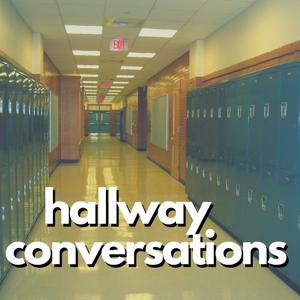
Welcome to “Hallway Conversations!"
We are friends who have been teaching for quite a while, but we still have lots of questions about education. This is our place for thinking out loud…

31,918 Listeners

39,029 Listeners

5,166 Listeners

8,597 Listeners
2,329 Listeners
10,449 Listeners

4,428 Listeners

1,480 Listeners

7,105 Listeners

56,407 Listeners
1,916 Listeners

35,894 Listeners
720 Listeners
24 Listeners

150 Listeners