
Sign up to save your podcasts
Or

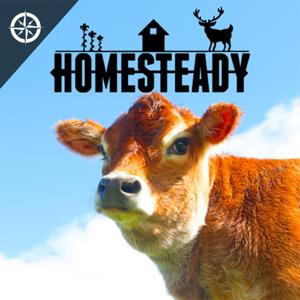


Trees are a generational gift. There is significant symbolism associated with trees. Trees have signified wealth throughout history. Having your own tree meant prosperity. On this episode of Homesteady, we are focusing on fruit trees. In focusing on fruit trees, and planting fruits, we are expanding upon the idea of "bearing fruit" to a discussion of assets and liabilities. Assets put money in your pocket; liabilities take money out of your pocket.
Making connections between wealth, a homesteading lifestyle, and the practical steps you can take to leave the rat race, and the hands-on work of raising animals, planting plants, and building infrastructure is part of the Homesteady culture. To this end, we'd like to bring you a quote from the book Rich Dad, Poor Dad. Aust learns the following important lesson: You must know the difference between an asset and a liability. But what does this have to do with fruit trees?
It's like planting a tree. You water it for years; then one day it doesn't need you anymore. It's roots are planted deep enough. The tree provides shade for your enjoyment."- Robert Kiyosaki, Rich Dad Poor Dad
As homesteaders, we want even more than shade. We want the work we do each year to result in greater and greater yields. Our guest tonight, Dave Hunt of Northeast Edible, shares how his passion for fruit trees and feeding his family better led to planting fruit trees, then to a homestead-based fruit tree business. Learn everything you need to know about how to choose plants, where and when to plant them, and the timeline from planting to having a harvest.
Learn everything you need to know about how to choose plants, where and when to plant them, and the timeline from planting to having a harvest.
Want more specifics? See Dave's visit to Aust's farm here on YouTube.
We would love it if you'd come see the Homesteady Farm! We will be hosting Dave from Northeast Edibles May 6th for a live orchard workshop. If you'd like to come, click here for some more information. If you can't make it, we will be posting the entire thing on our Pioneer page. For just $5/ mo, becoming a Homesteady Pioneer gives you access to members-only video, discount codes, how-tos, and exclusive podcasts. Become a Pioneer today!
For regular updates on what we are doing here at Homesteady, join our email list. Just for joining, you'll get our free "21 Steps to self-sufficiency" and access to our "Go Homestead" video course.
Getting new orchard equipment? Or are you already an Amazon shopper? We would love if you'd support the podcast through our Amazon affiliate link: www.amsteady.com. Buy whatever you normally buy, and with your purchase, you'll be supporting the podcast with no additional cost to you. Thanks!
Join us this upcoming Tuesday on our YouTube Channel or at Prepper Broadcasting at 9 PM EST to be a part of our live taping of our next Homesteady episode on foraging. There will be a Pioneers-only discussion following the taping at 10 PM EST.
Learn more about your ad choices. Visit megaphone.fm/adchoices
What do you think about when you hear, "The Rat Race?"
On this episode of Homesteady, we will explore the idea of the "rat race." What is it? And, most importantly, how do you escape it? We will explore these ideas, and give you some steps on how to escape it and live your idea of your ideal life.
The term "the rat race" finds its origins in a series of experiments where rats, motivated first by hunger, and then by avoiding pain (behaviorism's operant and classical conditioning for you fellow psychology enthusiasts out there) develop patterns of repetitive behavior based upon the ease or difficulty of attaining the goal set up by the experiment.
When we say, "I want to escape the rat race, buy a homestead, and move out to the country," how do we do it? In order to escape the rat race, we need to understand it. Using the aforementioned experiment as a guide, there are essentially four elements to the rat race:
Let's break down each piece.
Often, people work long hard hours at jobs they hate, to earn money to buy things they don't need, to impress people they don't like. — Nigel Marsh
Why did we even sign up for this? Mostly, because public school has taught us to do this, all of our lives. We learned to work for rewards, to do what others told us to do, and the feel the "shocks" of grades.
Don't despair! You CAN get out of the rat race. Unlike rats, we can make a difference in our own lives.
TODAY: Tell yourself, "I will NOT be a lab rat. I have control over my OWN life." Regardless of your work and life circumstances today, you are able to take steps to develop your own path in life.
RECOGNIZE Your own Rat Race. Once you realize what your own "rat race" is, evaluate what works, what doesn't work, and what needs to change. Write down what needs to change, and hold yourself accountable to finding an exit strategy. Maybe this book will help?
Avoid Stress. The most common stressor we all share? Debt. Avoid debt if at all possible. Dave Ramsey's book can assist you in evaluating your financial choices. If we avoid debt and save money, we will feel more satiated.
Redefine the Reward. Is the reward buying things? If you are stuck in a cycle of buying things in order to satiate your appetite, try to decide what would satiate it instead. More free time? More social time? What about more time with your family? Know that this takes time, and start to develop an exit strategy.
Make a Vision Board like Alexia the Suburban Escapee, who is an Expressive Arts Therapist (and who is writing this now because she has DROPPED OUT of the rat race), uses to keep her eye on her reward.
Are you enjoying the podcast coming out weekly? Thinking of dropping out of the rat race, but need to gain more skills? Become a Homesteady Pioneer! For only $5/month you get access to extended podcasts, exclusive videos, online live chats, how-to courses, discount codes, and more.
Already an Amazon Shopper? If you go to Amazon through www.amsteady.com, you support the show by doing your regular shopping and spending ZERO extra dollars. Amazon gives the show a "referral bonus," and you get what you were shopping for without spending an extra dime.
Join us for our live episode with Dave of Northeast Edible, as well as some other homesteader who have left the rat race, and learn about fruit trees and orchards this Tuesday at 9 PM on our YouTube Channel. We will have a Pioneers Only Q&A at 10. Excited about planting orchards? We have an exciting on-farm opportunity for you to join us! Learn more here.
Learn more about your ad choices. Visit megaphone.fm/adchoices
On this episode of Homesteady, Aust will reveal the secrets to actually catch fish when you go fishing. As fishing is something best done with your buddies, Aust has his fishing buddies, Uncle Bourbon, who is a fly fishing guide (find him here), and James, or "Pickles," as his guests on this show to share tips, tricks, and strategy. While there are many types of fish, this episode focuses on fresh water "panfish", specifically bass and trout.
***The Suburban Escapee here: New to fishing? Haven't fished since you were a scout? This cheat sheet of fishing terms will help when you are listening to this episode!***
Truth: "Fishing" is synonymous with "disappointed." Aust shares a story of his childhood fishing with Uncle John. On a bucolic day, planned for fishing under a waterfall, Aust arrives at this special spot to find that the waterfall is completely dried up. However, a couple of things can really change your luck. A little bit of know-how goes a long way.
When should you fish? Where should you fish? And what should you use? This episode will cover this, and so much more, so that next time you go fishing, you will actually catch fish.
The season, month, and weather greatly affect how many fish you will catch. In the Northeast, Aust and his buddies believe that May is the best fishing month. Particularly for fly fishing, the "hatch" is best in May. The spring is the best time to catch the fish, because the fish start spawning and they are "in the shallows" where even the most novice fisher can catch a fish while standing on the shore. A nice, overcast day will be the most comfortable, and fishing early in the morning or at nightfall are the best times of day for catching fish. Remember this rhyme:
If the barometer is risin' on their beds they'll be lyin'
If the barometer is droppin' in your boat they'll be hopin'
Where do you find the fish? It's often said 80% of the fish can be found in 20% of the water. Where to find the fish is dependent upon what type of fish one is trying to catch, the time of year, and what body of water is being fished. Fish like rocks, docks, shallow points, and downed trees. Fish eat insects, so anywhere insects lay eggs and hatch is a great place to cast your lure.
The right fishing gear can greatly improve your chances of catching fish. You need the right size pole, hook, and line to attract your desired fish. Different water conditions, different fish species, and different bodies of water require different gear.
Ready to start fishing? We've got a how-to on YouTube showing you exactly what to get.
Do you have more questions about fishing? Email Aust at [email protected]. Show us your fishing gear and the fish you catch by tagging your social media posts #iamhomesteady.
As we are now recording the podcast LIVE on YouTube and Prepperbroadcasting Tuesday evenings at 9, (join the email list to get the link) we were able to take phone calls from our listeners (and a very special guest!). Our listeners shared their best fish stories and asked advice on how to keep and prepare fish you catch properly for eating, fishing around heavy weeds, and how to best take kids fishing.
Did you know we do a Pioneer Only live discussion on the week's topic Tuesday at 10? Become a Pioneer today to receive the Pioneer Only link. For five dollars a month, you get access to exclusive podcast episodes, how-to classes and videos, discount codes, our weekly live Pioneer Discussion, and so much more.
Thank you to our sponsors!
Support the show without spending an extra dime. Shop Amazon by clicking on www.amsteady.com to do your Amazon shopping, and we receive a referral bonus since Amazon knows we sent you. Use your next bulk toilet paper order- or maybe now you're motivated to order some new fishing supplies?-to support our show.
Special Event Alert! We are thrilled to host Dave Hunt of Northeast Edible at the Homesteady Farm May 6, 2017 for an Orchard Planting Workshop. Interested in getting tickets? Join our email list and be the first to know when tickets go on sale. Unable to attend but want all the knowledge? Homesteady Pioneers to get access to an exclusive how-to video from the event.
Learn more about your ad choices. Visit megaphone.fm/adchoices
On this episode of Homesteady, we examine the question: Should you get pigs on your Homestead?
Aust brings us through history, recounting the trials of General Peter Stuyvesant in New Amsterdam to keeping pigs from destroying the Dutch fort with their rooting. Known as "mortgage lifters" for their dependable moneymaking attributes, Aust has been raising pigs on his homestead for five years, and sells them for his most profitable homestead business. We've discussed pigs many times before, on the blog and on the podcast (here, here, here, here, and here to give you a few.) Now, with experience as a guide, Aust and Mike are able to give detailed information on the financial and practical applications of raising pigs.
What is the right kind of homestead for pigs? How do you know if pigs would be a good fit for you? From grass to woods, pigs are versatile and able to flourish in diverse landscapes. However, there are several things to consider before deciding to buy pigs for your property:
What kind of pigs should you get? How many pigs are a good start? And what should you expect for them to give back to you? (For Accountant Mike, who only needs companionship from a pig, maybe a tea cup pig? Ok.. don't do a Tea Cup.. they are a scam ;)
Thomas Dexter, Aust's local source for his Yorkshire Landrace pigs, shares important information on raising pigs, and the care it takes to raise and maintain breeder pigs year round.
Are pigs profitable? Listen to Accountant Mike do the cost breakdown to see if pigs are the "mortgage lifters" Aust wants them to be.
On our next episode we are discussing fishing! Want to be part of next week's podcast? At 9:00 PM EST Tuesday on the Homesteady YouTube Channel and at the Prepperbroadcasting Network we are live! Not able to join us live but want to share your own fish story? Call 657-223-3276 to leave us a voicemail and you may hear your story on the air.
Pioneers get an exclusive after show where you are able to chat with Aust and Accountant Mike about your specific questions. Not a Pioneer? Become one today for exclusive access to discounts, podcasts, how-tos, and more.
A special thanks to our new sound engineer, Allyson Holley, who has been mixing the Homesteady Podcast since we've gone weekly. We couldn't do it without you!
Thank you to our sponsors! Try Hello Fresh for fresh, delicious, perfectly portioned ingredients that even the most novice cook can turn into delicious meals. Enter promo Code "Homesteady30" for $30 off first week of delivery. I (the Suburban Escapee) love Hello Fresh. My family (including the kids!) still ask for the Mediterranean Meatballs on the regular. Their fresh, sustainably raised and sourced meats and produce are a delicious way to integrate healthy, easy meals into your week.
Need to shop for some new products for your homestead? Or would it just be easier to have your toilet paper delivered? No matter what you buy, clicking on www.amsteady.com to make your Amazon purchases helps support the show through no cost to you.
Learn more about your ad choices. Visit megaphone.fm/adchoices
Sometimes we find ourselves playing a game of “what if” in the world of homesteading and prepping.
What if the grid went down?
What if there was another world war?
What if there was a pandemic?
These games of what if can be a fun mental exercise. But the reality is that these disasters will probably not ever happen to us. BUT… That does not mean we will not experience disasters in our life.
We absolutely will experience disasters.
The disasters that will happen to us may not harm as many people as a WWIII or Global Pandemic. But they have the same ability to ruin our own life, and maybe those around us.
What is the disaster that WILL happen to you? It could be…
A loss of a Job
A Health emergency (You or a loved one)
A local natural disaster (depending on where you live)
These disasters actually happen all the time, and to all of us. The truth is that someday you or a close loved one will absolutely experience one of these 3 disasters, if not all of them.
Are you ready? Not for the Zombies or Plagues… But for the day your handed a pink slip?
The day your child is rushed to the Emergency Room? The day you need to evacuate from an approaching hurricane?
This week our family experienced an emergency.
My 8 month old was rushed to the emergency room, and hours later to a second hospital for an emergency surgery. All this, at the same time a major blizzard was headed our way.
We learned some very real lessons on Emergency Preparedness, and we want to share them with you. Join us for a discussion about prepping for the disasters that WILL happen to you, and learn all about Family Emergency Planning, Go Bags, and Basic Preparedness.
We will tell our story, and then be joined by J.J. Johnson from the popular Youtube Channel Reality Survival https://www.youtube.com/user/RealitySurvival to discuss how to get the basic preparedness covered for the disaster that will happen to you.
Go to Listen and Chat This Tuesday 9pm/Est. 6pm/Pt
Visit Homesteady…
See all we do at www.thisishomesteady.com
Get access to the Pioneers Only library by becoming a Homesteady Pioneer HERE! https://www.thisishomesteady.com/head-west-become-pioneer/
Learn more about your ad choices. Visit megaphone.fm/adchoices
Since the very first episode of Homesteady, we have been asking the question: IS THIS WORTH IT? Will the investment of your time, money, and energy into your latest homesteading endeavor give you a return? And how do we measure these returns: financially, emotionally, in terms of gains in personal health and nutrition, or more broadly in relation to overall environmental sustainability?
On this episode of Homesteady, we take an in-depth look on our LIVE YouTube stream to examine, even more closely, The Family Cow. In a Homesteady first, Emily, our guest for tonight, was invited onto the show after she sent Aust an email highlighting the missed points on the first family cow episode. Emily OWNS a family cow and Aust and Accountant Mike engage her tonight in a live discussion, fueled by viewer questions, to truly examine the family cow from every angle.
Emily lives in mid-Missouri on three acres, with a small garden, chickens, three farm cats, and a family cow. Emily knew two years prior to even purchasing her homestead that cows "spoke to her." Their calm nature and her affinity for butter made the acquisition of Caroline Faith, Emily's first year heifer, an inevitability. After extensive preparation through self-directed education via classes (like these ones), blogs, books, and farm visits, Emily and her husband procured their farm and are now immersed in cow ownership. Being a new cow owner has come with its challenges.
Emily reflects on her challenges and mistakes with the insight that regardless of her preparation and research, experience brings it all together. Emily met challenges almost immediately when her cow caught shipping pneumonia on her way to the farm.
The level of sustainability a cow offers to a family is substantial. This is the hardest part of cow ownership to put a price tag on. Aust and Accountant Mike based their first breakdown on raw milk consumption. Would it be cheaper to have a cow than to purchase gallons of raw milk? In her letter to Aust, Emily focused on the missing pieces of this argument: what about the other dairy products that are produced with milk? The savings on producing these products at home needed to be compared with the prices paid for artisan products at your local grocery store or specialty shop. Emily also compares the prices of fertilizer compared to obtaining compost and fertilizer by collecting the cow poop. All the other livestock can eat sour milk as supplemental feed, like these pig farmers do.
Is Accountant Mike Convinced? Reflecting on all the factors previously considered, and adding in the additional points brought up by Emily, Accountant Mike is forced to reconsider.
Are you a Pioneer? For only $5/mo, in addition to all the incredible Pioneer-only podcasts, interviews, and classes, we are now offering a Pioneer-Only Aftershow. At 10:00 EST on Tuesday nights, enjoy a live forum with Aust, Accountant Mike, and the special guest of this week's livestream. Head over and become a pioneer today!
Thank you to our sponsors for making Homesteady possible! You can support us by using this link to shop on Amazon: www.amsteady.com. Without any extra expenditure on your part, you can use this link to make your regular purchases on Amazon, and a small percentage of your purchase will support the podcast.
Thanks to our friends at Prepper Broadcasting for streaming our Tuesday night live show.
Learn more about your ad choices. Visit megaphone.fm/adchoices
Meat Chickens are a great gateway animal into raising your own meat and becoming, overall, more sustainable.
On this episode of Homesteady, we revisit chicken ownership. As we examine homestead chickens closer, we have to wonder: are chickens a "gateway animal?" Does buying chickens lead to more chickens, then to pigs, goats, sheep, and even (perhaps) a cow? John Suscovich from the Growings Farms Podcast and Farm Marketing Solutions became a full-time farmer.
But First: We've got some changes happening on Homesteady! We are going weekly! For the next two months, we are going to broadcast weekly. We are hosting a LIVE SHOW at 9:00 PM EST, every week, live with Accountant Mike. Watch us on YouTube, on the Homesteady Channel, or on Prepperbroadcasting.com.
Today is our first time using our YouTube live-stream from last Tuesday evening! Did you know we will be live AGAIN this and EVERY Thursday event at 9:00 PM EST
Cornish Crosses' were Aust's first meat bird. Purchased at Tractor Supply Co, and treated more as pets, it was a very different experience at the beginning. Aust is able to reflect by re-reading an old Homesteady blog post on how his perception of raising chickens for meat has changed with experience. Now, Aust raises pastured pork along with meat chickens, and that pork is one of the most profitable of his homestead endeavors.
For Aust and Kendra, meat chickens were a gateway to raising pastured pigs; for John, chickens were the gateway into a career. John and his wife both wanted to farm; but they didn't own any land. Not only that, they had been homeless for two years, embarking on a cross-country bike trip across the United States. After touring farms and craft breweries, they knew that living on the farm was the life for them. But, John had a fascination with chickens, and knew how to process meat birds. Becoming a pastured poultry farmer seemed the next logical step.
NO money, NO job, NO land; John saw only opportunities. The broad decision of going into agriculture was passion-based...but it had to work on a spreadsheet before it was going to work on the field. John went door to door until he had accumulated several offers from landowners with hay fields he could use to begin his chicken business. He used chicken tractors to develop a mobile pastured chicken business. John started with Joel Salatin's chicken tractor design, and then...innovated. He designed a custom chicken tractor to meet his own needs. With a background in technical theater design, John was able to parlay his skills into his ideal chicken tractor. (See! EVEN THEATER can help on your homestead journey!) As John was selling chickens, people started to ask, "Where did you get those chicken tractors?" and another arm to his business was born.
Chickens for meat are great for a homesteader. Their infrastructure is mobile, they are affordable, they only take eight weeks to mature to processing if you use Cornish Cross chickens, and they are a very manageable animal. Running two or three groups of ten chickens will fertilize your lawn and fill your freezer. John has progressed from leasing open land to now running Camps Road Farm. He has diversified to not only raise chickens, but grows hops for his on-farm brewery and an apple orchard for his off-farm distillery.
There are two great resources John shares with us. The pastured poultry packet breaks down the process from purchase to processing. And of course the plans for his chicken tractor. If you'd like to build a John Suscovich chicken tractor, you can buy his book here. Homesteady Pioneers get ten percent off! Log into the discount section of the pioneer library. You can see the extended version of this podcast- an hour and a half long video- in the pioneer library.
You can do this. But what will you need to make the leap? And what about the butchering? You know, when the time comes to "process" the bird. While it is possible to process the chickens yourself, you are looking at a significant time commitment. At the very least, get a Power Plucker to help you pluck the feathers off the chickens.
What does Accountant Mike have to say? Is there a large enough profit margin? Does it get a thumbs up? Listen to find out.
With this being the THIRD Homesteady chicken episode, there is lots of material in our pioneer library about egg laying chickens, and now meat birds. Inspired after this episode to start with meat birds? John's books, the power plucker, and so much more have discount codes available in the Pioneer portal.
We are a growing internet community! You can follow Aust on Instagram at @homesteadyshow and Alexia, The Suburban Escapee, at @suburbanescapee. Tag your homesteading posts with #iamhomesteady and we will find you and see what you are up to, as well as connect with other homesteaders and fans of the show.
Do your Amazon shopping through the www.amsteady.com link and benefit the podcast!
Learn more about your ad choices. Visit megaphone.fm/adchoices
On this episode of Homesteady, Kendra and Aust pack up the family and record on location at Local Farm-, a dairy farm in Cornwall, Connecticut. The reason for the trip?
Kendra and Aust are interviewing cows and farmers to figure out for themselves: Is a family cow a good fit for our homestead?
Debra Tyler, the dairy farmer of Local Farm, compares a relationship with a cow to a marriage.
"Somebody I used to milk with said milking cows is worse than being married...and I say, there are good marriages out there, and a lot of advantages to good marriages. And there are a lot of advantages to the needs of a cow."
As Aust concurs, it makes sense to "court" a cow, the way you would court a partner, as becoming the owner of a cow affects every aspect of daily life on the homestead.
Deb shares with us,"My main focus is getting people and cows together." With this mission, Deb has opened her farm to interested cow owners. Twice yearly, she runs workshops on what the lifestyle of a family cow is like. She also offers other opportunities to individuals and groups on her farm, such as milking and tours, by appointment.
Not ready for a family cow? Even buying milk from a local farm can facilitate a lifestyle change. Deb has noticed amongst her customers, picking up weekly gallons of raw milk leads to the creation of family rituals; separating the cream, making butter, and spending time on the farm each week.
She says she finds families spending more time together, and more time at home, when they embrace any part of the "cow lifestyle."
Aust and Kendra are particularly interested in a Miniature Jersey Cow. This is the type of cow Deb breeds on her farm. These cows are more expensive to purchase, as they are a specialty breed, but they hold several advantages over a full-sized cow. As they are five to ten inches shorter than the standard Jersey cow, they take up less space, and require less feed.
They produce, on average, one to one and half gallons of milk per day, which is a useable amount for a family of four or more people. It is possible to feed them exclusively on grass and hay, which saves on the cost of purchasing grain for a larger cow.
While owning a cow is a big time and financial commitment, Debra, Kendra, and Aust are quick to note the priceless intangibles of cow ownership.
Taking care of an animal such as a cow necessitates a family to develop a rhythm, as cows need to be milked regularly both to maintain their milk production and for their own comfort. In families with children, cows provide "meaningful" chores, as it is immediately evident to children the effect care taking has a on a cow.
Will Aust and Kendra commit to a family cow? It appears they are still in the courting stage ;)
Want more Homesteady? Are you a Pioneer yet? If not, with spring just around the corner, now is an AMAZING time to become a Pioneer! Membership is only $5 per month, and gives you access to free classes, tutorials, and extended podcasts on sheep, hunting, and more. Join today! Another great option is to join our mailing list, where you will be the FIRST to receive updates on new podcasts, live web events, our YouTube Channel (we are live streaming our new ducklings!), and so much more.
Learn more about your ad choices. Visit megaphone.fm/adchoices
On this episode of Homesteady, Kendra and Aust sit down together (with their adorable baby!) to talk about the change in their plans to sell their farm, and their exciting new plans for 2017.
Why were Aust and Kendra going to sell the farm? Where Aust and Kendra live in Connecticut, land is very expensive. In selling the farm and traveling, they were hoping to find a larger homestead in a more affordable part of the country. A large homestead would allow hunting on the property, increased permaculture practices, and the ability to further diversify the homestead.
With the intent of traveling and moving, Kendra and Aust worked hard to ready the house and the farm. They made repairs, had a tag sale to minimize their belongings, and sold their sheep and goats. They listed the house with a realtor.
BUT.
Life happens. Family circumstances have changed, and Kendra and Aust now see themselves in Connecticut, near family, for a few more years. A cross-country trip is still in the works, but the house won't be sold.
The HOMESTEADING BUG Caught Kendra and Aust (again). The chick catalogues came. The seed catalogues came. And they realized: they have brand new ideas for 2017.
On Learning Lessons...
Many discouraging events occurred on the homestead in 2016. However, Aust and Kendra are encouraging:
If you learn from the mistakes, then they are ok. Don't treat it like it's the 'end all' to your endeavors.
Make plans for this year based on last' years's lessons. Infrastructure is the homestead priority for 2017, and this is going to be THE YEAR to work on it. Aust and Kendra are committed: THIS is the year they are going to learn to farm together. As a team, they are going to work to balance their needs for form and function.
Focusing on infrastructure has Kendra and Aust asking themselves: What works on the homestead? What doesn't work? What can we improve upon? While they admit replacing hinges isn't as exciting as getting new livestock, they have made a commitment to spend two-thirds of their time working on much-needed repairs to the homestead, as opposed to taking care of livestock.
Big Projects for the 2017 Season:
And don't worry- Kendra and Aust will still have livestock.
In addition to the big projects, Aust is going to continue to do pig farming and raise six feeder pigs, in addition, Aust and Kendra will be raising forty meat birds for their own consumption. Each of the Martin children are having their own special project on the farm. As homeschoolers, raising the animals and having a small business as part of their education.
2017 is going to be THE YEAR on the farm, as Aust and Kendra draw on their five years of experience to homestead better than ever before. Do you want to see the Homesteady Improvement Projects as they develop? Subscribe to our YouTube Channel!
We have a new way you can support the podcast! Use this link anytime you shop on Amazon:
www.amsteady.com
The podcast will get support, at no cost to you, no matter what you buy!
Do you live in or near Connecticut? Sign up to the Homesteady email list, as we will be hosting workshops as we make these infrastructure improvements on the homestead.
Caught the homesteading bug yourself? Join our Pioneer Program and have access to exclusive podcasts, homesteading courses, and so much more, for only $5 a month.
Learn more about your ad choices. Visit megaphone.fm/adchoices
“It doesn’t matter where you start: you can find acres of diamonds no matter where you are at.”
Are you excited for this new year?
Or are you thinking, "This year, I want to REALLY homestead, but I don't have the money." Your concern is valid. Growing a farm- or farm business- does require money.
So how do you do it if you don’t have any money?
On this episode of Homesteady, we look at the steps it takes to walk away from a "typical" job and responsibly take charge of your finances- and your life.
John Pugliano, of The Wealthsteading Podcast, and owner of Investable wealth, LLC, currently runs, "independent investment advisory firm that specializes in helping clients build wealth with active portfolio management."
John’s clients start with an investment portfolio of $250,000 to invest.
Oh wait, you don’t have an extra $250K hanging around?
Here's a secret: John didn't start out that way either.
"To me, wealth means freedom."-John Pugliano, The Wealthsteading Podcast
In our first interview, John shares with us his Seven Lessons to Building Wealth.
Lesson One: It doesn't matter where you start.
John comes from Western Pennsylvania- mining country. My father passed away when I was six months old, passed away unexpectedly of an annurism.
Learned a very important lesson from his dad:
Find value wherever you are.
In many ways, I was a slow starter, but at the same time I was constantly improving myself and building my wealth.
It doesn't matter where your start from, as long as long as you start at that point and move and advance from there.
Lesson Two: Identifying what wealth actually is.
"My perception of wealth is that wealth is just an extension of your life. You are trading your time for money and the reason you build wealth is so you have more control over your time."
John shares that when you have investments, you are really building "time in reserve." The goal is not to be rich in money, but to be able to enjoy your passions in life while maintaining your responsibilities- to care for yourself, your family and loved ones.
Lesson Three: Don't Believe the Myth
"The 'ah-ha' moment came for me when I was about 35," John shares with us, "instinctually I knew wealth was built by having a business." We are often taught that the way to build wealth is to attain advanced levels of education and procure a while-collar job. This path, and these jobs, are closely associated with financial security. The source of the myth for John started with schooling and his mom. But all around him, he saw individuals in the neighborhood he grew up with their own businesses and his definition of wealth: having what you need, and the freedom of time.
"The 'ah-ha' moment came for me when I was about 35," John shares with us, "instinctually I knew wealth was built by having a business." We are often taught that the way to build wealth is to attain advanced levels of education and procure a while-collar job. This path, and these jobs, are closely associated with financial security. The source of the myth for John started with schooling and his mom. But all around him, he saw individuals in the neighborhood he grew up with their own businesses and his definition of wealth: having what you need, and the freedom of time.
When John looked around his corporate environment, he didn't see wealth. He saw consumption, and he saw individuals stuck always reaching for more.
Do you see yourself in this description? Fear not, there is a way out.
The Millionaire Next Door is an inspirational story about individuals who developed true wealth by finding their own path, developing their own business, and are financially independent. Which brings us to the next lesson.
Lesson Four: Saving Money is Just as Important as Making It
Instead of investing increases in income in more lavish expenditures, put that money in the bank and use it to pay down existing debt.
Lesson Five: Don't Quit Your Day Job
Use it to fund your side hustle. John continued on his corporate path in his career. He needed to continue to support his family. But he began to work harder at developing a money-making hobby into a money making-business. For John, trading stocks was both fun and lucrative. He built his skills and his knowledge while continuing at his corporate job. He invested his increased earnings at his existing job towards building his own business.
Lesson Six: Monetize what you enjoy doing.
As a homesteading podcast, most of the businesses that immediately come to mind to Aust have to do with selling homesteading products. However, as Aust shares with us, his homesteading led not a giant pork business, but instead to an online marketing business, which includes podcasting and video production. Following your interests leads to an exponential growth in opportunities. If you enjoy your "side job," you will want to keep going when the going gets tough.
Lesson Seven: The Opportunities Will Come.
We all want to get rich quick, and find success overnight. However, this rarely, if ever, happens. However, by studying and continuously improving your product or service, you will open yourself up to opportunities that will bring wealth.
Bonus episode in Pioneer Library to learn about apprenticeship, business model, and investment.
If you want to access this bonus episode, become a Pioneer Today! For only $5 you receive bonus podcasts and access to a video learning library full of useful homesteading topics.
In the meantime, listening to the Wealthsteading Podcast will give you tips and tools to start building wealth.
Next, meet Matt Brechwald Off-farm income podcast. Matt took a path to farming from a starting point working as a police officer, despite his animal science degree. A job with his father-in-law hearding cattle on a ranch didn't work out as planned. After years of the Sunday night blues caused by dreading the workweek, Matt and his wife Autumn began to plan an exit strategy. Despite enjoying police work, Matt found his interests and priorities had changed.
"When I decided to leave, all I did was read about or consume audiobooks and podcasts about entrepreneurship." Matt was energized by a new season in life: one where the correct fit for him and his family was moving out of the city and working for himself.
Much like John, Matt kept his day job while learning and preparing for the next stage- a self-employed Gopher Exterminator. After putting pressure on himself to identify a passion, Matt instead decided to pursue a business he could run by himself. During a "start your farm" class with his wife in which gophers were identified as a major issue, Matt finally decided to take the plunge. See him talk about his transition to Gopher Exterminator here!
While Matt's passion is not trapping gophers, this business allowed him to be outside, in the country, as an entrepreneur, and leave the police force. It allowed him to provide a needed service to the community, as gophers are pervasive pests on midwestern farms.
See the pattern? Lesson Six: Follow Your Passion (Farming and Entrepreneurship) and Lesson Seven: The Opportunities Will Come.
Matt, like 9 out of 10 farmers, farms for part of his income, but needs an additional revenue stream to support his family. Matt farms because he loves the lifestyle, and he has made the decision that supporting himself "off-farm" allows him to pursue his farming habit without the financial pressures.
So what does this all mean for you? Are you ready to explore your passion, follow your curiosity, and start making steps towards wealth?
"Just Start," says Matt. "Just. Start. Right. Now."
Feeling your pennies pinching? Our friends at the Survival Podcast have a list of Ten Businesses You can Start with Minimal Income.
Need more inspiration?
Listen to Shia LaBeouf and Just Do It.
Learn more about your ad choices. Visit megaphone.fm/adchoices
From the publisher's feed

227,440 Listeners
980 Listeners

99,665 Listeners
2,207 Listeners
250 Listeners
2,017 Listeners

14,684 Listeners
148 Listeners
1,021 Listeners

20 Listeners

18,897 Listeners
1,254 Listeners

15,909 Listeners

62 Listeners
42 Listeners