
Sign up to save your podcasts
Or

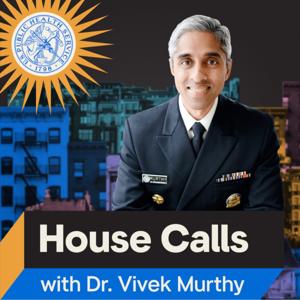


Based on Podcast App listening data
Do you wish it felt easier to make connections with others?
In this episode, recorded live from the Barclays Center in NY, the Surgeon General and Grammy Award-winning singer, songwriter and composer Jon Batiste share their experiences with reaching out to others. Even with complete strangers or in brand new situations, their approaches have countered loneliness and paved the way for new relationships. Jon opens up about his student days in New York, when he struggled to find his footing in a new place far from home in New Orleans, to how he views and manages the fame that is now part of his life.
As both men share their experiences with loneliness, they focus on the mental health of young people and some of the challenges this generation is experiencing. The conversation also speaks to the unique power of music to inspire and unite people. As Jon notes, just the simple sound of notes being played is an experience we can all share.
Jon Batiste warms up and closes this conversation with beautiful performances that make you want to be along for the ride.
(07:58) Adjusting to life in New York as a student at Julliard
(10:54) Creatively making creating connections in NY
(12:59) How did Jon Batiste develop confidence with strangers he could carry on stage?
(19:24) How has fame impacted his life?
(22:59) How does he stay connected with friends and family?
(29:11) Why does who we spend our time with matter so much?
(30:52) How can music bring people together?
(34:51) Have you ever experienced a musical “love riot?”
(38:56) How does Jon Batiste manage technology in his life?
(43:56) What are some simple ways we can connect with others?
(48:39) What are some steps we can take toward collective reconnection?
(53:15) Jon Batiste’s closing song
We’d love to hear from you! Send us a note at [email protected] with your feedback & ideas. For more episodes, visit www.surgeongeneral.gov/housecalls.
Jon Batiste, Singer & Songwriter
Twitter: @JonBatiste
Instagram: @jonbatiste
Facebook: @JonBatisteMusic
About Jon Batiste
Jon Batiste is a five-time Grammy Award-winning and Academy Award-winning singer, songwriter and composer.
Batiste is the subject of Matthew Heineman’s moving documentary "American Symphony,” which debuted with Barack and Michelle Obama’s Higher Ground in November 2023. The documentary follows Jon in early 2022, when he finds himself celebrated with 11 Grammy nominations, including album of the year. Amid that triumph, Jon is immersed in his most ambitious challenge yet: composing an original symphony for a performance at the storied Carnegie Hall. However, this extraordinary trajectory is upended when Jon’s life partner, NYT bestselling author and Emmy Award-winning journalist Suleika Jaouad, learns that her long-dormant cancer has returned.
Jon’s latest studio album, “World Music Radio” draws inspiration from his mission to create community and expand culture with the power of music. The album received widespread critical acclaim for its universal message and genre-defying sound, hailed by the Associated Press as “a mesmerizing way to dial into Batiste’s eclectic and wide musicality.”
His 2021 studio album, “We Are,” was nominated for 11 Grammy Awards across seven different categories, a first in Grammy history. He went on to win five Grammy Awards that evening, including the coveted “Album of the Year.”
Batiste composed and performed music for the Disney/Pixar film "Soul,” for which he won an Academy Award for Best Original Score alongside Trent Reznor and Atticus Ross. He is the second Black composer in history to win an Academy Award for composition. “Soul” also earned Batiste a Golden Globe, a BAFTA, a NAACP Image Award and a Critic’s Choice Award.
From 2015-2022, Batiste served as the bandleader and musical director of The Late Show with Stephen Colbert. Born and raised in New Orleans, Batiste received both a B.A. and M.F.A. at the world-renowned Juilliard School in NYC.
Do you know someone who is struggling with loneliness? Do you ever feel the definition of success you’ve been sold your whole life isn’t right?
These are some of the questions the Surgeon General and our guest, actor Matthew McConaughey, posed recently to an auditorium full of students at the University of Texas at Austin. In response, almost every hand in the young audience went up.
In this conversation, Matthew McConaughey also draws from his own life lessons. Especially in high school and college, he lived through periods of deep loneliness and learned how to find connection he needed. As his Hollywood career took off, it was time with his family and kids that put his career – and the primary importance of connection – into perspective. The Surgeon General spotlights the truth of McConaughey’s narrative – that it’s relationships with loved ones that sustain us and make our lives good, not the notions of material success our society so often seems to value.
In this conversation, we explore the power of social connection and what success really means.
We’d love to hear from you! Send us a note at [email protected] with your feedback & ideas. For more episodes, visit www.surgeongeneral.gov/housecalls.
Matthew McConaughey, Actor & Philanthropist
Twitter: @McConaughey
Instagram: @officiallymcconaughey
Facebook: @MatthewMcConaughey
About Matthew McConaughey
Do you want to improve your mental and physical health?
Deepen your friendships?
Help reduce loneliness?
Our relationships are an important part of our health and well-being. In this bonus episode, the Surgeon General announces the 5-for-5 Connection Challenge: to take 5 actions over 5 days to build social connection. Already underway at many college campuses, this challenge is a way for all of us to build our social connection muscles.
For more inspiration, visit SurgeonGeneral.gov/challenge. There you’ll find tools, including a deck of cards with plenty of ideas on how to connect.
TELL US YOUR CONNECTION STORIES
How did you choose to connect? And how did it make you feel? We are also looking for potential stories to be highlighted on a future episode of House Calls. Send us a note at [email protected].
In this episode, we re-visit a conversation with Dr. Laurie Santos, professor of Yale University’s famed “happiness” course (which has been adapted into a free online course taken by 4+ million people). As we address a youth mental health crisis, the U.S. Surgeon General and Dr. Santos talk about ways college students can find greater happiness through simple changes in behavior and mindset. In a world in which we believe our happiness hinges on material or external things, creating our own happiness is within us, says Dr. Santos. Tune in and see if you can figure out where your happiness lies. The answer might surprise you.
(02:04) How did Laurie Santos begin teaching about happiness?
(04:28) What is Laurie Santos seeing on campuses in terms of mental health?
(06:49) Why have we reached a point of crisis with youth mental health?
(10:27) What do we know about external reward, achievement, and happiness?
(12:14) What’s driving our culture of achievement?
(16:16) Can we actually make ourselves happier?
(22:49) When we make changes, how can we make them last?
(26:55) How can technology impact our happiness?
(29:34) Can we create a culture shift toward happiness for young people?
(32:29) What was Laurie Santos’ “Funtervention?”
(33:32) What can humans learn from monkeys?
For more episodes, visit www.surgeongeneral.gov/housecalls.
We’d love to hear from you! Send us a note at [email protected] with your feedback & ideas.
Dr. Laurie Santos, Professor and Podcast Host
Twitter: @lauriesantos
Instagram: @lauriesantosofficial
Facebook: @DrLaurieSantos
About Dr. Laurie Santos
Dr. Laurie Santos is Professor of Psychology at Yale University and host of the podcast “The Happiness Lab”. Dr. Santos is an expert on human cognition and the cognitive biases that impede better choices. Her course, “Psychology and the Good Life,” teaches students what the science of psychology says about how to make wiser choices and live a life that’s happier and more fulfilling. The class is Yale’s most popular course in over 300 years and has been adapted into a free Coursera program that has been taken by over 3.9 million people to date.
Dr. Santos has been featured in numerous news outlets including the New York Times, NBC Nightly News, The Today Show, CBS This Morning, NPR, GQ Magazine, Slate, CNN and O, The Oprah Magazine. Dr. Santos is a winner of numerous awards both for her science and teaching from institutions such as Yale and the American Psychological Association. She has been featured as one of Popular Science’s “Brilliant 10” young minds and was named TIME's “Leading Campus Celebrity.”
Yo-Yo Ma and the Surgeon General continue the conversation about the power of music. Yo-Yo reflects on how music was an antidote to his father’s loneliness while trapped in Paris during WWII, and how Yo-Yo shared his music to comfort people during the pandemic.
Continuing with personal stories about connection, the conversation turns to parenting, why it seems harder for men to connect, and what Mr. Rogers taught both of them. They also talk about why connecting to yourself is so important, and how Yo-Yo does that through practicing what he calls “The Beginner’s Mind.”
If you enjoy the art of conversation, this episode will be music to your ears. It will build up what Yo-Yo Ma refers to as your “emotional bank account” and bring about a sense of hope.
(02:04) How Yo-Yo's father turned to music to address loneliness
(07:14) How Yo-Yo's childhood informs his parenting
(12:15) On men & loneliness
(15:32) Lessons from Mister Rogers
(20:26) How did Yo-Yo Ma use music to help people during the COVID-19 pandemic?
(24:03) The importance of the Beginner’s Mind
(26:55) On burnout
(33:57) What are you grateful for?
(38:38) What are Yo-Yo Ma and the Surgeon General reading these days?
(42:02) What gives Yo-Yo Ma hope?
For more episodes, visit www.surgeongeneral.gov/housecalls.
We’d love to hear from you! Send us a note at [email protected] with your feedback & ideas.
Yo-Yo Ma, Cellist & Humanitarian
Twitter: @YoYo_Ma
Instagram: @YoYoMa
Facebook: @YoYoMa
YouTube: @YoYoMa
About Yo-Yo Ma
Yo-Yo Ma’s multi-faceted career is testament to his belief in culture’s power to generate trust and understanding. Whether performing new or familiar works for cello, bringing communities together to explore culture’s role in society, or engaging unexpected musical forms, Yo-Yo strives to foster connections that stimulate the imagination and reinforce our humanity.
Most recently, Yo-Yo began Our Common Nature, a cultural journey to celebrate the ways that nature can reunite us in pursuit of a shared future. Our Common Nature follows the Bach Project, a 36-community, six-continent tour of J. S. Bach’s cello suites paired with local cultural programming. Both endeavors reflect Yo-Yo’s lifelong commitment to stretching the boundaries of genre and tradition to understand how music helps us to imagine and build a stronger society.
Yo-Yo Ma was born in 1955 to Chinese parents living in Paris, where he began studying the cello with his father at age four. When he was seven, he moved with his family to New York City, where he continued his cello studies before pursuing a liberal arts education.
Yo-Yo has recorded more than 120 albums, is the winner of 19 Grammy Awards, and has performed for nine American presidents, most recently on the occasion of President Biden’s inauguration. He has received numerous awards, including the National Medal of the Arts, the Presidential Medal of Freedom, and the Birgit Nilsson Prize. He has been a UN Messenger of Peace since 2006, and was recognized as one of TIME magazine’s 100 Most Influential People of 2020. www.yo-yoma.com.
Healing can come in many forms. For world renowned cellist Yo-Yo Ma, he sees his music as a way to create touch between humans. Tirelessly performing around the world, Yo-Yo shares his musical gift generously and collaborates with many musicians, knowing that music brings healing, solace and inspiration. Music is what gives his own life meaning.
In this conversation about the healing power of music, Yo-Yo Ma and the Surgeon General contemplate how music can bring meaning that sometimes words alone cannot. How does music transform our minds and our bodies? How does music connect us to ourselves, to our humanity? Speaking from their own personal experiences and stories, this deeply personal and joyous conversation sounds like two old friends catching up.
(00:48) Dr. Murthy sings Happy Birthday for Yo-Yo
(01:42) Intro banter that will make you smile.
(05:39) How does Yo-Yo Ma see his identity?
(08:21) What does Yo-Yo Ma do to feel better when the world gets him down?
(15:15) The story of why Yo-Yo Ma doesn’t play the violin.
(17:15) Did Yo-Yo Ma have moments of doubts on his way to becoming a musician?
(22:07) How did Yo-Yo Ma come to see music as a source of healing?
(31:12) What does it mean to join the head, heart and body?
(34:54) Did salsa dancing change Dr. Murthy’s bedside manner?
(38:25) Why does Yo-Yo Ma treasure his education?
(40:07) Yo-Yo Ma’s lifelong question: What is the purpose of Music?
For more episodes, visit www.surgeongeneral.gov/housecalls.
We’d love to hear from you! Send us a note at [email protected] with your feedback & ideas.
Yo-Yo Ma, Cellist & Humanitarian
Twitter: @YoYo_Ma
Instagram: @YoYoMa
Facebook: @YoYoMa
YouTube: @YoYoMa
About Yo-Yo Ma
Yo-Yo Ma’s multi-faceted career is testament to his belief in culture’s power to generate trust and understanding. Whether performing new or familiar works for cello, bringing communities together to explore culture’s role in society, or engaging unexpected musical forms, Yo-Yo strives to foster connections that stimulate the imagination and reinforce our humanity.
Most recently, Yo-Yo began Our Common Nature, a cultural journey to celebrate the ways that nature can reunite us in pursuit of a shared future. Our Common Nature follows the Bach Project, a 36-community, six-continent tour of J. S. Bach’s cello suites paired with local cultural programming. Both endeavors reflect Yo-Yo’s lifelong commitment to stretching the boundaries of genre and tradition to understand how music helps us to imagine and build a stronger society.
Yo-Yo Ma was born in 1955 to Chinese parents living in Paris, where he began studying the cello with his father at age four. When he was seven, he moved with his family to New York City, where he continued his cello studies before pursuing a liberal arts education.
Yo-Yo has recorded more than 120 albums, is the winner of 19 Grammy Awards, and has performed for nine American presidents, most recently on the occasion of President Biden’s inauguration. He has received numerous awards, including the National Medal of the Arts, the Presidential Medal of Freedom, and the Birgit Nilsson Prize. He has been a UN Messenger of Peace since 2006, and was recognized as one of TIME magazine’s 100 Most Influential People of 2020. www.yo-yoma.com.
Nature matters to our ability to connect — with each other and ourselves. In this episode of House Calls, we explore how being in nature – whether it’s your local green space, or a national park, or somewhere in between – can build deep and important connections. Who better to take us on this journey than Baratunde Thurston, host of the PBS series “America Outdoors” and the podcast “How To Citizen.” Baratunde has traveled the United States from the Okefenokee Swamp to Death Valley, meeting people of all types and exploring their habitats with them. Baratunde shares his insights – that we Americans love the world around us and nature makes us feel better, both in body and mind. As we share our natural world with other animals and humans, Baratunde helps us see ourselves as part of something bigger, that we are beings who thrive on relationships, community, and participation with the world.
(02:26) How did Baratunde’s mother introduce him to nature?
(08:04) Why nature was a healing force for young Baratunde
(14:42) What wonders did Baratunde experience creating “America Outdoors?”
(20:41) How can nature help us reconnect with what’s really important?
(23:27) How does sharing the outdoors build connections across differences?
(29:24) How can we get more doses of nature on a daily basis?
(32:43) How can nature help us when we’re struggling?
(37:50) Why does Baratunde consider the word “citizen” a verb?
(44:02) What is the life balance of the individual versus the collective?
(51:46) What does Baratunde’s journey into the science reveal about nature and our mental health?
(54:04) Where’s the nature in the urban spaces?
(55:33) What does really knowing, and loving, other people do for us and for community?
(01:00:21) What gives Baratunde hope?
(01:04:23) What is Baratunde’s favorite food on the road?
For more conversations, visit www.surgeongeneral.gov/housecalls.
We’d love to hear from you! Send us a note at [email protected] with your feedback & ideas.
Baratunde Thurston, Host, Activist & Comedian
Twitter: @baratunde
Instagram: @baratunde
Facebook: @baratunde
About Baratunde Thurston
Baratunde Thurston tells a better story of us, weaving together threads of race, technology, democracy and climate through his work as an Emmy-nominated host, producer, writer, and public speaker. He is the host and executive producer of the PBS television series “America Outdoors with Baratunde Thurston,” creator and host of “How To Citizen” with Baratunde which Apple named one of its favorite podcasts of 2020, and a founding partner of the new media startup Puck. His comedic memoir, “How To Be Black,” is a New York Times best-seller. In 2019, he delivered what MSNBC’s Brian Williams called “one of the greatest TED talks of all time.” Baratunde is unique in his ability to integrate and synthesize different and difficult topics in a style that’s intelligent, compassionate, and humorous. Baratunde serves on the boards of Civics Unplugged and the Brooklyn Public Library and lives in Los Angeles, California.
In this episode of House Calls, the Surgeon General talks with actress and activist Ashley Judd, who brings along three friends she calls sisters in her chosen family. This five-way conversation explores the meaning of friendship, trust, and supporting one another in times of joy and hardship. From experiencing daily life to the devastating death of Ashley’s mother, country singer Naomi Judd, Ashley and her chosen family have been there for one another in ways that demonstrate the power of intentional connection. Listen as Dr. Murthy asks why this group of women hold their chosen family so dear.
(02:32) Who is Ashley Judd’s chosen family?
(04:09) How Ashley and her chosen family met
(07:29) When Ashley’s mother died, how did her chosen family show up?
(12:28) How Ashley & Friends find safety and support in one another
(18:08) How do Ashley & Friends define chosen family?
(24:33) How often are Ashley & Friends in touch?
(30:10) How have Ashley & Friends navigated conflict?
(34:15) How do Ashley & Friends handle friendship despite differing beliefs?
(41:01) How do Ashley & Friends advise others to create a chosen family?
(46:42) What principles have Ashley & Friends established for their chosen family?
(51:55) What gives Ashley hope for the future?
For more conversations, visit www.surgeongeneral.gov/housecalls. Email us at [email protected].
Ashley Judd
Twitter: @ashleyjudd
Instagram: @ashley_judd
Facebook: @ashleyjuddofficial
About Ashley Judd & Friends
Ashley Judd is a Golden Globe and Emmy-nominated actress who navigates between indie gems and box office hits. A feminist and social justice humanitarian, she is UNFPA Goodwill Ambassador, advocating for sexual and reproductive rights for girls and women worldwide. She has traveled to 23 countries, visiting brothels, refugee camps, and slums, to learn about male sexual violence and gender inequality. Her New York Times bestselling book, “All That Is Bitter & Sweet”, chronicles these journeys.
Ashley earned an MPA from Harvard's Kennedy School of Government. Ashley was Time Magazine’s 2017 Person of the Year as one of the Silence Breakers. She was the first to go on the record about rapist Harvey Weinstein. In 2019, the United Nations honored her as Global Advocate of the Year. A survivor of multi-generational trauma and child rape, Ashley has been in recovery for 17 years. She is an advocate for survivors and those who live with mental illness in their families. Ashley believes trauma we do not transform is trauma we will transfer, and that a life of service begins with taking responsibility for one’s own healing.
Logan Raines has found that connection with others takes intention, and lasting friendships are essential to emotional health. Logan wears many hats- wife, mother of 3, and part-time photographer. When her father was diagnosed with dementia, Logan stepped into the role of manager for her parent’s estate. Logan holds a Bachelor’s degree in Psychology from Belmont University. She lives in Franklin, TN with her husband, Danny, their children, Luke, Lillian, and Drew, and beloved dog Coco.
Heather Raymond is a wife, mother of 3, and a full time Realtor. In her first year of being a Realtor she was named Rookie of the Year by Parks Realty in Middle Tennessee. Heather is an endurance athlete who has completed several Ironmans and ultra marathons. Heather and her husband Marc plan to retire in his home county of France and hope Luc (16) Audrey (13) & William (7) will visit frequently when that becomes a reality.
Samantha Andros is a career educator who recently finished her master’s degree in social work from Indiana University. Sam has worked for over 30 years as a teacher, mentor, and interventionist, supporting the goals of students facing hardship. Sam has been married for over 30 years to her husband Ed, and has 3 young adult daughters. Sam credits her friends' unwavering encouragement for her ability to maintain a meaningful life.
The end of summer and the arrival of fall marks a time of transition. Vacation time ends and school begins. No matter your age, for many of us, these kinds of transitions mean change, and change can give rise to anxiety. We all have anxiety. It’s part of being human. The question is whether we can transform that uncomfortable feeling of being anxious into a positive? To help us think through, and better manage, our anxiety, House Calls is re-sharing a conversation with Dr. Tracey Dennis-Tiwary.
Dr. Tracy Dennis-Tiwary, author of “Future Tense: Why Anxiety is Good For you (Even Though It Feels Bad),” and a professor of psychology and neuroscience at Hunter College, says harnessing our anxiety can help us shape the future, instead of making it something, well…to be anxious about. In this episode of House Calls, the Surgeon General and Dr. Dennis-Tiwary talk about concrete ways many people can get through anxious times with a slower pulse, and calmer mind, and a clearer vision. Dr. Dennis-Tiwary calls it The Three Ls and she says anyone can learn to do it.
(02:50) What is anxiety and why does it exist?
(04:57) Stress, anxiety, or fear: What’s the difference?
(06:13) Anxiety or anxiety disorder?
(07:58) How does anxiety manifest?
(11:19) Is mental health the health crisis of our time?
(14:13) Managing anxiety with the Three L’s.
(18:12) Why should we befriend our anxiety?
(19:13) How can we help children with their anxiety?
(31:27) Can you become an emotional ninja?
(33:13) What drives our anxiety?
(39:11) Where do anxiety and social media intersect?
(45:21) Can we prioritize mental health?
For more conversations, visit www.surgeongeneral.gov/housecalls.
We’d love to hear from you! Send us a note at [email protected] with your feedback & ideas.
Dr. Tracy Dennis-Tiwary, Professor and Founder and CSO of Wise Therapeutics
Twitter: @tracyadennis
Instagram: @dr.tracyphd
LinkedIn: @tracydennistiwary
About Dr. Tracy Dennis-Tiwary
Tracy A. Dennis-Tiwary, Ph.D. is a professor of psychology and neuroscience, Director of the Emotion Regulation Lab, and Co-Executive Director of the Center for Health Technology at Hunter College, The City University of New York. As Founder and CSO of Wise Therapeutics, she translates neuroscience and cognitive therapy techniques into gamified, clinically validated digital therapeutics for mental health. She has published over 100 scientific articles and delivered over 400 presentations at academic conferences and for corporate clients. She has been featured throughout the media, including the New York Times, Wall Street Journal, Washington Post, ABC, CBS, CNN, NPR, The Today Show, and Bloomberg Television.
How can we become healers?
In these times of disconnection, we all search for sources of healing. One powerful, often untapped source is the healing we can provide for each other. For this conversation, I turned to my long-time medical school mentor, Dr. Rachel Naomi Remen. Rachel is widely known for launching the course The Healer’s Art, which has been taught to over 30,000 medical students, including me. Now in her 80s, she has been a guiding light for decades.
In this live conversation, we explore deep questions: What is the difference between curing and healing? What is the role of love in doctoring? How is listening a form of healing? Rachel draws from her own life, including the harsh experience of being the only woman in her medical school class and living with chronic illness; while still painful, those experiences helped her understand who she is.
In an increasingly complex world, knowing ourselves and finding ways to express love is what this episode of House Calls is all about.
(03:40) How Dr. Remen and Dr. Murthy connected through the heart and soul of medicine.
(14:01) What is the difference between healing and curing?
(16:10) What is a wounded healer?
(20:51) What is the role of love in healing?
(23:00) How does serving others help the heart and soul?
(24:28) How did Dr. Remen find a place she really belongs, and how can we?
(30:20) What does it mean to be one of a kind?
(34:30) Why love is a blessing for a lifetime.
(46:22) What has Dr. Remen learned from her cancer patients about healing?
(49:25) How can we be source of healing for others?
(54:09) What can help us break away from feelings of despair?
For more conversations, visit www.surgeongeneral.gov/housecalls.
We’d love to hear from you! Send us a note at [email protected] with your feedback & ideas.
Dr. Rachel Naomi Remen, Physician & Teacher
Facebook: @rachelnaomiremen
About Dr. Rachel Naomi Remen
Rachel Naomi Remen, MD is Clinical Professor Emeritus of Family and Community Medicine at the UCSF School of Medicine and Professor of Family Medicine at Wright State University Boonshoft School of Medicine in Ohio. In 1991, she founded the Remen Institute for the Study of Health and Illness (RISHI) a national training institute for physicians, nurses, medical students, nursing students, veterinarians and other health professionals who wish to practice a health care of compassion, meaning, service and community. She is an internationally recognized medical educator whose innovative discovery model course in professionalism, resiliency and relationship-centered care for medical students, The Healer’s Art, is taught at more than 90 American medical schools and schools in seven countries abroad. Her bestselling books “Kitchen Table Wisdom” and “My Grandfather’s Blessings” have been published in 23 languages and have millions of copies in print.
In recognition of her contribution to medicine and medical education, she has received numerous awards including three honorary degrees, the prestigious Bravewell Award as one of the earliest pioneers of Integrative Medicine and Relationship Centered Care. In 2013, she was voted the Gold-Headed Cane award by UCSF School of Medicine for excellence in embodying and teaching the qualities and values of the true physician. Dr. Remen has a 70-year personal history of chronic illness, and her work is a potent blend of the perspectives and wisdom of physician and patient.
From the publisher's feed
Ranked by our users in the last 21 days

43,852 Listeners

38,016 Listeners

43,359 Listeners

1,219 Listeners
729 Listeners
10,502 Listeners

111,799 Listeners
5,108 Listeners
14,353 Listeners

3,340 Listeners

15,882 Listeners
2,042 Listeners
10,532 Listeners

19,254 Listeners
4,284 Listeners