
Sign up to save your podcasts
Or

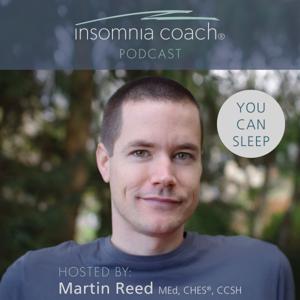

Jeannette thought of herself as a great sleeper until 13 years ago when she moved and her work schedule become less consistent. She started to stay up later and sleep in later and this led to some sleep disruption. When Jeannette tried to fix this, she ended up going down the insomnia rabbit hole and started researching how to get rid of her insomnia. The more research she did, the more she tried to fix her sleep, the more rules and rituals she engaged in, and the more she found herself struggling.
After working with me, Jeannette’s sleep improved — but one night she woke up and found that she couldn’t fall back to sleep and all her old fears returned. She felt that something must be wrong with her as she found herself waking and finding it impossible to fall back to sleep night after night.
This pulled Jeannette back into her old safety behaviors that she knew from experience weren’t helpful because she just didn’t know what else to do.
In this episode, Jeannette describes how she moved away from the insomnia struggle; how she became more comfortable with nighttime wakefulness, how she stopped chasing after sleep, how she started to allow her mind to generate whatever thoughts it chose to generate — even the difficult ones, and how she started to be kinder to herself when things were difficult.
Perhaps most importantly of all, Jeannette’s story shows that ups and downs are normal and to be expected. Just as we will have difficult days from time to time, we will have difficult nights from time to time. What truly matters is how we respond.
Click here for a full transcript of this episode.
Martin Reed:
Martin Reed:
Martin Reed:
Jeannette Stojcevski:
Martin Reed:
Jeannette Stojcevski:
And then when I had gotten this online job, on those days, I would sleep in and I would generally go out maybe the night before and not know why I was having trouble waking up at, because I had early clients. So on the other days, I had to get up at 4:30 in the morning and I could no longer fall asleep on the nights before. And it was just because I believe my schedule was completely erratic. So some days I was waking up at 4:00 AM, other days 10:00 AM, 8:00. So then my sleep just started to struggle from that point on, and I didn’t know why. I just thought, “Oh my gosh, what was going on with me? Why can’t I fall asleep anymore?” And that’s when the search started. That’s when I just started down the rabbit hole and it never stopped.
Martin Reed:
Jeannette Stojcevski:
Martin Reed:
Jeannette Stojcevski:
And then I started taking sleeping pills. That’s when I went down the path of, “Okay, I don’t know what else to do.” I started smoking marijuana and I started taking sleeping pills. But I had no idea what I was actually taking. I got them from a family member who was able to get them from Europe, and I did not know, and he didn’t know what I was taking either. So I eventually ran out because it wasn’t a prescription. So I eventually ran out, and now I’m dealing with, which I didn’t realize at the time how dangerous it was, I’m dealing with rebound insomnia. So it was even worse at that point where I didn’t sleep for days. I actually slept in my car one night. So I can’t even be in my apartment anymore, I’ve got to leave. So I went to my car and actually fell asleep that night, which was interesting.
And so after about five days of that, I stayed at a friend’s house and then I was able to sleep after that. I was able to get a good chunk of five, six hours. So I knew that I could sleep again, I knew my body was able to do this, but I still didn’t know why it was happening, so I sought out the help of a holistic doctor out there. And it was a wonderful experience, I started to sleep better, but I thought at that time it was because of the supplements. I thought, “Wow, I’m on this program, he balanced out whatever was going on with me, I’m good.” But in reality, looking back, I think my sleep got better at that time because I just started to, because I didn’t go out anymore, I wasn’t going out at night, so I wasn’t sleeping in as much. So I think everything regulated and I started sleeping better for a while.
And then it never really left me. I was always worried about it, I always thought about it, I obsessed about the way I looked like, “Is this affecting my appearance, is this affecting my workouts?” I just continue to worry about it, so that fear never left me. And then in December of 2020… Now I’m living in Michigan. I moved back to Michigan and I got COVID in December of 2020. And I got it pretty… I lost my smell, and so it was a pretty difficult time. I got a little depressed around that time. And my sleep suffered naturally, but of course… And I was having problems every so often before that. But it really, really suffered after I got COVID and I thought, “Oh no, this is different. This is the worst it’s ever been.”
And that’s when I started working with you and I got better. But then I think it was September of 2021 that I just started to get worse. I don’t know what the trigger was, it was just a night where I couldn’t fall back to sleep. That’s what it was. I woke up around three in the morning and then I couldn’t fall back to sleep after that. And then I was like, “Oh no, it is back.” But that’s never happened to me, usually I can get back to sleep. So I’m thinking it was worse than it has ever been, something must be wrong with me. And then I started going down another crazy rabbit hole.
I considered going to a rehab at that time like, “Do I need to go somewhere where somebody just has to take care of me for a while?” I considered going to the ER psych ward. I was just out of my mind thinking something was really wrong with me because of course, the following night it happened. And then I’m waking up and unable to go back to sleep every night of the week. So instead of going back to what I knew I should do, which is just stay calm, it usually passes, I just went down another rabbit hole where I started smoking marijuana again, I started looking for the supplements, and I started just doing the things that I knew weren’t going to work, but for some reason I just didn’t know what else to do at that moment because I just felt so bad.
And I think the reason why it was hard for me to go back on the program was because at that time I just felt so physically bad. But then that’s when I think I reached out to you or you reached out to me and I just decided, “Okay, I’m going to do this again. I’m really just going to give this a real shot again.” And I did. And of course my sleep started improving, I started to be able to fall back asleep again. And there was an interview you did that really inspired me.
I’m a big watcher of your podcast with other people because that’s really what fueled me during those dark moments. Just knowing that, I think there was a lady who had it pretty much her whole life, and she said something and it stuck with me, “There’s things going on behind the scenes.” It feels like it may not be working at first but I remember I just kept saying that to myself, “Behind the scenes, Jeannette. It’s going to work. This takes time, this takes a minute. You’ve had this and you’ve had some deep psychological changes around your thoughts around sleep, so this is not going to be an overnight thing.”
And I always thought, “Oh, by the third day, I should be sleeping better.” And that’s not the case. For me at least, it wasn’t. So I just started to stick to the program better too, because before the problem I think I had was I just couldn’t stick to it. I just had a really hard time getting out of bed. Yeah, but when I finally just committed and I just dived into the podcast and videos and it helped me so much on this last round of my last relapse.
Martin Reed:
So we then really what it comes down to, we engage in effort. We try harder to sleep than we ever have before, we put all this effort into sleep, we might engage in rituals, experiments. Again, all completely understandable why we do that. But it actually ends up giving insomnia the oxygen it needs to survive, that attention, that effort, that strong desire to avoid being awake at night. That’s what keeps insomnia going. And just as you experienced, some of this stuff can give a short-term relief. It can generate some improvements in the short term, but what can happen is when we then try and move away from those things, we are back to where we started because we never really got to that root issue, which is addressing that really strong desire to avoid being awake.
I think what it comes down to is if we are willing, if we can get to a place where we are more willing for insomnia to exist, it tends not to exist, but when we are really desperate for it not to exist, it’s really likely to exist. So all of that, and it’s like, it’s also important to recognize too, that the worry and the anxiety, and the stress, and all those difficult thoughts and feelings, they’re not necessarily a cause of insomnia. Just because we’re stressed or anxious or worried, that doesn’t mean that we’re going to have a really difficult night. But when we start to struggle with that, when we try and push or fight or avoid all that difficult stuff, all those thoughts and emotions, I think that’s what then definitely can generate some difficult nights.
Jeannette Stojcevski:
Martin Reed:
Jeannette Stojcevski:
But for some reason, I just couldn’t muster up the strength to get myself out of bed. Or if I did, I would, it would just be to go to the bathroom and then right back into the bed, or just a temporary quick break out of my bed. I would sit up and then get back into it because I was just like, “I don’t want to be off. It’s night.” But now I know looking back, that just fueled my issue. It just fueled it. There’s no reason to have a reaction like that unless you just… It’s a habit, it just became a habit for me that I was unable to break.
Martin Reed:
So what does the brain think? “Oh, you’re trying so hard to avoid being awake at night. Being awake at night, it must be a danger, it must be this threat. It’s like a very real physical threat and a danger to you, so I’m going to be alert to protect you from this danger of wakefulness.” And obviously that alertness makes sleep more difficult. So all those efforts that we engage in, they can give us some short-term relief sometimes, but what are we doing? We’re kind of reinforcing that belief in our brain that this wakefulness is a real danger, that it has to be alert to protect us from, because the brain isn’t doing all this stuff to make us feel bad. It’s doing all this stuff to look out for us, but it’s just trying so hard that it often ends up getting in the way.
Jeannette Stojcevski:
Martin Reed:
Jeannette Stojcevski:
Martin Reed:
Jeannette Stojcevski:
Martin Reed:
Maybe it will just hang out for a while, maybe then it will go away, maybe then it will come back. But we’re just not engaged in that struggle anymore, we’re not trying to push it. We’re not trying to push it away, we’re not trying to distract ourselves, which is so exhausting. We just let the mind do what the mind wants to do and focus on what we have control over, which are always our behaviors. No matter how bad things are, no matter how difficult they are, we can still move our body. We can do things that can make unpleasant wakefulness a bit more pleasant, and we can do things during the day, these don’t have to be huge things, but we can always do some things during the day that are aligned with our values and that just help us keep moving toward the kind of life we want to live, even when all this stuff is going on in our heads, even after we’ve had a difficult night.
And if we do that, not only does it help give us the opportunity to make the days and the nights a little bit better, but it also helps train the brain that maybe this wakefulness isn’t quite as much of a threat. Certainly not a physical threat, like a bear waiting for you under the covers because you’re making that wakefulness a little bit more pleasant by just doing something else instead of struggling. And then during the day, you’re still able to do some things that help you live the kind of life you want to live. And I think that’s all part of the journey that we have to go through in order to enjoy this long-term improvement where we just see that insomnia more in the rear-view mirror than something that’s controlling our lives.
Jeannette Stojcevski:
And it didn’t work for me. I liked the concept of being mindful and letting the thoughts come and just letting them come in, but I needed the structure of the sleep window, a real sleep window. I liked the discipline of that. For me, that was very important. So both together, I think combined helped me. And I think just letting go of the sleep window was probably a really bad thing for me that I was starting to let go of it, because I would spend long periods of time in bed too, I forgot to mention that. And I was that person nine, 10 hours, just sleep in till whenever. And I wasn’t even sleeping, just to catch up, but that didn’t help. So the structure really helps me. Structure.
Martin Reed:
So how about you tell us a little bit more about your experience there. You already mentioned that you were spending a lot of time in bed. How did you reduce that? Why did you reduce it? And how did you find that experience?
Jeannette Stojcevski:
But then you said, “You don’t have to make it this event. You don’t have to get up and do a five-mile run. You can get up and sit on the cozy couch with your blanket, with your cup of coffee or whatever, and start your morning out that way.” So that’s what I started to do. I remembered that. So just started to pull myself out of bed, not beat myself up if I slept in a little bit, 30 minutes, that’s okay. I would just get myself up. And I did what you mentioned, just start my day really slow. And slowly but surely I started to feel better in the morning, because I had a lot of nausea in the morning, whether it was from actual lack of sleep or I think it was more of my reaction to it. Of course, we all feel a little not so well after a poor night of sleep, but the way I felt was just I wasn’t able to eat sometimes, but that started to get a little bit better.
And then I actually just started just jotting. I wanted to let go of the charting. I didn’t like that because I don’t think that was helpful for me because I’m already a little bit of an obsessive person, but I would journal about just how I felt that day and the little improvements I was making. Like, “Oh, today I didn’t feel like… I was able to eat within an hour of waking up. That’s an improvement.” So I just started thinking about, instead of looking at all these negative things that were going on, I just started tracking my improvements. What has improved today and what have I continued to do during even some of the bad times? And nothing in my life really fell apart, so I think that was really helpful, just slow start to the morning, have just journaling my successes, because somebody else, I think this was another person, because I had spoke to many, many people over the years, that was just a snippet.
Like over the 13 years I had it, I saw quite a few sleep doctors and somebody recommended, “Oh, maybe you should schedule an exercise class in the morning, some things like maybe yoga or something.” I’m like, “That sounds horrible for me to get out the door. I mean, even if it’s yoga, that sounds horrible. So no.” And of course, I never took the yoga class in the morning because that just wasn’t going to work for me. And so this suggestion really helped and I still do it that way, not get up. And I never really was, even as an athlete in college, we had 6:00 AM practices. I was never, “Oh, I can’t wait to get off.” I was just slow as molasses in the morning, but my roommate loved mornings. So we’re all wired differently. It’s so interesting. But yeah, I’m still slow in the morning and that’s okay for me.
Martin Reed:
And often we start to feel differently as the day progresses in response to the time, what we’re doing, where we are, and stuff like that. I mean, I like to think that when I first wake in the morning, that’s the low point of the day, that’s the crappies I’m going to feel all day long most of the time, so I’ve got a big improvement to look forward to as the day progresses. And I think that’s where just getting out of bed around the same time every day can be helpful because often just lingering in the bed doesn’t usually help shake off all those difficult, that fatigue, that grogginess, but kind of moving, getting the day started no matter how slowly, often can be more helpful. And it’s another one of those things too, where we are not chasing off to sleep because we are getting out of bed around the same time.
And we don’t have to be super strict. Like you said, maybe one day we fancy like an hour lying or a half an hour lying. That’s fine, we’re human beings. But just getting out of bed around the same time, we are not chasing off to sleep, we are not saying to the brain, “Look, I got to get sleep, I’ve got to get sleep because being awake is a real danger. You need to protect me from this danger, be really alert at night to protect me from being awake, we’ve got to get sleep.” And when we’re out of bed, we tend to be moving around, engage. We are more likely to be engaged and doing the kind of stuff that’s important to us. And that’s really what life comes down to. Life comes with pain, and struggle, and difficulty. Life is what we do when we’re awake. It’s all the actions that we are engaged in.
So as long as we can just continue to do things that are aligned with our values, that are important and meaningful to us, even with all that difficult stuff going on, that’s really all that matters. In a hundred years, we are not going to look back on all the great nights of sleep we had. We’re going to be looking back on all the things we did when we were awake, even when we felt crappy doing them.
Jeannette Stojcevski:
Martin Reed:
Jeannette Stojcevski:
But I didn’t think about it, I didn’t sweat it, I wasn’t freaking out about it. It’s just life comes with lots of ups and downs. So yeah, I think when you’re in the crux of it, you just think, “This is not how I should feel.” And in reality, yeah, there’s going to be some days that won’t be so great, but really what are you doing during the day? Are you having joyful moments? And really, most of the time, like you just said, the mornings are the worst times of my day. But even on those nights I only slept a couple hours, by the evening time I’m tired, but I’m actually feeling okay. And I would always remember that, I reminded myself of that on those bad mornings like, “Jeannette, by seven o’clock tonight, you’re going to be feeling fine. Just let’s get through this day, stay calm, stay relaxed. Yeah, it’ll be okay.” So it’s just so crazy how we just can forget and want to just have this perfect little sleep in life and it doesn’t exist.
Martin Reed:
If we are training to be an athlete, you’re putting your body through all of that training, you’re feeling fatigued, but you recognize that in order to reach the level you want to reach to live the kind of life you want to live to reach your goals, there’s going to be that fatigue. It’s not all going to be plain saying. There’s going to be difficulty, there’s going to be struggle. And if you’re training for a marathon, I’m sure you’re going to be getting blisters, maybe some pulled muscles. There’s going to be pain.
Jeannette Stojcevski:
Martin Reed:
Jeannette Stojcevski:
Martin Reed:
Jeannette Stojcevski:
Martin Reed:
Jeannette Stojcevski:
And then after that conversation with him and then a couple more podcasts or interviews with people, I realized, “Okay, I really need to give this a shot. I think it’s not helping me because I’m ending up with sore, achy muscles anyway.” I really started to get real serious with myself and say, “If you don’t try something, if you don’t do something, this is going to be your life for the rest of your life.” Because I think I was, and I am still, disciplined. This is one area of my life where I feel like I lost discipline. I couldn’t just do this, so I just had some real good talks with myself just like I would before a race or something like, “You know what? This is something you have to do. You can do this, strong.”
And it was just a lot of positive self-talk like, “Come on Jeannette, let’s go. Get up, let’s do this.” So for me, it was just realizing that I really had no other choice If I wanted to get better, that laying in bed was not serving me. It was making me more anxious, more irritable, more sore, sweating. I felt like I was having hot flashes. I’m like, “I’m going through perimenopause.” That wasn’t it. It was just anxiety. So just with being able to reason, again, my journaling, I was able to start making those changes in the middle of the night, but I didn’t get up and read a book. That was never something that felt good or I never was one to get up and watch TV. I didn’t want to do anything that was just too much effort for me.
So for me, it was just stretching, laying on the ground, getting up. I actually got up, but I would come to my couch and then just sit on my couch or sometimes just listen to a YouTube station that has an image with rain or just something very relaxing, but not in an effort to fall back to sleep, just to stay calm. So I started doing that, just started removing myself from the bed, either stretch or just sit somewhere else, but I wasn’t necessarily doing anything. And that felt good to me, that did feel good to me. And eventually I did have a big fear of my bed for a long time, actually. I slept on this good old couch for a long time. So at that point I was going back to the bed though, and it all started just slowly but surely, but it took time.
Again, this is not something that worked for me in five days, it took weeks and weeks, and I feel like haven’t lost the fear completely of getting up in the middle of the night, like I’m still sometimes like, “Okay, I’m up.” But I know I’ll get there, to the point where I no longer even think about it. It’s just a blip and then I go back to sleep. So it is a process.
Martin Reed:
If instead we can do the opposite. So for example, with the sleep window allotting less time for sleep, what are we doing? Ultimately, we’re just preventing ourselves from chasing after sleep. So that’s a big sleep effort dropped right there just by giving ourselves an earliest possible bedtime and a consistent out of bedtime in the morning. Now we’re not chasing sleep and the process of getting out of bed during the night, I often get asked, “Isn’t that in itself a sleep effort?” I think it’s the opposite of a sleep effort because if we’re getting out of bed, we’re not going to fall asleep at that moment as the physical act of getting out of bed. Again, what are we doing really? We’re just not chasing sleep, we are not putting effort into sleep. So if we’re in bed and being in bed doesn’t feel good, we are just going to do something that’s going to make being awake more pleasant.
So we are not putting all that effort into sleep, we’re not struggling to get entangled up with our thoughts, and our feelings, and our emotions. We’re just going to do something to make being awake more pleasant. And again, not only are we not chasing after sleep, if we are able to do something more pleasant, the brain’s like, “Wait a minute, I thought wakefulness was this physical threat or this danger. How can that be if now this wakefulness is starting to feel a little bit more pleasant than it used to?” And so we chip away at it. And like you said, it’s not something that works within 48 hours or in three days, or necessarily within a week or two. Often it takes a lot of commitment to just avoid falling into that trap of trying to make sleep happen, trying not to think something, trying not to feel something, and just focusing on what we can control. But what we can control won’t necessarily give us immediate relief, but it’s usually more helpful over the long term.
Jeannette Stojcevski:
Martin Reed:
Jeannette Stojcevski:
And that was also a huge thing for me, catastrophize like, “Oh, am I going to lose my job because I’m going to become overweight?” Whatever, it was just horrible thoughts. But then I just started to really just live my life normally, which means doing my workout that I had scheduled, even if it didn’t… Some days it wouldn’t feel as good or I couldn’t lift as heavy or whatnot, but I still committed to that. And I just started living more, going out with people. Even when I felt dead tired, normally I would’ve canceled. I would even cancel a phone call because I just didn’t have the energy like, “Oh, I’m just too tired for it.” And I stopped doing all that stuff. I started living my life more true to how I wanted to live it.
And little by little I started journaling that too like, “Well, I did all my workouts this week.” And then I would really reflect on all the new things I started to add to my life, which is just going out to dinners with friends. For me, going out at night, I wasn’t afraid of it because I need to get back home because my bedtime was already pretty late. It was just more, “Do I have the energy to do this? I just feel so crappy or whatever.” And in reality, when I went out with that person, I always felt better, I was able to shake off the fatigue and have a good time. So I think little by little, just living life started to add up for me. And also being mindful of the days. That was something that I picked up too, is just being mindful on those days I wasn’t feeling my best. And also being kinder to myself, I started being kinder. That’s something I did.
Whereas I was really abusive before. I would just constantly in my head, “I’m a failure, I can’t do this, why can’t I do this? Other people have done this.” And I just decided to stop it, just be kind on those days. “Okay, so you didn’t wake up on time. All right. So you didn’t have a great night. How do you feel?” I just checked in with myself a little bit more and that was really helpful, that was really helpful for me. Just checking in during the day. I’m just doing more living.
Martin Reed:
Jeannette Stojcevski:
Martin Reed:
Jeannette Stojcevski:
Martin Reed:
So I’m curious to just hear your thoughts. Did you find that you followed a pattern that worked a bit like that?
Jeannette Stojcevski:
It was really important for me just to become, I went back because I have a lot of books on insomnia, and I just kind of reeducated myself on things I already knew, things I had already read. And I think sometimes when you’re struggling with something that’s so just kind of embedded in your brain, it’s very hard to get out of it. But for me, just continuing to work on just the thoughts around the fact that, “I am not different, I am the same as all these other people, this is not a different type of relapse, you’re going to get better.” That was helpful to me. And it wasn’t like I did anything too different. It was more just educating myself again. I didn’t try any new techniques or anything, it was just more of the education like, “Okay. All right, this person recovered. Oh, this is why this is happening. I’m hyper aroused.” That word, I just kept remembering that word.
“This is hyper arousal. This is nothing more than that. You’re aware that you’re awake and now because of this awareness, your brain’s trying to protect you.” So just understanding logically what was going on was helpful for this last relapse. I think before, I didn’t quite get into the education as much as I did this last time, and it did help. It really did. All of the interviews are so helpful. I want to shake every person’s hand who’s done an interview because each one has something like a snippet, and at some point you have to let them go too. You can’t just listen to videos all day long for the rest of your life, but I think as long as it’s helping, and I didn’t see anything wrong with that, so for me that was education.
Martin Reed:
All we can do is train it that it’s okay to be awake at night. And to do that, we have to be more willing to experience nighttime wakefulness. We can do that by making it a bit more pleasant when it doesn’t feel good and avoid all those sleep efforts, all those things that we might have been doing with the goal of creating sleep or creating sleepiness. They’re never usually helpful because we’re putting effort into sleep, and sleep doesn’t respond well to effort. And we are reinforcing this idea in our brain that wakefulness is a threat, that it has to be avoided, that, “Okay, brain, I’m tasking you with being alert at night to protect me from wakefulness.”
And so as soon as we’re engaged in those efforts, sleep becomes more difficult. So yeah, the education lifts that veil. And I think another big part of that education is giving ourselves the opportunity to continue doing things that are important to us, even when we’ve had difficult nights, just like you were talking about, because it reduces the kind of influence the sleep, wakefulness, or the difficult thoughts and feelings have over our lives. We’re not necessarily getting rid of them because these are things that we can’t control. The only thing we can control are our actions. So as long as we just continue to engage in actions that help us move toward the kind of life we want to live, all this difficult stuff has less of an influence over us.
I mean, it still doesn’t feel good, but there’s nothing we can do about that. We can’t make ourselves feel great, but what’s important is that we’re just doing stuff that matters, that’s important to us, even when all this difficult stuff is going on. And I think that’s really key to these long-term transformations like we are talking about here and that we have other guests talking about on the podcast.
Jeannette Stojcevski:
Martin Reed:
Jeannette Stojcevski:
But this does work, and it’s worked for many people. So if it’s too difficult, if you just can’t seem to do it on your own, hire somebody, it’s the best investment you can make. And give it a real shot. Don’t just say, “Oh, that won’t work for me because I did that too.” But usually those people may not be doing it in the way like just give it a shot. That’s all I can say. It works, it really works. I’ve been through a lot with insomnia, and I feel so much better, and I’m just continuing to get better. So yeah, that’s what I have to say.
Martin Reed:
Jeannette Stojcevski:
Martin Reed:
Jeannette Stojcevski:
Martin Reed:
Martin Reed:
Martin Reed:
Martin Reed:
Mentioned in this episode:
Podcast episode with Michelle talking about things going on “behind the scenes”
I want you to be the next insomnia success story I share! If you're ready to stop struggling with sleep and get your life back from insomnia, you can start my insomnia coaching course at insomniacoach.com.
Share this page
 View all episodes
 By Martin Reed, MEd, NBC-HWC, CCSH, CHES®

4.6
8686 ratings
Jeannette thought of herself as a great sleeper until 13 years ago when she moved and her work schedule become less consistent. She started to stay up later and sleep in later and this led to some sleep disruption. When Jeannette tried to fix this, she ended up going down the insomnia rabbit hole and started researching how to get rid of her insomnia. The more research she did, the more she tried to fix her sleep, the more rules and rituals she engaged in, and the more she found herself struggling.
After working with me, Jeannette’s sleep improved — but one night she woke up and found that she couldn’t fall back to sleep and all her old fears returned. She felt that something must be wrong with her as she found herself waking and finding it impossible to fall back to sleep night after night.
This pulled Jeannette back into her old safety behaviors that she knew from experience weren’t helpful because she just didn’t know what else to do.
In this episode, Jeannette describes how she moved away from the insomnia struggle; how she became more comfortable with nighttime wakefulness, how she stopped chasing after sleep, how she started to allow her mind to generate whatever thoughts it chose to generate — even the difficult ones, and how she started to be kinder to herself when things were difficult.
Perhaps most importantly of all, Jeannette’s story shows that ups and downs are normal and to be expected. Just as we will have difficult days from time to time, we will have difficult nights from time to time. What truly matters is how we respond.
Click here for a full transcript of this episode.
Martin Reed:
Martin Reed:
Martin Reed:
Jeannette Stojcevski:
Martin Reed:
Jeannette Stojcevski:
And then when I had gotten this online job, on those days, I would sleep in and I would generally go out maybe the night before and not know why I was having trouble waking up at, because I had early clients. So on the other days, I had to get up at 4:30 in the morning and I could no longer fall asleep on the nights before. And it was just because I believe my schedule was completely erratic. So some days I was waking up at 4:00 AM, other days 10:00 AM, 8:00. So then my sleep just started to struggle from that point on, and I didn’t know why. I just thought, “Oh my gosh, what was going on with me? Why can’t I fall asleep anymore?” And that’s when the search started. That’s when I just started down the rabbit hole and it never stopped.
Martin Reed:
Jeannette Stojcevski:
Martin Reed:
Jeannette Stojcevski:
And then I started taking sleeping pills. That’s when I went down the path of, “Okay, I don’t know what else to do.” I started smoking marijuana and I started taking sleeping pills. But I had no idea what I was actually taking. I got them from a family member who was able to get them from Europe, and I did not know, and he didn’t know what I was taking either. So I eventually ran out because it wasn’t a prescription. So I eventually ran out, and now I’m dealing with, which I didn’t realize at the time how dangerous it was, I’m dealing with rebound insomnia. So it was even worse at that point where I didn’t sleep for days. I actually slept in my car one night. So I can’t even be in my apartment anymore, I’ve got to leave. So I went to my car and actually fell asleep that night, which was interesting.
And so after about five days of that, I stayed at a friend’s house and then I was able to sleep after that. I was able to get a good chunk of five, six hours. So I knew that I could sleep again, I knew my body was able to do this, but I still didn’t know why it was happening, so I sought out the help of a holistic doctor out there. And it was a wonderful experience, I started to sleep better, but I thought at that time it was because of the supplements. I thought, “Wow, I’m on this program, he balanced out whatever was going on with me, I’m good.” But in reality, looking back, I think my sleep got better at that time because I just started to, because I didn’t go out anymore, I wasn’t going out at night, so I wasn’t sleeping in as much. So I think everything regulated and I started sleeping better for a while.
And then it never really left me. I was always worried about it, I always thought about it, I obsessed about the way I looked like, “Is this affecting my appearance, is this affecting my workouts?” I just continue to worry about it, so that fear never left me. And then in December of 2020… Now I’m living in Michigan. I moved back to Michigan and I got COVID in December of 2020. And I got it pretty… I lost my smell, and so it was a pretty difficult time. I got a little depressed around that time. And my sleep suffered naturally, but of course… And I was having problems every so often before that. But it really, really suffered after I got COVID and I thought, “Oh no, this is different. This is the worst it’s ever been.”
And that’s when I started working with you and I got better. But then I think it was September of 2021 that I just started to get worse. I don’t know what the trigger was, it was just a night where I couldn’t fall back to sleep. That’s what it was. I woke up around three in the morning and then I couldn’t fall back to sleep after that. And then I was like, “Oh no, it is back.” But that’s never happened to me, usually I can get back to sleep. So I’m thinking it was worse than it has ever been, something must be wrong with me. And then I started going down another crazy rabbit hole.
I considered going to a rehab at that time like, “Do I need to go somewhere where somebody just has to take care of me for a while?” I considered going to the ER psych ward. I was just out of my mind thinking something was really wrong with me because of course, the following night it happened. And then I’m waking up and unable to go back to sleep every night of the week. So instead of going back to what I knew I should do, which is just stay calm, it usually passes, I just went down another rabbit hole where I started smoking marijuana again, I started looking for the supplements, and I started just doing the things that I knew weren’t going to work, but for some reason I just didn’t know what else to do at that moment because I just felt so bad.
And I think the reason why it was hard for me to go back on the program was because at that time I just felt so physically bad. But then that’s when I think I reached out to you or you reached out to me and I just decided, “Okay, I’m going to do this again. I’m really just going to give this a real shot again.” And I did. And of course my sleep started improving, I started to be able to fall back asleep again. And there was an interview you did that really inspired me.
I’m a big watcher of your podcast with other people because that’s really what fueled me during those dark moments. Just knowing that, I think there was a lady who had it pretty much her whole life, and she said something and it stuck with me, “There’s things going on behind the scenes.” It feels like it may not be working at first but I remember I just kept saying that to myself, “Behind the scenes, Jeannette. It’s going to work. This takes time, this takes a minute. You’ve had this and you’ve had some deep psychological changes around your thoughts around sleep, so this is not going to be an overnight thing.”
And I always thought, “Oh, by the third day, I should be sleeping better.” And that’s not the case. For me at least, it wasn’t. So I just started to stick to the program better too, because before the problem I think I had was I just couldn’t stick to it. I just had a really hard time getting out of bed. Yeah, but when I finally just committed and I just dived into the podcast and videos and it helped me so much on this last round of my last relapse.
Martin Reed:
So we then really what it comes down to, we engage in effort. We try harder to sleep than we ever have before, we put all this effort into sleep, we might engage in rituals, experiments. Again, all completely understandable why we do that. But it actually ends up giving insomnia the oxygen it needs to survive, that attention, that effort, that strong desire to avoid being awake at night. That’s what keeps insomnia going. And just as you experienced, some of this stuff can give a short-term relief. It can generate some improvements in the short term, but what can happen is when we then try and move away from those things, we are back to where we started because we never really got to that root issue, which is addressing that really strong desire to avoid being awake.
I think what it comes down to is if we are willing, if we can get to a place where we are more willing for insomnia to exist, it tends not to exist, but when we are really desperate for it not to exist, it’s really likely to exist. So all of that, and it’s like, it’s also important to recognize too, that the worry and the anxiety, and the stress, and all those difficult thoughts and feelings, they’re not necessarily a cause of insomnia. Just because we’re stressed or anxious or worried, that doesn’t mean that we’re going to have a really difficult night. But when we start to struggle with that, when we try and push or fight or avoid all that difficult stuff, all those thoughts and emotions, I think that’s what then definitely can generate some difficult nights.
Jeannette Stojcevski:
Martin Reed:
Jeannette Stojcevski:
But for some reason, I just couldn’t muster up the strength to get myself out of bed. Or if I did, I would, it would just be to go to the bathroom and then right back into the bed, or just a temporary quick break out of my bed. I would sit up and then get back into it because I was just like, “I don’t want to be off. It’s night.” But now I know looking back, that just fueled my issue. It just fueled it. There’s no reason to have a reaction like that unless you just… It’s a habit, it just became a habit for me that I was unable to break.
Martin Reed:
So what does the brain think? “Oh, you’re trying so hard to avoid being awake at night. Being awake at night, it must be a danger, it must be this threat. It’s like a very real physical threat and a danger to you, so I’m going to be alert to protect you from this danger of wakefulness.” And obviously that alertness makes sleep more difficult. So all those efforts that we engage in, they can give us some short-term relief sometimes, but what are we doing? We’re kind of reinforcing that belief in our brain that this wakefulness is a real danger, that it has to be alert to protect us from, because the brain isn’t doing all this stuff to make us feel bad. It’s doing all this stuff to look out for us, but it’s just trying so hard that it often ends up getting in the way.
Jeannette Stojcevski:
Martin Reed:
Jeannette Stojcevski:
Martin Reed:
Jeannette Stojcevski:
Martin Reed:
Maybe it will just hang out for a while, maybe then it will go away, maybe then it will come back. But we’re just not engaged in that struggle anymore, we’re not trying to push it. We’re not trying to push it away, we’re not trying to distract ourselves, which is so exhausting. We just let the mind do what the mind wants to do and focus on what we have control over, which are always our behaviors. No matter how bad things are, no matter how difficult they are, we can still move our body. We can do things that can make unpleasant wakefulness a bit more pleasant, and we can do things during the day, these don’t have to be huge things, but we can always do some things during the day that are aligned with our values and that just help us keep moving toward the kind of life we want to live, even when all this stuff is going on in our heads, even after we’ve had a difficult night.
And if we do that, not only does it help give us the opportunity to make the days and the nights a little bit better, but it also helps train the brain that maybe this wakefulness isn’t quite as much of a threat. Certainly not a physical threat, like a bear waiting for you under the covers because you’re making that wakefulness a little bit more pleasant by just doing something else instead of struggling. And then during the day, you’re still able to do some things that help you live the kind of life you want to live. And I think that’s all part of the journey that we have to go through in order to enjoy this long-term improvement where we just see that insomnia more in the rear-view mirror than something that’s controlling our lives.
Jeannette Stojcevski:
And it didn’t work for me. I liked the concept of being mindful and letting the thoughts come and just letting them come in, but I needed the structure of the sleep window, a real sleep window. I liked the discipline of that. For me, that was very important. So both together, I think combined helped me. And I think just letting go of the sleep window was probably a really bad thing for me that I was starting to let go of it, because I would spend long periods of time in bed too, I forgot to mention that. And I was that person nine, 10 hours, just sleep in till whenever. And I wasn’t even sleeping, just to catch up, but that didn’t help. So the structure really helps me. Structure.
Martin Reed:
So how about you tell us a little bit more about your experience there. You already mentioned that you were spending a lot of time in bed. How did you reduce that? Why did you reduce it? And how did you find that experience?
Jeannette Stojcevski:
But then you said, “You don’t have to make it this event. You don’t have to get up and do a five-mile run. You can get up and sit on the cozy couch with your blanket, with your cup of coffee or whatever, and start your morning out that way.” So that’s what I started to do. I remembered that. So just started to pull myself out of bed, not beat myself up if I slept in a little bit, 30 minutes, that’s okay. I would just get myself up. And I did what you mentioned, just start my day really slow. And slowly but surely I started to feel better in the morning, because I had a lot of nausea in the morning, whether it was from actual lack of sleep or I think it was more of my reaction to it. Of course, we all feel a little not so well after a poor night of sleep, but the way I felt was just I wasn’t able to eat sometimes, but that started to get a little bit better.
And then I actually just started just jotting. I wanted to let go of the charting. I didn’t like that because I don’t think that was helpful for me because I’m already a little bit of an obsessive person, but I would journal about just how I felt that day and the little improvements I was making. Like, “Oh, today I didn’t feel like… I was able to eat within an hour of waking up. That’s an improvement.” So I just started thinking about, instead of looking at all these negative things that were going on, I just started tracking my improvements. What has improved today and what have I continued to do during even some of the bad times? And nothing in my life really fell apart, so I think that was really helpful, just slow start to the morning, have just journaling my successes, because somebody else, I think this was another person, because I had spoke to many, many people over the years, that was just a snippet.
Like over the 13 years I had it, I saw quite a few sleep doctors and somebody recommended, “Oh, maybe you should schedule an exercise class in the morning, some things like maybe yoga or something.” I’m like, “That sounds horrible for me to get out the door. I mean, even if it’s yoga, that sounds horrible. So no.” And of course, I never took the yoga class in the morning because that just wasn’t going to work for me. And so this suggestion really helped and I still do it that way, not get up. And I never really was, even as an athlete in college, we had 6:00 AM practices. I was never, “Oh, I can’t wait to get off.” I was just slow as molasses in the morning, but my roommate loved mornings. So we’re all wired differently. It’s so interesting. But yeah, I’m still slow in the morning and that’s okay for me.
Martin Reed:
And often we start to feel differently as the day progresses in response to the time, what we’re doing, where we are, and stuff like that. I mean, I like to think that when I first wake in the morning, that’s the low point of the day, that’s the crappies I’m going to feel all day long most of the time, so I’ve got a big improvement to look forward to as the day progresses. And I think that’s where just getting out of bed around the same time every day can be helpful because often just lingering in the bed doesn’t usually help shake off all those difficult, that fatigue, that grogginess, but kind of moving, getting the day started no matter how slowly, often can be more helpful. And it’s another one of those things too, where we are not chasing off to sleep because we are getting out of bed around the same time.
And we don’t have to be super strict. Like you said, maybe one day we fancy like an hour lying or a half an hour lying. That’s fine, we’re human beings. But just getting out of bed around the same time, we are not chasing off to sleep, we are not saying to the brain, “Look, I got to get sleep, I’ve got to get sleep because being awake is a real danger. You need to protect me from this danger, be really alert at night to protect me from being awake, we’ve got to get sleep.” And when we’re out of bed, we tend to be moving around, engage. We are more likely to be engaged and doing the kind of stuff that’s important to us. And that’s really what life comes down to. Life comes with pain, and struggle, and difficulty. Life is what we do when we’re awake. It’s all the actions that we are engaged in.
So as long as we can just continue to do things that are aligned with our values, that are important and meaningful to us, even with all that difficult stuff going on, that’s really all that matters. In a hundred years, we are not going to look back on all the great nights of sleep we had. We’re going to be looking back on all the things we did when we were awake, even when we felt crappy doing them.
Jeannette Stojcevski:
Martin Reed:
Jeannette Stojcevski:
But I didn’t think about it, I didn’t sweat it, I wasn’t freaking out about it. It’s just life comes with lots of ups and downs. So yeah, I think when you’re in the crux of it, you just think, “This is not how I should feel.” And in reality, yeah, there’s going to be some days that won’t be so great, but really what are you doing during the day? Are you having joyful moments? And really, most of the time, like you just said, the mornings are the worst times of my day. But even on those nights I only slept a couple hours, by the evening time I’m tired, but I’m actually feeling okay. And I would always remember that, I reminded myself of that on those bad mornings like, “Jeannette, by seven o’clock tonight, you’re going to be feeling fine. Just let’s get through this day, stay calm, stay relaxed. Yeah, it’ll be okay.” So it’s just so crazy how we just can forget and want to just have this perfect little sleep in life and it doesn’t exist.
Martin Reed:
If we are training to be an athlete, you’re putting your body through all of that training, you’re feeling fatigued, but you recognize that in order to reach the level you want to reach to live the kind of life you want to live to reach your goals, there’s going to be that fatigue. It’s not all going to be plain saying. There’s going to be difficulty, there’s going to be struggle. And if you’re training for a marathon, I’m sure you’re going to be getting blisters, maybe some pulled muscles. There’s going to be pain.
Jeannette Stojcevski:
Martin Reed:
Jeannette Stojcevski:
Martin Reed:
Jeannette Stojcevski:
Martin Reed:
Jeannette Stojcevski:
And then after that conversation with him and then a couple more podcasts or interviews with people, I realized, “Okay, I really need to give this a shot. I think it’s not helping me because I’m ending up with sore, achy muscles anyway.” I really started to get real serious with myself and say, “If you don’t try something, if you don’t do something, this is going to be your life for the rest of your life.” Because I think I was, and I am still, disciplined. This is one area of my life where I feel like I lost discipline. I couldn’t just do this, so I just had some real good talks with myself just like I would before a race or something like, “You know what? This is something you have to do. You can do this, strong.”
And it was just a lot of positive self-talk like, “Come on Jeannette, let’s go. Get up, let’s do this.” So for me, it was just realizing that I really had no other choice If I wanted to get better, that laying in bed was not serving me. It was making me more anxious, more irritable, more sore, sweating. I felt like I was having hot flashes. I’m like, “I’m going through perimenopause.” That wasn’t it. It was just anxiety. So just with being able to reason, again, my journaling, I was able to start making those changes in the middle of the night, but I didn’t get up and read a book. That was never something that felt good or I never was one to get up and watch TV. I didn’t want to do anything that was just too much effort for me.
So for me, it was just stretching, laying on the ground, getting up. I actually got up, but I would come to my couch and then just sit on my couch or sometimes just listen to a YouTube station that has an image with rain or just something very relaxing, but not in an effort to fall back to sleep, just to stay calm. So I started doing that, just started removing myself from the bed, either stretch or just sit somewhere else, but I wasn’t necessarily doing anything. And that felt good to me, that did feel good to me. And eventually I did have a big fear of my bed for a long time, actually. I slept on this good old couch for a long time. So at that point I was going back to the bed though, and it all started just slowly but surely, but it took time.
Again, this is not something that worked for me in five days, it took weeks and weeks, and I feel like haven’t lost the fear completely of getting up in the middle of the night, like I’m still sometimes like, “Okay, I’m up.” But I know I’ll get there, to the point where I no longer even think about it. It’s just a blip and then I go back to sleep. So it is a process.
Martin Reed:
If instead we can do the opposite. So for example, with the sleep window allotting less time for sleep, what are we doing? Ultimately, we’re just preventing ourselves from chasing after sleep. So that’s a big sleep effort dropped right there just by giving ourselves an earliest possible bedtime and a consistent out of bedtime in the morning. Now we’re not chasing sleep and the process of getting out of bed during the night, I often get asked, “Isn’t that in itself a sleep effort?” I think it’s the opposite of a sleep effort because if we’re getting out of bed, we’re not going to fall asleep at that moment as the physical act of getting out of bed. Again, what are we doing really? We’re just not chasing sleep, we are not putting effort into sleep. So if we’re in bed and being in bed doesn’t feel good, we are just going to do something that’s going to make being awake more pleasant.
So we are not putting all that effort into sleep, we’re not struggling to get entangled up with our thoughts, and our feelings, and our emotions. We’re just going to do something to make being awake more pleasant. And again, not only are we not chasing after sleep, if we are able to do something more pleasant, the brain’s like, “Wait a minute, I thought wakefulness was this physical threat or this danger. How can that be if now this wakefulness is starting to feel a little bit more pleasant than it used to?” And so we chip away at it. And like you said, it’s not something that works within 48 hours or in three days, or necessarily within a week or two. Often it takes a lot of commitment to just avoid falling into that trap of trying to make sleep happen, trying not to think something, trying not to feel something, and just focusing on what we can control. But what we can control won’t necessarily give us immediate relief, but it’s usually more helpful over the long term.
Jeannette Stojcevski:
Martin Reed:
Jeannette Stojcevski:
And that was also a huge thing for me, catastrophize like, “Oh, am I going to lose my job because I’m going to become overweight?” Whatever, it was just horrible thoughts. But then I just started to really just live my life normally, which means doing my workout that I had scheduled, even if it didn’t… Some days it wouldn’t feel as good or I couldn’t lift as heavy or whatnot, but I still committed to that. And I just started living more, going out with people. Even when I felt dead tired, normally I would’ve canceled. I would even cancel a phone call because I just didn’t have the energy like, “Oh, I’m just too tired for it.” And I stopped doing all that stuff. I started living my life more true to how I wanted to live it.
And little by little I started journaling that too like, “Well, I did all my workouts this week.” And then I would really reflect on all the new things I started to add to my life, which is just going out to dinners with friends. For me, going out at night, I wasn’t afraid of it because I need to get back home because my bedtime was already pretty late. It was just more, “Do I have the energy to do this? I just feel so crappy or whatever.” And in reality, when I went out with that person, I always felt better, I was able to shake off the fatigue and have a good time. So I think little by little, just living life started to add up for me. And also being mindful of the days. That was something that I picked up too, is just being mindful on those days I wasn’t feeling my best. And also being kinder to myself, I started being kinder. That’s something I did.
Whereas I was really abusive before. I would just constantly in my head, “I’m a failure, I can’t do this, why can’t I do this? Other people have done this.” And I just decided to stop it, just be kind on those days. “Okay, so you didn’t wake up on time. All right. So you didn’t have a great night. How do you feel?” I just checked in with myself a little bit more and that was really helpful, that was really helpful for me. Just checking in during the day. I’m just doing more living.
Martin Reed:
Jeannette Stojcevski:
Martin Reed:
Jeannette Stojcevski:
Martin Reed:
So I’m curious to just hear your thoughts. Did you find that you followed a pattern that worked a bit like that?
Jeannette Stojcevski:
It was really important for me just to become, I went back because I have a lot of books on insomnia, and I just kind of reeducated myself on things I already knew, things I had already read. And I think sometimes when you’re struggling with something that’s so just kind of embedded in your brain, it’s very hard to get out of it. But for me, just continuing to work on just the thoughts around the fact that, “I am not different, I am the same as all these other people, this is not a different type of relapse, you’re going to get better.” That was helpful to me. And it wasn’t like I did anything too different. It was more just educating myself again. I didn’t try any new techniques or anything, it was just more of the education like, “Okay. All right, this person recovered. Oh, this is why this is happening. I’m hyper aroused.” That word, I just kept remembering that word.
“This is hyper arousal. This is nothing more than that. You’re aware that you’re awake and now because of this awareness, your brain’s trying to protect you.” So just understanding logically what was going on was helpful for this last relapse. I think before, I didn’t quite get into the education as much as I did this last time, and it did help. It really did. All of the interviews are so helpful. I want to shake every person’s hand who’s done an interview because each one has something like a snippet, and at some point you have to let them go too. You can’t just listen to videos all day long for the rest of your life, but I think as long as it’s helping, and I didn’t see anything wrong with that, so for me that was education.
Martin Reed:
All we can do is train it that it’s okay to be awake at night. And to do that, we have to be more willing to experience nighttime wakefulness. We can do that by making it a bit more pleasant when it doesn’t feel good and avoid all those sleep efforts, all those things that we might have been doing with the goal of creating sleep or creating sleepiness. They’re never usually helpful because we’re putting effort into sleep, and sleep doesn’t respond well to effort. And we are reinforcing this idea in our brain that wakefulness is a threat, that it has to be avoided, that, “Okay, brain, I’m tasking you with being alert at night to protect me from wakefulness.”
And so as soon as we’re engaged in those efforts, sleep becomes more difficult. So yeah, the education lifts that veil. And I think another big part of that education is giving ourselves the opportunity to continue doing things that are important to us, even when we’ve had difficult nights, just like you were talking about, because it reduces the kind of influence the sleep, wakefulness, or the difficult thoughts and feelings have over our lives. We’re not necessarily getting rid of them because these are things that we can’t control. The only thing we can control are our actions. So as long as we just continue to engage in actions that help us move toward the kind of life we want to live, all this difficult stuff has less of an influence over us.
I mean, it still doesn’t feel good, but there’s nothing we can do about that. We can’t make ourselves feel great, but what’s important is that we’re just doing stuff that matters, that’s important to us, even when all this difficult stuff is going on. And I think that’s really key to these long-term transformations like we are talking about here and that we have other guests talking about on the podcast.
Jeannette Stojcevski:
Martin Reed:
Jeannette Stojcevski:
But this does work, and it’s worked for many people. So if it’s too difficult, if you just can’t seem to do it on your own, hire somebody, it’s the best investment you can make. And give it a real shot. Don’t just say, “Oh, that won’t work for me because I did that too.” But usually those people may not be doing it in the way like just give it a shot. That’s all I can say. It works, it really works. I’ve been through a lot with insomnia, and I feel so much better, and I’m just continuing to get better. So yeah, that’s what I have to say.
Martin Reed:
Jeannette Stojcevski:
Martin Reed:
Jeannette Stojcevski:
Martin Reed:
Martin Reed:
Martin Reed:
Martin Reed:
Mentioned in this episode:
Podcast episode with Michelle talking about things going on “behind the scenes”
I want you to be the next insomnia success story I share! If you're ready to stop struggling with sleep and get your life back from insomnia, you can start my insomnia coaching course at insomniacoach.com.
Share this page

90,964 Listeners

62 Listeners
953 Listeners
13,233 Listeners

8,407 Listeners

1,147 Listeners

59 Listeners

29,172 Listeners
1,360 Listeners

2,906 Listeners

20,090 Listeners

1,614 Listeners
420 Listeners

279 Listeners

2,156 Listeners