
Sign up to save your podcasts
Or

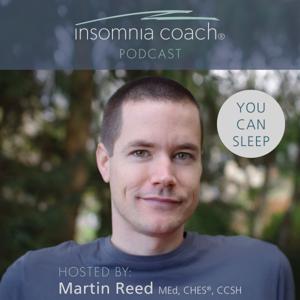

A couple of years ago, Maria experienced anxiety and panic attacks. When she didn’t sleep for over 72 hours, she felt that something was wrong with her. She feared that the chemistry of her brain had changed and her days became dominated by sleep-related thoughts and worries.
Medication didn’t seem to help. Maria felt lonely, confused, and afraid. She felt that she couldn’t even leave the house because things were so difficult. She withdrew from doing things that she enjoyed. She found it hard to focus on anything other than sleep.
Feeling completely stuck, Maria committed to a new approach. She started to leave the house and went for short walks — even when her mind told her that wasn’t possible. Taking baby steps, she started to do more of the things that mattered to her.
Perhaps the most helpful change Maria made was facing the fear of insomnia. Instead of trying to fight or avoid insomnia and all the difficult thoughts and feelings associated with it, Maria started to allow it to exist. She would even start to welcome it, whenever it chose to show up — and, by doing this, Maria found that insomnia started to lose its power and influence.
She soon discovered that she didn’t need medication to generate sleep. That she didn’t need to do anything to make sleep happen. And, that trying to fight or avoid insomnia and the difficult thoughts and feelings that often come with it only set her up for an ongoing struggle that made everything more difficult.
Maria realized that insomnia’s survival depends on how we respond to it. And, she is 100% sure that with the right approach, no matter how bad your situation might be right now, you can recover.
Click here for a full transcript of this episode.
Martin Reed:
Martin Reed:
Martin Reed:
Maria Koziol:
Martin Reed:
Maria Koziol:
And then on top of that, we had COVID, the outbreak of COVID. I had to experience loneliness and detachment from environment at that time. Also, problems with work as well because I wasn’t sure if I’m going to be able to keep my position at work, because of COVID. So I think there was a lot of different things that started all of my problems, and insomnia came along with it. Insomnia came around beginning of 2021. That’s how I would describe the beginnings, how I would describe the trigger. I know it doesn’t really point out any specific trigger, but it’s kind of hard for me to say, to be honest.
Martin Reed:
Maria Koziol:
I just felt as though something in my brain, like chemistry of my brain, has changed permanently, and I was super anxious about that. So, how would my sleep look like? I had the long streaks of not sleeping and then following that, I would have maybe a microdose of sleep the next night, like two hours, and then another streak of not sleeping like two days, and then maybe again two hours of sleep. Sometimes I had five, six hours of sleep during this period, but then it would usually be followed by, again, not sleeping or sleeping in micro doses. So that was a nightmare, I remember that so well.
I could lay for hours in bed and just focus so much on trying to get asleep that it never happened. The more I focus on trying to fall asleep, it never ever happened. I would usually spend hours and hours tossing around, tossing over in bed.
Martin Reed:
Maria Koziol:
My whole day was dominated by the sleep thing because I couldn’t stop thinking about it. Regardlessly of what was going on in my life, even if maybe I won lottery, I couldn’t probably be even enjoying that because I would be still thinking about how I am not able to sleep that night. That was manipulating my whole way of thinking. I felt like I couldn’t be really enjoying the activities I used to enjoy as well anymore. And to be honest, I think the worst part of it was the loneliness that came along with it. The feeling of being alone and the feeling of your family members and friends not having a smallest clue about what you’re going through because they have never experienced insomnia.
I know they have been trying to help me and comfort me, but they had no idea about what I was going through. My mom would usually tell me, “Okay, don’t worry. If you didn’t go sleep that night, you would probably go sleep the next night.” And I’m like, “But you don’t get it. I wasn’t sleeping for three days, what if I die?” No one could actually understand me. No one could relate to it, because none of my friends ever experienced insomnia, none of my family members ever experienced insomnia, so the feeling of loneliness that no one actually understands you, that was also a very big part of how I felt during the day, if that makes sense?
Martin Reed:
Maria Koziol:
But at that time, it was also very disappointing for me because I felt like they didn’t want to hang out with me anymore because all I could talk about was sleep, and the lack of sleep. I started to lose friends at this point. Of course, not family, but my family would also be kind of… I felt as though I shouldn’t really talk to them about this anymore because they didn’t express this explicitly, but I felt like they’re also fed up and helpless because I would usually talk, call my mom and cry over the phone how I can’t sleep, but she couldn’t do anything. She was just like, “I’m sorry, I can’t help you. I don’t know how to help you.” So, that was quite serious at that time. Before I actually met you and your content, I was completely lost with this.
Martin Reed:
Maria Koziol:
Martin Reed:
Maria Koziol:
Martin Reed:
Maria Koziol:
Martin Reed:
Maria Koziol:
Martin Reed:
Maria Koziol:
Martin Reed:
And so we are kind of caught in the middle of that. But I think where it can be so helpful, the process you described, even if it is baby steps, just kind of reintroducing stuff, doing stuff again, especially things that are important to us and meaningful to us, is we can prove to ourselves that even when our brain is doing whatever it wants to do, helpful thoughts, unhelpful thoughts, true thoughts, false thoughts, whatever it’s doing, whatever it’s churning out, we can still control the body. We can still choose how we respond to those thoughts.
So even if the brain says, you cannot go for a walk today, you’re too tired. Physically, we can still stand up, put our shoes on and go out of the door. That’s another reason why I think it’s helpful to start getting active again, is because we recognize and reinforce this idea that no matter what our brain is telling us, we still get to choose to respond. And every time we respond in a way that’s helpful or workable, we’re reminding ourselves of that. And maybe we are less likely to get tangled up in trying to battle with our mind because after all, do we need to battle with our mind when we are constantly reminding ourselves that we can respond however we like, regardless of what the mind is doing?
Maria Koziol:
Martin Reed:
Maria Koziol:
My psychiatrist, they started to prescribe me even weirder things like antipsychotic medication that was used for treatment of schizophrenia, for example. I think it was called quetiapine, something like that. It was an absolute disaster. I was going for holidays and then my whole suitcase will be filled up with different types of antipsychotic medication, sleeping pills. I felt as though I just walked out of a psychiatric ward. It was a absolutely terrible experience and it lasted for a couple months that I was taking the pills. None of these pills actually worked. With the sleeping pills, they helped me fall asleep initially, of course, but afterwards, I would just need more and more to fall asleep. If I stopped taking them, I was in an even worse place that I was before starting to take them.
That was not a solution to the problem, not at all, and I kind of blamed the psychiatrist for that as well because they knew that they shouldn’t have been prescribing me this as a long-term solution. And even though they knew it perfectly because it’s an obvious fact, it’s a short-term solution for insomnia, not a long-term, they kept prescribing me this all the time. Whenever I asked, no questions, just give her the pills, get her off my phone and give her the pills. So it wasn’t working anymore, and not to mention that I started to feel super, super depressed the day after. And then I started reading articles about how Zolpidem is linked to creating depression. There were even cases studied of people that committed suicide and didn’t struggle with any mental health issues before taking Zolpidem. I think it’s very important to mention that because it’s never going to do any good.
But they prescribed me the SSRI and then I took it, and it was like five milligrams. How I felt, I can’t even describe it. I was super scared about how I’m feeling so I immediately called the doctor and I was trying to get in touch with him like, “Hey, please help me. I’m scared. I don’t know what’s going on with my body. I feel as though my receptors are not working.” I couldn’t even read an email. I was taking my pen and going with my pen to my fridge. It felt absolutely odd, so I tried to call them. They didn’t pick up, or they said to me, “Okay, you can schedule an appointment in a week. I can’t give you anything right now.” So there was no support from them. I felt as though they would just prescribe me pills and didn’t care what happened to me afterwards. So, that were the things that I’ve tried and they only had a detrimental impact on my mental health.
Martin Reed:
Maria Koziol:
Martin Reed:
Maria Koziol:
Martin Reed:
Maria Koziol:
The method I have used, I would describe it as facing the fear or facing the pain. Previously, before I heard your video about what I just said, I would usually freak out when the night was coming, the bedtime was coming. I would run away from the fear. And the thing with fear is that when you run away from it, it gets bigger and bigger and holds you like a monster, but when you face it, it shrinks. So I know it may sound very odd to someone who didn’t apply this, but I applied this method in my life when it comes to insomnia and panic attacks, and it really works. It really works. When you face the fear, it just shrinks, and over time, it actually disappears. And the same applies to insomnia.
There’s something I read recently in a book, and it said, it stuck in my head, it said that pain and fear is not absolute, and your experience of fear and pain changes relative to how you react to it. And I think it’s perfect to describe the attitude we should have to insomnia. That is a great things to say, I’m not sure if you will agree with me, but this simple method I think has actually cured me. Your reaction to insomnia is something that essentially is the most important thing. It is all about how you react to this. And then once I understood it, of course, it wasn’t like, oh, I just started applying this method that I was cured the other day. No, of course not. It took time. It took quite a lot of time to apply it 100%.
But over time, I really stopped fearing the lack of sleep, stopped fearing the nighttime. Even though I wasn’t sure if I’m going to fall asleep, I would remind myself of the video you posted and I was like, okay, cool. Well, I won’t die anyway. I won’t sleep, but that’s it. I won’t die. Nothing bad will happen. I will live. Nothing bad will happen. And then I was able to change my thoughts over this. Of course, the bad thoughts would always pop up again. They would always try to devaluate what I was just saying to me. It takes time, of course. It’s not going to be overnight change, but it really works. It really works. When you maybe stop fearing insomnia, it’ll eventually vanish, evaporate because it will have no force over you. It will just lose its forces.
About the behavioral changes, what I mentioned so far, I started going out more, doing more activities, but I really started to not care anymore about sleep. I was like, well, I might not fall asleep this day, but it will not kill me. I will live, I not die, and there’s no proof someone ever died from lack of sleep. That was the same with my panic attacks. That was the same treatment that I used, and I was able to overcome them as well. I was like, okay, cool. I’ll have a panic attack, but there’s just a sensation. Nothing is actually physically happening in my body. It’s just a sensation of your thoughts and what’s going on in your head. There’s not nothing endangering your life at this point. So I think that was super relieving, this knowledge that the less you care, that the less powerful insomnia will become. I would say that was maybe my behavioral approach.
Martin Reed:
Maria Koziol:
Martin Reed:
Maria Koziol:
I would stop thinking about it. I’m like, I’m going to continue right now with my day. I’m going to go relax, watch TV. Then if I’m going to go to bed and the sleep doesn’t happen, I’m ready for it. I’m 100% ready for it, and I’m not going to be freaked out. I know it’s super difficult for people that are suffering with insomnia because they feel as though they’re dying, that they’re so desperate. I know where you are. I promise you, I’ve been there. It’s absolutely dreadful, but there’s hope. There’s always a way out, and you can do that. You can’t die from it, I promise you. There’s no way you can die from it. Nothing can happen to you. I’m sorry, I don’t really have instruction on how to actually apply this. It’s so difficult. I think it’s the battle that you need to have with your thoughts.
Martin Reed:
Maria Koziol:
But I said to myself, you’re going to get through this. It happened to you a lot of times. It’s not going to kill you, it never killed you. And then the panic attack came, and instead of trying to calm down as I would usually do, like oh my God, I need to calm down. Everybody will notice. Oh my God, nobody can notice that. I just felt as though this is normal. You’re just having a panic attack. Feel it, bring it on. I want to feel it even more. Just try to feel it with all of your body. Let it let this feeling flow through you and it will actually calm down after a while, after three, two minutes. And the same was with my insomnia. Let’s say that it was bedtime and it was like midnight, then 2:00 AM, 3:00 AM, I’m still not sleeping. Normally, at the very beginning, I would freak out.
I would be watching my clock all the time and just getting crazy, whereas after applying this method of not avoiding the fear and just facing it, I was rather laying in bed and thinking, well, that’s okay. Eventually I’m probably going to fall asleep, even if it’s microdose. I’m just going to watch a movie right now. There’s nothing bad happening. I’m just going to watch a movie and let the bad feeling flow through my body. I’m not sleeping well. Okay, what can I do about this? Nothing. This is how I try to explain this to myself. And you need to remember, the bad thoughts will always pop up. Even sometimes they will try to devaluate what you are thinking, and they will try to push you away from your path, but those are just thoughts. Those are just thoughts. They will always pop up. It’s just thoughts. I think that would be my advice.
Martin Reed:
Maria Koziol:
Martin Reed:
Maria Koziol:
So, that was something that was super big lesson for me, the attitude. When I started having insomnia, when it happened in my life, my attitude was anxious fighting. I was super confused. I was freaked out. I was battling the thoughts all the time. I was trying to fight the fact that I’m not sleeping, forcing myself to fall asleep, which is impossible to do it. With pills, it’s possible, but there’s no way you can force yourself to sleep. So my initial approach to that, my reaction to insomnia was completely fighting with that. And then when I changed to accepting it and just acknowledging it, it was shrinking more and more, and eventually it disappeared.
Martin Reed:
We can now see the world around us. We might be better able to engage in the world around us, and we free up our attention to do more of the things that matter rather than everything being consumed by what we see through that magnifying glass. I just think that aligned with what you were saying, where it kind of shrunk. That’s just what reminded me of that. When we’re able to recognize that this thing is here, maybe I can’t directly get rid of it, but what I can do is dilute it by adding other things to my life, doing good stuff. It starts to lose its influence, so it feels like it gets smaller. And even when it’s present, if something loses its influence over us, maybe then it becomes less of a problem that we feel we need to address. And when it comes to sleep and all the difficult thoughts and feelings that can come with it, the less engaged we are with trying to control that stuff, the more it’s able to take care of itself and get back on track by itself.
Maria Koziol:
Martin Reed:
Maria Koziol:
Martin Reed:
Maria Koziol:
I’m very lucky and grateful that I’m still here today, but you see at what point in my life I came from, what point I was in. That was absolutely a nightmare and I almost killed myself. Where I am now, I don’t have insomnia anymore. I can sleep without any pills, without nothing. So, just wanted to say it as a word of hope for anybody that could be listening to that because it doesn’t matter what state you are in right now, maybe you’re taking a lot of pills daily as well, you are able to get out of it. There’s always hope. You can always do it. And definitely, you’re going to recover from insomnia.
Remember that you are not alone and there’s millions of people experiencing the same thing, even though you don’t see them around you, but they are there. There’s a lot of people suffering from the same thing you are suffering right now. And as difficult as it might seem right now, I promise you, you will recover.
And you need to change your approach to insomnia and try to disempower insomnia. I know how confusing it sounds, but I promise you will be fine and there’s a way out, and you will 100% recover. I’m 100% sure about that, because I was at the same point as you and maybe even worse, so there’s hope.
Martin Reed:
Maria Koziol:
Martin Reed:
Martin Reed:
Martin Reed:
Martin Reed:
Mentioned in this episode: The Tools by Phil Stutz and Barry Michels
I want you to be the next insomnia success story I share! If you're ready to stop struggling with sleep and get your life back from insomnia, you can start my insomnia coaching course at insomniacoach.com.
Share this page
 View all episodes
 By Martin Reed, MEd, NBC-HWC, CCSH, CHES®

4.6
8686 ratings
A couple of years ago, Maria experienced anxiety and panic attacks. When she didn’t sleep for over 72 hours, she felt that something was wrong with her. She feared that the chemistry of her brain had changed and her days became dominated by sleep-related thoughts and worries.
Medication didn’t seem to help. Maria felt lonely, confused, and afraid. She felt that she couldn’t even leave the house because things were so difficult. She withdrew from doing things that she enjoyed. She found it hard to focus on anything other than sleep.
Feeling completely stuck, Maria committed to a new approach. She started to leave the house and went for short walks — even when her mind told her that wasn’t possible. Taking baby steps, she started to do more of the things that mattered to her.
Perhaps the most helpful change Maria made was facing the fear of insomnia. Instead of trying to fight or avoid insomnia and all the difficult thoughts and feelings associated with it, Maria started to allow it to exist. She would even start to welcome it, whenever it chose to show up — and, by doing this, Maria found that insomnia started to lose its power and influence.
She soon discovered that she didn’t need medication to generate sleep. That she didn’t need to do anything to make sleep happen. And, that trying to fight or avoid insomnia and the difficult thoughts and feelings that often come with it only set her up for an ongoing struggle that made everything more difficult.
Maria realized that insomnia’s survival depends on how we respond to it. And, she is 100% sure that with the right approach, no matter how bad your situation might be right now, you can recover.
Click here for a full transcript of this episode.
Martin Reed:
Martin Reed:
Martin Reed:
Maria Koziol:
Martin Reed:
Maria Koziol:
And then on top of that, we had COVID, the outbreak of COVID. I had to experience loneliness and detachment from environment at that time. Also, problems with work as well because I wasn’t sure if I’m going to be able to keep my position at work, because of COVID. So I think there was a lot of different things that started all of my problems, and insomnia came along with it. Insomnia came around beginning of 2021. That’s how I would describe the beginnings, how I would describe the trigger. I know it doesn’t really point out any specific trigger, but it’s kind of hard for me to say, to be honest.
Martin Reed:
Maria Koziol:
I just felt as though something in my brain, like chemistry of my brain, has changed permanently, and I was super anxious about that. So, how would my sleep look like? I had the long streaks of not sleeping and then following that, I would have maybe a microdose of sleep the next night, like two hours, and then another streak of not sleeping like two days, and then maybe again two hours of sleep. Sometimes I had five, six hours of sleep during this period, but then it would usually be followed by, again, not sleeping or sleeping in micro doses. So that was a nightmare, I remember that so well.
I could lay for hours in bed and just focus so much on trying to get asleep that it never happened. The more I focus on trying to fall asleep, it never ever happened. I would usually spend hours and hours tossing around, tossing over in bed.
Martin Reed:
Maria Koziol:
My whole day was dominated by the sleep thing because I couldn’t stop thinking about it. Regardlessly of what was going on in my life, even if maybe I won lottery, I couldn’t probably be even enjoying that because I would be still thinking about how I am not able to sleep that night. That was manipulating my whole way of thinking. I felt like I couldn’t be really enjoying the activities I used to enjoy as well anymore. And to be honest, I think the worst part of it was the loneliness that came along with it. The feeling of being alone and the feeling of your family members and friends not having a smallest clue about what you’re going through because they have never experienced insomnia.
I know they have been trying to help me and comfort me, but they had no idea about what I was going through. My mom would usually tell me, “Okay, don’t worry. If you didn’t go sleep that night, you would probably go sleep the next night.” And I’m like, “But you don’t get it. I wasn’t sleeping for three days, what if I die?” No one could actually understand me. No one could relate to it, because none of my friends ever experienced insomnia, none of my family members ever experienced insomnia, so the feeling of loneliness that no one actually understands you, that was also a very big part of how I felt during the day, if that makes sense?
Martin Reed:
Maria Koziol:
But at that time, it was also very disappointing for me because I felt like they didn’t want to hang out with me anymore because all I could talk about was sleep, and the lack of sleep. I started to lose friends at this point. Of course, not family, but my family would also be kind of… I felt as though I shouldn’t really talk to them about this anymore because they didn’t express this explicitly, but I felt like they’re also fed up and helpless because I would usually talk, call my mom and cry over the phone how I can’t sleep, but she couldn’t do anything. She was just like, “I’m sorry, I can’t help you. I don’t know how to help you.” So, that was quite serious at that time. Before I actually met you and your content, I was completely lost with this.
Martin Reed:
Maria Koziol:
Martin Reed:
Maria Koziol:
Martin Reed:
Maria Koziol:
Martin Reed:
Maria Koziol:
Martin Reed:
Maria Koziol:
Martin Reed:
And so we are kind of caught in the middle of that. But I think where it can be so helpful, the process you described, even if it is baby steps, just kind of reintroducing stuff, doing stuff again, especially things that are important to us and meaningful to us, is we can prove to ourselves that even when our brain is doing whatever it wants to do, helpful thoughts, unhelpful thoughts, true thoughts, false thoughts, whatever it’s doing, whatever it’s churning out, we can still control the body. We can still choose how we respond to those thoughts.
So even if the brain says, you cannot go for a walk today, you’re too tired. Physically, we can still stand up, put our shoes on and go out of the door. That’s another reason why I think it’s helpful to start getting active again, is because we recognize and reinforce this idea that no matter what our brain is telling us, we still get to choose to respond. And every time we respond in a way that’s helpful or workable, we’re reminding ourselves of that. And maybe we are less likely to get tangled up in trying to battle with our mind because after all, do we need to battle with our mind when we are constantly reminding ourselves that we can respond however we like, regardless of what the mind is doing?
Maria Koziol:
Martin Reed:
Maria Koziol:
My psychiatrist, they started to prescribe me even weirder things like antipsychotic medication that was used for treatment of schizophrenia, for example. I think it was called quetiapine, something like that. It was an absolute disaster. I was going for holidays and then my whole suitcase will be filled up with different types of antipsychotic medication, sleeping pills. I felt as though I just walked out of a psychiatric ward. It was a absolutely terrible experience and it lasted for a couple months that I was taking the pills. None of these pills actually worked. With the sleeping pills, they helped me fall asleep initially, of course, but afterwards, I would just need more and more to fall asleep. If I stopped taking them, I was in an even worse place that I was before starting to take them.
That was not a solution to the problem, not at all, and I kind of blamed the psychiatrist for that as well because they knew that they shouldn’t have been prescribing me this as a long-term solution. And even though they knew it perfectly because it’s an obvious fact, it’s a short-term solution for insomnia, not a long-term, they kept prescribing me this all the time. Whenever I asked, no questions, just give her the pills, get her off my phone and give her the pills. So it wasn’t working anymore, and not to mention that I started to feel super, super depressed the day after. And then I started reading articles about how Zolpidem is linked to creating depression. There were even cases studied of people that committed suicide and didn’t struggle with any mental health issues before taking Zolpidem. I think it’s very important to mention that because it’s never going to do any good.
But they prescribed me the SSRI and then I took it, and it was like five milligrams. How I felt, I can’t even describe it. I was super scared about how I’m feeling so I immediately called the doctor and I was trying to get in touch with him like, “Hey, please help me. I’m scared. I don’t know what’s going on with my body. I feel as though my receptors are not working.” I couldn’t even read an email. I was taking my pen and going with my pen to my fridge. It felt absolutely odd, so I tried to call them. They didn’t pick up, or they said to me, “Okay, you can schedule an appointment in a week. I can’t give you anything right now.” So there was no support from them. I felt as though they would just prescribe me pills and didn’t care what happened to me afterwards. So, that were the things that I’ve tried and they only had a detrimental impact on my mental health.
Martin Reed:
Maria Koziol:
Martin Reed:
Maria Koziol:
Martin Reed:
Maria Koziol:
The method I have used, I would describe it as facing the fear or facing the pain. Previously, before I heard your video about what I just said, I would usually freak out when the night was coming, the bedtime was coming. I would run away from the fear. And the thing with fear is that when you run away from it, it gets bigger and bigger and holds you like a monster, but when you face it, it shrinks. So I know it may sound very odd to someone who didn’t apply this, but I applied this method in my life when it comes to insomnia and panic attacks, and it really works. It really works. When you face the fear, it just shrinks, and over time, it actually disappears. And the same applies to insomnia.
There’s something I read recently in a book, and it said, it stuck in my head, it said that pain and fear is not absolute, and your experience of fear and pain changes relative to how you react to it. And I think it’s perfect to describe the attitude we should have to insomnia. That is a great things to say, I’m not sure if you will agree with me, but this simple method I think has actually cured me. Your reaction to insomnia is something that essentially is the most important thing. It is all about how you react to this. And then once I understood it, of course, it wasn’t like, oh, I just started applying this method that I was cured the other day. No, of course not. It took time. It took quite a lot of time to apply it 100%.
But over time, I really stopped fearing the lack of sleep, stopped fearing the nighttime. Even though I wasn’t sure if I’m going to fall asleep, I would remind myself of the video you posted and I was like, okay, cool. Well, I won’t die anyway. I won’t sleep, but that’s it. I won’t die. Nothing bad will happen. I will live. Nothing bad will happen. And then I was able to change my thoughts over this. Of course, the bad thoughts would always pop up again. They would always try to devaluate what I was just saying to me. It takes time, of course. It’s not going to be overnight change, but it really works. It really works. When you maybe stop fearing insomnia, it’ll eventually vanish, evaporate because it will have no force over you. It will just lose its forces.
About the behavioral changes, what I mentioned so far, I started going out more, doing more activities, but I really started to not care anymore about sleep. I was like, well, I might not fall asleep this day, but it will not kill me. I will live, I not die, and there’s no proof someone ever died from lack of sleep. That was the same with my panic attacks. That was the same treatment that I used, and I was able to overcome them as well. I was like, okay, cool. I’ll have a panic attack, but there’s just a sensation. Nothing is actually physically happening in my body. It’s just a sensation of your thoughts and what’s going on in your head. There’s not nothing endangering your life at this point. So I think that was super relieving, this knowledge that the less you care, that the less powerful insomnia will become. I would say that was maybe my behavioral approach.
Martin Reed:
Maria Koziol:
Martin Reed:
Maria Koziol:
I would stop thinking about it. I’m like, I’m going to continue right now with my day. I’m going to go relax, watch TV. Then if I’m going to go to bed and the sleep doesn’t happen, I’m ready for it. I’m 100% ready for it, and I’m not going to be freaked out. I know it’s super difficult for people that are suffering with insomnia because they feel as though they’re dying, that they’re so desperate. I know where you are. I promise you, I’ve been there. It’s absolutely dreadful, but there’s hope. There’s always a way out, and you can do that. You can’t die from it, I promise you. There’s no way you can die from it. Nothing can happen to you. I’m sorry, I don’t really have instruction on how to actually apply this. It’s so difficult. I think it’s the battle that you need to have with your thoughts.
Martin Reed:
Maria Koziol:
But I said to myself, you’re going to get through this. It happened to you a lot of times. It’s not going to kill you, it never killed you. And then the panic attack came, and instead of trying to calm down as I would usually do, like oh my God, I need to calm down. Everybody will notice. Oh my God, nobody can notice that. I just felt as though this is normal. You’re just having a panic attack. Feel it, bring it on. I want to feel it even more. Just try to feel it with all of your body. Let it let this feeling flow through you and it will actually calm down after a while, after three, two minutes. And the same was with my insomnia. Let’s say that it was bedtime and it was like midnight, then 2:00 AM, 3:00 AM, I’m still not sleeping. Normally, at the very beginning, I would freak out.
I would be watching my clock all the time and just getting crazy, whereas after applying this method of not avoiding the fear and just facing it, I was rather laying in bed and thinking, well, that’s okay. Eventually I’m probably going to fall asleep, even if it’s microdose. I’m just going to watch a movie right now. There’s nothing bad happening. I’m just going to watch a movie and let the bad feeling flow through my body. I’m not sleeping well. Okay, what can I do about this? Nothing. This is how I try to explain this to myself. And you need to remember, the bad thoughts will always pop up. Even sometimes they will try to devaluate what you are thinking, and they will try to push you away from your path, but those are just thoughts. Those are just thoughts. They will always pop up. It’s just thoughts. I think that would be my advice.
Martin Reed:
Maria Koziol:
Martin Reed:
Maria Koziol:
So, that was something that was super big lesson for me, the attitude. When I started having insomnia, when it happened in my life, my attitude was anxious fighting. I was super confused. I was freaked out. I was battling the thoughts all the time. I was trying to fight the fact that I’m not sleeping, forcing myself to fall asleep, which is impossible to do it. With pills, it’s possible, but there’s no way you can force yourself to sleep. So my initial approach to that, my reaction to insomnia was completely fighting with that. And then when I changed to accepting it and just acknowledging it, it was shrinking more and more, and eventually it disappeared.
Martin Reed:
We can now see the world around us. We might be better able to engage in the world around us, and we free up our attention to do more of the things that matter rather than everything being consumed by what we see through that magnifying glass. I just think that aligned with what you were saying, where it kind of shrunk. That’s just what reminded me of that. When we’re able to recognize that this thing is here, maybe I can’t directly get rid of it, but what I can do is dilute it by adding other things to my life, doing good stuff. It starts to lose its influence, so it feels like it gets smaller. And even when it’s present, if something loses its influence over us, maybe then it becomes less of a problem that we feel we need to address. And when it comes to sleep and all the difficult thoughts and feelings that can come with it, the less engaged we are with trying to control that stuff, the more it’s able to take care of itself and get back on track by itself.
Maria Koziol:
Martin Reed:
Maria Koziol:
Martin Reed:
Maria Koziol:
I’m very lucky and grateful that I’m still here today, but you see at what point in my life I came from, what point I was in. That was absolutely a nightmare and I almost killed myself. Where I am now, I don’t have insomnia anymore. I can sleep without any pills, without nothing. So, just wanted to say it as a word of hope for anybody that could be listening to that because it doesn’t matter what state you are in right now, maybe you’re taking a lot of pills daily as well, you are able to get out of it. There’s always hope. You can always do it. And definitely, you’re going to recover from insomnia.
Remember that you are not alone and there’s millions of people experiencing the same thing, even though you don’t see them around you, but they are there. There’s a lot of people suffering from the same thing you are suffering right now. And as difficult as it might seem right now, I promise you, you will recover.
And you need to change your approach to insomnia and try to disempower insomnia. I know how confusing it sounds, but I promise you will be fine and there’s a way out, and you will 100% recover. I’m 100% sure about that, because I was at the same point as you and maybe even worse, so there’s hope.
Martin Reed:
Maria Koziol:
Martin Reed:
Martin Reed:
Martin Reed:
Martin Reed:
Mentioned in this episode: The Tools by Phil Stutz and Barry Michels
I want you to be the next insomnia success story I share! If you're ready to stop struggling with sleep and get your life back from insomnia, you can start my insomnia coaching course at insomniacoach.com.
Share this page

90,952 Listeners
64 Listeners
953 Listeners
13,234 Listeners

8,380 Listeners

1,138 Listeners
59 Listeners

29,180 Listeners
1,357 Listeners

2,841 Listeners

19,934 Listeners
1,611 Listeners
420 Listeners
278 Listeners

2,121 Listeners