
Sign up to save your podcasts
Or

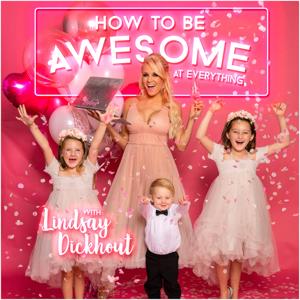


This is one huge deep dive into FOMO.
The fear of missing out and why I think it can quietly steal your peace, confidence and joy if you don't have a plan for how to think about it. Lots of things I talk about on this podcast, I'm currently also working on becoming awesome at the thing. This is one of those things that I've got down. I don't have FOMO ever and I don't get my feelings hurt if I wasn't invited somewhere. Not that either of these things are bad feelings - I don't actually label feelings at all- good or bad. I think it's so great if you can just see feelings clearly as they are and not judge yourself for the feelings you have. When you have feelings of missing out you lose the moment you're in for the moment you think you're missing or missed. I think once we really take time to think about what FOMO is and how it affects us, you just won't feel them the same way after. We talk about…Where FOMO actually comes from (spoiler: it's not about the event, it's about the emotion underneath it)
How to reframe FOMO into JOMO (the Joy of Missing Out)
Strategies to strengthen self-trust so you stop looking outward for validation
Why comparison is the thief of joy, and how to stop doing it
Good reframes and questions to ask yourself when FOMO hits
Understand the Root of FOMOMel Robbins says FOMO often comes from self-doubt or feeling like we're not doing enough.
"You're not missing out on anything when you're living in alignment."
FOMO is triggered when we think other people are having more fun, more success, or more freedom than we are, but it's all perception-based.
Ask yourself: Am I craving the experience… or the feeling I think it will give me?
Jay Shetty teaches that peace is found in presence, and JOMO is about intentionally choosing what you say yes and no to.
"You don't need to do everything. You need to do what matters most to you."
When you choose one thing, you're saying no to others, that's not loss, that's clarity.
Practice gratitude and groundedness in the choices you've made, don't look sideways.
Tony Robbins says that we suffer when our expectations don't match our reality.
"Trade your expectations for appreciation and your whole life changes."
Instead of feeling left out, feel proud of the decisions you've made that align with your values.
Anchor into your identity: "I'm someone who values…" and let that lead your yeses and noes.
Curate your inputs, if social media is triggering FOMO, take a pause or unfollow.
Mel Robbins: "You can't compare your behind-the-scenes to someone else's highlight reel."
Reconnect with your own life's magic. The more present you are, the less you'll care what others are doing.
Pause. Name it: "This is FOMO."
Ask: What am I afraid of missing… and why does that matter to me?
Reframe: "If I'm not there, it's because I'm meant to be here."
CHEERS to planning your days in a way that you don't have a fear of missing things but this sense of joy and calm knowing that you've chosen to do the things that align with what matters to you most.Lindsay Dickhout Business Cell: 714.600.5776 Websites: www.HowToBeAwesomeAtEverything.com www.HelpOCKids.org Podcast: How To Be Awesome at Everything
What if disappearing for 30 days felt like a rocket ship toward the goals you've been thinking about… the habits you've wanted to build, the changes you've wanted to make. In this episode, I'm showing you how to hit pause on your normal life, go all in on what actually moves the needle, and come out with results that would've taken years.. or never happened at all. This episode is about changing up your routine and getting quiet for a certain period of time so that you can be laser focused on doing things differently. It will mean passing up things you normally do and even things you enjoy doing - for a short period of time. This Intentional imbalance is a growth strategy. Rather than tinkering away at something- you charge it, get great at it, get it into your consistent routine then emerge. You don't live in this cave forever and the amount of time that you hibernate depends on how big of the goal and how focused you can be. You just need to hibernate long enough to get some major headway going in the direction that you want. Here's the truth, when you come out of this phase, you won't be the same person you were when you went in. You'll walk differently. Think differently. Speak with more certainty. Why? Because you've done something most people won't do, you intentionally pressed pause on the noise, the distractions, the social expectations… and you chose to go all in. You tell yourself… "For this short season, I'm putting blinders on. I'm not doing everything for everyone else. I'm focused. I'm building. I'm growing." And here's the beautiful part, it's temporary. This isn't about grinding forever. It's about locking in for a short, intentional window… and using that window to create momentum that would've taken years otherwise, or maybe wouldn't have happened at all. You didn't try to squeeze this goal into the cracks of your chaotic schedule, you restructured your life around it. That's why it sticks. It's like being in a workout class and your legs are burning and your mind is screaming "I can't do one more rep," and then the instructor says… "You only have 10 left." You find something extra. You push harder because the finish line is in sight. That's the magic of this phase, you know it has an end. You know the sacrifice is short-term. And because of that, you stay consistent. You don't flake. You show up. And on the other side? You've finished the reps. You've built the habit. You've launched the thing, or changed your body, or created a whole new standard for your life. And most importantly, you've built confidence. Not from hype. Not from external validation. But from evidence. Proof that you can be the kind of person who gets things done when it matters most. So if life's felt stuck or uninspired lately… This is your sign to reset. Go inward. Go hard. Hibernate for a little while. Then come back and dominate... with momentum, with confidence, and with proof that you are exactly who you say you are and way more awesome!
How To Be Awesome At Not Letting Anyone Clip Your Wings—because sometimes, without even realizing it, we let the words and doubts of others make us dilute who we are.
In this episode, we're talking about all the ways people (intentionally or not) try to clip your wings.
They might question your big goals, list out all the reasons something might not work, or subtly discourage you in a way that makes you second-guess yourself.
Sometimes it's huge dream-dampening conversations… and sometimes it's just tiny comments that plant seeds of doubt.
But here's the truth: if you're here to do something extraordinary, you will absolutely encounter people who try to limit you. It might be from people who love you the most, an enemy or strangers on the internet.
The best part about all of this… once you see it for what it is you just say… "Hey, don't clip my wings."
And I have the BEST ever song to put on to remind yourself of this daily.
Defining: 'Clip Your Wings'
Clipping your wings = causing someone to play smaller than they're meant to be.
It could be someone doubting your vision, warning you about risk, or even asking, "What's your backup plan?"
🎵 "Don't let nobody clip your wings…" You were made to fly—don't let someone else's fear ground you.
Doubting your big dreams, suggesting a safer path.
Mocking or downplaying your passion.
Silently disengaging or showing no belief.
Sometimes it's strangers online, sometimes it's people who love you.
🎵 "If you got a fire, don't lose it. If you got a do-or-die dream, do it."
💬 Steven Bartlett: "People will project their own insecurities on you when they're afraid to do the thing themselves."
Be conscious of tiny moments that plant self-doubt.
Just because someone can't see it, doesn't mean it's not possible.
🎵 "Keep your head down, keep on the blinders…"
💬 Chris Williamson: "Your biggest risk isn't trying and failing. It's getting to the end and realizing you listened to people who never tried at all."
When people offer limiting beliefs, ask: "Is this concern or fear?"
Your job is to protect your fire—not get approval for it.
🎵 "If you've got something to prove, go on and prove it."
💬 Ed Mylett: "You were born to do something great. Don't trade that for being liked."
When we let comments change our voice, slow our pursuit, or make us play safe—we dilute ourselves.
🎵 "So don't water down your dream just 'cause they don't believe."
Society teaches us to have a Plan B, just in case.
But if you're truly committed to something, your only backup plan is to get back up when you fall.
🎵 "Gettin' back up, that's the only backup plan you need."
🔥 Use every setback as part of the climb—not a reason to come down.
Not everyone will get it.
Most people only believe after they see results—but you have to believe first.
🎵 "If you've got a dream, then chase it. 'Cause a dream don't chase you back."
💬 Mel Robbins: "Stop waiting for someone to pick you. Pick yourself."
This is your permission slip to go all in on yourself.
You don't need a backup plan for being who you're meant to be.
If someone questions your dream—remind yourself: 🎵 "Don't let nobody clip your wings."
Cook your own food – cheapest, healthiest, tastiest path to looking & feeling better.
90 % whole-food rule – mostly meat, poultry, fish, eggs, raw milk/cheese, honey, fruit, veggies.
Limit the big saboteurs – alcohol, added sugar, processed/seed-oil-heavy foods, liquid calories.
Ancestral fats – butter, ghee, tallow, coconut or olive oil; dump industrial seed oils.
Protein-forward eating – anchor every meal with quality protein for muscle, satiety, blood-sugar control.
Precision hydration & minerals – use high-quality salt + magnesium with meals and water.
Fasting as a tool – strategic fasts for metabolic flexibility and gut rest.
Cheat-code bedtime nutrition – eating finishes 2-3 h before lights-out (see sleep section).
Daily baseline: walk ≥ 10 000 steps – the more you walk, the better you feel.
Lift ≥ 4× per week – the more you lift, the more muscle you build; prioritize compound moves.
Movement micro-wins – walk after meals, take the stairs, stretch while on calls.
Outdoor > indoor – sunlight + fresh air amplify the mood boost.
Do hard things – deliberate discomfort (heavy lifts, hill sprints, cold dips) makes the rest of life easier.
Mini-metric goals – work toward: 10 pull-ups, 25 push-ups, 30 crunches, 1-mile run
Active recovery – gentle walks, mobility flows, breath-work between intense sessions.
Golden bedtime – the earlier you sleep, the better you feel; 9 p.m. lights-out is a weight-loss & energy cheat code.
7 + hours every night – non-negotiable for hormones, immunity, cognition.
Calm mind priorities – gratitude, meditation, prayer, earthing, laughter, breath-work.
Nature therapy – sun, grass, water, trees: free antidepressants.
Purpose & passion stack
Fit body
Calm mind
Loving family
Exciting hobby
Respect for nature
Rewarding purpose
Supportive life partner
Stress is not a badge of honor – schedule rest like workouts; low-stim routines > chronic hustle.
Design a life you love – work that lights you up, movement built into the day, joyful relationships.
Reject the modern "normal" – daily Starbucks, cubicle confinement, 40-year job you hate, multiple meds, no sunlight, no exercise → not the path.
Embrace the real normal – fulfilling work, outdoor time, strong body, vibrant health, thriving relationships.
Foundational stack – magnesium, creatine, collagen (DiNic's "never-skip" trio).
Targeted add-ons – electrolytes, high-quality multi/mineral, vitamin D/K, omega-3s as labs dictate.
Sleep hygiene – dark room, cool temp, magnesium + glycine in the evening, zero blue light last hour.
Underrated "medical tools"
Sunlight ☀️
Sleep 😴
Nature & earthing 🌳
Real food 🥦
Exercise & walking 🚶♀️
Hot/cold exposure (sauna, cold plunges) 🔥🧊
Salt & magnesium 🧂
Meditation & laughter 🧘♂️😄
Active recovery tech – red-light, compression, massage, mobility, breath-work.
Lab-first mindset – annual bloodwork, CGM, body-comp scans; tweak before problems arise.
Body-transformation quick-start (90 days)
Limit alcohol
10 k steps daily
Lift ≥ 4× weekly
Sleep 7 + h
90 % whole foods
Ditch liquid calories
Prioritize protein + quality fats
Rule of compounding – small, relentless wins in movement, food, sleep, mindset snowball into radical change.
CHEERS to creating YOUR new normal based on all that we know!! XO LindsayIf you spend 18 minutes a day — focused on learning or practicing a skill, you will become better than 95% of the population at that skill.
That's the 100 hour rule.It's about consistency and this concept of small daily progress that compounds over time.
Jesse Itzler popularized this concept and it shows that you can become great at anything you're willing to put 100 hours towards. You don't need more time. You need more intention. In this episode I'm pulling out so many of the highlighted sections from some of my favorite books to bring you a very full perspective podcast episode on this topic. The 100 Hour Rule is your reminder that you already have what it takes. You just need to start — and keep showing up.This episode is your mini wake-up call — your invitation to finally get going on learning the skill that you've wanted to and get moving on your small and big and do it in a way that feels totally doable.
We're breaking down the 100 Hour Rule with inspiration from:
Jesse Itzler
Josh Kaufman
Chris Williamson
Alex Hormozi
Ed Mylett
Steven Bartlett
Let's talk about how to focus, what to prioritize, and how to finally follow through, even if your schedule is full and your motivation isn't perfect.
Why It Works- 100 hours = manageable, realistic, and motivating. Public speaking, playing piano, learning to use Canva, learn to cook, learn how to lift weights, learn how to meditate, learn to hike or mountain bike, learn to watercolor or speak French. Become at expert at using points to travel to places you wouldn't normally, work on learning & launching a business. What Is The 100 Hour Rule? 💬 Jesse Itzler:"If you spend 18 minutes a day on any skill, in one year you'll be in the top 5% in the world at that skill."
Most people quit because they think progress takes too long.
But it's not about hours in a day… it's about consistency.
The real magic is in the compounding effect of daily effort.
📌 18 minutes a day x 365 = 100+ hours a year
Josh Kaufman – Just 20 Hours to Get GoodAuthor of The First 20 Hours, Kaufman challenges the 10,000 hour myth by saying:
"You can go from knowing nothing to being pretty good in just 20 hours of focused, deliberate practice."
How?
Break the skill into sub-skills
Learn enough to self-correct
Remove distractions
Commit to 1–2 hours a day for 10 days or 20 minutes a day for 2 months
🎯 You don't need to master it. You just need to start enjoying it.
Alex Hormozi – Stack Skills That Multiply Your Value"Becoming world-class at the intersection of skills is the cheat code."
You don't have to be the best at one thing... be really good at a few.
100 hours on something like speaking, writing, or selling? Now you're dangerous.
Ask: What skill will give me disproportionate results?
Host of Modern Wisdom:
"The world rewards depth, not dabbling. Mastery is rare, and rare is valuable."
Attention spans are short, but attention is power.
Being intentional for 18 minutes a day beats random YouTube rabbit holes.
Ask: What's something I could be known for in a year... if I committed now?
"You're always one decision, one habit, one 'more' away from a totally different life."
Ed teaches that small, consistent actions compound faster than we think.
Also references the "1 degree" concept… how a tiny shift in direction today leads to a totally different destination down the road.
His belief: Build confidence by keeping promises to yourself, especially the small ones.
🎯 Make the promise: 18 minutes a day. Keep the promise. Watch the ripple effect.
Steven Bartlett – Identity Drives DisciplineHost of Diary of a CEO:
"You don't rise to the level of your goals. You fall to the level of your systems."
Steven focuses on identity and structure:
Want to be a writer? Write.
Want to be fit? Move daily.
Want to be a leader? Lead yourself first.
The 100 Hour Rule works because it reshapes your identity through repeated action.
💡 Ask: Who am I becoming with each session of focused effort?
Putting It Into Practice Choose your focus:What skill or habit will elevate your life?
Where can you apply 100 hours over the next 12 months?
Schedule 18 minutes daily
Use habit stacking (tie it to something you already do)
Keep a log or journal
Reflect weekly: What changed? What's easier now?
Ask yourself:
What's the one thing I'll be proud I invested in a year from now?
What excuse keeps stopping me… and what's my new story?
What part of my identity will this 100-hour journey unlock?
You don't need more motivation — you need a system that you trust.
The 100 Hour Rule is your reminder that you already have what it takes. You just need to start… and keep showing up.
The compound effect of tiny, focused actions is real. So start small. Stay consistent. And let this be the year you build something remarkable… 18 minutes at a time.
Common examples: clothes that no longer fit your lifestyle, kitchen gadgets you "might need someday."
The emotional burden of storing, organizing, and maintaining stuff "just in case."
Letting go frees up not just space, but time, clarity, and energy.
The evolved mindset says: "I'll be okay without this." If I really need it, I'll figure it out. So many things we hold onto are a $10 pickup if we need it again
Purging is not wasteful — it's trusting yourself and your future.
What am I holding onto that no longer adds value?
What items feel more like obligation than joy?
Tips for letting go:
Make it a celebration, not a chore.
Donate or re-home items to someone who needs them.
Keep only what aligns with your current season of life.
Organizing your space creates calm, energy, and creativity.
When everything has a place, your brain gets a break.
It's less about perfection, and more about flow and freedom.
Back to the Ziploc baggie — "it looked like it held value, but it was just weight."
Look at your physical spaces with fresh eyes.
Find the freedom and confidence that comes from letting go.
Mental Clarity & Emotional Lightness – Clutter creates mental overwhelm. When your space is clean, your mind feels clear and focused.
Saves Time & Energy – No more wasting time searching for things! You can use that energy for creativity, work, or self-care.
Boosts Productivity & Motivation – A structured space helps you feel in control and more motivated to tackle tasks.
Reduces Stress & Anxiety – Studies show clutter increases cortisol (stress hormone). A tidy home means a calmer mind.
Encourages Healthy Habits – An organized kitchen makes healthy eating easier; a tidy workspace boosts efficiency.
Better Sleep & Relaxation – A clean bedroom promotes deeper, more restorative sleep.
Declutter by Energy Zones – Organize based on how a space makes you feel. If a room feels "heavy," reassess what's in it.
Reverse Spring Cleaning – Unload drawers as if you're moving, then only put back what you truly love or need.
"One-Touch" Rule – When tidying, make sure each item you pick up is immediately put where it belongs.
Seasonal Reset Box – Place items you're unsure about in a box. If you don't use them in 3 months, donate them.
Declutter with Music & a Timer – Set a 30 minute timer & play loud music and go!
The "Why Do I Own This?" Test – Ask yourself if each item serves a purpose or brings joy. If not, let it go!
Detox Your Digital Space – Clean up emails, files, and phone apps to declutter your mind.
I hope this episode inspires you to see organization as a form of self-care rather than a chore. And helps you focus on what you're carrying around that you think serves you but is actually heavy dead weight.
CHEERS to your organized space & life!!Inspiration: Outlive + Good Energy
Dr. Peter Attia challenges the idea of "inevitable decline." He argues we don't die of old age, we die from preventable chronic diseases (heart disease, Type 2 diabetes, frailty, neurodegeneration).
Dr. Casey Means says our modern environment is biologically mismatched. Much of what we consider aging—fatigue, brain fog, joint stiffness—is inflammation caused by neglected lifestyle choices like ultra-processed food, lack of movement, and poor sleep.
Reframe: What feels like aging might be:
Muscle loss from underuse (not just age)
Joint stiffness from inactivity, not age
Brain fog from poor metabolic health, not "just getting older"
Peter Attia's Point: "Functional Longevity"
You don't train to live long—you train to live well long.
His "Centenarian Decathlon" concept: What physical feats do you want to do at 80 or 90? Train now for those.
Action Steps:
Start a Zone 2 cardio routine (walking uphill, light cycling). Great for mitochondria and long-term energy.
Add stability and grip strength work—these are major predictors of longevity.
Stretch daily or do mobility work 10 minutes/day. Lack of flexibility is not inevitable—it's just unused tissue.
Moving your body regularly improves cellular health and lowers inflammation, which protects against many "aging" diseases.
Nutrition is the Silent AgerGood Energy: "You are what you metabolize."
Modern food is driving chronic inflammation, which accelerates what we mistake as aging: skin issues, joint pain, fatigue, insulin resistance.
Ultra-processed food hijacks energy systems and causes mitochondrial dysfunction.
Action Steps:
Prioritize whole foods: protein, fiber, omega-3s.
Avoid "glucose roller coasters" — balance meals with fat/fiber/protein to avoid energy crashes.
Try time-restricted eating: not for weight loss, but to support metabolic flexibility.
Attia promotes a low-carb or carb-conscious diet to control insulin and prevent the slow creep of pre-diabetes that goes unnoticed.
Sleep & Stress—The Hidden AgersPoor sleep mimics aging in the brain. One bad night of sleep can spike blood glucose and disrupt hunger hormones.
Chronic stress leads to cortisol overload—breaking down muscle, weakening immunity, and inflaming joints.
Action Steps:
Prioritize 7–8 hours of sleep in a dark, cool room.
Wind down early with no screens—melatonin is suppressed by blue light.
Practice stress recovery: deep breathing, journaling, cold exposure, or sauna.
These are early signs of neglect that can be reversed:
Needing caffeine to function
Losing strength when lifting groceries or kids
Taking longer to recover after activity
Feeling "foggy" or irritable most mornings
Waking up feeling stiff every day
Attia and the Means both emphasize: These are signals. If you listen to them now, you can slow or even reverse them.
Your "Reverse the Neglect" Starter PlanGive listeners a 5-part challenge:
Move 30 minutes every day (combine walking + strength 3x/week)
Eat one full day of unprocessed meals
Cut sugar and seed oils completely
Stretch for 10 minutes in the morning and before bed
Walk after meals to stabilize glucose
This isn't about avoiding age—it's about owning your energy.
When we treat aging like a slow collapse, we give away our power.
But when we understand the difference between aging and neglect and add and remove habits, we change the game. Our mind and body will thank us now and even more when we're 80 and 90.
CHEERS to taking control of the way you age!Tips! -spread out your spend -get multiple quotes -start early if you can -set max budgets for some of the creative people -do half vendor, half yourself (balloons and treats) -hat vendor - $450 - DIY would have been similar plus helper time to do it -caricature - $300 for 3 hours - best deal in town -pizzas & taco guy- sometimes make it pretty and sometimes just to feed people -snack table is so easy and so useful and ads to decor -print signs at a store like FEDEX - then I had my sign girl just do 2 main signs -print tags, papers and "stickers" yourself -pizza boxes had our logo on it - just paper cut and taped -Etsy has great resources -before you rent - see what you would spend buying and do you have a place to store? This time I spent too much on a wood wall - but I decided I needed it too late -you either have to spend lots of time or lots of money! But you dont have to do both -use the school of YouTube ***Here's the link to my new party book!!*** https://howtobeawesomeateverything.com/pages/the-ultimate-kids-party-planning-guidebook CHEERS to your next awesome party!!
From the publisher's feed
5,811 Listeners

14,889 Listeners

25,915 Listeners

3,597 Listeners

8,972 Listeners

3,308 Listeners

1,237 Listeners
9,737 Listeners

1,061 Listeners

1,668 Listeners

4,273 Listeners
2,573 Listeners
3,464 Listeners

453 Listeners

2,828 Listeners