
Sign up to save your podcasts
Or



Send us Fan Mail
HOW TO DEAL WITH GRIEF AND TRAUMA is completely self-funded, produced, and edited by me, Nathalie Himmelrich.
Consider making a small donation to support the Podcast: bit.ly/SupportGTPodcast. Thank you!
For more information, please visit Nathalie’s website, join the podcast’s Instagram page, and subscribe to the newsletter to receive updates on future episodes here.
About this week’s episodeToday’s episode is about the impact of pet loss. Pet loss often goes unacknowledged, is compared with other losses, or is met with statements that invalidate the grief that is experienced. ‘It was just a cat’ and other unhelpful comments minimize the real experience of grief pet owners go through. Both Erica and I describe the connection we had with our cats and how their loss affected us. Erica’s cat Wolfgang had such an impact on her life and when he died, she could not find suitable support to help her navigate grief, so she created a beautiful card deck. Erica’s mission is to support others in dealing with pet loss and normalize pet loss grief as a valid sort of grief.
About this week’s guestAfter the sudden passing of her cat, Wolfgang, Erica couldn’t find a simple product to help her cope, so she created her own: Pet Loss Grieving Cards. Thus, her company Wolfie’s Wish was born. Grieving Cards have since won “Best New Product” at the Superzoo tradeshow. When she’s not paw-sitively rocking it in her business, Erica enjoys performing pop and rock covers on her harp or scratching and mixing on the turntables.
Erica’s links:
HOW TO DEAL WITH GRIEF AND TRAUMA is produced and edited by me, Nathalie Himmelrich.
Support the show
💡 If today’s episode touched you, please share it with someone who might need it.
🤝 Become a supporter of the show! Starting at $3/month & leave a review.
Stay Connected
Find Support Resources
Send us Fan Mail
HOW TO DEAL WITH GRIEF AND TRAUMA is completely self, funded, produced, and edited by me, Nathalie Himmelrich.
Consider making a small donation to support the Podcast: bit.ly/SupportGTPodcast. Thank you!
For more information, please visit Nathalie’s website, join the podcast’s Instagram page, and subscribe to the newsletter to receive updates on future episodes here.
About this week’s episodeThis amazing conversation with James Fish Gill from Australia comes to you in the form of a double episode. Fish, as he refers to himself, has so much wisdom to share, I already knew from before we started recording that it would not fit into the usual 45 minutes of this podcast. I knew Fish from Instagram, where I became intrigued with his approach of conscious communication. Listening to some of the podcasts where he had been a guest, I’ve been so drawn to what he shared in his capacity as a coach and through his unique approach.
In episode 51 and 52 he takes us through how he dealt with his own grief, using the approach of conscious communication with himself: first he honestly acknowledged and validated all his thoughts, then felt into the actual emotional experience. From there, he entered the field of his yearning, and the longing in his heart which he recognized and honored, even when it – in the case of his loss – could not be met. Bringing loving awareness to the whole experience, without wanting to change it, makes every component of the experience matter.
Fish says we are not usually bringing loving awareness, but we are trained to respond to pain by usually dismissing, minimizing, comparing, assigning fault, understanding, or fixing when what it actually needs is validating it.
Ok, I won’t say more but I can promise you with certainty that if you listened to one episode, you would want to listen to the other too.
James Gill (aka ‘Fish’) is a heart coach, yoga teacher and transformational facilitator based in Australia and working internationally. He is committed to the global spread of conscious communication practices that enable all beings to experience love in every moment which appears to have gone missing.
Fish’s links:
HOW TO DEAL WITH GRIEF AND TRAUMA is produced and edited by me, Nathalie Himmelrich.
Support the show
💡 If today’s episode touched you, please share it with someone who might need it.
🤝 Become a supporter of the show! Starting at $3/month & leave a review.
Stay Connected
Find Support Resources
Send us Fan Mail
HOW TO DEAL WITH GRIEF AND TRAUMA is completely self-funded, produced, and edited by me, Nathalie Himmelrich.
Consider making a small donation to support the Podcast: bit.ly/SupportGTPodcast. Thank you!
For more information, please visit Nathalie’s website, join the podcast’s Instagram page, and subscribe to the newsletter to receive updates on future episodes here.
This amazing conversation with James Fish Gill from Australia comes to you in the form of a double episode. Fish, as he refers to himself, has so much wisdom to share, I already knew before we started recording that it would not fit into the usual 45 minutes of this podcast. I knew Fish from Instagram, where I became intrigued with his approach of conscious communication. Listening to some of the podcasts where he had been a guest, I’ve been so drawn to what he shared in his capacity as a coach and through his unique approach.
In episode 51 and 52 he takes us through how he dealt with his own grief, using the approach of conscious communication with himself: first he honestly acknowledged and validated all his thoughts, then felt into the actual emotional experience. From there, he entered the field of his yearning, and the longing in his heart which he recognized and honored, even when it – in the case of his loss – could not be met. Bringing loving awareness to the whole experience, without wanting to change it, makes every component of the experience matter.
Fish says we are not usually bringing loving awareness, but we are trained to respond to pain by usually dismissing, minimizing, comparing, assigning fault, understanding, or fixing when what it actually needs is validating it.
Ok, I won’t say more but I can promise you with certainty that if you listened to one episode, you would want to listen to the other too.
James Gill (aka ‘Fish’) is a heart coach, yoga teacher and transformational facilitator based in Australia and working internationally. He is committed to the global spread of conscious communication practices that enable all beings to experience love in every moment which appears to have gone missing.
Fish’s links:
HOW TO DEAL WITH GRIEF AND TRAUMA is produced and edited by me, Nathalie Himmelrich.
Support the show
💡 If today’s episode touched you, please share it with someone who might need it.
🤝 Become a supporter of the show! Starting at $3/month & leave a review.
Stay Connected
Find Support Resources
Send us Fan Mail
HOW TO DEAL WITH GRIEF AND TRAUMA is completely self, funded, produced, and edited by me, Nathalie Himmelrich.
Consider making a small donation to support the Podcast: bit.ly/SupportGTPodcast. Thank you!
For more information, please visit Nathalie’s website, join the podcast’s Instagram page, and subscribe to the newsletter to receive updates on future episodes here.
About this week’s episodeRachel was my first guest on the podcast so I’m excited to have her back for episode number 50 – halfway to 100. She shares how she supports the bereaved with her tried and true methods which she found to be helpful in her own personal loss (check out Rachel’s personal story in Episode 1, Season 1).
Also, today we are starting something new: some of my guests will have a gift for you which you’ll receive by going to my website (nathaliehimmelrich.com) and finding ‘Podcast gift’ in the navigation bar. Simply enter the password, which in Rachel’s case is the word fifty, (as in the episode number) and you’ll receive her ebook about grief myths.
But for now, make sure to make notes of what Rachel is going to share with us.
About this week’s guestHelping people through grief is Rachel's passion. After her baby daughters died in 2008, she made a promise to them that she'd learn how to heal after loss and share what she learned with everyone who wants to heal too. Rachel has spent more than a decade making good on her promise and has helped hundreds of clients build a meaningful and purposeful life after loss.
Rachel’s links:
HOW TO DEAL WITH GRIEF AND TRAUMA is produced and edited by me, Nathalie Himmelrich.
Support the show
💡 If today’s episode touched you, please share it with someone who might need it.
🤝 Become a supporter of the show! Starting at $3/month & leave a review.
Stay Connected
Find Support Resources
Send us Fan Mail
HOW TO DEAL WITH GRIEF AND TRAUMA is completely self-funded, produced, and edited by me, Nathalie Himmelrich.
Consider making a small donation to support the Podcast: bit.ly/SupportGTPodcast. Thank you!
For more information, please visit Nathalie’s website, join the podcast’s Instagram page, and subscribe to the newsletter to receive updates on future episodes here.
About this week’s episodeThis is the second episode with Meghan and this time; we speak about all kinds of support modalities that are on offer to treat grief and trauma. This is by far the best episode if you want to get clarity on how grief and trauma work and to find out what kind of treatment is out there and might be the right way to support yourself personally and professionally. Just listen and sense into what feels or sounds good for you and try it.
Also, check out episode 41 to listen to Meghan’s personal story.
Meghan Riordan Jarvis, MA, LCSW, is an author, podcast host, TEDx Speaker, and psychotherapist specializing in trauma, grief, and loss. After experiencing PTSD following the deaths of both of her parents within two years of each other, Meghan began speaking on a larger scale about the importance of understanding grief and supporting grievers. Founder of Tacking Point Partners, Meghan, and her team consult regularly with companies addressing grief in the workplace. Meghan’s “Grief is My Side Hustle” platform includes her popular podcast of the same name, her blog, and her free grief writing workshop “Grief Mates.” Meghan’s memoir. “The End of The Hour,” will be published in December 2023.
Meghan’s links: Website | Instagram
Resources mentioned in this episode:HOW TO DEAL WITH GRIEF AND TRAUMA is produced and edited by me, Nathalie Himmelrich.
Support the show
💡 If today’s episode touched you, please share it with someone who might need it.
🤝 Become a supporter of the show! Starting at $3/month & leave a review.
Stay Connected
Find Support Resources
Send us Fan Mail
HOW TO DEAL WITH GRIEF AND TRAUMA is completely self, funded, produced, and edited by me, Nathalie Himmelrich.
Consider making a small donation to support the Podcast: bit.ly/SupportGTPodcast. Thank you!
For more information, please visit Nathalie’s website, join the podcast’s Instagram page, and subscribe to the newsletter to receive updates on future episodes here.
When I spoke with Gina, I was surprised at how moved I was by the depth of our conversation even though we just met for the first time. Gina has not only experienced multiple losses herself, but she is also working as a therapist with clients dealing with loss. Just last week she published her first book, a practical guide giving tools and resources helping people while they are grieving.
About this week’s guestGina Moffa is a licensed psychotherapist, mental health educator, and media consultant in New York City. In practice for nearly two decades, she has helped thousands of people seeking treatment for trauma, and grief, as well as challenging life experiences and transitions. She received her master’s degree in social work with a specialty in trauma from New York University. August 22nd, 2023, her book, Moving On Doesn't Mean Letting Go: A Modern Guide to Navigating Loss, will be on bookshelves around the world.
Gina’s links:
Moving On Doesn't Mean Letting Go: A Modern Guide to Navigating Loss
Thank you for listening!HOW TO DEAL WITH GRIEF AND TRAUMA is produced and edited by me, Nathalie Himmelrich.
Support the show
💡 If today’s episode touched you, please share it with someone who might need it.
🤝 Become a supporter of the show! Starting at $3/month & leave a review.
Stay Connected
Find Support Resources
Send us Fan Mail
HOW TO DEAL WITH GRIEF AND TRAUMA is completely self, funded, produced, and edited by me, Nathalie Himmelrich.
Consider making a small donation to support the Podcast: bit.ly/SupportGTPodcast. Thank you!
For more information, please visit Nathalie’s website, join the podcast’s Instagram page, and subscribe to the newsletter to receive updates on future episodes here.
Today I’m speaking with Tara, Taylor’s mum. Taylor died following a skiing accident when she was just a teenager. In the hospital when Taylor’s parents were met with the fact that she would not be able to survive, they were offered the option of organ donation, which surprisingly was one of the easier decisions the parents to make. Tara talks about how she and her husband both grieved the loss of their daughter in very different ways and how talking to another couple who experienced a similar loss helped them. After their loss, they made it their mission to focus on the good. Part of that was that Taylor had saved multiple lives through organ donation, so the parents started Taylor’s Gift Foundation to change the conversation around the topic and to support donor families.
About this week’s guestTara Storch is president and co-founder of Taylor’s Gift Foundation and is a marketing professional, award-winning author, and community leader. Tara and her husband Todd co-authored the award-winning book, Taylor’s Gift, which was recognized as the ‘Most Inspirational Book’ at the Books for A Better Life Awards in New York City. She and her husband were also recognized as “Heroes Among Us” by People Magazine.
Opening up about her journey of finding hope and purpose after the loss of their daughter Taylor, she speaks publicly across the nation about her powerful “Outlive Yourself” message. Sharing her journey on Good Morning America, The Today Show, The Ellen Show, People Magazine, and other national and international media, she brings a message of inspiration that touches lives worldwide. Tara is the proud mother to three children - Taylor, Ryan, and Peyton. She and her husband, Todd currently live in the Dallas, Texas area.
Tara’s links:
Other episodes mentioned in this episode:
HOW TO DEAL WITH GRIEF AND TRAUMA is produced and edited by me, Nathalie Himmelrich.
Support the show
💡 If today’s episode touched you, please share it with someone who might need it.
🤝 Become a supporter of the show! Starting at $3/month & leave a review.
Stay Connected
Find Support Resources
Send us Fan Mail
HOW TO DEAL WITH GRIEF AND TRAUMA is completely self, funded, produced, and edited by me, Nathalie Himmelrich.
Consider making a small donation to support the Podcast: bit.ly/SupportGTPodcast. Thank you!
For more information, please visit Nathalie’s website, join the podcast’s Instagram page, and subscribe to the newsletter to receive updates on future episodes here.
I’ve known Coco personally as we studied Somatic Experience, Peter Levine’s extensive professional trauma training, together. I accompanied her as she dealt with the intensive relationship with her mother and the grief over her mother’s subsequent death. From a young age - for half of her own life - Coco cared for her mother and had to be the one to make decisions regarding her mother’s care in her 23-year-long battle with cancer and mental health issues.
About this week’s guestCoco Buchmann is a body psychotherapist and trauma therapist. She is also the mother of two boys, 11 and 8 years old.
She originally studied improvisation and contemporary dance and later added clinical psychology, integrative body psychotherapy, and Somatic Experiencing to her repertoire. Most recently she finished her yoga teacher’s training which she practices in her daily life, besides dance, and Tao Yoga (Chi Gong).
As a therapist, Coco has been working with individuals, dealing with mental illness, such as depression and anxiety, and she also worked with couples.
Eighteen months ago, she started a sabbatical to delve into her own grieving process and to follow her destiny and passion to write a book about the expression of the true self and aliveness, a process which she has coined Yogawave.
Coco experienced many kinds of losses and traumas in her life, on a physical, emotional, and spiritual level.
Over the last 20 years, she has been obsessed with finding the connection between trauma, loss, and the nervous system and has been investigating the deeper layers of the soul and the energies in the body.
Coco’s website: www.chill-dini-basis.com
Other episodes mentioned in this episode:
HOW TO DEAL WITH GRIEF AND TRAUMA is produced and edited by me, Nathalie Himmelrich.
Support the show
💡 If today’s episode touched you, please share it with someone who might need it.
🤝 Become a supporter of the show! Starting at $3/month & leave a review.
Stay Connected
Find Support Resources
Send us Fan Mail
HOW TO DEAL WITH GRIEF AND TRAUMA is completely self, funded, produced, and edited by me, Nathalie Himmelrich.
Consider making a small donation to support the Podcast: bit.ly/SupportGTPodcast. Thank you!
For more information, please visit Nathalie’s website, join the podcast’s Instagram page, and subscribe to the newsletter to receive updates on future episodes here.
The episode with Laney Rosenzweig, founder of Accelerated Resolution Therapy ART has been one of those conversations that caught me by surprise. After hearing about Accelerated Resolution Therapy from one of my previous podcast guests, I was interested but after speaking with Laney I was completely intrigued by her experimental spirit which led to the potential of ART to help people heal from many challenges.
ART has been proven useful to treat:
Laney Rosenzweig is the Developer of Accelerated Resolution Therapy (ART). Developed in 2008, ART is an evidence-based, eye movement therapy that can resolve the symptoms of PTSD and other mental health issues. The research showed that one to five sessions with an average of three resolved the issues studied. Most past trauma can be resolved in only one session. Ongoing problems may take longer due to secondary gains. Her training company, Rosenzweig Center for Rapid Recovery (RCRR), has trained over 8,000 clinicians both in private practice and in numerous clinics. Her book, "Too Good to Be True" is an autobiographical account of her life, how she developed ART, and examples of ART's healing power.
Laney’s Website: https://erasetraumanow.com
Laney's TEDx Talk: https://www.youtube.com/watch?v=vP7dx03arxI
ART links: ART Website: http://www.acceleratedresolutiontherapy.com/ | Facebook: https://www.facebook.com/acceleratedresolutiontherapy
Thank you for listening!HOW TO DEAL WITH GRIEF AND TRAUMA is produced and edited by me, Nathalie Himmelrich.
Support the show
💡 If today’s episode touched you, please share it with someone who might need it.
🤝 Become a supporter of the show! Starting at $3/month & leave a review.
Stay Connected
Find Support Resources
Send us Fan Mail
Welcome again to the How to Deal With Grief and Trauma Podcast Season 5.
HOW TO DEAL WITH GRIEF AND TRAUMA is completely self, funded, produced, and edited by me, Nathalie Himmelrich.
Consider making a small donation to support the Podcast: bit.ly/SupportGTPodcast. Thank you!
For more information, please visit Nathalie’s website, join the podcast’s Instagram page, and subscribe to the newsletter to receive updates on future episodes here.
We will continue with Season 5 starting next week. We have a range of exciting guests already lined up for most of the episodes: From professors to psychotherapists, people who developed and/or therapeutic intervention models to help others. And, as always, there are people like you and I talking about how they dealt or are dealing with their losses.
Thank you for your support and please rate the show.
Blessings,
Nathalie Himmelrich
Your Podcast Host
Support the show
💡 If today’s episode touched you, please share it with someone who might need it.
🤝 Become a supporter of the show! Starting at $3/month & leave a review.
Stay Connected
Find Support Resources
From the publisher's feed
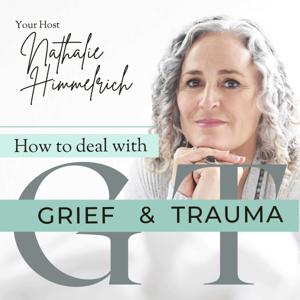
You can't go through life without experiencing loss and trauma the question is how do we deal and live with the grief and pain? Join Nathalie Himmelrich, grief expert and author, talking to people…

90,968 Listeners

43,324 Listeners

310 Listeners
332 Listeners
195 Listeners

61,787 Listeners
2,112 Listeners

10,526 Listeners

19,270 Listeners
53 Listeners
40 Listeners

43 Listeners

8,469 Listeners

2 Listeners

2,215 Listeners