
Sign up to save your podcasts
Or



What if the moment you stop trying to fix yourself is the moment real relief begins? That’s the surprising turn in our conversation with meditation teacher and parent Cara Lai—authorized in the Theravada lineage (IMS, Spirit Rock) and known for an approach that’s honest, funny, and deeply humane. Cara traces her path from art school and a “soul-sucking” office to early retreats that opened a brighter world, then a year-long retreat that didn’t go to plan. Living with Lyme disease, she discovered that discipline without tenderness can harden into harm, and that the path must be larger than the cushion.
We dig into collective pain, intuition, and the limits of control—how Western culture overvalues productivity while dismissing the “soft” skills that stabilize families and communities. Parenting reframes practice: interruptions became invitations, metta becomes embodied, and desire connect us with life-giving intuition. Cara shares how micro-mindfulness moments—feeling joy fully, pausing in a trigger, relaxing the urge to fix—can change a day. She offers practical on-ramps: start with 8 minutes, consider a short retreat if appropriate, and let nature, humor, and community widen your capacity.
This is a story about the middle way reimagined for modern life: less about perfect posture, more about real presence; less about control, more about trust. If you’ve ever tried to meditate your pain away, if parenting has blown up your schedule, or if softness feels “inefficient,” this conversation offers clarity, compassion, and tools you can use today.
If this resonates, follow and share the show, leave a quick review, and tell us: what will you soften around this week?
Support the show
Yoga doesn't have to be perfect to be powerful. That's the refreshing message from Melanie Salvatore August, who brings her background as a classically trained actor, writer, and veteran yoga teacher into a conversation that strips away pretense and gets to the heart of what makes practice sustainable.
Melanie's journey began with meditation books discovered as a preteen and evolved through her years in New York and Los Angeles before motherhood completely transformed her approach. With disarming honesty, she shares how having three children forced her to reimagine what yoga could look like - leading to her book "Kitchen Yoga" and a philosophy of "microhabits within opportunities." These practical strategies include putting self-care tools where you'll actually use them (like a toothbrush in the kitchen drawer) and finding moments for stretching, breathing, or gratitude practice throughout ordinary activities.
The conversation explores her concept of "fierce kindness" - the gentle but firm redirection of ourselves from fear-based patterns toward love and connection. Melanie offers wisdom about pausing before reacting, using awareness of death to prioritize what truly matters, and finding community to support your practice. Her evolution as a teacher reveals how yoga itself has changed, becoming more inclusive and adaptable while still honoring its transformative potential.
Whether you're struggling to start a practice, finding ways to maintain connection through different life seasons, or seeking to deepen your existing relationship with yoga, Melanie's practical wisdom serves as both permission slip and invitation. As she puts it: "Even bad yoga is good yoga" - a reminder that showing up imperfectly is infinitely better than waiting for perfect conditions that rarely arrive. Ready to discover how simple shifts might transform your everyday experience? This conversation shows the way.
Support the show
What if the key to living more fully isn’t thinking harder, but reconnecting with your body? In this week’s episode of How We Can Heal, Lisa sits down with actor and teacher Josh Pais to explore what it really means to “lose your mind” and why that might be the best thing you can do.
Josh shares how his father's work as a theoretical physicist alongside Einstein sparked a profound insight: emotions are simply atomic vibrations. This perspective forms the foundation of his groundbreaking approach to acting and authentic living. Rather than labeling sensations as "good" or "bad," Josh invites us to experience them fully as energy moving through our bodies—a practice that can transform anxiety into aliveness, fear into fuel for creativity.
The conversation explores how suppressing sensations disconnects us from our bodies, triggering what Josh calls "the mind"—that abusive internal voice telling us we're not enough. This disconnection doesn't just limit our creative expression; it affects our ability to form genuine connections with others. Whether you're an actor preparing for an audition, an entrepreneur making a presentation, or anyone navigating daily interactions, this pattern of suppression creates barriers between you and authentic engagement.
Josh introduces fascinating concepts like "kinespheres"—energetic patterns extending beyond our physical bodies—and offers practical tools for playing with these energies to transform how we show up in the world. He guides us through understanding impulses as our purest form of self-expression, challenging the cultural conditioning that teaches us to second-guess our natural responses.
Ready to increase your tolerance for the full spectrum of human experience? Josh's approach offers a path to greater aliveness, creativity, and connection—not by changing your thoughts, but by stepping out of them entirely and into the vibrant reality of embodied presence.
Support the show
Ever feel like polarization makes meaningful conversation nearly impossible? Dr. Donna Hicks returns with transformative insights on navigating our divided world through dignity consciousness.
At Harvard's Weatherhead Center for International Affairs, Hicks witnesses dignity violations daily yet remains steadfastly committed to her groundbreaking work. She reveals why these violations feel so viscerally painful – our brains process them identically to physical wounds – and offers practical tools for interrupting our instinctive reactions. Forget counting to ten; taking ten deep breaths actually changes your neurochemistry, creating space for thoughtful response rather than reflexive reaction.
The conversation explores what Hicks calls our "relentless ambivalence" as humans – we simultaneously crave safety through self-preservation and connection through dignity recognition. This tension leaves us constantly choosing which impulse will guide our interactions. When approaching difficult conversations, Hicks recommends genuine curiosity: "I'm really curious about how you arrived at your conclusions." This simple yet profound shift creates safety and honors the other person's inherent worth.
Most powerfully, Hicks shares her vision for a dignity-conscious society built on education and practice. From elementary schools to boardrooms to political chambers, she's witnessing growing receptivity to dignity-based approaches. Her nephew, recently appointed President of Ecuador's National Assembly, explicitly leads with dignity principles – proving these concepts can transform even the most contentious political environments.
For those struggling to connect with their own dignity, Hicks offers this bridge: recognize that unworthiness stems not from personal deficiency but from dignity violations experienced. "I'm worthy, no matter what" becomes possible when we understand "something bad happened to me" rather than "something is wrong with me."
Ready to transform your approach to conflict? Listen now to discover how dignity consciousness can heal our divided world – one conversation at a time.
Support the show
Lucy Bartholomew brings Australian sunshine to this captivating conversation about finding purpose on mountain trails and wisdom in difficult moments. When Lucy was just 15, she discovered her passion for ultra running alongside her father, embarking on a journey that would take her from weekend camping trips to world championship podiums.
What began as quality time with her dad evolved into a career marked by remarkable achievements—winning Ultra Trail Cape Town 100K, placing third at Western States, and becoming one of only two women to complete both UTMB and the Ironman World Championships in a single year. Yet through her success, Lucy maintains a refreshing perspective that prioritizes joy, connection, and process over outcomes.
The conversation takes a profound turn as Lucy reflects on her father's heartbreaking yet transformative Western States experience in 2023. After ten years of trying to gain entry through the lottery, he completed the entire 100-mile course but missed the official cutoff by just two minutes. Through a documentary that captured this emotional journey, her father became an unexpected spokesperson for valuing the experience over the result—a powerful reminder that what matters most isn't the finish time but the courage to begin and the determination to continue.
Lucy shares her practical wisdom for navigating both trail and life challenges: breaking overwhelming distances into manageable segments, recognizing when physical needs like hunger are masquerading as emotional lows, and maintaining unwavering optimism that "maybe it will get better." Her ability to find joy in the process—even when that means hiking up a mountain pass while eating pizza during UTMB—exemplifies why she's beloved in the ultra-running community.
Whether you're a seasoned ultra runner or someone who's never laced up running shoes, Lucy's insights on resilience, community, and finding your own path will inspire you to embrace challenges with curiosity and courage. As she prepares for another UTMB race, her message remains clear: sometimes the most meaningful journeys are the ones where we dare to cut our own trail.
Support the show
What does it truly mean to show up whole and authentic in a world that encourages fragmentation? Dr. Thema Bryant doesn't just talk about integration—she embodies it as a psychologist, author, professor, sacred artist, and minister leading transformative work in trauma healing and relationship building.
Dr. Bryant shares her excitement about merging different aspects of her identity and work, challenging the notion that we must compartmentalize ourselves based on context. "I'm excited about not being segregated within myself and with other people, but to be inviting for us to engage with our whole selves," she explains. This radical authenticity creates ripple effects, encouraging others to bring their full humanity into spaces where they've previously felt silenced.
Our conversation explores the powerful frameworks of decolonial and liberation psychology. Decolonial psychology deconstructs harmful colonial impacts—extraction, dehumanization, and power imbalances—while liberation psychology builds a vision for collective freedom. Dr. Bryant challenges the field's arrogance in assuming psychotherapy is the only path to healing, calling for cultural humility and recognition of diverse healing traditions that have sustained communities for generations.
Perhaps most provocatively, Dr. Bryant calls for mental health professionals to embody the healing they claim to facilitate. "I would love us to actually be well," she says, noting how many practitioners suffer from self-erasure and neglect. She critiques training systems that preach self-care while penalizing boundary-setting, and challenges the field's silence on systemic issues affecting mental health.
From the healing power of arts and cultural practices to the importance of releasing relationships that don't serve us, Dr. Bryant offers practical wisdom for navigating our interconnected existence. She reminds us that "liberation is interwoven, it is collective. It cannot be on the backs of other people's bondage."
The conversation closes with a vision of a world with "more ease in our bodies, more ease with each other, more ease in our spirits," while acknowledging the ongoing need for intentional resistance against harmful patterns. Dr. Bryant's integration of psychology, spirituality, arts, and justice work offers a roadmap for authentic, holistic healing that honors our full humanity.
Join us for this soul-nourishing conversation that will transform how you think about healing, relationships, and creating meaningful change in our complex world.
Support the show
Dr. Judith Herman, a towering figure in trauma studies and author of the landmark books "Trauma and Recovery" and "Truth and Repair," takes us on a journey through the evolution of trauma understanding from the 1970s—when we didn't even have terminology for what victims experienced—to today's complex landscape of healing and justice.
Drawing from decades of clinical work and research with survivors, Dr. Herman reveals how trauma exists within frameworks of dominance and subordination that permeate every level of human organization. "Whenever you have a dominant group and a subordinate group, especially when that dominance is deeply embedded in cultures and traditions, ultimately that dominance is enforced by violence," she explains. This perspective illuminates why healing cannot happen in isolation from addressing social power structures.
Perhaps most revolutionary are her findings about what survivors actually want from justice systems. Through interviews with 30 trauma survivors, she discovered that punishment of offenders—the primary offering of our criminal justice system—ranked surprisingly low on survivors' priority lists. Instead, survivors unanimously desired public acknowledgment of what happened, particularly from bystanders rather than perpetrators. They wanted the harm recognized and denounced by their communities. As one survivor powerfully stated, "I think he'd get a kick out of talking about what he did. He wouldn't really be sorry."
Dr. Herman's wisdom extends beyond analysis to action. She advocates for small community groups as starting points for change, emphasizing that healing happens in connection with others. "You can't do it alone," she reminds us. Her mother's saying—"activism is the antidote to despair"—continues to guide her vision for a world built on relationships of equality and mutuality rather than dominance and submission.
Join us for this profound conversation with a true pioneer whose work has transformed how we understand trauma, healing, and the pursuit of justice. Listen, share, and be part of the movement toward a more trauma-informed society.
---
On September 15th I'm offering a new, free training Freedom from Trauma - register here!
https://howwecanheal.com/freedomfromtrauma/
In this free 60-minute training, I’ll guide you through a compassionate process of identifying trauma and exploring a path forward. Together, we’ll connect with the inner resources and resilience that make healing possible, so you can move beyond surviving and begin to truly thrive.
In this session, we’ll explore:
✨What trauma is and how to recognize it - understanding the signs and patterns that may be shaping your life.
✨Pathways through trauma - tools and approaches to help you find your way forward with compassion.
✨Resilience and psychological resources - practices to strengthen your inner foundation for growth and healing.
✨Steps toward thriving - how to move from simply getting by to living with more ease, connection, and vitality.
This hour together is an opportunity to learn, reflect, and connect with the deeper strengths that are already within you. Whether you’re new to this work or looking to deepen your practice, you’ll leave with practical insights and supportive practices you can carry into your daily life.
Support the show
Ready to transform your healing journey? Season six of the award-winning How We Can Heal podcast brings fresh perspectives and powerful insights every Monday. We've assembled an extraordinary lineup of powerhouse healers, teachers, athletes, researchers, and even actors who will share their unique approaches to personal and collective healing.
This season dives deep into transformative concepts like liberation psychology and tyranny while exploring how moments of courage—whether small daily choices or life-altering decisions like embarking on year-long meditation retreats—can reshape our lives. Our conversations will challenge conventional thinking about healing while offering practical wisdom you can apply immediately.
Season five connected us with remarkable stories: Dr. Frank Corrigan revealing how deep brain reorienting heals shock, athletes sharing their journeys through cancer and community-building, and the heartwarming tale of Dion Leonard adopting Gobi, the loyal dog who ran 70 miles with him across the Gobi Desert. Season six promises even more compelling narratives, beginning with the legendary Dr. Judith Herman, followed by Dr. Thema Bryant, exploring healing across individual and societal dimensions. We'll also learn from yoga and meditation teachers Cara Lai and Melanie Salvatore-August before concluding with some exciting surprises, including a professional actor you've definitely seen on screen.
What healing are you seeking most right now? What excites you about this season? I'd love to hear from you at [email protected]. Your comments, reviews, and shares have built this community of healing-seekers, and I'm deeply grateful. Subscribe now so you don't miss a single transformative conversation as we explore how we can heal ourselves and our world together.
Support the show
Dr. David Spiegel, Wilson Professor at Stanford University School of Medicine, brings over 40 years of expertise in trauma, hypnosis, and mind-body medicine to this fascinating conversation. Drawing from decades of scientific research, Dr. Spiegel reveals how hypnosis serves as "controlled dissociation," offering a powerful pathway for trauma recovery by allowing people to revisit difficult experiences while maintaining physical comfort.
The conversation takes us deep into the neuroscience of trauma and healing. Dr. Spiegel shares remarkable findings from brain imaging studies showing how hypnosis actually turns down activity in the brain's alarm system and reduces self-judgment, creating space for new perspectives and healing. Particularly fascinating is his explanation of how hypnosis can reduce pain perception by over 50% - without medication or side effects.
Personal stories bring the science to life, from Dr. Spiegel's first experience using hypnosis with an asthmatic girl in crisis to his wife successfully using hypnosis during childbirth. His genetic "illness" of hypnosis, inherited from his psychiatrist father who used it to treat trauma in World War II veterans, creates a touching through-line in his lifelong dedication to understanding how our minds can heal our bodies.
The conversation bridges clinical approaches with accessible self-help strategies. Dr. Spiegel explains how two-thirds of adults are naturally somewhat hypnotizable, then details how his Reverie app makes these powerful techniques available to anyone dealing with stress, insomnia, or trauma. The discussion reveals fascinating parallels between hypnosis and yoga, showing how both practices engage the brain's natural capacity for healing through focused attention and absorption.
Ready to tap into your brain's natural healing abilities? Discover how hypnosis might serve as an underutilized "app" you already possess, and learn why focusing on what you're for rather than what you're against creates more effective healing. Whether you're a clinician or someone seeking relief from trauma or stress, this episode offers profound insights into our remarkable capacity for transformation.
Support the show
Season 5 of the How We Can Heal Podcast is sponsored by SimplePractice.
If you want to simplify the business side of your work, I highly recommend Simple Practice!
Right now they’re offering a special 7-day free trial with 70% off your first 4 months for How We Can Heal listeners.
Go to https://www.simplepractice.com/howwecanheal to take advantage of this offer today!
-----
This episode is also sponsored by the International Society for the Study of Trauma and Dissociation (ISSTD).
The International Society for the Study of Trauma and Dissociation is an international, non-profit, professional association organized to develop and promote comprehensive, clinically effective and empirically based resources and responses to trauma and dissociation and to address its relevance to other theoretical constructs.
Visit https://cfas.isst-d.org/ to access educational offerings for both professionals and non-professionals
To learn more and become a member, visit: https://www.isst-d.org/
---
What if everything we've been taught about trauma and healing has been filtered through a colonial lens? Dr. Laura Brown —psychologist, author, and activist with over 40 years of groundbreaking work in feminist therapy—challenges us to reimagine healing outside the medical model that has dominated Western thinking.
Dr. Brown takes us on a profound journey from her early activism in the 1960s through her pioneering work in trauma psychology, weaving together personal narrative with radical theory. She articulates how medical systems have colonized healing processes that humans have practiced for millennia, turning natural responses to harm into "disorders" requiring professional intervention. "People have been healing from trauma since human beings became human beings," she reminds us, inviting practitioners to question the foundations of conventional approaches.
The conversation expands beyond clinical settings to examine how trauma and power operate in our broader society. Dr. Brown offers wisdom about maintaining our integrity and voice in challenging times, protecting our nervous systems from becoming hijacked by those who don't deserve access to our activation, and finding small yet meaningful ways to resist injustice daily. Her perspective on trauma work as inherently political challenges the false neutrality many clinicians adopt, while her vision of collaborative healing relationships dismantles hierarchies between "expert" and "patient."
All while navigating cancer recovery and a vocal disorder affecting her speech, Dr. Brown embodies the resilience she describes, finding joy in aikido, nature, friendship, and beauty. Her message inspires hope not through toxic positivity but through genuine engagement with both suffering and possibility. Whether you're a healing professional or someone on your own recovery journey, this episode will transform how you think about trauma, power, and our collective capacity for change.
Want to keep creating opportunities for healing together? Subscribe at howwecanheal.com to continue exploring how we can create more humble, culturally responsive approaches to trauma that honor every person's inherent power and wisdom.
Support the show
From the publisher's feed
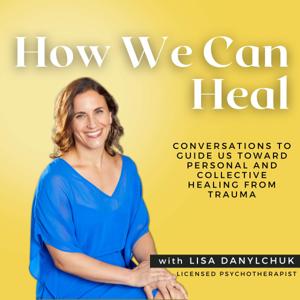
A podcast to share deep conversations about How We Can Heal from life’s toughest circumstances.
46e25130-c4e4-11f0-b994-d9ed1c1b3183

43,324 Listeners

2,520 Listeners

1,661 Listeners

116 Listeners

1,849 Listeners