
Sign up to save your podcasts
Or



Are you a therapist looking to organize your business? Try SimplePractice! Start with a seven-day free trial, then get 50% off your first three months.
Just go to https://www.simplepractice.com/ to claim the offer!
---
Curiosity heals faster than control. That’s the thread we follow with Lynette Danylchuk, PhD—trailblazing psychologist, past ISSTD president, and coauthor of Treating Complex Trauma and Dissociation. We talk about why the field has exploded with research and lived-experience leadership, and how the best therapy now balances sturdy containers with deep listening. Tools matter, but timing, consent, and relationship matter more. When we lead with humility, the psyche reveals its own map.
We get honest about clinician burnout and how to refill the well with beauty, community, and expressive arts. Long exhale singing, a moonlit walk, laughter with a trusted friend—these aren’t luxuries; they’re nervous system care. Lynette reframes dissociation as creativity under pressure, showing how fierce protectors once patterned after harm can be reclaimed in service of dignity. Integration becomes alignment: every self-state moving with the values the person chooses, not the rules of past abuse.
We also zoom out to collective trauma. React or respond? That choice shapes movements and mental health alike. Using anger as fuel for care keeps the frontal cortex online and harm in check. We talk intergenerational resilience, asking about ancestors to find the strengths that carried families through. For those seeking help, we share practical routes—referrals, skill-building programs, and the persistence it takes to find a good fit. And for a culture that long blamed victims, we name the shift underway: more empathy, more protection for children, and more voices rising to end the silence.
If this conversation gives you a spark—share it with someone who needs language for what they’re feeling, subscribe for more grounded healing talks, and leave a review so others can find us. Tell us: what practice helps you respond, not react, this week?
Support the show
Are you a therapist looking to organize your business? Try SimplePractice! Start with a seven-day free trial, then get 50% off your first three months.
Just go to https://www.simplepractice.com/ to claim the offer!
---
What happens when accessibility stops being an afterthought and becomes the starting line? That question drives our conversation with journalist, podcast host, and disability rights advocate Laszlo Jacksai, whose work blends reporting, storytelling, and community care to challenge the subtle and not-so-subtle ways ableism shows up in daily life.
We trace Laszlo’s path from launching Friends With Wheels to writing Disabled and Proud, and hear how authenticity—over algorithms—shaped his creative voice. He breaks down the difference between support and spectacle, explains why “you’re an inspiration” can land as a burden, and shares candid stories about accommodations that exist on paper but fail in practice. From IEPs and speech-to-text to seating at a crowded restaurant, he shows how small design choices add up to either friction or freedom.
Laszlo also maps the power of community, highlighting the DO-IT Program at the University of Washington and the value of peer networks that turn isolation into belonging. We talk practical allyship—ask before helping, learn the language of disability justice, build feedback loops at school and work—and we look at simple tools that rebuild energy and confidence, like guided meditations and self-hypnosis apps. His view of resilience is refreshingly human: not a quick bounce-back, but a steady commitment to keep showing up, try new strategies, and trust yourself through the next curveball.
If you care about disability advocacy, accessibility, inclusive education, and mental health, this conversation offers clear steps and real stories you can act on today. Listen, reflect, and share this episode with someone who’s designing a space, leading a classroom, or rethinking how they offer help. If the show resonates, follow, rate, and leave a review—then tell us: what’s one accessibility change you’ll champion this week?
Listen to Friends with Wheels here! https://podcasts.apple.com/us/podcast/friends-with-wheels/id1623717823
Support the show
Are you a therapist looking to organize your business? Try SimplePractice! Start with a seven-day free trial, then get 50% off your first three months.
Go to https://www.simplepractice.com/ to claim the offer!
---
What happens when we stop treating child sexual abuse as isolated “bad apples” and start seeing it as organized crime shaped by networks, money flows, and technology? We sit down with Dr. Michael Salter—criminologist, author, and global leader in child protection—to map the hidden systems that enable abuse and the practical steps that can disrupt it without re‑traumatizing survivors.
Michael shares how internet evidence shattered old myths and revealed collaborative, often sadistic offender networks operating on encrypted platforms. He explains why public awareness has surged while policy and policing lag behind, and how offender demographics—more educated, higher income, well‑networked—complicate investigations. We unpack the stark difference between high conviction rates for online offenses and the uphill battle of prosecuting intrafamilial abuse without corroborating evidence, then dive into how banks and payment rails have become crucial terrain for detection and disruption.
From the therapy room to the courtroom, we explore what it takes to support survivors of organized and extreme abuse. Michael offers grounded guidance for clinicians on pacing, reality testing, and building strong supervision so we can hold hope instead of collapsing into vicarious despair. We examine DARVO, the self‑protective reflexes of institutions, and how to prepare clients for the realities of reporting. Most importantly, we highlight shame‑sensitive, dignity‑affirming design—small details that signal worth at every step—and learn from Australia’s Royal Commission, which turned logistics into healing by treating survivors like they truly matter.
This conversation is candid, compassionate, and actionable. If you’re a therapist, advocate, policymaker, or concerned listener, you’ll leave with a clearer map of the problem and a blueprint for change: integrate therapy, law enforcement, finance, and tech; design for dignity; and keep public attention focused even when headlines shift. Subscribe, share with a colleague, and leave a review to help bring more light—and more accountability—to this work.
Learn more about Michael's work at: https://www.organisedabuse.com/
Support the show
A quiet shift in one enzyme may be steering how we age—and how strong we stay. Dr. Helen Blau, trailblazing Stanford scientist and 2025 National Medal of Science honoree, joins us to unpack a breakthrough decades in the making: prostaglandin E2 is essential for muscle stem cell repair, yet a degrading enzyme creeps up with age, draining that signal and eroding strength. Her team calls it a “gerozyme,” and blocking it with a targeted small molecule restored muscle size, power, and endurance in aged mice. The first human safety trial is complete, and a Phase 2 study in sarcopenia is on deck.
We dig into the practical takeaways for athletes and anyone over 50: why the inflammatory wave after training is needed for rebuilding, how common NSAIDs can blunt the very gains you’re chasing, and where a future therapy might help overcome anabolic resistance after illness, injury, or bedrest. Dr. Blau connects the dots across regenerative medicine—tissue‑specific stem cells, iPSCs, and organoids—to show how disease can be modeled in a dish and how patient‑matched cells are speeding smarter drug discovery. We also touch on her early work proving cellular plasticity, new insights on telomeres shortening in heart cells without division, and what “quality” muscle means for safe aging.
Beyond the lab, we talk truth about unproven stem cell clinics, the progress and remaining gaps for women founders in biotech, and the urgent threat of research defunding that stalls clinical trials and drains the talent pipeline. There’s a clear throughline: if we want longer, stronger years—true health span—we need rigorous science, sustained support, and smart training habits that work with our biology, not against it.
If this conversation sparked a shift in how you think about aging and recovery, tap follow, share with a friend who lifts or runs, and leave a review. Your support helps bring evidence‑based breakthroughs to more people—and speeds the path from lab bench to everyday life.
---
This BONUS EPISODE is our holiday gift for you! If you're looking for somewhere to offer a holiday or year end gift, please consider directly supporting scientists like Dr. Blau & their labs. Donations keep projects alive while funding is disrupted.
Dr. Blau: https://profiles.stanford.edu/helen-blau?tab=bio
The Lab: https://med.stanford.edu/blau-lab.html
The Book: https://www.amazon.com/Stem-Cells-Rescue-Helen-Blau/dp/1621825280
Support the show
What if the presence you practice in mindfulness is the same wiring that makes secure attachment possible? That question drives our conversation with clinician, author, and teacher Christine Forner, who introduces Securefulness—a relational state where an attuned nervous system helps another human co‑regulate. Christine explains why care isn’t sentimental; it’s a biologically essential force that organizes safety, regulation, and health. When true care arrives, dissociated pain often surfaces, which can feel like getting worse. She reframes this as healing beginning and uses a powerful “care isn’t the bucket” story, plus a re-feeding analogy, to show how to pace nourishment without overwhelming the system.
We get practical about what Securefulness looks like in the room: noticing micro‑signals like a shoulder hitch or a shift in breath, naming danger qualities, and adding immediate protections—hoodies, pillows, sunglasses, softened gaze—to reduce social threat and restore choice. Christine shares how therapeutic nurturing has helped clients reduce suicidal ideation within weeks by leveraging presence, titration, and interoception. She also digs into primal isolation threat, how shame language takes root in early deprivation, and we talk about why the inner critic is better replaced by an “inner celebrant” that collaborates with the body’s needs.
Zooming out, we challenge the idea that violence is human nature. Christine defines misogyny as disdain for Homo sapien nurturing and argues that many systems are fight‑state adaptations, not destiny. We explore evolutionary roots of co‑regulation, theory of mind as soothing, and why humans likely evolved in stable, alloparenting communities where care was central. There are signs of change: expanding parental leave, trauma‑informed practice, and evidence that stable resources like universal basic income lower addiction and crime while improving health and learning. If we organize society around care—as infrastructure, not charity—healing gets hard but possible, and repeatable.
If this conversation sparks something in you, share it with a friend, subscribe for future episodes, and leave a review wherever you listen. Your reflections help shape what we explore next—what stood out most to you?
Support the show
What does it really take to endure when the air thins, the quads burn, and doubt gets loud? We sit down with ultrarunner Katharina Hartmuth—Hardrock and UTMB podium finisher and winner of the 330 km Tor des Géants—to unpack the mental game of mountain ultras and the deeper work that fuels lasting resilience. From long stretches above 12,000 feet to the rare quiet of a small, devoted race community, Katharina explains why Hardrock feels both brutal and beautiful—and why she keeps coming back.
Katharina is candid about the lows: altitude-driven vision issues, bonks that won’t quit, and the storm-lashed nights where every step is a question. Her toolkit blends practical strategy and inner steadiness—separating pain from harm, checking ego at the door, and letting joy lead and metrics follow. We go further into healing, where she draws a firm line: running is therapeutic, but it isn’t therapy. Years of psychotherapy widened her window of tolerance, rebuilt trust, and turned setbacks into learning. We explore stigma, access, and the biology of stress, showing why mental health care deserves the same respect as injury rehab.
Injuries have tested her in recent years: a car accident, knee surgery, a last-minute bone bruise, and a nagging foot issue. Instead of spiraling, Katharina has learned to reframe recovery as training for patience, leaned on cross-training and strength, and practiced self-kindness that maintains her sense of worth and identity. She also shares how she’s reshaping life for sustainability—creating more rest, more nature, and taking a bold step to focus on running full-time.
If you’re curious about the psychology of endurance, the Hardrock culture, or how therapy and trail running can work together to heal, this conversation is your map. Subscribe, share with a friend who needs encouragement today, and leave a review to help more listeners find the show. What hard thing you’re ready to try next?
Support the show
When slowing down feels dangerous, your body might be living in Global High-Intensity Activation(GHIA): always on, always braced, always moving. Today we sit down with licensed marriage and family therapist and Somatic Experiencing faculty member Mahshid Hager to name that pattern, trace where it comes from, and chart a humane path back to rhythm.
Mahshid explains why a body wired for survival often resists rest, and how to work with that reality using micro-rests that your system will actually allow. We unpack the gas-and-brake reciprocity between sympathetic and parasympathetic systems, the difference between hyperarousal and global high, and how swings between overdrive and full collapse can fuel chronic pain, inflammation, and exhaustion. Along the way, curiosity shows up as the quiet superpower ~ because genuine curiosity cannot coexist with threat.
Mahshid shares a story about her relationship with the mountains over the years, and how the same thing that triggers panic can become a source of awe years later - not with forced exposure, but with care for the body. We also reflect on capitalism’s applause for burnout and the 24/7 news cycle that delivers shock without local action. You’ll hear smart, doable suggestions for managing news & technology in a way that keeps you engaged , but not overwhelmed.
If you’re always in GO mode, running on fumes, or trying to support clients through trauma, this conversation offers language, tools, and hope. Subscribe, share with a friend who needs a break, and leave a review to help more listeners find their way back to rhythm.
Support the show
What if the most powerful medicine starts with warmth, rhythm, and trust in your own body? Today we sit down down with licensed acupuncturist, Chinese herbalist, and yoga teacher Tara Tonini to trace how trauma-informed Chinese medicine can steady the nervous system, smooth cycles, and support conception, pregnancy, birth prep, and postpartum in a way that fits into real life. From liver qi and kidney jing to the heart-mind connection, Tara translates complex ideas into simple choices you can make today.
We dig into why many people are “acu-curious” yet needle-averse, and how energy work, qigong, and gentle touch can move qi without needles. Tara breaks down yin and yang as a practical parenting tool—intensity peaks, ease returns—and shows how seasonal eating, warm foods, and cozy rituals rebuild blood, improve sleep, and calm anxiety. She shares why chronic heat practices can dry you out, how cold plunges may impact kidney qi, and how warmth is medicine for conception and early postpartum recovery. You’ll hear concrete tips like herbal foot soaks for insomnia, body tapping along meridians to relieve pain, and using familiar yoga postures as targeted meridian stretches for better flow.
We also explore postpartum care through the lens of “sitting the moon,” with nourishing herbs, digestible meals, and home scents that signal safety. Tara’s trauma-informed clinical approach centers consent, pacing, and patient agency. If you’re navigating fertility, preparing for birth, or rebuilding after, this conversation offers grounded tools and a kinder way to meet your body where it is.
If this resonates, follow and share the episode, leave a review on your favorite app, and tell us the practice you’ll try today. Your story might spark someone else’s healing.
Support the show
Mothers are asked to offer the critical early childhood care that shapes people and impacts communities, while systems fail to offer them the basic care they need to thrive.
We invited Dr. Kathleen Kendall-Tackett, health psychologist and IBCLC, to map the real drivers of maternal mental health and the surprisingly simple supports that change everything: responsive care, consistent follow‑through after screening, and communities designed to include mothers instead of isolating them.
We trace the chain from attachment to lifelong outcomes—why secure bonds in the first thousand days predict resilience, school success, and adult health—and why rising ACEs signal a collective failure, not individual weakness. Kathleen challenges outdated hormone‑only narratives and explains how stress systems, trauma history, and cultural fit shape postpartum depression. She shares practical shifts any hospital or community can adopt today: walking groups that blend sunlight and peers, Baby Cafés that normalize feeding and connection, and staff who can spot a painful latch and intervene before a spiral begins. We also dig into sleep: red night lights, keeping baby close, and the counterintuitive finding that exclusive breastfeeding moms often sleep more overall because resettling is faster.
For families and friends asking “how can I help?”, we lay out concrete steps: protect a lying‑in period, offer hands‑on care, screen out unhelpful voices, and create an emergency four‑hour sleep window when she’s hanging by a thread. We look squarely at high‑risk groups, especially military mothers, where depression rates soar—then expand the toolkit with options beyond medication when needed: CBT, acupuncture, omega‑3s, vitamin D. We discuss innovations like rTMS, as well as emerging research on the careful use of ketamine with severe suicidal depression. Cultural trust matters; offering choices increases access and honors lived experience. We close with resources you can use now, from community programs to free postpartum art that normalizes breastfeeding and early parenting.
If this conversation moved you, share it with someone who supports new parents, subscribe for more, and leave a quick review—your words help more families find the care and connection they deserve.
Learn more at: https://praeclaruspress.com/
Support the show
From the publisher's feed
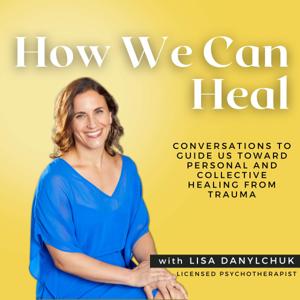
A podcast to share deep conversations about How We Can Heal from life’s toughest circumstances.
46e25130-c4e4-11f0-b994-d9ed1c1b3183

43,324 Listeners

2,520 Listeners

1,661 Listeners

116 Listeners

1,849 Listeners