
Sign up to save your podcasts
Or

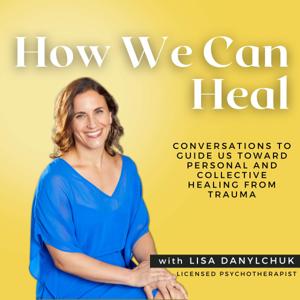


Welcome back to the How We Can Heal Podcast!
Season 5 is coming April 14th With new episodes dropping every Monday. You've probably heard the saying, "time heals all wounds," and while healing often does take time, there are other elements and skills that can support the process.
This season we'll focus on those moments, choices, and approaches that help us choose and experience healing. In addition to highlighting the voices of stellar clinicians and mental health professionals this season, you'll also hear personal journeys of healing and how different people at very different times in life found their way through the most challenging circumstances and fostered healing through intentional choices and moments of connection.
I also want you to know that you're officially listening to an award-winning podcast now! Last month at the International Society for the Study of Trauma and Dissociation annual conference in Boston, Massachusetts How We Can Heal was awarded the Audio Visual Media award. It's such an honor for the podcast to be recognized in this way, and I wanna thank the organization its members, as well as all of the guests on this podcast – and YOU listening right now.
It's wonderful to know that these conversations are resonating, and I so love hearing from you. So keep posting comments on YouTube, reviews on Apple and Spotify and wherever you're listening right now, and I encourage you to reach out, email your thoughts, questions and ideas to me at info at howwecanheal.com.
In season 4, we started with Dr. Ruth Lanius talking about deep brain reorienting & wrapped with Dr. Jennifer Gomez talking about healing cultural betrayal for Black women and girls. We also had Dr. Donna Hicks on the show to talk about leading and healing with dignity – so relevant right now, definitely go back & listen in if you haven't heard that one yet. And we had Dan Shaw talking about traumatizing narcissists, as well as Dr. Lauren Lebois describing recent fMRI studies on trauma and dissociation.
This season will kick off with Dr. Frank Corrigan, creator of Deep Brain Reorienting. He'll share, in his own sweet Scottish words, how DBR is different from many popular approaches to trauma recovery and how clients have responded to this unique treatment. From there, I'll be highlighting a few friends and legends in the ultramarathon community. So you'll get to hear the various ways these people have found healing on the trail. Spoiler alert, it isn't all about running - there's so much more!
I'll also be highlighting folks this season who support mothers and parents in unique and embodied ways. After exploring these personal journeys, we'll wrap with some more icons in the field of trauma and recovery. So we pay tribute to folks who are trailblazing from a research and clinical perspective, as well as those with their feet on the ground – or hands in the diaper pail as it may be.
I'm so looking forward to sharing the season with you. Drop me a line at info at howwecanheal.com and let me know what you're looking forward to. I'll see you there and I'll see you next week for episode one of Season five of the How We Can Heal Podcast.
Till then!
Support the show
Healing the Cultural Betrayal of Black Women & Girls: Bringing the Dreamstorm to Life
In this episode of the How We Can Heal podcast, host Lisa Danylchuk speaks with Dr. Jennifer Gomez about cultural betrayal trauma, particularly in the context of black women and girls. This in-depth discussion explores the complexities of holding perpetrators accountable, transforming cultural expectations, and the importance of small wins in the healing process. Dr. Gomez also shares insights from her recent book, 'The Cultural Betrayal of Black Women and Girls: A Black Feminist Approach to Healing from Sexual Abuse,' and her collaborative work in the field of trauma recovery.
00:52 Acknowledging Our Sponsor: ISSTD
02:14 Welcoming Dr. Jennifer Gomez
02:44 Discussing Dr. Gomez's Book
02:50 Cultural Betrayal Trauma
04:19 Personal Reflections and Feedback
07:14 Navigating Family Dynamics
12:12 Healing and Differentiation
21:41 Small Wins and Institutional Courage
26:16 Restorative Justice and Accountability
31:50 Accountability and Relational Repair
32:54 Expectations and Apologies
34:19 Child Sexual Abuse Prevention
36:09 Empathy and Collective Responsibility
41:08 The Role of Perpetrators in Prevention
47:51 Cultural Shifts and Professional Roles
54:50 Upcoming Talks and Publications
58:05 Conclusion and Resources
Season 3 Episode 6 The Importance of Cultural Betrayal Trauma, with Dr. Jennifer M. Gómez
Season 3 Episode 7: DreamStorming - Finding Hope & Joy in the face of Cultural Betrayal, with Dr. Jennifer M. Gómez
Jennifer’s upcoming ISSTD presentation: https://www.isst-d.org/training-and-conferences/upcoming-conferences/2024-washington-dc-regional-conference-2/
Harvard DID Conference: https://cmecatalog.hms.harvard.edu/stronger-together-dissociative-identity-disorder
Jennifer’s website:
https://jmgomez.org/
-- This episode is sponsored by the International Society for the Study of Trauma and Dissociation (ISSTD). The International Society for the Study of Trauma and Dissociation is an international, non-profit, professional association organized to develop and promote comprehensive, clinically effective and empirically based resources and responses to trauma and dissociation and to address its relevance to other theoretical constructs. Visit https://cfas.isst-d.org/ to access educational offerings for both professionals and non-professionals To learn more and become a member, visit: https://www.isst-d.org/
Support the show
BEHIND THE SCENES CONVERSATIONS WITH DR. KATHLEEN KENDALL-TACKETT
In this behind-the-scenes episode of the 'How We Can Heal' podcast, psychotherapist Lisa Danylchuk welcomes health psychologist Dr. Kathleen Kendall-Tackett, an expert in women's health, trauma, and maternal mental health. They delve deep into the science and practical interventions to support mothers, highlighting Dr. Kendall-Tackett's extensive research and recent publications. The episode covers the significance of community support, the impact of stress on breastfeeding, and the importance of secure attachment. Listeners gain insights into practical ways to foster maternal mental health and resilience in the face of trauma.
00:56 Meet Dr. Kathleen Kendall Tackett
03:54 The Importance of Community Support
06:09 Challenges in Postpartum Care
07:41 The Role of Healthcare Providers
09:18 The Impact of Trauma on Health
12:04 Breastfeeding and Mental Health
14:59 Effective Communication in Healthcare
20:59 Building Trust with Trauma Survivors
31:28 Processing Trauma in Therapy
32:02 The Science Behind Trauma and Physiology
32:54 Debunking Myths About Health and Trauma
34:18 Cannabis Use Among Pregnant and Breastfeeding Moms
37:34 The Importance of Secure Attachment
41:43 Challenges and Solutions in Breastfeeding
52:05 Final Thoughts and Resources
Support the show
Psychoneuroimmunology, Depression and Maternal Mental Health with Dr. Kathleen Kendall Tackett
In this episode of the How We Can Heal podcast, psychotherapist Lisa Danylchuk engages in an insightful discussion with Dr. Kathleen Kendall Tackett, a health psychologist expert in women's health. The conversation delves into Dr. Kendall Tackett's research on breastfeeding, maternal mental health, and postpartum depression. Key topics include psychoneuroimmunology, oxytocin's role in stress regulation, and practical guidance for new mothers. The episode also addresses the essential need for social support systems, inadequacies in U.S. parental leave policies, and community-driven support within African American communities. Listeners are offered valuable insights into the interconnectedness of mental and physical health and are encouraged to visit howwecanheal.com for additional resources and show notes.
00:56 Meet Dr. Kathleen Kendall Tackett
03:19 Understanding Psychoneuroimmunology
05:45 Inflammation and Mental Health
08:24 Bridging Trauma and Healing
10:48 Managing Chronic Pain and Trauma
32:48 The Role of Oxytocin in Healing
35:49 The Role of Oxytocin in Labor
36:31 Stress and Its Impact on Labor
37:34 Ways to Increase Oxytocin
38:33 Breastfeeding and Mental Health
43:33 The Importance of Sleep for New Parents
49:44 Social Support for New Mothers
56:44 Preventing and Relieving Postpartum Depression
01:06:14 Conclusion and Final Thoughts
Support the show
THE NEUROSCIENCE OF TRAUMA AND DISSOCIATION WITH DR. LAUREN LEBOIS
In this episode of the How We Can Heal podcast, host Lisa Danylchuk welcomes Dr. Lauren Lebois, a cognitive neuroscientist specializing in trauma and dissociation. They discuss the neurobiology of PTSD, dissociation, and DID, highlighting key brain regions and their functions. Dr. Lebois shares insights from her research, the importance of neuroplasticity, and the vital role of repair in healing. They also delve into indigenous perspectives on trauma and the upcoming DID course at Harvard. The episode captures the complexity of trauma recovery and emphasizes the transformative power of understanding and treating dissociation.
00:52 Sponsorship Acknowledgment
02:10 Introducing Dr. Lauren Lebois
03:41 Personal Connection and Parenting
04:57 Dr. Labois' Journey into Trauma Research
08:54 Understanding PTSD and Dissociation
13:08 Functional and Structural Brain Changes
24:09 Yoga for Trauma Online Training Program
25:35 Complexity of Brain Models
28:48 Goldilocks and Trauma: Finding Balance
29:12 Bridging the Gap: Tools for Trauma Recovery
29:27 Understanding Post-Traumatic Stress and Dissociation
30:35 The Brain's Adaptability and Neuroplasticity
31:02 Recognizing Progress in Healing
31:58 Gesture and Learning: Insights from Research
33:32 Indigenous Perspectives on Trauma and Soul Loss
35:52 Current Research on Trauma and Dissociation
42:22 Parenting with a Trauma-Informed Lens
44:21 Music and Memory: Personal Reflections
48:18 Resources and Further Learning
51:41 Maintaining Hope and Humor in Challenging Work
54:02 Conclusion and Gratitude
---
For more info about Lauren's work visit: https://www.ddtrp.com/
To learn about McLean and Harvard Medical School’s Inaugural Conference on DID visit:
https://cmecatalog.hms.harvard.edu/stronger-together-dissociative-identity-disorder/agenda
---
This episode is sponsored by the International Society for the Study of Trauma and Dissociation (ISSTD).
The International Society for the Study of Trauma and Dissociation is an international, non-profit, professional association organized to develop and promote comprehensive, clinically effective and empirically based resources and responses to trauma and dissociation and to address its relevance to other theoretical constructs.
Visit https://cfas.isst-d.org/ to access educational offerings for both professionals and non-professionals
To learn more and become a member, visit: https://www.isst-d.org/
Support the show
Traumatic Narcissism and Cult Dynamics With Dan Shaw
In this episode of the How We Can Heal Podcast, host Lisa Danylchuk welcomes Daniel Shaw, a psychotherapist trained in psychoanalysis and trauma-informed therapies, to discuss traumatic narcissism and cult dynamics. Daniel shares his personal journey from being an actor early in life to becoming a member of what he discovered over time was a spiritual cult. Today he shares how these experiences spurred his interest in trauma, and why he coined the term "traumatizing narcissist". He elaborates on the behaviors and characteristics of traumatizing narcissists, the impact on their victims, and how these dynamics can manifest in various relationships and institutions. They also touch on the importance of recognizing these abusive patterns for effective therapy and recovery. This episode aims to validate and support victims of traumatic narcissism while providing insights for therapists.
00:52 Acknowledging Our Sponsor: ISSTD
02:13 Introducing Daniel Shaw
03:43 Daniel Shaw's Journey into Trauma Work
15:01 Understanding Traumatic Narcissism
31:43 Delusional Contagion and Narcissistic Omnipotence
34:48 Impact on Victims and Coercive Control
39:32 Yoga for Trauma Online Training Program
41:01 Abuse in the Yoga Community
44:28 Narcissism in Helping Professions
48:39 Personal Reflections on Authoritarianism
51:49 Resources for Healing from Narcissistic Abuse
56:57 Hope and Human Potential
58:48 Podcast Conclusion and Acknowledgements For more info about Dan's work
visit: https://danielshawlcsw.com/ --- This episode is sponsored by the International Society for the Study of Trauma and Dissociation (ISSTD). The International Society for the Study of Trauma and Dissociation is an international, non-profit, professional association organized to develop and promote comprehensive, clinically effective and empirically based resources and responses to trauma and dissociation and to address its relevance to other theoretical constructs. Visit https://cfas.isst-d.org/ to access educational offerings for both professionals and non-professionals To learn more and become a member, visit: https://www.isst-d.org/
Support the show
Secular Spirituality and Healing From Religious Trauma with Britt Hartley
In this episode of the How We Can Heal podcast, host Lisa Danylchuk interviews Britt Hartley, a secular spiritual director and author of 'No Nonsense Spirituality.' Britt shares her journey from Mormonism, explores the concept of spirituality without dogma, and emphasizes the importance of connection, presence, and personal rituals in daily life. They discuss how spiritual practices can be integrated into everyday activities, creating meaning and intentional living. Listeners are invited to explore personalized spiritual paths and the balance between masculine and feminine energies in healing and spirituality.
00:55 Meet Britt Hartley: Exploring Secular Spirituality
03:45 Understanding Religious Trauma and Secular Tools
06:00 Navigating Spiritual Practices in Daily Life
18:10 The Balance Between Order and Chaos
26:12 Feminism and Spirituality: A Balanced Approach
29:51 Yoga for Trauma: Online Training Program
31:14 The Role of Connection in Spirituality
32:56 Creating Your Own Community
34:21 Embracing Vulnerability and Honesty
39:57 Integrating Spirituality into Daily Life
44:51 Finding Magic in Everyday Moments
54:52 Awakening to the Present
58:06 Connecting with Brett and Her Work
59:54 Final Thoughts and Gratitude
Support the show
Mentalizing For Healing, Connection & Growth with Janne Øestergaard Hagelquist
In this episode of the How We Can Heal podcast, host Lisa Danylchuk welcomes Janne Øestergaard Hagelquist, a licensed psychologist from Denmark, to discuss trauma treatment and mentalization. Janne shares her professional journey and experience in working with children, adolescents, and families affected by neglect, abuse, and violence. The conversation explores the mentalization theory, trauma recovery, and its practical application with various groups, including those on the autism spectrum. They delve into the significance of empathizing with others, the challenges of working in trauma recovery, and how fostering a mentalizing approach among professionals can lead to better outcomes for traumatized individuals. The episode also highlights Janne's recent work and publications, providing resources for those interested in learning more about mentalization.
00:00 Introduction to Season Four
00:54 Meet Janne Ostergaard Hagelquist
02:01 Janne's Journey into Trauma Recovery
10:06 Understanding Mentalization
14:06 The Justin Bieber Story
24:33 Mentalization and Trauma Recovery
28:00 Applying Mentalizing in Personal Life
28:55 Client Success Stories with Mentalizing
31:29 New Themes in Mentalizing Work
32:56 Mentalizing in Different Settings
36:25 Mentalizing with Traumatized Children
44:18 Mentalizing with Autism
48:21 Intergenerational Trauma and Resilience
51:50 Resources and Future Projects
54:09 Conclusion and Final Thoughts
Learn more at: https://www.centerformentalization.com/
Janne Østergaard Hagelquist is the founder of Center of Mentalization and takes care of day-to-day management, development and management of the center.
Janne is an authorized psychologist and approved specialist in the field of child psychology and supervision. She has over a long period worked with children, adolescents and families, who have been the target of neglect, sexual abuse and/or violence. She has experience in both supervising and teach other professionals, who are working with children or adolescents.
Janne Østergaard Hagelquist is the author of many different books on mentalization.
In 2012 her book “Mentalization in the meeting with marginalised children” was published in danish.
In 2013 she was a co writer on the danish book ”Pedagogy in the 24-hour care centre for children and adolescents”.
In 2014 she and psychologisk Marianne Køhler Skov published the book “Mentalization in pedagogy and therapy” in danish.
In 2015 she published the danish version of the Mentalization Guidebook and in 2016 the english version was released.
In 2016 she and E*MBA Heino Rasmussen published the book “Mentalization in organisations” in danish.
In 2017 the book “Mentalization in families” by Janne Oestegraard Hagelquist and E*MBA Heino Rasmussen was published.
Support the show
LEADING & HEALING WITH DIGNITY WITH DR. DONNA HICKS
In this episode of the How We Can Heal podcast, host and psychotherapist Lisa Danylchuk delves into a rich conversation with Dr. Donna Hicks, the Harvard psychologist who operationalized and popularized the concept of dignity. This episode explores Dr. Hicks' impactful work in international conflict resolution, how she arrived at her 10 elements of dignity, and how to identify and address dignity violations.
Dr. Hicks outlines the profound role dignity plays in healing and how this translates to leadership, including practical applications for creating a culture that fosters health, joy, and connection in personal, professional, and societal contexts. This discussion stems from Dr. Hicks' books, 'Dignity' and 'Leading with Dignity,' and underscores the psychological and communal role of dignity in healing.
00:00 Introduction to Season Four
00:52 Acknowledging Our Sponsor: ISSTD
02:14 Introducing Dr. Donna Hicks
04:56 The Concept of Dignity in Conflict Resolution
12:19 The 10 Elements of Dignity
25:11 The 10 Temptations to Violate Dignity
32:41 Normalizing Conflict Resolution
33:37 The Epidemic of Workplace Silence
35:26 Creating a Safe Space for Feedback
36:47 The Power of Dignity in Leadership
38:44 Systemic Issues and Policy Changes
40:31 Dignity in Diversity, Equity, and Inclusion
44:15 The Importance of Acknowledgement
49:02 Love and the Evolution of Human Connection
55:11 The Role of Self-Worth in Dignity
01:00:27 Final Thoughts and Call to Action
For more information about Dr. Donna Hicks, including her books, please visit: https://drdonnahicks.com/.
Dignity and Leading with Dignity are also available via audiobook on Audible.
--
This episode is sponsored by the International Society for the Study of Trauma and Dissociation (ISSTD).
The International Society for the Study of Trauma and Dissociation is an international, non-profit, professional association organized to develop and promote comprehensive, clinically effective and empirically based resources and responses to trauma and dissociation and to address its relevance to other theoretical constructs.
Visit https://cfas.isst-d.org/ to access educational offerings for both professionals and non-professionals
To learn more and become a member, visit: https://www.isst-d.org/
Support the show
Trauma & Dissociation Informed Internal Family Systems With Joanne Twombly LICSW
In this episode of the How We Can Heal podcast, psychotherapist and trauma specialist Lisa Danylchuk continues Season 4 with an insightful conversation featuring guest Joanne Twombly, a seasoned psychotherapist with expertise in complex PTSD and dissociative disorders. They discuss the nuances of trauma treatment and the implications of Internal Family Systems (IFS) therapy, touching upon groundbreaking aspects of dissociation, trauma recovery, and the importance of proper diagnosis and treatment methods.
00:00 Introduction to Season Four
00:52 Sponsor Acknowledgment and ISSTD Overview
02:11 Introducing Joanne Twombly
03:45 Joanne's Journey into Trauma Therapy
11:34 Understanding Dissociation
18:27 Internal Family Systems (IFS) Explained
37:20 Managing Overwhelming Emotions in Therapy
39:36 The Importance of Safe Space Imagery
40:59 Integrating IFS with Trauma and Dissociation
45:13 The Role of Training and Continuous Learning
49:07 The Path to Healing and Client Empowerment
56:21 The Importance of Awareness and Referral
01:00:49 Upcoming Workshops and Training Opportunities
01:07:03 Conclusion and Final Thoughts
This episode is sponsored by the International Society for the Study of Trauma and Dissociation (ISSTD).
The International Society for the Study of Trauma and Dissociation is an international, non-profit, professional association organized to develop and promote comprehensive, clinically effective and empirically based resources and responses to trauma and dissociation and to address its relevance to other theoretical constructs.
To learn more and become a member, visit: https://www.isst-d.org/
Visit https://cfas.isst-d.org/ to access educational offerings for both professionals and non-professionals
Support the show
From the publisher's feed
A podcast to share deep conversations about How We Can Heal from life’s toughest circumstances.
46e25130-c4e4-11f0-b994-d9ed1c1b3183

43,324 Listeners

2,520 Listeners

1,661 Listeners

116 Listeners

1,849 Listeners