
Sign up to save your podcasts
Or

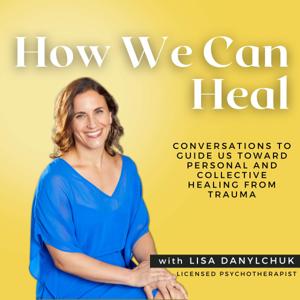


We’re going deep on racism and sexual trauma in this episode. We’re also exploring the theory of cultural betrayal, specifically by members of your same race, culture, or even family. Hear how it’s applied to celebrities, politicians, and everyday people. Our guest, Dr. Jennifer Gómez wrote the book on cultural betrayal (literally). Dr. Gómez published groundbreaking work after she developed Cultural Betrayal Trauma Theory as a tool for examining the impacts of discrimination and inequality in the wake of trauma. As an Assistant Professor at Boston University in the Clinical Practice department and as a faculty affiliate for the Center for Innovation in Social Work & Health, Dr. Gómez has made tremendous contributions to trauma therapies. She’s a black feminist trauma researcher and race scholar dedicated to understanding the effects of physical, sexual and emotional trauma in diverse and marginalized populations. There is something interesting for everyone to take away from this conversation.
Resources:
Dr. Jennifer Gómez's site: https://jmgomez.org/
Her book: https://www.apa.org/pubs/books/cultural-betrayal?tab=1#
Link to Jennifer Freyd Episode →https://howwecanheal.com/institutional-courage-with-jennifer-freyd/
For full transcript: https://howwecanheal.com/podcast/
This episode was produced by Bright Sighted Podcasting.
Support the show
Dr. Mary Anne Kate is a researcher specializing in interpersonal trauma, attachment, and post-traumatic disorders. She talks with Lisa about her research paper published in 2021, titled: Childhood Sexual, Emotional, and Physical Abuse as Predictors of Dissociation in Adulthood.
Hear how Dr. Kate identified predictors of dissociation in adults, and demonstrated that women who disclosed being sexual abused had a 106-fold risk of clinical levels of dissociation.
For her vast amount of work, Dr. Kate was awarded the Chancellor's Doctoral Research Medal from University of New England, and the David Caul Award from the ISSTD for her PhD on childhood maltreatment, parent-child dynamics, and dissociation. In 2021, Dr. Kate won the Morton Prince award for Scientific Research.
She’s currently the Lecturer Practitioner for the Master of Professional Psychology program at Southern Cross University and holds an adjunct research position at the University of New England
Links to items discussed in this episode:
Dr. Kate’s publications and MID-60 resources are available via ResearchGate:
https://www.researchgate.net/profile/Mary-Anne-Kate
Dr. Kate’s free MID Training: Webinar: Dissociation and dissociative disorders
https://novopsych.com.au/news/dissociation-and-dissociative-disorders/
ISSTD Public Resources:
https://www.isst-d.org/public-resources-home/
For full transcript: https://howwecanheal.com/podcast/
This episode was produced by Bright Sighted Podcasting.
Support the show
Dr. Bethany Brand, one of the leading researchers in the world on dissociative disorders, joins Lisa today to discuss her remarkable work in the field of trauma. Dissociative disorders were long thought to be nearly impossible to study or treat, but Dr. Brand’s research is not only debunking common myths but creating tools for therapists and patients to manage dissociation. She tells us about her groundbreaking TOPDD (Treatment of Patients with Dissociative Disorders) Study, how it was developed, ran its extraordinary results, and what research still needs to be done. Lisa and Dr. Brand also discuss the importance of trauma-informed therapy for patients experiencing dissociation, and the need for dissociative disorders to be a more prominent part of conversations about PTSD. Join us for this fascinating, inspiring conversation.
https://www.towson.edu/cla/departments/psychology/facultystaff/bbrand.html
For full transcript: https://howwecanheal.com/podcast/
This episode was produced by Bright Sighted Podcasting
Support the show
Licensed Clinical Social Worker and EMDR & complex trauma expert Michael Coy joins Lisa in this episode to continue this season’s discussion on dissociation. Michael tells us how he learned about trauma and what drew him to dedicate his practice to people coping with the impacts of complex trauma and dissociation. We also discuss how dissociation can impact the practice of EMDR and the different modes of thought among practitioners on how to use the treatment with patients experiencing dissociation. Plus, he shares that the most important lessons he’s learned as a therapist are that there are no shortcuts to therapy, and the biggest breakthroughs can come from accepting that there is always more to learn.
https://www.dmcoy.com/main/
For full transcript: https://howwecanheal.com/podcast/
This episode was produced by Bright Sighted Podcasting
Support the show
Megan Zipin - mother, wife, marathon runner, poet, and survivor of the Boston Marathon bombings - joins host Lisa D for this episode of How We Can Heal. They discuss how the trauma of the bombings manifested physically and mentally for Megan over the last ten years since the attack, how she has found healing through yoga, writing, and helping others, and what she wants to teach her young children about resilience and hope. She also reads several selections from her upcoming book of poetry "First Light." This inspiring episode is for anyone experiencing the lasting effects of trauma on their journey to healing.
Get Meghan's book " First Light" https://www.amazon.com/First-Light-Meghan-Zipin/dp/B0BP9VT1C3
For full transcript: https://howwecanheal.com/podcast/
This episode was produced by Bright Sighted Podcasting
Support the show
Dissociation is a common element of trauma that’s rarely discussed but should be. Kicking off Season 3 of How We Can Heal, host Lisa D gives us an introduction to the concept and causes of dissociation, as well as a preview of the new season dedicated to exploring this subject. Lisa also shares her view on the messaging and application of the increasingly popular trauma treatment EMDR (eye movement desensitization and reprocessing), and specifically her response to how it was discussed on an episode of The Huberman Lab Podcast.
Huberman's podcast episode: https://www.youtube.com/watch?v=31wjVhCcI5Y
For full transcript: https://howwecanheal.com/podcast/
This podcast is a production of Bright Sighted Podcasting
Support the show
In Season 3 of How We Can Heal is about Dissociation and Dissociative disorders. Dissociative disorders involve experiencing a disconnection and lack of continuity between thoughts, memories, surroundings, actions and identity.
Dissociative disorders usually develop as a reaction to trauma and help keep difficult memories at bay. Symptoms — ranging from amnesia to alternate identities — depend in part on the type of dissociative disorder you have. Times of stress can temporarily worsen symptoms, making them more obvious.
Support the show
Today on the How We Can Heal Podcast, Lisa Danylchuk chats with the inspiration and "seed planter" behind the podcast, Mr. Alex Castellanos. The pair dive into memorable moments, how the podcast flowered from its seed, and what to expect for Season 3. So let's get reflecting with Alex.
06:02 Season 2 Healing Takeaways
12:14 Why Lisa started the podcast
19:43 What to expect for Season 3
25:45 What gives Lisa hope
Enjoying the podcast? Tell me how to make it even better: https://forms.gle/qyhuMJhbxkbz4BbJ6
Support the show
Today on the How We Can Heal Podcast, Lisa Danylchuk chats with Jennifer Freyd, Ph.D., a researcher, author, educator, speaker and so much more. The pair discuss Freyd’s path to finding the Center for Institutional Courage, how the connections we have to institutions affect us, and her research on DARVO. Now, let’s wrap up Season 2 and get talking about how we can heal.
About Jennifer Freyd:
Jennifer J. Freyd, PhD, is a researcher, author, educator, and speaker. Freyd is the Founder and President of the Center for Institutional Courage, Professor Emerit of Psychology at the University of Oregon, and Adjunct Professor of Psychiatry and Behavioral Sciences in the School of Medicine, Affiliated Faculty at the Clayman Institute for Gender Research, and Affiliated Faculty, Women's Leadership Lab, Stanford University. She is also a Member of the Advisory Committee, 2019-2023, for the Action Collaborative on Preventing Sexual Harassment in Higher Education, National Academies of Science, Engineering, and Medicine. Freyd was in 1989-90 and again in 2018-19 a Fellow at the Center for Advanced Study in the Behavioral Sciences at Stanford University. Freyd currently serves as the Editor of The Journal of Trauma & Dissociation.
Freyd is a widely published and renowned scholar known for her theories of betrayal trauma, institutional betrayal, institutional courage, and DARVO. She received her PhD in Psychology from Stanford University. The author or coauthor of over 200 articles and op-eds, Freyd is also the author of the Harvard Press award-winning book Betrayal Trauma: The Logic of Forgetting Childhood Abuse. Her most recent book Blind to Betrayal, co-authored with Pamela J. Birrell, was published by John Wiley, with seven additional translations. In 2014, Freyd was invited two times to the U.S. White House due to her research on sexual assault and institutional betrayal. In 2021 Freyd and the University of Oregon settled Freyd’s precedent-setting equal pay lawsuit.
Freyd has received numerous awards including being named a John Simon Guggenheim Fellow, an Erskine Fellow at The University of Canterbury in New Zealand, and a Fellow of the American Association for the Advancement of Science. In April 2016, Freyd was awarded the Lifetime Achievement Award from the International Society for the Study of Trauma & Dissociation. Freyd was selected for the 2021 Christine Blasey Ford Woman of Courage Award by the Association for Women in Psychology.
Additional Bio: Jennifer Joy Freyd profile by the American Psychological Association.
Outline of the episode:
Resources:
Jennifer’s Website: https://www.jjfreyd.com/
Center for Institutional Courage: https://www.institutionalcourage.org/
Dynamics Lab: https://dynamic.uoregon.edu/
South Park DARVO clip: https://southpark.cc.com/video-clips/gfwbrf/south-park-it-s-called-darvo
You can follow Dr. Freyd on Twitter at @jjfreydcourage
Full Episode Transcript: howwecanheal.com/podcast
Support the show
Today on the How We Can Heal Podcast, Lisa Danylchuk chats with New York State Licensed Psychologist, Professor, Author (and more) Sheldon Itzkowitz. The pair go in-depth on Dissociation, Sheldon’s work with DID patients and discrimination, understanding evil, and more. Tune in to keep talking about how we can heal.
Outline of the episode:
Resources:
Website: https://www.sheldonitzkowitzphd.com/
Book: Psychoanalysts, Psychologists and Psychiatrists Discuss Psychopathy and Human Evil
ISSTD: ISSTD - International Society for the Study of Trauma & Dissociation
Full Transcript at howwecanheal.com/podcast
Support the show
From the publisher's feed
A podcast to share deep conversations about How We Can Heal from life’s toughest circumstances.
46e25130-c4e4-11f0-b994-d9ed1c1b3183

43,324 Listeners

2,520 Listeners

1,661 Listeners

116 Listeners

1,849 Listeners